- LOGIN
- MemberShip
- 2026-09-13 04:55:31
- Korea first to recommend cuffless blood pressure monitors,
- by Hwang, byoung woo | translator Alice Kang | 2026-07-20 08:51:21
Cuffless blood pressure monitors, which measure blood pressure without inflating a cuff around the arm, have been included in Korea's hypertension treatment guidelines for the first time. The Korean Society of Hypertension (KSH) has become the first in the world to recommend cuffless blood pressure monitors for out-of-office blood pressure measurement, establishing a clinical framework for their use.
The move is expected to accelerate clinical adoption, which is already increasing following reimbursement coverage, by reducing patient discomfort associated with conventional ambulatory blood pressure monitors and easing equipment burdens on healthcare providers. The society also plans follow-up clinical studies to strengthen the recommendation.
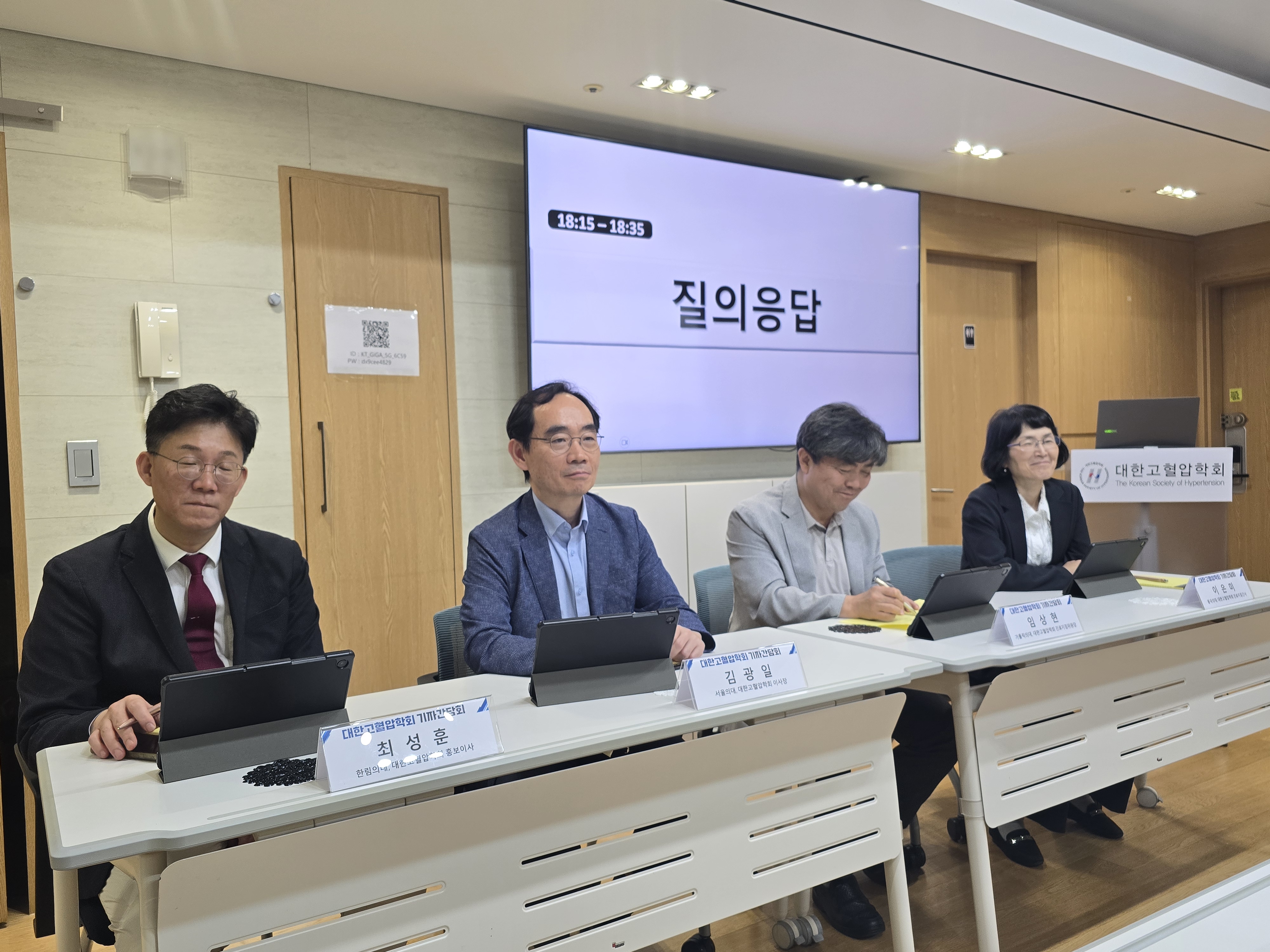
At a press briefing on July 17, the KSH introduced the major updates in its sixth edition of the 2026 Korean Society of Hypertension Guidelines and their clinical implications.
First positive recommendation…opens door to clinical use
The updated guidelines retain the existing recommendation to use validated cuff-based blood pressure monitors for office, home, and ambulatory blood pressure measurement while newly adding cuffless monitors as an option for out-of-office monitoring.
Its use received a Class IIb recommendation with Level B evidence, meaning it may be considered in practice. This differs from U.S. and European guidelines, which do not recommend cuffless devices for clinical use.
The society emphasized that this is the world's first positive recommendation for cuffless blood pressure monitors. While international discussions continue regarding their accuracy and appropriate use, the recommendation reflects growing validation data and real-world clinical experience accumulated in Korea.
Kwang-il Kim, Chairman of KSH and professor at Seoul National University College of Medicine, explained, "There were concerns from overseas academia that Korea might be moving too quickly, but others viewed it as taking the lead in a new field. This is the first positive recommendation for cuffless blood pressure monitors anywhere in the world."
In Korea, Sky Labs' CART BP, a ring-type blood pressure monitor, has already undergone validation against conventional 24-hour ambulatory blood pressure monitoring and is being used in clinical practice. Moving beyond being just a simple wearable device, its use has broadened as a clinical tool for ambulatory blood pressure monitoring.
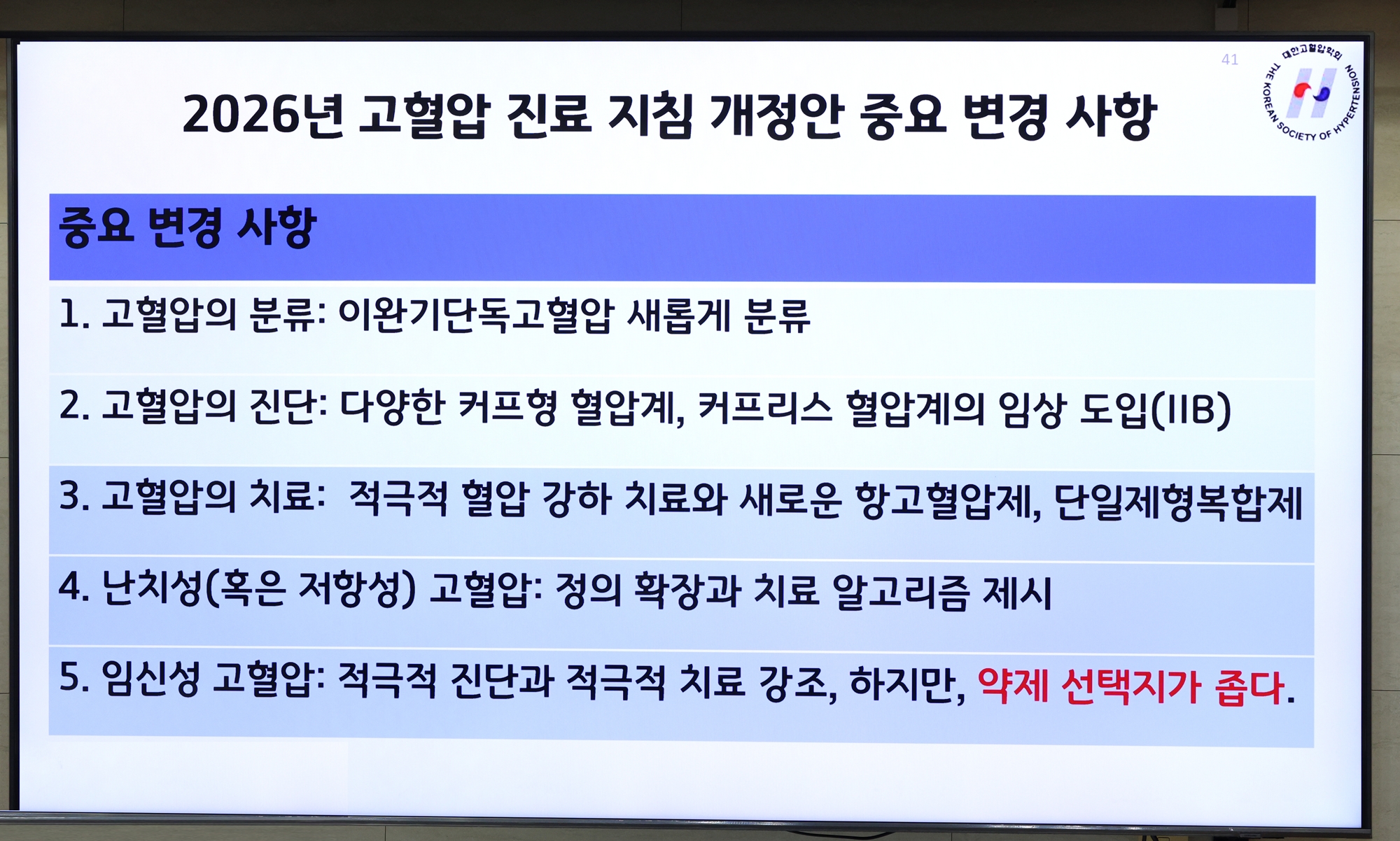
Sang-Hyun Ihm, Chair of the KSH Guideline Committee (Catholic University of Korea), said, "Given that the device is already being used in Korean patients and supporting evidence has accumulated, we concluded it would not be appropriate to classify it as a technology that should not be used. Although it has not reached Class I or IIa, we introduced it as a Class IIb recommendation that may be considered in clinical practice."
Adoption expands following reimbursement…use expands across primary care clinics
The inclusion of cuffless monitors in the guidelines is also expected to support the growing use of the technology following reimbursement coverage.
Eun Mi Lee, Secretary of the KSH Guideline Committee, said, "We understand that the use of cuffless blood pressure monitors has increased significantly since its reimbursement listing. The convenience for both patients and healthcare professionals serves as a clear advantage."
She noted, however, that additional validation is needed in certain patient populations, including those with thick finger joints, improperly positioned sensors, arrhythmias, or pregnancy.
The society attributed the increase in use partly to broader adoption by primary care clinics. Traditional 24-hour ambulatory blood pressure monitoring requires dedicated equipment and repeated cuff inflation, placing burdens on both providers and patients. This had limited its use in smaller clinics.
Seonghoon Choi, Director of Public Relations at KSH (Hallym University College of Medicine), said, “The rate of ambulatory blood pressure monitoring using conventional cuff-based devices has remained around 0.5% in Korea. The growing use of cuffless monitors suggests that primary care physicians, not just tertiary hospitals, are now participating in out-of-office blood pressure monitoring."
Choi added, "The society has long emphasized that treatment decisions should not rely on a single office blood pressure measurement. The expansion of ambulatory blood pressure monitoring in primary care is therefore a very encouraging development."
Can monitor blood pressure at night and in daily life… expands treatment data
One of the main advantages of cuffless monitors is their ability to measure blood pressure during sleep and daily activities without repeated arm compression.
Conventional ambulatory monitors inflate every 15 or 30 minutes, allowing patients to anticipate measurements and complain about sleep disturbances or discomfort during the night.
Ring-type cuffless monitors can measure blood pressure more frequently without compressing the arm, potentially enabling more comprehensive monitoring beyond nighttime to routine daily activities.
KSH President Kim said, "Conventional ambulatory monitors measure blood pressure every 15 or 30 minutes, whereas cuffless devices can collect readings at many more time points. They also offer advantages for nighttime and prolonged monitoring that exceeds one day."
The technology may also benefit patients who have difficulty wearing arm cuffs, such as those undergoing hemodialysis or those who experience discomfort from repeated cuff inflation.
For now, KSH sees the primary clinical role of cuffless monitoring in the follow-up of patients already diagnosed with hypertension, using the devices to assess treatment response, nighttime blood pressure, and diurnal variation while establishing interpretation criteria specific to cuffless measurements.
Large clinical study involving over 1000 patents planned…. To prepare data to elevate the recommendation level
The KSH is preparing an investigator-initiated clinical trial to strengthen the recommendation in future guideline updates.
Chairman Kim said, “Whereas previous studies focused mainly on whether cuffless devices produced measurements comparable to cuff-based monitors, the next phase will evaluate whether treatment guided by cuffless blood pressure readings improves blood pressure control and patient outcomes.
"The evidence showing that cuffless monitors can generate values comparable to conventional ambulatory monitors supported the current Class IIb recommendation. Going forward, we need to demonstrate whether treatment based on cuffless measurements leads to better outcomes and predicts prognosis more accurately than existing methods."
He added, "A single meaningful study could support a Class IIa recommendation, and consistent findings from both domestic and international studies could eventually lead to a Class I recommendation. Class IIb does not indicate a problem with the device -- it marks the beginning of a new clinical field."
The planned study is expected to enroll more than 1,000 patients, with the final sample size depending on participating institutions and whether primary care clinics are included. The KSH aims to launch the study later this year after completing institutional reviews and protocol evaluations.
The recommendation is not limited to any specific product. According to the KSH, any cuffless monitor that demonstrates sufficient accuracy and clinical evidence may receive the same level of recommendation.
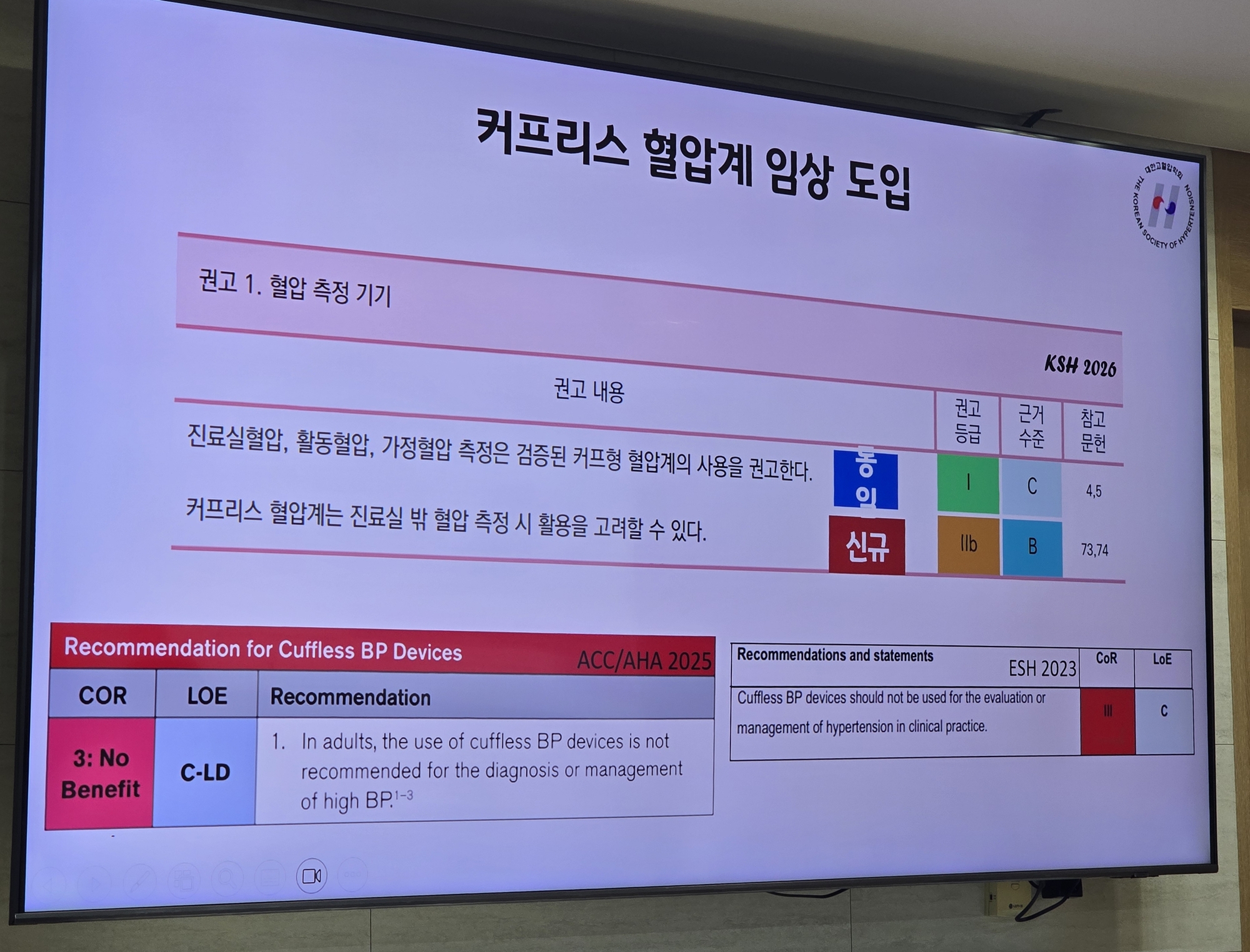
The updated guidelines also introduce isolated diastolic hypertension as a new category, strengthen blood pressure targets for high-risk patients, classify single-pill combination therapies, establish diagnostic and treatment algorithms for resistant hypertension, and emphasize more proactive management of hypertensive disorders of pregnancy. In particular, hypertensive disorders of pregnancy were identified as an area requiring efforts to bridge the gap between the guidelines and clinical practice, as the number of patients continues to increase while treatment options available in Korea remain limited.
Chairman Kim said, "Gestational hypertension not only impacts maternal health but also the health of the child. The society will continue exploring policy solutions and providing the information needed to improve care."
-

- 0
댓글 운영방식은
댓글은 실명게재와 익명게재 방식이 있으며, 실명은 이름과 아이디가 노출됩니다. 익명은 필명으로 등록 가능하며, 대댓글은 익명으로 등록 가능합니다.
댓글 노출방식은
댓글 명예자문위원(팜-코니언-필기모양 아이콘)으로 위촉된 데일리팜 회원의 댓글은 ‘게시판형 보기’와 ’펼쳐보기형’ 리스트에서 항상 최상단에 노출됩니다. 새로운 댓글을 올리는 일반회원은 ‘게시판형’과 ‘펼쳐보기형’ 모두 팜코니언 회원이 쓴 댓글의 하단에 실시간 노출됩니다.
댓글의 삭제 기준은
다음의 경우 사전 통보없이 삭제하고 아이디 이용정지 또는 영구 가입제한이 될 수도 있습니다.
-
저작권·인격권 등 타인의 권리를 침해하는 경우
상용 프로그램의 등록과 게재, 배포를 안내하는 게시물
타인 또는 제3자의 저작권 및 기타 권리를 침해한 내용을 담은 게시물
-
근거 없는 비방·명예를 훼손하는 게시물
특정 이용자 및 개인에 대한 인신 공격적인 내용의 글 및 직접적인 욕설이 사용된 경우
특정 지역 및 종교간의 감정대립을 조장하는 내용
사실 확인이 안된 소문을 유포 시키는 경우
욕설과 비어, 속어를 담은 내용
정당법 및 공직선거법, 관계 법령에 저촉되는 경우(선관위 요청 시 즉시 삭제)
특정 지역이나 단체를 비하하는 경우
특정인의 명예를 훼손하여 해당인이 삭제를 요청하는 경우
특정인의 개인정보(주민등록번호, 전화, 상세주소 등)를 무단으로 게시하는 경우
타인의 ID 혹은 닉네임을 도용하는 경우
-
게시판 특성상 제한되는 내용
서비스 주제와 맞지 않는 내용의 글을 게재한 경우
동일 내용의 연속 게재 및 여러 기사에 중복 게재한 경우
부분적으로 변경하여 반복 게재하는 경우도 포함
제목과 관련 없는 내용의 게시물, 제목과 본문이 무관한 경우
돈벌기 및 직·간접 상업적 목적의 내용이 포함된 게시물
게시물 읽기 유도 등을 위해 내용과 무관한 제목을 사용한 경우
-
수사기관 등의 공식적인 요청이 있는 경우
-
기타사항
각 서비스의 필요성에 따라 미리 공지한 경우
기타 법률에 저촉되는 정보 게재를 목적으로 할 경우
기타 원만한 운영을 위해 운영자가 필요하다고 판단되는 내용
-
사실 관계 확인 후 삭제
저작권자로부터 허락받지 않은 내용을 무단 게재, 복제, 배포하는 경우
타인의 초상권을 침해하거나 개인정보를 유출하는 경우
당사에 제공한 이용자의 정보가 허위인 경우 (타인의 ID, 비밀번호 도용 등)
※이상의 내용중 일부 사항에 적용될 경우 이용약관 및 관련 법률에 의해 제재를 받으실 수도 있으며, 민·형사상 처벌을 받을 수도 있습니다.
※위에 명시되지 않은 내용이더라도 불법적인 내용으로 판단되거나 데일리팜 서비스에 바람직하지 않다고 판단되는 경우는 선 조치 이후 본 관리 기준을 수정 공시하겠습니다.
※기타 문의 사항은 데일리팜 운영자에게 연락주십시오. 메일 주소는 dailypharm@dailypharm.com입니다.