
- LOGIN
- MemberShip
- 2026-05-04 03:20:12
- Policy
- MFDS organizes a Clinical Trial Consultative Body
- by Lee, Tak-Sun Jul 19, 2023 05:20am
- The Ministry of Food and Drug Safety announced on the 17th that it has organized and is operating a ‘Clinical Trial Consultative Body’ with the industry to hold an ear out to the domestic clinical trial industry’s opinion and facilitate the smooth operation of the systems that are being newly introduced. The consultative body will consist of 14 members, experts in the bio-industry, including pharmaceuticals, vaccines, and cell therapies recommended by associations (Korea Pharmaceutical and Bio-Pharma Manufacturers Association, Korean Research-based Pharmaceutical Industry Association, Korea Biomedicine Industry Association), and the 1st meeting of the body was held on the 13th (Thurs) at the KRPIA head office. At the meeting, the MFDS discussed ▲the main improvements required for the factual survey on Good Clinical Practice and disclosure of the main results of the factual survey ▲ mandatory up-to-date Development Safety Update Reporting, and also ▲ shared and guided the system for the therapeutic use of investigational drugs overseas and discussed related standards, producers, and subjects in depth. In addition, the committee members proposed the ▲activation of a central IRB, ▲simplification of data reported to MFDS, etc. An MFDS official said, “The 'Clinical Trial Consultative Body' requested that we continue to propose reasonable system improvements in all areas related to clinical trials. Also, the members asked for the MFDS’s active support and utilization of the body so that it can play its role in developing regulations for clinical trials in Korea.’ The MFDS will continue to support the rapid development of safe and effective new products and the expansion of patient treatment opportunities through active communication between the public and private sectors based on the 'Clinical Trial Consultative Body'.

- Policy
- 22 items that exploded in use during COVID-19,
- by Lee, Tak-Sun Jul 19, 2023 05:20am
- While negotiations are underway for PVA Type Da items, 22 items are said to have undergone correction due to increased usage due to Corona 19 last year. The NHIS plans to finalize the negotiations by this month, including these items, and report the results of the negotiations to the Health Insurance Policy Deliberation Committee of the Ministry of Health and Welfare next month. According to the industry on the 17th, the government is negotiating by correcting the number of drugs that have increased usage due to Corona 19 last year and selecting a target for negotiation. Items subject to PVA Type Da are drugs that have not been negotiated at the time of initial registration, and if the billing amount increases by 60% or more compared to the previous year, by 10% or more, or by 5 billion won or more, the upper limit is reached through negotiation from the 4th year of registration. adjust the amount. The problem is that the demand for respiratory medicines such as cold medicine has increased significantly as the number of Corona 19 patients exploded last year. Drugs whose bills have increased significantly from the previous year are likely to have their upper limit reduced according to PVA, so the pharmaceutical industry suggested making an exception for drugs used for Corona 19. It is difficult for NHIS to exclude all drugs used for COVID-19 from the negotiation target, and instead decided to negotiate only those drugs that meet the standard by correcting the amount used. This is in accordance with Article 10 (2) of the PVA Negotiation Guidelines, which stipulates an exception to the application of PVA in the case of drugs used to support the treatment of infectious diseases. It is known that the NHIS, which has monitored about 2,600 items, including cold medicines and antibiotics that the Ministry of Food and Drug Safety has encouraged to produce since the beginning of this year, selected 22 items among them and proceeded with negotiations. The total number of Type Da negotiation items is known to be 60 items and 138 items in the same product group. The NHIS plans to complete the negotiations this month and submit the results of the negotiations to the Health Policy Deliberation Committee to be held next month to reflect the drug price adjustments in the reimbursement list in September. The NHIS explained that it lowered the upper limit on a total of 175 items according to the Type Da negotiations last year, resulting in a total of 44.7 billion won in financial savings.
- Policy
- No need to fear for the lack of Sabril after recall
- by Lee, Hye-Kyung Jul 19, 2023 05:20am
- The supply of Handok’s ‘Sabril Tab’ that was recalled by the company is expected to smoothen up soon. Its recall was issued by the health authorities due to the discovery of a small amount of an active pharmaceutical ingredient for a different drug, ‘tiapride,’ in its main active pharmaceutical ingredient, ‘vigabatrin.’ The Ministry of Food and Drug Safety (Minister Yu-Kyung Oh) said on the 18th, “We are aware of the concerns over the lack of epilepsy and infantile spasm treatment Sabril being raised by the industry. We have been discussing measures with Korea’s Children's Hospital Association, seeking expert advice, and meeting with the industry to closely understand the need and supply status in the field, and encouraged Handok, its domestic manufacturer, to promptly supply Sabril.” As a result, Handok decided to import 980,000 tablets (an amount that can be used for 5 months) of active ingredient (bulk tablets) that was scheduled to be imported in December in July, and its customs clearance is scheduled for July 21. Handok is known to be hastening its overseas import as there is no drug that can replace Sabril in Korea. The MFDS explained, “We have acquired information overseas on the discovery of another drug’s active pharmaceutical ingredient tiapride in some batches of Sabril’s active pharmaceutical ingredient, vigabatrin. Although the possibility of side effects is low, considering the fact that the safety of the detected ingredient for children has not been established, the MFDS recommended that the company recall a product with a specific lot number manufactured using the raw material on July 14 as a precautionary measure." Tiapride is an active pharmacuetical ingredient used to treat a variety of neurological and psychiatric disorders including movement disorders, neuromuscular pain, aggression, agitation, etc. The MFDS said, “ We have issued the recall recommendation as a preemptive measure for patient safety in comprehensive consideration of the potential distribution amount owned by the company (92,000 tablets that are not subject to recall) and the additional amount set to be supplied within July (980,000 tablets).”
- Policy
- Multiple Rxs for newly reimbursed drugs
- by Lee, Tak-Sun Jul 17, 2023 05:30am
- Pfizer Korea’s atopic dermatitis drug New drugs such as Cibinqo Tab (Pfizer Korea), a treatment for atopic dermatitis, and Newmaco S, a treatment for high triglycerides, which were listed in July, were included in the list of cost-effective, high-dose oral drugs. If multiple prescriptions are made for low content, the cost of claiming benefits can be reduced by exceeding the upper limit for high-content products. Cibinqo Tab, a treatment for atopic dermatitis in adolescents and adults that inhibits JAK1, was listed as reimbursement through NHIS negotiations on July 1. As for the JAK1 inhibitor, it is the second drug to be covered after AbbVie's Rinvoq ER 15mg for the treatment of atopic dermatitis in adolescents aged 12 years and older. Three doses of 50mg, 100mg, and 200mg are listed for this drug, but you should pay attention to multiple prescriptions for 50mg and 100mg products. In the case of Cibinqo 50mg, the upper limit is 11,087 won, which exceeds the upper limit of 100mg (17,739 won) and 200mg (25,942 won) when prescribed twice or 4 times. If 100mg is prescribed twice, it exceeds the upper limit of 200mg and is subject to reduction. Yuyu Pharmaceutical's 500mg product 'Newmaco S 500mg', which was first introduced among omega-3 preparations, should also be careful of multiple prescriptions. This is because multiple prescriptions exceed the upper limit of the previously listed 1000mg product Newmaco S. The upper limit of Newmaco S Soft Cap 500mg is 198 won, and the upper limit of Newmaco Soft Cap is 297 won. These items are reviewed and adjusted by the difference in drug price that occurs when they are replaced with the upper limit price for high content. Along with this, Gabape Capsule 100mg of Hanpoong, Kuhnletal SR Cap 100mg (Cilostazol) of Kunil Biopharmaceuticals, Prelin 25mg of Myungmoon, and Tamsu SR of Youngpoong are also added to the target items for cost-effective oral medications, so multiple prescriptions should be taken into consideration.
- Policy
- Will Koselugo’s reimb listing pick up speed in Korea?
- by Lee, Tak-Sun Jul 17, 2023 05:30am
- AstraZeneca is bracing up its battle to receive reimbursement approval for its Koselugo (selumetinib, AZ) within the year. The company’s new neurofibromatosis drug was unable to pass review by the Health Insurance Review and Assessment Service’s Drug Reimbursement Evaluation Committee last year. AstraZeneca submitted its 3rd supplementary material and RSA proposal recently. Whether the agenda will be reviewed at HIRA’s DREC meeting and determined adequate for reimbursement is receiving attention. According to industry sources on the 16th, AZ withdrew its previous drug listing and reimbursement price application for Koselugo in January and submitted a new application in February. Koselugo received a non-reimbursement decision from DREC last March. It was the only drug that received a non-reimbursement decision among all drugs that were reviewed by DREC last year. Unwaivered, the company continued its attempt to pass HIRA’s gates. Due to a lack of treatment options for neurofibromatosis, the demand for treatment in the area from the HCPs and patients has been high. Neurofibromatosis is a rare disease that presents abnormalities of the skin, nervous system, bones, and soft tissues. Around 4,900 patients are known to be ailing from the disease in Korea. The only available treatment option for neurofibromatosis until now had been surgical removal. However, as complete excision of these tumors is difficult, the possibility of relapse always remains even after surgery. The Phase II SPRINT study that became the basis for Koselugo’s approval showed that Koselugo reduced tumor size by over 20% in 68% of the patients that received the drug, and achieved its primary endpoint of ORR. Also, 82% of the patients that showed a partial response had sustained responses lasting at least 12 months. The issue is Koselugo’s price. It is an expensive drug that costs 200 million won a year. Therefore, industry prospects were that its reimbursement listing would only be possible if the company submits a solid RSA plan in addition to its proof of effect. Determined to receive reimbursement, the company had continuously submitted supplementary data even after the non-reimbursement decision last year and is continuing on its attempt this year by submitting a new reimbursement application. In April, the company changed its application drug price and applied for expedited listing. Since then, the company has submitted supplementary data three times and has persistently knocked on the DREC’s door. More recently, the company had also prepared a risk-sharing agreement plan as a reimbursement failsafe for the government. Starting this year, the insurance authorities have been applying the expedited listing process to treatments for diseases that threaten the quality of life of children. In this aspect, there is a higher chance that Koselugo will get listed faster if the pharmaceutical company submits a solid plan on how it would share the burden of high prices. Therefore, attention is focusing on whether Koselugo can overcome last year’s non-reimbursement decision and expedite its listing this year.
- Policy
- Gov’t starts researching generic drug pricing policy in 2H
- by Lee, Jeong-Hwan Jul 14, 2023 05:39am
- The Ministry of Health and Welfare has started research to improve the generic drug price system in the second half of this year. The industry expects that the authorities will likely prepare and implement a system to reduce the price of generic drugs as soon as the research is complete. The research will mainly investigate the need to change the ’20 listed drugs’ standard used to differentiate the drug price of same-ingredient drugs and the 53.55% generic drug price discount rate that is applied after the expiry of the original drug’s patent. Recently, the Ministry of Health and Welfare signed a private contract with Professor Dong-sook Kim’s research team at Kongju National University for the project, ‘Preparing measures to improve the drug price system for generic drugs'. KRW 50 million won was invested into the research service. The MOHW presented creating a healthy competitive market for generic drugs as its research purpose and claimed that too many generics are still being introduced to the market despite the implementation of a stepped drug pricing system that discounts the price of drugs depending on whether or not the standard requirements are met. The main purpose of the study is to compare the drug pricing system and price level of Korea’s generic drugs with those of 8 overseas countries (Japan, France, Germany, Italy, Switzerland, the United Kingdom, the United States, and Canada) and to establish a rational generic drug management plan. More specifically, the research will compare the number of pharmaceutical companies and the total number of generic drug items listed in Korea and abroad. Also, Korea’s generic drug price level will be compared with those abroad, and the team will investigate the current status of the generic drug contol systems abroad and analyzed premium pricing systems implemented overseas for generic drugs. To devise measures used to manage generic drugs, the team will also analyze the current generic drug pricing system in Korea. Also, the team will investigate whether the ’20 product’ limit applied to differentiate the drug price discount rate from 53.55% to 38.69% is adequate, and whether it is appropriate to maintain the 53.55% standard for calculating the price of generics compared to the price before the original’s patent expires, and whether it is necessary to differentiate the price between patent expired original drugs and generic drugs. An analysis of the average percentage of claims filed for each generic drug according to their order of listing and the appropriate number of generics per ingredient will also follow. Also, the team will seek ways to improve the drug price premium system by studying cases where multiple generics were simultaneously listed after the patent expiry of a blockbuster new drug. In other words, the authorities are determined to prevent the recurrence of cases in which more than 100 generics are listed in the health insurance, as in the case of the SGLT-2 inhibitor diabetes drug Forxiga (dapagliflozin) generics. The Ministry of Health and Welfare plans to come up with a plan to improve the current drug pricing system based on the appropriate number of generic drugs and level of drug price compared to the original analyzed by the research team. In addition, the research will also look over the systemic improvements that should follow the new drug pricing policy in terms of drug demand and prescriptions. After a literature review to search for prior studies conducted in the area, the research team will collect the opinions from experts and the pharmaceutical industry, and then investigate the current status of the pharmaceutical industry and drug price levels in other countries through data such as IQVIA. The research schedule is, after signing the agreement within this month (July), the team will provide an investigator’s interim report in October, based on which the Ministry of Health and Welfare, Health Insurance Review and Assessment Service, and National Health Insurance Service will conduct advisory meetings and finalize the report by December. The MOHW said, "This study will improve the soundness of Korea’s pharmaceutical industry by maintaining price competition at an appropriate level between pharmaceutical companies and preventing the proliferation of generic drugs. The study is also expected to strengthen the sustainability of health insurance finances by allowing efficient expenditure of medicines. This will help Korea establish a generic drug pricing system that induces research and development for new drugs." “We also expected the measure to strengthen the sustainability of health insurance finances by allowing efficient drug expenditures.”
- Policy
- Enhertu passed the cancer dz review board after a retrial
- by Lee, Tak-Sun Jul 14, 2023 05:39am
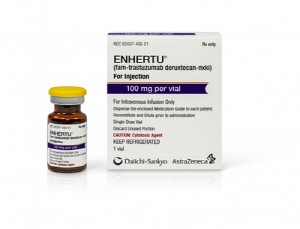
- After a retrial in the first half of last year, the anticancer drug Enhertu, which passed the Cancer Disease Review Committee, met another hurdle: passing the Pharmaceutical Reimbursement Evaluation Committee. Enhertu, which succeeded in setting reimbursement standards at the end of the review committee's reexamination in May, was not presented to the Pharmaceutical Reimbursement Evaluation Committee, which was held three times afterward. According to the industry on the 11th, Enhertu's Daiichi Sankyo submitted data to HIRA a day late, which requested PE supplementary data earlier this month. Currently, Enhertu is in PE, and it is expected to be submitted to the committee by taking steps such as the RSA sub-committee. The PE data was submitted on the 5th and is currently awaiting deliberation. Accordingly, it is expected that Enhertu's submission to the Pharmaceutical Reimbursement Evaluation Committee will be decided according to the deliberation results. Currently, it is difficult to estimate when the drug benefit evaluation committee will be presented. Enhertu, which applied for reimbursement in November last year, began reviewing patients' prompt reimbursement. In February, through a national consent petition, 50,000 people agreed to the demand for the benefit, and it was referred to the National Assembly. It is indicated for the treatment of patients with unresectable or metastatic HER2-positive breast cancer who have previously received one or more anti-HER2-based therapies. It is also indicated for the treatment of locally advanced or metastatic HER2-positive gastric or gastroesophageal junction adenocarcinoma who have previously received two or more therapies, including anti-HER2 therapy. The petitioner for Enhertu reimbursement strongly requested health insurance approval, saying that Enhertu is called the last hope for breast cancer patients and that it is difficult to use because it is an expensive drug that costs about 5 million won per injection. The HIRA reviewed the reimbursement standards for Enhertu for the first time in March. However, in the case of gastric cancer indications, the cancer disease review committee decided to re-deliberate without reaching a conclusion due to the weak evidence and the high price of the applied drug. Still, it was not that the salary standard setting failed, but that it was re-examined, so I was able to continue my hopes. Afterward, Daiichi Sankyo submitted supplementary data and managed to set the salary standard at the cancer screening meeting held in May. In order for the reimbursement to be applied, there are still procedures, such as passing through the Drug Evaluation Committee and then negotiating with NHIS. In many cases, it took a long time to pass the drug evaluation committee after the reimbursement standard was established. In the case of Keytruda, an immuno-oncology drug, it was presented to the Drug Evaluation Committee within six months. Accordingly, there is an opinion that the reimbursement review process for anti-cancer drugs, which must pass through two consecutive committees, should be improved to expedite reimbursement. However, the HIRA draws a line against this argument, saying that the cancer disease review committee, which sets reimbursement standards, and the drug evaluation committee, which determines the adequacy of reimbursement, have distinctly different functions. However, given that Enhertu's petition for expedited reimbursement is a drug that has been referred to the National Assembly, there is a prospect that it will not take long for Enhertu to be presented to the Drug Evaluation Committee. The rare re-discussion by the Cancer Disease Review Committee is an interpretation that the insurance authorities are also conscious of the speed of reimbursement. Daiichi Sankyo also said, "We are actively discussing with the government authorities for the prompt reimbursement of Enhertu, putting the patient's wishes first." Attention is focusing on whether Enhertu, which is facing the drug evaluation committee, will quickly go through the reimbursement process as patients wish.
- Policy
- HIRA declines NHIS and KPBMA's request
- by Lee, Tak-Sun Jul 14, 2023 05:39am
- The National Health Insurance Service and the Korea Pharmaceutical and Bio-Pharma Manufacturers Association have requested to participate in the Drug Reimbursement Evaluation Committee, but the Health Insurance Review and Assessment Service announced plans to amend its operational regulations without reflecting their requests. The NHIS has been strongly pushing to take part in the Drug Reimbursement Evaluation Committee since earlier this year, which drew attention to the recent amendment of the operational regulations. According to HIRA on the 13th, the amendment to the operational regulations for the Drug Reimbursement Evaluation Committee will be officially announced soon and will incorporate the contents pre-announced last month. The pre-announced contents of the amendment included increasing the committee's member pool from 100 to 105 and increasing the number of experts recommended by academic societies from 65 to 70. HIRA will reorganize the specific departments for specialized experts among those recommended by the Korean Medical Association by removing the Korean Society of Gastrointestinal Cancer Research and adding 4 specialized departments including the Korean Orthopedic Association, the Korean Society of Coloproctology, the Korean Society of Medical Oncology, and the Korean Society of Surgical Oncology, HIRA made a pre-announcement of its administrative decision on the 21st of last month and has collected opinions until the 27th of the same month. After the announcement, the NHIS immediately offered to take part in the Drug Reimbursement Evaluation Committee. The NHIS has been emphasizing the need for their participation in the committee to enable smooth operation of tasks related to drug reimbursement.since earlier this year. While NHIS participated in the 3rd Drug Reimbursement Evaluation Committee, they were not given voting rights due to a conflict of interest and are now no longer involved in the committee. In March, Sang-Il Lee, Executive Director for Benefit at NHIS, argued for NHIS’s participation in the Drug Benefit Evaluation Committee during a briefing with the Korea Special Press Association. He said, "NHIS’s participation in the Drug Reimbursement Evaluation Committee is necessary to ensure the appropriateness of reimbursement, secure consistency of financial impacts when listing new drugs, and serve as an organic link between the evaluation and negotiation conducted on the uncertainty of new drugs under the risk-sharing agreement. We will further discuss this matter with relevant organizations, such as MOHW and HIRA.” Subsequently, the National Health Insurance Trade Union and the Korea Alliance of Patients Organization also supported the participation of NHIS in the Drug Reimbursement Evaluation Committee. The Korea Alliance of Patients Organization submitted a letter of opinion in favor of NHIS’s participation when the amendment to the operating regulations for the Drug Reimbursement Evaluation Committee had been pre-announced. However, HIRA showed a negative stance toward NHIS’s participation in the Drug Reimbursement Evaluation Committee. Mi-Young Yoo, Head of the Department of Drug Management at HIRA stated during a briefing in March that “As an insurer, NHIS directly negotiates with pharmaceutical companies on the ceiling price for new drugs, etc. Concerns may arise about fairness and objectivity if the negotiating party participates in the decision-making process,” essentially rejecting their opinions. In addition to the NHIS, the Korea Pharmaceutical and Bio-Pharma Manufacturers Association also submitted their opinion for its participation in the Drug Reimbursement Evaluation Committee during the pre-announcement period, with the aim of ensuring transparency in the process of reimbursement decisions. However, their opinions to take part in the Drug Reimbursement Evaluation Committee were not accepted. The official announcement is expected to align with the pre-announced contents. Thus, NHIS and KPBMA representatives will not be part of the 9th Drug Reimbursement Evaluation Committee that is set to commence in October.
- Policy
- Approval of phase 3 for Retatrutide
- by Lee, Hye-Kyung Jul 14, 2023 05:38am
- Eli Lilly's anti-obesity drug Ly3437943 is undergoing phase 3 clinical trials in Korea. The Ministry of Food and Drug Safety recently approved a phase 3 clinical trial to study the efficacy and safety of once-weekly administration of Retatrutide in obese or overweight type 2 diabetic subjects. Seoul National University Hospital, Severance Hospital, Ulsan University Hospital, Hanyang University Guri Hospital, Korea University Ansan Hospital, and Yeungnam University Hospital participate in the phase 3 clinical trial conducted worldwide. Retatrutide is a triple agonist of Lilly's GIP/GLP-1/glucagon (GCG) receptor, which is famous as an obesity treatment following Mounjaro. Mounjaro was clinically confirmed to have a 22.5% weight loss effect when administered at the highest dose of 15mg/0.5ml for 72 weeks in obese patients without diabetes. approved as an adjuvant in therapy. The indication for obesity treatment plans to receive approval from the FDA within the next year. On the other hand, Retatrutide showed a weight loss effect of 24.2% after 48 weeks in the 12mg group, the highest dose group, in phase 2 clinical trial conducted on 281 adults aged 18 to 75 years at the recently opened ADA. It is evaluated that the combination of glucagon receptor action with glucose-dependent insulinotropic polypeptide (GIP) and glucagon-like peptide-1 (GLP-1) receptor action led to the weight loss effect of Retatrutide. GLP-1 was developed as a diabetes treatment because it promotes insulin secretion and lowers blood sugar levels, but as the side weight loss effect was confirmed, it is being used as an obesity treatment. Meanwhile, representative drugs such as GLP-1 agonists include Novo Nordisk's Saxenda and Wegovy.
- Policy
- HIRA is reviewing reimb of Korea’s first donepezil 3mg
- by Lee, Tak-Sun Jul 14, 2023 05:38am
- Donepezil Powder released by Hyundai Pharmaceutical last year The 3mg donepezil tablet that was developed by Hyundai Pharmaceutical is being reviewed by the health authorities for reimbursement in Korea. No other tablet formulation of donepezil 3mg currently exists in Korea’s reimbursement list. Therefore, the Health Insurance Review and Assessment Service is seeking for the most appropriate development target product to determine its price. Hyundai Pharmaceutical received approval for Hipezil Tab 3mg (Donepezil hydrochloride monohydrate) on the 28th of last month. Hipezil Tab 3mg is indicated to slow the progression of symptoms of dementia associated with Alzheimer's disease and is the first 3mg donepezil formulation introduced to the market. Although the 3mg dose is being used abroad, Hyundai is the first in Korea to receive approval for the specific dose. Currently, 5mg, 10mg, and 23mg formulations of donepezil are listed for reimbursement in Korea. The 3mg donepezil tablet has a specific use. Its dosing schedule indicates that an initial dose of 3mg once daily can be used for the purpose of reducing gastrointestinal adverse reactions. However, the use of the 3mg dose is conditional and limited to 1-2 weeks. Also, the dosage for underweight female patients aged 85 or older is not allowed to exceed 5mg, therefore are allowed the use of the 3mg formulation. Hyundai Pharmaceutical is thought to have adopted the strategy of receiving approval for Hipezil Tab 3mg to target a less attended spot in the highly competitive donepezil market. Hyundai Pharmaceutical has also released a powder-type formulation of donepezil, Hipezil Powder, that offers better convenience in intake. In the domestic donepezil market, competition among pharmaceutical companies is so fierce that 121 10mg tablets are on the reimbursement list. According to HIRA, the amount of claims submitted for dementia (ATC code N06D) in Korea amounted to KRW 414.9 billion in 2022, up 58.4% compared to 2020. The market is growing due to the increasing number of dementia patients and the normalization of hospital visits by the elderly with COVID-19 becoming endemic. Therefore, whether Hyundai Pharmaceutical’s strategy will show an effect is receiving industrywide attention.
