
- LOGIN
- MemberShip
- 2026-05-04 17:16:29
- Policy
- Rapidly changing breast cancer treatment
- by Choi, sun May 11, 2023 05:49am
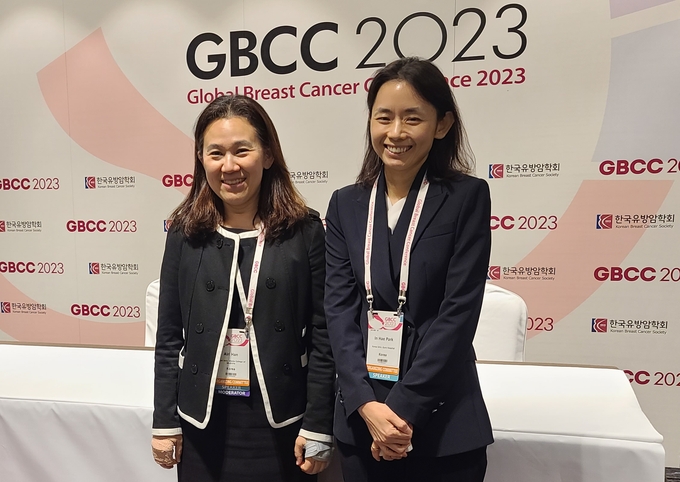
- The Korean Breast Cancer Society revised the treatment recommendation on the 27th. Combination drug treatment using a combination of an antibody and an anticancer drug has emerged as a hot issue, and as the new anticancer drug Enhertu for HER2-positive metastatic breast cancer received domestic approval in September last year, the reflection of this is emerging as a concern. In the case of new drugs, society reflects them if there is evidence, while also preparing new recommendations for rare cases that have been neglected. It means that it presented an 'answer' based on expert consensus in areas where large-scale randomized clinical studies were lacking due to the small number of patients, such as male breast cancer, osteoporosis treatment in breast cancer patients, and familial breast cancer, which depended on individual judgment of medical staff. Given that the clinical field of breast cancer is rapidly changing due to the emergence of various new drugs and treatments, society adheres to preparing revisions every two years. Even with a 'short cycle' of 2 years, it contains a lot of changes. We met Ae-Ri Han (Department of Breast Surgery, Yonsei Wonju University) and In-Hye Park (Department of Oncology, Korea University Guro Hospital), chair of the Breast Cancer Society, to hear about major changes. Usually, guidelines and recommendations are based on data. After the evidence is accumulated and verified over time, it goes through the usual procedure reflected in the guidelines. The problem is in the case of rare cancers, where it is difficult to accumulate data despite the passage of time. The need for a minimum 'guidance' that relied entirely on the judgment of medical staff has been a demand in the clinical field. (From left) Han Ae-ri, chair of the breast cancer society, and Park In-hye, chair of the academic committee Chairman Han expressed the biggest change in this recommendation as 'interest in the minority. "Because recommendations are not standard medical guidelines, they do not mean that they must be done as they are," she said. Usually, for rare cases, foreign studies are referred to. It was not easy to find high-quality research data abroad for the rare cases included in this guideline. Chairman Han said, "The most reliable data is a randomized clinical trial involving a long period of time and a large number of patients, but the cases mentioned above have physical limitations in conducting such clinical trials. This is the same situation in Korea as well as abroad." Explained. The society decided to support smooth use through recommendations on the use of Enhertu, which is on the verge of reimbursement. Enhertu drew attention last year with a national consent petition urging 50,000 people to request rapid approval. Even after the domestic approval in September of last year, as 50,000 people urged public consent for health insurance, it emerged as a topic of interest in the breast cancer academic community. Park In-hye, chairman of the Academic Committee (Korea University Guro Hospital), said, “Enhertu’s insurance review has already been completed and some adjustments remain, so the review will begin again in May soon.” Since locals use it a lot, I think a similar level of decision will come out." She said, "I think that insurance benefits will be available to patients after the review in May in Korea." She said, “Especially, as the treatment indications for Enhertu are getting wider, the number of patients who can be treated with Enhertu is expected to gradually increase.” Chairman Han Ae-ri said, "Because the level of evidence must be high, it is difficult to unconditionally reflect in the recommendation that a new drug has been released, but all cases that meet the criteria such as Enhertu are reflected in this guideline." I thought it was, so I didn't reflect it," she explained. “The National Comprehensive Cancer Network (NCCN) has recommended Ribociclib as a first-class among CDK 4/6 inhibitors,” she said. “In Korea, Palbociclib was first launched in 2016 and is a generic drug. Abemaciclib and Ribociclib are competing, but experts are also divided on whether to switch to another drug if they are currently taking Palbociclib.” Although not enough data has been accumulated to change the recommendation, it was not easy to make a decision because the recommendation level for late-comer drugs is being raised overseas. In particular, it was also pointed out that if the prognosis worsens after first administering Ribociclib, there is no other drug that can be used. Chairman Han said, “There was an opinion that existing drugs should be used first and new drugs should be used as a last resort in preparation for a worsening prognosis, but in the end, there were more opinions that good drugs should be used from the beginning.” I also gave a lecture about using good medicine first from the beginning.” "Currently, the market is changing due to competition in generics such as Ribociclib, and the recommended level is also changing, so it is true that there is confusion in the clinical field," said Han. Chairman Han added, "If there is an effective treatment, I think it is the mission of the society to reflect and recommend it."
- Policy
- A benefit study of the Gardasil 9 NIP is also forthcoming
- by Lee, Jeong-Hwan May 10, 2023 11:17pm
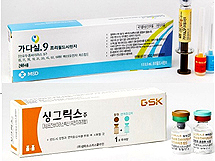
- The KDCA is ordering an additional policy research service to apply the National Vaccination Support Project (NIP) of the 'HPV 9-valent vaccine' to female adolescents and male adolescents over 12 years of age. As the result of the HPV 9 commissioned by KDCA to NECA earlier was found to be low in cost-effectiveness in vaccine research, it is in effect a follow-up study. In addition, the KDCA plans to conduct a cost-effectiveness study when applying NIP to the shingles vaccine. On the 8th, KDCA Medical Safety and Prevention Director Lim Eul-ki made this statement at a meeting with the Professional Reporters Association. Director Lim Eul-ki explained, "The additional study on the cost-effectiveness of the male HPV 9 vaccine will be conducted as quickly as possible and an order will be placed in May." The policy of free vaccination of Gardasil 9, a vaccine against HPV 9, to female and male adolescents was a pledge of President Seok-Yeol Yoon during the presidential election. To this end, the KDCA commissioned NECA to conduct a cost-effectiveness study, but it was concluded that it was not cost-effective in all analysis scenarios. Specifically, the research team analyzed the economic effects of three scenarios: ▲ 12-year-old girl 9-valent conversion, ▲ 12-year-old male and female 9-valent vaccination, ▲ and 12-year-old male HPV vaccine NIP subject to NIP However, as a result, the cost-benefit ratio was not significant in all scenarios. Accordingly, KDCA decided to conduct a cost-benefit analysis again through additional research. The subject of the follow-up study was decided to be kept private for the time being to maintain research fairness. Regarding the background of the additional research, Director Lim Eul-ki explained, "There were many experts' opinions that the research design of the research service conducted by NECA was carried out excessively conservatively." Director Lim explained, "For example, we underestimated the diseases that occur in men during the HPV vaccine effect." Director Lim said, "There was an expert opinion that the effect on side diseases such as head and neck cancer was also underestimated. In follow-up studies, we plan to actively reflect this aspect." Director Lim added, “In particular, it should have been studied compared to female non-vaccinated people, but there was also an evaluation that the sensitivity was lowered because of the study compared to female non-vaccinated people.” Director Lim added, "In fact, research services have been conducted overseas as well, and additional research is being ordered in Korea under the same conditions." The KDCA will also embark on a NIP cost-benefit study of the shingles vaccine. The research will also be ordered in May. Director Lim said, "It would be nice if NIP was implemented for the shingles vaccine, but it was difficult to proceed due to budget limitations. This research service will include the recently released Shingrix vaccine." Lim said, "Unlike HPV vaccine research, the period required for research on shingles is planned to be about one year with time to spare."
- Policy
- Prior HIRA approval is required to administer Crysvita
- by Lee, Tak-Sun May 10, 2023 06:00am
- Prior approval from the Health Insurance Review and Assessment Service will be required to administer the pediatric rickets treatment Crysvita Inj which is set to be reimbursed from May this year. Accordingly, HIRA has prepared the specifics for Crysvita’s prior approval and applied it from the 3rd of this month. According to the specific criteria, medical institutions that seek to administer Crysvita’s to children with X-linked hypophosphatemia (XLH), a rare inherited form of rickets, must apply for prior approval to HIRA. The deliberation will be conducted by the Crysvita subcommittee under the Healthcare Review and Assessment Committee (HCRAC). The subcommittee will convene on the third Wednesday of each month and will be deliberating applications submitted until 14 days before the date of the meeting. Medical institutions that receive HIRA’s Prior approval must administer Crysvita within 60 days of being notified of the deliberation results. If the institution seeks to administer it after 60 days, it must reapply for prior approval. Medical institutions that have been approved in advance and administered Crysvita can file claims for health insurance benefits. The institutions are also required to submit monitoring data after administering Crysvita. The medical institution in charge is required to submit a monitoring report every 12 months after initiating treatment before administering the maintenance dose, which is again subject to the subcommittee’s review. The subcommittee can reverse its approval if the institution approved to receive the health insurance benefits is found to have falsely filed related data in the applications and monitoring reports or submitted false data. However, a medical institution that has been notified of the subcommittee’s decision to cancel or withdraw the approval of health insurance benefits may file an objection within 90 days. With the addition of Crysvita Inj., a total of 9 items now require prior approval before being insurance benefits: ▲Immune Tolerance Induction; ▲Soliris‧Ultomiris Inj. ▲Strensiq Inj. ▲Spinraza‧Zolgensma Inj.; ▲ Autologous Stem Cell Transplantation; ▲Implantable Cardioverter Defibrillator & Cardiac Resynchronization; ▲Ventricular Assist Device therapy; ▲Clinical studies; and ▲Crysvita Inj. However, in the case of autologous stem cell transplantation, institutions can opt to receive a review after administration without undergoing prior approval procedures.
- Policy
- Insurance price ceiling reeval results to be notified soon
- by Lee, Tak-Sun May 09, 2023 05:38am
- The Health Insurance Review and Assessment Service completed its first review on drugs subject to primary pricing ceiling reevaluations and will be notifying companies of the results soon. A 30-day objection period will follow HIRA’s result notification. According to HIRA on the 8th, HIRA’s Drug Reimbursement Evaluation Committee completed its first review of drugs subject to pricing ceiling reevaluations and will notify companies of the results within the week. About 14,000 items from about 200 companies were subject to primary evaluations. According to the original schedule, HIRA was supposed to complete the first evaluation and DREC review in April, but the period was delayed by a month due to the large amount of data the companies submitted in February, the last month of the data submission deadline. As a result, the plan for the results to be applied to the reimbursement list in July after negotiations is also likely to be delayed by a month. The re-evaluation of the upper limit amount of drugs includes the decision of whether to maintain or lower the upper limit after examining whether listed drugs met the self-bioequivalence testing and DMF listing requirements. Drugs that satisfy both the self-bioequivalence testing and DMF listing requirements are allowed to maintain their previous upper limit, and the price ceiling for drugs that satisfy only one of the two requirements is reduced to 85%, and those that satisfy none are reduced to 72.25%. In July 2020, the government applied the differentiated drug pricing system based on the standard requirements such as self-bioequivalence testing and DMF to new drugs and then started to reevaluate existing drugs (items listed as of August 1, 2020) after a grace period. The reevaluations were conducted in two groups in consideration of the pharmaceutical companies’ schedules. Companies that were subject to submit bioequivalence test results last year for their items (5,905 items) submitted data by July 31, and for other drugs, the standard requirements data were submitted from October of last year to February of this year. The items that will be notified of the first results are those whose data has been submitted by February. Once the first results are notified to each pharmaceutical company, a 30-day objection period will be available for the companies’ appeal. After the appeal process is concluded, the final result will be announced through DREC’s second review. According to the current schedule, it is highly likely that the final evaluation results will be deliberated at the second DREC meeting held at the end of June. Then, the results are expected to be reflected in the reimbursement list in August after the companies undergo main negotiations with the NHIS in July. The NHIS is currently forging preliminary discussions with pharmaceutical companies to complete the main negotiations in one month.
- Policy
- Retevmo passes DREC review and undergoes negotiations
- by Lee, Tak-Sun May 08, 2023 05:41am
- The anticancer drug ‘Retevmo Cap (selpercatinib, Lilly Korea)’ has passed redeliberations by the Health Insurance Review and Assessment Service’s Drug Reimbursement Evaluation Committee (DREC). Therefore, the drug is expected to be smoothly listed for reimbursement if it passes drug pricing negotiations with the National Health Insurance Service. On the 4th, HIRA announced that it had recognized the reimbursement adequacy of Retevmo Cap after deliberations at the 5th 2023 DREC meeting. Although the agenda had been discussed at the 4th DREC meeting held in April, a conclusion had not been made for Retevmo Cap, and was set to be rediscussed at a further meeting. Retevmo is indicated for ▲RET fusion-positive non-small cell lung cancer (NSCLC); ▲ RET-mutated medullary thyroid cancer; ▲ RET-fusion benign thyroid cancer. Although the number of patients is small, it is used in the RET mutation patient group with poor prognosis Along with Retevmo Cap the chronic kidney disease treatment ‘Verquvo Tab’ was also determined to be adequate for reimbursement. On the other hand, the Breztri Aerosphere inhaler and the Hemophilia A treatment Jivi Injection were determined to have reimbursement adequacy if they accept a price lower than DREC’s assessed amount. In other words, the two drugs will be able to pass DREC review and proceed further to receive pricing negotiations with the NHIS only if they accept the price presented by DREC.
- Policy
- First reimbursement of Yuhan Pregabalin 75mg CR
- by Lee, Tak-Sun May 08, 2023 05:41am
- Yuhan Pregabalin SR 300mgYuhan Corporation became the first company in Korea to list Pregabalin 75mg SR tablets for benefit. This drug is used as an initial dose for patients with moderate renal impairment. According to the industry on the 6th, Yuhan Pregabalin SR 75mg has been listed at 513 won per tab since May. Various doses of Pregabalin, such as 25 mg, 50 mg, 150 mg, and 300 mg, as well as 75 mg for neuropathic pain, were registered for reimbursement. Pregabalin is usually administered at a starting dose of 150 mg per day for neuropathic pain. However, in patients with renal impairment, lower doses are used first. Pregabalin 75 mg is used as a starting dose for patients with moderate renal impairment. In the meantime, only 150mg and 300mg, which are the main doses, have been developed for SR. Pregabalin 75mg extended-release tablet is the first time for Yuhan. This drug is intended for use in low doses in patients with moderate renal impairment. As it is SR, it is taken once a day. Considering that the existing 75mg fast-acting tablet was taken 2-3 times a day, it is expected that the convenience of taking it will increase for patients. Although there is no 75mg sustained-release tablet, Original Viatris is offering Lyrica CR extended-release 82.5mg for patients with moderate renal dysfunction. It is analyzed that Pregabalin 75mg was developed targeting Lyrica CR 82.5mg. In terms of price, Pregabalin 75mg is cheaper than Lyrica CR 82.5mg. Yuhan products are priced at 513 won, while Viatris products are priced at 732 won, which is more than 200 won higher. Lyrica is a blockbuster product that recorded 69 billion won in outpatient prescriptions (UBIST) last year. However, the SR market is small. Lyrica CR's outpatient prescriptions last year were only 900 million won. As such, the extended-release tablet market, which is highly convenient to take, has great potential for growth, and generics are also launching products one after another targeting this. Yuhan was the first to receive approval and is evaluated as having established an unrivaled area in the domestic Pregabalin 75mg market. Yuhan is already rolling out Pregabalin 50mg and 300mg SR through reimbursement. In the pregabalin market, in the Pregabalin market, attention is focused on whether Yuhan's efforts to develop SR will bear fruit.
- Policy
- The expansion of MPOX vaccination
- by Lee, Jeong-Hwan May 03, 2023 05:38am
- 17 million adult males aged 20 to 64, 170,000, about 1%, the high-risk group estimated As the number of MPOX cumulative confirmed cases in Korea increased to 49, concerns about community infection grew, and domestic quarantine authorities decided to expand the target of third-generation MPOX vaccine to 'high-risk subjects of infection', drawing attention. Currently, the quarantine authorities are implementing the MPOX 3rd generation vaccine by dividing it into 'pre-exposure vaccination' for medical staff and 'post-exposure vaccination' for contacts. The plan is to add people at high risk of infection among the general public. The high-risk target for infection is estimated to be 17 million adult male sexual minorities between the ages of 20 and 64, and the quarantine authorities plan to more actively recommend and publicize the third-generation vaccine for them. On the 2nd, the Korea Centers for Disease Control and Prevention (KCDC) responded to a written inquiry related to the MPOX epidemic in the community by In-soon Nam, a member of the Democratic Party of Korea. Rep. Nam In-soon closely inquired about the possibility of an outbreak in the MPOX community, the vaccination of medical staff, the current status of high-risk groups, and plans for siege vaccination. According to the Agency for Disease Control and Prevention, as of the 27th of last month, 109 people have been vaccinated, including medical staff in treatment beds to treat MPOX patients, and 165 people have received the first vaccination. The second dose of Jynneos, a third-generation MPOX vaccine, should be administered 28 days after the first dose. The Agency for Disease Control and Prevention announced through an official document the implementation of vaccination for those who wish to be pre-vaccinated with the Mpox 3rd generation vaccine in 17 cities and provinces to improve vaccination, such as treatment bed medical staff, diagnostic test laboratory personnel, and epidemiological investigators. The hospital for the confirmed patient was informed by phone to the hospital and actively encouraged vaccination in advance. Going further here, the Agency for Disease Control and Prevention plans to implement the 3rd generation vaccination administration. This is to prevent infection in the MPOX community in advance. Specifically, the target of third-generation vaccination before MPOX exposure is not limited to medical staff, but is expanded to 'high-risk subjects of infection'. The Agency for Disease Control and Prevention estimated that about 170,000 LGBT people are the high-risk group, based on UNAIDS, an AIDS task force under the United Nations, at about 1% of the 17 million adult male population aged 20 to 64 in Korea. MPOX 3rd generation vaccine The Agency for Disease Control and Prevention said, “We are currently conducting pre-exposure vaccination for medical staff and post-exposure vaccination for contacts.” We will expand it to those at high risk of infection.” The Agency for Disease Control and Prevention predicted that sporadic MPOX infections would continue for the time being, but diagnosed that it was not at a level to worry about a pandemic at the level of Corona-19. Unlike respiratory infectious diseases such as COVID-19 and MERS, where droplets are the main route of infection, MPOX is mainly spread through the skin and sexual contact with symptomatic infected people, and it was presented on the basis that the risk of transmission is low on the general population other than the high-risk group. The Agency for Disease Control and Prevention said, "Recently, MPOX patients have been steadily occurring in the region, and are not limited to a specific region and are distributed across the country, so sporadic cases in the community will continue." The prevailing opinion is that it is not at the level of concern about the same pandemic.” The Agency for Disease Control and Prevention added, “MPOX, which is transmitted through skin and sexual contact, has a relatively low risk of transmission in the general population of Korea, not in the high-risk group.” Meanwhile, on August 11 last year, the Korean government introduced 10,000 doses for 5,000 Jynneos, the third-generation Mpox vaccine produced by Bavarian Nordic A/S, a foreign pharmaceutical company. The third-generation smallpox vaccine, Jynneos, has been approved by the FDA and EMA for being effective against both human and monkeypox.
- Policy
- Pemazyre received domestic product approval
- by Lee, Hye-Kyung May 02, 2023 03:40pm
- Handok's locally advanced or metastatic cholangiocarcinoma treatment Pemazyre received domestic product approval on the 25th. The Ministry of Food and Drug Safety (Minister Oh Yoo-kyung) announced that it had approved three doses (4.5mg, 9mg, 13.5mg) of Pemazyre, an orphan drug. Pemazyre is an oral FGFR inhibitor that inhibits the proliferation of cancer cells caused by the fusion or rearrangement of fibroblast growth factor receptor 2 (FGFR2), which is involved in cell growth and differentiation. It is expected to provide a new treatment opportunity for adult patients with locally advanced or metastatic cholangiocarcinoma with FGFR2 fusion or rearrangement who have received one or more systemic treatments. Pemazyre is approved in the United States, Europe, and Japan for the treatment of adult patients diagnosed with locally advanced or metastatic cholangiocarcinoma with a fusion or rearrangement of the FGFR2 gene who have received at least one prior systemic therapy. In Korea, after being designated as an orphan drug in November 2021, it has been designated as a treatment for life-threatening or serious diseases since December. Previously, the US FDA designated Pemazyre as a breakthrough therapy for the treatment of previously treated patients with advanced, metastatic, or unresectable FGFR2 translocation cholangiocarcinoma, and designated it as an orphan drug, conducting an expedited review through a priority review program. Cholangiocarcinoma is a rare type of cancer and is classified according to its anatomical origin as iCCA and extrahepatic cholangiocarcinoma arising from the bile duct outside the liver. Cholangiocarcinoma is often diagnosed at an advanced or advanced stage with a poor prognosis. FGFR2 fusions or rearrangements are found in 10-16% of patients with intrahepatic cholangiocarcinoma. FGFRs play important roles in the proliferation, survival, migration, and angiogenesis of tumor cells. FGFR fusion, rearrangement, translocation, and gene amplification activities are closely related to the development of various cancers. Pemazyre is an oral FGFR inhibitor and is the first and only treatment approved by the FDA for this indication.
- Policy
- Dual punishment for CSO rebate excluded from review
- by Lee, Jeong-Hwan Apr 28, 2023 05:49am
- An amendment to the Medical Service Act that applies a dual punishment system when doctors receive rebates paid by pharmaceutical contract sales organizations (CSOs) and an amendment to the Pharmaceutical Affairs Act to prohibit potential hospital/pharmacy owners and brokers from exchanging illegal hospital subsidies in exchange for prescriptions has been omitted as an agenda of the plenary meeting of the National Assembly’s Legislation and Judiciary Committee that was set to be held in the afternoon (27th) However, the amendment to the Pharmaceutical Affairs Act, which legislates the factual survey of illegally opened and operated pharmacies and publicly announces the results of illegally confirmed pharmacies, and the Narcotics Control Act, which grants pharmacies the right to refuse prescriptions of insolvent drugs that are suspected of forgery or missing some of the mandatory information, will be reviewed by the Legislation and Judiciary Committee. The bill for the illegal pharmacy factual survey and their public disclosure and refusal to dispense poor drug prescriptions are expected to be reviewed at the NA’s plenary session scheduled for tomorrow (27th) if they pass the Legislation and Judiciary Committee review. If the two bills pass the plenary session, pharmacies that have not gone through proper procedures, such as face-to-face pharmacies, will be regularly managed and regulated through factual surveys, and punitive public announcements will be possible. If passed, the difficulties front-line pharmacies have dispensing prescriptions for drugs that are suspected of being counterfeit or poor drug prescriptions issued by medical institutions without essential information such as the patient's resident registration number, will be improved. However, the bills to ban CSO rebates and illegal hospital subsidies for doctors and pharmacists will not be passed at the plenary session held this month due to the delay in their Legislation and Judiciary Committee review. In particular, the exclusion of the bill to ban CSO rebates for doctors from the Legislation and Judiciary Committee review leaves room for regret. This is because the CSO reporting system passed the plenary session of the National Assembly last month, and regulatory synergies were expected in the future when the National Assembly passed the CSO rebate ban bill this month. Legislation of the bill to ban collusion activity between pharmacies and medical institutions for prescriptions was supposed to add 'a person who intends to open an institution’ and the bill to eradicate illegal hospital subsidies and punish brokers who mediate collusions has also been delayed with the exclusion of their review by the Legislation and Judiciary Committee. In addition, a partial amendment to the National Health Insurance Act, which will enable stable financial support for health insurance by extending the effective period of state treasury support for the National Health Insurance Service to 'December 31, 2027' will also be proposed for review by the Legislation and Judiciary Committee today.
- Policy
- JW Pharma Hemlibra will be reimbursed starting in May
- by Lee, Tak-Sun Apr 25, 2023 05:56am
- JW Pharma's Hemlibra will also be covered for patients with severe non-antibody hemophilia A from May. Previously, this drug was covered only for hemophilia A patients with antibodies. This increase in coverage is expected to greatly contribute to the quality of life of patients with severe non-antibody hemophilia A, especially pediatric patients. According to the industry on the 21st, Hemlibra has been used as a daily prophylaxis to reduce or prevent bleeding frequency in patients with severe hemophilia A (congenital factor VIII deficiency) who do not have factor VIII inhibitors since May. Even if you use it, the salary will be applied. In other words, severe hemophilia A patients without antibodies can receive health insurance benefits when using Hemlibra. In the meantime, non-antibody hemophilia patients have been using intravenous treatment two to three times a week. Hemlibra is expected to be more convenient than existing intravenous treatments because the preventive effect lasts with subcutaneous injections from once a week to once every 4 weeks. In particular, it is analyzed that it will help improve the quality of life of pediatric patients. In the parliamentary audit last year, the rapid payment of Hemlibra for pediatric patients with non-antibody hemophilia was also an issue. According to the 2019 Hemophilia Foundation White Paper, among a total of 1,746 patients with hemophilia A in Korea, 78 were antibody patients and 1589 non-antibody patients were resistant to the existing treatment (factor 8 drug). Among them, severely ill patients accounted for 1259 (72.1%). Hemlibra is a treatment for hemophilia A developed by Chugai, a subsidiary of Roche, in Japan. This time, Hemlibra's drug price will be reduced as reimbursement increases. The 30mg/1mL product is adjusted to 2.28 million won per bottle, 60mg/0.4mL to 4.56 million won, 90mg/0.6mL to 6.84 million won, 0.105g/0.7mL to 7.98 million won, and 0.15g/1mL to 11.4 million won. From May, Chinese pharmaceutical company BeiGene's anti-cancer drug 'Brukinsa 80mg' will be covered. This drug is reimbursed for the treatment of Waldenstrom's macroglobulinemia (WM). Waldenstrom's macroglobulinemia (WM) is a rare blood cancer in which the bone marrow produces large numbers of abnormal white blood cells that crowd out healthy blood cells. The US FDA approved Brukinsa as a treatment for WM in September 2021. In Korea, it is attracting attention as it is the first case in which a Chinese new drug entered the right to benefit. Brukinsa is priced at 34,100 won per capsule. Expenditure cap RSA is applied to this drug.
