
- LOGIN
- MemberShip
- 2026-05-07 16:06:41
- Policy
- Discord in system hinder coverage of rare disease drugs
- by Lee, Jeong-Hwan Jan 18, 2022 06:06am
- A suggestion has been raised that it is irrational for a drug that received an orphan drug designation to be ineligible for insurance benefits that were set for rare disease treatments to improve patient accessibility because its disease was not designated as a rare disease or set for special exemption of calculation. In other words, the treatment and disease burden born by the patients are worsening because the tools for orphan drug reimbursement evaluations such as the risk-sharing agreement system (RSA) and the pharmacoeconomic evaluation exemption system cannot be applied due to discord between the designation of orphan drugs and rare diseases, and this issue must be resolved. In particular, the benefits of reimbursement tools such as the RSA are too concentrated on anticancer drugs, leaving orphan drugs to be neglected from the system. Criticism also followed that the national orphan drug policy is more focused on providing convenience to the administrative system rather than being patient-focused in its operations. On the 17th, Jong Hyuk Lee, Professor of Chung-ang University’s College of Pharmacy, wrote so in a special column of ‘Angel Spoon,’ a magazine published by the Korean Organization for Rare Disease. Professor Lee argued that Korea should spend more on rare drugs as the current rate falls much below the global rate. As of 2018, Korea spent 370 billion won on rare disease drugs, which is 2.1% of its total drug expenditure. The global rate of expenditures on rare disease drugs exceeds 14%. Lee added that there is a need to improve the reality that stops patients from benefitting from systems that can reduce their medical costs, such as the RSA and the pharmacoeconomic evaluation exemption system that are in place in Korea. Patients cannot receive these benefits if their condition is not designated as a rare disease. Even if a drug is designated as an orphan drug used to treat rare diseases, the drug may not go through the RSA or pharmacoeconomic evaluation exemption track when undergoing evaluation for reimbursement benefits if its indicated disease is not recognized as a rare disease. This in turn triggers failure in reimbursement and increases the burden borne by patients. Also, the operation of the NHI coverage enhancement policy is too focused on anticancer drugs, harming the reimbursement of rare disease drugs in the process. 78%, or 32 of the 41 drugs that are applied RSA, a system that plays the biggest role in enhancing coverage of new drugs, were anticancer drugs. Another issue that was raised was that the system for rare disease drugs was designed to convenience government ministries rather than the patients. Orphan drug designation/approval is carried out by the Ministry of Food and Drug Safety; rare disease designation/ insurance registration/ special exemption of calculation by the Ministry of Health and Welfare and operated by the Korea Disease Control and Prevention Agency, the Health Insurance Review and Assessment Service, and the National Health Insurance Service; medical expenses support by each city/town/district; and the catastrophic medical expense support project operated by NHIS, rendering the processes too complicated for patients to follow. In the column, Lee emphasized that we need to expedite the approval of rare disease treatments to increase accessibility for the patients and increase special systems like the pharmacoeconomic evaluation exemption system for such diseases in the course of granting their reimbursement. Also, Lee added that social discussion should be held on diversifying finances for the coverage of rare diseases that are mainly sourced by NHI finances by raising funds for rare diseases, etc. Lee said, “We need to carefully examine whether any patients are left neglected due to institutional issues that create gaps between the designation of rare diseases and orphan drugs. The entities that operate such systems for rare diseases vary and the procedures are also very complicated. Therefore, the system should move away from such convenience-focused administrative practices and become more patient-centered.”
- Policy
- The gov will push for a refund on losses from suspension
- by Kim, Jung-Ju Jan 18, 2022 06:05am
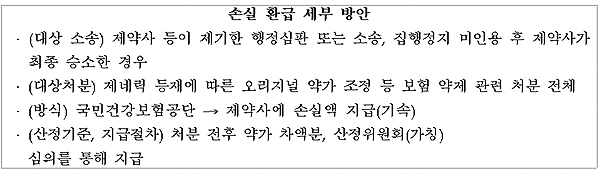
- The government will push for a revision of the law that will put a brake on the suspension of execution filed by pharmaceutical companies in drug price lawsuits. If companies fight against the government over drug prices and finally win the case, the insurer will refund the drug cost equivalent to the loss so far. This is a revision of the legal unit, so it is highly likely to take effect immediately. The revision bill will three times shorten the negotiation period for the reduction of the original drug price of patent expiration, and includes amendments to omit drugs with a history of negotiations in the future. The MOHW announced today (17th) the "Partial Amendment to the Rules on the standards of national health insurance medical benefits" and began inquiring opinions. The revision is a plan already reported by the government to the Health Insurance Policy Deliberation Committee late last month, and is a follow-up to calls by the National Assembly to prevent abuse of execution and rationalize industry negotiations. ◆Introduction of the loss refund system according to the outcome of the dispute =The government explained that the purpose of the system is to protect the rights and interests of drug manufacturers and prevent financial losses in health insurance by applying for suspension of execution when pharmaceutical companies file drug lawsuits. The main contents of the amendment stipulate that the chairman of the National Health Insurance Service pays the manufacturer, etc. the loss if the drug manufacturer or the administrative trial's citation ruling is confirmed on whether the Minister of Health and Welfare is eligible, adjustment of upper limit price, and changes in details. On the contrary, if the government wins, a revision is currently pending in the National Assembly to recover the insurer's loss to the pharmaceutical company that filed the lawsuit. ◆Regulation of negotiation period and procedure for registered drugs and follow-up measures = The maintenance and measures were designed to prevent confusion in the pharmaceutical industry and secure predictability caused by unclear negotiation procedures and follow-up measures since October 2020. The main contents include allowing negotiations to be omitted for drugs with a history of existing negotiations and reasonably reducing the negotiation period from the current 60 days to the next 20 days in consideration of health insurance finances when the government adjusts the original drug ex officio. However, if the negotiations break down, renegotiation will be allowed after deliberation by the Drug Benefit Evaluation Committee, and if the negotiations break down, the drug will be excluded from medical care benefits. The MOHW plans to conduct an opinion inquiry until March 18 and implement it as originally planned if there is nothing special.
- Policy
- A plan to expand patient access to Kymriah should be passed
- by Kim, Jung-Ju Jan 17, 2022 05:51am
- While the agenda for the health insurance registration of the ultra-high-priced innovative drug Kymriah and the expansion of immuno-cancer drug Keytruda benefits have been in full swing since the afternoon of today (13th), patient groups gathered in front of the Kukje Electronic Center's Smart Work Center. Patient maximum co-payment of 1 million won Of the patients' Union including patient maximum co-payment of 1 million won told the Drug Reimbursement Evaluation Committee, that the committee should pass the Kymriah insurance registration agenda and the expansion of Keytruda benefit standards, and presidential candidates insisted on the introduction of a "fast new drug health insurance system" and "Patient maximum co-payment of 1 million won." Acute lymphoblastic leukemia, lymphoma - car kymriah t treatment is Novartis Korea by taking advantage of the 'drug approval - patent linkage system' for listing on March 3, health insurance last year and on October 13, nearly seven months after conditionally cancer drugs benefit appraisal committee through. Kymriah, an acute lymphocytic leukemia and lymphoma CAR-T treatment, applied for health insurance registration on March 3 last year using the "Drug Approval-Patent Linkage System" and passed the Cancer Drugs Benefit Appeal Committee on October 13, about seven months later. No longer there is no cure, recurrence or refractory acute lymphocytic leukemia and lymphoma patients about 200 new cases annually. Kymriah's treatment effect was a one-time treatment, with 8 out of 10 patients with end-stage acute lymphocytic leukemia and 4 out of 10 patients surviving for a long time, which is a "one-shot treatment" with only one dose, but the disadvantage was about 460 million won. In addition, Keytruda, a non-small cell lung cancer immuno-cancer drug among lung cancer, has to be used from the first treatment to obtain better treatment effects, and thousands of patients are required to pay from 70 million won to 100 million won per year. Therefore, Kymriah has been delayed in health insurance registration for 11 months, and Keytruda has not been able to expand its health insurance standards to primary treatments for 4 years and 4 months. Patient groups appealed, "Thousands or tens of thousands of terminal acute lymphocytic leukemia and lymphoma patients and stage 4 non-small cell lung cancer patients, who had been eagerly waiting for the coverage of Kymriah and Keytruda health insurance, eventually died because they could not afford the drug price." These groups also argued in connection with the recent pledge of the ruling party's presidential candidate to apply health insurance to hair loss drugs. Patient groups said, "Whether hair loss drugs are covered is a matter of comprehensive judgment considering the priority of financial use, Korea's health insurance situation, patient burden of drug prices, and cost-to-treatment effects, but if Presidential candidate Lee Jae-myung actively reviews life-related health insurance coverage, he should soon." In particular, these groups pressured the National Human Rights Commission of Korea's review of the petition filed against the Minister of Health and Welfare in October last year by some patient guardians preparing for leukemia patients and Kymriah treatment. Finally, they urged the government ▲to push for patient maximum co-payment of 1 million won system to ensure rapid access to Kymriah and Keytruda to about 200 terminal acute lymphocytic leukemia and lymphoma patients and thousands of stage 4 non-small cell lung cancer patients, ▲ to be held today, drug reimbursement evaluation committee the agenda through, and ▲the government should introduce a quick registration system for new drug health insurance directly related to life.
- Policy
- The ultra-high-priced new drug Kymriah passed the Committee
- by Lee, Hye-Kyung Jan 14, 2022 05:50am
- Kymriah(Tisagenlecleucel) of Novartis Korea, dubbed an ultra-high-priced "one-shot treatment" with a cost of 500 million won per dose, passed the committee. The HIRA (Director Kim Sun-min) held the first Drug Reimbursement Evaluation Committee in 2021 on the afternoon of the 13th and conducted a review on the appropriateness of medical care benefits for five items such as Nasa Care Realtris Nasal Spray 18mL or 31mL. At that time, the deliberation committee was slightly delayed until the agenda was presented. ▲ Higher levels of risk sharing by pharmaceutical companies considering the level of overseas drug prices, ▲ In the case of diffuse giant B-cell lymphoma, which has insufficient clinical performance compared to acute lymphoid leukemia, the risk-sharing system of the performance-based payment model according to treatment performance is added on a patient-by-patient basis, and ▲ Kymriah While attaching clues such as setting the total amount of expenditure. While the committee decided on the adequacy of Kymriah benefits, it attached conditions for applying DLBCL and Expenditure Cap. Until now, the NHIS has been holding continuous meetings with the MOHW regarding financial sharing ahead of the Kymriah price negotiations, and will use RSA/Expension Cap for 60 days to come up with financial sharing plans between the government and pharmaceutical companies. In addition, five items, including lesinowon, which were reviewed, were also recognized for their appropriateness of benefits, but NASA Care Realtris Nasal Spray can take the stage of listing salaries if they are accepted below the committee's evaluation amount.
- Policy
- MOHW·MOTIE accelerates Global COVID-19 Vaccine Hub project
- by Kim, Jung-Ju Jan 14, 2022 05:50am
- The Ministry of Health and Welfare (MOHW) and the Ministry of Trade, Industry, and Energy (MOTIE) joined forces to come up with a plan to accelerate the government’s goal of Korea becoming a ‘Global Vaccine Hub’ that was set last year. On the morning of the 13th, Minister of Health and Welfare Kwon Deok-Chul and First Vice Minister of Trade, Industry, and Energy Park Jin-kyu co-hosted the ‘Meeting to promote investment in companies for vaccine and raw materials, followed by a ‘Cooperative meeting of the heads of Top 10 relevant agencies.' The events were held in the light of the new year for the government, companies, and related agencies to share their achievements and progress that were made to turn Korea into a global vaccine hub in 2021, as well as discuss policy vision and direction for this year. Officials from relevant ministries such as the Korea Disease Control and Prevention Agency (KDCA), Korean Intellectual Property Office (KIPO), MOTIE, Ministry of Food and Drug Safety and Korea Customs Service, as well as 10 heads of relevant institutions, and presidents from KoreaBio, Korea Pharmaceutical and Bio-Pharma Manufacturers Association, Korea Biomedicine Industry Association, as well as CEOs from 14 vaccine and raw material companies, attended the meeting. In the first part of the event, the 'Meeting to promote investment in companies for vaccine and raw materials,’ ▲Presentation on the investment performance of 13 vaccine and raw material companies ▲Import/export trend of vaccines and measures to strengthen support for export ▲Business roundtable were held sequentially. Using the government’s ₩18 billion (last year's supplementary budget) to prime investment and ₩50.4 billion of their own investment fund, the 14 vaccine and raw material companies plan to complete their facility investments worth ₩68.4 billion by July this year. The 10 vaccine companies participating are ST Pharm (mRNA), Quratis (mRNA), BMI Korea (mRNA), Hanmi Pharmaceutical (mRNA/DNA), HK Bio Innovation (synthetic antigen), CdmoGen (mRNA), Humedix (vector type), Jetema (vector type), Boran Pharma (vector type), and CELLID (vector type), and 4 raw material companies are Hanmi Fine Chemical (mRNA), Amicogen (synthetic antigen/vector type), LMS (mRNA), and Ecell (mRNA) The investments are expected to expand the manufacturing capability of various vaccine platforms for mRNA, virus vector, and synthetic antigen vaccines in Korea's progress to becoming a global vaccine manufacturing hub. Also, 847 new employees will be hired in the vaccine and raw material manufacturing sector to help ease the youth unemployment issue and contribute to fostering high-quality personnel. In addition, over 34%, ₩23.8 billion of the ₩68.4 billion of the fund for purchasing facilities and equipment will be used to first purchase domestic equipment and provide market support for domestic equipment manufactures, and improve business conditions. In terms of vaccine import and exports, vaccine export last year reached a record-high amount of $520 million powered by the export of contracted COVID-19 vaccine products among others. This is a threefold increase from the previous year. In terms of vaccine API and raw materials, exports of ▲vaccine carriers and low-temperature storage boxes, ▲Sterol (raw material that makes up mRNA vaccines and LNP), and ▲syringes also increased with the expanded global vaccine market. Export of carriers and cold boxes also reached a record-high of $1.35 billion. The increase in manufacturing of mRNA vaccinees (Pfizer/Moderna) had increased the export of sterols by 72% to reach a record of $4.74 million this year. For syringes, the increased vaccination rate had made the largest ever exports, with a record-high growth rate of 87.9%. Meanwhile, the government announced it will be strengthening the corporate support services to expand exports of vaccines and raw materials, including corporate matching and marketing support. In the case of the corporate matching service, the government will actively support matching between domestic and global pharmaceutical companies and the companies’ market pioneering through the ‘Global Partnering (GP)’ business in linkage with the 3 major B2B export platforms in Korea, as well as through Bio Korea. For marketing support, the government will hold a global vaccine business forum tour in Korea and abroad and support customized overseas expansion services (local market research, roadshows, etc.) for individual companies. In the case of financing, the government will increase the trade insurance cap of vaccine exporters to twice the current amount, provide insurance premium discounts, and loan funds for building domestic facilities for vaccine export purposes. Also, the government will significantly strengthen export support using its trade networks such as the WTO and FTA to establish global vaccine partnerships that encompass advanced and developing countries alike. In particular, based on the Korea-US and Korea-EU partnerships, the government will specifically support the procurement of vaccines and raw materials, investment attraction, and mutual market entry with advanced countries. With the developing countries, the government will explore the possibility of cooperation, such as discovering domestic vaccine exporters and joint manufacturing of vaccines and raw materials, at various occasions of bilateral talks. In addition, the government held a business roundtable at the meeting in four separate sessions, ▲ clinical-related support ▲ R&D/patent/testing support ▲ raw material supply/demand support ▲ production/export/customs clearance support, to hold an ear out to the difficulties experienced by companies and derive results. For clinical-related support, the government will provide all-out support at the government level through various diplomatic channels to contact foreign governments and utilize international conferences such as WHO and CEPI in addition to reaching out to individual companies to secure comparator vaccines for the Phase III trials that are essential for the development of domestic vaccines. The licensing and authorization process will also be simplified. The MFDS will accelerate the review of clinical trial protocols and marketing authorization for COVID-19 vaccines and treatments through a rolling review that allows for prior review of company data (non-clinical, GMP, quality, clinical trial protocol, etc) upon their preparation before applications are filed. In the case of R&D/patent/testing support, the MOHW plans to organically link and support R&D projects distributed to each Ministry as the national vaccine R&D control tower while establishing an industry-academia-research-hospital cooperative model to secure domestic technology for mRNA platform development in Korea. Support measures for patent response were also prepared. KIPO plans to address the lack of patent information and actively support domestic vaccine and raw material companies' response to patents that may hinder the production of undiluted vaccine solutions and raw materials. KIPO will also expand its patent-R&D strategies to provide patent evasion and licensing strategies to the vaccine and raw material companies in the R&D stage and provide early diagnosis and support dispute response strategies for small-and-mid-sized companies in the product production and export stage. Also, measures to secure raw materials were prepared. MOTIE will request cooperation from major suppliers for the stable procurement of raw materials to resolve the difficulties in supply and demand of such materials and work with diplomatic offices overseas and KOTRA to support the discovery of alternative supply lines. In addition, the authorities will expand R&D support to secure technology for raw materials in Korea to prepare a basis for a stable supply of raw materials domestically. Also, MOTIE will regularly hold a ‘consultative body to seek cooperative co-growth for vaccines, raw materials, and equipment’ and devise diverse support measures such as an exchange between demand and supplier companies and promotion of best practices. MOTIE will encourage cooperation between the companies supplying and demanding the products to increase acceptance of domestic products. Furthermore, a measure will be prepared for developers to borrow raw materials from one other. MOTIE and MOHW plan to prepare a forum where the general measures for cooperation may be discussed from sharing inventory status among major vaccine companies, mutual rental of raw materials, and the possibility of joint purchases between major vaccine companies in Korea through the ‘consultative body to seek cooperative co-growth for vaccine, raw materials, and equipment.' Currently, Samsung Biologics, Celltrion, LG Chem, SK Bioscience, Hanmi Pharmaceutical, GC Pharma, ST Pharm, Ecell, Dongsin Tube Glass, Junghyun Plant, Wiatek are members of the consultative body, and the authorities are planning to increase participating companies in the coming future. The government will also support the localization of raw materials and equipment for vaccines. MOTIE plans to accelerate the technological development of key items by newly establishing a technology development project specializing in the production of raw materials for vaccines this year (₩30 billion by 2025). In particular, MOTIE plans to intensively support the development of raw materials for mRNA COVID-19 vaccines (core enzymes, resins, etc.), and the development of the mRNA vaccine manufacturing process and core equipment technology. Measures to support the production, export, and customs were also prepared. The MOHW is seeking measures to improve the system from various angles, such as sending an official letter to local governments to shorten the time required for the review of 'prior approval for research and production facility installation, which is required before registering plans within registration in the high-tech medical complex.’ MOTIE plans to also prepare a performance evaluation system for raw materials of vaccines at a global level this year, including various test and evaluation support measures necessary needed by companies, including leachable tests. In addition, the government plans to significantly strengthen export support for companies that produce vaccines, raw materials, and equipment. For this, the Korea SMEs and Startups Agency (KOSME) will award up to 5 additional points for vaccine and raw material companies that wish to participate in the export voucher business. Also, it will prioritize entrance of the companies’ vaccine and raw material products in the Top 3 B2B export platforms in Korea - BuyKOREA (KOTRA), GoBizKorea (KOSME), and TradeKorea (Korea International Trade Association) - and BioKorea (Korea Health Industry Development Institute), and expand the provision of customized support for the vaccine industry, such as support for major overseas market research, buyer matching, and certification support. MOTIE had previously only supported booth installation cost for overseas exhibitions, but will now support booth installations in academic conferences and forums in the future. In the second part of the event, ‘Cooperative meeting of the heads of Top 10 related organizations,’ ▲ Korea’s achievements in becoming a global vaccine hub and its future tasks, ▲ achievements and strategies for attracting foreign investment in vaccines and raw materials ▲ top 10 related organizations’ visions and focus plans for this year, were discussed. Looking at Korea’s achievements in becoming a global vaccine hub and its future tasks, SK Bioscience conducted Phase III clinical trials after receiving approval for its trial protocol (August last year) and plans to commercialize ‘the first homegrown COVID-19 vaccine’ in the first half of this year. In addition, the company plans to expand the domestic CMO production of COVID-19 vaccines (Moderna, Novavax, etc.) this year as well. On December 13th last year, Samsung Biologics had obtained marketing authorization for the Moderna vaccine it manufactured under a CMO agreement with Moderna. This is the first domestically manufactured mRNA vaccine approved for marketing authorization in Korea. Under the companies’ agreement, hundreds of million doses of Moderna vaccine will be produced and distributed within Korea and exported abroad. This marketing authorization obtained by Moderna Korea officially allows Moderna’s COVID-19 vaccine manufactured at Samsung Biologics’ local pharmaceutical production facilities to be distributed within Korea and exported to other countries. SK Bioscience had signed a CMO agreement to produce AstraZeneca’s vaccine from February of last year, however, the CMO agreement expired on December 31st of the same year. On the other hand, Novartis received marketing authorization for its vaccine from the MFDS on the 12th of this month and is expected to start manufacturing in earnest this year. The MOHW plans to raise a "K-Global Vaccine Fund" worth ₩500 billion this year for clinical support in the biopharmaceutical sector In terms of achievements and strategies for attracting foreign investment in vaccines and raw materials, foreign direct investment in vaccines and raw materials last year reached $1,007 million, up 58.7% from the $635 million in 2020. In particular, Sartorius plans to invest $300 million, around ₩350 billion in Korean won to build a manufacturing plant to produce various raw materials and manufacturing facilities for cell culture media, pharmaceutical filters, and membranes until 2025 in Songdo. The company completed reporting the investment in December last year and will start construction after the City of Incheon confirms its location within the Songdo Biocluster by June this year. Also, Cytiva will invest $52.5 million, around ₩62.8 billion in Korean won from this year to 2026 to build manufacturing facilities for its raw materials including its disposable cell culture bags. The City of Incheon confirmed its location in Songdo in December last year, and construction is scheduled to start in the second quarter of this year. The government will continue to look for global raw material and equipment companies to attract to Korea and promote the project in consideration of the export scale, the demand of domestic companies, the possibility of foreign-invested companies entering the country, and project progress. Due to heated efforts to attract vaccine and raw material companies globally, the government plan to strengthen activities to attract such by each stage of investment rather than employ short-term events. The government will expand cash support and prioritize the designation of high-tech investment districts. In line with the expansion of investment tax deductions for national strategic technologies that are implemented this month, the government will also promote expanding cash support under the Foreign Investment Promotion Act. Each of the top 10 related organizations also set up visions and focus plans for this year. The top 10 relevant agencies will provide concentrated support for vaccines, raw materials, and equipment companies by linking them with support programs needed in the field, from technology development, financial loans, industrial support, export support, export insurance, and guarantees.
- Policy
- COVID-19 vaccine by NovaVax is approved in Korea
- by Lee, Tak-Sun Jan 14, 2022 05:50am
- COVID-19 vaccine by NovaVax was approved for domestic items on the 12th. At the final inspection committee held on the same day, experts judged that the Novavax vaccine had a sufficient effect on preventing COVID-19. The MFDS announced on the 12th that SK Bioscience has decided to approve the product on the condition that it submits a final report on the clinical trial results for the COVID-19 vaccine Nuvaxovid PFS, which has applied for approval for manufacturing and sales items. Nuvaxovid PFS is a gene recombinant COVID-19 vaccine developed by Novavax in the U.S. and manufactured by SK Bioscience in Korea from undiluted to complete. The main active ingredient is the same as a vaccine (10 vials packed with doses) conditionally licensed in EUA by 30 countries including Europe and WHO. The newly approved vaccine can be immediately inoculated with a single dose PFS injection that contains one dose per vaccine without dilution. Storage conditions are 5 months in refrigeration (2-8°C). The MFDS evaluated that the vaccine is meaningful in that it was manufactured in a gene recombination method with existing national vaccination experience, that it is convenient to store, transport, and inject, and that the types of vaccines that can be selected in the medical field have expanded. The MFDS began reviewing in advance from April 29 last year. A total of four data were submitted, including clinical trials conducted in Australia, the United States (clinical phase 1/2), South Africa (clinical phase 2), the United Kingdom (clinical phase 3), and the United States (clinical phase 3). As a result of analyzing the people who were confirmed with COVID-19 after 7 days of the second vaccination in clinical trials, about 89.7% of the preventive effect was found in British clinical trials, 10 in the vaccine group and 96 in the control group. In clinical trials in the United States, 14 vaccine groups and 63 control groups showed a preventive effect of about 90.4%. In addition, according to the evaluation of neutralizing antibodies that induce preventive effects by binding to the surface of the COVID-19 virus to neutralize the infectivity of the virus, compared to before vaccination, antibodies more than quadrupled from two weeks after vaccination. The final inspection committee for Novavax vaccine held on the 12th Abnormal cases predicted after vaccination (local, systemic) include tenderness, injection site pain, erythema, and swelling, most of which are mild to moderate, and were lost within one to three days of occurrence. The MFDS went through a triple advisory process consisting of experts to enhance the expertise and objectivity of the licensing process. Starting with the verification advisory group on the 29th of last month, the Central Pharmaceutical Review Committee on the 6th and the final inspection committee on the morning of the 12th were held. The final inspection committee judged that most of the reported abnormalities were generally good as predicted abnormalities related to vaccination. In addition, the review based on the submitted clinical trial data concluded that the preventive effect of the vaccine was sufficient.
- Policy
- The timing of approval for Novavax vaccine is unpredictable
- by Lee, Tak-Sun Jan 13, 2022 02:54pm
- The MFDS, which was active in disclosing information on COVID-19 vaccine screening, is suddenly not disclosing any information on the Novavax vaccine. There was no news of the expert advisory group, and 40 days have already passed the promised screening period. Some analysts say that this is because it is difficult for the MFDS to predict the timing of approval with "quality" data different from overseas. The Novavax vaccine was reviewed by the MFDS in November. It is the fifth COVID-19 vaccine to be officially reviewed. The previously approved vaccines of AstraZeneca, Pfizer, Janssen, and Moderna were approved 40 days after the screening. Considering the urgency of infectious diseases, the MFDS has established a policy to grant permission within 40 days by advancing the screening period for the COVID-19 vaccine as much as possible. However, the Novavax vaccine has not been approved for more than 60 days since the screening, let alone expert advice. The MFDS has set up a triple advisory group to speed up the screening of the COVID-19 vaccine as much as possible, but has finally approved it so that the public does not worry about safety and effectiveness. After the first COVID-19 vaccine safety and effectiveness verification advisory group, the second Central Pharmaceutical Review Committee and finally, the final inspection committee decided on the same day's approval. Whenever experts consulted, the MFDS distributed media data and held briefings. It was part of an attempt to increase transparency in public interest in screening. However, the Novavax vaccine seems to be an exception. According to some media reports, the first verification advisory group meeting among the triple advisory groups was passed. Now, the verification of the Central Pharmaceutical Review Committee and the Final Inspection Committee remains. However, unlike the previous vaccines, the MFDS has not actively disclosed information. Analysts say this is because there are other variables. The Novavax vaccine is a recombinant protein vaccine made by gene recombination technology that injects COVID-19 virus antigen proteins into the body to produce antibodies. Vaccines currently being reviewed by the MFDS are produced at SK Bioscience's Andong plant. However, the vaccines produced by SK Bioscience are different from those approved by the WHO and the EMA. Vaccines approved by the WHO and the EMA are multi-use vials, while domestic license applications are single-use PFS. Accordingly, the quality data submitted to the review authorities are also different. The MFDS is known to be cautious about this quality data. It is said that one or two supplementary orders have also been issued. The safety and effectiveness verification seen by the triple advisory group is not too unreasonable as it has been recognized overseas, but it seems that the MFDS is checking quality data that has never been verified abroad more meticulously as it is a sole review. Therefore, it is analyzed that the MFDS has been cautious about disclosing information so far because it is possible to predict the time of final approval when quality data are fully prepared than the triple advisory group. However, some insiders say that the Novavax vaccine is likely to be approved within this month. Analysts say that the expert verification plan will be disclosed and the final approval will be decided when the data submission is properly prepared. An official from the MFDS said, "Not only safety and effectiveness, but also quality data will be approved at the end of the review. We plan to proceed with expert advisory procedures soon."
- Policy
- NHRC issues ‘expedited listing of Kymriah’ opinion to MOHW
- by Lee, Jeong-Hwan Jan 13, 2022 06:05am
- The National Human Rights Commission of Korea urged the Ministry of Health and Welfare on the need to expedite insurance listing of the CAR-T therapy ‘Kymriah’ that is used to treat leukemia and lymphoma. The NHRC’s position is that the government should set a temporary drug price with NHI coverage for drugs that are directly related to life immediately upon its sale for the patients’ benefit. In this case, Kymriah will be again put on the agenda and discussed by the Health Insurance Review and Assessment Service’s Drug Reimbursement Evaluation Committee on the 13th. On the 12th, the NHRC turned down the complaint filed by leukemia patients and patients preparing to use Kymriah against the Minister of Health and Welfare, and issue an opinion to the MOHW to expedite insurance listing of the drug. Kymriah is awaiting deliberation by DREC on the 13th. The petition was filed by KLPO last year to the NHRC to urge for the expedited reimbursement listing of Kymriah, and NHRC turned down the petition but issued its opinion on the need for an expedited listing of the drug to the Minister of Health and Welfare. For the reason why the NHRC rejected the petition, the NHRC pointed to the fact that the reimbursement standards that are set for specific treatments are an area that requires high-level expertise, and that NHRC is not capable of comprehensively considering and making a decision on Kymriah based on approval cases in Korea and abroad, clinical trial results, and academic and expert opinions. In addition, the NHRC said it is difficult to say that the ‘petitionee’ MOHW had made no effort for the prompt insurance listing of Kymirah. In addition, the NHRC told the Minister of Health and Welfare that it is necessary to allow patients to first receive treatment at a temporary drug price that is covered by health insurance as soon as Kymriah is sold post-MFDS approval. NHRC’s request is that a system needs to be prepared to expedite insurance listing of new drugs directly related to life. The KLPO agreed to the opinion issued by NHRC, criticizing Korea’s reality in which no system is available for prior use of NHI finances even for new drugs that are directly related to life. In other words, the KLPO also pointed to the need for an added expediated NHI listing system for new drugs that are directly related to life. Also, the KLPO pointed to Novartis Korea’s high-price request as the cause of the delay in Kymriah’s CDDC and DREC review. According to KLPO, a non-reimbursed patient should pay around ₩460 million to be treated with Kymirah. Therefore, KLPO believes that the company should prepare a reasonable fiscal sharing plan while the health authorities make efforts to promptly introduce an expedited listing system. KLPO said, “The unceasing tug-of-war between Novartis, which is trying get a high price, and the government, which is trying to save NHI finances, is hurting the patients who cannot bear the high cost of the drug. The due procedures for Kymriah’s listing, including deliberation and vote by DREC, the drug pricing negotiations between NHIS and the Novartis, as well as deliberation by HIPDC, should be proceeded in a prompt manner.”
- Policy
- Lee wants to cover infertility, contraception, HPV vaccines
- by Lee, Jeong-Hwan Jan 11, 2022 06:29am
- With the rising heat over the insurance coverage of hair loss treatments that was mentioned by presidential candidate Jae-Myn Lee, other healthcare-related election pledges made by the presidential candidates are also being reilluminated. Lee, who is planning to publically announce his pledge promising the insurance coverage of hair loss treatments, had previously already pledged to expand insurance coverage for infertility couples, contraception and abortion, and HPV vaccines. On the 7th, Lee’s camp announced that its policy team was reviewing the hair loss treatment coverage plan to set a specific pledge. Lee said that hair loss is not a cosmetic issue but a disease, therefore, his camp is seriously reviewing its details such as health insurance coverage targets, proportion, and required finances. In particular, he said that covering hair loss treatments should be positively considered because the coverage could be provided at an annual cost of 100 billion won. In addition, Lee is also known to be considering applying health insurance to wigs and hair transplants. In addition to the pledge for hair loss treatments, Lee had also made a number of pledges to expand health insurance coverage to various other areas. More specifically, Lee had announced the reimbursement of infertility-related treatment cost, contraception and abortion, and HPV vaccination for adolescents as part of his ‘small but definite happiness pledges.’ In covering infertility treatments, Lee said he will simplify the complicated number and support amount set for various parts of the in-vitro fertilization procedure and expand insurance coverage to necessary pharmaceuticals including ovulation inducers. Also, basic tests to identify infertility status will be added to the regular health examination items and promised emotional and psychological support through the provision of counseling vouchers, etc. to infertility couples. The contraception and abortion pledge promises insurance coverage for modern contraceptive procedures and well medical practice for the termination of pregnancies. This pledge may not only benefit contraception and abortion treatment but lead to the reimbursement of the abortion pill ‘Mifegymiso’ that may soon be granted marketing authorization in Korea. Lee also pledged to expand the subject for free HPV vaccinations to all adolescents between the ages of 12 and 17, male and female. In addition, he said he will change the name of the vaccination project from ‘First step for women’s health clinic project’ that is currently being used to ‘HPV vaccine national inoculation project.’ HPV, which causes cervical cancer in women and anal cancer in both men and women, is infectious regardless of gender, so Lee believes that the government should bear the cost of its vaccination so that both men and women can get vaccinated in a timely manner. In addition, Lee is known to be reviewing covering dental implants in addition to hair loss treatments as his insurance coverage expansion pledge. Currently, people aged over 65 are applied insurance for dental implants, and the number of teeth covered is limited to 2 for each person. Lee is reviewing extending the coverage to 4 teeth per person. Lee had mentioned his position on MBC’s 100 Minute Debate on the 6th. Lee said, “ Implants are also one of the NHI coverage agendas I am considering. 2 are not enough to chew. We need to cover at least 4 teeth implants.” The ruling party's leading candidate’s series of health insurance benefit expansion pledges have led the presidential election stage to focus on each candidate’s healthcare pledges. In response to Lee’s hair loss treatment pledge, Cheol-soo Ahn, presidential candidate of the minor opposition People's Party, pledged to reduce the price of hair loss drug generics and said that Lee’s pledge would worsen the financial status of the current national health insurance. Members of the leading opposition party had also set out to criticize Lee’s pledge as populism that undermines the domestic health insurance application procedures and standards that were just made to attract votes. In response to the populism criticism, the Democratic Party plans to hold a meeting to comprehensively review the coverage of hair loss treatments including the possibility of expanding NHI finances and the establishment of medical standards, then announce it as an election pledge.
- Policy
- Alopecia belongs to the health sector, benefits are possible
- by Lee, Jeong-Hwan Jan 11, 2022 06:29am
- Democratic Party of Korea's presidential candidate Lee Jae-myung claimed that the application of health insurance for hair loss treatments is a health pledge to alleviate public pain, and said he is reviewing the targets, ratios, and amounts through experts in the camp. He said that if pain relief is possible at an annual cost of around 100 billion won, we should think positively, but that it is necessary to discuss to what extent we will apply health insurance and to what extent. He said in MBC's current affairs program "100 Minute Discussion" on the 6th, "It is said that health insurance finances will collapse over the application of hair loss health insurance, and if an additional 100 billion won is paid annually, the drug price will be cheaper." He said that people who do not suffer from hair loss can never understand the pain caused by hair loss, adding that the application of health insurance related to hair loss belongs to the health field related to diseases, not welfare at the beauty level. He also said that the application of health insurance for hair loss should be viewed positively. However, he expressed his position that analysis and discussion are needed to determine to what extent insurance should be applied. He said, "People who are worried about hair loss are really in pain and the cost of medicine is quite burdensome. If there is anything that the people are in pain, it is the role of the government to alleviate and resolve it." He said, "If health insurance coverage for hair loss belongs to beauty, it is close to welfare, but it is a health area because it relieves pain. In the past, the Park Geun Hye government covered scaling. "At that time, it is not understandable to say that it distributes health insurance for hair loss, which costs about 100 billion won a year, rather than distributing it recklessly," he stressed. Candidate Lee said, "We need to think positively about the application of hair loss health insurance. However, it is necessary to discuss to what extent and to what extent it will be done. Experts are reviewing health insurance targets, support, ratio, and amount. The policy is to find a compromise. We will try to adjust it appropriately so that the majority opinion is not excluded."
