
- LOGIN
- MemberShip
- 2026-05-01 23:44:44
- Policy
- P3T for Sanofi’s Itepekimab in rhinosinusitis approved
- by Lee, Hye-Kyung Feb 12, 2025 06:13am
- Sanofi Aventis' biological drug 'Itepekimab' is entering Phase III trial in Korea to secure an indication for chronic rhinosinusitis following chronic obstructive pulmonary disease (COPD). On the 10th, the Ministry of Food and Drug Safety approved Sanofi’s 52-week Phase III randomized, double-blind, placebo-controlled, parallel-group clinical trial to investigate the efficacy, safety, and tolerability of Itepekimab in adult subjects with chronic rhinosinusitis with uncontrolled nasal polyps. Chronic rhinosinusitis is defined as inflammation of the nasal cavity and paranasal sinuses that lasts for 12 weeks or longer. Some doctors also describe inflammation of the nose and sinuses when nasal inflammation (rhinitis) is present. In Korea, it is said that about 8.4% of the total population has sinusitis, and the prevalence of chronic rhinosinusitis with polyps is 2.6%. With the approval, the number of clinical trials being conducted for Itepekimab since 2021 in Korea has increased to four in total. Since 2021, two Phase III clinical trials have been underway for COPD patients, and Phase II and III trials are being conducted simultaneously for chronic rhinosinusitis patients. Itepekimab is a monoclonal antibody that targets interleukin (IL)-33, an inflammatory cytokine. Autoimmune diseases associated with IL-33 include allergic diseases, atopic allergies, asthma, rheumatoid arthritis, multiple sclerosis, and systemic lupus erythematosus, and it plays an important role in the functioning of the immune system. Sanofi is developing Itepekimab as the next-generation drug to succeed Dupixent (dupilumab). Dupixent is the first biological agent that targets the signaling of interleukin (IL)-4 and IL-13, which are the main causative agents of type 2 inflammation and has been approved as an atopic dermatitis treatment in several countries, including South Korea, the United States, Canada, Europe, Japan, and Australia. It has since expanded its indications to include patients with moderate-to-severe asthma, nodular rash, COPD, and eosinophilic esophagitis. Currently, Sanofi is seeking to further obtain indications for Dupixent for chronic idiopathic urticaria (CSU), chronic pruritus of unknown origin (CPUO), and bullous pemphigoid (BP).
- Policy
- Boryung’s Lenvima generic approved in Korea
- by Lee, Hye-Kyung Feb 11, 2025 06:03am
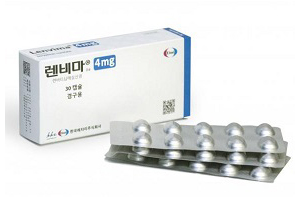
- Boryung has received approval for a generic version of the liver cancer treatment 'Lenvima Cap (lenvatinib).' It received approval as an incrementally modified drug (new salt version) and added a 12 mg dose, which is not available with the original drug. The Ministry of Food and Drug Safety (MFDS) approved three items on the 6th, including 4 mg, 10 g, and 12 mg doses of Lenvanib Cap (Lenvatinib Mesylate Dimethyl Sulfoxide) from Boryung. Lenvanib was approved by adopting a salt modification strategy, adding dimethyl sulfoxide (DMSO) to the mesylate of the original main ingredient, lenvatinib mesylate. Like the original, Lenvanib has 4 indications: ▲ for the treatment of locally recurrent or metastatic progressive differentiated thyroid cancer that is not responsive to radioactive iodine ▲ as a first-line treatment for patients with unresectable hepatocellular carcinoma ▲ in combination with pembrolizumab, for the treatment of patients with advanced endometrial carcinoma (EC) that is not microsatellite instability-high (MSI-H) or mismatch repair deficient (dMMR) who have disease progression following prior systemic therapy in any setting and are not candidates for curative surgery or radiation, and ▲ in combination with pembrolizumab, for the first line treatment of adult patients with advanced renal cell carcinoma. The new 12 mg dose, which is not available with the original, can be administered to patients weighing more than 60 kg, increasing patient convenience. However, in the case of Boryung, the actual launch date for the drug is unknown as the company has been in a patent dispute for Lenvima for over 2 years. Lenvima has six patents, including a substance patent expiring in April 2025, ▲ a use expiring in March 2028, ▲ a crystalline form patent expiring in June 2028, ▲ a formulation patent expiring in March 2031, ▲ a composition patent expiring in August 2035, and ▲ a use patent not listed, expiring in December 2035. In the Lenvima composition patent dispute, Boryung won the first trial but is awaiting the decision of the Patent Court following an appeal by Eisai. When Eisai registered a new use patent on its use in combination with Keytruda for advanced endometrial cancer in April last year and in combination with Keytruda for first-line treatment of advanced renal cell carcinoma, Boryung filed a request for invalidation and a request for confirmation of the passive scope of rights for the new unlisted patent. In order for Boryung to launch its Lenvanib, it must first win the trial to invalidate the patent for its intended use, which it filed in November 2022. In addition, it must win the second trial that will be held as a result of Eisai's appeal. In addition, it must circumvent or invalidate the newly registered Eisai’s patent. Meanwhile, according to the market research institution UBIST, sales of Lenvima last year were KRW 12.8 billion.

- Policy
- KAPO ‘CDDC should pass Keytruda’s reimb extension agenda’
- by Lee, Tak-Sun Feb 11, 2025 06:02am
- A patient group has called for the immediate expansion of the coverage of the immuno-oncology drug 'Keytruda'. With the National Health Insurance Service's Cancer Disease Deliberation Committee scheduled to meet on the 12th, the group is asking for the establishment of reimbursement standards to strengthen patient access to treatment. In a statement issued on the 10th, the Korea Alliance of Patients Organization (KAPO) said, “Immuno-oncology drugs are innovative treatments that have changed the paradigm of cancer treatment. While conventional anticancer drugs directly attack cancer cells, the immuno-oncology drugs activate the patient's immune system to eliminate cancer cells on their own, providing new treatment opportunities for cancer patients who have experienced limitations with existing treatments.” Keytruda (pembrolizumab) is a representative immuno-oncology drug that was first approved by the US Food and Drug Administration (FDA) in September 2014. It was approved by the European Medicines Agency (EMA) in July 2015, and currently has 31 and 39 approved indications, respectively. In Korea, it was first approved by the Ministry of Food and Drug Safety on March 6, 2015, for the treatment of inoperable or metastatic melanoma. Since then, its indications have been expanded, and a total of 34 indications have been approved for 16 different types of cancer. Although Keytruda has many indications, only a few are covered by national health insurance. As KAPO pointed out, only 7 indications are covered by national health insurance for 4 types of cancer: non-small cell lung cancer, Hodgkin's lymphoma, melanoma, and urothelial carcinoma. This is significantly less than what is covered in the UK (19), Canada (18), and Australia (14). Currently, discussions on the expansion of the coverage of Keytruda in Korea are underway, starting with a request for the expansion of coverage for 13 indications in 2023, followed by an additional 4 indications in 2024, for a total of 17 indications. KAPO pointed out, “While discussions on reimbursement extensions have been delayed for the second year, patients are missing out on appropriate treatment opportunities. The damage that patients suffered due to the delay in expanding the coverage of the first-line treatment of non-small cell lung cancer in 2017 should not be repeated.” He also urged, “Treatments should be a door of hope for the patients. However, the government and pharmaceutical companies are now making patients wait behind closed doors. The government and pharmaceutical companies should not delay expanding coverage of Keytruda any longer on the issue of sharing the financial burden.” KAPO said, “We urge the Cancer Disease Deliberation Committee to pass Keytruda’s reimbursement extension proposal on the 12th, at the first CDDC meeting in 2025. The drug reimbursement adequacy evaluation by the Drug Reimbursement Evaluation Committee and the drug pricing negotiations between the National Health Insurance Service and pharmaceutical companies should be carried out promptly thereafter. The government and pharmaceutical companies should no longer postpone their responsibilities.”

- Policy
- Pricing negotiations complete for Pfizer’s Vyndamax
- by Lee, Tak-Sun Feb 10, 2025 05:50am
- Pfizer has completed pricing negotiations with the National Health Insurance Service for its cardiomyopathy drug, Vyndamax Cap (tafamidis). As a result, the drug is soon expected to be listed for reimbursement benefits in Korea. Four and a half years after its approval in August 2020, the drug is finally being included in Korea’s health insurance system. According to industry sources on the 7th, the National Health Insurance Service and Pfizer Korea recently agreed on the insurance price of Vyndamax Cap 61 mg, for which the pricing negotiations began in December last year. The NHIS and Pfizer reportedly reached an agreement through a risk-sharing agreement. Vyndamax has gained attention as the only treatment option for ATTR amyloidosis with cardiomyopathy (ATTR-CM). ATTR-CM is a devastating disease with a median survival of 2 to 3.5 years without adequate treatment but has been poorly treated, either because it is mistaken for simple heart failure or because there are no other treatments available. In this area with a dire need, Vyndamax has demonstrated its efficacy in reducing the incidence of cardiovascular events and improving the 6-minute walk test in CM patients through the Phase 3 ATTR-ACT study. Although it is the only treatment for the disease, its approval process has not been smooth. After receiving domestic approval in 2021, the company began to pursue reimbursement in earnest but was stuck in HIRA’s evaluation phase. In April 2022, the drug failed to pass HIRA’s Drug Reimbursement Subcommittee in April 2022, and then was presented to the Drug Reimbursement Evaluation Committee (DREC) review in April 2023, the last stage of HIRA’s review, but was not deemed adequate for reimbursement. However, in October of last year, it finally passed the DREC review and has been negotiating with the NHIS since early December by the Ministry of Health and Welfare's negotiation order. By completing negotiations with the NHIS, the reimbursement listing process has now been virtually completed. The only remaining procedures are the report to the Ministry of Health and Welfare’s Health Insurance Policy Deliberation Committee (HIPDC) and notification. It is expected that the report will be presented to the HIPDC as early as this month and will be listed for reimbursement on March 1. As the only treatment for ATTR-CM, Vyndamax’s reimbursement will provide patients with much better access to treatment. As of 2021, there are 75 patients with ATTR-CM in Korea.
- Policy
- HIRA to develop RWE guidelines for post-listing drug evals
- by Lee, Tak-Sun Feb 07, 2025 05:51am
- The Health Insurance Review and Assessment Service (HIRA) has begun developing real-world evidence (RWE) guidelines for the evaluation of drugs listed under the post-listing drug control condition, with the goal of resolving uncertainties in the reimbursement decision-making process On the 5th, HIRA announced a request for proposals for research on guidelines for generating real-world evidence (RWE) for drug performance evaluations.” “Recently listed high-priced treatments for serious diseases have high uncertainty in terms of the level of evidence, but they are listed under the condition of post-listing control to improve patient access,” said the agency. ”Real-world data (RWD) and real-world evidence (RWE), which are the main sources of drug performance evaluation for post-listing control, are at risk of bias, so it is necessary to improve the reliability of RWE generations.” Drugs listed under the post-listing control condition are those that have only short-term, single-arm, small-patient trial results or have been exempted from submitting pharmacoeconomic evaluation data. HIRA plans to conduct post-listing evaluations to resolve the uncertainty of reimbursement of such drugs. RWE data is used for this purpose, but there is an urgent need for guidelines to improve reliability. Major countries such as the United Kingdom and Canada have developed and utilized their own RWE guidelines to better accommodate their decision-making process. The study aims to ▲ review the current status of RWE utilization for drug performance evaluations make recommendations and ▲ prepare guidelines for generating real-world evidence (RWE) for drug performance evaluations. The study is expected to improve the transparency and quality of domestic RWD collection, secure patient access and safety by generating reliable RWE, and establish an evidence-based expenditure management system. For example, post-listing control using RWE is expected to reduce uncertainties in clinical utility, cost-effectiveness, and financial impact of listed drugs, while strengthening patient access and safety with RWE-based post-listing control. It is also expected that the submission of standardized data prepared according to the guidelines will improve the predictability of pharmaceutical companies and shorten the review period for drug performance evaluation upon listing. The study will be conducted for 9 months from the date of selection and signing of the contract. The total budget for the study is KRW 100 million.

- Policy
- Daewon to sell AZ’s Symbicort in Korea
- by Lee, Tak-Sun Feb 06, 2025 05:56am
- Daewon Pharmaceutical will start selling AstraZeneca's asthma inhaler Symbicort (budesonide + formoterol fumarate hydrate) in Korea. The move is expected to expand the company's asthma inhaler lineup in addition to its existing Compona and expand the company’s market share. According to industry sources, Daewon Pharmaceutical will start selling Symbicort Turbuhaler -Symbicort Rapihaler this month. Symbicort, which was approved in Korea in 2001, has long been popular in the asthma inhaler market. Symbicort is a combination inhaler that combines the adrenocorticosteroid budesonide, which reduces inflammation, and formoterol, which dilates the airways in the lungs, and is used to treat asthma and severe COPD. The addition of Symbicort to Daewon's lineup is expected to increase its competitiveness in the domestic asthma inhaler market, which is worth about KRW 130 billion. Daewon launched Componacompact Air in 2020, a dry powder inhalation asthma treatment that combines fluticasone propionate and salmeterol xinafoate. Daewon Pharmaceutical had partnered with Turkish pharmaceutical company Neutec to import and sell the product, which is produced at Neutec's dedicated inhaler factory. The original fluticasone-salmeterol combination inhaler is GSK's Seretide. Together with Symbicort, the drugs held the market lead from 2000 until the 2020s. However, Seretide and Symbicort have since fallen from the top of the market due to the high effectiveness and ease of use of products such as Spiriva and Relvar. Last year, Seretide eventually withdrew from the Korean market. However, Symbicort's domestic sales are still over 10 billion won and its high market share is expected be beneficial for Daewon, which is a latecomer to asthma inhalers. In 2023, sales of Symbicort Turbuhaler had been KRW 7.9 billion and Symbicort Rapihaler KRW 6.7 billion, totaling at KRW 14.6 billion, according to IQVIA. “The asthma inhaler market had been a difficult one to enter for domestic pharmaceutical companies even after patent expiry as it requires inhaler technology,” said a pharmaceutical industry insider. ”Daewon entered the market with Compona in 2020 and is expected to expand its share by the addition of Symbicort.” Currently, there are only a few domestic pharmaceutical companies selling asthma inhalers, including Daewon Pharmaceutical, Kolon Pharmaceutical with Foster-Trimbow, Hanmi Pharmaceutical with Fluterol, and Huons with Zephirus. When narrowing down the products to domestically manufactured products, Fluterol is almost the only one.

- Policy
- Imlunestrant becomes first reviewed after new drug approval
- by Lee, Hye-Kyung Feb 06, 2025 05:56am
- The first application for a new drug license has been submitted since the fee for drug approval was raised to KRW 410 million. According to industry sources on the 6th, the multinational pharmaceutical company Eli Lilly applied for an marketing authorization for its breast cancer drug 'Inrulio (imlunestrant)' to the Ministry of Food and Drug Safety on Jan. 31. This is the first new drug application filed since the MFDS drastically improved its new drug approval review process and revised the new drug approval review fee. The MFDS implemented the New Drug Approval Innovation Plan on January 1, 2025, and introduced various improvements to increase the transparency and predictability of the approval process. The biggest change is the introduction of a preliminary consultation process. Previously, discussions could only be held after the submission of a new drug application, but now preliminary consultations can be held before submission to prepare for the approval process. This allows companies to get an early indication on the direction of data required for their new drug approval applications and minimize unnecessary supplement requests. Lilly has also already held one preliminary consultation session for Inrulio and the MFDS is currently finalizing the establishment of a dedicated team for its review within its organization. In addition, during the first and second rounds of supplement requests, a process has been added to allow pharmaceutical companies to pre-register supplement materials and request a clarification meeting. This will allow the MFDS to provide clear guidelines, and a final meeting will be held at the final review stage, which is expected to increase the consistency and efficiency of the approval process. Based on such innovative measures, the MFDS aims to shorten the review period for new drugs to 295 days or less, and in particular, the GMP survey period has been significantly shortened from 12 months to 90 days. This is expected to speed up the time for new drug releases. Lilly's Inrulio is the domestically licensed name for imlunestrant, an oral selective estrogen receptor degrader (SERD). The drug is being developed for the treatment of patients with estrogen receptor-positive (ER+), and hormone receptor 2-negative (HER2-) advanced breast cancer. Results from the recently announced Phase III EMBER-3 trial showed that imlunestrant provided a statistically significant improvement in progression-free survival (PFS) compared to standard-of-care endocrine therapy (SOC ET). In particular, patients with estrogen receptor 1 (ESR1) mutations experienced a 38% reduction in tumor worsening compared to conventional therapy. In addition, the combination of imlunestrant and the CDK4/6 inhibitor Verzenio (abemaciclib) reduced the rate of tumor worsening by 43% compared to monotherapy, with a median progression-free survival of 9.4 months compared to 5.5 months for imlunestrant alone. The findings were published in the New England Journal of Medicine (NEJM) and presented at the San Antonio Breast Cancer Symposium (SABCS). This application is the first to be submitted since the implementation of the new drug approval innovation plan and will be an important test of how quickly and efficiently the MFDS’s new approval process will work. The MFDS had said, “ We will establish a review system that stands at the global level through the new drug approval innovation plan. The review process with increased transparency and predictability will contribute to strengthening the competitiveness of Korea’s pharmaceutical industry.” “This is a positive sign that the domestic new drug review process is evolving to a global level,” said a pharma and bio-industry official. ”If the new drug launch period is shortened through this innovation plan, domestic patients will be able to access innovative treatment options more quickly.” Another industry expert said, “If the MFDS's expedited approval process works smoothly, not only global pharmaceutical companies but also domestic biotech companies will be able to more actively engage in new drug development,” and “Increasing the efficiency of the new drug approval process will have a positive impact on the entire industry.”

- Policy
- Reimb imminent for switching between atopic dermatitis drugs
- by Lee, Tak-Sun Feb 05, 2025 05:53am
- Switching between atopic dermatitis drugs may be reimbursed soon. This is because the National Health Insurance Service has completed its review through the preliminary drug price reduction system, and all that remains is the National Health Insurance Service's negotiations. As the expected claim amount is not large, the negotiations are expected to be completed without difficulty. According to industry sources on the 3rd, the Health Insurance Review & Assessment Service (HIRA) has completed its review on expanding reimbursement to cross-administration between biological drugs and JAK inhibitors through the preliminary drug price reduction system and reported it to the Ministry of Health and Welfare. The review was completed after the Drug Reimbursement Evaluation Committee, which was held on January 9, recognized the appropriateness of the reimbursement benefits and collected opinions from pharmaceutical companies. Relevant pharmaceutical companies have not submitted separate objections on the agenda. In the case of expanding the scope of use, if the expected additional claim is less than KRW 1.5 billion, the drug price reduction will not be applied, and if it is between KRW 1.5 billion and 10 billion, a preliminary price reduction will be applied, and if it is over KRW 10 billion, drug price negotiations will be conducted. This cross-administration between biological drugs and JAK inhibitors was subject to a preliminary drug price reduction, and the drug price reduction rate for individual products was determined according to the formula. The target items include biologics such as Dupixent (dupilumab) and Adtralza (tralokinumab), and JAK inhibitors such as Rinvoq (upadacitinib), Olumiant (baricitinib), and Cibinqo (abrocitinib). If approved, most patients will be switching from biological drugs to JAK inhibitors, which will likely lead to an increase in the amount of claims for JAK inhibitors. However, the amount of additional claims is not expected to be high. Accordingly, industry insiders believe that the drug price reduction rate may well be determined based on the formula without drug price negotiations, Even if the NHIS enters drug price negotiations, the industry believes that it will be easy to reach an agreement as the level of the expected additional claims amount will be low. It is analyzed that cross-administration may be reimbursable from March at the earliest after being reported to the Health Insurance Review and Assessment Service. Meanwhile, the current reimbursement standard requires that patients with severe atopic dermatitis who have used biological agents or JAK inhibitors to have first administered the first-line treatment for 3 months and meet the criteria of Eczema Area and Severity Index (EASI) 23 or higher to switch to other drugs. The regulations made it difficult to immediately replace the drug even if side effects occur or the treatment is ineffective, so healthcare professionals have urged the government to reimburse cross-administration without conditions. Health authorities have been considering expanding reimbursement of cross-administration between biological agents and JAK inhibitors since last year.

- Policy
- Low-dose nicergoline continues to be popular
- by Lee, Hye-Kyung Feb 05, 2025 05:52am
- Although it does not indicate the primary treatment of dementia, companies continue to receive approval for their low-dose nicergoline products. .The Ministry of Food and Drug Safety (MFDS) approved Reyon Pharm’s ‘Nicechol Tab .10mg’ on the 3rd .This is the second approval this year, following the approval of the ‘Neurogoline Tab .10mg’ in January .Nicergoline is an α1-adrenergic receptor antagonist that dilates blood vessels to increase arterial blood flow, inhibits platelet aggregation by enhancing neurotransmitter function, and promotes metabolic activity .니세르골린 10mg 용량 허가 품목. Among low-dose nicergoline, Hanmi Pharm’s ‘Nicegoline Tab .10mg’ was the only drug to be approved after 27 years, following Ildong Pharmaceutical's original nicergoline product, ‘Sermion Tab.’ However, new products are being approved lately as the 30mg high-dose product is emerging as a substitute for 'choline alfoscerate,' which is currently subject to clinical and reimbursement reevaluation .Pharmaceutical companies are additionally applying for marketing authorization after demonstrating bioequivalence between its 10 mg and its already-approved 30mg product through comparative dissolution tests .The 10 mg dose is used to ▲ improve the loss of motivation caused by chronic cerebral circulatory disorders that accompany the aftereffects of cerebral infarction, ▲arteriosclerotic headaches in the elderly, and ▲as an adjunctive therapy for hypertension .The 5 to 10 mg dose is administered orally three times a day before meals .So far, a total of 15 nicergoline 10 mg products and 38 high-dose products have been approved in Korea .In the case of primary prevention and treatment of dementia, it is possible to increase the dose up to 60 mg after the initial 30 mg prescription, so it is interpreted that pharmaceutical companies have set out to secure approval for a variety of doses by obtaining approval for not only for high doses but also low doses .Nicergoline 30 mg is indicated for ▲the primary treatment of the following dementia syndromes associated with primary degenerative vascular dementia and mixed dementia: memory impairment, concentration disorder, judgment disorder, and lack of initiative .Meanwhile, according to global market research firm QYreserach, the global nicergoline market is expected to grow at an annual average rate of 16.6% to reach USD 2.3547 billion (about KRW 3.14 trillion) by 2029.

- Policy
- 3-way race starts in faslodex mkt with new generic entry
- by Lee, Tak-Sun Feb 03, 2025 05:52am
- Breast cancer treatment A new generic company entered the fulvestrant drug market that has been a battle between the original’s owner AstraZeneca and the first generic developer Boryung. The new entrant, Korus Pharm, will spark three-way competition in the market with its product being reimbursed this month. According to industry sources on the 31st, Korus Pharm’s breast cancer treatment, ‘Elbracan Inj (fulvestrant ) will be reimbursed from this month. The original fulvestrant is AstraZeneca’s Faslodex Inj, which was released in 2008 in Korea. The competition started after Boryung first released the generic version, ‘Fulvet Inj.’ in 2022. Elbracan, which is being released this time, differs from the other two and the fact that it is manufactured domestically. Elbracan is manufactured at Korus Pharm’s Chuncheon manufacturing plant. On the other hand, Faslodex Inj and Fulvet Inj. are imported finished drugs. Another point is the difference in the drug price. Elbracan’s price has been adjusted to 53.55% of the highest insurance price, which is KRW 288,194 per pack. On the other hand, the premium pricing term for Faslodex and Fulvet has been extended and has not yet been reduced to the level of 53.55%. The premium pricing benefit is scheduled to end in August this year. As a result, the price of Faslodex has remained at 70% of the original first-year price, at KRW 376,724 since the generic’s entry. The price of Boryung’s Fulvet has been maintained at KRW 357,888 with the innovative pharmaceutical company premium. The Elbracan listed this time is about KRW 80,000 to 90,000 cheaper, so it will be interesting to see how the lower price will affect the market competition in the early stages of its entry. Meanwhile, the launch of the generic product Ibrance (Palbociclib) that is used in combination with Faslodex is expected to intensify the onslaught of domestic generic products in the Faslodex-Ibrance combination market as Kwangdong Pharmaceutical and Daewoong Pharmaceutical have been granted approval for their respective Ibrance generic products. Boryung has also been expanding its portfolio of breast cancer treatment drugs, including last year signing a contract with Bixink Therapeutics to jointly market and sell the breast cancer drugs Nerlynx (neratinib) and Fulvet (fulvestrant).
