
- LOGIN
- MemberShip
- 2026-06-15 14:36:38
- Company
- Imfinzi nears reimb for biliary tract cancer in Korea
- by Son, Hyung Min Nov 11, 2025 06:09am
- Immunotherapy Imfinzi Inj The immunotherapy drug Imfinzi has cleared the Drug Reimbursement Evaluation Committee review and has taken one step closer to expanding reimbursement for biliary tract cancer. Beyond biliary tract cancer, Imfinzi has also shown efficacy in hepatocellular carcinoma and gastric cancer, signaling its potential across the spectrum of gastrointestinal cancers. According to industry sources on the 11th, the Health Insurance Review and Assessment Service's Drug Reimbursement Evaluation Committee recently approved the reimbursement appropriateness of AstraZeneca's ‘Imfinzi (durvalumab)’. The specific indication is as a first-line treatment for patients with advanced or metastatic biliary tract cancer, in combination with gemcitabine and cisplatin. Imfinzi is an immuno-oncology drug that targets PD-L1. It has been approved for multiple cancer types, including non-small cell lung cancer, small cell lung cancer, hepatocellular carcinoma, endometrial cancer, and bladder cancer, in addition to bile duct cancer. However, except for non-small cell lung cancer, it is currently not reimbursed in Korea, limiting patient access. The DREC approval is significant as it raises potential for expanding access in the treatment of gastrointestinal cancers, where treatment gaps have persisted. First reimbursable new drug for biliary tract cancer to be introduced in a decade Immunotherapy Imfinzi InjBiliary tract cancer has long been one of the most challenging areas in oncology drug development. Although the patient population is smaller than that of other cancers, early detection is difficult, and the disease is characterized by rapid invasion and frequent recurrence, yielding a 5-year relative survival rate of only 28.9% (2017–2021) in Korea. The mortality rate stands at 11.6%. Another reason for the low survival rate is the limited treatment options available. For locally advanced or metastatic biliary tract cancer where surgery is not feasible, and after failure of first-line therapy, there is a shortage of treatment options available as second-line therapies. In this context, in 2022, Imfinzi was approved as a first-line therapy in combination with chemotherapy, demonstrating the potential for improving long-term survival in biliary tract cancer patients. Imfinzi demonstrated an improved 3-year long-term survival rate compared to the control group in clinical trials, with particularly pronounced effects observed in the Korean patient cohort. Notably, no new drugs for biliary tract cancer have been reimbursed in Korea over the past decade. The Imfinzi combination therapy also offers the advantage of higher overall survival (OS) rates in Korean patients. According to the study results at the time, the 2-year survival rate for the Korean patient group receiving the Imfinzi combination therapy was 38.5%, more than double the 14.1% survival rate in the group receiving chemotherapy alone. Furthermore, the 36-month survival rate was 21.0% for the Imfinzi combination group, more than double the 8.8% in the chemotherapy group. Expanding to hepatocellular carcinoma and gastric cancer... ‘Immunotherapy combination’ competition intensifies During the same reimbursement review, Imfinzi also demonstrated potential as a first-line therapy for hepatocellular carcinoma in combination with Imjudo (tremelimumab), a CTLA-4–targeting immuno-oncology drug. The Imfinzi–Imjudo immunotherapy regimen has already entered the Korean market. Imfinzi, a PD-L1-targeted immune checkpoint inhibitor, was launched domestically in May as a liver cancer treatment in combination with the CTLA-4-targeted Imjudo. The Phase III HIMALAYA study demonstrated the efficacy of the Imfinzi and Imjudo combination. The trial compared the efficacy and safety of the Imfinzi + Imjudo combination versus Bayer's Nexavar in 1,171 patients aged 18 years or older with previously untreated, unresectable HCC. The study showed that Imfinzi + Imjudo reduced the risk of death by 22% compared to Nexavar alone. Median overall survival was 16.4 months versus 13.8 months, respectively. The Imfinzi–Imjudo combination is expected to face stiff competition from Roche’s Tecentriq-Avastin combination regimen. Imfinzi is considered to carry a lower bleeding risk. In contrast, Roche's already approved combination of the immuno-oncology drug Tecentriq and the targeted therapy Avastin is known to cause bleeding issues at a relatively high frequency due to Avastin. Liver cancer patients often have impaired liver function, increasing their bleeding risk. However, as the Imfinzi combination therapy carries a lower bleeding risk, it offers the advantage of enabling immediate endoscopic treatment. The expansion of Imfinzi's indications for gastrointestinal cancers is extending beyond bile duct and liver cancers to include gastric cancer. The final analysis of the Phase III MATTERHORN trial that was presented at the recent European Society for Medical Oncology (ESMO) Annual Congress 2025 in Berlin, Germany, confirmed that Imfinzi neoadjuvant and adjuvant therapy statistically significantly improved overall survival (OS). This study is considered the first instance of an immunotherapy demonstrating a survival benefit as neoadjuvant and adjuvant therapy for gastric cancer. The study enrolled patients with resectable locally advanced gastric cancer (stages II–IVA) and gastroesophageal junction cancer, and patients received Imfinzi plus FLOT combination therapy pre-surgery, followed by maintenance Imfinzi post-surgery. The Imfinzi combination group reduced the risk of death by 22% compared to the control group, with consistent survival benefits observed regardless of PD-L1 expression levels. Event-free survival (EFS) was also improved, reducing the risk of disease progression or recurrence by 29%. The pathological complete response (pCR) rate was also more than double in the Imfinzi group (19%) compared to the control group (7%).

- Company
- UCB "Korea is a key country globally…patient access"
- by Hwang, byoung woo Nov 11, 2025 06:08am
- The regulatory strategy of global pharmaceutical companies is changing to enhance access to new drugs in the treatment landscape for rare and intractable diseases. The trend is a 'regulatory science approach' that goes beyond simply meeting approval requirements. It now involves incorporating patient-reported treatment experience and quality-of-life (QoL) measures into regulatory and evaluation processes from the early stages of development. In line with the current trend, UCB is restructuring its global regulatory strategies, focusing on a patient-centric approach across clinical design, evaluation variables, and regulatory cooperation. DailyPharm met with Susanne Dorn, Senior Vice President and Head of Global Regulatory Affairs at UCB, to discuss the shift toward patient-centric regulatory strategies and the direction of collaboration in the Korean market. Changes in regulatory strategy, strengthening patient-centric access Susanne Dorn, Head of Global Regulatory Affairs at UCBSusanne Dorn evaluated that the regulatory function within pharmaceutical companies is shifting from merely meeting requirements to a scientific discussion focused on delivering value to patients. She said, "In rare and intractable diseases, it is difficult to secure sufficient evidence using conventional clinical trial designs alone," and explained. "Therefore, an approach that sets the actual difficulties and burdens experienced by patients and their families during the treatment process as variables in the clinical design stage is becoming critical." According to Dorn, UCB is incorporating everyday patient experiences, such as the degree of functional recovery, the burden of taking medicine, and the long-term sustainability of treatment, into its clinical trial endpoints. She said, "UCB sets investment priorities and establishes strategies to simultaneously meet regulatory requirements and deliver tangible value to patients during the drug development process," and emphasized, "The patient's story is not just a reference, but it is the motivation and starting point for why we must continue developing this therapy." Dorn also noted the expansion of the regulatory environment toward Regulatory Science, shifting from an approval-procedure focus to one centered on scientific evaluation. "Given the increasing complexity of diseases, it's crucial to set appropriate endpoints and find the optimal pathway from the product development stage," she stressed. "In areas where the total population is small, such as rare diseases or pediatrics, an efficient evaluation design that maintains scientific evidence is necessary." It means that the importance of developing faster, more efficient evaluation methods while maintaining scientific integrity through collaboration with regulatory authorities aligns with the discussion of utilizing Real-World Data (RWD). Dorn added, "Regulatory agencies in various countries are actively considering new evaluation methods like expedited approval, and UCB is collaborating closely with them." "Korean approval success provides crucial global insights" UCB's regulatory perspective is drawing attention because the company has recently achieved success in new drug approvals in Korea. Starting with the psoriasis treatment Bimzelx (approved August 2024, reimbursed June 2025), the company has continued its success with the systemic myasthenia gravis treatments Zilbrysq (approved November 2024) and Rystiggo (approved April 2025). Regarding these successes, Dorn said, "Korea is a vital country in the global market, and we are extremely proud of the achievements made in the short span of the last one or two years. We see the effort to resolve unmet needs through a patient-centric approach in neurology and immunology as highly exemplary." UCB is pursuing collaborations that leverage the environments and strengths of each country in line with its global strategy. The recent experience in Korea is considered crucial for the execution of the global strategy. "Based on these experiences, we are deliberating on how to implement successful cases from the U.S. and Europe even more effectively in the Korean market," she emphasized. "This visit to Asia is also intended to broadly understand institutional differences between countries and further strengthen global collaboration." UCB is also currently preparing for the domestic approval of its Dravet syndrome treatment candidate. The drug has been selected as a target for the MFDS's Concurrent Approval-Evaluation-Negotiation Pilot Program, which is noteworthy. Dorn stressed, "Dravet syndrome is a severe intractable disease that impacts the entire daily life of not only the children affected but also their caregivers and siblings. The treatment goal is not just to reduce seizure frequency and manage comorbidities but also to restore the family's quality of life." She said, "Access to innovative treatments is not only a matter of drug price or budget discussions; it is a matter of the time remaining for patients," and added, "UCB will collaborate with Korea's institutional efforts and do its utmost to create an environment where innovative treatments genuinely change the lives of patients and their families." Dorn concluded by stating that the global headquarters and the Korean branch will work closely together to expand patient access to patient-centric, innovative treatments continuously. "Our goal is to create an environment where Korean patients can rapidly benefit from innovative treatments through efforts, including regulatory collaboration and clinical evidence generation," she added. "UCB will continue to accurately identify unmet patient needs and fulfill its role as a partner contributing to the improvement of the treatment environment."
- Company
- Yuhan-Janssen Korea to jointly sell 'Leclaza + Rybrevant'
- by Son, Hyung Min Nov 11, 2025 06:08am
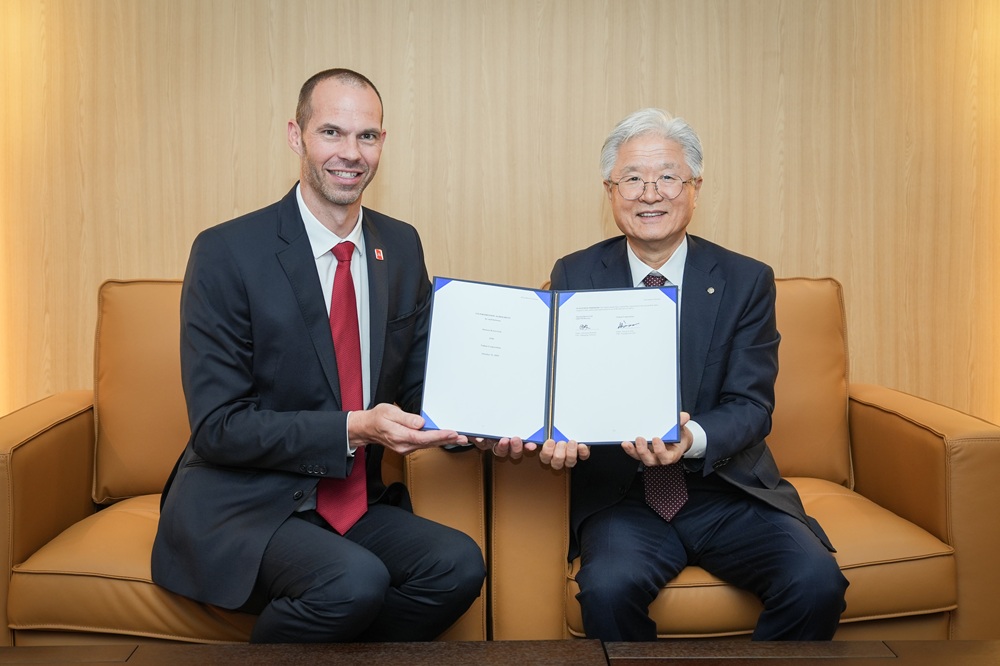
- (from left) Christian Rodseth, Managing Director of North Asia for Johnson & Johnson Johnson & Johnson's Korea-based pharmaceutical unit, Janssen Korea (CEO Chris Rodseth), announced that it will jointly conduct domestic promotion for the non-small cell lung cancer treatment combination therapy, Leclaza (lazertinib) + Rybrevant (amivantamab), with Yuhan Corporation (Yuhan). Previously, promotional activities for the Leclaza + Rybrevant combination therapy were led by Johnson & Johnson, which holds the global rights. Through this new agreement, the promotion will be conducted jointly with Yuhan. Yuhan had previously been responsible for promoting Leclaza monotherapy and will now expand its role to include co-promotion of the combination therapy. The Leclaza + Rybrevant combination therapy received approval from the Ministry of Food and Drug Safety (MFDS) this January for the first-line treatment of non-small cell lung cancer (NSCLC) with EGFR exon 19 deletions or exon 21 (L858R) substitution mutations. Christian Rodseth, Managing Director of North Asia for Johnson & Johnson's pharmaceutical sector, said, "Through this strategic partnership with Yuhan, we hope that more NSCLC patients in Korea can benefit from the treatment of this combination therapy." Rodseth added, "Johnson & Johnson is dedicated to changing patients' lives through science and innovation, and we will do our best to provide better treatment opportunities to patients based on close collaboration and communication with Yuhan." In addition to Leclaza monotherapy, for which Yuhan holds the rights and conducts promotion in Korea, Johnson & Johnson will exclusively conduct promotion for: second-line or later treatment of adult NSCLC patients with EGFR exon 19 deletion or exon 21 (L858R) substitution mutations, and first-line treatment of adult NSCLC patients with EGFR exon 20 insertion mutations. Johnson & Johnson will also supply Rybrevant exclusively.
- Company
- NSCLC standard treatment options undergo major change
- by Son, Hyung Min Nov 11, 2025 06:07am
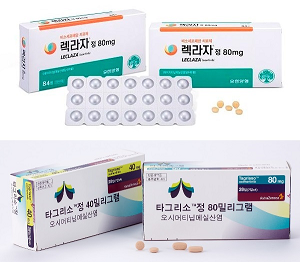
- YuhanThe Leclaza + Rybrevant combination therapy has been recommended as the first-line treatment option by the National Comprehensive Cancer Network (NCCN) guidelines, based on its clinical utility. With Tagrisso also listed as a preferred therapy in combination with platinum-based chemotherapy, combination therapy is expected to become the major strategy in first-line treatment for EGFR-positive non-small cell lung cancer (NSCLC). According to industry sources on November 8, the NCCN recently revised its NSCLC treatment guidelines, including the combination of Yuhan's 'Leclaza (lazertinib)' and Janssen's 'Rybrevant (amivantamab)' as a Category 1 Preferred, first-line recommendation for EGFR-positive NSCLC. Consequently, experts preferentially recommend combination therapy as first-line treatment when an EGFR exon 19 or exon 21 mutation is identified in NSCLC. The Leclaza + Rybrevant combination therapy, which was first listed as a general recommendation last year, achieved the significant result of being changed to a Preferred recommendation in just about a year. This opens the door to recognition of combination therapy as a Standard of Care (SOC) globally. The NCCN provides guidelines for the diagnosis, treatment, and prognosis of cancer. This organization is a federation of 32 institutions, including U.S. National Cancer Centers and research institutes, and healthcare professionals worldwide refer to NCCN as a primary guide for cancer care and treatment. The reason the Leclaza + Rybrevant combination therapy was listed as a Preferred recommendation by the NCCN is that it secured sufficient efficacy results. Leclaza is a new EGFR-positive NSCLC drug developed by Yuhan, a 3rd-generation tyrosine kinase inhibitor (TKI) targeting exon 19 and exon 21 (L858R) mutations. Johnson & Johnson secured the global rights to Leclaza and has been conducting clinical research to evaluate its efficacy in combination with Rybrevant, a targeted treatment option that targets exon 20 and the MET mutation. The final overall survival (OS) analysis of the Leclaza + Rybrevant combination therapy showed superior OS compared to 'Tagrisso (osimertinib)' monotherapy. This combination therapy is currently expected to secure the longest OS results among all pivotal clinical studies for EGFR-positive targeted therapies. In the trial, the combination therapy group showed a statistically significant improvement in survival compared with the Tagrisso monotherapy group (p< 0.005). In detail, the median OS for the Leclaza + Rybrevant group was not estimable (42.9 months-NE). In contrast, the Tagrisso group showed an OS of 36.7 months. Based on the distribution of survival indices, the Leclaza + Rybrevant group is expected to extend OS by at least 12 months compared with the Tagrisso group. These study results were recently published in the New England Journal of Medicine (NEJM), attracting significant attention from the academic community. Previously, Tagrisso monotherapy, a 3rd-generation TKI targeting EGFR exons 19 or 21, had been recommended as the Preferred treatment option in major guidelines, such as the NCCN guidelines. However, the Leclaza + Rybrevant combination therapy, which is a 3rd-generation TKI similar to Tagrisso, demonstrated superior results compared to Tagrisso monotherapy, suggesting potential changes in key cancer treatment guidelines. The Leclaza + Rybrevant combination therapy is achieving significant success in both the OS results, which were identified as the key to commercialization, and its NCCN guideline listing. As the NCCN guidelines have been revised, the Leclaza + Rybrevant combination therapy has been recommended as the first-line treatment option. Tagrisso + platinum-based chemotherapy receives the priority recommendation…combination with Rybrevant possible AstraZenecaTagrisso was also recommended as a preferred therapy in combination with platinum-based chemotherapy, alongside its monotherapy use. While Tagrisso became the SOC for first-line EGFR-positive NSCLC through monotherapy, the Leclaza + Rybrevant combination therapy joined the competition. AstraZeneca received approval for Tagrisso in combination with platinum-based chemotherapy as a first-line EGFR-positive treatment. The company aims to extend survival by using chemotherapy, previously a second-line treatment, at an earlier stage. The Tagrisso + platinum-based chemotherapy combination therapy demonstrated efficacy compared with Tagrisso monotherapy in the FLAURA2 study. The clinical results showed that the combination therapy recorded an OS of 47.5 months, longer than Tagrisso monotherapy's 37.6 months. The median Progression-Free Survival (PFS) based on the investigators' assessment was 25.5 months, an extension of 8.8 months compared with Tagrisso monotherapy at 16.7 months. AstraZeneca is confirming the possibility of combining its targeted therapies with various options. The company is currently conducting combination trials of Tagrisso with the Antibody-Drug Conjugate (ADC) 'Datroway (datopotamab)' and the targeted therapy 'savolitinib'. In addition, AstraZeneca is conducting a clinical trial in collaboration with the global Contract Research Organization (CRO) Parexel to assess the combination potential of Tagrisso and Rybrevant. The Phase 2 OSTARA study began in July 2023 and is evaluating the efficacy and safety of the Tagrisso + Rybrevant combination therapy as a first-line treatment for EGFR-positive NSCLC. With the efficacy of the Rybrevant + Leclaza combination therapy validated, AstraZeneca also plans to confirm the potential of combining Tagrisso with a targeted therapy.
- Company
- HAE treatment 'Takhzyro' closer to reimbursement
- by Eo, Yun-Ho Nov 10, 2025 06:08am
- Product photo of Takhzyro (lanadelumab) A hereditary angioedema (HAE) treatment, 'Takhzyro,' appears closer to insurance reimbursement listing, approximately five years after acquiring domestic approval in South Korea. Takeda Korea's Takhzyro (lanadelumab) has recently passed the Drug Reimbursement Evaluation Committee (DREC). This is the first achievement since receiving approval from the Ministry of Food and Drug Safety (MFDS) in February 2021. Attention has been drawn to whether Takhzyro will successfully undergo drug pricing negotiations with the National Health Insurance Service (NHIS) to become a new treatment option for the HAE area, where treatments are lacking. HAE is a rare disorder caused by dysfunction of the C1-esterase inhibitor (C1-INH) protein, resulting in recurrent, unpredictable, and sudden swelling in different parts of the body. Upper airway edema can restrict breathing and lead to asphyxiation. Gastrointestinal tract swelling can cause emergency events, such as severe pain and intestinal obstruction. Approximately 40% of patients have their first episode before age 5, and 75% before age 15. However, most individuals undergo a 'diagnostic odyssey' and receive an accurate diagnosis only as adults. This is why the number of diagnosed cases in South Korea was only 200-250 as of last year, despite an estimated total of approximately 1,000 patients. In fact, it takes an average of 19 years to get diagnosed. Even after the diagnosis, patients are exposed to unpredictable HAE attacks and emergencies. However, in South Korea, patient access to treatments that provide fundamental care has been low. Therefore, the medical field has been consistently requesting reimbursement listing for Takhzyro. It remains to be seen whether drug price negotiations with the NHIS for Takhzyro will be successfully concluded and emerge as a new treatment option for HAE, where therapeutic agents are scarce. Meanwhile, Takhzyro demonstrated efficacy in the Phase 3 HELP study. The study results showed that the group receiving Takhzyro every two weeks reduced the average monthly attack frequency of HAE attacks by 87% compared with the placebo group, while the group receiving Takhzyro every four weeks achieved a 74% reduction.
- Company
- GSK seeks reimb for self-injectable form of its asthma drug
- by Eo, Yun-Ho Nov 07, 2025 06:17am
- The self-injectable formulation of the antibody drug ‘Nucala’ is aiming to enter Korea’s insurance reimbursement system. GSK Korea recently filed for insurance reimbursement of its Nucala Autoinjector (mepolizumab), an anti-IL-5 (interleukin-5) antibody for treating eosinophilic diseases. Nucala Autoinjector was approved in Korea last March and was released as a non-reimbursed drug this month after securing a distribution network and supply volume. It remains to be seen whether Nucala, which has established its position in the field of eosinophilic asthma, can successfully secure reimbursement coverage for the new formulation upon its launch and expand its influence in Korea. The new autoinjector formulation is approved not only for severe eosinophilic asthma in adults and adolescents (12 years and older), but also ▲ eosinophilic granulomatosis with polyangiitis (EGPA) in adults, and ▲ hypereosinophilic syndrome (HES) in adults. This medication is a self-administered injection used to treat eosinophilic diseases. It is indicated as add-on maintenance therapy in adolescents and adults aged 12 years and older with severe eosinophilic asthma (SEA), as add-on maintenance therapy in adult patients with eosinophilic granulomatosis with polyangiitis (EGPA), and as add-on maintenance therapy in adult patients with hypereosinophilic syndrome (excluding HES, FIP1L1-PDGFRα positive patients). The autoinjector formulation enables patients to self-administer injections conveniently at home. This is evidenced by a self-injection success rate exceeding 96%, high patient preference, and ease of use. Meanwhile, Nucala has been enhancing its competitiveness by securing an indication for chronic obstructive pulmonary disease (COPD). The drug obtained additional approval from the U.S. FDA in May as an “add-on maintenance therapy for adult patients with COPD with an eosinophilic phenotype.” This approval was based on the results of the Phase III MATINEE and METREX studies. In these studies, among a broad spectrum of COPD patients with an eosinophilic phenotype, the Nucala treatment group showed a significantly lower annual rate of moderate-to-severe exacerbations compared to the placebo group.

- Company
- "Rise of regenerative aesthetics focused on natural beauty"
- by Hwang, byoung woo Nov 07, 2025 06:17am
- As the use of medical aesthetics treatments expands, the field is moving away from excessive volume correction toward a focus on natural balance and improved skin quality. As the proportion of surgical procedures decreases, minimally invasive procedures are expanding, and a strategy focused on maintaining long-term safety and efficacy is becoming more critical. DailyPharm met with Dr. Jonathan Kadouch, a dermatologist in the Netherlands, to discuss trends in global medical aesthetics and strategies for safety management in injectable procedures. "From overcorrection to balance...natural aesthetics is trending" Dr. Kadouch explained that the most significant recent change in the field of medical aesthetics is the 'transition from overcorrection to natural harmony.' Dr. Jonathan Kadouch (dermatologist in the Netherlands)"Over the past 20 years, surgical procedures have decreased, and minimally invasive injectable procedures have become the mainstream," he said. "The focus is shifting from simply adding volume to restoring balance, considering the face's structure and tissue changes." Notably, strategies to enhance the skin's inherent quality and its regeneration process are currently gaining attention. Dr. Kadouch said, "Regenerative aesthetics is not just about creating volume, but about creating an environment where tissues can heal themselves," and added, "As interest in regenerative medicine, such as quality improvement, is growing, the medical aesthetics trend is evolving toward prioritizing procedure safety." Dr. Kadouch also emphasized, "In the past, artificially correcting many areas of the face was popular, but now, both patients and medical professionals prioritize natural and long-term sustainable results." "HA and CaHA differ in mechanism and complication management" The major injectable agents are Hyaluronic Acid (HA) fillers and Calcium Hydroxylapatite (CaHA). Although they appear similar, the two agents differ in their mechanisms of action and approaches to managing complications. First, HA fillers are characterized by their degradability with hyaluronidase. This allows for immediate management should side effects occur or if aesthetic adjustments are needed during the procedure. In contrast, CaHA is a microparticle that induces collagen and elastin production as it gradually degrades in the body. Dr. Kadouch distinguished them, explaining, "HA is a natural component of the human body found in joints, eyes, and skin, and has established itself in the medical aesthetics market for improving volume and wrinkles." He added, "CaHA is a biostimulator that promotes tissue regeneration, where anatomical understanding and the precision of the injection layer determine the treatment outcome." Given the high interest in minimally invasive procedures and safety, the approach to managing complications differs between HA and CaHA. Dr. Kadouch explained, "The biggest advantage of HA filler is its reversibility, meaning most issues can be managed by dissolving the filler using hyaluronidase." He noted, "CaHA lacks a dissolving enzyme, requiring an algorithm-based approach to reduce particle concentration or induce tissue diffusion." Dr. Kadouch also mentioned, "The lack of a specific dissolving agent can be a burden for practitioners with limited clinical experience with CaHA. However, as CaHA is increasingly used for regenerative purposes rather than volume correction, the risks of complications and side effects have significantly reduced compared to the past." "Evidence-based product selection and patient expectation management are key" Notably, Dr. Kadouch emphasized that while complications and adverse reactions from filler procedures are often multifactorial, selecting products based on scientific evidence is crucial for ensuring procedure safety. "The more clinical papers and research results a product has accumulated to prove its safety and efficacy, the higher the confidence a practitioner can have in selecting that product," Dr. Kadouch said. "Therefore, rationale decision-making based on objective data and literature is the starting point for safe procedures." Dr. Kadouch said, "Some biostimulator agents have long-proven safety and efficacy," and added, "In contrast, some rapidly expanding new products lack sufficient data accumulation, necessitating a cautious approach." He also explained that with the increase in patients requesting specific procedures seen on social media, the consultation process is important for managing patient expectations. Dr. Kadouch stated, "As information dissemination through social media accelerates, the speed at which specific procedures or products become trends has also become very fast. Combined with new products and marketing, physicians in the medical aesthetics field face greater challenges than before." However, Dr. Kadouch believes that medical professionals must uphold their medical convictions and ethical standards while still meeting patient expectations amid this changing trend. Dr. Kadouch emphasized, "If medical professionals present scientific evidence and logical reasons, many patients understand and prioritize safety in their decisions," and stressed, "Adequately guiding patients on the limitations of expectations and the criteria for safe product selection is essential not only for medical ethics but also for providing trust-based treatment." Finally, Dr. Kadouch projected that the future of the medical aesthetics field will center on improving skin quality, long-term maintenance treatment, and combined-procedure strategies. Dr. Kadouch said, "Across the industry, invasive procedures are being minimized, and the shift toward minimally invasive or non-invasive procedures is clear and expected to continue," and added, "Combining the advantages of different procedures to improve overall skin quality is expected to become the core trend in the aesthetics field."

- Company
- 31 Chinese, 2 Korean firms rank among the global Top 100
- by Kim, Jin-Gu Nov 07, 2025 06:16am
- Two Korean companies made it into the Top 100 global pharmaceutical and biotech firms by revenue. Samsung Biologics and Celltrion ranked 64th and 87th, respectively. By nationality, Chinese and Hong Kong-based companies led with 31 firms, followed by the US (23), Japan (12), and India (6). According to data released on the 6th by BullFincher, a global listed-company analytics platform, Johnson & Johnson led the global rankings among global pharmaceutical and biotech companies. This result comes from aggregating the trailing twelve months (TTM) sales of all global listed pharmaceutical and biotech companies, without distinguishing between pharmaceutical and biotech firms. Johnson & Johnson's revenue from Q4 last year to Q3 this year reached USD 92.15 billion (approximately KRW 1,133 trillion). This figure includes performance from both its pharmaceuticals and medical device divisions. Following Johnson & Johnson, MSD (US Merck), Pfizer, AbbVie, Eli Lilly, AstraZeneca, Novartis, Bayer, Sanofi, and Novo Nordisk rounded out the top 10 companies. All five top spots in the rank were held by U.S. companies. By market capitalization, however, Eli Lilly remains the global leader, valued at USD 805.3 billion, roughly 1.8 times higher than the runner-up Johnson & Johnson (USD 448.8 billion). Other Top 10 market-cap players include AbbVie, AstraZeneca, Novartis, Novo Nordisk, MSD, Amgen, Gilead Sciences, and Pfizer. Among the top 100 pharmaceutical and biotech companies by revenue, Chinese and Hong Kong-based companies are the most numerous at 31. This is followed by the United States with 23, Japan with 12, India with 6, the United Kingdom with 4, and Germany, Denmark, Switzerland, and France each with 3. Among Korean companies, Samsung Biologics and Celltrion made the Top 100 list. Samsung Biologics' revenue for the past year (Q4 last year to Q3 this year) was KRW 5.5048 trillion, ranking 64th in revenue. This is similar to the level of Germany's BioNTech SE, known for developing mRNA vaccines. Celltrion ranked 87th. Celltrion's revenue over the past year was KRW 3.896 trillion. This is comparable in scale to China's Innovent Biologics and India's Lupin. The presence of Korean companies was more prominent in terms of market capitalization. Five Korean firms are included in the Top 100 global pharmaceutical and biotech companies by market cap: Samsung Biologics (25th), Celltrion (30th), Alteogen (32nd), SK Biopharm (90th), and Yuhan Corporation (99th).

- Company
- Samsung Biologics spins off Samsung Epis Holdings
- by Cha, Jihyun Nov 06, 2025 06:34am
- Samsung Biologics spun off its investment and subsidiary management business unit to establish Samsung Epis Holdings as a dedicated bio investment holding company The company announced on the 3rd that the holding company was officially established following a board resolution. Samsung Bioepis Holdings will establish separate subsidiaries to pursue bio-technology platform development projects, while retaining Samsung Bioepis—a company focused on developing and commercializing biosimilars (generic versions of biopharmaceuticals)—as a wholly-owned subsidiary. Samsung Epis Holdings plans to maximize enterprise value and shareholder value by establishing tailored strategies for each subsidiary and driving aggressive R&D and investment. First, it intends to further strengthen the biosimilar business capabilities the company has accumulated over the past 13 years. Samsung Bioepis will focus its R&D efforts on securing more than 20 competitive products and pipelines in the biosimilar industry, which is expected to grow steadily alongside rising global demand driven by population aging and chronic disease growth. Since its establishment in 2012, Samsung Bioepis has successfully developed and launched biosimilars for 11 blockbuster biologics. Last year, the company reported record-high sales of KRW 1.5377 trillion and an operating profit of KRW 435.4 billion. Furthermore, Samsung Epis Holdings plans to actively explore promising new businesses based on next-generation technologies by establishing a new subsidiary for future growth. The new subsidiary will pursue innovation and discover new growth engines beyond the biosimilar business by developing next-generation biotech platforms with diverse modalities (treatment approaches). The new subsidiary will adopt a biotech model as its core business structure, focusing on platformizing highly scalable core technologies and developing various new drug candidates to pursue joint development with global pharmaceutical companies. Kyung-ah Kim, the current CEO of Samsung Bioepis, has been appointed as the inaugural CEO of Samsung Epis Holdings and will oversee both the holding entity and its operating subsidiaries. Samsung Epis Holdings will complete legal procedures to establish its new subsidiary by November 14, with re-listing on the Korea Exchange scheduled for November 24. Kim stated, “The launch of Samsung Epis Holdings marks a new leap forward to lead the future global bio industry. We will strengthen synergies across all business divisions to write a unique success story that contributes to a better life for humanity.”
- Company
- GSK reattempts reimb for myelofibrosis drug Omjjara
- by Eo, Yun-Ho Nov 06, 2025 06:33am
- GSK’s myelofibrosis drug Omjjara (momelotinib), which failed reimbursement on its first attempt, is once again seeking insurance reimbursement in Korea. According to industry sources, GSK Korea recently resubmitted its reimbursement application for Omjjara. Despite its recent failure to be presented to the Health Insurance Review and Assessment Service (HIRA) Drug Coverage Evaluation Committee, the company is showing renewed determination. Omjjara passed the Cancer Disease Deliberation Committee review last March, but reimbursement procedures were halted after disagreements arose between GSK and HIRA regarding comparator drug selection for price calculation. Consequently, it remains to be seen whether GSK and the government can reach a consensus this time. Omjjara has a triple mechanism of action that inhibits JAK1 and JAK2 as well as ACVR1 (activin A receptor type 1). In myelofibrosis treatment, JAK1 and JAK2 inhibition helps relieve systemic symptoms and reduce splenomegaly, while ACVR1 inhibition decreases hepcidin expression and thereby alleviates anemia. Anemia management remains one of the major unmet needs in treating myelofibrosis. Transfusion-dependent anemia brings more than just the commonly perceived issue of dizziness - depending on its severity, it can be life-threatening. Phase III trials SIMPLIFY-1 and MOMENTUM demonstrated that Omjjara significantly improved key symptoms such as splenomegaly and reduced transfusion dependence in anemic myelofibrosis patients regardless of prior JAK-inhibitor exposure. In SIMPLIFY-1, which compared Omjjara to ruxolitinib (Jakavi) in JAK-inhibitor-naïve myelofibrosis patients, Omjjara demonstrated non-inferiority to ruxolitinib in the primary endpoint of spleen volume response at week 24. The proportion of transfusion-independent patients was 66.5 % in the Omjjara group versus 49.3 % in the ruxolitinib group, showing a statistically significant reduction in transfusion dependence in the Omjjara arm. Professor Seo-yeon Ahn of Chonnam National University Hwasun Hospital’s Department of Hematology stated, “Existing JAK inhibitors relieve splenomegaly and systemic symptoms but often worsen anemia or increase transfusion needs, leaving an unmet clinical need. Omjjara demonstrated significant clinical value in improving anemia, which is closely tied to prognosis in myelofibrosis patients.”
