
- LOGIN
- MemberShip
- 2026-06-29 10:10:08
- Company
- Organon ‘Samsung’s Humira biosimilar to make KRW 100 billi
- by Jung, Sae-Im Feb 20, 2023 05:53am
- Samsung Bioepeis’ U.S partner Organon projected that the sales of the company’s Humira biosimilar will reach a maximum of KRW 123.5 billion in the first year of its release. On the 16th (local time), Organon projected so while presenting its full-year 2022 financial results, announcing that the company “will be launching the Humira biosimilar ‘Hadlima’ in the U.S. July this year.” Hadlima is a Humira biosimilar that was developed by Samsung Bioepis. Humira is a blockbuster drug that held the ranks as the most-sold drug worldwide for a decade. Its global sales recorded USD 21.24 billion (approximately KRW 27 trillion) last year, of which sales in the U.S. accounted for USD 18.62 billion (approximately KRW 24 trillion). Starting with Amgen, various companies including Samsung Bioepis, Boehringer Ingelheim, Pfizer, and Coherus are set to release Humira biosimilars this year. Amgen’s ‘Amjevita’ has already been released to the market. In particular, up to 8 companies including Samsung Bioepis are expected to competitively release their biosimilar products in July this year. Building on their successful launch of Hadlima in Canada and Australia, the company expects the experience to positively impact the launch in the U.S. market. Also, it pointed to Hadlima’s equal product composition and pen device technology as what differentiates its biosimilar from other products. Organon said, “We have launched Hadlima in Canada and Australia in 2021 and achieved good results. The data we collected from the launches will support our launch of the same in the U.S. Both the citrate-free, high-concentration formulation and the low-concentration formulation will be released then. The design of the pen that contains the drug can also be a differentiating factor. As a device design and manufacturing expert, the company designed the pen to ensure a smooth transition for the patients switching from Humira to Hadlima.” Organon expects Hadlima to make sales of up to USD 96.75 million (KRW 123.5 billion) this year, the first year of its launch in the US. This amount was derived based on the expectation that Hadlima sales will not exceed 1.5% of the estimated total sales of USD 92.25-96.75 million (KRW 117.8-123.5 billion), which roughly amounts to USD 92.25-96.75 million (KRW 117.8-123.5 billion). This will be around fivefold of what Hadlima made last year (USD 19 million, KRW 24.2 billion). Organon said, “We expect sales of Hadlima to rise gradually with competition among biosimilars to be officially listed by major Pharmacy Benefit Managers (PBMs) in the U.S. From the next year after the biosimilar market is formed in earnest, Hadlima will grow into Organon's second largest grossing product.” The ‘interchangeable biosimilar’ designation sought by Samsung Bioepis was expected to be achieved in Q2 to Q3 of 2024. The interchangeable biosimilar designation is made by the U.S. Food and Drug Administration for biosimilars that are very similar to and have no clinically meaningful differences from the original drug. Drugs that are approved as interchangeable biosimilars may be substituted at the pharmacy without a separate order for switching by the prescribing health care provider. Organon said, “We expect to be able to receive the interchangeable biosimilar designation around one year after Hadlima’s release in July. Our other Humira biosimilar competitors will also be able to receive designation by then. For the first 1-2 years after a drug is launched, whether the drug received the interchangeable biosimilar designation does not become a key point of differentiation for biosimilars during discussions with PBMs. As long as give convince them that we can receive the designation within a reasonable period of time, it will not be a major point for discussion at the negotiation table."
- Policy
- Will there be progress in introducing a checkup for Hep C?
- by Jung, Sae-Im Feb 20, 2023 05:52am
- Attention is focusing on whether the introduction of national screening for hepatitis C, which has been idle for eight years, will be able to make progress this year. At APASL 2023, which was held in Taipei, Taiwan for five days from the 15th, in-depth discussions were held on preparing national policies to combat hepatitis C. The forum examined the situation in Korea, where hepatitis C was still not included in the national examination. The WHO declared the eradication of hepatitis C by 2030 and called for international efforts. As hepatitis C has opened the era of cure due to the development of treatments, the most important goal is to find patients who have not been diagnosed. Several countries around the world, including Germany, Japan, and Taiwan, are reducing the number of patients through active diagnosis and treatment, including hepatitis C, in national checkups. Discussions on hepatitis C, which began in 2016, are still "in progress." Although cost-effectiveness has been consistently proven through feasibility studies and pilot projects centered on the Korean Liver Association, the government has not responded positively. Korean health officials who attended the forum made an optimistic prediction that "If positive results are obtained from this year's expert review, hepatitis C could be included in the national examination as early as next year." Kwak Jin, head of the infectious disease management department of the Korea Centers for Disease Control and Prevention, said, "The first expert review conducted in 2018 judged that there was not enough evidence to meet the qualifications for national screening." "If we pass the review successfully, we predict that national screening of hepatitis C could be possible next year or the year after next," he said. He also suggested other aspects to consider to combat hepatitis C. This means that a system from diagnosis to treatment and management, such as post-diagnosis treatment and high-risk group management, should be established organically. Manager Kwak said, "If a public or private examination confirms the infection, a system should be established that can be performed as treatment." It is also important to establish management and screening systems for high-risk groups of infection, such as correctional facility inmates, refugees, and injection drug users, and to establish a comprehensive public-private cooperation system including the hepatitis Policy Advisory Committee. Park Ji-min, a health promotion officer at the Ministry of Health and Welfare, said, "Since the Korean government is well aware of the importance of eradicating hepatitis C, two large-scale pilot studies have been conducted. However, Park took a cautious stance, saying, "Korea has a national health examination system, which is a program for all Korean citizens, and the inclusion of hepatitis C in the national examination has a great impact. Therefore, the careful and conservative application is needed according to the principles mentioned by Kwak." This is seen as a remark in consideration of whether it is right to include hepatitis C, which has a domestic prevalence of only 0.8%, in the screening system for all citizens. The prevalence of hepatitis C, which has met cost-effectiveness through various pilot projects, has been mentioned as the reason for failing to enter the national examination. The Korean Liver Association has reaffirmed the validity of the hepatitis C screening test through further research. According to the report on the study's final results on the feasibility analysis of hepatitis C screening and follow-up management of screening among the national health screening items released by the Korea Centers for Disease Control and Prevention, hepatitis C met all five conditions for introducing national screening items. The five conditions will be important health problems, diseases that can be detected and treated early, acceptable to the screening method, more profitable than loss, and effective against cost. The report relates to prevalence. In 2020, medical expenses due to hepatitis and related diseases were confirmed to be 11.5% of the total annual medical expenses," it stressed. At the forum, domestic specialists reiterated the need to introduce a rapid national screening of hepatitis C. Jang Jae-young, a professor of gastroenterology at Soonchunhyang University Seoul Hospital, said, "As a result of the study, the incidence of major liver diseases was significantly reduced when all people aged 40 to 65 were examined for hepatitis C through national checkups and was cost-effective at all ages. In particular, screening in the 60s is the most cost-effective, and when conducting hepatitis C screening tests at the age of 56 to 65, the savings have been greater than the input cost since 12 years ago. After 20 years, 20 billion won can be saved, and 30 billion won can be saved after 30 years."
- Company
- Novartis’s Jakavi makes a step towards reimb for GvHD
- by Eo, Yun-Ho Feb 20, 2023 05:52am
- ‘Jakavi’ is now one step closer to extending reimbursement to Graft versus Host Disease (GvHD) in Korea. According to industry sources, Novartis Kroea’s Jakavi (ruxolitinib) recently passed deliberation by the Drug Reimbursement Evaluation Standard Subcommittee. The next step is for the drug to be reviewed by the Drug Reimbursement Evaluation Committee. Novartis Korea submitted an application to extend reimbursement for Jakavi (ruxolitinib) to Graft-versus-Host Disease (GvHD), immediately after receiving approval for the indication in May 2022. The application passed review after being pending at this stage for 8 months. GvHD is a potentially serious complication that may occur after allogeneic stem cell transplantation. When the donor’s T cells (the graft) view the patient’s healthy cells (the host) as foreign and attack and damages them, affecting various organs including the skin, the gastrointestinal tract, the liver, and the lungs. As symptoms can appear throughout the body, GvHD poses another challenge to patients who have survived allogeneic hematopoietic stem cell transplantations by affecting the patient’s quality of life. Steroids are used as standard first-line therapy, but unmet needs exist as no standard-line therapy exists in the second-line for the 50% of patients that fail treatment in the first-line. In this area, Jakavi arose as an option that can be used to treat patients aged 12 years and older with acute or chronic GvHD who have an inadequate response to corticosteroids or other systemic therapies. Hee-Jae Kim, the Chief Chair of the Korean Society of Blood and Marrow Transplantation (Professor of Hematology at the Catholic University of Korea), said, “Jakavi demonstrated superior effect in treating acute and chronic GvHD patients in clinical studies and has shown similar results in the field, and opened up new possibilities for patients suffering from the lack of an appropriate treatment option” Meanwhile, Jakavi has demonstrated its efficacy in the Phase III REACH2 trial. Results showed that the overall response rate with Jakavi at Day 28 was 62% (96/154), compared to the 39% that was achieved with the best available therapy (61/155) Also, the durable overall response was found to be twice higher in the Jakavi group at Day 56 at 22% (34/155) compared with 40% (61/154) in the control group.
- Policy
- Skyrizi benefit will be expanded from next month
- by Lee, Jeong-Hwan Feb 17, 2023 05:50am
- Expanded standards for oral hepatitis B drugs. From March 1, the scope of recognition of drug care benefits by Skyrizi PFS is expected to expand from existing psoriasis to active and progressive psoriatic arthritis. Reva-K and Reba-eye 2% are listed as new benefits, and medical benefits are recognized when administered to "improve corneal epithelial disorders in adult ocular anterior patients." The criteria for recognition of medical care benefits for oral chronic hepatitis B treatment will also be expanded compared to the previous one. The phrase of the Argatroban component injection is changed so that the detailed recognition criteria for medical care benefits are administered within the scope of permits for each drug. The hemostatic oxidative regenerative cellulose benefit item is changed from Equtamp to Surgicel. On the 15th, the Ministry of Health and Welfare will announce the administrative notice of "partial revision of the criteria and methods for applying for medical care benefits" and conduct a related opinion inquiry until the 24th. First, the standard of the AbbVie interleukin (IL)-23 inhibitor Skyrizi PFS will be expanded. Skyrizi, which is an indication of plate psoriasis and psoriatic arthritis, is currently only reimbursed for psoriasis. The Ministry of Health and Welfare adds 'active and progressive psoriatic arthritis' to the Skyrizi standard. Skyrich will also be added to the replacement pay standard for Tremfya, Taltz PFS, Cosentyx, and Stelara. 2% Reva-K and Reba-ye, are newly registered and a new standard will be established. Nursing benefits are recognized if administered within the scope of the permit, "Improvement of corneal epithelial disorders in adult dry eye patients." However, benefits are not recognized when administered in combination with mucin secretion promoters such as Diquasol Eye drops. Oral chronic hepatitis B drugs expand the liver enzyme (AST/ALT) numerical standard that recognizes drug benefits. The HBV-DNA numerical standard, which recognizes benefits even in chronic hepatitis B patients accompanied by targeted cirrhosis, is expanded. Specifically, "Patients with 40-80 units of AST or ALT and showing stages of liver biopsy or fibrosis of illiterate periphery" will be added to the initial treatment benefit standard. Patients with chronic active hepatitis B with cirrhosis and hepatocellular carcinoma are recognized for benefits if they are HBV-DNA positive. The standard item of Agastroban injection, an antithrombotic component used to treat chronic arterial obstruction, will be revised from "Argaron Inj" to "Argaron Inj, etc." Considering that each drug has different permits, the statement of the administration discussion will be changed within the scope of each drug. The standard item for hemostatic oxidatively regenerated cellulose is changed from Equtamp to Surgicel. This is to make it current as an item on the list of drug benefits.
- Company
- Leclza’s partner ‘Rybrevant’ lands in Big 5 hospitals
- by Eo, Yun-Ho Feb 17, 2023 05:50am
- The anticancer drug Rybrevant which targets a small number of lung cancer patients has landed at general hospitals in Korea. According to industry sources, Janssen Korea’s Rybrevant (amivantamab), which is used to treat EGFR exon 20 insertion non-small-cell lung cancer (NSCLC) that is insensitive to currently available EGFR tyrosine kinase inhibitors (TKIs), has passed the drug committees of 18 medical institutions in Korea including tertiary hospitals such as the Samsung Medical Center, Seoul National University Hospital, Seoul St.Mary’s Hospital, Seoul Asan Medical Center, and Sinchon Severance Hospital, as well as other institutions nationwide, such as Gangnam Severance Hospital, National Cancer Center, Konyang University Hospital, Kyungpook National University Hospital, Ajou University Hospital, Incehon St.Mary’s Hospital, Jeonbuk National University Hospital, Chungnam National University Hospital, Kyungpook National University Chilgok Hospital, and Chonnam National University Hwasun Hospital. The drug has landed relatively quickly for prescriptions after being approved in Korea in February last year. However, Rybrevant is currently a non-reimbursed drug. Janssen applied for reimbursement but was unable to pass deliberations by the Health Insurance Review and Assessment Service’s Cancer Disease Deliberation Committee. The company is known to be preparing to reapply for reimbursement. EGFR exon 20 insertion mutations in NSCLC are so rare that it is found in only 2% of all NSCLC patients harboring EGFR mutations in Korea. With no suitable treatment available for the specific condition, even the NCCN guidelines have only been recommending platinum-based chemotherapy for the patients. And even this is subject to expenditure cuts. Although lung cancer in itself is not a rare disease, NSCLC with EGFR exon 20 insertions can be classified as a rare condition. Unlike other common EGFR mutations, NSCLC patients with EGFR exon 20 insertion mutations have a 75% higher risk of death, a 5-year survival rate of 8%, and a life expectancy of less than 2 years. Rybrevant, which is well known for its combined use with ‘lasertinib (Leclaza),’ was the first targeted therapy approved in Korea for the treatment of NSCLC with EGFR exon 20 insertion mutations in February this year. The approval for the drug was based on the results from the CHRYSALIS study, where the drug demonstrated an overall response rate (ORR) of 40%, a 4% complete response (CR), and 36% partial response (PR) rate. The U.S. Food and Drug Administration (FDA) granted accelerated approval for the drug based on Phase I trial results in recognition of its value as a treatment for a rare type of cancer. Following the approval in the U.S., the drug also was designated for expedited review and approved in Korea. However, the issue lies in whether its value will be accepted during the reimbursement review. As the drug was approved based on data from a single-arm clinical trial that was conducted without a control group, Rybrevant needs to take the pharmacoeconomic evaluation exemption track for reimbursement. Therefore, the key issue lies in whether Rybrevant’s value as a treatment for a rare cancer, not just lung cancer, will be acknowledged during the reimbursement review. Byoung-Chul Cho, Chief of the Lung Cancer Center at Yonsei Cancer Center, said “EGFR exon 20 insertion presents in various subtypes, and the sub-analysis of the CHRYSALIS study showed that Rybrevant showed an even response rate across several subtypes. In addition to its target inhibition effect, Rybrevant shows more promise due to its immune cell-directing activity.”
- Opinion
- [Reporter's view] An uncomfortable gift from the gov
- by Kim, Jin-Gu Feb 17, 2023 05:50am
- The Ministry of Trade, Industry and Energy is pushing to designate key technologies used in the development of biopharmaceuticals as "national high-tech strategic technologies." If bio-core technology is designated as a state-of-the-art strategic technology, various benefits will follow. They include support for the creation of specialized complexes, training professionals through the establishment of specialized graduate schools, and tax credits. In particular, it is known that tax credits can receive up to 40% of R&D costs and up to 16% of facility investment. In November last year, the Ministry of Industry selected 15 core technologies in semiconductor, display, and secondary battery fields as state-of-the-art strategic technologies. The Ministry of Industry's plan is to provide "semiconductor-level" treatment to the pharmaceutical bio-industry by adding biotechnology. However, the pharmaceutical bio-industry is not positive about this. Some are rather opposed to the Ministry of Industry's policy. It was prepared in good faith, but the person involved did not want it. The reason why the pharmaceutical bio-industry refuses the good faith of the Ministry of Industry is because of the "regulations" accompanying support measures. The biggest concern in the industry is to require companies with related technologies to obtain approval from the Ministry of Industry when they make overseas mergers and acquisitions or establish joint ventures. The global trend of the pharmaceutical bio-industry is open innovation, which is feared to disrupt close and prompt consultations with global companies if it is approved by the Ministry of Industry every time. Furthermore, some point out whether it is appropriate for the state to intervene in transactions between companies. Some say that the pharmaceutical bio-industry and the semiconductor and display industries are physically different. In the case of the semiconductor and display industries, it is necessary to prevent the outflow of core technologies from overseas in a position where Korea leads industries around the world. On the other hand, the pharmaceutical bio-industry is still chasing the global industry. It is pointed out that it will be a burden to have to wait for the approval of the Ministry of Industry every time it is time to narrow the technology gap with global leading companies. Considering these practical benefits, the pharmaceutical bio-industry believes that losses will eventually be greater than profits. Currently, the Ministry of Trade, Industry, and Energy is collecting industry opinions to designate the nation's state-of-the-art strategic technology for core biotechnologies. In this regard, related organizations such as the Korea Pharmaceutical Bio Association are reportedly planning to convey the opposite position. It is hard to say that the Ministry of Industry's intention to provide semiconductor-level treatment to the pharmaceutical bio-industry itself was bad. But there is no guarantee that a good start will necessarily produce good results. The starting point for fostering and supporting the pharmaceutical bio-industry may be to look at the industry from the perspective of the pharmaceutical bio industry.
- Policy
- NHIS President “will improve the PVA system"
- by Lee, Tak-Sun Feb 17, 2023 05:49am
- NHIS President Do-Tae Kang is explaining NHIS Do-Tae Kang, President of the National Health Insurance Service expressed plans to continue managing pharmaceutical expenditures by preparing a plan to improve the price-volume agreement (PVA) negotiation system within the year. Also, Kang added that the NHIS will be applying the refund type of the performance-based risk-sharing agreement (RSA) system that was applied to Kymriah and Zolgensma to high-priced drugs that cost over KRW 300 million and reduce the reimbursement negotiation period for new anticancer or severe and rare disease drugs. At a new year’s roundtable meeting with industry journalists that was held at a Korean-Chinese restaurant in Mapo-gu on the 16th, Kang explained that he would promote such policies this year as part of HIRA’s plan to manage drug expenditures. Kang said, “Our research service results showed that the PVA system has produced great outcomes in reducing NHIS’s drug expenditures and had a positive impact from a social and industrial aspect. Based on the results, we will work with pharmaceutical companies and the working group to prepare improvement plans to continue managing pharmaceutical expenditures this year by adjusting the maximum discount rate, improving the negotiation reference formula, and deriving a plan to expand the exclusion criteria, etc.” The refund type of the performance-based RSA system is expected to be mainly used as a measure to manage high-priced new drugs. Kang said, “Drug expenditures have been soaring every year in line with the rising social demand for high-priced new drugs. However, the mechanism for predicting and controlling drug expenditures is yet inadequate. We plan to apply the ‘expenditure cap type’ and ‘performance-based refund type’ RSA to new drugs with high prices that were recently developed and have unverified treatment efficacy and cost-effectiveness to consider both the accessibility to essential drugs and fiscal health of Korea’s national health insurance.” He added, “We introduced a ‘performance-based refund type’ of RSA where pharmaceutical companies bear a portion of the expenditures according to treatment performance to reimburse the ultra-high-priced drugs Kymriah and Zolgensma. This year, we plan to expand the performance-based refund type RSA to drugs that cost over KRW 300 million and shorten the negotiation period for anticancer drugs or new severe or rare disease drugs for prompt listing.” The NHIS also plans to prepare a plan to improve the fee negotiation system and find the right balance between the parties. Kang said, “Despite the difficult economic situation, Korea’s national health insurance finances are expected to see a surplus for the second year in a row, therefore fee negotiations are expected to be quite difficult this year. While the subscribers are expected to request a minimum raise in fees, the suppliers are expected to demand a bigger raise in fees as a compensatory measure in consideration of the companies’ management difficulties." He added, “As NHIS is in charge of managing NHI finances, we will comprehensively consider the fiscal soundness, essential medical reinforcement policies, and the subscribers’ insurance premium level to find a reasonable balance between parties. Based on the results of the research service, we will conduct a multilateral analysis and discuss with the ‘system development consultative body' that subscribers and suppliers are involved in to prepare an agreeable model and apply it to fee negotiations." NHIS will also continue to manage chronic diseases and promote the big data business this year. Kang said, “We have been promoting a 'Pilot project on primary care for chronic disease', which provides annual care plans and services for patients with hypertension and diabetes in neighborhood clinics and have advanced the chronic disease management model by managing service quality and improving the project participation process. This year, we will consult with stakeholders and the government to reach an agreement on the appropriate fee level and copayment rate, conduct a pilot project, and then promote its conversion to a main project." Regarding the big data business, the NHIS has been providing customized health information for individuals on their health status and life cycle through mobile apps and will develop a new personal health record (PHR) service to promote public health and manage the disease with a ‘QR Electronic Prescription System’ among others in the future. Also, as a data integration institution, the NHIS will develop a guideline for the provision of combined data and expand the analysis center to promptly provide data necessary for drug development and research. Kang said, “The health insurance finances are being stably operated so far. We expect a current account surplus that exceeds what was made in 2021 to occur in 2022." “However, fiscal expenditures are continuing to increase due to the aging population and the introduction of new health technologies. Therefore, we will do our best to responsibly carry out key tasks by independently operating the 'fiscal consolidation promotion team,’ and find new tasks to pursue in line with the mid-term fiscal consolidation plan.” On this, the NHIS opened a ‘Proposal and report center to protect the fiscal soundness of NHI finances’ in December last year to reinforce the management of financial leakage factors by directly collecting public opinion. After the operation of the report center, reports were filed on illegal medical institutions and unfair claims, for which an investigation is underway. Lastly, regarding the embezzlement of its employee last year, “Many people must have been shocked and disappointed by the disreputable incident. The NHIS announced comprehensive measures last November to fundamentally prevent the recurrence of such events, and consulting with external specialized institutions is currently underway for a more professional inspection. After the consultations are complete, we will prepare improvement plans for each work type and implement them immediately.” He added, "In addition, we plan to support insurance premiums for the low-income and the vulnerable class whose insurance premiums are significantly less likely to be collected, by using donations voluntarily collected from NHIS executives and staff.”
- Company
- Samsung Bioepis Soliris patent partially invalidated
- by Kim, Jin-Gu Feb 16, 2023 05:52am
- SolirisSamsung Bioepis succeeded in partially invalidating the 'Solaris patent. A blue light has been turned on for the release of the Soliris biosimilar this year. According to the pharmaceutical industry on the 13th, the Korean Intellectual Property Tribunal ruled in favor of Samsung Bioepis and ruled in favor of Samsung Bioepis in the invalidation trial filed in the Soliris usage patent. Soliris is a rare disease treatment developed by Alexion in the U.S. It is known to be an ultra-high-priced drug with an annual drug cost of 500 million won. Handok is in charge of sales in Korea. In January 2010, PNH was approved in Korea as an indication. Since then, the indications have expanded to the atypical uremic syndrome, systemic severe work history, and optic nerve scoliosis. In Korea, Samsung Bioepis is challenging the development of Soliris biosimilars. Phase 3 clinical trials were completed in October 2021. In July last year, the Ministry of Food and Drug Safety applied for an item license. It then applied for and registered trademarks named "EPYSQLI" and "EPIZQA." At the same time, the Soliris patent was requested to be invalidated. Soliris has two patents registered. However, among the two patents, the patent for "a method for treating glomerulonephritis and other inflammatory diseases and a composition for treatment" expired in July 2015. The remaining "how to treat hemolytic diseases" patents expire in February 2025. However, as Samsung Bioepis succeeded in partially invalidating the patent, the possibility of releasing related biosimilars within this year has increased. The pharmaceutical industry is paying attention to the timing of the release of the Soliris biosimilar. This is because Soliris is rapidly being replaced by Ultomiris, a follow-up drug. According to IQVIA, an actual drug market research firm, Soliris' cumulative sales in the third quarter of last year were KRW 7.7 billion, down a quarter from 28.4 billion won a year earlier. Ultomiris, on the other hand, increased 3.7 times from 8.9 billion won to 32.7 billion won during the period. Samsung Bioepis should release the product as soon as possible. Soliris should be administered daily for the first four weeks and then administered with a retention dose every two weeks thereafter. On the other hand, Ultomiris can be administered once every 8 weeks from 2 weeks after the initial dose administration.
- Product
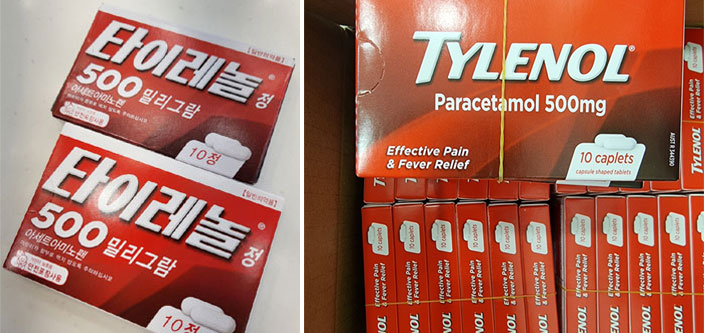
- Australian supply of Tylenol 500 mg is embarrassing
- by Kang, Hye-kyung Feb 16, 2023 05:52am
- 500mg of existing Tylenol and 500mg of Australian Tylenol supplied to pharmacies Pharmacists seem to be confused as 500mg of Tylenol products arrive one after another at pharmacies that ordered 500mg of Tylenol at the end of January due to supply increase issues. Pharmacists who bought the product before the price hike responded that the newly distributed Tylenol is expected to cause confusion among pharmacists as well as ordinary consumers as it has different packaging and ingredient names from existing products. Pharmacist A said, "I ordered a completely different product when I heard that the supply price of all Tylenol products will increase by 18% from March. The problem is consumer resistance. Although it is said to be an emergency drug for the smooth supply of antipyretic analgesics in Korea, it is greatly different from existing products, and the ingredient name is also specified as paracetamol, which is feared to cause resistance from consumers. Pharmacist A said, "I have to explain it to consumers, but I don't know how to understand that acetaminophen and paracetamol are the same ingredients," adding, "I'm worried that consumers will resist." Since the efficacy and effect are also specified as "Effective Pain & Fever Relief," some say that it should be written manually or attached to a notice. Pharmaceutical company A said, "The expiration date is also May 2024, which is shorter than the existing products (2025), so caution is required when selling them, and there are places that inevitably consider returning them." Johnson & Johnson Korea is an Australian product that urgently introduced Tylenol, which arrived at the pharmacy, and explains that it has the same ingredients and contents as existing products. An official from a pharmaceutical company said, "It is an Australian product that was urgently introduced by the Tylenol brand with approval from the Ministry of Food and Drug Safety and the KODC for smooth supply of antipyretic painkillers in Korea." The official said, "Australian Tylenol has the same expiration date of 36 months as the existing Tylenol 500mg. Johnson & Johnson Korea is making many efforts to supply Tylenol stably in the market in line with changing domestic market demand."
- Company
- Open Innovation Trend
- by Jung, Sae-Im Feb 16, 2023 05:52am
- China is pushing for a policy to restrict its biopharmaceutical technology from escaping abroad. In the pharmaceutical industry, where open innovation has become a trend, the U.S. and China are taking the opposite step by fighting for technological supremacy. According to a report published by the Bioeconomic Research Center of the Korea Bio Association on the 14th, China's Ministry of Commerce recently collected public opinions on revising its export-restricted technology catalog. The notice posted on China's commerce ministry's website calls for revising the list of technologies that will restrict exports based on the Foreign Trade Act and the Technology Import and Export Management Regulations with the Ministry of Science and Technology. The technology export referred to here refers to the transfer of technology from China to overseas through the transfer of patent rights or patent application rights, patent enforcement permits, technology secret transfer, and technology services. In the revision of the list of technology export restrictions, technologies such as the Internet, solar and new energy, autonomous driving, and biopharmaceuticals that have made rapid progress in China in recent years have been raised. Biopharmaceutical technology includes human-related cell cloning and gene editing technology, CRISPR gene editing technology, and synthetic biology technology. In particular, gene editing and synthetic biology are areas that are actively being studied around the world. Genetic editing technology refers to deleting or rewriting genetic information by cutting a specific part of DNA for the purpose of treating or preventing diseases. Reproductive cell editing is strictly limited to ethical issues and potential risks, so most companies use patient somatic cells. Synthetic biology technology is a technology that redesigns biological systems such as enzymes, biosynthetic pathways, and cells to create biological systems with new functions. China is promoting innovation in synthetic biology technology and applying it to a wide range of areas such as new drug development and resource supply through the 14th Five-Year Bio-Economic Development Plan. While open innovation, which is jointly conducted by multinational pharmaceutical companies, is actively carried out, the battle for supremacy between China and the United States over innovative technologies continues. Earlier, the U.S. strengthened its trading monitoring for fear of China taking biotechnology away. In 2018, the Foreign Investment Risk Review Modernization Act (FIRMA) was enacted, which could restrict foreign investors such as China from accessing the U.S. market. This is to strengthen transaction monitoring on Chinese capital, from simple license transactions to M&A transactions. Recently, the government is also pushing for the enactment of the National Core Capacity Defense Act (NCCDA), which regulates investment and transaction activities in overseas concerned countries such as China. In addition to semiconductors, batteries, artificial intelligence, and quantum technologies, pharmaceuticals and bioeconomics were included in the technologies subject to national core competencies. China's push to restrict exports of biopharmaceutical technology is seen as a countermeasure to the U.S. move. It also shows confidence that China is not behind the U.S. in gene editing technology and synthetic biology. The report said, "China's recent attempt to designate bio-medicine-related technologies such as gene editing technology and synthetic biology as export-restricted technologies are believed to be on par with the U.S. in this technology field."
