
- LOGIN
- MemberShip
- 2026-07-01 07:13:24

- Company
- Sales of immuno-cancer drugs exceeded 200 billion won
- by Sep 08, 2022 05:58am
- In the first half of this year, the domestic immune anticancer drug market surpassed 200 billion won. In particular, Opdivo's performance, which showed his endurance, was remarkable. Opdivo sales increased 41% from the previous year, surpassing 50 billion won in half-year sales. According to IQVIA, a pharmaceutical market research firm, the size of the domestic immuno-cancer drug market in the first half of this year was 215.8 billion won, up 17.2% from 184.1 billion won a year earlier. The drug leading this market is MSD's Keytruda, which has the most indications. Keytruda posted 94.4 billion won in sales in the first half of this year, up 1.2% from the previous year. Sales seemed to be decreasing from the same period last year due to drug price cuts in the first quarter, but it turned upward again as benefits expanded in the second quarter, including primary treatment for non-small cell lung cancer. Currently, there are 15 cancers that can use Keytruda, including lung cancer, head and neck cancer, Hodgkin lymphoma, urinary epithelial cancer (Bladder cancer), esophageal cancer, melanoma, renal cell cancer, endometrial cancer, gastric cancer, small intestine cancer, ovarian cancer, pancreatic cancer, biliary cancer, colorectal cancer, and triple negative breast cancer. ◆Opdivo, which shows its endurance, surpasses 50 billion won in semi-annual prescriptions What stands out is Opdivo's rise. Opdivo sales in the first half of the year were 51.3 billion won, up 40.5% from 36.5 billion won a year earlier. The gap with Keytruda, which nearly tripled, has less than doubled. The market share of immuno-cancer drugs has also changed due to higher growth than Keytruda. Unlike last year, when Keytruda monopolized half of the total market, its share of Opdivo rose to 24% this year, reducing its share of Keytruda to 44%. Opdivo, developed by Ono and BMS, is an immuno-cancer drug licensed in Korea at the same time as Keytruda in 2015. It recorded sales similar to Keytruda until 2017, but the gap widened since 2018. This is because it has been relatively slow to expand indications and benefits compared to Keytruda, which aggressively increased indications. For this reason, Opdivo sales seemed to slow down between 2019 and 2020, but began to rise again from the end of last year. Opdivo, which stayed at 10 billion won for seven consecutive quarters from the fourth quarter of 2019, surpassed 20 billion won for the first time in the third quarter of last year. In the first and second quarters of this year, it settled in the mid-20 billion range with 25.1 billion won and 26.2 billion won, respectively. Opivo is expected to continue its upward trend as stomach cancer benefits are expected for the first time in an immuno-cancer drug. In June, the HIRA set Opdivo's standard for first-line gastric cancer treatment. Opdivo succeeded in re-challenging in about four months after suffering once in February. When the expansion process is completed, patients with HER2-negative stomach cancer will be able to use new drugs at low prices. HER2 negative gastric cancer patients account for nearly 90% of all patients, and there are no drugs other than Opdivo in the first treatment, so if it is expanded, it is expected to have a significant impact on sales. Yervoy, considered Opdivo's partner, also saw sales increase. Yervoy, which was only 1.3 billion won in the first half of last year, jumped to 6.1 billion won this year. Yervoy, the first immuno-cancer drug in Korea in the CTLA-4 family, is not well selected alone due to its limited effect and relatively high side effects. Instead, there is a combination therapy with Opdivo. Earlier this year, a combination therapy with Opdivo added a metastatic direct bowel cancer indication. ◆↑ 23% of Tecentriq & growth of Impinzi Roche Tecentriq and AstraZeneca Impinzi, generics of immuno-cancer drugs, are also steadily increasing their sales. It is Tecentriq which is showing greater performance. Tecentriq increased 22.6% year-on-year to 37.6 billion won in the first half of the year. During the same period, Impinzi increased 19.1% from 22.2 billion won to 26.4 billion won. Tecentriq succeeded in paying liver cancer for the first time among immuno-cancer drugs in April. The combination of Tecentriq and the targeted anticancer drug Avastin has become a standard treatment for liver cancer with excellent data beyond existing drugs. Analysts say that Tecentriq will gain momentum in expanding sales as it is prescribed for liver cancer in earnest. Impinzi is growing at a relatively slow pace this year with no special news. After surpassing 10 billion won for the first time in the first quarter of last year, quarterly sales remained in the early 10 billion range. Impinzi continues clinical trials in biliary tract cancer and liver cancer to expand further indications. Merck's Bavencio posted only 100 million won in sales in the first half of the year.
- Company
- Zolgensma, which is the same price as an apartment
- by Moon, sung-ho Sep 08, 2022 05:58am
- With ultra-high-priced treatments from global pharmaceutical companies newly entering the benefit range this year, human "risk management" is emerging as an issue at clinical sites. Since the treatment is so expensive, "risk" management issues such as damage and loss that may occur during administration are acting as a key issue. #Kymriah, the CAR-T treatment of Novartis Korea, which entered the benefit range this year, and Zolgensma, the treatment of Spinal Muscular Atrophy (SMA), are representative. According to the pharmaceutical industry and the medical community, Novartis Kymriah Korea has been applied as a health insurance benefit since April, and it has been confirmed that it has been administered not only at university hospitals in the Seoul metropolitan area but also at university hospitals in provincial areas. Zolgensma, who has newly entered the health insurance benefit zone since August, has passed the Drug Committee (DC) of major Big 5 hospitals, including Seoul National University Hospital and Seoul Asan Hospital, and is preparing to administer patients in earnest. As expensive treatments, which cost hundreds of millions of won alone, are administered in earnest at the clinical site, "risk management" that may occur is emerging as a key issue. For example, the question is who will be responsible for the damage or loss of the treatment in the process of handling patients with expensive treatments. This is because the price of the treatment is expensive, so both hospitals and pharmaceutical companies can be burdened depending on where they are responsible. Moreover, in Korea, it is recognized as a bigger problem because there is no insurance system that can be called a safety device in preparation for the human risk of such expensive treatments. However, there is a difference if Kymriah and Zolgensma are directly compared in terms of risk management. First of all, Kymriah, which entered the benefit range, is a pair due to the nature of the treatment, that is, a system that prepares two treatments in case of an emergency. An official from Novartis said, "In the case of Kymriah, due to the nature of the treatment, two treatments are prepared in case of an emergency." He explained the background, "As we make a treatment with T cells collected from the patient's blood, we can make two treatments with the same sauce." Kymriah reached up to 500 million won in the United States for a single administration, but in Korea, the patient's burden was lowered to up to 5.98 million won as it was set at 360.4 million won through drug price negotiations. Against this background, Um Ki-sung, a professor of blood medicine at Seoul St. Mary's Hospital, said, "In the process of introducing Kymriah, Novartis said that he would not receive drug costs if it was not actually administered, regardless of who did it wrong." Professor Um Ki-sung explained, "If a patient receives a lot of chemotherapy during the three-week administration, lymphocytes may not be extracted or cells may not come out." Professor Um said, "This means that pharmaceutical companies will not take issue with this and will only receive the drug price when the administration is completed." The problem is Zolgensma, which domestic drug price has been set at nearly 2 billion won. This is because the characteristics are different from Kymriah itself and there is no insurance system to prepare for risks that may occur during the administration process. In particular, in the case of Zolgensma, it is also worrisome that it differs from Kymriah in that the process is different, such as putting genes in vectors and transporting them so that they do not die. For this reason, there are opinions among large hospitals that are concerned about this. On top of that, Evrysdi, which is considering salaries as SMA treatments following Zolgensma, is also said to have to come up with a safety device for human risk. In this regard, the HIRA, which is considering benefits, reportedly asked pharmaceutical company Roche to come up with a plan. As Evrysdi is an oral drug, it means that safety devices should be prepared to prevent risk of patient loss. This is because Evrysdi will not have a high drug price compared to Zolgensma and Spinraza, but it is widely expected that it will be set as a burdensome drug price for patients. Novartis is in a position to discuss the plan with hospitals as it is scheduled to be administered in earnest according to the application of Zolgensma benefits. "Since it is an expensive treatment, it is not easy for hospitals and pharmaceutical companies to pay for it," a Novartis official said. "In the near future, Seoul National University Hospital is discussing how to manage risks and has been partially coordinated." "I think we will need to continue discussions in the future," he explained. He said, "I checked the insurance company in terms of human risk safety, but there is no insurance company that covers it." He added, "There is no internal determination of responsibility at the moment, but since it is the first time, we have to continue to discuss it in the future.".
- Policy
- MOHW to provide premium pricing support for innovative drugs
- by Lee, Jeong-Hwan Sep 07, 2022 05:52am
- The Korean government has emphasized the need to enact subordinate statutes to give preferential treatment to new drugs manufactured by Korea Innovative Pharmaceutical Companies and promises to prepare policy support. This announcement reflects the authorities’ determination to find a way to provide preferential treatment for drug prices based on the “Research service for the preparation of subordinate statutes for preferential pricing of drugs developed by Korea Innovative Pharmaceutical Companies that correspond to the international trade order.” However, the government had also expressed practical difficulties in its implementation, as providing pricing support for specific pharmaceutical companies, despite its legal basis, can lead to trade conflict. On the 6th, MOHW answered so to the written inquiry submitted by the People Power Party member Jong-Sung Lee regarding the preferential pricing of drugs developed by Korea Innovative Pharmaceutical Companies. NA member Lee inquired on the reason why no actual support is being provided for such companies despite legal grounds provided under the Special Act On Fostering and Support of Pharmaceutical Industry, and the MOHW’s opinion on the need for subordinate statutes to support the legal grounds. To the inquiry, the MOHW answered that although a clause for providing pricing premiums to Korea Innovative Pharmaceutical Companies does exist, the authorities must exercise caution in providing support to specific companies as this can lead to international trade conflict under international trade laws. If the final supports implemented under the act are concentrated on Korean companies, other countries may file a complaint under the WTO subsidy agreement, etc. In particular, the ‘Premium drug pricing system for global innovative new drugs’ that had been announced on July 7th, 2016, to provide preferential treatment for drugs developed by such companies, had been deleted in December 2018 as a discriminatory factor as a result of negotiations on amendments and modifications of the US-Korea (KORUS FTA). Despite such realistic difficulties, the MOHW expressed its will to enact subordinate statutes for the preferential drug pricing clause of the Special Act On Fostering and Support of the Pharmaceutical Industry. In addition, the MFDS said it will prepare measures for policy support that aligns with the international trade order and does not trigger trade conflict. The MOHW said, “We agree on the need to enact subordinate statutes to foster the Korean biohealth industry. However, the matter needs to be approached in comprehensive consideration of its impact on the domestic pharmaceutical industry, its compliance with the international trade order, its fiscal impact on NHI finances, etc.." It added, “We will also contemplate preparing policy measures for preferential pricing of new drugs manufactured by Korea Innovative Pharmaceutical Companies. And examine various angles to prepare drug pricing support that complies with the international trade order. The authorities also announced their operation plan for the Roadmap on supporting homegrown new drugs. The MOHW explained, “The government will support the full cycle of new drug R&D processes, investing ₩2.2 trillion through the pan-government National New Drug Development Project (2021-2030). With the support, we will start introducing a smart clinical trial system in 2022 to establish an environment for large-scale clinical trials and new drug development.” "We are also reviewing preparing measures to support continous new drug development for pharmaceutical companies by establishing large-scale funds in the pharma and bio industry."
- Policy
- What's patient-centered safety in the biopharmaceutical era?
- by Lee, Hye-Kyung Sep 07, 2022 05:52am
- Along with the application of the world's first CAR-T cell therapy Kymriah and Zolgensma, an alternative treatment for spinal proximal phagocytosis (SMA), the biopharmaceutical era has opened in Korea. Controversy over safety and accessibility has not yet been resolved in the process of innovative biopharmaceuticals being developed and used to treat patients. Seo Kyung-won, director of NIFDS, who attended the debate, said, "It seems to be the first session related to patient safety during the 8th session of the GBC," adding, "Thinking about how and at what point patients' opinions should be contained should begin from now on." Director Seo said, "Although it was not actually implemented due to the spread of COVID-19, we wanted to provide a place to listen to the stories of patients who participated in clinical trials of anticancer drugs developed in Korea at expert meetings such as the Central Pharmaceutical Review Committee." Director Seo expressed his willingness to directly hold the patient's opinion, saying, "It is a task I really want to do in the future." What is the controversy over biopharmaceutical safety and accessibility? Lee Hyung-ki, a clinical pharmacology professor at Seoul National University Hospital who was in charge of the topic presentation, pointed out safety problems such as unexpected side effects in clinical trials on patients due to the nature of biopharmaceuticals. Professor Lee said, "A skin injection reaction that did not occur in a preclinical trial of an innovative biopharmaceutical company in Korea occurred in a clinical trial of a patient," adding, "Biopharmaceuticals have unexpected problems, and the safety of long-term administration has not been clinically confirmed." Professor Lee's opinion is that as more innovative biopharmaceuticals have been developed and used to treat patients, the issue of safety should not be underestimated after approval. Regarding biopharmaceutical safety, the industry showed a slightly different idea. Choi In-hwa, executive director of Roche Korea, said, "Stability is under follow-up management such as management and post-marketing management to carefully review data when the Ministry of Food and Drug Safety approves products." Executive Director Choi said, "There are drugs that have been approved in foreign countries, but have not been approved in Korea, and in some cases, benefits are applied after two to three years of approval due to complicated benefit processes." Executive Director Choi said, "We have no choice but to be upset from the perspective of patients who are threatened with rare and incurable diseases or lives." Choi added, "There are products from the introduction of innovative new drugs such as rapid approval system, rare disease designation system, permit-drug link system, rare disease law, RSA, and PE exemption, but improvement is needed because there are not enough systems that reflect patient opinions." Critics of drug accessibility were also pointed out by patient groups. Lee Eun-young, director of the Korean Association of Patient Organizations, said, "The right to access drugs should start with permission." She noted, "Kymriah took more than a year to get approval from the Ministry of Food and Drug Safety after FDA approval, and it took 13 months to register benefits." Director Lee said, "Quick permission and benefit registration are important issues," adding, "The Yoon Seok-yeol government will be established and the Ministry of Health and Welfare will carry out pilot projects and main projects so that approval and drug price negotiations can be carried out at the same time for rapid registration." An important phrase here is the establishment of a cooperative relationship with the Ministry of Food and Drug Safety. Director Lee said, "If the Ministry of Food and Drug Safety does not grant prompt permission, rapid registration is useless," adding, "If a pharmaceutical company applies for an item permission, the Ministry of Food and Drug Safety must approve it and then go through the HIRA and the NHIS procedures." At this time, he emphasized that "the accessibility of new drugs will be stabilized only when patients are centered, and it will be a patient-centered policy that the Ministry of Food and Drug Safety is talking about." The association also agreed that the Ministry of Food and Drug Safety's patient-centered policy can be realized only when patients have access to new drugs. Park Jung-tae, vice chairman of the Korea Biopharmaceutical Association, said, "In foreign cases, patient safety is reflected in the policy," adding, "It is important to secure therapeutic access to patients by opening the way for active participation in regulatory science." The Ministry of Food and Drug Safety also expressed a consensus on this point, but explained why it is practically difficult. Jung Hyun-chul, head of the Ministry of Food and Drug Safety's bio-policy department, said, "The keywords of today's debate are the same as rapid screening and rapid approval," adding, "With the introduction of the Breakthrough Designation system in the U.S. in 2015, Korea also enacted the Breakthrough Drug Development Promotion Act the following year, but it was scrapped." The scrapped bill calls for introducing an occasional review to review the results of each product development process even before applying for permission to boost the development of miracle drugs and shorten the approval period. It also includes the basis for the conditional permission system, such as priority screening before other drugs so that innovative drugs can be supplied to terminal cancer patients in a timely manner, submitting clinical trial data that can confirm the effectiveness of the drug, or prescribing only specific trained medical personnel. "Because rapid approval and screening are really necessary for high-tech biopharmaceuticals, the 2019 Advanced Biopharmaceutical Act was passed, and a bill related to drugs responding to the public health crisis was prepared due to the spread of COVID-19 in 2020," said Jeong. He said, "As it requires a lot of manpower as well as the burden of reviewers, recruitment of manpower should be done." There was also an explanation for the approval of the therapeutic purpose of overseas clinical trial drugs currently being promoted. "Overseas clinical trial drugs are expected to be used for a small number of patients," Jeong said. "The problem is that there should be a great burden as the KFDA judges have to proceed with permission only with doctor's medical certificates and opinions without seeing any non-clinical data and quality data."
- Company
- Godex’s price to be cut further under PVA
- by Nho, Byung Chul Sep 07, 2022 05:52am
- Celltrion Pharm’s liver disease treatment Godex cap. is experiencing ‘double trouble,’ being subject to Price-Volume Agreement negotiations after reimbursement reevaluations. According to industry sources, Godex’s price will be cut by ₩15 per capsule (4% reduction) from ₩371 to ₩356 as of the 1st of this month. Until now, Godex’s price had been discounted 11 times, from ₩434 in 2009 to ₩433 in 2011, to ₩431 in March 2016, to ₩422 in December 2016, to ₩422 in February 2017, to ₩413 in November 2017, to ₩402 in 2018, to ₩388 in 2019, to ₩376 in 2020, to ₩371 in 2021, to finally reach ₩356 in September this year. Godex, which was approved in Korea in 2000, is a combination of Biphenyldimethyldicarboxylate (main ingredient), Cyanocobalamin, Adenine Hcl, Carnitine Orotate, Pyridoxine Hcl, and antitoxic liver extract. Although its patent had become expired due to difficulty demonstrating bioequivalence, no generics have been released as of yet. The drug, which had enjoyed exclusivity in the market over the past 23 years due to this reason, is under adjustments after filing an appeal after the Health Insurance Reimbursement and Assessment Service failed to recognize the adequacy of its reimbursement during reevaluations, and its course of direction will be decided upon soon. In addition to the rise of such situational variables, Godex also became subject to management under the Price-Volume Agreement system and was cut ₩15 per capsule, hampering the product’s external growth. Even excluding the potential threat of reimbursement reevaluations, Godex will incur a ₩2.4 (4%) drop in annual sales from its current ₩60 billion in annual sales. Meanwhile, the PVA system was implemented with the positive-listing system to improve drug price management and encourage appropriate use of NHI finances. The PVA system discounts a drug’s price by up to 10% through negotiations between the pharmaceutical company and NHIS for products whose use volume had exceeded a certain rate. The system is largely categorized into those applied to new drugs and generic drugs, as ▲Type A (new drug); ▲Type B (new drug); ▲Type C (drugs and generics listed without negotiations). Type A applies to cases where the volume of the estimated claims exceeds the volume negotiated with the NHIS by over 30%. Type B applies to claims volume increases by ① over 60% from the previous year, or by ② over 10% and exceeds ₩5 billion for drugs in the same therapeutic class for which the maximum volume had already been adjusted according to type A. Drugs fall under Type C when claims of products in the same therapeutic class ① increase by over 60% from the volume of claims filed in the previous year, or ② has increased over 10% but the increased volume exceeds ₩5 billion and does not fall under PVA Type A or Type B. However, drugs with an annual claims volume less than ₩1.5 billion, whose ceiling price is less than the arithmetic average of other same-ingredient drugs, and Drug Shortage Prevention Program drugs are not subject to PVA.
- Company
- Poziotinib responds 100% to pts with lung cancer mutations
- by Sep 07, 2022 05:52am
- Poziotinib, a new lung cancer drug exported by Hanmi Pharmaceutical, was found to have a significant effect on the G778 mutation, which is common in patients with HER2 Exxon20 insertion mutation. As a result of ZENITH20 clinical subanalysis, 12 patients showed 100% response, and PFS was also longer than other HER2 Exxon20 mutants. In particular, when Poziotinib was first used, the PFS reached 9.8 months. ESMO pre-released a draft of clinical studies scheduled to be announced ahead of the opening of the academic conference on the 5th (local time). Further analysis results of ZENITH20 clinical trials conducted by Hanmi Pharmaceutical partner Spectrum Pharmaceuticals were also published. Poziotinib is a pan-HER2 anticancer drug that Hanmi Pharmaceutical transferred technology to the spectrum in 2015. Spectrum has taken over the right to develop and commercialize Poziotinib in countries around the world except Korea and China. At the end of last year, Spectrum filed an application for Poziotinib's permission with the U.S. Food and Drug Administration (FDA) based on the results of the cohort 2 study among the ZENITH20 Global Phase 2. The official review process will begin in February and an advisory committee will be held this month. The data released this time is the result of confirming the effect of Poziotinib in the patient group with the G778 mutation among subtypes of non-small cell lung cancer with HER2 Exxon20 insertion mutation. According to the spectrum, the G778 mutation is one of the most common submutants found in 9-19% of patients with HER2 Exxon20 insertion mutation. Of the 170 patients who participated in the ZENITH20 study, a total of 14 patients showed G778 mutations among non-small cell lung cancer patients with HER2 Exxon20 insertion mutations. They were included in cohort 2 and cohort 4, respectively. Cohort 2 is for patients with past treatment experience, and Poziotinib 16mg was administered (QD) per day. Cohort 4 administered one pill a day of Poziotinib 16mg or two tablets a day (BID) of 8mg to patients with no history of treatment. As a result of analyzing 12 people who can be evaluated out of 14, all of them (100%) showed PR, and the DoR median value was 5.5 months. The median PFS was 7.8 months. In particular, in the case of cohort 4 consisting of patients with no treatment experience, the median PFS value reached 9.8 months, which was superior to the group of patients without G778 mutation. The PFS of the patient group without G778 mutation was 5.5 months in cohort and 45.6 months in cohort. Side effect profiles were similar to existing TKI ratings. Spectrum commented, "No treatment experience or Poziotinib was effective in G778."
- Policy
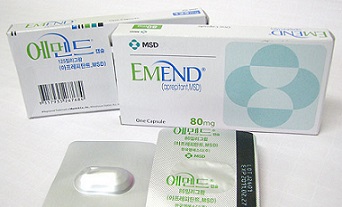
- Antiemetic Emend's generic benefit after 15 yrs since origin
- by Lee, Tak-Sun Sep 07, 2022 05:51am
- Emend As the generic of Emend will be applied starting this month, the burden of drug prices for patients is expected to decrease. It is the first time in 15 years that generic for Emend capsule has been reimbursed since the original was listed. According to industries on the 5th, Acepharma's Atant 80mg and Atant 125mg have been registered as benefits since the 1st of this month. Emend of MSD Korea is used in combination with corticosteroids and 5-HT3 antagonists, and was registered in April 2007. The 5-HT3 antagonist which ends with Setron is a popular drug. The market size is also large, so generics have also come out a lot in 5-HT3 antagonists. Aprepitant has not been released in the meantime, perhaps because of its strong partner drug nature, which is used in combination with 5-HT3 antagonists. Of course, the market size is also smaller than the 5-HT3 antagonist. Based on IQVIA, Emend's sales peaked at 6 billion won in 2019, followed by 5.2 billion won in 2020 and 4.8 billion won in 2021. Acepharma started developing generic for Emend in 2018 and succeeded in obtaining the first generic license among domestic pharmaceutical companies in January. And it was registered as of the 1st of this month. As Emend's generic Attant is registered, the burden of drug prices for patients is also reduced. Emend 80mg is listed at 11,044 won and Emend 125mg at 13,570 won. Atant was listed at 59.5% of the original price due to the addition of First Generic, with a big difference of 6,571 won for 80mg and 8,074 won for 125mg. Of course, the drug price is expected to be lowered to 70% before the addition of the original Emend is completed due to the registration of the generic. Acepharma received a license for the drug import business in 2016 and received a total of four import items, including anticancer drugs. The office is located in Munjeong-dong, Songpa-gu, Seoul.
- Policy
- Enactment of preferential pricing sublaws slow
- by Lee, Jeong-Hwan Sep 06, 2022 05:51am
- The enactment of subordinate statutes for the so-called ‘preferential drug pricing for Korean Innovative Pharmaceutical Companies’ clause of the ‘Special Act On Fostering and Support of Pharmaceutical Industry’ is hardly picking up speed. Although the research service ordered by the Ministry of Health and Welfare and the Korea Health Industry Development Institute and conducted by Professor Mi-Hye Park’s research team at the School of Pharmacy at Sungkyunkwan University, has been completed, the authorities are known to be having difficulty in preparing the specific provisions for the statute. On the 5th, the MOHW responded that it is “supplementing the final result reports, including survey results, etc” to the separately written inquiry submitted by the NA Health and Welfare Committee regarding the results of the research service on the preparation of subordinate statutes for preferential pricing of drugs developed by Korean Innovative Pharmaceutical Companies. The study had been conducted after specific subordinate statutes under the ‘Special Act On Fostering and Support of Pharmaceutical Industry (hereinafter “Special Act for the Pharma Industry”) for preferential pricing of drugs developed by Korean Innovative Pharmaceutical Companies had not been established for several years. The MOHW had previously pointed to how preparing subordinate statutes for the preferential treatment of Innovative Pharmaceutical Companies could trigger international trade conflict due to the violation of WTO and FTA agreements. However, the MOHW had initiated related studies through KHIDI after receiving much criticism at the NA audit from members of NA’s Health and Welfare Committee, including In-Soon Nam and Byung-Won Kang of the Democratic Party of Korea, and Byung-Won Kang of the People Power Party. 국내 제약사들은 혁신형 제약기업이 만든 의약품의 보험가격을 우대하는 제약산업특별법 제17조의2 조항이 위임한 하위법령이 수 년째 공백상태인 현실을 개선해 약가를 지원해야 한다는 입장이다. The study was completed earlier this year and the result report was submitted to KHIDI in May, but the results have not been disclosed to the public yet. With the research results undisclosed for nearly 4 months, some have been speculating that the government may not have been able to come up with a clear policy to provide drug pricing support for Korean Innovative Pharmaceutical Companies that do not cause trade conflict. In fact, the MOHW had agreed on the need for a drug pricing support policy for Korean Innovative Pharmaceutical Companies in line with the international trade order to reinforce technology innovation and financial competitiveness of Korean companies to foster them to become global leading companies and lay the mid-to-long term foundation for the development of innovative new drugs but was unable to present the research results. The research was conducted to survey the current status of drug pricing policy in Korea and abroad, collect opinions on drug price support for Korean Innovative Pharmaceutical Companies, review the need to provide pricing support for Korean Innovative Pharmaceutical Companies, prepare a pricing support policy measure for Korean Innovative Pharmaceutical Companies that align with the international trade order, and analyze data requested by organizations involved in establishing pricing support policiies for Korean Innovative Pharmaceutical Companies. However, on its key results, the MOHW is only repeating the explanation that it is supplementing the final result report, including the industry survey results, etc. An official from a domestic pharmaceutical company said, “It will be hard to come up with a clear plan to support drug pricing for drugs developed by Korean Innovative Pharmaceutical Companies without sparking trade conflict. The research team is known to be specifically contemplating measures to provide preferential treatment to Korean Innovative Pharmaceutical Companies with the industry survey results.” The official added, “Whether the policy research results will be publicly disclosed and lead to the enactment of subordinate statutes of the Special Act for the Pharma Industry will depend on what measures the research team, MOHW, and KHIDI will come up with. It will be significant if this leads to essential drug pricing support for products produced by Korean Innovative Pharmaceutical Companies, even if at a relatively narrow range."
- Policy
- The goal shorten the development of mRNA vaccine to 100 days
- by Lee, Hye-Kyung Sep 06, 2022 05:51am
- SK Bioscience, which developed Korea's No. 1 COVID-19 vaccine, aims to shorten the development period of the mRNA vaccine to 100 days and create innovative technology that can be supplied to the world within six months. #1 Choi Chang-won, vice chairman of SK Discovery's CEO, gave a keynote speech at the "2022 Global Bio Conference" held at Grand InterContinental Parnas in Seoul on the 5th on the importance of global cooperation to respond to the next pandemic. SK Discovery is a holding company of SK Bioscience. SK Bioscience obtained the item license for the COVID-19 vaccine SKYCovione from the Ministry of Food and Drug Safety for the first time in Korea on June 29, and has been vaccinated in earnest since the 5th. Vice Chairman Choi said, "SKYCovione is a remarkable and innovative achievement in that it has shortened the development of vaccines that take more than 10 years to two years while developing global products with high safety and effectiveness." "This is the result of global and domestic collaboration in all processes, including funding, R&D, clinical trials, production and licensing, and supply in the early stages of development," he analyzed. The development of the nation's No. 1 COVID-19 vaccine is the result of cooperation and support from the Korean government and global partners. Vice Chairman Choi added, "We will make efforts to secure the long-term and sustainability of SK Bioscience as well as global healthcare in Korea and developing countries with a sense of debt." Referring to the delay of one to two years from the SKYCovione development process to the WHO application, he said he would make efforts to develop vaccines within 100 days required by the CEPI and to provide global fairness within 6 months required by the Gates Foundation. Vice Chairman Choi said, "Speed seems to be the most important thing to prepare for the Next Pandemic based on various experiences," adding, "We have shortened the vaccine development period from 10 years to 2 years, but innovative technologies are absolutely needed as we have to shorten it to 100 days." Although there seem to be many impossible tasks like when the COVID-19 vaccine was developed, Vice Chairman Choi believes that the development period can be shortened if it is prepared in advance. SK bioscience explained that it is preparing to maintain active and close global partnerships, develop innovative technology platforms, strengthen research and production infrastructure, and strengthen clinical and licensing capabilities. In particular, by 2024, Pangyo R&D Center will be relocated to Songdo to become a global R&PD (Research & Process Development) center, which is five times larger, and Andong Plant will be expanded to more than double the production of products that meet GMP standards. Choi said, "The goal is to double the production of Andong plants by 2024 and triple by 2026. "If global cooperation proceeds, flexible production facilities such as Andong plant are needed." He said, "We will produce and supply the necessary vaccines in each region, and we will convert them as soon as a pandemic occurs to make a pandemic vaccine." Vice Chairman Choi said, "For the 100-day vaccine development operation, preparation is needed at the clinical and approval stage." "At the government level, the Ministry of Food and Drug Safety should prepare and train for the next pandemic by strengthening investment and cooperation in the bio R&D ecosystem and greatly increasing manpower," he said.

- Company
- Kisqali’s sales surge, Ibrance’s sales falter
- by Sep 06, 2022 05:51am
- Competition for breast cancer-treating cyclin-dependent kinases (CDK) 4/6 inhibitors in the market are heating up. Kisqali, which was the last to enter the market, has grown rapidly in the first half of this year and exceeded sales of the runner-up product in the market, Verzenio. Ibrance, the sole leader in the market, has also seen a downfall in semiannual sales for the first time this year. According to the market research institution IQVIA, the domestic market size for CDK 4/6 inhibitors in 1H this year was ₩44.5 billion, an 8.4% increase from the ₩41.1 billion of the previous year. CDK 4/6 inhibitors control cell division and growth and selectively inhibit the proliferation of cancer cells. The drugs are mainly used to treat hormone receptor (HR)-positive or human epidermal growth factor receptor 2 (HER2)-negative advanced or metastatic breast cancer, which accounts for 60% of all breast cancers. Since the entry of the first CDK 4/6 inhibitor, Pfizer’s Ibrance (palbociclib) 6 years ago, Lilly’s Verzenio (abemaciclib), and Novartis’s Kisqali (ribociclib) followed, totaling the number of CDK 4/6 inhibitors in the market to 3. Ibrance, which overtook the market as a 'first-in-class' drug, experienced its first decrease in sales, recording ₩28.9 billion, down 11.3% from the ₩32.6 billion of the previous year. Ibrance, which had entered the market 3 years ahead of the other two products, has been leading the CDK4/6 inhibitor market emerging as a new treatment option for breast cancer patients who had to use chemotherapy, which had many systemic side effects. Its sales also grew every year and recorded ₩40 billion in annual sales during its unrivaled 3 years in the market. Last year, the drug saw sales of ₩65.6 billion. However, with the first-ever reduction in sales shown in the first half of this year, it is highly likely that its annual sales will also fall for this year. On the other hand, Kisqali, which was the last to enter the market, has shown marked growth during the same period. Kisqali sold ₩9.7 billion in the first half of the year, a 236.6% increase from the ₩2.9 billion it had made the previous year. Such an increase in Kisqali’s sales is expected to hurt Ibrance’s sales. Kisqali’s sales had first exceeded ₩1 billion in quarterly sales in Q4 2020 when it first started receiving insurance reimbursement. Since then, its sales had risen continuously to surpass that of Verzenio for the first time in Q3 last year. This year, the drug continued to make sales far exceeding that of Verzenio, making ₩4.4. billion in Q1 and ₩5.3 billion in Q2 this year. The analysis is that the rise in Kisqali‘s sales is attributable to the fact that it is the only first-line treatment option among CDK4/6 inhibitors that can be used in premenopausal breast cancer patients. Reimbursement for the drug had been extended to premenopausal breast cancer patients who had failed ‘adjuvant chemotherapy’ since Q3 last year, further accelerating sales of the drug. Although it is the only drug among CDK4/6 inhibitors that require ECG monitoring before initiating treatment, it had improved reliability by demonstrating consistent overall survival (OS) improvement in premenopausal, perimenopausal, and postmenopausal patients. Verzenio’s sales rose 5% YoY to record ₩5.9 billion in 1H this year. Verzenio’s sales have also been steadily increasing, but at a rate slower than that of Kisqali, and has been recording quarterly sales in the ₩2 billion range for 5 consecutive quarters.
