
- LOGIN
- MemberShip
- 2026-07-02 19:24:59
- Policy
- Is "Platform of Drug Delivery" starting?
- by Lee, Jeong-Hwan Jun 24, 2022 05:46am
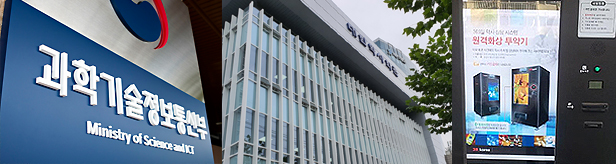
- The Ministry of Science and Technology recently decided on the demonstration exception of OTC teleconference bending machine at the 22nd ICT regulatory sandbox meetingWill the new government's implementation of the OTC teleconference bending machine demonstration special case serve as a signal for full-fledged activation of the "drug delivery platform"? Analysts say that as the government introduced the OTC teleconference bending machine, which is virtually not allowed by the Pharmaceutical Affairs Act, regulations on platform operators such as drug delivery apps are also likely to be eased significantly in the future. In particular, the Ministry of Science and ICT seems to be more proactive in looking at deregulation as the situation develops rather than the MOHW at the forefront of management and regulation of non-face-to-face treatment and drug delivery apps. On the 23rd, the health and medical community is paying keen attention to the direction of the new government's digital platform policy operation. Yoon Seok-yeol's government has decided to foster the digital online platform industry as a national task. In order to revitalize new industries, it is in a position to boldly break down existing regulatory barriers and collect opinions from industries quickly and actively. The OTC teleconference bending machine regulation special case seems to be the result of reflecting this new government policy. The problem is that the OTC teleconference bending machine is a regulatory exception that is relatively local and has little ripple effect. Digital platform technology is not used in that electronic devices are installed inside and outside existing pharmacies to allow the sale of general drugs in some efficacy groups with the pharmacist's OTC teleconference bending machine medication map. In the end, it is evaluated that deregulation of digital platforms in the health care sector will gradually flow in the direction of activating drug delivery platforms. The new government is implementing a one-sided policy of deregulation of digital platforms every day. The Ministry of Science and Technology is planning to lead the promotion of platforms by jointly announcing strategies for developing digital platforms within this year. Minister of Science and Technology Lee Jong-ho recently held a policy forum with digital platform companies such as Naver, Kakao, and Coupang and promised to "establish a private-led self-regulatory organization." The plan is to increase the effectiveness by providing legal grounds for establishing and supporting self-regulatory organizations so that the private sector, not the government, can set up platform regulations on its own. Of course, health and medical platform companies such as drug delivery apps did not attend the forum, but the wider the scope of the government's promotion of the platform industry, the more likely the drug delivery apps will also benefit from deregulation. The opposition Democratic Party of Korea is expressing some concern about the stance of the new government. Even if the digital platform industry is fostered, the Democratic Party of Korea believes that deregulation should be applied conservatively in health care fields such as non-face-to-face treatment and drug delivery apps. It's directly related to national health It takes into account the fact that it can bring considerable shock waves to the health care delivery system such as local clinics and the ecosystem of pharmacies. An official from the Democratic Party's policy committee said, "The OTC teleconference bending machine was applied by the government to the regulatory sandbox track after it was put on hold during the legislative debate in the National Assembly. Although it was allowed, I don't think the actual ripple effect will be significant, he said. "However, there will definitely be an effect of activating platform operators such as drug delivery services." The OTC teleconference bending machine is an agenda limited to pharmacists in a way, but the activation of health care platforms such as non-face-to-face treatment and drug delivery apps will have a great impact on the medical community and the pharmaceutical community, the official said. It will be necessary to respond to platform regulations in the health care sector," he added.
- Company
- Sanofi’s Allegra dominates OTC·ETC drug market
- by Nho, Byung Chul Jun 24, 2022 05:46am
- The market for OTCs and ETCs of the antihistamine ingredient fexofenadine hydrochloride has been showing stagnant performance with its sales making a rectangle pattern for several years now. The market is virtually monopolized by the original drug, Sanofi’s Allegra Tab., with the total market estimated to be in the ₩8 billion range. One aspect to note is that the high-dose 120mg Allegra Tab. is listed for reimbursement as an OTC, and the other 180·60·30mg strengths of Allegra are distributed and prescribed as ETCs in Korea. This is analyzed as a strategic decision made by the company in consideration of the clinical protocol, design, and efficacy of its drug. Allegra is in the undisputed lead among fexofenadine hydrochloride OTCs, showing a vendor performance of ₩2-3 billion. Hanmi Pharmaceutical's Fexonadine, Huon’s Allerdin, and Chong Kun Dang’s Pecsone 120mg had sold ₩350 million, ₩150 million, and 120 million each, respectively. These latecomers were all released around 2005 and 2008, and all three drugs are all listed at ₩226 per tablet. The price of Sanofi’s finished imported pharmaceutical, the OTC Allegra, has been discounted to ₩225/tablet in 2017, ₩224/tablet in 2018, then to ₩222 in 2022, and is currently sold at a lower price than its domestic latecomers. Allegra and other OTC drugs with identical APIs that are effective in alleviating symptoms of allergic rhinitis are recommended to be administered with caution in patients with kidney failure, cardiovascular disease, or old age, and require particular medication guidance on the pharmacist’s part. In addition, its related ingredients are classified as pregnancy risk category C, and are used when there is a clear clinical basis or reason for its inevitable use. In the fexofenadine hydrochloride ETC market, the original, Sanofi’s Allegra and its bioequivalent, Hanmi Pharmaceutical’s Fexonadine are in a two-way battle. Allegra 180mg sold ₩3.1 billion, Fexonadine 180mg ₩870 million last year, and Allegra 30mg ₩240 million, Fexonadine 30mg ₩140 million. The 180mg strength of Allegra that was approved in 2000 is used to treat allergic dermatitis, and its price had been reduced to ₩314/tablet in 2017, ₩313/tablet in 2018, ₩312/tablet in 2020, and then to ₩311/tablet in 2022. The price of Allegra 60mg is currently set at ₩181/tablet and is effective in relieving symptoms of seasonal allergic rhinitis. According to the insert paper, etc. patients with hypertension, diabetic kidney disease, hyperthyroidism, and benign prostatic hyperplasia are requested to consult with their doctor, dentist, or pharmacist before taking the drug. Allegra 30mg, which is priced at ₩91/tablet, is prescribed to relieve symptoms of seasonal allergic rhinitis and allergic dermatitis. Hanmi Pharmaceutical’s Fexonadine 30mg, which was approved as a bioequivalence-assured product in 2007 is listed at ₩91/tablet, at the same price as the original drug. Meanwhile, one point of interest is in their distribution. The distribution of Allegra is dualized so that the OTCs are directly managed by Sanofi while the ETCs are imported and sold by Handok Pharmaceuticals.
- Company
- Yuhan’s new lung cancer drug Leclaza shows OS benefit
- by Nho, Byung Chul Jun 24, 2022 05:46am
- Yuhan Corp (CEO and President Wook Je Cho) announced on the 23rd that it had confirmed the overall survival (OS) benefit of Leclaza (lasertinib) in the Phase I/II LASER201 trial (NCT03046992). Leclaza is a treatment for epidermal growth factor receptor (EGFR) T790M mutation-positive non-small cell lung cancer (NSCLC). Leclaza is a third-generation oral EGFR Tyrosine Kinase Inhibitor (TKI) that has high selectivity against the EGFR T790M resistant mutation. The drug showed superior efficacy and safety in NSCLC patients with brain metastasis as it can pass through the blood-brain-barrier (BBB). Lecalza’s OS results had been presented at the AOS 2022 & KCA Annual Meeting 2022 which was held from the 16th to 18th of this month. The OS results were updated from the Phase I/II LASER201 trial that had been the basis for Leclaza’s approval in Korea. The Phase I/II trial evaluated the efficacy and safety of continuous daily oral administration of Leclaza 240mg on 78 adult patients with EGFR mutation-positive NSCLC whose disease had progressed after EGFR TKI at 17 centers in Korea. Analysis results on the 76 patients with EGFR T790M mutation-positive patients showed that the median overall survival (mOS) was 38.9 months. Ji-Youn Han, Professor of Hemato -Oncology at the National Cancer Center who presented Leclaza’s OS results at the AOS 2022 & KCA Annual Meeting 2022, said, “It is encouraging that the mOS of EGFR T790M mutation-positive patients who are at high risk of brain metastasis had reached 38.9 months in the study, showing over 3 years of survival. Also, Leclaza is associated with the superior effect of achieving median intracranial progression-free survival (mPFS) of 26 months in patients with measurable brain lesions (25 patients).” Han added, “When considering that the ultimate treatment goal of treating cancer patients is in extending life, the OS benefit identified in the trial shows potential to extend life expectancy in T790M mutation-positive patients.” Meanwhile, the latest results of the Phase I/II LASER201 trial had previously been published in the April edition of the Journal of Thoracic Oncology (JTO), the official journal of the International Association for the Study of Lung Cancer (IASLC). Yeol-Hong Kim, Professor of Hemato Oncology at Korea University Anam Hospital, who is also the President of the Asian Oncology Society, said, “It is meaningful that Leclaza’s OS benefit had been presented at the AOS 2022 & KCA Annual Meeting 2022. The fact that Leclaza, a novel homegrown lung cancer drug, has demonstrated an mOS of 38.9 months in the second-line treatment of EGFR mutation-positive NSCLC is remarkable. The results show the possibility that Leclaza could bring a new turning point to the lung cancer treatment landscape in the future.” Wook Je Cho, CEO of Yuhan Corp, said, “We are pleased to share the news that Leclaza showed an OS benefit that meets the expectations as a novel homegrown lung cancer drug. Yuhan Corp will continue to make efforts, including completing the ongoing clinical trials and global commercialization so that Leclaza can become a useful treatment option for patients suffering from EGFR mutation-positive NSCLC in Korea and around the globe. Meanwhile, Yuhan is currently conducting a multinational Phase III trial (LASER 301) to evaluate the efficacy and safety of Leclaza as a first-line treatment in patients with EGFR mutation-positive NSCLC, and the top-line results of the Phase III trial are expected to be disclosed by the end of this year. A global Phase III trial on the combination of Leclaza with amivantamab, Janssen’s fully human bispecific antibody targeting both EGFR and MET, is also in progress.
- Policy
- A suspected Monkeypox patient entered Korea
- by Lee, Jeong-Hwan Jun 24, 2022 05:46am
- With two suspected Monkeypox infections confirmed to have entered Korea, President Yoon ordered accelerated approval of vaccines and antiviral drugs from quarantine authorities. On the 22nd, President Yoon ordered, "Strengthen the management of entry and quarantine through airports and closely monitor the additional occurrence in Korea." Currently, the quarantine authorities are conducting tests on one foreigner suspected of being infected with Monkeypox and one Korean among domestic arrivals. A suspected foreign infection entered the country by air on the 20th. From the 19th, blistering skin lesions occurred along with systemic symptoms such as sore throat and lymph node disease, and visited a hospital in Busan on the morning of the 21st. The hospital reported a suspected foreigner as a suspected monkeypox case and is currently being treated in an isolation bed. The suspected Korean entered Incheon International Airport from Germany at around 4 p.m. on the 21st and reported himself suspiciously to the Korea Centers for Disease Control and Prevention and was classified as a doctor by the airport quarantine office and the central epidemiological investigator. Suspected patients are suspected of monkeypox in consideration of clinical symptoms or epidemiological associations, but there are no test results that meet the test criteria for diagnosis. The suspected patient was transferred to Incheon Medical Center for treatment after waiting for an airport quarantine facility. The quarantine authorities plan to hold a briefing as soon as the results of the Monkeypox diagnostic test and epidemiological investigation are released. In the news, President Yoon ordered the rapid distribution of vaccines and treatments and ordered the introduction of third-generation smallpox vaccines and Monkeypox treatments in Korea. President Yoon ordered, "If necessary, prepare fully so that the vaccines and treatments currently secured can be quickly distributed to the medical field and complete the introduction of additional third-generation vaccines and antiviral drugs for Monkeypox as soon as possible."
- Policy
- Abnormal cases of Inlyta in PMS for 9 yrs is 82.8%
- by Lee, Hye-Kyung Jun 24, 2022 05:45am
- As a result of a post-marketing survey of Korea Pfizer Pharmaceutical's kidney cancer treatment Inlyta, the incidence of abnormal cases was 82.88% regardless of the causal relationship. As a result of conducting PMS on 111 people over 9 years for re-examination, 92 people (338 cases in total) showed abnormal cases regardless of causality. Among them, 7.31% of the serious adverse drug reactions that cannot be excluded from the causal relationship and 14.41% of the unexpected adverse drug reactions. The MFDS announced that it plans to reflect it from September 21st after completing a preliminary notice of changes to permits according to the results of PMS. Serious drug adverse reactions in 7 out of 111 patients were pulmonary artery thrombosis, cerebral infarction, anemia, helplessness, and diarrhea. Unexpected adverse drug reactions appeared in 16 out of 111 people, and side effects such as rhinitis, gingivitis, pneumonia, edema, chest discomfort, acne, difficulty in urination, difficulty in swallowing, toothache, peripheral neuropathy, and gout appeared. Meanwhile, Inlyta was approved for domestic market on August 22, 2012. At the time of approval, it was given 6 years of re-examination for indications of progressive renal cell cancer that failed to treat one systemic therapy, but the PMS period increased to 9 years as it maintained non-reimbursement for 3 years due to delayed registration. According to the AXIS phase 3 comparing the treatment effects of Inlyta and Nexavar, the median duration of progression-free survival in the Inlyta administration group was 8.3 months, which reduced the disease progression risk by about 34% compared to 5.7 months in the Nexavar administration group.

- InterView
- Tremfya to bring generation shift in the IL inhibitor market
- by Jun 23, 2022 05:50am
- The competition among latecomers is intensifying in the interleukin inhibitor market with the scope of their indications expanding to psoriatic arthritis. The leader in this market is Janssen’s IL-12/23 inhibitor, ‘Stelara (Ustekinumab).’ Although 10 years have passed since its approval, the drug still boasts a growth rate in the 30% range. Based on IQVIA, sales of Stelara recorded ₩36.1 billion last year. Janssen’s new goal in the market is to successfully make a generation change and replace Stelara with its follow-up drug, ‘Tremfya (guselkumab),' the first-in-class IL-23 inhibitor that was released in Korea in 2018. However, Tremfya is being challenged in the market by the second IL-23 inhibitor ‘Skyrizi (risankizumab)’ that entered the market. Therefore, making the successful generational shift from Stelara to Tremfya without losing any market share to other companies’ competitors is an important task at hand for Janssen. ▲ JungHyun Lee, Tremfya Marketing Manager at Janssen Korea Janssen Korea’s Tremfya Marketing Team has been working quickly to achieve this goal. The three members of the Tremfya Team at Janssen Korea have been focusing on conducting marketing activities for the psoriatic arthritis indication that was granted insurance benefits last month. In an interview with Dailypharm, Product Manager Jung-Hyun Lee, who had been in charge of Tremfya since it started preparations for marketing authorization at the end of 2016, said, “There are many treatments including Tremfya available for plaque psoriasis, and awareness on the availability of theses drugs have now increased significantly among psoriasis patients. Just as we have concentrated on marketing Tremfya in plaque psoriasis last year, we plan to concentrate on carrying out activities to make known the importance of early diagnosis and treatment in psoriatic arthritis this year.” Lee pointed to the low disease awareness of psoriatic arthritis as the reason for this year’s specific focus of interest. PM Hye-Ji Kang who newly joined the Tremfya Marketing Team this year, said, “It is important for patients with psoriasis to manage comorbidities such as psoriatic arthritis. Therefore, we need to raise awareness of psoriatic arthritis so that doctors and patients can suspect and allow for early diagnosis and treatment of their condition when joint pain occurs while maintaining skin symptom improvement in their course of treatment.” In addition to Tremfya, the IL-17 inhibitors Cosentyx (secukinumab) and Taltz (ixekizumab) are also approved for use in psoriatic arthritis. Also, Skyrizi added a psoriatic arthritis indication in January this year. Although Skyrizi is yet to be approved for reimbursement, Janssen may not rest assured as Abbvie is speeding up its reimbursement expansion process for Skyrizi. Ultimately, it is in the hands of Tremfya’s Marketing Team to highlight the characteristics of Tremfya that differentiate the drug from other IL-17 inhibitors, while appealing to the strengths of Tremfya compared to the other same class IL-23 inhibitor. Lee said, “Inhibiting radiographic progression of joint damage is considered the most important indicator in treating psoriatic arthritis because there is no way to reverse damage in the joints. Tremfya administered every 4 weeks has demonstrated statistically significant inhibition of radiographic progression of joint structural damage compared to placebo.” Lee added, “In over 70% of the cases, psoriasis skin symptoms appear before psoriatic arthritis, and as treatment effect in the main disease of psoriasis is most important until arthritis progresses, Tremfya’s long-term effect in maintaining skin clearance indicates how our drug brings greater treatment benefit than its competitors.” The lasting long-term effect of Tremfya that was mentioned by Lee was demonstrated through a 5-year long-term clinical trial and a 5-year real-world data on domestic patients, evidencing the differentiated benefit of Tremfya over the latecomers. Another positive aspect of Tremfya is that a survey on patients with severe psoriasis in the Asia-Pacific region including Korea showed that patients consider lasting, long-term effects as most important. ▲ Hye-JeeKang, Tremfya Marketing PM at Janssen KoreaAlso, the company had demonstrated the superiority of Tremfya through a head-to-head trial. Janssen’s ECLIPSE study that directly compared the efficacy between the first-in-class IL-23 inhibitor Tremfya and the IL-17 inhibitor Cosentyx showed that Tremfya’s mechanism of action allows for psoriasis lesions to not recur and provides long-lasting improvement of skin symptoms. Kang said, “Only Tremfya was found to maintain regulatory T cells that are involved in lesion recurrence and reduce the rise of resident memory T-cells. The trial was informative in understanding the different mechanisms of action between classes. Through such data, the IL-17 and IL-23 inhibitors are being differentiated in the field, and IL-23 inhibitors, as a higher level mechanism than IL-17 inhibitors, have provided convenience to the patients with their longer dosing interval.” Of course, opposing data also exists. Novartis’ ARROW trial is one example. However, no statistically significant difference was found in the proportion of patients that achieved a “clear” or “almost clear” status of the target plaques at Week 16, which was the primary outcome measure of the trial. Kang explained, “Results from the ARROW trial show no statistical difference between the two drugs, therefore, it is difficult to say there is a difference between the two drugs based on that data. Also, the study was conducted on only 40 patients in the short term of 16 weeks, different from the large-scale ECLIPSE trial that was conducted for one year on 1,048 patients.” On how the drug is different from Skyrizi, a same-class drug, the marketing team pointed out that Tremfya is the only ‘fully human monoclonal antibody.’ In antibody drugs, reducing immunogenicity by minimizing the sequence of other species such as mice is important as it can cause side effects and reduce the efficacy of a drug. If the humanized monoclonal antibody Skyrizi has nearly a 90% human-generated nucleotide sequence, Tremfya has a 100% human-generated nucleotide sequence. Lee also added that the team will continue to strengthen Tremfya’s status in the market through the provision of various customized data. Lee said, “With most drugs now being able to provide clear skin, the needs of the patients and medical are becoming more specific and subdivided. Some wish for the occasional lesions or itching to go away after skin clearance, others wish to get rid of the pigmentation left after treatment. We will work to provide customized data to fit the needs of these patients.”
- Opinion
- [Reporter's view] Only 2% of patients
- by Eo, Yun-Ho Jun 23, 2022 05:50am
- #Will the new EGFR Exon 20 Insertion-Mutated Non-Small-Cell Lung Cancer treatment, which was useless for existing TKI, be able to receive insurance benefits? It's all the same cancer, but it's different. Cancer species such as liver cancer, stomach cancer, and lung cancer, which we call, are only a simple category, and in fact, they are classified in detail. Even if tumors originate from the same organ, the difficulty of treatment varies according to this detailed classification and the number of patients also varies. For example, EGFR Exon 20 Insertion-Mutated Non-Small-Cell Lung Cancer is so rare that only 2% of EGFR mutated non-small cell lung cancer patients in Korea are identified. Until now, there has been no suitable treatment for the treatment of this disease, and the NCCN guidelines have also recommended platinum-based anticancer therapy. Even this is subject to reduction in Korea. Lung cancer is not a rare disease, but EGFR Exon 20 Insertion–Mutated Non–Small-Cell Lung Cancer can be a rare cancer. EGFR Exon 20 Insertion–Mutated Non–Small-Cell Lung Cancer has a 75% higher risk of death compared to common EGFR mutated non-small cell lung cancer, a 5-year survival rate of 8% and patient life expectancy of less than 2 years. In this situation, the anticancer drug Rybrevant, which targets EGFR Exon 20 Insertion-Mutation, will be submitted to the HIRA Cancer Disease Review Committee on the 29th to register insurance benefits. This drug, well known as Leclaza's combination therapy partner, was approved in Korea in February this year as the first targeted treatment for EGFR Exon 20 Insertion-Mutated Non-Small-Cell Lung Cancer treatment. Rybrevant confirmed the overall response rate (ORR) of 40% through a CHRYSALIS clinical study, with 4% of patients achieving CR and 36% achieving PR. In recognition of its value as a treatment for rare carcinomas, it was quickly approved by the U.S. FDA in May last year with only the results of phase 1 clinical trials, and was designated as a subject for rapid review in Korea before obtaining permission. The question is whether or not value is recognized in the benefit evaluation. As it is a drug licensed as a single-Arm clinical data without a control group, the key is whether the value of Rybrevant, which should take the PE system, can be recognized as rare cancer, not just lung cancer. The new government, which was launched last month, promised to promote a rapid registration system for anticancer drugs and treatments for severe rare diseases without alternative drugs. It remains to be seen whether the speed of registration of rare disease and rare cancer drugs in Korea can be improved in the future.
- Company
- LG Chem’s Zemiglo+Forxiga combo Zemidapa is approved
- by Chon, Seung-Hyun Jun 23, 2022 05:50am
- LG Chem made a public announcement on the 22nd that the company had received marketing authorization for its type 2 diabetes treatment ‘Zemidapa Tab’ from the Ministry of Food and Drug Safety. The drug is a fixed-dose combination of the antidiabetic drug gemigliptin and dapagliflozin. Gemigliptin is an active ingredient of "Zemiglo," a new DPP-4 inhibitor antidiabetic that was developed by LG Chem. Dapagliflozin is the generic name of AstraZeneca’s SLGT-2 inhibitor, "Forxiga." Zemidapa is the third combination drug made using Zemiglo. LG Chem also owns two other drugs, including ‘Zemimet’ which combines Zemiglo with the antidiabetic drug metformin, and ‘Zemiro’ which combines Zemiglo with the hyperlipidemia drug rosuvastatin, in the market. LG Chem said, “We expect to continue on our current leadership in the diabetes treatment market in Korea with the development of a gemigliptin and dapagliflozin combination that improves the convenience and medication compliance of patients who used to take the two drugs separately as a combination therapy.”
- Company
- Hyundai Introduces Estrogen-Free Contraceptives
- by Jun 23, 2022 05:50am
- Hyundai Pharmaceutical (CEO Lee Sang-joon) announced on the 21st that it has signed an exclusive license agreement with Asuka Pharmaceutical in Korea for the oral contraceptive Slinda"with Drospirenone only. Slinda is a product developed by Exeltis, a women's medical brand division in Insud Pharma, Spain. Unlike the existing fourth-generation complex oral contraceptives, they do not contain Estrogen, so there is less concern about related side effects. Slinda is licensed to sell in the United States and Europe, and Aska has development rights in Korea and Japan. Under this contract, Hyundai Pharmaceutical will have the right to exclusive development and commercialization of Slinda in Korea. An official from Hyundai Pharmaceutical said, "We expect the addition of Slinda to further solidify its position in the domestic contraceptive market."
- Product
- Approval of OTC teleconference bending machine project
- by Kang, Shin-Kook Jun 23, 2022 05:49am
- OTC teleconference bending machine issue, which has been on hold for 10 years, has secured a bridgehead for entering the market under the new government deregulation stance. The Ministry of Science and ICT held an ICT regulatory sandbox review committee on the 20th and approved the OTC teleconference bending machine based on the MOHW's conditional acceptance opinion as an empirical special project. The OTC teleconference bending machine has long been an issue. When the issue of selling OTC at supermarkets occurred in 2012, the Gyeonggi Pharmaceutical Association voluntarily discussed the introduction of the OTC teleconference bending machine in the name of preventing it. Since then, in 2016, during Park government, the "Amendment to the Pharmaceutical Affairs Act" to introduce the OTC teleconference bending machine was pushed in the form of government legislation, but pharmacists opposed it. As the amendment to the Pharmaceutical Affairs Act was automatically scrapped at the end of the term of the National Assembly, it was a good opportunity for OTC teleconference bending machine companies. This is because of the regulatory sandbox introduced by Moon's government. Regulatory sandboxes are a system that exempts or suspends existing regulations for a certain period of time when new products and services are released in new industries and new technologies. The system was first launched in the UK to foster the fintech industry and was adopted by Moon's government as one of the regulatory reform measures. In the end, the Ministry of Science and ICT held a meeting to allow regulatory sandboxes for OTC teleconference bending machines in 2019, and it was likely to pass. At that time, the Pharmaceutical Association withheld deliberation, but the attempt continued. There was a second attempt to enter the regulatory sandbox in 2020. Moon's government received much help from pharmacists about public masks. It was not easy for Moon's government, which was well aware that innocent pharmacists suffered from public criticism due to public mask issues, to blindly push ahead with video medication machines. According to a statement from the Pharmaceutical Affairs Association at the time, "Pharmacists are doing their best to supply public masks in pharmacies, which has an unprecedented role in supporting the national public health and medical functions." To push ahead with the OTC teleconference bending machine demonstration special, which 80,000 pharmacists across the country oppose, just as they brutally trample on the efforts of these pharmacists, is a one-sided example of administration with no minimum form and common sense." In 2021, the Ministry of Science and Technology tried to deliberate on the OTC teleconference bending machine again, but it was put on hold again and it was handed over to the new government and Choi Kwang-hoon executive. However, Yoon's administration recognized deregulation as the top national task. The new government's economic policy was also focused on regulatory innovation. It was also a negative factor for the pharmaceutical society that Jeon Hye-sook, Kim Sang-hee, and Seo Young-seok, who were former pharmacists, became opposition lawmakers in the ruling party, making it difficult to exert power on the government. On top of that, unlike Moon's government, Yoon's government had no debt to the pharmaceutical society. The MOHW, which was skeptical of the OTC teleconference bending machine, also seems to have been forced to jump on the new government's regulatory innovation stance. On top of that, there is an analysis that the situation in which the MOHW is for nothing and it has also expanded the scope of the Ministry of Science and Technology. In the end, the OTC teleconference bending machine, which had been seeking to enter pharmacies for 10 years, began to enter the long-awaited pharmacy market after meeting the new government's market economy policy, and the pharmacist society, which resisted by even opening-air meeting, fell into despair. The problem is that open-air meeting is the beginning of deregulation. There is a possibility that the expansion of safety emergency medicine items at convenience stores and the permission of non-face-to-face treatment and drug delivery may also be a second open-air meeting. The government has already announced the formation of a task force for regulatory innovation in health care, and two important issues, economic revitalization and national health, have been forced to continue to collide.
