
- LOGIN
- MemberShip
- 2026-07-03 01:08:12
- Company
- Lorviqua, which is about to be reimbursed, has settled
- by Eo, Yun-Ho May 29, 2022 05:15pm
- The third-generation ALK inhibitor Lorviqua has settled in the Big Five Hospital. According to related industries, Lorviqua of Pfizer Korea passed the Drug Committee of Big 5 (DC), excluding Seoul St. Mary's Hospital such as Samsung Medical Center, Seoul National Cancer Center, and Chung-Ang University Hospital. As the adequacy of insurance benefits was recognized by the Drug Benefit Evaluation Committee last month after passing the first HIRA Cancer Disease Review Committee in January, it is expected to be quickly linked to actual prescriptions if the registration of Lorviqua is confirmed. It remains to be seen whether Pfizer, the first developer of ALK anticancer drugs, will be able to increase its market share. This drug was designated as a rare drug in March last year, and in July, it was approved in Korea for use when Alecensa or Zykadia was previously treated with a primary ALK inhibitor or Xalkori and at least one other ALK inhibitor as a treatment. The third-generation drug, Lorviqua, can be an alternative to patients with subsequent resistance, such as the first-generation drug, Xalkori, and the second-generation drugs, Zykadia and Alecensa. If Xalkori was used in the primary therapy, Lorviqua could be used after the second generation drug, and if the first generation drug was used, Lorviqua could be used in the second. Until now, if resistance developed in secondary drugs, chemotherapy had to be used because there was no target treatment available. G1202R is the most common resistance mutation after second-generation drug treatment, and depending on the drug, F1174L (Zykadia), I1171T/N/S (Alecensa), and E1210K (Alunbrig) appear. Lorviqua works on all known resistant mutations. Lorviqua has added indications of primary therapy for non-small cell lung cancer in Europe. The approval was made based on the results of a phase 3 CROWN study. In this study, Lorviqua demonstrated improvement efficacy in indicators such as death risk and ORR compared to Xalkori.
- Policy
- Chong Kun Dang faces Hanmi due to Rivaroxaban 2.5mg
- by Lee, Tak-Sun May 29, 2022 05:14pm
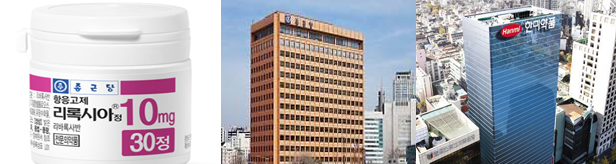
- Riroxia 10mg, which was released five months before the expiration of the original material patent by Chong Kun Dang, dominated the generic market. Next month, capsule-type 2.5mg products will be listed, and it is expected to face off with Hanmi over the generic marketChong Kun Dang anticoagulant Rivaroxaban 2.5mg will be listed as the second generic drug after Hanmi. Since Chong Kun Dang has shown extraordinary affection for anti-coagulation oral new drugs, it is expected that it will also focus its efforts on low dose Rivaroxaban products. According to the industry on the 22nd, Riroxia capsules 2.5mg will be listed next month. The original Rivaroxaban product is Bayer's Xarelto. However, 2.5mg product could not be released because it still has a patent for its product and a patent for its use, and Hanmi Pharmaceutical and SK Chemical acquired generic for exclusivity. There is also a difference in adaptation of the low dose (2.5 mg) and other doses. If 10, 15, and 20 mg are also used for treatment such as treatment of cardiac venous thrombosis and pulmonary embolism, 2.5 mg prodcut is used for the prevention of cardiovascular disease like aspirin. Studies show that using Xarelto 2.5 mg with Aspirin relatively reduced the risk of death from stroke, myocardial infarction, and cardiovascular disease in adult patients with coronary artery disease or symptoms than Aspirin alone. Accordingly, Bayer, which owns Xarelto, also paid more attention to generic blocking than other doses, such as registering 2.5 mg patent and use patent separately in Korea. Hanmi Pharmaceutical and SK Chemical succeeded in invalidating and avoiding 2.5mg of patents, respectively, and through this, they obtained generic for exclusivity. When the material patent was terminated in October last year, other pharmaceutical companies were not able to release 2.5mg products, but Hanmi, which acquired generic for exclusivity, was able to release the product. Currently, Original Bayer and Hanmi Pharmaceutical are the only pharmaceutical companies that have registered Rivaroxaban 2.5mg products. Chong Kun Dang could have been released in October last year if it had solved the original patent. Chong Kun Dang products are capsule formulations and are different from those of Korea. It seems that the registration was belatedly promoted because the patent for use was still in existence at the time. Currently, the Korean Supreme Court has ruled that the patent is invalid due to the request from Hanmi, and the final registration is about to be invalidated. The patent for use also expires on the 7th of next month. Although Chong Kun Dang belatedly releases 2.5mg products, they are faster than other post-refining drugs. This is because Rivaroxaban 2.5mg tablets can be released only on July 4 when the generic for exclusivity period between Hanmi and SK ends. Chong Kun Dang is working harder than any other pharmaceutical company in Korea on anticoagulant oral medicine generics. Rivaroxaban's other products, excluding 2.5 mg, also reduced some of the indications related to prolongation of life and pushed ahead with the launch five months before the expiration of the material patent. Chong Kun Dang requested a trial to confirm the scope of rights to avoid material patents. The request for the trial was dismissed in July last year, and Chong Kun Dang appealed to the Patent Court. However, Chong Kun Dang explained that Bayer's application for an injunction against patent infringement requested by the Seoul Central District Court has been rejected based on the judgment that it does not infringe material patents due to reduced indications. Chong Kun Dang ranks first in the Rivaroxaban market. Chong Kun Dang is conducting marketing under the plan to expand the original anticoagulant drugs to local clinics as they remain only in prescriptions for hospitals. Riroxia 2.5mg, which is listed at this time, is also expected to launch a large-scale marketing by Chong Kun Dang. It is expected that they will make desperate efforts to fight against Hanmi, which dominated the late drug market. The drug price was also set at 700 won, the same as 2.5 mg of Riroxban in Korea and Hanmi. As it is a showdown between the Chong Kun Dang, which has the strongest sales power in Clinics, and Hanmi, fierce competition is expected.

- Company
- Janssen takes sole lead in the ₩50 billion PAH market
- by Kim, Jin-Gu May 27, 2022 05:56am
- Janssen Korea is solidifying its lead in the ₩50 billion pulmonary arterial hypertension market in Korea. Whether the company will be able to maintain the share it has built up so far after terminating the co-promotion agreement with Handok remains a large variable. ◆The market for the rare disease pulmonary arterial hypertension expands to record ₩50 billion According to the pharmaceutical market research institution IQVIA, the market size for pulmonary arterial hypertension treatments last year was estimated at ₩51.4 billion. This market is steadily expanding with the discovery of new patients. Sales in the market in Q1 this year recorded ₩13.8 billion, a 12% YoY increase from the ₩12.2 billion in Q1 last year. The market size increased 51% in the past 4 years from the ₩9.1 billion in Q1 2018. Change in sales trend of treatments for pulmonary arterial hypertension (Unit 100 million won, Data: IQVIA) Pulmonary arterial hypertension is classified by function into three groups by the World Health Organization (WHO). Class 1 patients may be administered calcium channel blockers (CCB) that are widely used for hypertension treatment. For conditions that fall into WHO Class 2-3 may use endothelin receptor antagonists such as ambrisentan, bosentan, macitentan, or prostacyclin analogs such as beraprost, epoprostenol, iloporst, treprostinil, selexipag. In some cases, erectile dysfunction treatments such as sildenafil and tadalafil are prescribed. ◆Janssen Korea settles as sold lead in the market with its 3 drugs By company, Janssen Korea was found to have the sole lead in the market. Janssen Korea’s share accounted for 47% of the entire market in Q1 this year, followed by Anterogen (18%), Jeil Pharmaceutical (11%), and GSK (11%). Picture of OpsumitJanssen Korea owns 3 types of pulmonary arterial hypertension treatments - Opsumit (macitentan), Uptravi (selexipag), and Tracleer (bosentan). Opsumit has the highest sales among WHO Functional Class 2-3 treatments. Since its release in 2016, sales had steadily increased to record ₩16 billion last year. The drug sold ₩4.3 billion in Q1 this year, which is a 112% YoY increase from the same period last year (₩3.9 billion) Janssen Korea’s other treatments are also showing even growth. Uptravi and Tracleer have all raised ₩1.1 billion in sales in Q1 this year. This is a 5% YoY increase from the sales made in Q1 last year. ◆Janssen Korea sets out to stand alone in the market…will it be able to shake off its competitors?… The interest is focused on whether Janssen Korea will be able to maintain its sold lead in the market. Janssen recently concluded its long partnership with Handok. Handok first introduced Tracleer to Korea in 2006. At the time, the company was in charge of domestic sales of the product that was produced by Actelion. Handok then also took charge of selling Opsumit in 2016 and Uptravi in 2017 that followed. Handok maintained the exclusive sales agreement for the drugs even after Actelion was acquired by Johnson & Johnson in 2017. However, Janssen Korea and Handok concluded their domestic co-promotion agreement at the end of last year. Therefore, Janssen Korea is now solely in charge of the drugs’ domestic sales. Janssen Korea is now left with the challenge of avoiding the pursuits of Anterogen’s ‘Remodulin (Treprostinil)’ and GSK’s Volibris (ambrisentan) on its own. Quarterly sales of major treatments for pulmonary arterial hypertension (Unit 100 million won, Data: IQVIA) Anterogen received approval for Remodulin in 2010. Although the drug did not show good performance earlier in its release, being an injection type with inconvenient administration, its presence and sales have rapidly increased since 2019. Remodulin's sales more than tripled in the past three years from ₩2.8 billion in 2018 to ₩9 billion last year, and then recorded sales of ₩2.5 billion in Q1 this year. In the case of GSK’s Volibris, sales rose 57% in three years from the ₩3.3 billion in 2018 to ₩5.2 billion last year. In Q1 this year, the drug raised sales of ₩1.4 billion, a 17% YoY increase from Q1 last year.
- Company
- Tremfya reimb. expanded to psoriatic arthritis
- by Eo, Yun-Ho May 27, 2022 05:56am
- The IL-23 inhibitor 'Tremfya’ is now applied insurance benefit in psoriatic arthritis. The Ministry of Health and Welfare issued a notice of amendment and extended the reimbursement standard of Tremfya as of the first of this month. With the amendment, Tremfya may now be reimbursed in patients with active or progressive psoriatic arthritis who show an inadequate response to TNF-α inhibitor or IL-17 inhibitor or need to discontinue the use of such drugs due to contraindication or adverse events. Psoriatic arthritis is a chronic progressive immune disorder that is accompanied by joint swelling (inflammation), enthesitis (inflammation where a tendon or ligament attaches to bone), dactylitis (severe inflammation in the fingers and toes), and pain in the hand and feet areas. No cure exists for psoriatic arthritis until now, and despite the availability of treatment options, many patients are experiencing symptoms that affect their ability to perform daily activities. Around 9% of psoriasis patients in Korea are known to develop psoriatic arthritis. Tremfya received approval as the first IL-23 inhibitor to treat active psoriatic arthritis in adult patients who had responded inadequately or were intolerant to disease-modifying anti-rheumatic drugs (DMARDs). Meanwhile, Tremfya was approved as a treatment for adult patients with plaque psoriasis in April 2018 and as a treatment for adult patients with palmoplantar pustulosis in May 2019, and the indications were applied insurance benefits in September 2018 and May 2021, respectively.
- Company
- Soliris to Ultomiris...generation shift picks up speed
- by Kim, Jin-Gu May 26, 2022 05:56am
- The generation shift between Handok’s paroxysmal nocturnal hemoglobinuria treatments Soliris (eculizumab) and Ultomiris (ravulizumab) is gaining speed. With Ultomiris quickly replacing Soliris, Handok’s strategy of checking the release of Soliris’s biosimilars is also being considered a success. ◆Sales of Soliris drop 75%… replaced by its follow-on Ultomiris According to the market research institution IQVIA on the 24th, Soliris’s sales in Q1 this year recorded ₩2.8 billion. This is a 76% drop from the ₩11.4 billion it had made in Q1 2021. However, the rise in Ultromiris’s sales more than made up for the reduced sales of Soliris. Ultromiris raised ₩9.6 billion in sales in Q1 this year, exceeding the reduction in sales seen with Soliris (₩8.6 billion). Quarterly sales of Soliris and Ultomiris (Unit: 100 million won, IQVIA) Ultromiris is Soliris’s follow-on drug that has reduced the number of required administrations. Ultomiris can be administered every 8 weeks as maintenance therapy after the initial dose. However, Soliris needs to be administered biweekly. The drug was developed by Alexion (now AstraZeneca) and Handok is in charge of its domestic sales. Ultromiris started generating sales in Q3 after the drug was listed for reimbursement in June last year. Ultromiris had been showing high performance since its reimbursement, generating ₩8.9 billion in Q3, then ₩10.7 billion in Q4 last year. Ultomiris drew much attention in the prescription field since its reimbursement listing. According to the Health Insurance Review and Assessment Service, Ultomiris received 47 applications for prior approval in the first month of June 2021 alone. Only 9 new applications for prior approval were filed for Soliris in the same period. Soliris and Ultomiris, which were both listed as ultra-high-priced drugs, require prior approval on their eligibility for insurance reimbursement. The institutions that apply for prior approvals must administer the drug within 60 days of receiving HIRA’s deliberation results. Ultomiris’s prior approval applications amounted to 67 in the second half of last year. New applications for Soliris’s prior approval in the same period were only 16. Among these, only 1 new application was filed for the prior approval of Soliris to treat PNH, the indication that is also held by Ultomiris. The other 15 new applications were filed for the treatment of atypical Hemolytic Uremic Syndrome, an indication not covered by Ultomiris. ◆Handok chose ‘speed’ over ‘price’ to contain the rise of its biosimilars Soliris(left), Ultomiris (right) Handok’s reimbursement listing strategy is also receiving attention with the speedy generation shift between Soliris and Ultomiris. Handok received marketing authorization for Ultomiris in May 2020. In the process of receiving reimbursement approval, the drug’s insurance price was set lower than the weighted average of Soliris (₩5,598,492), at ₩5,132,364 per vial. At the time, the interpretation that Handok focused on ‘speed’ rather than ‘price’ had prevailed. Ultimately, Handok succeeded in listing Ultomiris for reimbursement in only 10 months since it applied for insurance benefits in August 2020 as planned. It is interpreted that Handok made such a decision with Soliris’s biosimilars in mind. In Korea, Samsung Bioepis and Isu Abixs are currently developing Soliris biosimilars. Handok's strategy was to quickly register Ultomiris before the biosimilars in development enter the market, and drive prompt switching to the follow-on drug. From this year’s Q1 results, it is evaluated that Handok's fast registration strategy to contain biosimilars was successful to some extent with the rapid switching of Soliris to Ultomiris. PNH is a life-threatening rare blood disease characterized by the destruction of red blood cells by the complement component that is part of the immune system. Without treatment, 4 out of 10 patients die within 5 years after diagnosis. The survival rate of those who are treated with Soliris or Ultomiris has been found to improve to 95.5%. In Korea, around 200 patients suffer from PNH.
- InterView
- “Allowing safe use of JAK inhibitors over restrictions"
- by Eo, Yun-Ho May 26, 2022 05:56am
- Professor Ki-Jo Kim Nowadays, safety is as important as a drug’s efficacy. In particular, reaffirming the safety of drugs that require long-term administration post-approval is essential. JAK inhibitors, which have entered the market as an oral option to treat various autoimmune diseases such as rheumatoid arthritis and ankylosing spondylitis, have been embroiled in controversy since last year. In 2021, the US FDA had warned of increased risk of cardiovascular events and cancer on the use of Jak inhibitors, and the MFDS also issued a Dear Healthcare Professional Letter on the issue. In the end, the FDA decided to include the increased risk of major heart-related events, thrombosis, and death in the black box warnings. The risk is undoubtedly an issue that cannot be overlooked. The risk of cardiovascular disease is a common issue that tags all treatments used for chronic diseases, but more accurate judgment on this risk is needed for JAK inhibitors as some patients do certainly benefit from its use. Also, various factors including age and race need to be investigated. On this, Ki-Jo Kim, Professor of Rheumatology at Catholic University St. Vincent Hospital, lectured on the ‘'Management of Rheumatoid Arthritis considering Safety” at the KCR 2022 (the 42nd Korean College of Rheumatology Annual Scientific Meeting and the 16th International Symposium) that was held from the 19th to 21st. Dailypharm met with Professor Kim to hear about the efficacy and safety of JAK inhibitors. -Could you tell us about your lecture? When first introduced, JAK inhibitors opened a new paradigm in the treatment of rheumatoid arthritis. Its safety issue had risen last year with the announcement of the Oral Surveillance study results that showed that JAK inhibitors may increase the risk of some cardiovascular disease and cancer. This prompted a fierce debate in academic societies in the US, Europe, and Korea. I have reviewed and reevaluated relevant data, studied how to read the results and interpret the studies that followed, and investigated whether different JAK inhibitors showed different results for the presentation. -What was your conclusion? When looking into the ORAL Surveillance results in detail, data showed that the JAK inhibitors had a slightly higher risk of developing cardiovascular disease and cancer compared to TNF inhibitors. But in detail, even this slight difference was limited to North American patients aged 65 or older. Also, supplementary data in the paper showed that a higher proportion of North American patients in the study had a high risk of developing cardiovascular disease, due to factors such as being over 65 years of age, obesity, high blood pressure, diabetes, and various drugs intake, etc. In this sense, the high-risk patients in the North American patient group may have driven such results. The real-world data that followed studied all patients with rheumatoid arthritis. No difference was found in these patients, and there was no difference when patients aged 50 or older that had 1 risk of cardiovascular disease were extracted and investigated as in the ORAL Surveillance study. A tendency was there, but with no statistically significant difference. When considering these factors, the ORAL Surveillance study data may have shown a larger difference due to its various limitations and regional variations. .The FDA seems to be quite strict in monitoring the risk of cardiovascular events .I understand that it is that much of a serious issue, but also suspect the decision made for JAK inhibitors had been somewhat influenced by this tendency. I agree to a certain extent .Moreover, due to the recent COVID-19 pandemic and the rapid introduction of vaccines, many patients seem to have become more sensitive about safety, not only for the vaccines but for all drugs in general .This may be why the FDA made such preemptive measures based on just one study result .-The rising concern is that due to the issue, authorities may limit the prescription of JAK inhibitors to ‘patients that are unable to use Anti-TNF therapies.’ What is your opinion on this? It’s a shame .JAK inhibitors have the advantage of being an oral formulation .There is stress in receiving regular shots, especially in the case of intravenous agents .There are patients who clearly show an effect when prescribed JAK inhibitors .It’s not that the anti-TNF therapies are lacking in effect, it’s just about what better fits the patient .Some patients who seem fine and are well controlling their inflammations but complain of pain or bad conditions were relieved of their inconveniences with JAK inhibitors .All drugs have adverse reactions that are identified with the use in their respective indications .We carefully examine these to select an appropriate drug for each patient .I believe it is better to let the doctors in the field use their discretion for the safe use of JAK inhibitors rather than impose regulations and restrict its use to the second-line.
- Company
- Avastin’s Q1 sales drop sharply… future sales prospects?
- by May 25, 2022 05:47am
- Roche’s blockbuster anticancer drug ‘Avastin (bevacizumab) has recorded the lowest quarterly sales in 5 years. The drug had been much influenced by the drug price cut that followed the introduction of its biosimilars. However, whether the drop will continue remains to be seen due to the rise of new variables from the additional price cut applied recently, the indication expansion to liver cancer, and the possibility of intensified competition among biosimilars this year. ◆Avastin’s sales drop sharply for 2 consecutive quarters… due to a 30% price cut According to the pharmaceutical market research institution IQVIA, Avastin’s sales in Q1 this year were ₩19.3 billion, a 32.6% YoY decrease from the ₩28.7 billion it made in the same period last year. Avastin is a blockbuster drug that has made ₩100 billion in annual sales over the past 5 years. Avastin inhibits VEGF, the main protein involved in inducing angiogenesis to create an antitumor effect. It is used in various cancer types including breast cancer, non-small cell lung cancer, renal cell carcinoma, and ovarian cancer. Avastin’s sales, which recorded ₩92 billion increased to ₩104.5 billion in 2018, and then ₩119.3 billion the next year. However, sales fell to ₩118.1 billion in 2020 and then dropped 4.9% last year to record ₩112.3 billion. Avastin's sales decline began in earnest in Q4 last year. Avastin's sales, which reached ₩30.9 billion in Q3 last year, fell 27.2% to ₩22.5 billion in Q1 this year. Then, in the first quarter of this year, it fell to ₩19.3 billion. This is the first time Avastin’s quarterly sales recorded less than ₩20 billion in the past five years. The sales drop was greatly influenced by the price cut that was made due to the introduction of its biosimilars. Samsung Bioepis received approval for the first Avastin biosimilar ‘Onbevzi’ in March last year and entered the market in earnest after being listed for insurance reimbursement in September. With Onbevzi’s listing, Avastin’s price ceiling fell 30% in October last year. Price of Avastin 0.1g/4mL fell from ₩330,387 to ₩231,271 and Avastin 0.1g/16mL fell from ₩1,077,531 to ₩752,746, respectively. In other words, the company received a sales hit corresponding to the 30% price cut. Avastin’s sales drop increased greater with Onbevzi generating ₩1.8 billion in sales in Q1 this year, and Samsung Bioepis is attempting to expand its market and signed a co-promotion agreement for the sale of Onbevzi in Korea. Onbevzi’s price was set at 63% of Avastin’s price, at ₩208,144 (0.1g/4mL) and ₩677,471 (0.4g/16mL). ◆Reimbursement expansion, additional price cuts, intensified competition….entangles the bevacizumab market Although Avastin’s sales dipped in the recent 2 quarters, whether the drop will continue remains unknown. For one, Roche received reimbursement approval for the combination of Avastin and its cancer immunotherapy ‘Tecentriq’ in liver cancer. In addition, other variables such as the additional price cuts, difference in price with its biosimilars, entry of additional competitors, etc had risen recently. On April 29th, the Ministry of Health and Welfare assigned reimbursement standards for the Tecentiq+Avastin combination therapy in the first-line treatment of hepatocellular cancer. This is the first time reimbursement was applied to a combination therapy that uses cancer immunotherapy in liver cancer. The Tecentiq+Avastin combination therapy may now be used as a first-line treatment option with other existing first-line treatments – Nexavar and Lenvima. This reimbursement extension has laid the foundation for Avastin to rebound in sales. Also, the reimbursement extension had made Avastin’s drug price similar to its biosimilars. With insurance benefits extended to liver cancer, the price ceiling of Avastin has been reduced by an additional 5% since October last year. From this month, the price ceiling of Avastin will be ₩218,782 (0.1g/4mL) and ₩712,098 (0.4g/16mL). The price difference between the 4mL doses is only ₩1,638 and ₩34,627 for the 16 mL dose. This reduced gap in price is analyzed to have decreased the biggest strength held by its biosimilars – the price competitiveness. On the other hand, Avastin’s biosimilar market has been unfolding in a more complex manner. The industry prospects are that Pfizer's Zirabev which was approved in May last year, and Alvogen’s Alymsis which was approved in January will join in the competition this year. On top of that, Celltrion also applied for permission for its 'CT-P16' in October last year. The Avastin biosimilar market, which had only one product, has quickly formed a multilateral competition structure. In particular, each of the Avastin biosimilars is showing a difference in price and its indications, and some biosimilar developers are in a patent dispute with the original company over some indications, including ovarian cancer. Recently, Alvogen lost to Roche in one patent invalidation trial. Its impact on the original Avastin will vary depending on the outcome of further lawsuits.
- Product
- The supply of Tylenol suspension has been postponed again
- by Kim JiEun May 25, 2022 05:47am
- The sale of children's Tylenol suspension will be extended further. The supplier originally promised to supply it in June, but it seems that it will not be available until August, two months later. Johnson & Johnson Korea recently sent an official letter to drug distributors on the "Delay Notice on the Supply Schedule of Children's Tylenol Suspension 500ml." As of January 3, children's Tylenol suspension 500ml was distributed from Janssen Korea to Johnson & Johnson Korea, and the vendor was changed. In this official letter, the company said, "The supply schedule of children's Tylenol suspension 500ml products will be delayed from June to August due to internal circumstances," and added, "We will do our best to provide stable products." Earlier this month, the government also decided to urgently introduce Tylenol suspension and tablets distributed in Australia due to the prolonged sale of children's antipyretic analgesics containing acetaminophen. Tylenol suspension 50ml for children was scheduled to be supplied from this month, and Tylenol 500mg tablet from June through wholesalers nationwide. As of last week, Australian children's Tylenol suspension 50ml began to be distributed to pharmacies, but this is also not easy to order. Currently, 100, 500, 200ml of Tylenol suspension is on sale at drug store, It has been confirmed that only Tylenol suspension 200ml can be ordered in small quantities. In most pharmacies, consumers' perception has changed to some extent compared to the early Tylenol crisis, so the number of cases of explaining and selling generics for Tylenol has increased. A pharmacist in Seoul said, "Since there are many products from domestic pharmaceutical companies, I understand and purchase them when I explain them to mothers these days," adding, "As even orders are not easy for years, I have virtually given up ordering them these days." In the case of Australian Tylenol suspension, caution is required when instructing drugs at pharmacies as the dose per dose is unknown due to the difference in the concentration of active ingredients compared to domestic products. For ages 7 to 8, 10ml of existing Tylenol suspension, 7.5ml of Australian Tylenol, 15ml of existing Tylenol and 11ml of Australian Tylenol are recommended. At the age of 12, 20ml of existing Tylenol suspension and 12.5ml of Australian Tylenol suspension are recommended doses.
- Policy
- Xarelto's generic 15 items have been revoked
- by Lee, Hye-Kyung May 25, 2022 05:47am
- The MFDS canceled the item license of Rivaroxaban-based products, which were sold before the expiration date of the registered patent right as of the 27th. The cancelled product is Rixa 10mg, 15mg, 20mg, Wirelto 10mg, 15mg, 20mg, Jabaroxa 10mg, 15mg, 20mg Xarel-Q 10mg, 15mg, 20mg Xarelivan 10mg, 15mg, 20mg. The composition patent of the original Bayer Xarelto is until November 2024, and the material patent ended in October last year. However, it was confirmed that five pharmaceutical companies distributed generics to wholesalers before Xarelto's patent expired on October 3 last year, and the cancellation of the item license was decided this time. The reason was that generic products were distributed to wholesalers before the expiration of Xarelto's patent (October 3, 2021). According to Article 76(1)5-8 of the Pharmaceutical Affairs Act, "If a person who applied for an item permit or permission to change a registered patent right to sell it after the expiration of the period sells the drug" is subject to cancellation and suspension. The items that were decided to cancel the item license were reportedly distributed to some wholesalers first for distribution purposes after October 13 last year. Xarelto's outpatient prescription (UBIST) performance reached 59.6 billion won last year.
- Opinion
- [Reporter’s view] What was gained and lost with COVID R&D
- by Kim, Jin-Gu May 25, 2022 05:47am
- Literally, the companies have played it out to the end. By the companies, this reporter is referring to the developers of COVID-19 treatments and vaccines. Just 2 years ago, the developers had received the investors’ utmost interest. Stock prices soared when news broke out that a company is developing COVID-19 treatments or vaccines. The domestic stock market had been in a boom then, and every day, press releases on related news poured in. Some companies had even made malicious attempts to ride the investment boom. Many new treatments and vaccines were released in the past 2 years, but many of the companies that attempted to develop COVID-19 treatments and vaccines have also waved the white flag. In the case of the other companies still continuing on their R&D journey, their motive and drive have weakened significantly. Skepticism prevails over how many of these companies will continue to carry out their COVID-19 R&Ds to the end. The investors’ interest has also dropped sharply. They are no longer interested in whether the companies applied to initiate clinical trials, completed patient enrollment, or saw positive interim results. The stock prices of the companies that dangerously soared 2 years ago are making their way back. The COVID-19 R&D companies have both gained and lost much during the past 2 years. One gain is that the companies were able to imprint their names into the investors’ minds amid fierce competition. Also, the companies accumulated practical experience deriving candidate substances and conducting clinical trials in an emergency situation like the pandemic. Some companies also secured considerable cashable assets by selling their shares when their stock prices rose. On the other hand, many of these companies are losing their investors' interest and trust in return. In particular, the declining investor trust seems to be adding weight to the bubble theory in the pharmaceutical and bio industry. KRXHLTH, which represents the stock price of the pharmaceutical and bio-industry in Korea, has returned exactly to the level it had been before the pandemic. KRXHLTH rose 89.3% from 2915.31 at the start of 2020 to 5517.31 at the end of 2020 but then has been steadily declining to return to the pre-COVID-19 level of 2916.62 (as of May 20th). Among the 17 industry sectors that make up the KRX sector, the decline compared to the end of 2020 has been the largest in Healthcare. Now, there is rising concern that KRXHLTH may become lower than even before the COVID-19 outbreak. It is not about applauding the companies that have succeeded and criticizing those that failed to develop COVID-19 treatments and vaccines. It is more about asking the conscience of the companies that have carried out massive promotions about their development of COVID-19 treatments and vaccines. What did you truly gain, and what have you lost?
