
- LOGIN
- MemberShip
- 2026-07-03 21:47:24
- Company
- Omicron confirmed cases continue to occur in companies
- by Ji Yong Jun Mar 02, 2022 05:55am
- Due to the spread of COVID-19 Omicron, there are a series of in-house confirmed cases within pharmaceutical bio companies. Pharmaceutical bio companies are responding by operating the Omicron emergency system and granting additional telecommuting to close contacts. According to the Central Disease Control Headquarters on the 2nd, the number of new confirmed cases as of the 1st was 138,993. Compared to last week (February 25), the number of confirmed patients increased 1.4 times and more than 6.0 times from four weeks ago (February 1st). As a result, the cumulative number of confirmed patients in Korea is 3,273,449. As the spread of Omicron increases, it is known that confirmed cases occur one after another in pharmaceutical bio companies. Pharmaceutical Company A reportedly had a commotion in which all employees classified as close contacts at the time left work after an in-office employee was recently confirmed. Pharmaceutical B is also known to have returned home to all those who worked in the same department the previous day after an in-office employee was confirmed by a self-diagnosis test before going to work. An official from a pharmaceutical company said, "All of the contacts have been converted to telecommuting because the number of employees on duty has been confirmed," adding, "Some pharmaceutical companies also know that the number of confirmed cases by employees is increasing." There have been no reports of mass infections in pharmaceutical bio companies yet, but there are confirmed cases all over the company, so we are paying attention to the management of confirmed cases. According to the guidelines of the quarantine authorities, they are paying more attention to the corporate quarantine system as it enters self-management according to the situation. Hanmi Pharmaceutical operates an emergency situation room in the CSR team to manage confirmed patients at work. The emergency room manages employees who have symptoms such as fever, cough, and body aches, or who have been in close contact with confirmed patients in their families. Even if an employee classified as a close contact is tested negative in a self-diagnosis test, additional telecommuting is given according to the health status and intention of the employee. Dong-A Socio Group has increased the proportion of telecommuters among its in-house workers to 50%. This is to reduce unnecessary contact between employees. In addition, in the event of an in-house confirmed patient, the scope is set and managed larger than the government's close contact standard (more than 15 minutes within 2m). In addition, the government is taking measures to reduce contact between employees by varying the hours of use of the cafeteria or to support diagnostic tests and work from home for employees with suspected COVID-19 symptoms. HK inno.N recommends telecommuting for all employees except for essential field workers to reduce contact with employees at workplaces nationwide, which has been underway since January. It also established a system in which each department creates an emergency contact network to report symptoms or to the head of the department when the cohabitant is confirmed. If a confirmed patient comes out in-house, it is conducting its own quarantine guidelines to check close contacts and return home along with internal sharing. However, pharmaceutical companies are also concerned about work disruptions as a series of self-quarantine people follow due to close contact. Concerns are growing that telecommuting on a large scale in essential field groups such as factories and research institutes could disrupt production schedules. Since the 1st, the government has applied eased self-quarantine guidelines that require the government to exempt families living with confirmed patients from quarantine regardless of whether they are vaccinated or not. Most pharmaceutical bio companies recommend working from home if their cohabitants are confirmed, and the key is whether employees will reorganize their quarantine standards to minimize work gaps. An official from a large pharmaceutical company said, "In addition to the flexible work system and wearing regular masks, we are striving for internal quarantine in a stronger way than the government guidelines." However, as the government's quarantine guidelines are easing, there are many cautious parts about how to set the number of quarantine personnel in case of in-house confirmed patients, he said.
- Company
- Keytruda may make ₩300 billion with 1st-line reimb
- by Mar 02, 2022 05:55am
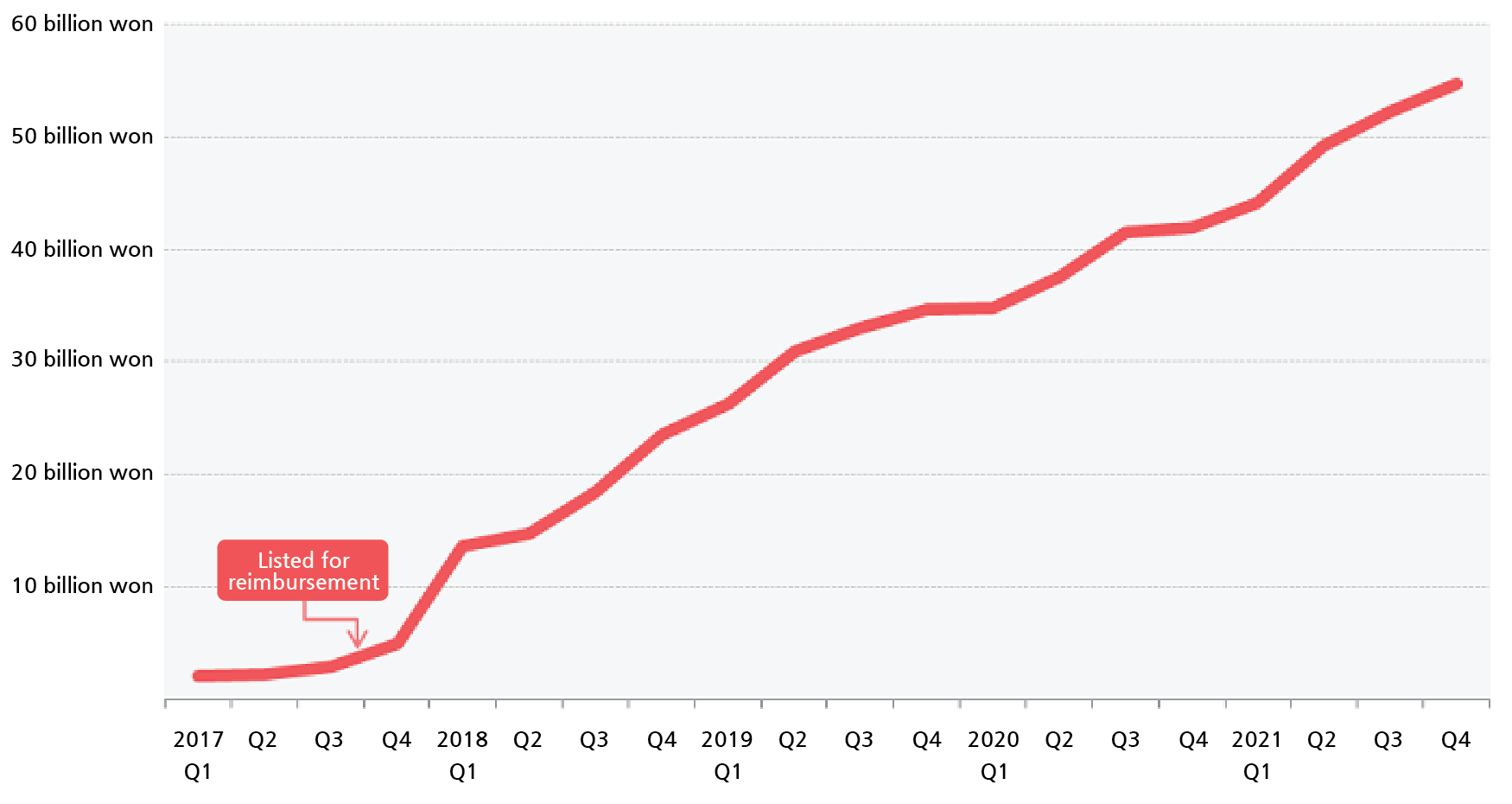
- The reimbursement expansion approval of Keytruda is expected to add wings to the sales growth of an already leading product in the domestic pharmaceutical market. It is expected that the company may achieve ₩300 billion in sales with its reimbursement expansion to the first-line, which has more patients, from the ₩200 billion sold last year. According to industry sources, the insurance benefit for MSD’s PD-1 inhibitor Keytruda (pembrolizumab) will be expanded to first-line treatment of NSCLC. This is the first time an immunotherapy drug was granted reimbursement for the first-line treatment of cancer. Also, a new reimbursement category was prepared for the drug’s use as second or higher-line monotherapy in Hodgkin’s lymphoma. Patient groups that will be newly benefitting from the reimbursement expansion are ▲ Patients with advanced (Stage IV) NSCLC (PD-L1 positive (TPS≥50%) without EGFR or ALK mutations, ▲ patients with metastatic non-squamous NSCLC without EGFR or ALK mutations (in combination with chemotherapy) ▲ metastatic non-squamous cell lung cancer without EGFR or ALK mutation (in combination with chemotherapy) ▲ adult and ages 2 or older patients who have relapsed/refractory typical Hodgkin’s lymphoma and have failed two or more therapies and failed or cannot receive autologous stem cell transplants (ASCT). The reimbursement expansion this time is expected to become a ‘catalyst’ for the explosive growth of Keytruda’s sales. Based on IQVIA, Ketyruda’s sales had surpassed ₩200 billion for the first time last year. This is a 28.5% increase from the ₩155.7 billion made in the previous year. The drug has topped the ranks with its sales for the second consecutive year. With its reimbursement expanded to first-line treatment, an area with relatively more patients, Keytruda is expected to be the first to exceed ₩300 billion in annual sales. The health authorities believe 4,000 additional metastatic NSCLC and Hodgkin lymphoma patients will receive insurance benefits with the expanded reimbursement. Simple calculation of once every three weeks (2 vials) administration at the discounted price (₩2,107,642) will bring around ₩72 million in annual sales per patient. In other words, even if only half of these potential patients are treated with Keytruda, this will bring in ₩140 billion in sales. Quarterly sales of Keytruda (Source=IQVIA) Keytruda's sales had surged when it was initially approved for reimbursement. Its sales, which stayed at ₩10 billion after its release in Korea in 2015, skyrocketed to ₩70.4 billion after it started being reimbursed as a second-line treatment for NSCLC in August 2017. In 2019, its sales exceeded ₩100 billion. It has been analyzed that the reimbursement approval played a big part in Keytruda's sales exceeding ₩200 billion only 6 years since its release. Less than 10 products including Lipitor, Avastin, Tagrisso, and Humira, had made over ₩100 billion in annual sales in the domestic prescription drug market. Among the products, Keytruday was the only product that recorded over ₩200 billion in sales as a single product. If patients start using Keytruda for first-line treatment, its annual sales may easily reach ₩400 billion. Of course, due to the expenditure-cap type RSA that was agreed upon for the reimbursement, the company’s profit may not be proportional to the increased sales. This is because the company and the authorities agreed to increase the company's share of the cost burden after undergoing 9 deliberations by the Cancer Disease Deliberation Committee. The reimbursement extension was also good news for the patients. The immune checkpoint inhibitor Keytruda treats cancer with a different mechanism of action than other existing anticancer drugs. It inhibits PD-1 (programmed death 1) proteins expressed at the surface of activated T cells, thereby inhibiting its binding to PD-L1 and activating the immune system to treat cancer. The introduction of Keytruda had changed the treatment paradigm for NSCLC, which was untreatable using targeted therapies. However, its high cost had acted as a high barrier in its access. Until now, the non-reimbursed use of Keytruda had cost nearly ₩100 million, an amount difficult to come up with unless you have private medical indemnity insurance or go to hospitals that are applied the new DRG system. However, with the reimbursement expansion, its price had fallen 25.6%, and patients will now only need to bear 5% of the cost as a copayment, which is around ₩3.5 million a year.

- Company
- Tylenol's sales amounted to ₩83.1 billion last year
- by Chon, Seung-Hyun Mar 02, 2022 05:54am
- OTC Tylenol recorded the highest sales ever. Sales more than doubled last year from the previous year due to a surge in demand for COVID-19 vaccinations. However, growth slowed in the second half of last year as demand for Tylenol was resolved. According to IQVIA, a pharmaceutical research institute, sales of the Tylenol series last year amounted to 83.1 billion won, up 118.4% from 38.1 billion won a year earlier. It is sales of four types: Tylenol, Tylenol 8-hour ER, Tylenol Cold, and Women's Tylenol. Sales of the Tylenol series did not change much from 20 billion won to 30 billion won every year, but soared suddenly last year. Sales of Tylenol and Tylenol 8-hour ER, which are used as antipyretic analgesics, surged. Sales of Tylenol and Tylenol 8-hour ER totaled 80.2 billion won last year, up 133.4% from the previous year. Tylenol's sales surged 159.4% from 24.3 billion won in 2020 to 62.9 billion won last year, while Tylenol's 8-hour ER sales rose 71.1% from the previous year to 17.3 billion won last year. It is analyzed that sales have increased significantly as COVID-19 vaccinations started purchasing Tylenol in preparation for fever and muscle pain. As COVID-19 vaccinations began in earnest in Korea from the beginning of last year, demand for Tylenol surged. Tylenol ranked first in sales among all OTCs last year. It was also pointed out that the government contributed to the surge in Tylenol's sales. The quarantine authorities informed those subject to vaccination in March last year, "If side effects such as fever occur, it is better to take Tylenol." Since then, the demand for purchasing Tylenol has soared, leading to a shortage. According to quarterly sales of acetaminophen single-drug Tylenol, it surged in the first half of last year and slowed down somewhat in the second half. Sales of Tylenol and Tylenol 8-hour ER more than tripled from the previous quarter from 10.7 billion won in the first quarter of last year to 32.9 billion won in the second quarter. In the case of Tylenol, sales more than tripled from 8.1 billion won in the first quarter of last year to 25.5 billion won in the second quarter, while Tylenol 8-hour Al also expanded from 2.6 billion won to 7.5 billion won during the same period. Sales of Tylenol and Tylenol 8-hour ER jumped sharply from the previous year to 20.4 billion won and 16.2 billion won in the third and fourth quarters of last year, respectively, but decreased from the second quarter. Sales in the fourth quarter of last year fell by half compared to the second quarter. It is analyzed that the unstable supply and demand of Tylenol has been resolved and sales of Tylenol have been on the decline through the purchase of generics. In May last year, the MFDS disclosed information that more than 60 acetaminophen single agents were on sale in addition to Tylenol, inducing the purchase of other products with the same ingredients. In June last year, the MFDS decided to cooperate with KPA, KPBMA, and KPDA in the smooth supply of Acetaminophen. KPDA also urgently implemented a plan to supply Acetaminophen drugs, which are supplied first from producers, to pharmacies nationwide.
- Policy
- Negotiations with NHIS on Actemra have been completed
- by Lee, Tak-Sun Mar 02, 2022 05:54am
- Actemra (Tocilizumab), a treatment for rheumatoid arthritis by JW Pharma, has been officially recognized as a treatment for COVID-19 in Korea. The drug, which has been used in patients with severe COVID-19 for purposes other than permission, will also be covered by health insurance benefits from March. On the 24th, the MOHW announced that Actemra is preparing to revise the regulations so that benefits can be applied as a treatment for COVID-19. Earlier, the NHIS negotiated with JW Pharma, a domestic importer and seller, to apply benefits. Through this, it is possible to apply benefits to severely ill patients with COVID-19. According to the revision of the MOHW, medical care benefits are recognized when administered to COVID-19 patients aged 2 or older beyond the scope of the existing permits of Actemra (excluding SC injections). "If a patient is admitted to an intensive care unit or a hospital room within 48 hours and needs respiratory treatment of HFNC (High Flow Nasal Canula) or higher," alternatively, it corresponds to "the case of administration to patients who rapidly deteriorate to a state in which respiratory treatment above High Flow Nasal Cannula (HFNC) is required even though they have been treated with steroid therapy and low flow oxygen therapy." Full support is provided through health insurance without the patient's copayment. Actemra, unlike in Korea, is already used as a treatment for COVID-19 abroad. The U.S. FDA decided on Actemra as a treatment for COVID-19 in June last year. The European Commission also approved it as a treatment for COVID-19 in December last year. Recently, the WHO also added Actemra to the Pre-qualification Review List for COVID-19 Treatment for reference by middle and low-income countries that have difficulty in independent drug screening. It has been used as an offline in Korea, but the problem is that the patient had to pay the full price of the drug because it was not paid. Other COVID-19 treatments approved in Korea are purchased entirely by the state and have no Pt's payment. Therefore, the medical community also requested the purchase of Actemra to the state in terms of equity. Actemra achieved 20 billion won in domestic sales last year, up 24.9% year-on-year. Currently, Actemra 80mg's price is 134,263 won, Actemra 200mg's price is 306,166 won, and Actemra 400mg's price is 537,060 won, while SC (subcutaneous injection) product is 345,682 won. Until now, patients have paid all the drug prices, but if health insurance benefits are applied, the patient will not be burdened with the drug prices. Actemra is also pushing for a change in permission to expand manufacturing sources limited to Japan due to the recent shortage of supply. It is also known that EUA plans as a treatment for COVID-19 are being considered. Meanwhile, JW Pharma also announced on the 25th that Actemra's benefit range will be expanded for the purpose of treating COVID-19 (COVID-19) in accordance with the revision announced by the MOHW. The company explained that the new revision, which will take effect on March 1, has changed its standards to reflect the status of overseas permits such as FDA EUA, clinical research literature, and related academic opinions. An official from JW Pharma said, "Considering the recent surge in confirmed cases of Omikron mutant virus, we have been closely discussing with health authorities to expand the benefits of Actemra. The EUA is also quickly proceeding with the MFDS." Actemra is an antibody treatment that treats diseases such as rheumatoid arthritis and pediatric idiopathic arthritis by inhibiting the binding of IL-6 and its receptors, a protein that causes inflammation in the body. It has been shown that it effectively lowers the mortality rate of severely ill and critically ill patients with COVID-19 and reduces hospitalization time in global clinical trials, a complication of excessive immune responses. JW Pharma acquired Actemra's domestic development and exclusive sales authority from Chugai under Roche Group in 2009 and has since been selling it since 2013 through phase 3 clinical trials for rheumatoid arthritis patients.
- Opinion
- [Reporter’s View] Why Big Pharmas 'select and focus'
- by Mar 02, 2022 05:54am
- In the famous TV show ‘Backstreet,’ CEO Baek Jong-won’s main advice and solution for small eateries suffering from slow business was to ‘reduce menus.’ Paik tells the restaurant owners to concentrate on their main menus instead of trying everything. Due to his consistent act of reducing menus in every restaurant he consults, he was fondly dubbed ‘BBunos,’ a combination of his nickname ‘BBu the homemaker’ and the ‘Avengers’ villain ‘Thanos’ who eradicated half of all life in the universe. Global big pharmas are also busy ‘reducing their menus.’ The companies are letting go of their main sources of income, in particular, products in their Consumer Health care units that are mainly consumer goods. In this sense, Johnson & Johnson’s announcement of its plan to spin off its consumer division had received much attention. The spin-off will not only transfer the baby powder product that imprinted the J&J brand on the public, but also many familiar brands including Aveeno, Neutrogena, Listerine, etc. The company had also said that the planned separation was a “momentous event” and the “biggest change in direction in J&J's 135-year history.” GSK is also spinning off its consumer healthcare unit. The spin-off, newly named ‘Haleon’ does not contain the GSK name. GSK Consumer Healthcare had been in charge of OTC drugs and consumer goods including popular products such as Sensodyne, Otrivin, and Theraflu. GSK Consumer Healthcare, which had been formed as a joint venture with Novartis, increased its size by adding Pfizer’s Consumer Healthcare business in 2018. However, the company seems to have intended to separate from the business. The company announced its plans to sell the business last year and is known to be considering its acquisition offers. The same trend is evident in other big pharmas as well. Sanofi had transferred all of its OTC drugs to its newly established spin-off of its Healthcare ‘Opella Healthcare.’ Going further, MSD had even transferred its off-patent chronic disease business to its spin-off, Organon. The global pharmaceutical companies are making such decisions to 'select and focus' on their specialty drugs, especially those in the field of oncology, immunology, and rare diseases. Of course, J&J’s decision is being suspected as a sort of ‘sham’ to pass on its responsibility for compensation for its baby powder product, which caused controversy due to the detection of carcinogens. However, the global perception in the industry is that they may survive only by focusing on severe and rare diseases. Also, it has been evaluated the industry reached a limit in growing using OTC drugs and consumer goods. On the other hand, once commercialized, innovative new drugs for severe and rare diseases bring big profit to companies. This is because these drugs may be sold at a high price due to little or no competition and the use of next-generation technology. Such restructuring of businesses through reorganizations of their business units has recently begun in earnest. J&J promised to strengthen its pharmaceutical division at the JP Morgan Health Care Conference in January and aims to achieve sales of ₩70 trillion in its pharmaceutical division by 2025 with next-generation new drugs such as anticancer drugs and CAR-T therapies. GSK also plans to focus on developing innovative new drugs and vaccines. Sanofi also stopped investing in chronic diseases and is broadening its autoimmune diseases and vaccines portfolio. For this, the company bought several early-stage research biotechs rather than those that can generate immediate sales. Last year alone, the company carried out 6 M&As with biotechs. The domestic pharmaceutical industry should eye this trend and movement of global pharmaceutical companies. Although it is impossible to directly compare companies due to the different size and focus areas, domestic pharmaceutical companies are still mainly pursuing the business strategy of providing 'many generics' rather than a single ‘wise drug'. Cash cows are necessary to develop new drugs as this costs an astronomical amount of resources, but everyone knows that it cannot be a long-term survival strategy. It's time for Korean companies to devise their own differentiation strategy on what and which areas to ‘select and focus.'
- Company
- Pfizer's 3rd attempt to reimburse ATTR-CM drug ‘Vyndamax'
- by Eo, Yun-Ho Feb 28, 2022 05:55am
- The third attempt at reimbursement for Vyndamax, a new drug for transthyretin amyloid cardiomyopathy, has been made by its company. According to industry sources, Pfizer Korea had again applied for the insurance reimbursement of its new drug that is indicated for the treatment of transthyretin amyloid cardiomyopathy (ATTR-CM). This is the company’s third attempt. Earlier last year, Pfizer failed to first designate Vyndamax as an essential medicine. In the first half of the same year, the company made the second attempt at reimbursement using the Risk-sharing Agreement but failed again. With perseverance, the company made its third attempt in 2022. Vyndamax is virtually the only treatment option available for ATTR-CM. ATTR-CM is a fatal condition with a poor treatment outcome due to a lack of specific treatment and is often mistaken for simple heart failure If not treated properly, patients with ATTR-CM have a survival period of only 2 to 3.5 years. In this area with a dire need, Vyndamax had demonstrated a reduction of cardiovascular events in ATTR-CM patients and improvement in their functional athletic ability in the six-minute walk through the Phase III ATTR-ACT study. Based on these results, healthcare professionals in Korea are also insisting on the necessity of prescribing Vyndamax. Due to its high cost, the decision lies in the will of the government and company. As the less attention paid to reimbursement listing of rare disease treatments is emerging as an issue, whether Vyndamax will bring a different result this time remains to be seen. In the ATTR-ACT study, 441 patients were randomly assigned in a 2:1:2 ratio to receive the tafamidis 80 mg dose, tafamidis 20 mg dose, or placebo, respectively. The primary endpoint of the study was the hierarchical combination of all-cause mortality and frequency of cardiovascular-related hospitalizations. The key secondary endpoints were the change from baseline to month 30 for the 6-minute walk test and the score on the Kansas City Cardiomyopathy Questionnaire–Overall Summary (KCCQ-OS), in which higher scores indicate better health status. Study results showed that the tafamidis demonstrated a statistically significant reduction in all-cause mortality and frequency of cardiovascular-related hospitalizations compared to placebo.
- Company
- Osteoporosis should be taken care of for the rest of life
- by Feb 28, 2022 05:55am
- Ha Yongchan, chairman of The Korean Society for Bone and Mineral ResearchThe Korean Society for Bone and Mineral Research has begun to improve awareness of osteoporosis treatment. This is to enable continuous treatment by recognizing the seriousness of diseases that can lead to death from fractures and improving standards. Osteoporosis is a disease in which holes are formed in bones, and when bone strength weakens, fractures easily occur even with small shocks. It is not easy to think that a broken bone usually leads to death. However, if the hip joint connecting the upper and lower limbs is fractured, various complications such as pneumonia can occur as they cannot walk and have to lie down for a long time even if surgery is performed. In a study that analyzed the cause of short-term death of fracture patients, deaths from complications such as pulmonary embolism and pneumonia after fracture were the highest. Still, there is not a high perception that osteoporosis should be treated steadily. Ha Yong-chan, chairman of The Korean Society for Bone and Mineral Research (professor of orthopedic surgery at Chung-Ang University Hospital), said in a meeting with Dailypharm, "It is natural to fracture easily when pts get older, and I think pts only need to treat the fracture area." However, fractures caused by osteoporosis cause deformities, gait disorders, and death, so it should be taken as a concept of disease, he said. He said, "The treatment rate for osteoporosis is better than before, but the one-year treatment rate for osteoporosis patients with fractures is still less than 40%. Osteoporosis patients are lower than this, he explained. The start of osteoporosis treatment is important, but persistence is more important, Ha stressed. Usually, 5 to 10 years of treatment is required, but only 10% of all patients maintain treatment for more than 5 years. He cited ▲ lack of awareness of the disease ▲ discomfort of taking medicine ▲ limited benefit standards as the reason for the poor continuous treatment of osteoporosis. The existing drug, bisphosphonate, was difficult to take, such as taking enough water and not lying down for at least 30 minutes after taking it one to two hours before meals. Side effects of bisphosphonate formulations are also one of the factors that lowered the continuous treatment rate. Fortunately, the treatment environment has improved significantly recently with the emergence of the latest drugs that require only two shots a year and minimize complications. It is evaluated that the limited standard for new drugs is still preventing continuous treatment. Chairman Ha said, Prolia was released in Korea at the lowest drug price in the world, but the benefit standard has not been resolved. According to the current standard, if the T-score is slightly higher than -2.5 in follow-up observation a year after prolia treatment, the administration will be stopped. "To minimize the side effects of stopping treatment, the drug should be able to continue to be used even if the T-score improves." Chairman Ha cited the perception of osteoporosis treatments as the reason for the limited standards. Many people, including policymakers, think of osteoporosis treatments only as "preventive drugs." He said, "We should recognize osteoporosis treatment as a concept of lifelong management, not prevention," adding, "For example, hypertension drugs are blood pressure management drugs to prevent stroke or stroke, but they do not stop because blood pressure drops due to treatment." The treatment for osteoporosis also needs to be recognized as a drug that focuses on managing osteoporosis and preventing fractures through continuous treatment, he explained. Chairman Ha believes that the deadline for administration should be extended to five years so that he can receive treatment for at least five years. He said, "It is better to receive lifelong treatment for more than 10 years, but considering the financial burden of health insurance, we should be able to increase the benefit deadline by five years as much as much as possible. Meanwhile, various activities will be carried out to improve awareness of diseases at the academic level. It includes policy symposiums for continuous treatment, revision of medical guidelines, and strengthening post-management of osteoporosis screening in national health checkups.
- Policy
- Keytruda is reimbursed as first-line at ₩2,107,642
- by Kim, Jung-Ju Feb 28, 2022 05:54am
- The insurance price of MDS Korea’s immuno-oncology drug Keytruda(pembrolizumab) inj. that is used for non-small-cell lung cancer and Hodgkin lymphoma will drop 25.6% with its reimbursement extended from the second-line to the first-line starting next month, Astellas Korea’s Xospata 40mg (gilteritinib), as well as Novartis Korea’s Lutathera Inj. that was supplied in Korea as an urgently requested drug will also be individually listed for reimbursement as an expenditure-cap type RSA after reaching an agreement with the National Health Insurance Service. The Ministry of Health and Welfare announced on the afternoon of the 25th that it had deliberated and passed the ‘amendment to the drug benefit list and the maximum ceiling price table (draft)’ that contains the changes above as an agenda at the 5th Health Insurance Policy Deliberation Committee. ◆Keytruda(pembrolizumab) = The immuno-oncology drug Keytruda, which is indicated for the treatment of non-small-cell lung cancer and Hodgkin lymphoma, was listed as second-line treatment in August 2017, and then received an indication extension in February 2018. The company had applied for the reimbursement expansion to the Health Insurance Review and Assessment Service in October 2019 and received deliberation from the Cancer Disease Deliberation Committee on April, August, November 2020, and on May 7th last year. In January of this year, HIRA’s Pharmaceutical Reimbursement Evaluation Committee deliberated and passed Keytruda’s reimbursement expansion agenda. At the time, the PBAC judged that the ICER threshold (economic evaluation result) of Keytruda in NSCLC as monotherapy and as combination therapy in squamous and non-squamous NSCLC was appropriate, and that it was cost-effective as it costs less than its alternative brentuximab vedotin in Hodgkin's lymphoma. Also, the committee considered that the drug was listed for reimbursement in all A7 countries. The company afterward reached a final agreement with the NHIS under the Ministry of Health and Welfare’s negotiation order on the RSA drug price and expected claims amount by mid-February. In the drug pricing negotiations, the company made a refund-type RSA agreement in which the company refunds a specific proportion of the claims amount and a proportion of the amount that exceeds the expected claims cap to the government. Both parties have made an agreement to set the price at ₩2,107,642, a 25.6% discount from the current cap of ₩2,833,278 in consideration of the expanded scope of use, the standard for price cap adjustment, and its fiscal impact on insurance finances. With the refund-type RSA applied, the NHIS expects the actual fiscal spending on the drug to be less than the expected claims amount.. ◆Xospata Tab40mg (gilteritinib fumarate) = Xospata, which was approved for the treatment of acute myeloid leukemia, applied for reimbursement listing in November 2020 after receiving marketing authorization in March 2020. After deliberation by CDDC in February and PBAC in September, HIRA judged that reimbursement was appropriate for the drug. At the time, HIRA considered the fact that the drug is recommended in adult patients with FLT3-positive AML in clinical guidelines and that its cost-effectiveness also meets the pharmacoeconomic evaluation data exemption drug (PE exemption drug) conditions, and is listed in 5 of the 7 A7 countries – the US, UK, Germany, Italy, and Japan. Relevant societies have also judged that the drug improved convenience in intake as an oral formulation and may become a new treatment alternative for the disease. After passing HIRA review, the company completed drug pricing negotiations with the NHIS as a refund-type RSA. In consideration of its price abroad and fiscal impact, the two parties agreed to set the price at ₩214,100 per vial. ◆Lutathera inj.(lutetium Lu 177 dotatate) = Novartis Korea’s Lutathera Inj is a radiolabeled somatostatin analog indicated for the treatment of gastroenteropancreatic neuroendocrine tumors. The drug, which was approved in July 2020, was designated an urgently requested drug when it was first supplied in November 2019 without reimbursement and reimbursed from March 2020 ever since. In November 2020, the company applied for its formal reimbursement listing to HIRA, and the authorities deliberated the case with the CDDC in April 2021 and with DREC in November of the same year. At the time, HIRA considered the fact that the drug was recommended for the treatment of patients whose condition progressed after the current standard-of-care sandostatin lar (octreotide) in clinical guidelines (clinical efficacy aspect) and that the drug met the PE exemption criteria by applying at a price lower than the lowest A7 price(cost-effectiveness aspect), and that the drug is listed in 4 of the 7 A7 countries – the US, France, Japan, and Italy. After passing HIRA review, the company completed drug pricing negotiations with the NHIS as a refund-type RSA at ₩22,104,660 per vial.
- Policy
- BeiGene's Brukinsa has been approved in Korea
- by Lee, Hye-Kyung Feb 28, 2022 05:54am
- Brukininsa 80mg (Zanubrutinib), a BTK inhibitor from Chinese pharmaceutical company BeiGene, has obtained an item license in Korea. It is the second new drug approved by a Chinese pharmaceutical company after Antengene's Xpovio 20mg (Selinexor) in July last year. On the 24th, the MFDS approved Brukinsa, a new drug for treating blood cancer in BeiGene. This drug was recognized for its efficacy and effectiveness▲ in monotherapy in adult patients with mantle cell lymphoma (MCL) who had received more than one treatment before and▲ monotherapy in WM adult patients who had received more than one treatment before. Brukinsa is a Brutons Tyrosine Kinase (BTK) inhibitor that inhibits the survival and spread of malignant B cells by blocking BTK protein, a signaling molecule that affects the survival and development of B cells. Among the drugs licensed in Korea as BTK inhibitors are Janssen's Imbruvica 140mg, AstraZeneca's Calquence 100mg, and Ono's Velexbru 80mg. Brukinsa was quickly approved by the U.S. Food and Drug Administration (FDA) as an MCL treatment in November 2019. At that time, it became famous as the first new drug to be approved by the FDA based on clinical trials in China. It then expanded its indications in September last year when it was approved by the FDA as a treatment for WM patients. Clinical trials are currently underway for CLL, MZL, and FL patients. A new drug approved by a Chinese pharmaceutical company in Korea was first released in July last year. Antengene's Xpovio 20mg (Selinexor) has been approved in Korea for anti-cancer drug which is administered to treat refractory multiple myeloma and refractory giant B-cell lymphoma.
- Policy
- President Moon said, "WHO selects Korea as a vaccine hub"
- by Kang, Shin-Kook Feb 28, 2022 05:54am
- President Moon Jae In evaluated that the government's efforts to become a vaccine hub country have paid off, saying that Korea has been exclusively selected as the "WHO Global Bio Human Resources Development Hub." President Moon posted on SNS on the 24th and said, "This is the result of being internationally recognized for Korea's biopharmaceutical production capacity and excellence in educational infrastructure." He said, "It is the evaluation of the international community that the Korean government is taking the lead in overcoming the World Health crisis by strengthening vaccine cooperation with various countries and organizations, including Hanmi global vaccine partnership." President Moon said, "Korea has become a hub country for education and training and training to increase vaccine capabilities of developing countries. We will actively share our experiences and know-how with the international community, self-sufficiency of vaccines, and resolve vaccine inequality." "It's another opportunity for us. The world's top five vaccine powers and bio-leading countries set by the Korean government are coming to reality, he said. "It will provide young people with opportunities to form world-class education and human networks, and increase the awareness and reliability of our bio companies to help hub overseas exports and vaccine production." President Moon said, "South Korea is successful based on innovation capabilities and human investment," adding, "It is constantly advancing from a country that receives aid, from developing countries to developed countries, from pursuing countries to leading countries." The WHO announced on the 23rd that it has exclusively selected South Korea as "the WHO Global Bio Human Resources Development Hub." WHO Human Resources Development Hub refers to a central institution that provides education and training for vaccine and biopharmaceutical production processes to self-sufficiency vaccines in middle and low-income countries. In response, Minister of Health and Welfare Kwon Deok-cheol said, "The fact that Korea was designated as a hub for fostering WHO manpower is to expect leadership for global health and safety by overcoming COVID-19 and responding to the next pandemic and utilizing domestic capabilities." In response to expectations, we will develop Korea into a global bio-human resource training mecca in the future, he said.
