
- LOGIN
- MemberShip
- 2026-07-05 03:27:29

- Policy
- South Korea recovered Sartan products with AZBT impurities
- by Lee, Tak-Sun Aug 11, 2021 05:58am
- The recovery of Sartan medicines containing 'AZBT' has also begun in Korea. Three products containing Irbesartan, manufactured in 2021, were voluntarily recovered by related pharmaceutical companies. Starting in Canada in May, recovery of Sartan containing AZBT is spreading around the world to Europe and Asia. The MFDS announced on the 6th that it would voluntarily collect three Irbesartan-containing items (Rovelito, CoAprovel, and Aprovel) manufactured before 2021. Sanofi, which supplies Irbesartan in Korea, pre-emptively delivered to distributors and vendors that it would voluntarily recover Irbesartan products produced before January 2021. Sanofi explained why the impurity (AZBT) produced since January 2021 is managed below the acceptable limit, but the previous manufactured batch of finished products was recovered because it needed time to derive test results. The recovery of Sanofi is due to the imminent submission of test results ordered by the Ministry of Food and Drug Safety. Also, the fact that recovery began in Europe affected it. Azido methyl bipheny Tetrazole (AZBT) is a genetic mutation that is believed to occur in the synthesis process of Sartans, a treatment for hypertension. It is different from the carcinogen NDMA detected in Valsartan in 2018. Valsartan has been temporarily recovered and stopped selling all items due to NDMA detection. In the following year, drugs containing Ranitidine were also banned from selling or recovered from NDMA. The AZBT issue began at the end of May when Canada's Federal Health Department voluntarily recalled three ingredients of drug products from nine pharmaceutical companies, including Teva and Sandoz, including Losartan, Valsartan, and Irvesartan. Since then, Korea's Ministry of Food and Drug Safety has also requested the AZBT impurity evaluation and test results to be submitted by the 14th of the month at medicines containing Losartan, Valsartan, and Irbesartan ingredients in early June, and the AZBT test results for all finished product lot numbers by the 31st of the month. This recovery in Korea has been confirmed in a test inspection of finished products since January 2021, but it seems that it was carried out preemptively because the test results did not secure the time of submission. It also appears that recalls of some products containing Losartan, Valsartan and Irbesartan began in some European countries, including the United Kingdom and Spain, last month. Industries are paying attention to the rest of South Korea's generic items that will be affected by the recovery of the original products. Currently, there are 55 products containing Irbesartan licensed in Korea. Also, not only Irbesartan but also Losartan and Valsartan are eligible for recall. This is because not only Canada but also Europe contained all three ingredients. The key is whether to secure the test results. In addition to Irbesartan, many prescriptions from Valsartan and Losartan are expected to cause inconvenience to pharmaceutical companies and medical institutions. However, foreign authorities that conduct recovery recommend not to stop administration of patients, saying that only some lot numbers are recovered and the impact on the human body is unknown.
- Policy
- Incentive-paid items for generic substitution fell to 12,757
- by Lee, Hye-Kyung Aug 11, 2021 05:58am
- 12,757 items were found to be eligible for incentives of 30% of the difference in drug prices if pharmacies dispense generic substitution, which is cheaper than prescription drugs. It decreased 48 items compared to the previous month. The HIRA recently guided the 'Billing Method of Drugs Subjected to Incentives for low-price generic substitution in August'. As of August, 25,745 items were listed on the drug benefits, with 49.5% of the drugs available for generic substitution. Among Metformine and Ranitidines, 203 items of drug sales and suspension are excluded from incentive payments. The generic substitution to low-cost drugs is a system that allows pharmacies to get back 30% of the difference in drug prices. If the doctor's prescription medicine was ₩1,000, and the pharmacist makes generic substitution with a low-cost ₩700 medicine, he will be offered ₩90, which is 30% of the difference in drug prices (₩300). Pharmacists can substitute medicines that are the same active ingredients, and are cheaper than those prescribed by doctors or dentists. In the case of syrup, etc. according to the maintenance of the drug benefit list from January 2016, the main ingredient code and representative code should be checked as the main ingredient code changes according to the production standard (total content). The review was postponed once at a welfare committee meeting in April after the proposed amendment to the Pharmaceutical Law, which allows doctors, dentists or the HIRA to make post-notifications at the National Assembly to revitalize the Generic infrastructure. The Health and Medical Development Council, which participates in the government and medical organizations, is preparing a plan to utilize the generic substitution post-notification DUR system.
- Company
- Reimbursement for Kymriah will be deliberated by CDRC
- by Eo, Yun-Ho Aug 10, 2021 05:54am
- The discussions on listing the ultra-high-priced, one-shot treatment ‘Kymriah’ for health insurance benefits will begin. According to industry sources, Novartis Korea’s first-in-class CAR-T (chimeric antigen receptor-T) treatment will be put as an agenda for deliberation in September at Health Insurance Review and Assessment Service’s Cancer Disease Review Committee (CDRC) meeting. Kymriah, which was approved in March in Korea, used the ‘approval-benefit appraisal linkage system’ to promptly apply for insurance benefits. However, the agenda was not put up for deliberation by the Cancer Disease Review Committee last month, which gave rise to harsh criticism from the Korea Leukemia Patients Organization (KLPO) to the government and Novartis on the delay in reimbursement. Kymriah will be put as an agenda for deliberation at the next CDRC meeting, but what the results will be is difficult to predict. With a single shot of the drug costing 500 million won, whether the agreement can be reached smoothly between the government and the pharmaceutical company remains unclear. However, if Kymriah is listed for insurance benefits, the drug is expected to be quickly prescribed at hospitals. Among the ‘Big-5’ tertiary hospitals of Korea, Seoul National University Hospital (SNUH), Asan Medical Center (AMC), Seoul St. Mary’s Hospital, Samsung Medical Center (SMC), and Severance Hospital are in the process of acquiring the ‘human cell management business approval’ from the Ministry of Food and Drug Safety, and the Samsung Medical Center (SMC) already obtained approval. As such, hospitals have been rapidly preparing the environment to prescribe Kymriah. In the Seoul National University Hospital, Kymriah (tisagenlecleucel) passed the drug committee (DC) review in April, and the drug is also expected to land in Samsung Medical Center in May. Kymriah developer Novartis has allowed general hospitals to receive payment for the ancillary costs by establishing Kymriah centers in their institutions. SMC and SNUH will open their Kymriah centers in May, and other tertiary hospitals are expected to follow. To establish the center, hospitals are first required to receive a permit for the human cell management business under the newly implemented ‘Advance Regenerative Bio Act.’ CAR-T therapy takes a different approach in its method of treatment. Unlike conventional drugs that are produced as finished products, for CAR-T, the hospital first collects T cells from the patient's white blood cells, then freezes and sends them to a manufacturing facility. At the facility, the T cells are genetically engineered to express the chimeric antigen receptors (CARs) that allow the T cells to recognize tumor cells, cultivated, then sent back to the hospital. In other words, after the hospital sends the raw material (patient’s T cells) to the company, the company makes the finished ‘Kymriah’ product with the raw material and sends it back to the hospital. The hospital maximizes the effect of Kymriah by using lymphodepleting chemotherapy to reduce the white blood cell count in advance. After 4-5 weeks, the processes are all complete, and Kymriah is finally infused into the patient. “Relapsed/refractory ALL patients are very rare in Korea, however, these few young patients that are diagnosed every year are in the fight for their lives,” said Chuhl Joo Lyu, professor of pediatric Hematology-Oncology at Severance Hospital. “As in the cases seen overseas, the government, pharmaceutical company, and the medical community should work together to create an environment for these young patients to enable timely treatment with Kymriah.” Kymriah is the first CAR-T therapy and the most expensive drug in Korea up to date. The drug is indicated for adult patients with diffuse large B cell lymphoma (DLBCL) and young adult and pediatric patients with acute lymphoblastic leukemia (ALL). Both indications are for late-stage patients that are in relapse post-transplant or in second or later relapse after two or more lines of therapy.
- Policy
- Pfizer is working hard to introduce Prevenar-20 in Korea
- by Lee, Tak-Sun Aug 10, 2021 05:54am
- Prevenar-13 Pfizer, which supplies Prevenar-13, pneumococcal vaccine that ranks overwhelmingly at the top of the domestic market, is also working hard to introduce the next-generation vaccine. It started clinical trials for East Asians to introduce Prevenar-20, which was approved by the U.S. Food and Drug Administration (FDA) in June. Prevenar-20 has a preventive effect on seven additional pneumonia streptococcus aureus serotype in Prevenar-13. Pfizer Korea received approval from the MFDS on the 30th of last month for phase 3 for PF-06482077. It is a candidate for the 20-valent pneumococcal vaccine developed by Pfizer. On June 8, the U.S. FDA approved the product name Prevenar-20. The vaccine is used to prevent invasive diseases and pneumonia that occur in adults aged 18 and older with 20 types of streptococcus aureus serotype. Prevenar-13 currently on the market prevents 13 serotypes, including 1, 3, 4, 5, 6A, 6B, 7F, 9V, 14, 18C, 19A, 19F and 23F. Prevenar-20 is known to prevent seven more serotypes, including 8, 10A, 11A, 12F, 15B, 22F and 33F. The clinical trial, approved by the MFDS, is interpreted as a test to see the effectiveness of adults in the region to be released in East Asia, including Korea. Clinical trials are conducted in Japan, Korea, and Taiwan to assess the safety and immunogenicity of the 20-valent pneumococcal vaccine for adults aged 60 or older. The total number of test subjects is 1,400, with 500 participating in Korea alone. Clinical treatment will be carried out at 12 medical institutions, including AMC in Seoul. Based on this clinical trial, Pfizer is likely to apply for permission in Korea. As Prevenar-13 currently has an overwhelming market share of 90%, sales are expected to rise as soon as Prevenar-20 is released. Last year, Prevenar-13 imported $73.94 million, more than doubling from $35.3 million a year earlier. This is attributed to the increased demand for pneumonia prevention due to COVID epidemic. Pfizer's competitors are also introducing next-generation vaccines. Pneumoccal 15-valent Conjugate Vaccine Vaxneuvance by MSD was approved on the 16th of last month. Astellas is also working on the development of Pneumococcal 24-valent Conjugate Vaccine.
- Company
- Marken establishs a cGMP cold-chain center in Korea
- by Nho, Byung Chul Aug 10, 2021 05:54am
- Image of Marken’s cold-chain logistics center that will be established near the Incheon Airport in October this year A cGMP compliant cold-chain center for the distribution of pharmaceuticals that will soon be complete in Korea is receiving attention. According to industry sources, the global biopharmaceutical·clinical trial logistics company Marken and its parent company UPS have worked together to establish a 1,000-pyeong cold chain storage and distribution center in Korea. The center will be completed in October. The importance of the cold-chain system has emerged in the process of distributing COVID-19 mRNA vaccines. Marken’s establishment of the new distribution center near the Incheon Airport is expected to contribute to the establishment of an upgraded biopharmaceutical distribution standard in Korea. An official from Marken Korea said, “To respond quickly to the surge in demand for cold-chain storage and shipping of pharmaceuticals in Korea and abroad, the company had begun construction of a GMP-compliant pharmaceutical storage and distribution center in June, which will be complete in October this year.” The Marken Cold-chain Distribution Center will be around 3305 square meters (approximately 1000 pyeong) and be equipped with various facilities suited for storage of clinical drug products, medical devices, vaccines, and biologics that require temperature control at room temperature (+15 to +8°C) or refrigeration (+2 to +8°C), freezing (15 to -25°C), and cryogenic (-80°C) storage. In addition, a liquid nitrogen (LN2) storage unit will also be prepared for the exclusive storage of cell and gene therapies. Marken has a logistics network in 17 countries in the Asia-Pacific region. With the opening of the Incheon Airport logistics center, the company will have a total of 7 GMP cold-chain drug storage facilities, 4 liquid nitrogen filling locations, and 2 clinical kit production facilities in Asia. Marken currently manages 110,000 cold-chain drug product and biological sample shipments every month in more than 220 countries around the globe. The company uses a GPS tracking system to track the route of all products in real-time and operates a 24-hour global control center that monitors and manages the tracking system. Also, the company offers differentiated and specialized services such as validation for the full course from storage, distribution to shipment of pharmaceuticals, and regulatory and compliance consulting services for each country. For more information on the storage and distribution of pharmaceuticals products in Korea and overseas, please contact info@marken.com.
- Policy
- Supply of Oseltamivir has declined 55% since COVID outbreak
- by Lee, Hye-Kyung Aug 10, 2021 05:54am
- After COVID-19 epidemic, the supply of respiratory medicine has dropped by nearly half. According to the HIRA's "Medicine Distribution Newsletter No. 1" published on the 5th, the supply of respiratory drugs in spring and winter since 2020 decreased by 40.6% compared to the same period last year, and the supply of Oseltamivir used to treat flu also decreased by 55.1% compared to the same period last year. According to the period, 10,719,850 respiratory drugs (based on ATC code 'R05'cough and cold preparation OTC) were supplied from November 2019 to April 2020, while only 597,997,447 were supplied, down 40.6% from November 2020 to April 2021. During the same period, the supply of Oseltamivir (based on ATC code "J05AH02") decreased 55.1% from 155,716 to 69,870. The information center has launched a newsletter for drug distribution to share changes in the drug distribution information management system and recent trends and issues. According to the newsletter, as of 2020, the total number of drug suppliers is 3,654 and the size of the distribution market is ₩75.9 trillion per year. By business type, wholesale drug dealers account for 3,170 (86.8%), pharmaceutical manufacturers and importers account for 484 (13.3%) and companies based in Seoul and Gyeonggi account for 48.9% by region. The top 5% of drug suppliers account for 71% of the total drug distribution market. The proportion of manufacturers and importers directly supply medicines to medical institutions is 10.6% of all transactions, and in most cases, they supply them to medical institutions through wholesalers.The distribution amount of medicines supplied to medical institutions among all drug supplies in 2020 is ₩30.3 trillion, and the amount of distribution other than the supply of medical institutions such as transactions between companies is ₩45.5 trillion. The supply amount of Rx drugs was ₩27 trillion (89%), the supply amount of OTC was ₩3.3 trillion(11%), and most of the medicines supplied were Rx drugs.
- Policy
- Vaccination agencies are expected to work too hard in Oct
- by Lee, Tak-Sun Aug 10, 2021 05:54am
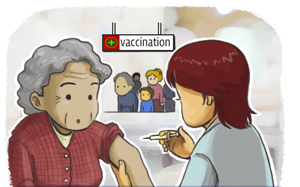
- Confusion is expected in October, when COVID vaccinations and flu vaccinations overlap, due to a significant increase in the work of inoculation institutions. In October, the largest number of people are scheduled to receive the second round of COVID vaccinations, and vaccinations to prevent seasonal flu will also begin in earnest. Front-line health centers, hospitals, and clinics expect that vaccination work will be excessive from reservation due to increased demand for vaccinations. The MFDS said Tuesday that it released 878,000 people of the seasonal flu vaccine for the first time this year. A total of 28 million flu vaccines are expected to be released this year. The MFDS said that considering 14.6 million people eligible for free vaccination (children, pregnant women, and elderly) and the target vaccination rate (80.0% for children aged 6 months to 13 years, 50.0% for pregnant women, and 85.0% for elderly people, about 11.92 million are expected to be vaccinated. Flu vaccines usually begin in September, with the largest number of people administered in October and November. Since December to March is the flu epidemic in Korea, many people are given vaccines before then. The problem is that large-scale COVID vaccinations are also scheduled in October. The KDCA announced its plan to vaccinate people in their 40s and under on the 30th. There are 17.77 million people in their 40s and They plan to complete the first round of inoculation from August 26 to September 30. Those in their 40s or younger will be vaccinated with Pfizer or Moderna, and the second vaccination is likely to be crowded in October because the interval between the first and second vaccinations is four weeks. Therefore, the flu vaccine and COVID vaccine will overlap in October, adding to the work at the front site. The MFDS plans to increase the number of people working for stable supply to help the rapid national lot release of COVID and flu vaccine. Therefore, COVID vaccine will be released in the new infectious disease vaccine test and the flu vaccine will be released in the vaccine test. However, health centers and local hospitals, which are difficult to expand personnel immediately, are unlikely to be able to fully respond to the vaccine demand. As a result, it is feared that vaccination will not take place on time or that there will be an accident of misuse. An official from the pharmaceutical industry said, "In October, the work load of front-line inoculation agencies will increase significantly due to the overlapping demand for flu vaccines and COVID vaccinations. If we fail to respond properly, there is a possibility that the number of people waiting will increase and the vaccination will be pushed back." The official said, "The government should make a thorough plan for inoculation in consideration of this."
- Opinion
- [FOCUS] Why retrieve the insurance paid for CA?
- by Chon, Seung-Hyun Aug 09, 2021 06:04am
- The tug-of-war between the health authorities and pharmaceutical companies over the negotiation on the restitution of insurance claims paid for the brain function enhancer choline alfoscerate (cholinergic agents) has been now ongoing for 8 months. In December of last year, the Ministry of Health and Welfare (MOHW) ordered the National Health Insurance Service (NHIS) to negotiate with choline alfoscerate companies by February 10th of this year to agree on 'returning the full amount of insurance that was claimed for the drug, from the date the clinical trial protocol was submitted to the Ministry of Food and Drug Safety to the date the indication is removed if the clinical trial fails' to retrieve the claims paid for the drug. 8 months had passed since the order was issued, and 6 months had passed from the first deadline that was set for negotiations. However, the only change made to the terms of the negotiation was that the period of insurance retrieval had been pushed back from the 'date the clinical trial protocol was submitted to the 'date the protocol was approved,' and the breakdown of negotiations and deadline extensions have repeated continuously. Some companies have agreed to the 20% retrieval rate proposed by the NHIS. In other words, these companies will be paying back to the NHIS 20% of the amount that was prescribed from the date the clinical trial protocol was approved by MFDS to the date the indication is deleted if their clinical reevaluations for their choline alfoscerate products fail. However, many other pharmaceutical companies, including those that are earning much from choline alfoscerate products, have not been able to reach an agreement with the NHIS even in the several additional negotiation periods that were provided. Even the 20% rate was considered to be too great a risk for these companies. The clinical reevaluations will be completed in 6.5 years at the latest. If companies agree on the 20% rate, and the trial fails after 6.5 years, each company may have to pay out more than 100 billion won each. Due to this burden, many companies are trying to reach an agreement by proposing a lower recollection rate. Some companies are also considering discounting their drug prices in advance while requesting a recollection rate that is lower than 20%. Their opinion is that it may be more efficient to share the risk early on rather than paying out a large sum at once if the clinical trial fails. However, the biggest reason why the negotiations are being indefinitely extended is that there is no justification for the negotiation itself. There had never been a case where the companies had to agree to a restitution rate of the prescribed amount, presuming that the clinical trial would fail even before the trial has begun. There also has been no social consensus made on whether it is reasonable to demand restitution for the failure of a clinical trial that was conducted for reevaluation purposes, for a product that had already been approved and was distributed according to due processes. Clinical reevaluations are conducted to reexamine the safety and efficacy of drugs that are on the market. Selling the drugs that are under clinical reevaluations during the trial period is not illegal because the approval granted by the MFDS stays valid. The MFDS approved the renewal of the product license for choline alfoscerate drugs in 2018. In other words, the authorities in charge of approving drugs acknowledged the safety and efficacy of choline alfoscerate drugs just 3 years ago. Therefore, the legal dispute over whether the attempt to retrieve the claimed insurance benefits is reasonable if the clinical reevaluations fail is deemed inevitable. The health authorities had never once asked the companies to pay back the prescribed amount of a drug that failed reevaluations. The health authorities are also now at a dead-end in this never-ending tug-of-war. With some companies already reaching an agreement with the authorities, the authorities have no choice but to impose sanctions on the pharmaceutical companies that refuses to negotiate and take measures such as removing the company's drugs from the reimbursement list. However, pharmaceutical companies will naturally take legal action if their drug is removed from the reimbursement list. The negotiations on choline alfoscerate products have deepened the confusion across the pharmaceutical industry. One question that lingers is: did the health authorities not expect such fierce resistance when they began negotiations? Did they really not expect the pharmaceutical companies to take legal actions in every direction, filing suits to nullify the negotiation, suspend execution, as well as file constitutional and administrative appeals? Even the period of retrieval that had been modified recently was changed inevitably due to unexpected variables. Choline alfoscerate is approved under 3 indications: to treat ▲ secondary symptoms and degeneration due to cerebrovascular defect or degenerative organic brain syndrome ▲ emotional and behavioral changes ▲ senile pseudo-depression. Of these, only ‘secondary symptoms and degeneration due to cerebrovascular defect or degenerative organic brain syndrome’ is subject to reevaluation, and the remaining two indications will be removed regardless of the clinical trials' success or failure. If the time of retrieval is set to 'the date the clinical trial protocol was approved', pharmaceutical companies will have to pay back insurance for the two indications that had been removed before the clinical reevaluations had begun. This indicates that the retrieval period has not been through from the start. If pharmaceutical companies have to pay back several years' worth of prescriptions due to the failure of their clinical trials, patients could also demand repayment for the drugs that they have taken during those years. The government may also be criticized for allowing the sale of such a problematic drug. A clear explanation seems to be necessary as to why the government is causing more harm than good by pushing ahead with the negotiations for recollection of insurance benefits.
- Policy
- It will be reviewed by the Regulatory Reform Committee
- by Lee, Jeong-Hwan Aug 09, 2021 06:02am
- Whether or not to introduce the "no change in manufacturing" policy of consignment generic, which is being opposed by the domestic pharmaceutical industry, will eventually be decided based on the results of the Regulatory Reform Committee review. The MFDS finished collecting opinions on the related industries by March this year after announcing the regulations last year, began reviewing internal regulations, and even completed reporting to the president and the National Assembly. On the 8th, the pharmaceutical industry is stressed by the MFDS' move to prevent pharmaceutical companies with consignment generics from changing manufacturing sources. The MFDS has begun discussions such as the regulatory reform legal affairs office's own review of the Regulatory Reform Committee, which is necessary to introduce administrative regulations restricting changes to manufacturers. Until just before the review of the Regulatory Reform Committee, work related to regulations on new and strengthened regulations has been carried out. Regarding the reason for the introduction of the restriction on change of manufacturers, the MFDS explained, "It is to continuously improve the quality of medicines by strengthening the management of manufacturing methods such as the manufacturing process of Rx drugs." The MFDS said that "systematic management and international harmony are needed for changes in the manufacturing method of finished drugs that can affect the quality, safety and effectiveness of impurities." The KIPCO and the KPBMA are confronting the MFDS, saying that it is excessive and double regulation to prevent changes in manufacturers now that the "1+3 Restricted Act" has been introduced and implemented. The reason why regulations against the domestic pharmaceutical industry have proceeded such as administrative notice, opinion check, and internal regulatory review by the Ministry of Food and Drug Safety was uncertain whether the pharmaceutical 1+3 restriction law could pass the National Assembly. The 1+3 Act is a strong regulation that limits the number of marketing permits for generic and improved new drugs to four. The pharmaceutical industry could not oppose the MFDS' plan to solve some problems of domestic generics by banning manufacturers from changing their manufacturers because it was uncertain whether the 1+3 law would pass the National Assembly. The 1+3 Act was implemented to limit the number of commercial permits for new drugs as well as generics. In response, the pharmaceutical industry is arguing that introducing restrictions on changes in manufacturing sources is excessive regulation and overlapping regulation. In the end, it is expected that the regulation will be introduced in Korea based on the results of the Regulatory Reform Committee review. It will review the MFDS' internal regulatory review and decide whether to implement or withdraw the objection. An official from a local pharmaceutical company said, "The pharmaceutical companies are in conflict with the MFDS' position that prohibition of changes in manufacturing is excessive regulation and that no country in the world has freely released changes in manufacturing." "In particular, it was difficult for the pharmaceutical industry to oppose because it was unclear whether the 1+3 Act was passed by the National Assembly at the time of the administrative notice banning manufacturers from changing their sources," he explained. He added, "Regulatory Reform Committee has also lifted restrictions on 1+3 by the MFDS, so it may decide to withdraw the ban on changing manufacturing sources." Meanwhile, the MFDS did not elaborate except that it was conducting an internal regulatory review in this regard.
- Company
- Antengen Korea's blood cancer treatment Xpovio is approved
- by Eo, Yun-Ho Aug 09, 2021 06:02am
- The Chinese pharmaceutical company Antengene’s blood cancer drug ‘Xpovio’ has entered the domestic market. According to industry sources, Antengene Korea’s first-in-class XPO1 inhibitor Xpovio (Selinexor) was approved by the Ministry of Food and Drug Safety (MFDS) on the 29th of last month. The drug had been previously designated an Orphan Drug in Korea through a priority review process. Xpovio is a first-in-class drug that selectively inhibits the XPO1 nuclear export protein that was approved ▲ in combination with dexamethasone for the treatment of adult patients with relapsed or refractory multiple myeloma (rrMM) who have received at least 4 prior therapies and whose disease is refractory to at least 2 proteasome inhibitors, at least 2 immunomodulatory agents, and 1 anti-CD38 monoclonal antibody; and ▲ as a monotherapy for the treatment of adult patients with relapsed/refractory diffuse large B-cell lymphoma (rrDLBCL) who have received at least 2 prior lines of treatment. XPO1 inhibitors are expected to be used in combination with other various therapies (drugs) to improve treatment outcomes in various diseases. Currently, 5 therapies that contain Xpovio are recommended under the National Comprehensive Cancer Network (NCCN®) Guidelines. Most patients with MM eventually suffer from relapse or become refractory diseases. For Diffuse large B-cell lymphoma (DLBCL) patients that failed systemic therapy, their prognosis and the chance of cure or long-term disease-free survival declines every time the condition worsens after treatment. Therefore, a dire need had existed for safer and more effective therapies to treat rrMM and rrDLBCL. Minyoung Kim, General Manager of Antengene Korea said, “I am confident that this oral selective inhibitor of nuclear export protein will improve the quality of life of patients with rrMM and rrDLBCL in South Korea, and bring renewed hope to this patient population.” Xpovio’s approval was based on the two Phase II studies - STORM and SADAL. In the STORM study, Xpovio achieved a 26% Overall response rate (ORR) and a clinical benefit rate (CBR) of 39.9% in combination with dexamethasone for the treatment of adult patients with relapsed or refractory multiple myeloma (RRMM) who have received at least four prior therapies. In the SADAL study that was conducted on relapsed DLBCL patients who have received two or more prior therapies, Xpovio monotherapy demonstrated an overall response rate (ORR) of 28.3% and a complete response (CR) rate of 11.8%.
