
- LOGIN
- MemberShip
- 2026-07-05 13:54:15
- InterView
- KRPIA will introduce advanced new drugs and seek co-growth
- by Eo, Yun-Ho Apr 26, 2021 05:52am
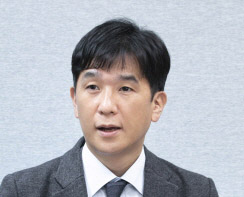
- Dong-Wook Oh, Chairman of KRPIA The Korean Research-based Pharmaceutical Industry Association (KRPIA), which represents the multinational pharmaceutical companies that are considered the key source for the supply of new drugs, welcomed a new leader last February. KRPIA’s newly appointed Chairman Dong-Wook Oh (51) has been leading Pfizer Pharmaceuticals Korea since 2015. Oh's appointment has brought on various changes within the organization. For the first time in three years, KPRIA has appointed a Korean to head its organization. Demand for the appointment of a Korean leader had been rising as it would enable better communication with relevant ministries, as the access and supply of new drugs is the primary objective of multinational pharmaceutical companies Moreover, with the pipeline of multinational companies weighing towards high-priced drugs, the ability to communicate with the government and list such drugs is being emphasized. In fact, related ministries, such as the Ministry of Health and Welfare (MoHW ) also tend to prefer Korean leaders. Former chairman Avi BenShoshan (former CEO of MSD Korea) was the first foreigner to be elected in 7 years since 2011, after the appointment of the former CEO of Pfizer Dong-Soo Lee (58), former CEO of GSK Korea Jin-Ho Kim (70), and former CEO of Janssen Korea Ok-Yeon Kim. The rise of the dominance of Korean leaders cannot be welcomed without reservations. However, from KRPIA’s perspective, there is no doubt that now is more important than ever. With Oh’s appointment, a new board of directors (BOD) has launched, including a new Vice-Chair and Director. Also, Min-Young Kim (51) joined KRPIA as a policy executive, a position that was left vacant for 6 months after executive director Seong-Ho Kim (63) resigned from his post last April. Dailypharm Korea met with Chairman Dong-Wook Oh, who is leading the change at KRPIA, to hear about the assosication's future direction and challenges. -Regardless of rights and wrongs, a difference certainly exists between companies led by a Korean and a foreigner. As the new chairman, how are you planning to run KRPIA? The trend these days is to pursue a win-win model in which Korean society, Korean patients, and business companies can coexist. In special circumstances like the current COVID-19 outbreak, promptly introducing vaccines to Korea was an extremely difficult task as the whole world needed vaccines. However, KRPIA and branch offices of multinational pharmaceutical companies were dedicated to securing a stable supply of the vaccine, persuading their headquarters, and cooperating with the government. The COVID-19 vaccine case is a perfect example of the efforts made by pharmaceutical companies to support the local community by persuading their headquarters and cooperating with the government. The win-win model is also important in terms of economic contribution. In the age of the 4th industrial revolution, barriers to entering the biopharma industry are higher than in other industries because the know-how and technology transfer of leading global companies is very extremely important. KRPIA has been acting as the bridge connecting domestic companies to form partnerships with global pharmaceutical companies through open innovation so that these companies may grow to establish themselves as leaders in the field by developing their own know-how and capabilities based on partnerships with the global companies. - As you have mentioned, it is encouraging that multinational companies were able to persuade their headquarters to improve Korea’s treatment and prevention environment. However, advanced new drugs that ㅊcannot be properly handled under Korea’s current healthcare system are pouring in right now. Persuading company headquarters may get more and more difficult in this aspect. That is true. With the development of advanced technology, ‘cures’ are now emerging. In other words, ‘one-shot treatment’ technologies that can fundamentally treat diseases caused by genetic defects are currently being developed. The key issue is whether the insurance models established in the past may embrace these innovative treatments. Although the drugs are good news for the patients, as it is an unprecedented technological advance, new financing methods and insurance models need to be introduced to allow the innovative drugs to be included in Korea's systems and policies. The government has also made much effort to deal with this challenge, such as by implementing the ‘Safety and Support Act for Advanced Regenerative Medicine and Advanced Biopharmaceuticals.' From now on, it will be important to bring together the relevant organizations, government, and various stakeholders to create an appropriate model for the introduction of advanced treatments. At this stage, it is too early to decisively point to a certain model and follow its direction. With no precedents available, I believe much social discussion will be needed in the future. - More countries, including the U.S. and China, have been referencing Korea's drug prices for more than just advanced new drugs. It seems ironic that the transparency of our system, which has led to more companies referencing Korea's prices, may ultimately cause supply difficulties in Korea. The phenomenon may seem positive. in terms of sharing information and in verifying that Korea's position in the global market has risen to the level where other countries wish to refer to Korea's prices. However, considering that Korea's drug prices are referenced in large overseas markets such as the US and China, and the influence power of Korea's price will continue to increases gradually, the dreaded situation of drugs being not released at all in Korea may really become a reality. In other words, I am very concerned about the 'Korea passing phenomenon,' in which the introduction of new drugs to Korea becomes delayed due to Korea's reference pricing system. KRPIA feels grateful the government made the decision to implement systems like RSA (Risk Sharing Agreement) as a means to overcome such situations. Currently, drugs eligible for RSA are limited, therefore continuous support is required for the system to expand flexibly and to allow more drugs to overcome such difficulties by devising various models. -‘Clinical investment’ cannot be left out when discussing the contributions made by multinational pharmaceutical companies. However, research investment in Korea is undoubtedly concentrated on Phase 3 research. Does KRPIA have plans to expand its funding to basic research? The association has been actively promoting and taking interest in domestic clinical trials and investment, as well as in the investment trend in the high value-added Phase 1 and 2 research. According to an annual R&D investment status survey conducted by KRPIA, in addition to the overall size of the field, the field of basic research has also been growing continuously recently. Discussions have been held to attract more early-phase clinical trials, and we encourage our members to also do so. KRPIA expects to expand investment to basic clinical studies and will continue to make further efforts in the future. - WIth regards to the direction discussed for KRPIA in the future, What is KPRIA's top priority challenge? Tackling challenges in the drug pricing system to allow the smoother introduction of new drugs is a priority. Also, our key objective is to find ways to transparently and reasonably improve various systems to allow the approval, distribution, and introduction of new drugs. More specifically, we need to find reasonable methods to flexibly expand the application of beneficial systems like the RSA and to utilize the scope, methodology, and real-world data in the PE exemption system.

- Company
- Hankook Korus Pharm is preparing for Sputnik V
- by Kim, Jin-Gu Apr 26, 2021 05:51am
- Hankook Korus Pharm announced on the 23rd that it has begun preliminary work for domestic approval of Sputnik V, COVID-19 vaccine developed by Russia. According to Hankook Korus Pharm, the company has recently requested documents related to the permit from the Russian Direct Investment Fund (RDIF) and is preparing the necessary materials for the permit. An official from Hankook Korus Pharm said, "We have inquired the MFDS for other domestic permits and necessary matters. We are preparing for it as the recent discussion on the introduction of Sputnik V in Korea has progressed." In particular, President Moon Jae-in ordered the inspection. There are steps that must be taken to introduce Sputnik V in Korea. First, it is a contract with the Russian Direct Investment Fund (RDIF). As with other vaccines, the amount and timing of introduction should be negotiated with the supplier. Formal approval from the MFDS is also required. The approval of the MFDS is expected to be the key to approval by the European Medicines Agency (EMA). Currently, the EMA is undergoing formal review of Sputnik V. It is expected that the evaluation results will be announced as early as May. If the EMA approves Sputnik V, it is expected to speed up domestic introduction. In Korea, Hankook Korus Pharm and Huons Global each have signed a contract for consignment production of Sputnik V. Hankook Korus Pharm has decided to produce 500 million doses. Huons decided to build a facility capable of producing more than 100 million doses per month.
- Policy
- The authorities is monitoring Sputnik V's overseas data
- by Kim, Jung-Ju Apr 26, 2021 05:51am
- Regarding the information that Cheongwadae and the licensing authorities are trying to introduce Russia's COVID-19 vaccine, Sputnik V, the Central Disease Control Headquarters said, "It is still in the stage of collecting and monitoring foreign data," and that no application for permission has been received from the company. The Central Disease Control Headquarters explained the current situation in connection with the review of the introduction of the Russian vaccine Sputnik V at the' COVID-19 Regular Briefing' today (22nd). Recently, President Moon Jae-in agreed with his staff that there is a need to review the introduction of COVID-19 vaccine in Russia. Prior to this, the National Security Council (NSC) also reportedly included the introduction of Russian vaccines in the process of discussing the need to secure additional vaccines at a standing committee meeting on the 15th. People's Power Rep. Jongheon Paik sent an official letter to the Ministry of Foreign Affairs on the 15th, asking the government to collect relevant safety information for 12 countries, including Russia, Algeria, and Mexico, which are vaccinating Sputnik V. Regarding this, the Central Disease Control Headquarters said, “Sputnik V's safety data is being collected mainly by the MFDS and the Ministry of Foreign Affairs. The current stage for Sputnik V is data collection and various overseas monitoring stages." However, the authorities revealed that it is not in the process of applying for a permit yet in relation to the company's permission application process. The Central Disease Control Headquarters added, "The company has not applied for permission from the MFDS at this time. We are collecting data from various channels to secure data and understand foreign trends."

- Policy
- Price cuts for Lixiana and Lenvima due to increased usage
- by Kim, Jung-Ju Apr 26, 2021 05:51am
- Prices of Daiichi Sankyo Korea’s Lixiana tab. (edoxaban tosylate hydrate), Eisai Korea’s Lenvima cap. (Lenvatinib mesilate), and Janssen Korea’s Trenfya Pre-filled Syringe inj. (guselkumab_genetic recombination) are expected to fall by 2.5% to 4.5% due to their increased usage. Prices of 10 products including Han Wha Pharma’s Hanwha Topiramate Tablet, Hanwha Donepezil Tablet, and Yooyoung Pharmaceutical’s Cnoxane Injection will also fall by 5.8% to 28.8% at most, following voluntary price cut requests by the companies. Also due to an expansion in the scope of usage, prices of Sanofi-Aventis Korea’s Eloxatin inj., and Lilly Korea’s Alimta inj. will be cut by 1.5% and 2.6% in advance. According to industry officials, the Ministry of Health and Welfare (MOHW) will make amendments to its drug reimbursement list on May 1st that contains the abovementioned changes. ◆Price-volume agreement type ‘A’ = Next month, three products will be applied type ‘A’ of the Price-Volume Agreement (PVA), a system used to manage prices of post-listed drugs. PVA Type A is applied to new drugs that were through drug pricing negotiations for which the actual claims amount of the same drug exceeds over 30% of the expected volume discussed during the negotiation; in which case the National Health Insurance Service (NHIS) and the pharmaceutical company undergo further negotiation to reduce the price. Accordingly, the prices of Eisai Korea’s Lenvima cap. 4mg and 10mg will be cut by 2.5% each, and Janssen Korea’s Trenfya Pre-filled Syringe inj. by 4.5%. ◆Price-volume agreement type ‘B’ = In addition, three products that fall under PVA type 'B’ will be listed next month after negotiations. PVA Type B is applied to new drugs that have been listed for 4 years that did not receive pricing adjustments under Type A, but the actual claims amount of the same drug exceeds over 30% of the expected claims amount and requires adjustment of its ceiling price. From the eligible drugs, NHIS negotiates with the pharmaceutical companies whose claims amount ▲increased over 60% from the previous year or ▲increased by 10% but the amount exceeds 5 billion won. Under PVA Type B, prices of Daiichi Sankyo Korea’s Lixiana Tablet 15mg, 30mg, and 60mg will be each reduced by 2.7%. ◆Products that applied for voluntary price cuts = When a pharmaceutical company applies to lower the drug price of its listed drug to an amount lower than the set ceiling price, the government adjusts the insurance drug price of the product to the requested amount. Among 10 products that voluntarily requested price cuts, 8 are Han Wha Pharma’s products. Price of Hanwha Topiramate tab. 100mg will fall by 10.1%; Hanwha Quetiapine tab. 25mg by 8.4% and 100mg by 14.1%; Hanwha Escitalopram tab. 5mg by 19.5% and 10mg by 22.3%; and Hanwha Donepezil tab. 10mg by 11.9% and 5mg by 28.8%. Price of YooYoung Pharm’s Cnoxane inj. 60mg will also be reduced by 5.8%, and 80mg by 11%. ◆Price cuts in advance for expanded scope of use = Also, the government reduces prices of drugs taking into account the expected increase in the claims amount and rate of increase of drugs that received approval for expanded scope of usage through additional indications, etc. According to the price-cut formula, drugs with an expected additional claims amount of 7.5 billion won to 10 billion won will undergo price cuts between 3.6% to 5%, according to the rate of increase in their claims amount. 4 products will undergo price cuts in advance due to the expanded scope of usage. The price of Sanofi-Aventis Korea’s Eloxatin inj. 5mg/mL will be cut by 1.5% for each strength, and Lilly Korea’s Alimta Injection will be cut by 2.6% for each strength.
- Opinion
- [Reporter’s View] Interest in the role and vision of GAs
- by Eo, Yun-Ho Apr 26, 2021 05:51am
- Multinational pharmaceutical companies have been eagerly hiring employees for Government Affairs (GA). Even companies that originally had no such position have newly created the position. Until now, the distinction between areas covered by Market Access (MA) and GA was unclear, and GA's target 'government institutions’ were limited to directly relevant ministries such as the Ministry of Health and Welfare (MOHW), Health and Insurance Review & Assessment Service (HIRA), and National Health Insurance Service (NHIS). This was why in quite many companies, the MA managers also took care of GA. However, such industry practices have changed much over the past few years. Many multinational pharmaceutical companies including Novartis, Takeda Pharmaceuticals, Roche, AstraZeneca, Pfizer, BMS, and MSD have been reinforcing their policy area. Also, other companies including Boehringer Ingelheim, Viatris, and Organon have hired or are in the process of hiring GAs. This change is largely due to the trend of new drugs. With the advent of the ‘'high-priced drug era,' the government and pharmaceutical companies are finding it increasingly difficult to see eye to eye on the price of such drugs. As a result, whether and when the government would list a drug for reimbursement became the determinant that makes or breaks the success of a new drug. However, as issues that cannot be resolved through communication with only ‘directly related ministries’ began to accumulate, the pharmaceutical companies started to seek new solutions such as the National Assembly. This raised the need for experts from various backgrounds including the National Assembly, the government, and the media. The Korean Research-based Pharmaceutical Industry Association (KRPIA) has also been paying more attention to strengthen its GA-focused HC Policy committee. However, internal and external conflict regarding this increased interest in GAs exists. Contrary to MAs who are typical pharmaceutical industry experts that have a high understanding of drugs and drug pricing systems, GAs are often not from the industry. Therefore, the perception that ‘GAs do not know the industry well' does exist within the industry. Externally, although MAs and GAs both deal with government authorities, the specific authority targeted by each is different. For example, from the MOHW’s perspective, it is natural that it would feel uncomfortable if a drug-related issue is raised by the National Assembly. In such situations, if MA represents the MOHW and GA represents the National Assembly, friction is due to arise. Therefore, only companies that achieve synergy between MAs and GAs may succeed in using GAs. The internal message needs to be integrated first before taking further steps. However, one warning to bear in mind is that companies should not simply use GAs for the generation of profit in the ‘‘'high-priced drug era.’ Publicizing drug issues is like a double-edged sword. Bear in mind how the COVID-19 vaccine issue became embroiled in a political battle.
- Company
- Ninlaro can be prescribed at general hospitals
- by Eo, Yun-Ho Apr 26, 2021 01:34am
- Ninlaro, an oral multiple myeloma treatment that solves the problem of insurance benefits, is prescribed at general hospitals. According to related industries, Ninlaro (Ixazomib), an oral medication option in the field of multiple myeloma (MM), is used in Korea, including Samsung Medical Center, Seoul National University Hospital, the Catholic University of Korea Seoul St. Mary's Hospital, Hwasun Chonnam National University Hospital, Kyungpook National University Hospital, Pusan National University Hospital, and Chungnam National University Hospital. it has passed the drug commitee (DC) of major medical institutions nationwide. Ninlaro was designated as an orphan drug in May 2017 and was listed last month. This is because the risk sharing agreement (RSA) could not be used due to the selection of competing drugs. Takeda Korea, a supplier, has also provided free domestic supply since October 2019. This drug, a proteasome inhibitor, proved its efficacy in the TOURMALINE-MM1 study, a phase 3 clinical trial in 722 patients with relapsed or refractory multiple myeloma. According to the results of the study, Ninlaro, Revlimid (Lenalidomide), and Dexamethasone therapy had an average progression-free survival (PFS) of 20.6 months, which was higher than that of placebo, Lenalidomide and dexamethasone combination therapy at 14.7 months. Meanwhile, three-drug therapy including Revlimid for multiple myeloma is recommended as a major treatment option in the NCCN guidelines and ESMO. Reblimide's 'R' is the backbone of these three-drug therapies. Amgen's Kyprolis (Carfilzomib) is used as KRd (Kyprolis, Revlimid, dexamethasone) therapy, BMS' Empliciti (Elotuzumab) is used as ERd therapy, Ninlaro is used as IRd therapy, Janssen's Darzalex (Daratumumab) is used as DRd therapy. Deok-Hyun Yoon, professor of oncology at Asan Medical Center, said, "Multiple myeloma with many elderly patients and frequent recurrence will gradually increase in number of patients and increase the socioeconomic burden as the population ages. In the treatment of relapsed and refractory multiple myeloma patients for a long period of time," "The treatment strategy that keeps this from progressing is important, and one of the factors to consider for this is patient compliance." He added, “The combination therapy of oral three-drugs through Ninlaro is a treatment option that lowers the patient's treatment burden for outpatient and administration time and increases medication convenience. It is recommended for patients first.”
- Policy
- Rucalo & Xeljanz are subject to usage monitoring in 2Q
- by Lee, Hye-Kyung Apr 26, 2021 01:32am
- Yooyoung Pharmaceutical's chronic constipation treatment Rucalo(Prucalopride Succinate) 1mg and 2mg were included in the price volume agreement monitoring. Pfizer Korea's Xeljanz (Tofacitinib Citrate) 5-10mg, Novartis Korea's Revolade (Eltrombopag) 25-50mg also decreases in price due to drug price negotiations as the usage increases. The NHIS recently unveiled the drugs subject to monitoring in the second quarter of 2021 price volume agreement negotiations (Type Ka and Na) on the website. The targets for monitoring in the second quarter of this year are 187 items in 89 drug groups. The price volume agreement negotiation system is a method in which the NHIS and pharmaceutical companies share the risk to health insurance finances. In the case of drugs with a sharp increase in usage, drug prices are reduced through negotiations with the NHIS. Type Ka under price volume agreement negotiations is a case in which the amount of the same product group claim that has been agreed upon by the NHIS for drug price negotiations, estimated billing amount negotiations, drug price increase adjustment negotiations, and scope expansion negotiations has increased by more than 30% from the expected billing amount. For Type Na, in the case of the same product group that has been negotiated with Type Ka or that has not been negotiated with Type Ka and has passed 4 years from the date of initial listing, the previous type will increase by 60% or more or 10% or more from the previous year's bill every year from the day after the end of the analysis target period. This applies to cases of more than ₩5 billion. Meanwhile, drugs with an annual billing amount of less than ₩1.5 billion, drugs with an upper limit price lower than the arithmetic average price of the same ingredient, low-cost drugs, and shortage prevention drugs are excluded from the price volume agreement. The drug groups included this time include Sanofia Ventis Korea's Dupixent Prefilled Inj.(Dupilumab) 300mg, Jeil's' Apydamole ER Cap, and Hyundai's Dipyanox ER.
- Company
- The market share of Hanmi & Chong Kun Dang's is 16%
- by Kim, Jin-Gu Apr 26, 2021 01:29am
- BetmigaCompetition for the generic drug Betmiga (Mirabegron), an overactive bladder treatment, is intensifying in the outpatient prescription market. According to the drug market research agency UBIST on the 20th, the Mirabegron market scale in the first quarter reached ₩18.3 billion. It increased by 9% compared to ₩16.7 billion in the same period last year (1st quarter of 2020). It is an analysis that the addition of generics has contributed to the expansion of the market size. Hanmi Pharm and Chong Kun Dang released Mirabek and Selebeta consecutively in June and July of last year through the avoidance of Betmiga patents. The sales of both items totaled ₩1.4 billion in the third quarter of 2020. The prescription amount for the two items increased to ₩2.3 billion in the fourth quarter, then to ₩2.9 billion in the first quarter of this year. In half a year, prescription performance more than doubled. Generic market share also doubled from 8% to 16% during this period. It is possible to exceed ₩10 billion in annual prescriptions. The prescription amount of the original Betmiga in the first quarter was ₩15.4 billion, down 8% from ₩16.7 billion a year earlier. As the drug price of Betmiga remains almost the same as before, it is interpreted that generic drugs have a direct effect on the decline in original performance. Astellas has postponed the government's disposition of drug price cuts following the release of generics to filing an administrative lawsuit. However, from March this year, the upper limit price was cut by 5.5% according to the price-volume agreement. From 2Q, competition in the Mirabegron market is expected to intensify. This is because Mirabek and Selebeta's generic for exclusivity period ended in February of this year. According to the MFDS, 26 companies in addition to Hanmi and Chong Kun Dang have received the generic for Betmiga license. Betmiga is an overactive bladder treatment launched by Astellas in October 2015. It became a representative item at the same time as it was released. The annual prescription amount is ₩28.8 billion in 2016, ₩41.9 billion in 2017, ₩54.8 billion in 2018, ₩64.7 billion in 2019, and ₩65.1 billion in 2020. About 40 domestic companies challenged the patent. Since 2015, it has filed a request for an invalidation trial and a negative trial for confirming the scope of rights for material patents, formulation patents, crystalline patents, and use patents. Hanmi and Chong Kun Dang won generic for exclusivity. The generic for exclusivity period was from May 4 last year to February 3 this year.

- Company
- Domestic drug Rosuzet/K-CAB sales performance is very good
- by An, Kyung-Jin Apr 26, 2021 01:28am
- Lipitor Lipitor, a treatment for hyperlipidemia, kept the lead in outpatient prescription sales. Drugs developed with domestic technology such as Rosuzet and Zemiglo, led by HK inno.N's K-CAB, increased sales despite prolonged COVID-19. Original drugs are on a decreasing trend after patent expiration. According to UBIST, a drug research institute on the 20th, Pfizer's Lipitor took the lead in overall outpatient prescriptions with ₩43 billion in the first quarter. Lipitor is an Atorvastatin-based treatment for hyperlipidemia, which Pfizer Korea introduced to the domestic market in 1999. After the expiration of the patent, the insurance drug price has dropped to half, and more than 130 generics have been poured out, but except for 2017 alone, it has maintained the lead in prescription sales for the past 10 years. However, the uptrend has slowed. Lipitor reduced the size of quarterly prescriptions by 8.5% compared to ₩47 billion a year earlier. In January and February, prescriptions decreased by 9.9% and 11.2%, respectively. The prescription amount in March was ₩15.3 billion, recovering to the previous year's level. Hanmi's Rosuzet ranked second in prescriptions with an outpatient prescription amount of ₩26.6 billion, up 16.3% year-on-year. Rosuzet is a hyperlipidemia complex consisting of two ingredients: Rosuvastatin Calcium and Ezetimibe. Since its launch at the end of 2015, it has been ranked No. 1 in the same ingredient market. It is analyzed that the strategy of entering the market before competitors while securing the right to use Ezetimibe from the patent holder MSD was effective. Rosuzet recorded an increase of more than 10% each month compared to the previous year, even when there were many restrictions on face-to-face sales marketing activities due toCOVID-19 incident last year. Rosuzet surpassed Gliatamin in the second half of last year, exceeding ₩8 billion in monthly prescriptions. In March, it set its own highest prescription record at ₩9.4 billion and the monthly prescription amount exceeded ₩10 billion. Daewoong's Gliatamin amounted to ₩23.2 billion in outpatient prescriptions in the first quarter of last year, down 1.7% from the same period last year. Gliatamin is generic containing Choline alfoscerate, a brain function improvement agent. As the government imposed two sanctions, including reduction in reimbursement and negotiations for redemption, and pharmaceutical companies protested, an unprecedented legal battle is expected, but the market impact of prescription drugs is still strong. During the same period, the competitive item CKD Gliatilin Soft Cap is ranked 9th overall with outpatient prescription performance of ₩19.8 billion, up 1.2% from the same period last year. HK inno.N's K-CAB showed an unrivaled growth rate, rising 54.7% year-on-year to ₩22.5 billion in prescriptions in the first quarter of last year. K-CAB (Tegoprazan 50mg) is a P-CAB-based anti-ulcer drug released by HK inno.N in March 2019. In gastric parietal cells, it represents a new mechanism of action that inhibits gastric acid secretion by competitively binding the proton pump and potassium ions located in the final stage of acid secretion. The monthly prescription for K-CAB in the first year of its release rose from ₩1.7 billion to ₩5 billion. After securing the indication for GERD as the first indication, the amount of prescriptions increased further with the addition of the indication for gastric ulcer treatment in July of the same year. In January and February this year, when most pharmaceuticals were sluggish, the prescription ranking rose by two steps in the first quarter. It is evaluated that the joint sales strategy with Chong Kun Dang, which has differentiated mechanisms compared to the existing PPI and strong sales power in the digestive system field, created synergy. LG Chem's diabetes combination drug Zemimet's outpatient prescription for the first quarter was ₩20.8 billion. It changed its own prescription record, rising 12.2% from the same period last year. Zemimet is a combination drug that combines Metformin with Zemiglo, a new diabetes drug based on DPP-4 inhibitors developed by LG Chem. Since 2016, it has signed a co-promotion contract with Daewoong and has been selling it jointly. Eutropin, a growth-promoting hormone developed by LG Chem, doubled from the same period last year as it was prescribed ₩17.9 billion worth in the first quarter. Since it was listed on the list of selective benefits at the end of 2018, it has grown rapidly in the prescription drug market. Patent expiration drugs, which are copyrighted by global pharmaceutical companies, still rank at the top of the outpatient prescription market, but the uptrend did not show the same trend as in previous years. The quarterly prescription size of the top 10 outpatient prescription drugs with expired patents such as Boehringer Ingelheim's high blood pressure combination drug Twynsta, Sanofiaventis' antithrombotic drug Plavix, Gilead Science's hepatitis B treatment Viread, and AstraZeneca's hyperlipidemia treatment Crestor declined. Twynsta's outpatient prescription amount fell 7.7% YoY to W21.8bn in 1Q. Twynsta is a hypertensive combination drug that combines ARB-based Telmisartan and CCB-based Amlodipine Besylate. Yuhan Corporation has been selling jointly since 2010, but sales have declined compared to K-CAB since the third quarter of last year. The two hepatitis B treatments that once dominated the prescription drug market had poor prescription performance. Viread barely maintained ₩20 billion, with prescriptions falling 5% in the first quarter. Baraclude by BMS Pharmaceutical, a rival drug, was ₩16.3 billion, down 5.1% from the previous year, ranking 20th in the prescription ranking. For Plavix and Crestor, the amount of prescriptions decreased by 7.5% each. For dementia treatment Handok Aricept, the quarterly prescription amount decreased by 7.3%. Aricept developed by Eisai was changed from Daewoong to Handok in Korea for some items such as Aricept and Aricept Evess in May of last year. The quarterly prescriptions for MSD's diabetes combination drug JANUMET and Astellas Pharmaceutical's prostatic hypertrophy treatment Harnal fell 3.5% and 6.2% respectively.
- Tamiflu hit hard by COVID-19, prescription drops 99.9%
- by Chon, Seung-Hyun Apr 23, 2021 05:53am
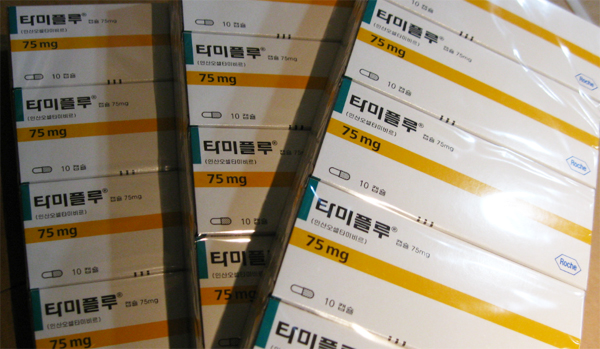
- The market for the influenza (flu) treatment ‘Tamiflu’ has virtually become moribund this year. Its market size fell 99.9% due to the rapid drop of flu cases in the prolonged coronavirus disease-2019 (COVID-19) pandemic. According to the pharmaceutical market data research firm UBIST on the 22nd, outpatient prescription of ‘oseltamivir’ recorded 10.27 million won in the first quarter of this year. This is a 99.9% drop from the 8.3 billion won recorded in the first quarter of the previous year. This is the second consecutive quarter in which virtually no prescriptions were written for oseltamivir, the main ingredient of Tamiflu. The prescription sales amount of oseltamivir in the fourth quarter of last year was 25.42 million won. Quarterly outpatient prescription sales of oseltamivir (Unit: 1 million won, Source: U-BIST) The Tamiflu market had a repetitious pattern where most of its prescriptions were made during the flu season - the first and fourth quarter of each year. In the fourth quarter of 2018 and first quarter of 2019, the prescription record of Tamiflu was 18.9 billion won and 7.2 billion won, respectively. The market stayed strong until the fourth quarter of 2019, maintaining a market size of 7.5 billion won. However, in the latest flu season that started in the fourth quarter of last year, the Tamiflu market has virtually become non-existent. Experts owe this change to the prolonged COVID-19 crisis. The improved personal hygiene management has significantly reduced the incidence of infectious diseases, which consequently would have reduced the number of hospital visits. According to the Korea Disease Control and Prevention Agency (KDCA), the number of suspected flu patients per 1,000 outpatients during the first 8 weeks of this year were 2.4, 2.4, 2.6, 2.3, 1.9, 1,9, 1.9, 2.0, remaining well below the national epidemic threshold of 5.8. Weekly no. of suspected flu patients per 1,000 outpatient population during week1-13 in 2020·2021 (Unit: no. of ppl, Source: KDCA) The number of suspected flu patients per 1,000 outpatients from week 1 to week 8 of the previous year were 49.1, 47.8, 42.4, 40.9, 28.0, 16.4, 11.6, and 8.5. Comparing the two periods, it is evident that the number of flu cases has decreased substantially. The number of suspected flu patients per 1,000 outpatients during weeks 9-13 of this year was similar to those in the previous weeks in January to February, around 1-2 patients. The prescription amount of oseltamivir by product shows that only Tamiflu had produced results, making 10.27 million won in the first quarter of this year. Chong Kun Dang is in charge of the local sales and distribution of Tamiflu. Other oseltamivir products that had raised over 1 billion won in the Tamiflu market in the past, including products produced by Hanmi Pharmaceutical, Kolon Pharmaceuticals, Yuhan Corp., and Jeil Pharmaceutical, showed no results during the first quarter of this year.
