
- LOGIN
- MemberShip
- 2026-07-06 12:21:32

- Policy
- What is the solution for Remdesivir/generic competitiveness?
- by Lee, Tak-Sun Jun 19, 2020 06:21am
- Kim Young-ok, director of pharmaceutical safety bureau at the MFDS There was no communication between the MFDS and the pharmaceutical industry due to the COVID-19 crisis that began in Korea from the end of January. Since the 'Director of pharmaceutical safety bureau at the MFDS-CEO Meeting in 2020' was postponed indefinitely on February 12, the news of the MFDS was only occasionally available through data and articles. The 'Online Video Conference between the MFDS and the factory managers in the pharmaceutical industry' held on the 2nd and 9th attracted attention as it was a place of communication after a long time. The MFDS says it will continue to expand such non-face-to-face video conferencing and investigation. Officially met with reporters this year, Kim Young-ok, director of pharmaceutical safety bureau at the MFDS, also selected keywords of the MFDS as a solution to non-face-to-face environmental changes and generic competitiveness measures after the COVID-19 outbreak. In addition to the reporter's meeting with director Kim Young-ok held on the 16th, there was also a story about the homework facing the MFDS in COVID-19 crisis. These include, for example, special imports of Remdesivir and clinical trials of COVID-19 treatments. The following is a summary of the meeting with Director Kim Young-ok. After COVID-19 incident, how will the factory survey be conducted? "As the non-face-to-face environment becomes common, it is inevitable to change. Some are already doing so. For example, if there is a due diligence report from the PIC/s member countries, it replaces the actual investigation. I'm going to try a method that I can see even if I don't go, and I think I can connect to the company and employees through video equipment to look at facilities, equipment, etc. Korea has good IT technology and networks, If it goes well, I think these things will be enlarged and become everyday." Will the policy briefing sessions proceed in a non-face-to-face manner in the future? "I recently had a videoconference with the factory manager of a pharmaceutical company, and I plan to expand it in the future because it was a place where I could communicate with the field without face-to-face. There are several technical and unfamiliar parts. There are many effective aspects. The policy briefing session is also looking for ways to make it non-face-to-face, and it is also considering ways to post content on Youtube and so on, so that it does not end in one time. Counseling is also being prepared so that the videoconference can proceed as much as possible." In this non-face-to-face situation, can clinical trials of COVID-19 treatment be conducted properly? "The clinical trials for new drug development should also prepare for system maintenance according to non-face-to-face. Change has already begun.. In the case of COVID-19 treatment, it is difficult for clinical trial operators to contact and even obtain consent. The agency has made improvements to ensure that clinical trials can be carried out smoothly. As a result, 12 clinical trials related to COVID-19 treatment and 2 vaccines have been approved." How is the public-private partnership to strengthen the competitiveness of generic drugs? Paradoxically, international confidence in medical products in Korea has been increasing a lot since COVID-19. I think Korean medicine should enter the global market with this opportunity. It is discussing strengthening international competitiveness of generic drugs through public-private councils in this regard. There are two main objectives. The first is to provide accurate information to the people, and the second is to make 'K-Generic' grow into the future industry. In order for these things to work, we need to help them enter the global market. The MFDS is planning to proceed with international cooperation with local governments so that Korean companies can obtain product approvals quickly from overseas countries. The public-private council plans to announce the final conclusion in late June." How is the cause of NDMA detected in Metformin being investigated? “We plan to draw a final conclusion through the NDMA investigation committee. We are investigating with the manufacturer with the detected item. We went through due diligence to understand the situation. When the data is gathered in the committee, it seems that scientific conclusion will be reached. However, it seems difficult to complete the cause investigation within a short period of time because there are various facts (causes) in the process.” How is the discussion of accident compensation due to the NDMA case going on? "This issue is also being discussed through the public-private council. However, I think we should see the lawsuit result in the Valsartan case. I intend to participate if it goes through legislative assembly with regard to personal contributions." How is the proceedings of special import for Remdesivir going? "We are in the process of discussing with Gilead and the KCDC. The timing and quantity of supply will be decided in a consultation process. Gilead is also actively negotiating. These drugs need to be approached in that respect because the company has more publicity than taking private profits. Gilead knows well." Isn’t the reevaluation of Choline alfoscerate formulations too late? “We are going at our own pace. The schedule of the MFDS was in June, and it seems to be going as it was. In the meantime, there were data limitations, and thus, manufacturers were asked for additional data. Some experts reviewed it internally, and some evaluations were conducted by the evaluation agency. Currently, Pharmaceutical Affairs Review Committee’s meeting is scheduled to be held and it will be asked if a special reevaluation is appropriate. If a special reevaluation is conducted, it is planned to seek advice on how appropriate it is. When the results are announced, we will take steps to organize the position of the MFDS and publish it soon. However, the Committee is not a deliberative body, but an advisory body.”
- Policy
- Lee Nak-yeon, would continue to support COVID-19 development
- by Lee, Jeong-Hwan Jun 19, 2020 06:20am
- 민주당 코로나19 국난극복위원회 이낙연 위원장(왼쪽)과 전혜숙 부위원장Chairman Lee Nak-yeon urged the MOHW and the MFDS to fully compensate for the cost of R&D so that domestic COVID-19 vaccines and therapeutics can contribute to the world. On the 17th, Chairman Lee attended the 'One-Health Strategy Debate on Future Infectious Diseases X' hosted by the Democratic Party of Korea’s COVID-19 National Overcoming Committee. Chairman Lee said that even if domestic COVID-19 vaccines and treatments are not developed for the first time in the world, policy support and cost compensation should be sufficiently provided. In particular, he pointed out that the new infectious diseases, including COVID-19, are caused by the spread of common infectious diseases, and that the 'one-health research system' between the government, industry, and academics should be promptly established. "In recent meetings with pharmaceutical representatives, the development of COVID-19 vaccine is delayed compared to the initial forecast, the more this is done, the sooner the health research system needs to be established." Lee said. Chairman Lee said, “We hope that vaccines and treatments will be made in Korea for the first time in the world, but they have sufficient strategic and industrial value even if they are not the first. It is clear that the message will be supported to the end. The MOHW and the MFDS must fully compensate for the R&D expenses as the President promised." He added, "If the domestic pharmaceutical industry develops a therapeutic drug and makes a profit, it will be reassuring to give it back. We look forward to the day when the Korean pharmaceutical industry will contribute beyond the prevention and diagnosis to the treatment and prevention of humanity."
- Policy
- Dexamethasone would be difficult to use as direct treatment
- by Lee, Jeong-Hwan Jun 19, 2020 06:20am
- While Dexamethasone focused global attention as a candidate for the COVID-19 treatment, the government decided that Dexamethasone would be difficult to use as a direct treatment. The government explained that Dexamethasone, which is considered a relatively old drug, is used to alleviate severe inflammation rather than directly treating COVID-19. On the 17th, at 2 pm, the head of the Central Disease Control Headquarters, Jung Eun-Kyeong, answered the question of using Dexamethasone in a regular briefing question and answer. Dexamethasone is attracting attention as a result of a clinical study published in the UK that significantly lowers the mortality rate of severe patients. However, Jung Eun-Kyeong believes that Dexamethasone would be difficult to use as a fundamental solution to directly treat COVID-19 infection. Head Jung Eun-Kyeong said that Dexamethasone is a steroid-based drug, and although it can be expected to relieve severe inflammation, it is not enough to expect the effect of eliminating the virus itself. In particular, The head hoped that overseas research result for Dexamethasone would not have much effect on the amount of Remdesivir, which is pursuing special import for COVID-19 treatment. She said, "Dexamethasone is a common drug that is used primarily to reduce inflammation. Medical experts have suggested that this drug reduces inflammation, but it also reduces immunity and requires attention. I think it's not a drug that fundamentally treats COVID-19 infection, but an anti-inflammatory drug." She added, "It is necessary to discuss experts such as clinical doctors to determine whether clinical research of Dexamethasone (for direct treatment of COVID-19) is needed. I don't think this medicine will affect other medicines (such as Remdesivir)."
- Company
- “Immunotherapy Tecentriq, a crucial turning point for TNBC"
- by Eo, Yun-Ho Jun 19, 2020 06:20am
- Professor Im Seock-ah “The release of immunotherapy makes a significant difference in treating triple-negative breast cancer with limited treatment options.” To this date, treating the triple-negative breast cancer (TNBC), reacting negatively on all receptors (estrogen, progesterone and HER2), has not been struggling with high unmet medical need. Programmed death-ligand 1 (PD-L1) inhibiting immunotherapy Tecentriq (atezolizumab) is now getting the limelight as it has been newly indicated to treat patients with TNBC. Roche Korea (President Nic Horridge) convened a press conference on June 17 at the Westin Chosun Seoul regarding the shift in TNBC treatment paradigm. On Jan. 30, Korea’s Ministry of Food and Drug Safety (MFDS) approved Tecentriq, in combination with nanoparticle albumin-bound (nab) paclitaxel, to treat patients with PD-L1 positive, unresectable, locally advanced or metastatic TNBC. The indication made Tecentriq to be the first and only immunotherapy to treat patients with TNBC in Korea. In the IMpassion130 trial, the combination of Tecentriq and nab-paclitaxel demonstrated median progression free survival (mPFS) of 7.5 months in first-line treatment of patients with PD-L1 positive metastatic TNBC, and lowered the risk of progression or death by 40 percent compared with nab-paclitaxel alone. In the same patient group, the Tecentriq combination therapy marked the median overall survival (mOS) at 25.0 months. Professor Im Seock-ah at the oncology department of Seoul National University Hospital said, “The Tecentriq combination therapy demonstrated a meaningful improvement in PFS and mOS longer than two years in patients with metastatic TNBC. We can anticipate the treatment option to be a crucial turning point in treating metastatic TNBC with high unmet medical needs.”

- Company
- KRPIA-KPBMA welcome MOHW revising stepped pricing reduction
- by Eo, Yun-Ho Jun 18, 2020 06:28am
- “We sincerely welcome the Ministry of Health and Welfare’s reasonable decision.” The pharmaceutical industry, especially the companies preparing an ownership change in drug item, seemed to be relieved with the latest decision by the Korean government. On June 17, Ministry of Health and Welfare (MOHW) preannounced the revised Standard of Pharmaceutical Decision and Adjustment that ultimately exempted stepped drug pricing reduction on transferred drugs. So far, the pharmaceutical industry has been greatly concerned of the government possibly applying stepped drug pricing reduction on the drug products transferred due to corporate restructuring. The controversial Section ‘Ba’ revised The issue of pricing reduction on the transferred drug was first raised when the Standard of Pharmaceutical Decision and Adjustment was revised in February. The Section Ba (바) in the February revision, according to the Pharmaceutical Affairs Act Paragraph 2 of Article 89, stipulates a product transferred by a change in the ownership would be priced at a lower pricing between the final upper limit pricing and calculated pricing. In other words, an item’s pricing could be brought down depending on the number of listed generics and the revised drug pricing conditions the item qualifies for. Pfizer Pharmaceutical Korea (with Pfizer Upjohn Korea) and MSD (with Organon), for instance, are preparing to transfer a number of originals for their split and they were initially expecting significant damage. Also Takeda Pharmaceuticals that recently transferred its antidiabetic pipeline to Celltrion was not completely free from the issue. In case of Pfizer Pharmaceutical Korea transferring Lipitor (atorvastatin) to Pfizer Upjohn Korea, healthcare reimbursement on the first-in-class item would be removed at first. And when the item reapplies for the reimbursement listing, the original would be considered as a generic with over 20 other generics already listed, and Lipitor would be priced at 85 percent of the lowest pricing of other same substance drug. But the newly revised Section Ba stipulates when a same company re-applies for reimbursement listing of an already-listed but removed item, its pricing would be set to a lower pricing either by the final upper limit pricing or by the pricing calculated by the Article 2. Basically, the government newly established a separate regulation to maintain the original pricing of an item transferred to another company due to corporate merger or acquisition. Industry against the February revision, urged the government to revisit the change After the preannouncement of the first revision in February, Korean Research-based Pharmaceutical Industry Association (KRPIA), as well as Korea Pharmaceutical and Bio-Pharma Manufacturers Association (KPBMA), have conveyed their official statement and urged the government to exclude the items transferred by corporate restructuring from the pricing reduction. KRPIA, representing the global pharmaceutical companies in Korea, has been demanding the government to make an exception in the revised drug pricing system via an authoritative interpretation. The organization claimed the revision did not agree with the initial objective of the regulation to follow the principle of differentiating the drug pricing by recognizing the endeavor to develop a novel drug. KPBMA also supported KRPIA’s argument by demanding the government to assure the status of a first-in-class drug (mostly a novel drug), and by questioning the government’s negative intention to ‘prevent unfair listing of a generic.’ However, the industry’s complain is seemingly subsiding fast as MOHW even set down a separate regulation instead of the demanded authoritative interpretation. KRPIA official said, “The issue could have gravely impacted the novel drug business. We sincerely welcome the government’s decision to prevent making an innocent victim while agreeing with the original objective of the regulation.” KPBMA official also commented, “The decision to sustain the pricing of transferred original drug was appropriate and well reflected the reality of the industry. By exempting the stepped pricing reduction on the transferred item, pharmaceutical companies would feel less burdened when diversifying the business model and collaborating with other partners.”
- Policy
- Tagrisso, approved phase III clinical trial
- by Lee, Tak-Sun Jun 18, 2020 06:28am
- Tagrisso, the third-generation medicine for metastatic non-small cell lung cancer with certain types of abnormal EGFR genes is gradually expanding its treatment area. Recently, the results of Phase III clinical trial that proved the effectiveness of Tagrisso as an adjuvant therapy after surgery were released at the American Society of Clinical Oncology (ASCO 2020). The effectiveness of the patient's preoperative adjuvant therapy is also verified at this time. The MFDS approved the clinical trial for 'NeoADAURA' in Tagrisso on the 15th. It is a multinational clinical trial, with 351 patients participating. Of these, 22 are domestic patients. It is also a long-term test scheduled to start in July this year and continue through January 2029. In this study, patients with resectable non-small cell lung cancer, which are positive for epidermal growth factor receptor (EGFR) mutation, are administered as a prior adjuvant therapy alone or in combination with chemical therapy to compare Tagrisso and standard chemotherapy. AstraZeneca has named the test the 'NeoADAURA' test. Earlier, in ASCO 2020 held in May, ADAURA Phase III intermediate results to prove Tagrisso's 'post-surgery adjuvant therapy' were released and made headline. In a study of 682 patients with stage I~III non-small cell lung cancer who had resected the tumor site, Tagrisso was found to reduce the risk of recurrence or death by 83% in patients with stage 2~3A, the primary endpoint. In addition, the risk of death was reduced by 79% in the secondary endpoint including stage Ib patients. If ADAURA is a verification of adjuvant therapy after surgery, NeoADURA, which is being performed at this time, can be said to be a verification of preoperative adjuvant therapy before surgery. A third-generation anti-cancer agent, Tagrisso is indicated ▲ for the first-line treatment of patients with metastatic non-small cell lung cancer (NSCLC) whose tumors have epidermal growth factor receptor (EGFR) exon 19 deletions or exon 21 L858R mutations, as detected by an FDA-approved test and ▲ for the treatment of patients with metastatic EGFR T790M mutation-positive NSCLC, as detected by an FDA-approved test, whose disease has progressed on or after EGFR tyrosine kinase inhibitor (TKI) therapy . However, insurance benefits have not yet been applied as a primary treatment. Nevertheless,domestic sales amounted to ₩79.2 billion, ranking sixth among all drugs based on IQVIA.
- Policy
- What criteria did it decide whether to introduce Kaletra?
- by Kim, Jung-Ju Jun 18, 2020 06:28am
- What criteria did the government decide whether to introduce Remdesivir and Kaletra, which are used internationally as a treatment for 'COVID-19'? The government explained that the US FDA recently canceled the Hydroxychloroquine's emergency use of 'COVID-19' and that Korea is also considering whether to introduce it in consideration of the global clinical situation. Central Disease Control Headquarters the director of the headquarters deputy director of the Korea Centers for Disease Control and Prevention Jun-Wook Kwon, Vice Head of the Central Disease Control Headquarters, replied to this through a questionnaire at the regular briefing of the Central Disease Control Headquarters today (16th). Currently, the United States has canceled the emergency use of Hydroxychloroquine, and the Korean government has also reviewed this as an important matter and has virtually stopped clinical trials. In our case, the number of patients is rapidly declining, and in the United States, several clinical studies have reported the effects of side effects or insignificant effects, so it is not actually implemented. Vice Head Kwon said, "Currently, our quarantine authorities are applying or recommending that the treatment guidelines recognized or accepted by experts through the Infectious Diseases Association be applied in first-line clinical trials, and the urgent decision of Remdesivir, which was conducted by the US National Institutes of Health, was also made through various reviews by experts such as the Infectious Diseases Association and the Central Clinical Committee." Kaletra is similar to Remdesivir. The reason why experts in the United States are not recommending the use of treatment guidelines is another reason why our authorities are not introducing Kaletra. Vice Head Kwon said, "We will also consider this if the effectiveness of treatment is negative through foreign situations or several papers for effective treatment. However, clinical trials are being conducted in Korea if the test results have not yet been shown."

- Policy
- MFDS, published COVID-19 vaccine clinical trial guidelines
- by Lee, Tak-Sun Jun 18, 2020 06:28am
- The MFDS announced on the 16th that it has published guidelines to help early entry into the clinical trial of COVID-19 vaccine and support its commercialization. The main contents are: ▲requirements for quality data of clinical trial drugs ▲considerations for non-clinical studies such as toxicity tests cConsiderations for the first clinical trial ▲considerations for setting safety, efficacy, and immunogenicity evaluation items ▲The World Health Organization (WHO)’s COVID-19 vaccine Guidelines (Appendix). Development status of COVID-19 vaccines Meanwhile, the MFDS provides customized consultations to 11 companies developing COVID-19 vaccines through the 'Rapid Examination Promotion Group for K-Vaccine' and supports them to quickly enter the clinical trial stage. The Group consists of the 'Exclusive Examination Team' that oversees vaccine screening, the 'Situation Support Team' dedicated to internal and external business cooperation, and 'external expert advisory groups' such as academics and hospitals. Currently, 11 cases including 2 cases of clinical approval and 9 cases of non-clinical development are supported. An official from the MFDS, "We plan to actively support vaccine developers by providing new scientific information and clinical trial information at home and abroad so that the COVID-19 vaccine can be developed in Korea soon."
- Product
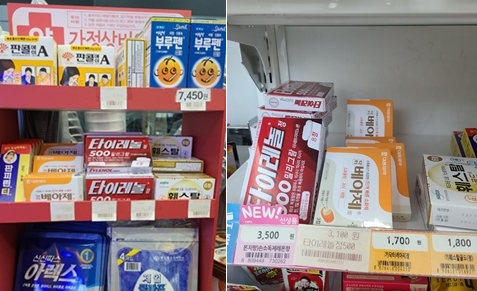
- Why Tylenol short in pharmacy, but still plenty in GS25?
- by Jung, Heung-Jun Jun 18, 2020 06:27am
- As of June 15, Tylenol is sold out in online pharmacy Pharmacies in Korea are experiencing a long-term shortage of Tylenol 500 mg and Tylenol ER 600 mg, but apparently convenient stores have no issue stocking up Tylenol 500 mg. As of June 15, Tylenol in 500 mg and ER 650 mg tablets were indicated to be sold out on an online pharmaceutical wholesale website used by pharmacists. Since the incident of the World Health Organization (WHO) initially recommending the use of acetaminophen in suspicious symptoms of the novel coronavirus in last March, pharmacies in Korea have been struggling to get their hands on Tylenols. However, major convenient store brands like GS25, Emart24 and CU had no problem with Tylenol 500 mg stock. Seeing the contrasting situations, pharmacists have started wondering if the pharmaceutical company is differentiating the stock control in convenient stores and pharmacies. Tylenol still sold at convenient stores like CU and GS25 A pharmacist from Gangwon who requested to be anonymous commented, “Following the 500 mg dose, our pharmacy is short on the ER 650 mg dose as well. The wholesale distributors also seem to be short on the stock according to their online websites,” and “Even if the bulk package in bottle for prescription dispensing is available, OTC stocks are sold out. Three regular vendors and an online shop are all having the same issue.” The pharmacist also noted, “Currently, the drug is strangely not available in pharmacy, but accessible in convenient store. Although pharmacists have requested the OTC first-aid kits to be sold in pharmacists as well, the request was rejected.” “The shortage should be resolved as soon as possible as many of customers specifically ask for Tylenol and they tend to be faithful to the brand,” added the pharmacist. Regarding the issue, Johnson & Johnson Korea stated the company is doing the best to streamline the supply to meet the rapidly changing demand, and the supplies to both pharmacies and convenient stores are delivered normally at the moment. And the company noted the supply amounts to both outlets are not differentiated. Johnson & Johnson official said, “The company has been normally supplying stocks of Tylenol to pharmacies and convenient stores. As Tylenol has been mentioned more usual and consumer demand has surged amid COVID-19, the company is committed to supply stocks smoothly.” On the shortage apparent in online shopping sites, the official explained, “When supplied to the distributor, some [of wholesale distributors] seem to be pacing the stock release.” Regardless, the distributors claim they are not the one controlling the supply, but actually they do not get access to the stock. A distributor insider said, “The drug stock has not been supplied to our company. Including Tylenol, some of items are having similar issues and we suspect it is the active pharmaceutical ingredient supply issue.” According to Daily Pharm’s analysis on top 100 drugs sold in 300 pharmacies around Korea with POS machine installed, Tylenol was highly demanded as it was on top third, fifth and ninth place in March, April and May, respectively.

- Policy
- MFDS talks of choline alfoscerate efficacy reevaluation
- by Lee, Tak-Sun Jun 17, 2020 06:22am
- Director Kim Young-ok of Pharmaceutical Safety Bureau at MFDS Director Kim Young-ok of Pharmaceutical Safety Bureau at Ministry of Food and Drug Safety (MFDS) explained that the efficacy reevaluation on cognitive enhancer choline alfoscerate is in progress according to the principle, and the Central Pharmaceutical Affairs Deliberation Committee would assess the need for the clinical efficacy reevaluation. The director’s statement ultimately refuted the criticism the clinical efficacy reevaluation was announced too late, as the Health Insurance Review and Assessment Service (HIRA) has decided to reevaluate the drug’s reimbursement. On June 16, Director Kim met with correspondents at MFDS headquarters in Osong, and said the announcement of clinical efficacy reevaluation was belated and stressed “Decision-making procedure of the choline alfoscerate efficacy reevaluation is taking proper steps by the book,” while “The Ministry of Health and Welfare’s (MOHW) reimbursement reevaluation scheduled in June also seems to be on its track.” MFDS plans to convene the Central Pharmaceutical Affairs Deliberation Committee on June 19 to discuss conducting a clinical efficacy reevaluation on choline alfoscerate as skepticism on the drug’s cognitive enhancing benefit has been questioned. However, the ministry’s plan was disclosed only after HIRA officially stated Drug Reimbursement Evaluation Committee (DREC) on June 11 has called for the reimbursement standard adjustment on choline alfoscerate. And the public reacted with reproach on MFDS’ belated reevaluation plan. HIRA apparently has decided to raise the copayment rate to 80 percent for prescribing choline alfoscerate in other use besides dementia treatment. The public’s criticism is mainly on the sluggish planning of MFDS as the ministry has already collected all evidences regarding the drug’s efficacy from the manufacturers and suppliers in last November. Commenting on the criticism, Director Kim elaborated, “The initial evidence submitted were limited and the ministry has been reviewing all materials to see additionally required evidences,” also “the ministry consulted with experts and internally reviewed with National Institute of Food and Drug Safety Evaluation (NIFDS) on efficacy and benefits.” The ministry claims it is taking the next step of consulting with Central Pharmaceutical Affairs Deliberation Committee of running a Special Reevaluation (clinical efficacy reevaluation) on choline alfoscerate. Although the procedure was delayed amid COVID-19, the director argues the ministry was not deliberately slowing down the procedure. Director Kim noted, “The Central Committee would decide whether or not to conduct the reevaluation, and if so then the most adequate method of reevaluation would be discussed,” and “the ministry would officially disclose the result of the Central Committee decision and related procedure.” However, the director emphasized MFDS would make the final decision as the Central Committee is actually not a deliberation committee but a consultative committee. On the question raised about the low success rate in clinical trials with dementia patients and adequacy reviewing of them, Director Kim also answered the committee would cover the design of clinical trial, taking account of various circumstances.
