
- LOGIN
- MemberShip
- 2026-07-06 21:01:03

- Company
- Pneumonia vaccine & immune booster sales surged
- by Kim, Jin-Gu Feb 25, 2020 06:11am
- COVID-19 outbreak lasted for one month, and sales of pneumococcal vaccines and immune boosters also increased. Prevenar 13According to the industry on the 20th, Pfizer's pneumococcal vaccine, Prevenar 13, Prevena 13 sales soared during COVID-19 outbreak. According to Chong Kun Dang, which is currently in charge of domestic sales of Prevenar, Prevena 13 sales soared since February, when the COVID-19 crisis began in earnest in Korea. An official from Chong Kun Dang said, "There is no accurate statistics, but the sales volume so far has increased by 50% compared to last month. By the end of this month, it is expected to grow 900% from last year". "Vaccinations are usually the highest in October-December because of the nature of vaccines, and it is currently observed that sales volume is at the level of November-December", he said. In some regions, there are also concerns about out of stock. An official of Pfizer Pharmaceuticals, a manufacturer, said, "We understand that the sales volume has increased, and we’ll our best to supply smoothly". Chong Kun Dang has been in charge of domestic distribution of prevenar for adults since December 2017. Previously, Yuhan Corporation was in charge of distribution. Prevenar is the top seller in the global pneumococcal vaccine market. In Korea, the company records annual sales of ₩30 billion. Prevenar has not been shown to be effective in preventing pneumonia caused by COVID-19. Prevenar, a pneumococcal vaccine, is literally a vaccine against pneumococcal infection. Pneumococci are one of the leading causes of pneumonia, accounting for 27-44% of the causes of pneumonia. The causative organism is different from COVID-19, and in principle it is impossible to prevent it. However, some experts recommend that inoculation of pneumococcal vaccines may help relieve symptoms. Although pneumonia caused by COVID-19 cannot be prevented, it helps to pass through only the mild symptoms of pneumonia. Aronamin productsIn addition to Prevenar, sales of immunity-related products also surged. It is a vitamin B·C product. Ildong Pharmaceutical's Aronamin product is a typical example. Ildong Pharmaceutical official said, "As we know, the sales volume of the aronamine product has increased by 40~50% compared to in January". In addition, Daewoong's 'Impactamine' and Chong Kun Dang's 'Benfobel' are reported to have increased in February. It is analyzed that it is influence of COVID-19 outbreak. Although it is not a vitamin product, Echinaforce, a respiratory immune enhancer of Hanwha Pharm, suffered a temporary out of stock situation early in the outbreak. According to Hanwha Pharmaceutical, the supply of this product was resumed on the 20th. An official of Hanwha Pharm said, "COVID-19 is showing signs of spreading, which is unexpected, leading to inquiries about products, and we did our best to supply urgently". Echinaforce is mainly derived from the raw material Echinacea. Hanwha Pharm explained that it could help to boost antiviral, anti-inflammatory and immunity.

- Opinion
- [Reporter’s view] Regional infection of COVID-19 has spread
- by Lee, Hye-Kyung Feb 25, 2020 06:10am
- On the 18th, the HIRA turned upside down when news of the first positive COVID-19 patient occurred in Daegu. It was reported that a family of the HIRA’s Daegu branch staff members worked in Daegu Saeronan Hospital, where patient #31 suspected of being a ‘super spreader’ of the spread of community infection in COVID-19, was working. The HIRA, which runs the COVID-19 Countermeasures Team, immediately grasped the facts. Fortunately, the employee's family was not classified as a contact person with patient#31. However, starting with patient#31, as of 9:00AM on the 23rd, The number of COVID-19 confirmed patients increased to 556, with 4 deaths. In particular, at the Shincheonji Church of Jesus, which had been visited by patient#31, in a situation where mass infected patients occur, it is known that Gangwon-do members who visited Daegu Church from January 29 to February 16 included Wonju citizens The atmosphere in Wonju, Gangwon-do, where the HIRA and the NHIS are located, has became strange. From the morning of the 20th, concerns about spreading of COVID-19 in Wonju and false information ran rampant. I also received false information text mixed with several regards to COVID-19. Among them, the staff of Wonju headquarters of the HIRA is waiting for the test result as suspected COVID-19'. As a result, employee A, who visited Daegu to attend the wedding ceremony of the HIRA’s employee on the 15th, was diagnosed and screened at the clinic for self-isolation. The employee had a fever from two weeks before his visit to Daegu, but after his wedding visit (but not the Queen Vell Hotel visited by patient#31), his symptoms worsened. He received two medical examinations at a medical clinic in Wonju innovative city and was examined at a screening clinic by doctor’s recommendation. The COVID-19 countermeasures team of the auditor evaluation was aware of the fact on the 20th, and took not only the employee but also all the employees who had close contact with the employee from February 15th to 20th home. In the process, the COVID-19 suspicious symptoms were made public, and in the process of spreading this information, various false information appeared. The government raised its alert level for COVID-19 to the highest level as the number of confirmed patients with COVID-19 has increased rapidly. The severity level is the highest level of wealth and is triggered when foreign infectious diseases introduced in Korea spread to the community or spread nationwide. False information and indiscriminate fears are one of the things to watch out for in a national disaster. It is also important for the government to come up with strong countermeasures against unproven information or fake news, but citizens must also take care not to engage in or mislead in disseminating false information. COVID-19 has no vaccine or cure at ths time. If you develop fever or respiratory symptoms (cough, sore throat, etc.), you should contact the KCDC call center (1339) or the Public Health Center. If you want to see a doctor for suspected symptoms, you should first visit your local screening clinic (check the KCDC or the MOHW). For now, don't forget that personal hygiene, masking, and compliance with infection prevention rules are the best ways to stop the spread of COVID-19 nationwide.
- Policy
- Nocdurna SL benefits are newly established
- by Kim, Jung-Ju Feb 25, 2020 06:09am
- Nocdurna SL tab’s identification picture (Source: the KPIC)The new benefit standard for the pituitary hormone, Nocdurna Sublingual tab (Desmopressin acetate), which is used for the treatment of nocturnal urine, will be applied from next month. However, because The drug’s benefit would be limited to only for idiopathic nocturnal polyuria, and it is not eligible for primary urination and nocturnal polyuria. The MOHW issued an administrative notice on amending ‘Pharmaceutical Reimbursement Listing Standard and Method’ on Feb 20 and released pharmaceutical standard. Ferring's Nocdurna SL is approved for the treatment of nocturia due to idiopathic nocturnal urination in adults. 50μg for males and 25μg for females are administered sublingually without water 1 hour before bedtime. Increasing dosed of desmopressin is not recommended in older patients 65 years or older, The drug has been included in the Desmopressin acetate formulation benefit standard, while receiving benefits from the Ministry of Health. However, it would be limited to idiopathic symptoms, and is not allowed to receive benefits for primary nocturnal enuresis 5 years and older. In addition, the treatment of nocturia symptoms associated with adult nocturnal urination is limited to use because it is applied only for idiopathic salary. The start date will be on March 1st. Desmopressin acetate preparations include Minirin by Korea Ferring, Demoresin Powder by Hanmi, Newlitan by Nexpharm Korea, Denerin fine granule by Pharmbio, and Demorin Fine Granule by Doonkoo.

- Company
- Reimbursed Imfinzi available for stage 3 lung cancer soon
- by Eo, Yun-Ho Feb 24, 2020 06:28am
- The first immunotherapy option for patients with stage 3 lung cancer, Imfinzi, would soon receive healthcare reimbursement. According to pharmaceutical industry, AstraZeneca and National Health Insurance Service (NHIS) have reached an agreement on the pricing of PD-11 inhibitor Imfinzi injection (duvalumab). The reimbursed indication is to treat patients, previously treated by chemotherapy and radiotherapy, with locally advanced stage 3 non-small cell lung cancer. The treatment was cleared for marketing in Korea from December 2018, and Health Insurance Review and Assessment Service’ (HIRA) Drug Reimbursement Evaluation Committee (DREC) green lit it from last November. Taking the refund type risk sharing agreement (RSA), the treatment’s reimbursement decision would be deliberated and finalized by Health Insurance Policy Deliberation Committee (HIPDC) soon. While three other immunotherapies, including PD-1 inhibitor Keytruda (pebrolizumab) and Opdivo (nivolumab) and PD-L1 inhibitor Tecentriq (atezolizumab), have been approved before focusing on stage 4 lung cancer treatment, Imfinzi has an exclusive market with its unique indication. Imfinzi’s approval was based on Phase 3, randomized, double-blinded, placebo-controlled, multicenter PACIFIC trial, conducted with 713 patients in 235 institutes in 26 countries. The trial found the Imfinzi patient group has prolonged median progression-free survival (mPFS) to 16.8 months, about 11.2 months longer than the placebo group. Regardless of PD-L1 expression, Imfinzi also reduced risk of death by 32 percent and improved overall survival (OS) significantly. In 2019, American Society of Clinical Oncology (ASCO) presented three-year OS rate analyzed from PACIFIC trial. 43.5 percent higher than the placebo group, Imfinzi group demonstrated significantly higher OS rate of 57.0 percent. Imfinzi is a human monoclonal antibody that binds to PD-L1 and blocks the interaction of PD-L1 with PD-1 and CD80, countering the tumor’s immune-evading tactics and releasing the inhibition of immune response. Based on a patient’s body weight, 10 mg/ kg dose of Imfinzi is administered by intravenous infusion over 60 minutes for every two weeks. It can be used until the disease is progressed or unacceptable level of toxicity is developed.
- Opinion
- [Column] Regulations hindering healthcare IT development
- by Jung, Hye-Jin Feb 24, 2020 06:27am
- Dr. Ji Young Ho People say ‘data is petroleum of the future.’ ‘Big Data’ is the key resource and product of data economics and digital economics, but also is a key factor deciding the state competitiveness. With the recently passed Three Data Bills, anonymous information system has been adopted and obfuscated data incorporation between companies or public institutes via security specialist agency have been stipulated. While the anticipation on increasing number of high value-added businesses created from data value chain model (generate, collect, analyze, apply), the table would turn for the government’s D-N-A (Data, Network and AI)-focused sectors and emerging industries like, system semiconductor, biohealth, and future car. ◆"Three Big Data Economics Bills legislated, importance of healthcare big data emphasized" The Three Big Data Economics Bills mean three bills stipulating data utilization by revising ‘Personal Information Protection Act,’ ‘Act on Promotion of Information and Communications Network Utilization and Information Protection, etc. (Information and Communication Network Act),’ and ‘Credit Information Use and Protection Act (Credit Information Act).’ The three laws have different government ministries and agencies in charge, so the bills were introduced to remove overlapping regulation and expand scope of information utilization for private and corporate use to accommodate the Fourth Industrial Revolution era. Korea has Mandatory Electronic Record Archiving System that requires all medical record, including patient’s personal information, medical history, hospitalizations record, to be databased digitally. Therefore, vast amount of health insurance database, medical check-up database and hospital medical information are already available. However, the vast amount of medical data were not allowed to be utilized, and even surveying and analyzing personal medical data for research purpose was heavily regulated by Personal Information Protection Act. As a result, using personal medical information for healthcare management was impossible. Ministry of Health and Welfare’s (MOHW) healthcare big data platform has been established in September 2019. And the ministry plans to use the platform to obfuscate medical data like disease prevalence, prescription, insurance reimbursement claim, and patient data collected from respective healthcare institutes by removing names and making them unidentifiable. ◆ The rise of My Data to change pharmaceutical industry paradigm People use credit cards to pay for snacks and a cup of coffee at a convenient store. As soon as the card slides down the machine, their purchasing data is transferred to the credit card company and used to analyze consumers’ purchasing tendency. And the company giving back the personal data collected to individuals is called ‘My Data.’ According to industry source, when the Credit Information Act revision is finalized, the industry would be able to actively use the My Data system. My Data could be used for healthcare sector. Upon patient’s request, hospitals would use patient’s diagnosis record for medical practice without requesting for consent from the archiving institute. For instance, the system could minimize the inconvenience of a patient hauling medical document from a healthcare institute to another. For such purpose, My Data online portal website would be opened and managed by healthcare related public institute. These days, AI and big data have been the biggest topics in pharmaceutical and bio industries. The industry expects the technologies to reduce development period of a breakthrough investigational drug by four to five years, and also to significantly lower the development cost. This is why the affected companies are welcoming the Three Data Bills stipulating use of medical big data in Korea. In fact, the pharmaceutical and bio markets are eyeing on Korean and global venture and start-ups with technology to dramatically shorten the period from candidate medicine exploration to pre-clinical trial phase. And some predicts these technologies could make a breakthrough for struggling small and medium enterprises. "Healthcare regulations should be alleviated with the Three Data Bills " Pharmaceutical and bio industries are carefully anticipating that the legislated Three Data Bills would mark a turning point for the healthcare AI technology development by accessing to the vast amount of medical big data in Korea. Besides increasing AI-based development of new drug, interest on venture and start-up companies developing AI platform would also surge as well. After overcoming Three Data Bills, other regulations should be reformed and broken down. The most urgent regulation is restriction on telemedicine. Naver has initiated telemedicine business in Japan with a Japanese partner company. The government should stop watching Korean companies spreading their wings of new business in other countries as they have been crippled in Korea. And rather, the government should stand up against opposing medical industry and privileged groups. High-quality emerging industry could be found and developed into an exporting industry, when converging the world class medical technology and IT technology. It is difficult to comprehend why Korean telemedicine should be shut off when other surrounding Asian countries have already opened their minds to the idea. Pharmaceutical sector would also experience a series of changes. Using AI technology for literature review, and analysis on genetic or patent information could speed up the candidate medicine exploring phase. There is already a new market providing personalized service based on personal health record and lifestyle information. A company could generate profit from the market as well by utilizing anonymous information, collected database and additional big data together. Regardless of the Three Data Bills, the medical data-using industry cannot guarantee an accelerated growth. Actually, a bigger problem is in the Medical Service Act banning individuals from using their personal health records on demand. The law should be amended to have healthcare institutes to digitally share information on patient and healthcare institutes. As the economic recession worsens, emerging industry and future growth engine should be tended. Regulations strapping down emerging industry should be reformed assertively. Reinforce support and give investment opportunities to ventures and start-ups to present them with hopes in emerging industries.

- Policy
- The ruling & opposition parties agreed to COVID-19 committee
- by Lee, Jeong-Hwan Feb 24, 2020 06:27am
- The parliament barely agreed to form a special committee for the COVID-19. It will be officially launched when it is processed at the plenary session on the 24th. The official name was the National Assembly COVID-19 special committee, and the chairman was appointed by the Democratic Party. On the 20th, a member of the Democratic Party, Huduk Yoon, a member of United Future Party, Han Pyo Kim, and Jung-sook Chang, the head of the parliamentary negotiating group's three-party leader, made an emergency meeting at the National Assembly headquarters. COVID-19 chairman is chaired by the Democratic Party, the most seated. The proportion of members is nine Democrats, eight United Future Party, and one Democratic Unity Assembly. In addition, the ruling and opposition parties decided to act as the head of the National Assembly's intelligence chairman in the Democratic Party and the chairman of the education council in the United Future Party. The ruling and opposition parties will deal with the constitution of COVID-19 special committee, the selection of the chairman of the standing committee, and the agreement to appoint a justice of the Supreme Court,Tae-ak Noh.
- Policy
- Welfare committee passed a set of three bills about COVID-19
- by Lee, Jeong-Hwan Feb 24, 2020 06:25am
- The parliamentary welfare committee approved the three measures about COVID-19 at the plenary session on the 20th morning Three bills about COVID-19 were thus reviewed by the Legislation-Judiciary Committee. After passing through the judiciary committee, the final plenary session must be resolved before the final promulgation can be made. A revision to the infectious disease act calls for permitting the government to provide face masks for free to people who are vulnerable to infections when the country's contagious disease alert level is raised to the level above "caution", the measure also calls for doctors and pharmacists to check patients' records of foreign travel via a shared information program when they prescribe medication, for the establishment and monitoring of medical-related infections, and the increase in the number of epidemiological investigators. On the 20th, the Committee decided on 13 amendments in the Infectious Disease Prevention and Management Act, Medical Law and Quarantine Act. ◆Amendment to the Prevention and Control of Infectious Diseases Act=When a warning of abnormality was issued under the Basic Act on Disaster and Safety Management due to the spread of infectious diseases, a bill was issued to provide free masks to the vulnerable people such as children and the elderly who use social welfare facilities. In order to prevent recurrence of problems such as mask purchase disturbances, a bill that prohibits the export or export of goods such as masks and antiseptics during the period announced by the Minister of Health and Welfare if a sudden rise in prices or supply shortages such as medicines occurs due to the first-class infectious disease epidemic passed by the Welfare Committee The number of quarantine officials at the health ministry would rise to more than 100 from the current 30. In some cities, counties, and districts, there is a legal basis for mandatory epidemiological investigators. The bill also stipulates that health professionals, who are directly involved in patient care, prescription, and medication, such as medical workers, pharmacists, and heads of health care institutions, can check the patient's overseas travel information system at all times. However, the bill will not be punished even though it is not followed because the penalty clause has been deleted. ◆Amendment to the Medical Law=A bill was proposed to change the name of hospital infections to medical-related infections and legislation was passed to establish and embody justice. Evidence for compliance with medical institutions for the prevention of medical infections is also established. The medical system infection monitoring system was strengthened, and legal basis for self-reporting of infection control of medical institutions was also established. The extension of the designation and mandate of infection control personnel to all medical institutions, including local clinics, was removed from the subcommittee. ◆Amendment to the Quarantine Act=The point of Quarantine Act is that allows the Minister of Health and Welfare to ask the Minister of Justice to ban or suspend the entry into or through a country where a person is confirmed. The government has secured a legal basis for prohibiting the entry and entry of confirmed or suspected suspects in case of new infectious diseases such as COVID-19. The Minister of Welfare, Neunghoo Park, expressed his appreciation for the resolution of a set of three bills about COVID-19 by th Welfare committee. In particular, The Minister, Park requested adjustment only for the timing of the implementation of some provisions, and the Commission decided to accept the final decision. The Minister, Park said, "Some of the bills have been in force for six months after the promulgation. In consideration of the urgency and importance (of COVID-19), some provisions should be adjusted immediately and the penalty clause should be adjusted to one month of promulgation, and the provisions that define the definition of suspects, the self-containment facilities for suspected infectious diseases, and the provision of overseas travel history information provisions should be promptly promulgated, and the relevant penalties need to be adjusted one month after the promulgation".
- Opinion
- [Reporter’s view] MFDS’ eyebrow-raising review dependency
- by Lee, Tak-Sun Feb 24, 2020 06:24am
- Obviously not true, but a series of recent incidents have gotten the public skeptical about Korea’s Ministry of Food and Drug Safety’s (MFDS) independent pharmaceutical review capacity. Many of recent safety issues have surfaced from overseas, and none of them were first found in Korea. Merely in a day, the ministry decided to copy the U.S. Food and Drug Administration’s (FDA) official action to ban sales of an appetite suppressant, Belviq (lorcaserin), due to its cancerous risk. While FDA has reported Belviq’s risk of causing cancer last month and issued a recommendation to pullback the item from market on Feb. 13, MFDS not only did not have a chance to review clinical data that raised the issue but also was unable to acquire it. And apparently, European Medicines Agency (EMA) had known about the cancerous risk before and refused to approve the item. So the public naturally started questioning MFDS’ ability to review pharmaceuticals properly by itself. In another instance, Korean-made cell and gene therapy ‘Invossa’ made a ruckus last year, leaving MFDS’s review ability seem even more questionable. Besides the developer Kolon Life Science’s ethics issues, one could wonder if MFDS could have filtered it out during the approval review procedure from the first place. When reviewing thousands of pages of pharmaceutical data, lack of review reviewing capacity or company’s deceptive data could be considered their inevitable limitation. But maybe it is time to rethink if it isn’t merely an excuse. How could MFDS be clueless until some problem arises? If it was not for the U.S. regulator pinpointing the clinical procedure, Invossa could have been used on patients without knowing that the key active pharmaceutical ingredient was switched. MFDS has retroactively banned sales of anti-hypertension substance valsartan and stomach ulcer treatment ranitidine, when a report of cancerous impurity found was issued from overseas. As the ministry took a strict action on the matter, the public’s criticism on the ministry’s timing of recognizing the issue was relatively mild. But we are left with no answers as to why the Koreans are late in the game to realize such problems. Former MFDS Clinical Trial Review Committee member Kang Yoon-hee, who received disciplinary action with an issue reported by a whistle-blower and had her contract terminated, claimed MFDS lacks ability to review independently. She argued MFDS basically imitates decisions by other overseas health regulators. Specifically for first-in-class drugs, the ministry has never proactively approved any without FDA or EMA’s decision. She reproached MFDS is not ‘reviewing,’ but is ‘learning’ from other’s decisions. Kang’s criticism may have neglected the reality, but her comment should not be overlooked. It is time for MFDS to assess itself on what is the cause of such dependency on foreign institutes, on lack of qualified human resources, and on problems in reporting procedure or review system.
- Policy
- Full inspection on BTX manufacturers and vaccine distributor
- by Lee, Tak-Sun Feb 24, 2020 06:23am
- Korea's Ministry of Food and Drug Safety (MDFS) plans to pin-point inspect 'botulinum toxin manufacturer' and 'chicken pox vaccine cold chain.' The focused inspection on biopharmaceutical would be completed by the first quarter. MFDS posted the 'Biopharmaceutical Manufacturer and Distributor Management Master Plan 2020 (biopharmaceutical, Korean medicine (herbal medicine), cosmetics, quasi-drug, and human tissue) on its website on Feb. 18. ◆ Special inspection on botulinum toxin and chicken pox vaccine cold chain: For the subjects of the focused inspection, MFDS headquarter and regional offices would audit botulinum toxin product manufacturer for their manufacturing and quality control in the first quarter. Currently, Medytox, Daewoong Pharmaceutical, Hugel, Huons, Pharma Research Bio, and BMI Korea are the six licensed botulinum toxin manufacturers in Korea. And the ministry plans to inspect all of them. Based on the report by a whistle-blower, the health regulators inspected the manufacturing facilities of Medytox and found quality control issue, which the company had to recall the products for. The ministry decided to further inspect every botulinum toxin manufacturers and aims to improve the credibility of the biopharmaceuticals. Previously, the regulator used to focus the chicken pox vaccine cold chain inspection on distributor, but the regulator would, for this year, inspect all process of cold chain from distributor to healthcare institute to confirm quality maintenance system and to seek improvement measures. Within the first quarter, the ministry headquarters, regional office and local government offices would cooperate to monitor the cold chain management of chicken pox vaccine. ◆ Regular inspection on seven biopharmaceutical GMPs: The three-year regular on-site inspection for the biopharmaceutical GMPs would be conducted as well. The subjects for this year’s regular inspection are Medipost (finished pharmaceutical product (FPP)), S. Biomedics (FPP), Eubiologics (FPP), CJ Healthcare (finished pharmaceutical ingredient), Corestem (FPP), Daewoong Pharmaceutical second plant (finished pharmaceutical ingredient) and TKM (FPP). ◆ Monitoring illegal advertisement of Saxenda-like self-injections: Charged for exaggerated advertisement in last year, appetite suppressant Saxenda injection and other prescribed self-injection’s mass media advertisement and illegal distribution would be monitored all year round. The mass media advertisement on poster, billboard, leaflet and online pop-up and banner ads on hospital, clinic and pharmacy website are subjects for monitoring. Also online advertisement, influencer advertisement and illegal online distribution through new media like social media channel, Youtube and Afreeca TV, are also subjects for the monitoring. ◆ Special inspection and quality test on respirator: Respirator, struggling to meet surged demand due to COVID-19, would be inspected thoroughly as well. Especially the manufacturers neglected from last year’s inspection for being temporary or permanent closed are included for this year’s inspection. The ministry would also monitor any toxic substance found in distributed respirator, and 90 cases of quality test conducted last year would be increased to 200 cases. The ministry and local government offices would cooperate and each test quality on 100 items all year. Online and offline retail stores would be monitored all the time as well.
- Company
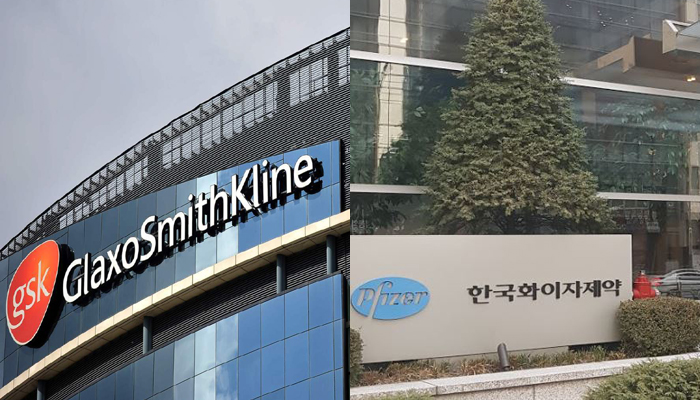
- GSK-Pfizer Consumer Healthcare JV to kick-off on Feb. 24
- by An, Kyung-Jin Feb 21, 2020 06:37am
- Pfizer Pharmaceutical Korea and GlaxoSmithKline Korea (GSK Korea) have finalized the decision on their joint venture in Korea. Two years since the headquarters have signed a merger deal on consumer healthcare divisions, the two companies are finally ready to begin the joint venture. Pharmaceutical industry source reported on Feb. 20, the Korean branches of Pfizer and GSK have decided to kick-off their consumer healthcare joint venture on Feb. 24. In the morning of Feb. 20, GSK Korea and Pfizer Pharmaceutical Korea have co-convened a second meeting on Working Condition Agreement regarding ‘unfair changes in working condition’ for the consumer healthcare division employees to vote. Among 51 Pfizer Consumer Healthcare employees, except for 12 employees who refuse to be transferred to GSK, the companies surveyed if the rest of 39 employees would like to comply with GSK’s working condition after the transfer. 22 employees, more than the half of 39, voted ‘yes’ and passed the Working Condition Agreement. Contrasting to the majority of the employees voting ‘no’ at the first vote on Feb. 14, the table has turned completely in merely a week. Pfizer Pharmaceutical Korea’s labor union official said, “On Feb. 19, a day before the second meeting, GSK has reportedly notified the employees of Pfizer Consumer Healthcare division that ‘the company would pay out 10 million won as M&A bonus if the Working Condition Agreement passes. But, if it falls through then the joint venture establishment could be postponed indefinitely.’” Based on the voting result, GSK would be able to lessen the burden of handling working condition discrepancies between employees. However, how many Pfizer Consumer Healthcare employees would actually get transferred is still unknown. But as GSK has set the deadline of transfer agreement submission on Feb. 21, 39 employees are apparently contemplating on either staying at Pfizer or transferring to GSK. Pfizer’s labor union insider hinted the Consumer Healthcare employees are feeling increasingly insecure about their job security, regardless of taking any option. The labor union has decided to convene a general assembly on Feb. 21 to initiate forming a new labor union to secure their jobs even after the transfer. Pfizer’s labor union is also pondering on means to protect employees, who have decided to stay at Pfizer. Pfizer Pharmaceutical Korea insider said, “So far, 12 employees have made the decision to stay. We are closely paying attention on the other 39 employee’s decision. We do not know how many would decide to stay, but the union is planning to negotiate with the management to protect them.” Both companies have reached an agreement on the kick-off date for the consumer healthcare joint venture. GSK Korea official said, “As of now, we can only disclose that the two companies have agreed the joint venture would sail on from Feb. 24. For Pfizer Pharmaceutical Korea’s Consumer Healthcare Division employees to sufficiently understand the two companies’ stances, we would continue to engage with them in various communication channels.” Pfizer Pharmaceutical Korea official commented, “We would fully cooperate with everyone to process the rest of the procedure.”
