- LOGIN
- MemberShip
- 2026-09-27 01:22:38
- Only 6% of domestic medical staff received the vaccines
- by Lee, In-Bok | translator Choi HeeYoung | 2020-02-25 06:12:41
A large number of university hospital staff in Korea are treating patients without even receiving a preventive vaccine recommended for medical workers.
Even 93.5% of administrators for Hospital Infection did not have all the recommended vaccines.
As most of the reasons for the difficulty in vaccinating are the cost burden, the government needs financial support.

/jkms.2020.35.e76).
Since May 2018, researchers have surveyed vaccination status in a self-administered questionnaire in 652 member hospitals, of which 200 responded to specific surveys.
The questionnaire includes the designation of an administrators for Hospital Infection, a hospital-level immunization policy, and the recommended immunization.
The recommended vaccinations included influenza, MMR (measles, mumps, and rubela), TDAP (tetanus, diphtheria, pertussis mixed vaccines), and hepatitis vaccines, jointly recommended by the KCDC and the KSID.
As a result, 172 hospitals (86%) have a vaccination policy, and there is an infection control room and medical staff to plan this.
Of the 200 hospitals, 151 (75.5%) said they had a screening program for at least one antibody before recruitment.
The most common screening program was hepatitis B, which was conducted at 74 % of hospitals before recruitment, with rubella (19%), measles (18%) and mumps (17%).
However, less than 6% of the hepatitis A infections were tested beforehand.
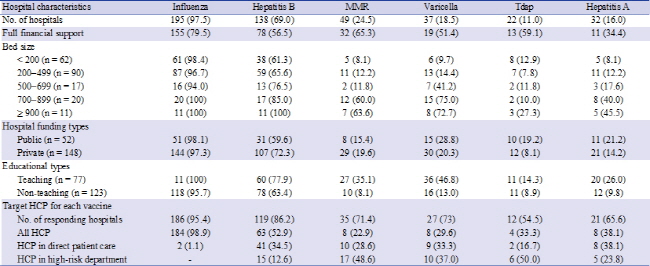
The most common is influenza vaccine, with 97.5% being inoculated, followed by hepatitis B vaccine with 69%.
However, only 24.5% of MMR vaccines were vaccinated, 18.5% had chickenpox, and 11% had TDAP.
Only 6.5% of hospitals included all five vaccines recommended by the KCDC and the KSID.
93.5% of hospitals have only one or two vaccines.
As a result, as of 2017, 43 cases of medical staff were exposed to infectious diseases.
Chicken pox was the most common (15 cases) and hepatitis B (11 cases).
As such, each hospital was passive in vaccination because of the cost.
When asked what was the biggest obstacle to implementing the recommended vaccination policy, 77% said it was due to financial burden.
In addition, 21% of the respondents said that the awareness of vaccination was less than expected, and 21% of hospitals said they were due to the absence of vaccination campaigns.
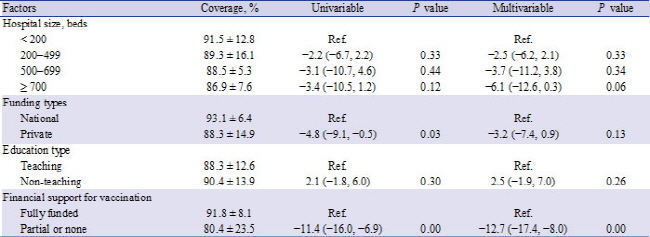
As for the percentage of free vaccination projects, more than 700 beds recorded 100%, but 500 ~ 699 beds were 81.3%, 200 ~ 499 beds were 77%, and less than 200 beds were 72.1%.
Sung-ran Kim, a professor of infectious medicine at Kyunghee University Hospital, who conducted the study, said, “The exposure to infectious diseases in hospitals is a serious problem that can lead to paralysis of hospital function.
It is a big threat to the situation".
Professor Kim said, “The biggest obstacle to the recommended immunization policy was the hospital's financial burden,and this means there is a limit to lowering these barriers without financial support from the government".
-

- 0
댓글 운영방식은
댓글은 실명게재와 익명게재 방식이 있으며, 실명은 이름과 아이디가 노출됩니다. 익명은 필명으로 등록 가능하며, 대댓글은 익명으로 등록 가능합니다.
댓글 노출방식은
댓글 명예자문위원(팜-코니언-필기모양 아이콘)으로 위촉된 데일리팜 회원의 댓글은 ‘게시판형 보기’와 ’펼쳐보기형’ 리스트에서 항상 최상단에 노출됩니다. 새로운 댓글을 올리는 일반회원은 ‘게시판형’과 ‘펼쳐보기형’ 모두 팜코니언 회원이 쓴 댓글의 하단에 실시간 노출됩니다.
댓글의 삭제 기준은
다음의 경우 사전 통보없이 삭제하고 아이디 이용정지 또는 영구 가입제한이 될 수도 있습니다.
-
저작권·인격권 등 타인의 권리를 침해하는 경우
상용 프로그램의 등록과 게재, 배포를 안내하는 게시물
타인 또는 제3자의 저작권 및 기타 권리를 침해한 내용을 담은 게시물
-
근거 없는 비방·명예를 훼손하는 게시물
특정 이용자 및 개인에 대한 인신 공격적인 내용의 글 및 직접적인 욕설이 사용된 경우
특정 지역 및 종교간의 감정대립을 조장하는 내용
사실 확인이 안된 소문을 유포 시키는 경우
욕설과 비어, 속어를 담은 내용
정당법 및 공직선거법, 관계 법령에 저촉되는 경우(선관위 요청 시 즉시 삭제)
특정 지역이나 단체를 비하하는 경우
특정인의 명예를 훼손하여 해당인이 삭제를 요청하는 경우
특정인의 개인정보(주민등록번호, 전화, 상세주소 등)를 무단으로 게시하는 경우
타인의 ID 혹은 닉네임을 도용하는 경우
-
게시판 특성상 제한되는 내용
서비스 주제와 맞지 않는 내용의 글을 게재한 경우
동일 내용의 연속 게재 및 여러 기사에 중복 게재한 경우
부분적으로 변경하여 반복 게재하는 경우도 포함
제목과 관련 없는 내용의 게시물, 제목과 본문이 무관한 경우
돈벌기 및 직·간접 상업적 목적의 내용이 포함된 게시물
게시물 읽기 유도 등을 위해 내용과 무관한 제목을 사용한 경우
-
수사기관 등의 공식적인 요청이 있는 경우
-
기타사항
각 서비스의 필요성에 따라 미리 공지한 경우
기타 법률에 저촉되는 정보 게재를 목적으로 할 경우
기타 원만한 운영을 위해 운영자가 필요하다고 판단되는 내용
-
사실 관계 확인 후 삭제
저작권자로부터 허락받지 않은 내용을 무단 게재, 복제, 배포하는 경우
타인의 초상권을 침해하거나 개인정보를 유출하는 경우
당사에 제공한 이용자의 정보가 허위인 경우 (타인의 ID, 비밀번호 도용 등)
※이상의 내용중 일부 사항에 적용될 경우 이용약관 및 관련 법률에 의해 제재를 받으실 수도 있으며, 민·형사상 처벌을 받을 수도 있습니다.
※위에 명시되지 않은 내용이더라도 불법적인 내용으로 판단되거나 데일리팜 서비스에 바람직하지 않다고 판단되는 경우는 선 조치 이후 본 관리 기준을 수정 공시하겠습니다.
※기타 문의 사항은 데일리팜 운영자에게 연락주십시오. 메일 주소는 dailypharm@dailypharm.com입니다.