
- LOGIN
- MemberShip
- 2026-06-21 15:37:12
- Product
- Paxlovid transition to general health system effective June
- by Apr 11, 2025 06:01am
- Product photo of Paxlovid Paxlovid, a treatment for COVID-19, will be transitioned to the general healthcare system starting in June. The free supply previously provided to centers designated for COVID-19 treatment (prescribing facilities) will be terminated entirely due to stock depletion. According to local pharmacists, on the 9th, various local public health centers recently announced that they would discontinue new supplies. The public health centers stated, '"Although the government has been supplying Paxlovid through both market distribution and government-supplied stocks, new supplies from the government are scheduled to discontinue starting in June due to exhaustion of stock.' The announcement is interpreted as a plan to transition Paxlovid entirely to the general healthcare system after the government-held stocks expire at the end of May. Pharmacy's applications and distribution for remaining stock are still ongoing. Pharmacist A stated, "I ordered four units through the public health center,” and added, “We placed the order as a precaution since there have still been occasional COVID-19 cases," and added, "I am now concerned about how to place Paxlovid orders once it transitions to the general healthcare system." Concerns over placing Paxlovid orders during the transition to the general healthcare system continue. Pharmacist B, who operates a Paxlovid-dedicated pharmacy, commented, "We received notice from the public health center that free supply will be discontinued at the end of May," and added, "This means that the distribution channels will be switched to a single market channel, but the specifics on orders are still undecided." Since October 25 of last year, when health insurance coverage for Paxlovid was first applied, a portion has been transitioned to the general healthcare system so that all clinics and pharmacies can handle it. However, the high price of KRW 950,000 per package (30 tablets) remains a significant burden, as discussed among pharmacists. Pharmacist B explained, "We have inquired with several wholesalers, but they all responded that there is currently no stock available," and added, "Since the acquisition cost is KRW 941,940, nearly KRW 950,000, I am concerned that pharmacies might end up bearing the stock, which would be problematic." Pharmacists point out that wholesalers have not yet released clear policies on the return of Paxlovid, raising concerns that without such policies, they could incur losses due to non-returnable stock. Pharmacist C also remarked, "Once the government's free supply of Paxlovid is depleted, the number of pharmacies ordering it will inevitably decrease," adding, "While it would be ideal if COVID-19 does not resurge, in the event of another outbreak, the burden of inventory and the inconvenience of dispensing for patients are expected to be unavoidable." However, the co-payment fee remains at approximately KRW 47,090 per package, maintaining the current level of around KRW 50,000. Earlier, Lee Jung Kyu, Director of the General Bureau of Health Insurance Policy at the Ministry of Health and Welfare (MOHW), stated, "In order to minimize gaps in practices due to the system transition and to efficiently utilize the purchased stock, the Korea Disease Control and Prevention Agency (KDCA) plans to maintain both market distribution and government supply for awhile," and added, "With health insurance coverage for COVID-19 treatments, we expect that patients will be able to use these treatments stably in response to COVID-19 resurges, and we will continue working to expand health insurance coverage for essential treatments needed in society."

- Policy
- NHIS opens a non-reimbursement information portal
- by Lee, Tak-Sun Apr 11, 2025 06:01am
- The National Health Insurance Service (NHIS) announced that it will launch a 'non-reimbursement information portal' on the 10th to help people easily understand information on non-reimbursed items at a glance to improve their right to know and promote rational medical use. Unlike reimbursed items, where prices and standards of care are set by law, those of non-reimbursed items are set by medical institutions autonomously, so people have difficulty making medical choices because they do not have enough information about whether the prices of the non-reimbursed medical services are reasonable and safe. In response, the NHIS explained that it has established the 'Non-Reimbursement Information Portal' to provide comprehensive information on the safety and effectiveness of major items, symptoms, and treatments for each disease, in addition to price information on non-reimbursed items, to support people make informed medical choices. In addition, the Ministry of Health and Welfare has strengthened access so that people can more easily and reasonably access medical services by collecting non-reimbursement information from various institutions, including the National Health Insurance Service, Health Insurance Review and Assessment Service, the Korea Human Resource Development Institute For Health & Welfare, and the Korea Disease Control and Prevention Agency. The Ministry of Health and Welfare has added a menu on: Understanding non-reimbursement, Taking non-reimbursed services with information, and Statistics on non-reimbursed items. Users can easily check key information at a glance on the landing page. Starting with a guide to non-reimbursed care and an introduction to non-reimbursed care systems that could help people make appropriate and rational choices when using non-reimbursed care, the website shows prices for each non-reimbursed item, medical fees for major diseases and surgeries (reimbursement + non-reimbursement), results of safety and effectiveness evaluations of non-reimbursed items, and various statistical results related to non-reimbursed care. It also provides a shortcut service for each institution that allows users to check videos that help them manage their health, information on diseases related to non-reimbursable items, and details on the information provided. The information provided by this non-reimbursement information portal includes 1,064 non-reimbursement items, 91 diseases, and 54 health technology reevaluation results, and the information will continue to be expanded through continuous analysis and evaluation, as well as strengthened cooperation with specialized institutions. The price information provided by the non-reimbursement information portal is based on information collected through the non-reimbursement reporting system, which has been in effect since 2023. Under the non-reimbursement reporting system, hospitals are required to submit items, amounts, and treatment details to the National Health Insurance Service twice a year (March and September), and clinics once a year (March). “By providing comprehensive non-reimbursed medical information through the non-reimbursement information portal, we expect to strengthen access to non-reimbursement information and contribute to ensuring that people can use the non-reimbursed medical services they need at an appropriate cost, safely and reasonably,” said NHIS President Ki-Suck Jung. Jung added, “We plan to continue our efforts to help people use medical services rationally and reduce the burden of medical expenses.”
- Company
- Reimbursement listing of Handok’s Doptelet near
- by Son, Hyung Min Apr 11, 2025 06:00am
- Doptelet, Handok’s newly introduced drug, is close to being listed for insurance reimbursement in Korea. According to industry sources, Handok has accepted the conditions presented by the Drug Reimbursement Evaluation Committee of the Health Insurance Review and Assessment Service for Doptelet (avatrombopag), a treatment for immune thrombocytopenia (ITP) and 'thrombocytopenia in patients with chronic liver disease scheduled for surgery,' and is in the negotiation stage with the National Health Insurance Service.'' Handok introduced Doptelet from the global biopharmaceutical company SOBI. The drug is an oral thrombopoietin receptor agonist (TPO-RA) used to help treat low blood platelet counts in adults with chronic immune thrombocytopenia (ITP) when other treatments have It is used in various countries, including the United States, Europe, Australia, and Japan, and was approved by the US Food and Drug Administration (FDA) in June 2019 and the European Medicines Agency (EMA) in January 2021 for the treatment of immune thrombocytopenia. Doptelet offers a new option for both patients new to and those already experienced with TPO-RA treatment for chronic immune thrombocytopenia. The results of the Phase III 302 Study showed that the cumulative number of weeks with a platelet response (platelet count of 50,000/μL or higher) in the Doptelet group was 12.4 weeks (median), which was significantly longer than the 0 weeks (median) in the placebo group, and that 65.6% of patients in the Doptelet group showed a rapid platelet response on day 8 of treatment. These results were consistent regardless of whether or not the patient had previous TPO-RA treatment experience. A retrospective analysis of patients who switched from existing TPO-RA to Doptelet also showed that Doptelet had excellent therapeutic effects. In an analysis of a total of 44 patients in the United States, 93% of patients who switched to Doptelet reached a platelet count of 50,000/μL or higher, and 86% of patients reached a platelet count of 100,000/μL or higher. In particular, in patients who did not see sufficient effects with existing TPO-RA, the platelet count (median) increased from 28,000/uL to 88,000/uL after taking Doptelet. Doptelet has also demonstrated its efficacy in patients with chronic liver disease who are having difficulty undergoing invasive procedures due to thrombocytopenia. The results of the ADAPT-1 and ADAPT-2 trials showed that the percentage of patients with chronic liver disease and thrombocytopenia of less than 40,000/uL who did not require platelet transfusions or rescue therapy after the procedure was 22.9% and 34.9%, respectively, in the ADAPT1 and ADAPT2 placebo groups. In contrast, 65.6% and 68.6% of the patients in the Doptelet group did not require platelet transfusions or rescue therapy in the ADAPT-1 and ADAPT-2 trials, respectively. In patients with 40,000/uL to 50,000/uL, 88.1% and 87.9% of patients in the Doptelet group did not require platelet transfusions or rescue therapy, while 38.2% and 33.3% of patients in the placebo group did not require platelet transfusions or rescue therapy in each clinical trial. Meanwhile, following the strategic partnership last year, Handok established a joint venture with SOBI in April this year. Handok-Sobi develops and sells rare disease drugs in Korea, with Handok and Sobi holding 49% and 51% of the shares, respectively. And Handok's newly introduced drug, ‘Doptelet,' is nearing insurance reimbursement listing in Korea.
- Company
- Biosimilars to Prolia compete for the market worth KRW 170B
- by Whang, byung-woo Apr 10, 2025 05:57am
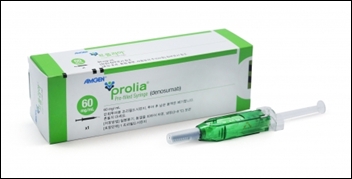
- As biosimilars have been introduced following the patent expiration of the osteoporosis treatment, 'Prolia (denosumab),' competition in the market is expected to heat up. As biosimilars from Celltrion and Samsung Bioepis, distributed by Daewoong and Hanmi, respectively, become distributed, the original drug producer, Chong Kun Dang, and the biosimilar companies are expected to engage in active marketing activities. Product photo of ProliaAmgen’s original drug, Prolia, generates exceptional sales in the domestic osteoporosis treatment market. Last year, Prolia's reimbursement criteria were expanded. Reimbursement has been expanded allowing even borderline patients who reached the treatment target defined by the T‑score for osteoporosis, thereby extending its influence. After surpassing KRW 100 billion in sales with KRW 115.7 billion in 2022, Prolia's sales continued to grow, reaching KRW 151.1 billion in 2023 and KRW 174.9 billion in 2024. However, following the expiration of domestic patents last March, biosimilars have been introduced, inevitably impacting Prolia's sales. The first to enter the market was Celltrion's Stoboclo, which captured the 'first mover' position by receiving marketing approval from the MFDS in November last year—the first biosimilar to denosumab to be approved. 4-year Sales Trend for Prolia (unit: KRW 100 million, source: IQVIA) Stoboclo, which was launched last month on the 19th, features an improved syringe design compared to the original drug, enhancing convenience and safety for healthcare providers. The syringe is designed so that the needle is automatically concealed after injection, allowing for single-handed handling, and minimizing needle-related injury risks. Subsequently, on the 4th, Samsung Bioepis' Prolia biosimilar, Obodence, received domestic marketing approval. Although the reimbursement price for Obodence has not yet been set, it is expected to be launched on the market by the end of this year after completing the reimbursement listing process with the Ministry of Health and Welfare (MOHW). Stoboclo, already available in the market, is expected to capture market share based on the price competitiveness of biosimilars. As of April 1, Prolia's reimbursement price was adjusted from KRW 154,700 to KRW 123,760. In contrast, Stoboclo's reimbursement price is KRW 111,384, approximately KRW 10,000 lower than the original product's price. Although Samsung Bioepis' pricing strategy is difficult to predict, several opinions suggest it will be set at the same level as Stoboclo. However, unlike overseas markets, where biosimilars have strong price competitiveness, the domestic market relies more on sales capabilities, which is likely to drive market competition. We must wait and see, but according to the Health Insurance Review and Assessment Service (HIRA) announcement, by March 18, 2026, the price difference between the original drug, Prolia, and its biosimilar, Stoboclo, will be eliminated. In other words, this implies that the price competitiveness of biosimilars will be lost. Currently, the market is dominated by major domestic pharmaceutical companies with strong sales capabilities, such as Amgen-Chong Kun Dang, Celltrion-Daewoong, Samsung Bioepis-Hanmi Pharmaceuticals. It is anticipated that competition among biosimilars will be influenced by whether they pass the Drug Committee (DC) reviews at hospitals. Based on other biosimilar cases, hospitals tend not to secure two biosimilars, so the extent of a company's network of prescribing hospitals could determine its success. From this perspective, it appears that Stoboclo, which was the first to enter the market, may initially have a competitive edge; however, given that osteoporosis treatments are prescribed not only in university hospitals but also in primary clinics, it remains to be seen what strategies each company will deploy. In Amgen's case, its original product, containing the active ingredient denosumab, is expected to solidify its market position by emphasizing its authenticity and strengthening its partnership with Chong Kun Dang. According to pharmaceutical industry sources, Amgen is actively working to expand its partnership with Chong Kun Dang, especially in university hospitals, to further reinforce its sales capabilities. Prolia's long-term efficacy and safety data, accumulated over many years, may also serve as a strong competitive advantage. Prolia's long-term benefits were demonstrated in two studies, FREEDOM (from August 1, 2004, to June 17, 2008) and FREEDOM Extension (from August 7, 2007, to July 19, 2015).
- Company
- Yuhan "Immunotherapy candidate, Phase 1/2 IND approved"
- by Kim, Jin-Gu Apr 10, 2025 05:57am
- Yuhan announced on April 7 that it received approval from the Ministry of Food and Drug Safety (MFDS) for its investigational new drug (IND) application to initiate Phase ½ trial of 'YH32364,' a novel immunotherapy for cancer under development. According to Yuhan, YH32364 is a bispecific antibody that simultaneously targets epidermal growth factor (EGFR) and 4-1BB. While YH32364 binds to EGFR expressed on cancer cell surfaces and blocks growth signaling, it also stimulates 4-1BB signaling and activates immune cells, thereby maximizing anticancer effects. In a preclinical efficacy trial, YH32364 showed stronger superior effects in EGFR-expressing tumors compared to cetuximab. It was demonstrated that the candidate drug retained long-term anti-tumor effects through immunological memory. Furthermore, it was confirmed that YH32364 activated 4-1BB signaling in EGFR-expressing tumors, leading to the recruitment of tumor-infiltrating immune cells and altering the tumor microenvironment. This trial is a Phase ½ trial involving human study participants for the first time. It will assess the safety·tolerability·pharmacokinetics·antitumor activity of YH32364 in patients with locally advanced or metastatic solid tumors that overexpress the epidermal growth factor receptor (EGFR). EGFR overexpression in various solid cancers has been mainly targeted for cancer treatment. The currently developed monoclonal antibody (mAB) applies to metastatic colorectal cancer and head and neck squamous cell carcinoma (HNSCC). The candidate has shown specific efficacy and it has been reported that unmet needs for effective treatments are high. Yuhan stated that YH32364 works by activating immune cells through EGFR-specific 4-1BB signaling in tumors. The company hopes YH32364 will be more effective in a wide variety of EGFR-expressing solid cancers than anti-EGFR mAb. Yeol-Hong Kim, Head-R&D at Yuhan, said, "After several years of focusing on discovering·optimizing leading product, as well as preclinical development, the Yuhan R&D center successfully entered clinical development stage," adding, "YH32364 is a significant achievement as it is a bispecific antibody, combining solid cancer target EGFR and 4-1BB that strengthens immune responses in tumor microenvironment. Yuhan plans to recruit study participants soon." YH32364 a novel immunotherapy for cancer pipeline that Yuhan signed technology transfer with ABL Bio in 2018. 4-1BB (CD137 or TNFRSF9) is a member of the TNF receptor family. It is expressed in many cells, including activated T-cells, Natural Killer cells (NK cells), and dendritic cells (DC). 4-1BB plays a crucial role in retaining effective T-cell immune response and forming immunological memory.
- Opinion
- [Reporter's View] Korean R&BD system and strategies
- by Whang, byung-woo Apr 10, 2025 05:57am
- “It is not easy for a new drug to succeed just with good technology. It is only a real success when the drug reaches the market.” This is what an executive of a global pharmaceutical trading company said to the reporter recently. The tides are changing in the pharmaceutical and biopharmaceutical industry. The focus is shifting from R&D (Research & Development) to R&BD (Research & Business Development). In other words, business-related strategies such as technology transfer, joint development, and investment attraction have become as important as R&D. The reality of the industrial ecosystem is behind this. South Korea is still choosing a growth strategy centered on technology exports rather than innovative new drugs. Although the number of pipelines is increasing, due to the nature of drug development that is accompanied by high cost and long-term battles, companies are focusing on technology transfer based on early-stage - such as Phase I and II - clinical results rather than the final approval, in order to achieve results. In fact, it takes a long time for a single candidate substance to reach global clinical trials, approval, and market entry. There is also a view that this is an unavoidable strategy in the domestic environment, where the pharmaceutical and bio-pharmaceutical ecosystem is relatively small, in terms of market size and investment conditions. At the global level, there is a growing recognition that it is difficult to survive without commercialization in mind from the early stages of R&D. R&BD, which adds business to R&D, has been spreading in line with this trend. Although Business Development (BD) was an existing job category, there is an overall shift beyond a simple change in terminology, and the occupation now entails roles in setting research direction, investment structure, and organizational operation methods. A typical example of such change is reflected in the recent activities of the Korea Drug Development Fund (KDDF). The KDDF has recently put its R&BD strategy at the forefront when selecting support projects. It comprehensively evaluates not only scientific feasibility but also the possibility of technology transfer, marketability, and global partnership plans. Whereas in the past the focus was on “good research,” now the emphasis is on “technologies with commercial potential.” To this end, KDDF is currently preparing a multi-layered support system for strengthening R&BD, including consulting, collaboration programs with global pharmaceutical companies, and VC networking. There are also cases where KDDF has arranged global partnering meetings for participating companies, which have led to positive trends in early-stage technology transfer. They are sharing 'how to speak in business language, not technology'. At the event, Yeong-Min Park, head of the KDDF, emphasized that “a sophisticated commercialization strategy is needed from the early stages for successful new drug development.” Ultimately, the key now lies in how to define the destination of research and development. Paper? Patent? Clinical trial? Now the destination is 'market'. The industry believes that no matter how excellent the technology is, it is useless if it is not connected to the market. Many pharmaceutical companies are reorganizing their structures by establishing new R&BD organizations or including BD personnel in their R&D departments. New drug development is both a science and a business. And it is the role of R&BD to create the intersection of the two. The capabilities of business developers are becoming as important as those of researchers. This is because, although there are many technologies, there are few success stories. Now is the time to ask what value the technology has in the market rather than the R&D results. Ultimately, the task of the pharmaceutical and biopharmaceutical industry is to nurture people who can bring the technology to the market.
- Company
- Dupixent aims to meet unmet needs in COPD
- by Whang, byung-woo Apr 10, 2025 05:56am
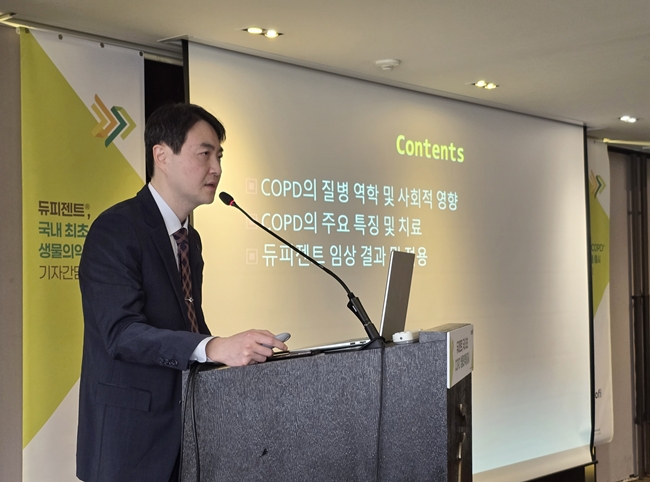
- Dupixent (dupilumab), which is leading the atopic dermatitis market, is seeking to enter the market as Korea's first chronic obstructive pulmonary disease (COPD) targeted biologic drug. The company wants to open a new paradigm in the treatment of COPD, which has a high unmet need, based on Dupixent’s mechanism that targets interleukin (IL)-4 and IL-13. Professor Chin Kook Rhee, Department of Respiratory Medicine at Seoul St. Mary Sanofi held a meeting on the 9th to highlight the expansion of Dupixent's COPD indication and announce its future plans. COPD patients experience a decline in their quality of life due to dyspnea, fatigue, and acute exacerbations, and in severe cases, it can even lead to death. However, even with the existing inhaler-based triple therapy, about 50% of patients still experience severe exacerbations, indicating an unmet need. “COPD is a chronic condition that requires systemic corticosteroid drugs or antibiotic treatment due to repeated acute exacerbations, which significantly increases the health and economic burden,” said Professor Chin Kook Rhee of the Department of Respiratory Medicine at Seoul St. Mary's Hospital, presented at the event. ”Once an acute exacerbation occurs, the risk of future acute exacerbations and cardiovascular disease increases. In addition to the burden of treatment, the condition also brings a high social and economic burden, including nursing care costs, which are estimated to cost around KRW 1.4214 trillion per year. Rhee added, “Many patients with COPD whose acute exacerbations are not sufficiently controlled, as well as COPD patients with elevated blood eosinophil levels due to type 2 inflammation are at high risk of experiencing an acute exacerbation or rehospitalization.” He added, “The mortality rate within 3.6 years after the first severe acute exacerbation is about 50%, so preventing acute exacerbations is one main goal of COPD treatment.” In this context, Dupixent's expanded indication for COPD is attracting attention as it is expected to benefit patients whose acute exacerbations are not sufficiently controlled. Dupixent has been approved by the Ministry of Food and Drug Safety for additional maintenance treatment of adults with COPD whose blood eosinophil count is elevated and not adequately controlled with standard inhaler therapy. This approval was granted following two Phase III clinical studies that showed a reduction in the annual exacerbation rate of COPD and significant improvements in lung function and patient quality of life. According to the Phase III BOREAS and NOTUS studies, which became the basis for the indication expansions, the annual moderate-to-severe exacerbation rates at week 52 of Dupixent’s administration were 0.78 and 0.86, respectively, 30% and 34% lower than the placebo group’s 1.1 and 1.3, meeting the primary efficacy endpoint. Pic of DupixentImprovement in lung function was observed as early as the second week of Dupixent treatment and was maintained until the 52nd week. In the BOREAS and NOTUS clinical studies, the forced expiratory volume in one second (FEV1) before the use of bronchodilators was 160 mL and 139 mL at Week 12 of Dupixent administration, compared to 77 mL and 57 mL in the placebo group, and significant improvement was confirmed at Week 52, at 153 mL and 115 mL compared to the 70 mL and 54 mL. in the placebo group. “Dupixent selectively inhibits the signaling of IL-4 and IL-13, which can promote the activation and transport of type 2 inflammatory cells, including eosinophils,” said Rhee. ”Domestic and international guidelines also additionally recommend Dupixent.” He went on to say, “It is unusual for a Korean treatment guideline to recommend a drug before it is approved in Korea; this shows the high expectations and social demand for innovative new drugs in COPD and the dire unmet need. It is also necessary to strengthen treatment access so that more COPD patients can benefit from the clinical benefits of Dupixent.” However, with separate treatments currently being provided for low-risk and high-risk groups, and a three-drug therapy being reimbursed for the high-risk group, Dupixent is likely to be positioned as the last treatment option. “We welcome the introduction of a new treatment in an area where there was no choice when exacerbations continued after using the three-drug therapy, as Dupixent has proven to be beneficial even in this case,” said Rhee. ”Considering the situation of asthma, there is a possibility that Dupixent’s position may change in the long run and become an earlier line option to prevent exacerbations in COPD as well.” For Sanofi, Dupixent’s entry into the reimbursement system is likely to be a major task in order to expand its market influence in Korea. A Sanofi official added, “Sanofi also has much vision and a sense of mission for the early diagnosis and early treatment of COPD and will strive to improve access to our drugs.”

- Policy
- Cost of cell&gene therapies for clinical patients set
- by Lee, Jeong-Hwan Apr 10, 2025 05:56am
- The government has set out to create standards for the 'cost of clinical trial drugs' to be used as an indicator when giving patients expensive cell and gene therapy drugs at the clinical trial stage. This is to rationally calculate the cost that patients must pay when they are administered investigational drugs for therapeutic purposes. The government plans to look at the cost calculation methods for investigational drugs that are in operation overseas, such as in the US and Europe, and analyze the current state of the system in Korea to create cost standards for each detailed item of investigational drugs. On the 8th, the Korea Institute of Drug Safety & Risk Management announced that it would begin research on establishing a standard for the cost of investigational drugs. The current Pharmaceutical Affairs Act stipulates that drugs in the clinical trial stage can be used for therapeutic purposes. The problem is that there is no reasonable standard for pricing drugs that must be charged to patients, as the manufacturing costs of cell therapies and gene therapies are often high. This is because there are various detailed items that are included when calculating the cost according to the characteristics of each drug, such as cell therapy and gene therapy. The cost of investigational drugs is the price minus the cost of facility and environmental management and research and development and refers to the cost directly incurred in the manufacture of investigational drugs used for individual patients. The KIDS will investigate the cost calculation methods for investigational drugs that are being used in overseas countries such as the US and Europe to establish the cost calculation standards for patient claims for investigational drugs, and examine the cost calculation details when claiming the cost of investigational drugs for therapeutic use in domestic clinical trials. The cost calculation method will also be analyzed by comparing the cases when importing investigational drugs and domestic contract manufacturing drugs. KIDS will also seek to discover the specific cost calculation items used for cell therapies and radiopharmaceuticals that take into account their characteristics, such as the manufacturing process of pharmaceuticals. Based on this, KIDS plans to prepare a detailed cost standard for each item used to calculate the price of investigational drugs. KIDS explained, “We will study whether detailed items such as raw material costs, material costs, labor costs, manufacturing expenses, and quality inspection costs should be included in the cost calculation of manufactured drugs. We will consider the purpose of the cost stipulated in the Prime Minister's Decree on the Pharmaceutical Affairs Act & Regulation on Safety of Drugs.” It added, “We will also look at the details of the raw material costs, such as whether the raw material is autologous or allogeneic, the type of source, such as blood, cord blood, skin, or adipose tissue, and the method of collection, such as surgery or blood collection. The goal is to establish standards that can be used by suppliers of investigational drugs when calculating costs.”

- Company
- Novartis, PNH drug 'Fabhalta' enters drug pricing nego.
- by Eo, Yun-Ho Apr 10, 2025 05:56am
- Product photo of Fabhalta The new oral drug 'Fabhalta' has entered the last phase of receiving approval for insurance reimbursement. According to industry sources, Novartis Korea’s ’Fabhalta (iptacopan),’ a treatment for paroxysmal nocturnal hemoglobinuria (PNH), is under negotiations for drug pricing. Consequently, attention is gaining to whether another treatment option for PNH would emerge. PNH is a rare disease estimated to occur in approximately 1.5 individuals per 1 million globally. Until now, the treatment for PNH has relied on C5 inhibitors. In 2010, ’Soliris (eculizumab)’ was first approved in South Korea, and 'Ultomiris (ravulizumab)' has been used for PNH treatment since its approval in 2022. Both treatment options are C5 inhibitors. C5 inhibitors inhibit C5, the terminal component within the complement system's alternative pathway involved in the body's immune response, and are administered via intravenous injection. In April last year, the subcutaneous injection product 'Empaveli (pegcetacoplan),' which works by binding to C3 and C3b to inhibit the complement cascade, was approved. The oral drug Fabhalta, which operates by inhibiting factor B, was introduced in August. Due to the mechanistic limitations of C5 inhibitors, there are still unmet needs for patients with PNH. 'Extravascular hemolysis (EVH)' PNH arises from a genetic deficiency in red blood cells and leads to both intravascular hemolysis (IVH) and extravascular hemolysis (EVH). Such hemolysis subsequently triggers thrombosis and bone marrow failure, thereby endangering life. Therefore, controlling hemolysis is critical for treating PNH. However, the current standard treatment for PNH, a C5 inhibitor, effectively manages IVH but is inherently limited in its mechanism to control EVH. This is why there is significant interest in the reimbursement status of the factor B inhibitor, Fabhalta. Factor B is located higher in the alternative pathway than C5, C3, and C3b, and by inhibiting it, one can comprehensively regulate both IVH and EVH. In fact, the efficacy of Fabhalta has been demonstrated in patients with no prior treatment experience. According to the APPOINT-PNH study, conducted in treatment-naïve PNH patients, 19 out of 33 patients achieved a hemoglobin level of at least 12 g/dL without the need for red blood cell transfusions. Furthermore, 92% of the patients showed a clinically significant increase in hemoglobin of at least 2 g/dL, and 63% maintained a hemoglobin level of 12 g/dL or higher without transfusions. During the 24‑week study period, hemoglobin levels continued to rise steadily, reaching normalized levels by week 20 and remaining at that level through week 24. Additionally, 98% of the patients overcame transfusion dependency. Professor Junho Jang, Department of Hematology at Samsung Medical Center, said, "When a C5 inhibitor first emerged, experts stated that the PNH treatment paradigm has shifted. However, C5 inhibitors are still limited in managing EVH." "Fabhalta is a new drug that is likely to bring a paradigm shift for PNH treatment. This drug is involved in regulating factor B located in the upper alternative pathway, thus inhibiting factor B. It can comprehensively control both IVH and EVH. A favorable result has been demonstrated through clinical trials," Professor Jang emphasized.
- Company
- Will Leqvio not be reimbursed for ASCVD in Korea?
- by Eo, Yun-Ho Apr 09, 2025 05:56am
- The reimbursement of the twice-yearly dyslipidemia drug ‘Leqvio’ for ASCVD became unclear in Korea. According to Dailpharm coverage, the siRNA drug, Leqvio (inclisiran), from Novartis Korea failed to set reimbursement standards at the Drug Reimbursement Evaluation Subcommittee meeting of the Health Insurance Review and Assessment Service in February as a treatment for the “reduction of cardiovascular events in patients with atherosclerotic cardiovascular disease(ASCVD).” However, at the meeting, the indication for “heterozygous familial and familial, or mixed dyslipidemia” passed review, and the Drug Reimbursement Evaluation Committee conditionally approved the indication for reimbursement earlier this month. This is because the target patients are very few. The government may have decided that it would not be a problem to delay reimbursement for Leqvio because a competitor of the same therapeutic class, Amgen Korea's 'Repatha (evolocumab)', is already listed for reimbursement. However, it is worth considering the fact that Leqvio is administered directly by healthcare professionals at hospitals twice a year. Not only is the number of doses reduced, but the advantage is that the injection is administered by medical staff at the hospital rather than by the patient. In fact, 78.4% of the target patient population, including patients with atherosclerotic cardiovascular disease (ASCVD) who have been administered Leqvio for up to 6.8 years or more, have reached the target LDL-C level. In a real-world study in the United States, the group with high medication adherence (fully adherent) among patients with ASCVD, including myocardial infarction, had a 27% lower risk of major adverse cardiovascular events (MACE) compared to the low-adherence group. In addition, it was found that patients with ASCVD who were highly compliant with their medication had lower annual medical costs than those with low compliance, which reduced the risk of recurrent cardiovascular disease and the economic burden of ASCVD patients. In other words, the convenience of taking the drug provided by Leqvio has clear therapeutic benefits. The market for statins and ezetimibe combination drugs alone is worth KRW 1 trillion, and if we add the funds spent on statins and PCSK9 inhibitors, the funds spent on lowering LDL-C alone are estimated to be between KRW 1.5 trillion to KRW 2 trillion. However, the LDL-C target achievement rate for ASCVD patients in Korea is only 24%. “In the case of high-risk patients, medication adherence is especially important for lipid-lowering treatment. In reality, medication adherence to current treatment options is low, and only 3 out of 10 patients still achieve the target LDL-C level. This is proof that new treatment options are urgently needed for lipid-lowering therapy,” said Jon Suh, Secretary of the Insurance Committee of the Korean Society of Cardiology and a member of the Insurance Committee of the Korean Society of Cardiology.
