
- LOGIN
- MemberShip
- 2026-06-24 22:53:17
- Company
- Reimbursed Leclaza nears annual sales of 1T won
- by Chon, Seung-Hyun Dec 26, 2023 01:11pm
- Yuhan Corp.'s new cancer drug, Leclaza, swiftly wins reimbursement listing for its use as a first-line treatment. Following success with its second-line treatment, Leclaza received reimbursement for the first-line treatment within just six months of approval. The second-line treatment alone has generated quarterly sales of 6 billion won and continues to perform well. Similar to the success of the anticancer immunotherapy Keytruda after its reimbursement expansion , Leclaza is also anticipated to considerably benefit from its inclusion as first-line treatment. Recently, the Ministry of Health and Welfare (MOHW) held a meeting of the Health Insurance Policy Deliberation Committee and approved the reimbursement expansion for Leclaza and Tagrisso as first-line treatment options. Beginning next month, National Health Insurance will begin reimbursement for the use of Leclaza and Tagrisso as the "first-line treatment of locally advanced or metastatic non-small cell lung cancer (NSCLC) with specific genetic mutations." Leclaza, which was approved in January 2021 as the 31st Korean-made new drug, is indicated for treating NSCLC. Initially, Leclaza was approved as a second-line treatment for patients with locally advanced or metastatic NSCLC who had developed chemical resistance to a specific genetic mutation (T790M) following the administration of first or second-generation epidermal growth factor receptor (EGFR) tyrosine kinase inhibitors (TKI). In June 2023, the Ministry of Food and Drug Safety (MFDS) approved the use of Yuhan’s Leclaza for first-line treatment of NSCLC. Within just six months, Leclaza successfully passed the National Health Insurance’s reimbursement review. Originally, Leclaza was launched in the Korean market with a reimbursement listing in July 2021, just six months following its approval by MFDS as second-line treatment. It only took six months for Yuhan to obtain reimbursement approval for Leclaza’s first-line and second-line treatment uses following its approval by the MFDS. This timeline is unprecedented in comparison to AstraZeneca’s effort to list Tagrisso in the national insurance reimbursement scheme. Tagrisso became reimbursable more than five years after its first-line treatment use was approved in 2018. Furthermore, in March 2023, Yuhan received marketing approval only three months after applying to the MFDS for Leclaza’s first-line treatment. Yuhan continues to benefit from the rapid approval of Leclaza, having had its conditional approval removed just three years after its initial regulatory approval. As of November 28th, Leclaza secured full approval to change indications by meeting all the conditions for the second-line treatment indication. Yuhan presented additional analysis data that demonstrated Leclaza’s statistically significant effectiveness as a second-line treatment when compared to platinum-based chemotherapy. Yuhan submitted an application for converting from conditional to full approval in August. Impressively, Leclaza secured full approval within two years and ten months after its initial conditional approval. Leclaza received approval first as a first-line treatment after demonstrating statistically significant improvement in progression-free survival in a multinational Phase 3 clinical trial (LASER301 study) for EGFR mutation-positive NSCLC. Just 2 years and 10 months after obtaining conditional approval as a second-line treatment, Leclaza is now officially approved for both first and second-line treatments in EGFR mutation-positive NSCLC. Increased sales is expected following Leclaza’s reimbursement approval for a first-line treatment option. MOHW explains that "patients with locally advanced or metastatic NSCLC had to bear an annual medication cost of approximately 68 million won per person. With National Health Insurance coverage, a patient’s out-of-pocket expense will be limited to a 5% co-payment, which comes to about 3.4 million won per year." Even though Leclaza is only reimbursed as a second-line treatment, it continues to show strong performance in the prescription market. IQVIA, a drug market research company, reported on December 22nd that Leclaza's sales in Q3 reached 6 billion won. In 2021, Leclaza recorded sales of 1.5 billion won and 2.6 billion won in Q3 and Q4, respectively. Last year, it accumulated sales of 16.1 billion won, surpassing 10 billion won in its second year. In 2023, Leclaza recorded sales in the upwards of 5 billion won in both Q1 and Q2, with a notable increase in Q3. Leclaza’s total sales amounted to 164 billion won in Q3 in 2023. Leclaza is on track to surpass the 200 billion won mark within three years of launching. The initial sales of Leclaza show a promising start. Commercial success of a domestically developed anticancer drug is challenging as it must compete with new products from global pharmaceutical companies. Before Leclaza, other domestically developed anticancer drugs approved in Korea include Il-Yang Pharm's Supect, Dong-A Pharm's Milican, Chong Kun Dang's Camtobell, Samsung Pharm’s Riavax, and Hanmi Pharm's Olita. Among these, only Leclaza exceeded an annual sales of 100 billion won. MOHW has estimated that the inclusion of Leclaza as a first-line treatment option will require an additional budget of 881 billion won. Mathmatically, there is a potential for Leclaza’s sales to surpass 1 trillion won next year. In turn, the competition will intensify with Tagrisso, a similar cancer drug in the same class. MOHW has projected an additional budget of 920 billion won for the reimbursement of Tagrisso as a first-line treatment. HK Inno.N’s K-CAB stands out as the only domestically developed new drug to have achieved annual sales surpassing 1 trillion won. Approved in 2018 as the 30th Korean-made new drug, K-CAB is categorized as a 'potassium-competitive acid blocker (P-CAB)' in the anti-ulcer drug class. Its competitively binds with the proton pump and potassium ions in gastric cells' final acid secretion step, thereby inhibiting acid production. K-CAB, now in its third year of sales, surpassed 1 trillion won in prescription sales in 2021 and thereafter continued to exceed this milestone for two consecutive years. K-CAB has already made its mark in the "1 Trillion Won Club" for prescription sales by recording 1.141 trillion won in prescription sales in Q3 of this year. Leclaza is postulated to enter the U.S. market shortly. On December 21, 2023, Johnson & Johnson (J&J) submitted to the U.S. Food and Drug Administration (FDA) a new drug application for Leclaza and supplemental biologics license application for Rybrevant’s use in combination with Leclaza. Previously, in November 2018, Yuhan licensed Leclaza's technology to Janssen Biotech and received an initial non-refundable licensing fee of $50 million. The recent FDA submissions are based on results from the Phase 3 MARIPOSA clinical study, which tested the efficacy of the combination therapy of Rybrevant and Leclaza. Interim analysis data from this clinical trial were presented at the European Society for Medical Oncology Annual Meeting (ESMO 2023) in October 2023. In the clinical trial, Rybrevant and Leclaza combination therapy showed improvement in the primary endpoint of progression-free survival (PFS) when compared to Tagrisso (osimertinib) monotherapy. The median PFS was 23.7 months with Rybrevant and Leclaza combination therapy versus 16.6 months with Tagrisso monotherapy. The combination therapy demonstrated a 30% reduction in disease progression and mortality risk compared to Tagrisso monotherapy.
- Company
- Restrictions on new AML drug Xospata may be lifted next yr
- by Eo, Yun-Ho Dec 26, 2023 05:47am
- The acute myeloid leukemia drug Xospata has entered the last gateway to resolving its dosing cycle restrictions. According to industry sources, Astellas Korea has started drug pricing negotiations with the National Health Insurance Service for its Xospata (gilteritinib), a new drug for patients with relapsed or refractory acute myeloid leukemia (AML) with an FLT3 mutation If the negotiations are finalized by the deadline, the drug could be covered in the first quarter of next year. The drug applied for reimbursement extensions in November last year passed the Cancer Disease Review Committee in May, and passed the Drug Reimbursement Evaluation Committee last month. The drug is indicated as monotherapy for the treatment of patients with relapsed or refractory acute myeloid leukemia (AML) with a FLT3 mutation (FLT3mut+). However, only patients who received allogeneic hematopoietic stem cell transplantation are eligible for reimbursement, for up to 4 cycles, under the current reimbursement standards. Other than the financial issues, there are no specific reasons to limit the number of administration cycles for Xospata. This is why the need for its reimbursement extensions was already suggested in the Cancer Disease Deliberation Committee review stage during the initial reimbursement listing. In the ADMIRAL trial, Xospata was used without limiting the treatment period, and the NCCN guidelines also issued a ‘Category 1 recommendation for the drug without restricting its treatment period. The current best option to cure AML patients is hematopoietic stem cell transplantation, but this is accompanied by a high risk of recurrence, and transplantation is not an option for the large number of elderly AML patients that exist. Therefore, there is no suitable treatment alternative other than Xospata available for patients who cannot undergo hematopoietic stem cell transplantations, and these patients are still using the chemotherapy that was developed over 40 years ago due to ineligibility for reimbursement of Xospata. Xospata targets both types of FLT3 mutations, FLT3-ITD and FLT3-TKD, and may be self-administered at home as a single oral tablet once daily without frequent hospital visits. Also, Xostapa has demonstrated improved safety and efficacy compared with existing chemotherapy.
- Policy
- Enhertu, G-tec will benefit from new govn't plan
- by Lee, Tak-Sun Dec 26, 2023 05:47am
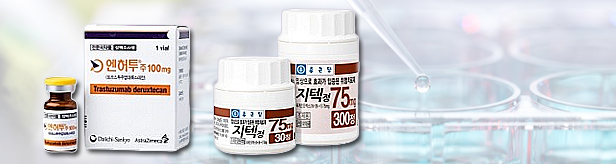
- According to the ‘Plan for the compensation of the innovative value of new drugs’ that the government announced on the 22nd, the breast cancer treatment ‘Enhertu (Daiichi Sankyo-AstraZeneca),’ and the new gastrointestinal botanical drug ‘G-tec (Chong Kund Dang)’ are being regarded as immediate beneficiaries. In the case of Enhertu, it is expected to receive a reimbursement and make way for its reimbursement according to the benefit plan for innovative new drugs according to preferential price awarded to new innovative drugs.' G-tec will receive preferential treatment as a new botanical drug. The burden of drug price cuts for new products produced by innovative pharmaceutical companies will also be reduced based on the eased Price-Volume Agreement system. The government decided to accept reimbursement of innovative new drugs that are recognized by the state. as an innovative new drug, even if they exceed the drug’s ICER threshold, an economic evaluation indicator. The new breast cancer drug Entertu is being evaluated as the only new drug that satisfies the government’s innovativeness standards. The criteria for innovativeness are ▲ there is no substitute or therapeutically equivalent product or treatment ▲ demonstrated clinically meaningful improvement, such as a significant extension in survival ▲ the new drug has been approved by the Ministry of Food and Drug Safety under Article 35(4)(2) of the Pharmaceutical Affairs Act (designation of priority review) and were approved through the fast-track (GIFT) or received a breakthrough therapy designation (BTD) by the US FDA or a priority review (PRIME) by the European Union’s EMA. Enhertu met all of these criteria and is expected be applied a flexible ICER threshold. Enhertu’s reimbursement process is stuck at the pharmacoeconomic evaluation stage because it improved life expectancy and rather increased treatment cost per patient. For example, if the ICER threshold exceeds KRW 50 million, its cost-effectiveness is not recognized, making it difficult to pass the pharmacoeconomic evaluation. However, in this improvement plan, a measure to accept drugs whose innovativeness is recognized, therefore, the drug’s reimbursement progress gains momentum. In addition, Chong Kun Dang’s new drug G-tec will likely benefit and be eligible for preferential drug pricing as a new botanical drug during the reimbursement process. G-tec is a cinnamon bark dried extract that was granted marketing authorization in July last year. The improvement plan reportedly includes preferential drug pricing for drugs developed by innovative pharmaceutical companies. for non-inferior new botanical drugs and new botanical drugs. As a result, there is a possibility that drug prices that were previously set below the weighted average price of alternative drugs or be set in between the highest weighted average price and the weighted average price of alternative drugs. This means that drug prices will be set slightly higher. Chong Kun Dang is an innovative pharmaceutical company, and G-tec is a new botanical drug, so it is likely that the two drugs will both benefit through reimbursement negotiations. On the other hand, Jeil Pharmaceutical’s new Gastroesophageal Reflux Disease (GERD) drug ‘zastaprazan,’ which is considered a potential novel homegrown drug candidate for commercialization next year, is not eligible for this improvement plan. This is because neither Jeil Pharmaceutical nor the drug’s developer, Onconic Therapeutics, is regarded as an innovative pharmaceutical company. Although not immediately eligible, new products from innovative pharmaceutical companies will be able to ease the burden of drug price cuts as they are applied to an eased PVA system. The improvement contains a plan that lowers the drug price cut rate for drugs produced by innovative pharmaceutical companies or an equivalent if the drug is subject to continued PVA price cuts - three times in five years, due to a continuous increase in usage. As a result, products that were subject to more than 3 out of 5 PVA price cuts will receive a reduced price cut rate next year. However, the key is the timing of implementation. The government plans to apply the measures sequentially from the beginning of next year, and the outline of eligible products is expected to be clarified depending on the timing of the revision. An official from the domestic pharmaceutical industry said, "The proposed new drug value compensation plan will at least induce the development of domestically developed drugs, increasing their motivation to develop new drugs.” "This is why domestic pharmaceutical companies have long desired preferential drug pricing for innovative pharmaceutical companies," he said.
- Opinion
- [Reporter’s view] Expanded catastrophic medical expenses
- by Lee, Hye-Kyung Dec 22, 2023 05:47am
- Among foreigners, the saying, "If you are ill, you should go to Korea," had once become a trend. Foreigners that stay in the country for over 6 months are eligible for the National Health Insurance subscription as a local subscriber, allowing them to receive reimbursement benefits. This issue has been a topic of heated debate during the annual National Assembly audit. As a result, the National Health Insurance Service (NHIS) has been implementing safety measures every year to prevent foreigners from freeloading on Korea's National Health Insurance. For foreigners, the National Health Insurance is a cost-effective benefit, but there are Korean citizens who cannot afford medical bills even with the National Health Insurance coverage. In the past, when the cost coverage was not high enough, medical bills used to be one of the top three causes of household bankruptcy. In Korea, many citizens still subscribe to private health insurance. Starting in the early 2000s, there was a movement with the initiative "Single-payer healthcare: all medical fees to be covered by National Health Insurance," but it was often seen as an empty slogan. In response, the government introduced measures to alleviate the financial burden on the people. These measures included the introduction of the copayment maximum in 2004, the special assessment for cancer, cerebrovascular disease, and heart disease in 2005, and the implementation of the Catastrophic Medical Expenses Support Program in 2013. The Catastrophic Medical Expenses Support Program is designed to alleviate the burden of medical fees on households facing excessive expenses, and its insurance coverage is expanding. At a recent cabinet meeting, the partial amendment to the "Enforcement Decree for the Catastrophic Medical Expenses Support Program," was approved. Starting on January 1st, 2024, the Catastrophic Medical Expenses Support Program will be expanded to include all medical conditions that occurred within one year prior to the final inpatient or outpatient treatment. Prior to the revision, the previous system combined all medical expenses for inpatient care, but for outpatient care, it only considered expenses for the same disease, and application was restricted to the six major severe diseases. Even if the total medical expenses for the entire year reached the standard for the Catastrophic Medical Expenses Support Program, there were situations where support could not be provided because the standard was not met for the same diseases alone. Starting next year, with the expansion that includes all diseases, reimbursement for catastrophic medical expenses can be claimed if the total medical expenses for all conditions exceed 4.1 million won. Previously, a four-person household earning 100% of the median income could only apply for support if medical expenses for the same condition exceeded 5.9 million won. However, lowering the standard means that more people will be able to benefit from catastrophic medical expense support. The Catastrophic Medical Expenses Support Program is designed to prevent households from facing financial disaster due to medical expenses. Questions have arisen regarding the implementation of reimbursement for all types of diseases, including non-reimbursement and total copay, selective reimbursement, implants for those aged 65 and older, double and triple room hospitalization fees, Chuna manual therapy, and senior dentures, based on income levels. The National Health Insurance system was established to enhance the quality of national healthcare and improve social security. To ensure that people do not have to worry about medical expenses, catastrophic medical expenses coverage should be expanded to include all diseases could serve as a significant step toward the establishment of a single-payer healthcare system.

- Company
- Fierce competition heralded in the hair loss treatment mkt
- by Nho, Byung Chul Dec 22, 2023 05:47am
- Enterobiome confirms the efficacy of akkermansia muciniphila in preclinical trial The battle between global big pharma and domestic pharma-bio companies is expected to unfold in the field of hair loss treatment. Multinational pharmaceutical companies that have succeeded in commercializing alopecia areata treatments - U.S. companies Eli Lilly and Pfizer - have been leading the market, but local pharmaceutical companies have also been completing their clinical trials, heralding an imminent clash between them in the global market. In terms of U.S. FDA approval, the foreign company at the most advantage is Eli Lilly, whose Olumiant was approved in June 2022 to treat alopecia areata. The drug is a Janus kinase (JAK) inhibitor class drug that contains baricitinib, an immunomodulatory and anti-inflammatory enzyme, and is the first drug that works systemically, unlike existing alopecia areata treatments that work locally on the lesion. Pfizer also received FDA approval in June 2023 for Litfulo, a ritlecitinib-based treatment for alopecia areata. This drug is also a JAK inhibitor class drug. In particular, Pfizer’s drug gained attention as the first hair loss treatment for adolescents aged 12 and older, as previous treatments were only available for adults aged 18 and older. The domestic pharmaceutical industry is focusing on developing new types of hair loss treatments that offer a better effect and convenience in intake. Daewoong Pharmaceutical is making significant progress in developing a long-acting injectable that can be administered only once a month, dramatically reducing the number of doses. In July last year, Daewoong completed a Phase 1 clinical trial of IVL3001, a long-acting injectable drug candidate for the treatment of hair loss, that was conducted in Australia. IVL3001 is being developed as a long-acting injectable version of finasteride, an existing oral drug prescribed for androgenic alopecia in adult men. Patients will be able to see an identical effect to the daily pill with once-monthly injections. The results of the Phase 1 IVL3001 trial showed no evidence of an initial burst, a major weakness of existing long-acting injectables, where a large amount of drug is released into the body immediately after administration. Also, the study showed that a steady level of the drug flowed steadily into the blood for more than a month, and blood levels of DHT, the male hormone that causes hair loss, remained as low as they would have been with an oral drug during the monitoring period. In particular, oral finasteride is strictly off-limits to women of childbearing age because it can suppress male hormones and affect the genitals of an unborn child. The availability of long-acting injectable formulations could be convenient for patients and pharmacists alike, eliminating the need for personal storage of medications due to the reduced risk of human contact. Se-ho Jin, Head of Raw Material Research Center at JW Pharmaceutical, and Kim Kyoung-dong, CEO of Theraject Asia shake hand after signing an agreement this October JW Pharmaceutical signed a joint research agreement with Theraject Asia in October and is developing a microneedle hair loss treatment. Microneedle, also known as the "sticker injection," adopts a transdermal drug delivery technology that delivers drugs through the skin with a microscopic needle about one-third the size of a human hair. When a microneedle is applied to the skin, the microneedle pierces the skin and injects the drug, making it a next-generation drug delivery technology that can replace existing injections or oral medications. In addition to the convenience of dosing, it has the advantage of faster recovery compared to injections and the possibility of mass production at low cost. Enterobiome had also recently published the results of its research on hair loss treatment in the International Journal of the Federation of American Societies for Experimental Biology (FASEB), suggesting the possibility of new microbiome drugs.” The research was conducted in collaboration with Dr. Changhwa Jung of the Korea Food Research Institute through R&D support from the Korea Institute for Advancement of Technology. When orally administering the live and killed stains of Enterobiome’s leading strain, akkermansia muciniphila ‘EB-AMDK19’ to animal models with testosterone-induced hair loss for 5 weeks, both models showed a significant increase in the number of hair follicles and improved hair loss by activating beta-catenin protein, which is involved in hair follicle growth and promoting beta-catenin protein proliferation. Furthermore, its hair growth efficacy was equivalent to that of finasteride, the representative hair loss treatment in the field, and the expression of fibroblast growth factor (FGF) and insulin-like growth factor-1 (IGF-1), which are well-known factors for promoting hair growth, was significantly higher in the EB-AMDK19 administered group, indicating the potential for developing innovative hair loss treatments. Meanwhile, according to the Korea Health Insurance Review and Assessment Service, 243,609 patients in Korea received medical treatment for hair loss in 2021, which is an increase of about 15% compared to the 212,041 in 2016. The domestic hair loss treatment market is expected to double from KRW 103.4 billion in 2021 to KRW 200 billion in 2028. The global hair loss treatment market is also expected to grow at an annual rate of 8% from KRW 8 trillion in 2020 to around KRW 15 trillion in 2028, drawing attention to the emergence of new hair loss treatments both in Korea and abroad.
- Policy
- Series of expectorant Prospan generics enter KOR mkt
- by Lee, Tak-Sun Dec 22, 2023 05:46am
- Generic versions of Prospan Syrup, a drug that dominated the phyto-expectorant market in the 2000s, are again being introduced to the market. Prospan Syrup, which has been resold by Kwangdong Pharmaceutical since 2012, is the only available 200mL bottle formulation of Prospan, and 7.5mL and bottle formulations of the drug are only available from Kwangdong Pharmaceutical and Youngjin Pharmaceutical. However, 500mL bottle formulations from Ildong Pharmaceutical, Sama Pharm, and Pharmgen Scien are available with reimbursement. In total, 5 companies are selling ivy leaf dried extracts (dried extract of ivy leaves (extraction solvent, 30% ethanol), the active pharmaceutical ingredient in Prospan Syrup. In this situation, four companies will be listed for reimbursement at once next month. According to the industry on the 21st, Ilsung Pharmaceuticals, Kuhnil Biopharm, and Daewoong Bio's Ivy Leaf 30% Ethanol Dried Ext 7.5mL package products will be listed on the reimbursement list from the 1st of next month. Also, Nexpharm Korea and Ilsung Pharmaceuticals’ 500mL vial product will be applied reimbursement. As there are more than 2 but less than 19 identical preparations available in the market, Prospa Syrup generic companies can receive the highest price if they meet the pricing criteria. The products on the list met all the requirements and received the highest price of KRW 240 per packet and 32 won per mL bottle. Prospan syrup was the leading phyto-expectorant with a market share of 25% in the 2000s. In 2010, UBIST statistics show that outpatient prescription sales for the drug alone reached KRW 37.8 billion. The frog character on the product package reflected the popularity of Prospan alone. The drug, which was introduced by Ahn-gook Pharm in 2010 from Germany's Engelhard, suffered a downturn due to its switch to an over-the-counter drug. In 2011, the drug was reevaluated by the Ministry of Food and Drug Safety (MFDS) and converted to an over-the-counter drug, and in that year, the was covered by health insurance only for people under 12 years of age based on the principles set for the oral liquid formulation. Ahn-gook Pharm released Synatura, a combination drug that contains Prospan in March 2011, and parted ways with Prospan in September of the same year. After seemingly ending its relationship with the domestic market, Prospan was reintroduced to the Korean market by Kwangdong Pharmaceutical in 2012 and has remained available ever since. However, Prospan failed to regain its former glory due to the rise of the use of combination drugs such as Synechura. According to IQVIA statistics, Prospan’s sales last year were only KRW 500 million. Nevertheless, there are reasons why generic companies are launching their respective versions. First of all, the number of generics is small, so there are no concerns about receiving discounted prices through the stepped pricing system. Moreover, over-the-counter syrups do not have to meet the ‘own bioequivalence testing’ requirements, so there is no burden on contract manufacturers. All of the pharmaceutical companies that have received the salary this time are being supplied the drug in consignment from Daewon Pharmaceutical. Another favorable factor is that adults can be prescribed Prospan with reimbursement following the change in reimbursement standards that were made in February 2019. In addition, Kwangdong Pharmaceutical's launch of a conveniently packaged product in 2021 has also contributed to the upward trend. Above all, the rise in demand for respiratory drugs after COVID-19 is likely to have attracted the entry of new generics. More Prospan syrup generics are expected to be introduced to the market. Three more pharmaceutical companies received approval for the product, including Daewon Pharmaceutical, Ilhwa, and Hutecs Korea Pharmaceutical.
- Policy
- Delayed re-evaluation of hyaluronic acid eye drops
- by Lee, Tak-Sun Dec 21, 2023 05:54am
- The re-evaluation of the reimbursement appropriateness of hyaluronic acid (HA) eye drops has ultimately been delayed. On the 7th, the Health Insurance Review and Assessment Service (HIRA)’s Drug Reimbursement Committee decided to conduct an additional review of the re-evaluation item. Similarly, on the 20th, the Ministry of Health and Welfare (MOHW)’s Health Insurance Policy Review Committee was unable to reach a decision. Experts who reviewed the re-evaluation item expressed concerns about the potential impact of limiting the amount of HA eye drops use on other single-use eye drops. As the re-evaluation process goes back to the beginning, it will take some time for the results to be determined. On the 20th, the Drug Reimbursement Committee stated during a meeting that, "Regarding HA eye drops, the evaluation results have indicated that establishing a comprehensive reimbursement criteria on single-use eye drops may be necessary, considering the transition to alternative single use eye drops. We will soon make a final decision on this matter." Initially, based on the initial evaluation report by the Drug Reimbursement Committee in September, HA eye drops were deemed unsuitable for reimbursement for conditions related to exogenous factors, such as post-surgery use, medication-related issues, trauma, and contact lens wear. On the other hand, endogenous conditions like Sjogren's syndrome, Stevens-Johnson syndrome, and dry eye syndrome were found to be appropriate for reimbursement. Yet, it was deemed necessary to establish reimbursement criteria, including restrictions such as limiting prescriptions to one per patient visit and setting an annual prescription limit per patient, to ensure appropriate usage. Considering that endogenous diseases make up more than 80% of all prescriptions, pharmaceutical companies were somewhat relieved by the outcomes of the initial review. In fact, no objections were raised by pharmaceutical companies in response to the initial results. However, there is concern about limiting the volume of use. Pharmaceutical companies have expressed concern about discussions to limit the amount of annual use to four from the current 60 annual uses, as it would reduce the track record by half. Despite these concerns, it is reported that no objections were filed as the re-evaluation results were not too bad. Additionally, revising the reimbursement criteria to limit the amount of use may not be straightforward due to opposing opinions among experts. In fact, some experts have suggested that the review of limiting the amount of use should be withdrawn. With the October parliamentary audit season season, there was a surge of concerns about weakened access for senior patients and potential for higher costs, creating an unfriendly atmosphere towards the HIRA. Despite HIRA's efforts to dispute media reports suggesting a more than tenfold increase in the cost of non-reimbursed drugs, there was an ongoing anxiety among the public. During the parliamentary audit season, there was a strong call from members of opposition party to maintain the reimbursement for HA, and the HIRA seemed preoccupied with appeasing the members. Amidst these developments, there were rumors circulating before the final decision in December that reimbursement might be retained for post-LASIK surgery and other exogenous conditions. This proposal would represent a reversal from the initial review. In these circumstances, it’s reported that consultations with experts regarding limiting the amount of usage have not advanced. Experts voiced concerns about a potential balloon effect after the Drug Evaluation Committee's final evaluation. They anticipated that limiting the amount of use of HA eye drops might increase volume of usage of other single-use eye drops. As a result, there is a prevailing opinion that a review of reimbursement criteria for all single-use eye drops should be conducted. However, it is perceived that if the committee were to review the reimbursement criteria for all single-use eye drops, including HA eye drops, it could be challenging to reaching a conclusion in a short time. "Revising the reimbursement criteria for all single use eye drops would pose challenges in terms of time and gathering expert opinions. Consequently, it is possible that the re-evaluation of HA eye drops may not reach a conclusion," said a representative from the pharmaceutical company. It appears that the HA eye drop companies, which had entered into preemptive contracts with prominent law firms at significant cost, have seen their desires fulfilled.
- Policy
- Braftovi Cap. & Bosulif tablets reimb for the New Year
- by Lee, Tak-Sun Dec 21, 2023 05:39am
- Starting on Jan 1 next month, two anti-cancer drugs will be reimbursed. These drugs include Ono Pharmaceutical Korea’s Braftovi Cap. 75mg (encorafenib) and the 3 Pfizer Korea’s Bosulif tablet tiems. Braftovi has been listed following drug price negotiation with the National Health Insurance Service, and Bosulif was not subject to maximum reimbursement amount negotiations. According to the industry on 19th, two anti-cancer drugs including Braftovi Cap. 75mg and Bosulif tablets in dosages of 100mg, 400mg, and 500mg will be listed for reimbursement starting on Jan 1, 2024. Braftovi tablets are used in combination with cetuximab for the treatment of adult patients who have previously received systemic therapy, with metastatic colorectal cancer (mCRC) harboring a BRAF V600E mutation. In August, both drugs successfully cleared the Health Insurance Review and Assessment Service (HIRA)’s Drug Reimbursement Evaluation Committee review, and in September, they initiated drug price negotiations with the National Health Insurance Service. The pharmaceutical companies agreed to apply the risk-sharing agreement (RSA) scheme, leading to their reimbursement approval. The drugs were applied a refund type and expenditure cap type RSA, with an agreement to submit data, such as duration of life for patients who used the drugs, at the end of the RSA period for evaluation. The maximum listed insurance price is reported to be 56,023 won per tablet. Bosulif is indicated for the second-line or later treatment of adult patients with chronic phase, accelerated phase, or blast phase Philadelphia chromosome-positive chronic myelogenous leukemia (Ph+ CML) who have previously demonstrated resistance or intolerance to neoadjuvant therapy including imatinib. In September, the drugs were cleared by the Drug Reimbursement Committee, and a decision was reached to accept an amount below the standard for negotiation exemption. As a result, negotiations on the maximum listed price with the National Health Insurance Service were bypassed, and agreement was reached only on the anticipated claim amount. The government set the maximum listed prices of Bosulif 100mg, Bosulif 400mg, and Bosulif 500mg at 23,552 won, 62,526 won, and 70,655 won, respectively, per tablet. Bosulif is a second-generation targeted anti-cancer drug available alongside Tasigna, Sprycel, and Supect. It received approval from the U.S. Food and Drug Administration in 2021 but has yet to enter the market in Korea. The competition between Pfizer and industry leaders like Novartis and Bristol-Myers Squibb, who currently dominate the chronic myelogenous leukemia (CML) treatment market, remains to be watched.
- Company
- 30 companies do not fulfill disability employment obligation
- by Kim, Jin-Gu Dec 21, 2023 05:39am
- Twenty-nine Korean pharmaceutical and biotech companies have failed to fulfill their obligations to hire people with disabilities. The Ministry of Employment and Labor added AstraZeneca Korea to the list for 10 consecutive years and Kolon Pharmaceutical for 3 consecutive years due to their failure in fulfilling their disability hiring obligations. On the 20th, the Ministry of Employment and Labor published a list of 457 companies and organizations that are under-employing people with disabilities. As of the end of last year, the list contained 29 local governments and public institutions with a disability employment rate of less than 3.6% and 428 private companies with a disability employment rate below 1.55%. In April, the Ministry of Employment and Labor issued a preannouncement that it would disclose the list and gave the companies until October to fulfill their employment obligations. Even so, 457 organizations and companies have not made any new hiring or recruitment efforts. Of these, 29 were pharma and bio companies. AstraZeneca Korea has been on the list for 10 consecutive years. At the end of last year, AstraZeneca Korea had 372 permanent employees, and while it was required to hire 11 people with disabilities, it did not hire any. In the case of Kolon Pharmaceuticals, the company made it to the list for 3 consecutive years. As of the end of last year, the company was required to hire 11 people with disabilities out of 372 permanent workers but only hired one. Among companies with more than 1,000 full-time workers, Ildong Pharmaceutical also violated its obligations. The company was required to hire 46 people with disabilities but only hired 10. Among businesses with over 500 and fewer than 1,000 employees, companies including ▲Medtronic Korea ▲IQIVA Korea ▲ Abbott Diagnostics Korea ▲ Samjin Pharmaceutical ▲Chong Kun Dang Bio ▲Korea United Pharm ▲Bioneer ▲Reyon Pharm ▲ Daihan Pharmaceutical ▲ Baekje Pharmaceutical Green Cross Laboratories did not fulfill their disability hiring obligations. In the case of Medtronic Korea and Korea IQVIA, they did not hire any persons with disabilities. Among businesses with over 300 and fewer than 500 employees, companies including ▲Roche Diagnostics Korea, ▲AstraZeneca Korea ▲Pharmaceutical Research Associates Korea ▲ Kolon Pharmaceuticals ▲Green Cross EM ▲ Thermo Fisher Scientific Korea ▲Osang Healthcare ▲Johnson & Johnson Korea) ▲C&R Research ▲Pharmbio Korea ▲Sam Chun Dang Pharm ▲Janssen Korea ▲Shinsin Pharmaceutical ▲Seoul Viosys ▲GlaxoSmithKline ▲Myung In Pharm ▲Neobiotech ▲Dong Kwang Pharmaceutical did not fulfill their disability hiring obligations. Roche Diagnostics Korea and AstraZeneca did not hire any persons with disabilities. The Ministry of Employment and Labor announced companies that failed to comply with their hiring obligation to hire people with disabilities and conducted disability awareness training, briefings, and meetings for 6 months. The companies hired 3,477 people with disabilities in the process. Young-Mi Lim, Director of the Inclusive Employment Policy Bureau, said, “In the following year, the government will continue to develop suitable jobs and consult with large companies that have low employment rates. We will also improve the regulations for establishing standardized workplaces for people with disabilities and allow state-linked employment in the government sector so that more companies can participate in hiring people with disabilities."
- Company
- ‘Use of Cosentyx will rise in ankylosing spondylitis’
- by Son, Hyung-Min Dec 21, 2023 05:39am
- On the 20th, Novartis held a media session at its Yeouido headquarters in Seoul on Cosentyx, it Reimbursement for Novartis' Cosentyx has been expanded to the first-line in ankylosing spondylitis in Korea. The rise of the new reimbursed drug option in the treatment of early ankylosing spondylitis, which is added to the existing options of tumor necrosis factor-alpha (TNF-α) inhibitors such as Humira and Remicade, is expected to increase Cosentyx's use in the field. On the 20th, Novartis held a media session at its Yeouido headquarters in Seoul on Cosentyx, it's biologic that inhibits interleukin (IL)-17A. IL-17 induces the reduction of osteoblasts and causes various inflammatory diseases. Cosentyx has a mechanism of action that directly blocks IL-17, which causes spinal deformity from the earliest stages of the disease including enthesitis. Novartis announced today that Cosentyx’s reimbursement standard had been extended to ankylosing spondylitis on the 1st. Previously, patients were only covered for Cosentyx if they had an inadequate response to one or more TNF-α inhibitors or if they discontinued treatment due to side effects or contraindications. Cosentyx’s reimbursement had been extended to patients with severe active ankylosing spondylitis who have been treated with 2 or more types of non-steroidal anti-inflammatory drugs (NSAIDs) or biologic disease-modifying anti-rheumatic drugs (bDMARDs) for at least 3 months and have discontinued treatment due to lack of benefit or drug side effects. In the long-term MEASURE1 4-year study, approximately 80% of patients using Cosentyx showed a modified Stoke Ankylosing Spondylitis Spine Score (mSASSS) of less than 2 over 4 years, showing no progression of spinal deformation. Cosentyx showed sustained effectiveness at all doses and formulations, regardless of age and disease duration. The MEASURE2 study also demonstrated that treatment with Cosentyx improved key symptoms of ankylosing spondylitis, including early morning stiffness, spinal pain, fatigue, and nighttime back pain, which was sustained for up to 5 years. Professor Sang-Heon Lee, Professor of Rheumatology at Konkuk University Hospital, said, “The treatment adherence rate of TNF-α inhibitors is not as high as expected, highlighting the limitations of existing treatment options and the need for new treatment options.” Lee added, "People have been switching between TNF-α inhibitors to little effect. Studies have shown that 15.4% of all patients fail treatment. Continuing to use ineffective drugs can be burdensome for patients. It makes medical sense for the patients to attempt a new mechanism of action, such as Cosentyx." The need to start early diagnosis and treatment rises in ankylosing spondylitis Ankylosing spondylitis is an autoimmune disease in which the spine joint becomes inflamed and gradually stiffens. Inflammation of the spinal joints causes pain, stiffness, and other symptoms. If left untreated, the joints can become stiff and become immobile. Ankylosing spondylitis affects a various body systems and can lead to a number of complications. Recognizing the condition is the first step in its treatment, as the disease progresses slowly and patients often don't recognize the early symptoms. Professor Lee said, “Although many patients affected with rheumatism are women aged in their 40s to 50s, spondylarthritis patients are more generally men aged in their teens to 30s. Ankylosing spondylitis occurs in socially active patients, therefore their life satisfaction will decrease. Ankylosing spondylitis often starts with pain in the hips, patients should suspect ankylosing spondylitis if the pain persists. "Ankylosing spondylitis is a systemic inflammatory disease, not just a spinal condition, and is difficult to diagnose early. Patients tend not to notice the stiffness in the morning and the stiffness improves with activity during the afternoon, so they often visit the hospital too late. Recognizing the early symptoms of ankylosing spondylitis and administering medications early can lead to a good recovery. It is important to recognize the condition early on."
