
- LOGIN
- MemberShip
- 2026-06-29 22:42:03
- Product
- “Immediately stop enforcing the Healthcare Data Act”
- by Dec 27, 2022 06:10am
- Five major healthcare associations in Korea have called for the discontinuation of the enforcement of the Healthcare Data Act. The Korean Pharmaceutical Association (President: Kwang-Hoon Choi), Korean Medical Association (President: Pil-Soo Lee), Korean Hospital Association (President: Dong-Seop Yoon), Korean Dental Association (President: Tae-Geun Park), Association of Korean Medicine (President: Joo-Eui Hong) issued a joint statement on the 23rd criticizing the government's enforcement of the 'Act on the Promotion of Digital Healthcare and Utilization of Healthcare Data.’ The associations criticized, “From the 23rd of last month, the 5 associations had asked the government to consult on the details related to healthcare data services with medical and pharmaceutical associations under the premise that ‘healthcare services should be designed around public safety and health rather than from an economical or commercial point of view.’ However, the Ministry of Health and Welfare has been pursuing legislation of the Act from an economic and commercial perspective without any prior consultation.” In other words, the associations agree on the purpose of the legislation in promoting public health and contributing to improving the quality of life. However, the issue is in how the actual act overlooks the importance of healthcare data, which is highly sensitive information, and the need to manage it more strictly than any other information. The associations pointed out, “What’s most important is to ensure that the primary essential element of healthcare - protecting the life and health of the people – is not infringed by secondary by-products such as promotion of the industry in the course of applying digital technology. However, the MOHW is allowing sensitive data, not only the public’s diagnosis results, treatment history but also genetic information and life-related information to be leaked outside of healthcare institutions based on individual intent without supervision from healthcare institutions.” They added, “This goes to show that the measures for the safe use of healthcare data that had been discussed in-depth in the health, medical, and pharmaceutical industry are not being reflected at all in the legislation. Although medical information is sensitive information that requires the highest level of security, the government plans to transmit it to a private company without obtaining consent from healthcare institutions, which are in charge of producing and managing such clinical medical information, in an electronic format that is vulnerable to hacking, etc.” Also, the associations explained that the act contradicts other laws including the Medical Service Act, Bioethics and Safety Act, Personal Information Protection Act, Copyright Act, Data Industry Act, etc., and therefore may likely cause national confusion. The associations said, “In conclusion, we agree with the legislative purpose of contributing to the improvement of national health and quality of life and fostering the digital and biohealth industry, but as the legislation and institutionalization of a system that emphasizes industry promotion over public value and disregards the issues of safety and efficacy, poses a serious threat to public health and protection of personal information. Therefore we strongly oppose to the enactment of the law and request the following 4 conditions be met to guarantee the rights of healthcare data generators, ensure fair value evaluation and protection of personal information, and minimize infringement on the public’s right to health.” The four conditions suggested by the association are: ▲as healthcare institutions are obligated to directly produce, process, manage and protect healthcare data, the government should guarantee the status and rights of healthcare institutions as the principal subject of healthcare data; ▲ the government should guarantee a reasonable right of refusal to healthcare institutions against the third party’s and one-sided personal right to request transfer as the current Act only imposes obligations on healthcare institutions and overlooks the fact that a leakage of the large amount of concentrated healthcare data in the process can lead to a national disaster; ▲ the information that can be subject to the right to request transfer should be limited to information provided by individuals to healthcare institutions; ▲the government should ensure mandatory participation of healthcare institutions and representatives of industry types to represent the voices in the field and industry when forming of various national data policy medical expert committees including the Healthcare Data Policy Deliberative Committee, and the Digital Healthcare Policy Deliberative Committee, etc.
- Company
- LG Chem's Humira biosimilar applies for domestic permission
- by Dec 27, 2022 06:10am
- A researcher at LG Chem is looking at the data.(Source: LG Chem)LG Chem announced on the 23rd that it has applied for permission for Humira biosimilar LBAL items to the Ministry of Food and Drug Safety. Indications include rheumatoid arthritis, psoriatic arthritis, axillary spinal arthritis, adult Crohn's disease, psoriasis, ulcerative colitis, Betchett enteritis, and meningitis in adults. In addition, children (6 to 17 years old) have Crohn's disease, idiopathic childhood arthritis, and childhood plate psoriasis. LG Chem was approved on May 27, 2016, for a phase 3 clinical trial to evaluate the equivalence of LBAL and Humira in patients with active rheumatoid arthritis who responded inappropriately to Methotrexate. After registering the first target on June 23, 2016, the last target visit was completed on February 1, 2018. LG Chem confirmed equivalence in the LBAL and Humira groups as clinical results. In the safety sector, the incidence of adverse reactions (AE) was similar in the LBAL and Humira groups. The incidence of significant adverse reactions (SAE) was 8.3% in the LBAL group and 4.7% in the Humira group, showing no significant difference. There was no adverse reaction that resulted in death. LBAL is a biosimilar developed in a high-concentration formulation like Humira. It is a product that improves patient convenience by removing citrate that can cause pain to patients. An official from LG Chem said, "We expect to provide patients with more options for treating autoimmune diseases through the previously released Eucept and LBAL."
- Policy
- Darzalex succeeded in renewing his contract with RSA
- by Kim, Jung-Ju Dec 26, 2022 06:07am
- Darzalex, a treatment for multiple myeloma by Janssen Korea, has succeeded in negotiating a contract renewal with the NHIS. As a condition for renewal of the contract, the drug price was reduced by 2% by content, and RSA plans such as refund rate and cap were also set. According to the industry, the Ministry of Health and Welfare will push for a revision of the "drug benefit list and upper limit table," which includes Darzalex price cut, based on the renewal of the RSA contract between the NHIS and the company. This drug is used to treat multiple myeloma, which failed to treat at least three treatments, including proteasome inhibitors and immunomodulatory agents, and the alternative drug is Dexamethasone which is listed in all of the A77 countries (the United States, France, Germany, Italy, Britain, Switzerland, and Japan). When the RSA-applied drug approaches the expiration of the contract period, the NHIS evaluates the clinical usefulness and cost-effectiveness of the drug in advance. Based on the results, the corporation and pharmaceutical companies renegotiate RSA negotiations on the reduction price, expected claim amount, refund rate, and cap. The drug succeeded in signing its first RSA contract with the NHIS on April 8, 2019, as a Refund with Expenditure Cap, and was set to expire in early April next year. The company conveyed its intention to renew the contract to the NHIS, and renegotiated with the NHIS from September 23 to the 24th of last month after the NHIS review. As a result, the drug price by content was reduced by 2%. The NHIS expected to cut the drug price to 2% compared to the existing upper limit, which is expected to reduce the budget for health insurance. The time to apply the cut price is April 8th next year.
- Imported new Tylenol to be listed for reimb from Jan
- by Lee, Tak-Sun Dec 26, 2022 06:07am
- Tylenol 8 hours ER Tab that had been manufactured and sold in Korea. J&J will be importing the product for sale from JanuaryThe new Tylenol 8 hours ER Tab will be listed for reimbursement. The insurance price of Tylenol products has been raised to address the imbalance in supply and demand. With the listing, the existing domestically manufactured products will be removed from the reimbursement list. Unlike the previously listed products, the newly listed products are imported, and the insurance ceiling price has been set at KRW 90, which is the highest price among same-ingredient products. According to industry sources on the 25th, Tylenol 8 hours ER Tab, which is being sold by Johnson & Johnson Korea, will be listed for reimbursement from January next year. The product has been imported from Canada and Indonesia. The drug has been approved by the Ministry of Food and Drug Safety in January this year. With the reimbursement approved for the new product, the previous Tylenol 8 hours ER Tab that had been manufactured by Janssen Korea will be removed from the reimbursement list. The product had been set to be removed from the reimbursement list in March with a 6 month claims grace period after its license withdrawal in January in line with the shutdown of the Hyangnam plant. However, in consideration of the shortage of supply and inventory, the grace period for reimbursement had been extended until December upon request of the company. Its drug price had been raised from KRW 51 to KRW 90 after pricing negotiations. This is the highest price among the same ingredient products. As the pricing raise negotiations were made proportionate to the supply volume, the highest increase in price for the drug implies that its supply volume may also be the greatest. The new product’s ceiling price was set at KRW 90. The company, therefore, will be importing that many Tylenol products. However, with China withdrawing its COVID-19 lockdowns, demand for acetaminophen has been rising greatly, raising concerns over whether the imported amounts will arrive properly. The concerns have been rising further with increasing reports on how Chinese tourists are stockpiling cold medicines in Korea and Japan.
- Policy
- Dong-A ST’s Forxiga prodrug Dapapro 5mg listed for reimb
- by Lee, Tak-Sun Dec 26, 2022 06:07am
- Following the reimbursement listing of the 10mg formulation of Dapapro Tab, the first follow-on drug of the antidiabetic SGLT-2 inhibitor Forxiga that had been developed by Dong-A ST, the 5mg lower-strength formulation of the drug is also soon to be listed with reimbursement. When listed, Dapapro Tab 5mg will be the only dapagliflozin drug to be reimbursed and will have the potential to exclusively take over the market. Reimbursement of the original Forxiga 5mg has been removed from the list. According to industry sources on the 23rd, Dong-A ST’s Dapapro Tab 5mg will be listed at an insurance ceiling price of KRW 456 per tablet. Dong-A ST had already launched Dapapro Tab 10mg with reimbursement for KRW 684 per tablet starting this month. This was the first Forxiga latecomer to be listed for reimbursement. Other Forxiga latecomers can only be released after the original drug’s patent expires in April. Therefore, the company is expected to make every effort to preoccupy the market before the entry of its competitors. Dong-A ST was able to release its product before patent expiry because its product is a prodrug that has a different chemical structure from the original. However, once absorbed, the structure changes and the drug shows the same effect as the original. Dong-A ST was able to invalidate 917 days added to Forxiga’s substance patent through its prodrug strategy, with the court ruling in favor of Dong-A ST in the passive trial to confirm the scope of the patent that was filed against Forxiga’s substance patent. However, the final winner of the patent suit is yet to be determined as there is a high possibility that AstraZeneca, the patent holder, will appeal. However still, DongA-ST decided to release Dapapro Tab 10mg to preoccupy the market. The Dapapro Tab 5mg that will soon be listed will also be released to the market. Moreover, DongA-ST’s Dapapro Tab 5mg is the only 5mg formulation to be reimbursed. The original Forxiga 5mg Tab had been removed from the reimbursement list in October 2018. As the 5mg strength is the recommended initial dose for patients who have not been treated with drugs for diabetes before in combination with metformin, it is expected to be quite well used in the market. However, AstraZeneca is focusing on the main dose, 10mg strength of dapagliflozin. This is why its combination drugs containing 5 mg of dapagliflozin, Xigduo XR Tab 5/500mg, and Xigduo XR Tab 5/1000mg still remain reimbursed. Therefore, Dong-A ST will be on its own in the dapagliflozin 5mg market until AstraZeneca’s patent expires in April next year. However, dozens of dapagliflozin follow-on drugs are expected to pour in after patent expiry. In addition, Daewoong Pharmaceutical is also aiming for an early release of its SGLT-2 class new drug 'Envlo Tab.’ Therefore, competition among domestic companies in the SGLT-2 inhibitor market will intensify after April. Therefore, from Dong-A ST’s perspective, the next four months will serve as an important period for them to measure the drug’s performance.
- Policy
- Zavicefta has been approved for domestic use
- by Lee, Hye-Kyung Dec 26, 2022 06:06am
- .The Ministry of Food and Drug Safety (Director Oh Yu-kyung) announced on the 22nd that it has approved Korea Pfizer Pharmaceutical's "Zavicefta 2g/0.5g (Ceftazidime/Avibactam)," a new antibiotic drug. This drug is a combination of Cefalosporin-based antibiotic Ceftazidime and avibactam, a newly developed beta-lactam inhibitor. Permitted efficacy and effect are ▲Infection treatment in the complex abdominal cavity for adults and children over 3 months old ▲Infection treatment in the complex urinary tract including nephritis for adults and children over 3 months old ▲Infection treatment in hospitals for adult patients over 18 years old. It is a drug developed by Zavicefta AstraZeneca and sold the development and copyright of the global market outside the U.S. in the low-molecular antibiotic business to Pfizer on August 24, 2016. The Ministry of Food and Drug Safety said, "We will continue to do our best to expand treatment opportunities to patients by quickly supplying treatments that have been sufficiently confirmed in safety and effectiveness based on regulatory science expertise."
- Policy
- Exclude Australia from the drug price reference country?
- by Lee, Tak-Sun Dec 26, 2022 06:06am
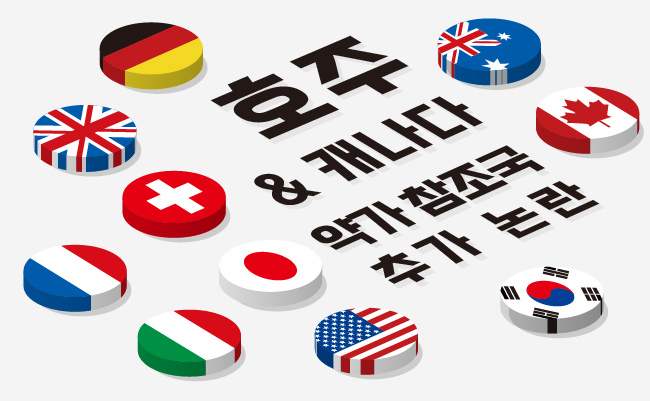
- Insurance authorities, which are seeking to expand drug reference countries from seven to nine from next year, are expected to exclude Australia from strong opposition from the pharmaceutical industry. It is said that the government has turned to a careful review after a meeting with the Vice Minister of Health and Welfare and the pharmaceutical industry held last week. The HIRA is expected to finalize the plan announced by internal regulations within this week and announce it soon. According to industries on the 22nd, there is a possibility that an amendment excluding Australia will be announced in the revised bill, which was announced by adding Australia and Canada to the drug price reference country. Earlier, the HIRA announced on the 21st of last month a revision to regulations on evaluation standards and procedures, including whether drugs are subject to concessionary benefits, including the U.S., Britain, Germany, France, Italy, Switzerland, and Australia. It will take effect on 1 January next year. The HIRA explained the revision, "We are using the adjusted price, which translates the drug price of seven foreign countries (A7), to evaluate the adequacy of new drug benefits, but we want to improve transparency and clarity and supplement its validity." When the revision was announced, the pharmaceutical industry strongly protested. In addition to the KPBMA, which represents domestic pharmaceutical companies, KRPIA, which has multinational pharmaceutical companies, issued a statement and made clear its opposition to the addition of Australia. Domestic pharmaceutical companies are concerned that the addition of Australia, which has low generic drug prices, could significantly lower the domestic generic drug price in the re-evaluation of registered drugs that reflect this. Foreign pharmaceutical companies are also strongly opposed to the revision that if Australia, which has low drug prices, is added, the price of new drugs will be lowered, further reducing patient accessibility. At a meeting with Park Min-soo, the second vice minister of the Ministry of Health and Welfare, pharmaceutical organizations, and CEOs of pharmaceutical companies on the 16th, the industry expressed concern about Australia's addition to the reference country. At the meeting, Vice Minister Park also said, "We will listen to the opinions of the field under the stance of increasing the sustainability of the health insurance finance and carefully look at ways to improve the system, including insurance drug price policies." It seems to have changed to a careful review. For now, the Ministry of Health and Welfare is said to have presented its revised opinion, and it is believed that it felt burdened to announce the existing plan as it is, conscious of the controversy within the HIRA. A senior HIRA official also said, "As the purpose of the amendment was to supplement the validity of the existing calculation formula, we are carefully considering ways that all stakeholders can accept." The HIRA is expected to draw up a final draft as early as this week and immediately announce the amendment without further notice.
- Company
- Nubeqa, approval for a combination therapy indication
- by Eo, Yun-Ho Dec 23, 2022 06:06am
- It is expected that the prescription of the combination therapy of the prostate cancer treatment Nubeqa will be possible in Korea. According to related industries, Bayer Korea recently submitted an application to the Ministry of Food and Drug Safety to expand the Taxotere combination therapy indication of an oral androgen receptor inhibitor (ARi) Nubeqa for treating vision nmCRPC. Nubeqa is an androgen receptor inhibitor with a unique chemical structure that binds to androgen receptors to inhibit the growth of prostate cancer cells through strong antagonism. The corresponding indication of this drug has been validated through an ARASENS phase 3 study. The metastatic hormone-sensitive prostate cancer patient group with Nubeqa and ADT and Taxotere on ARASENS 3 demonstrated a statistically significant improvement in total survival compared to the control group with ADT and Taxotere. The patient group using Nubeqa, ADT, and Taxotere showed a statistically significant delay in the period required for the pain to progress. The clinical results were announced at the 2022 Urology Cancer Symposium (ASCO GU) of the American Society for Clinical Oncology held in February, and were published in the medical journal "New England Journal of Medicine." Nubeqa has not yet applied for insurance benefits in Korea, so it is expected to take time to lead to actual prescription activation. The drug has not been registered since the HIRA Cancer Disease Review Committee ruled it unsuitable in February 2021.
- Company
- 1 of 2 patent suits filed this year proceed to the 2nd round
- by Kim, Jin-Gu Dec 23, 2022 06:06am
- It seems that the patent disputes in the pharma and bio industry will continue on in the long term. Among the 20 major rulings made during the first trial, 11, over 50% are being retried in a second trial by the Patent Court of Korea. Both the winning and losing parties of the patent suit that had been filed against Boryung Pharmaceutical’s fixed-dose combination for hypertension, ‘Dukarb (fimasartan and amlodipine),’ opted to continue their dispute in a second trial. In the case of the patent dispute over Novartis’s heart failure treatment ‘Entresto (valsartan+sacubitril),’ the original company appealed after the generic drug companies won the first trial. In the case of the dispute over the DPP-4 inhibitor class antidiabetic ‘Galvus (vildagliptin),’ the agenda is being fiercely tried again from square one after the Supreme Court's ruling of remand after reversal, and Novartis is also further countering by filing a trial for the active confirmation of the scope of rights. ◆Generics companies win first trial on Entresto... Novartis appeals According to industry sources on the 23rd, 21 major trial rulings and judgments have been made this year for patents in the industry. The number excludes cases where the company voluntarily withdrew its suit after requesting judgment. 20 of the cases received a ruling from the Intellectual Property Trial and Appeal Board (first trial), and 1 received a ruling from the Patent Court of Korea (second trial). Of the 20 cases that received a ruling in the first trial, 11 cases chose to continue on to the second trial. This means that more than half of the parties of major disputes did not accept the decision of the first trial. Pic of EntrestoEntresto’s patent dispute is one representative example. The dispute was sparked after its generic companies simultaneously filed suits to invalidate and confirm the passive scope of rights on Entresto’s 6 patents. Starting with Elyson Pharm, 13 companies challenged ▲1 use·composition patent ▲ 1 salt·hydrate patent (un-listed in the patent register) ▲1 use patent ▲1 crystalline form patent ▲2 substance patents for Entresto. The first trial was concluded in favor of the generic companies. Generic companies succeeded in challenging 1 use·substance patent, 1 crystalline form patent, and 2 substance patents. The remaining trials for the use patent and salt·hydrate patent have not been concluded yet. The company of the original drug, Novartis, decided to continue on the fight to the second trial for the crystalline form patent and the use·composition patent in March and July of this year. The company has given up the trials for its other 2 substance patents. Entresto has no drug substance patent, and the role is replaced by the use·composition patent and crystalline form patent. Therefore, Novartis plans to focus its defense strategy around these two patents. ◆Both the winning and loser parties appeal to ruling for Dukarb... long-term dispute inevitable Pic of Dukarb Two conflicting rulings were made in the first trial for Boryung’s Dukarb patent. Among 40 generic companies that challenged Dukarb’s patent, 2 won against Boryung, while the others lost. 29 of the companies filed a new trial on the same patent at the same time. If the first trial they attempted was made to avoid the patent by confirming the passive scope of rights, the companies added a patent invalidation strategy after losing the first trial. From the generic company’s perspective, whether it receives a winning decision from the Patent Court of Korea or a new ruling from the Intellectual Property Trial and Appeal Board, the company will be eligible to release its generic early. This is why companies that challenge the patent are mobilizing all available strategies. Boryung Pharmaceutical also filed a lawsuit against the two pharmaceutical companies that won against the company in the first trial to annul the trial decision. As a result, the Dukarb patent dispute, which began in March last year, is expected to be prolonged to even after the substance patent for Kanarb expires in February next year. ◆Galvus dispute to continue to the end...Novartis files active confirmation of the scope of rights # i3 The patent dispute around Galvus was also inconclusive this year. The analysis is that the conflict has been prolonged for more than 5 years due to the sharp differences in the position of the two parties. The situation had also intensified with Novartis' counteract, filing a trial for the active confirmation of the scope of rights. The conflict began in 2017 when Ahn-Gook Pharmaceuticals and Hanmi Pharmaceuticals claimed part of the term extended for the substance patent of Galvus invalid. The generic companies won the first trial. In the second trial, the court overruled the first court’s decision and ruled in favor of the original company. In the third trial, the Supreme court questioned the qualifications of the original company that filed the appeal and remanded it back to the first trial. With the remandment, the dispute resumed in the first instance court. Unlike in the previous first trial, the Intellectual Property Trial and Appeal Board ruled in favor of the original company, and generic companies appealed once again. Currently, Ahn-Gook Pharmaceuticals and Hanmi Pharmaceuticals are waiting for the second trial ruling. Apart from the dispute, Novartis had filed a trial for the active confirmation of the scope of rights against Kyongbo Pharmaceutical, Ahn-Gook Pharmaceuticals, and Korea United Pharm. The active confirmation of the scope of rights is filed by the original companies to protect their patent rights from generic companies. The suit is rarely filed in the domestic pharmaceutical and bio-industry. Kyongbo and the others have already released their generic versions after they won the first trial. The substance patent for Galvus expired in March of this year. However still, Novartis plans to see the dispute to the end and be recognized for the generic companies’ patent infringement. If Novartis wins, it will be possible to claim damages due to patent infringement. All companies that released Galvus generics will be subject to claims for damages. Also, Roche and Alvogen Korea received mixed results over the 3 use patents for Avastin. Alvogen Korea won 2 trials and Roche succeeded in defending 1 claim. Both companies decided to appeal and take the dispute to the second trial. However, Roche withdrew the lawsuit it had filed for cancellation of the trial decision in September and plans to focus on the case appealed by Alvogen Korea. In the patent dispute over Monterizine Cap, Hanmi Pharmaceuticals filed an appeal for the cacellation of the trial decision against 20 pharmaceutical companies after losing the first trial.
- Policy
- Revlimid's benefit for multiple myeloma maintenance therapy
- by Lee, Tak-Sun Dec 23, 2022 06:05am
- Revlimid, a treatment for multiple myeloma, is eligible for maintenance therapy for hematopoietic stem cell transplantation patients. The effective date is January 1 next year. The HIRA has launched an opinion survey on the revision of the anti-cancer drug standard. According to the revision, benefits will be newly established for maintenance therapy for newly diagnosed multiple myeloma patients who have reacted more than stable stool after transplanting Revlimid into autologous hematopoietic stem cells. The administration starts six months after the end of the transplant, and as a result of the response evaluation, the administration was stopped when the disease progressed. In response, the HIRA said that Lenalidomide, including Revlimid, is a drug licensed to maintain multiple myeloma patients who have been newly diagnosed with autologous hematopoietic stem cell transplants, and that this therapy is mentioned as standard treatment in textbooks, and is also recommended by the NCCN Guidelines (2022) and ESMO Guidelines (2021). In particular, in a random assignment, double-blind, and phase 3 clinical trial (CALGB) for patients with multiple myeloma who received a newly diagnosed autologous hematopoietic stem cell transplant, it was confirmed that it was clinically useful compared to those who did not perform maintenance therapy, and added that benefit standards were set. The clinical trial results showed 57.3 months of progression-free survival median (mPFS) (28.9 months in the control group) and 113.8 months of total survival median (mOS) (84.1 months in the control group). The revised bill also introduced a combination of adjuvant and Fluorouracil + Leucovorin for biliary tract cancer. Pediatric combination therapy among "Dasatinib + chemotherapy" has been modified and supplemented for acute lymphocytic leukemia. This is in response to a request to change the Korean Pediatric Blood Oncology Association. At the same time, Niraparib monotherapy (more than 4th round) was deleted from ovarian cancer, ovarian cancer, and primary peritoneal cancer palliative, while Paclitaxel + Cisplatin (Intra-peritoneal) combination therapy was also deleted for other cancers.
