
- LOGIN
- MemberShip
- 2026-06-30 22:48:54
- Company
- Evrysdi can be prescribed with non-reimbursement
- by Eo, Yun-Ho Nov 21, 2022 05:56am
- Evrysdi, an eating spinal muscular atrophy treatment, can be prescribed at hospitals and is still non-reimbursement. According to related industries, Roche Korea's Spinal Muscular Atrophy treatment passed through D.C. at medical institutions such as Severance Hospital, Seoul National University Hospital, Yangsan Pusan National University Hospital, and Yongin Severance Hospital. Evrysdi, which was approved in Korea in November 2020, was first approved for "adult and infant SMA patients for more than 2 months." On top of that, the U.S. recently expanded the scope of administration to infants under 2 months of age in the United States. Evrysdi, the first oral option as an SMA treatment, has the advantage of being able to be customized according to age and weight. The process of registering insurance benefits is still sluggish. Solidarity Against Disability Discrimination issued a statement last month when Zolgensma's benefit was applied, calling on the HIRA to abolish the criteria for suspension of Spinraza's benefit, the same SMA treatment, and implementation of Evrysdi discussions as soon as possible. Evrysdi points out that SMA patients are emerging in the blind spot of therapy as the Korea Appraisal Board continues to withhold discussions on benefits just because they will discuss them in the future in line with the adjustment of Spinraza's application standards. Currently, the SMA area lists Biogen's Spinraza and Novartis' Zolgensma. Evrysdi proved its efficacy through a FIREFISH study conducted on infants of 2 months to 7 months and a SUNFISH study conducted on children and adults aged 2 to 25. In SUNFISH conducted in 180 SMA type 2 or type 3 patients, Evrysdi demonstrated improvement in motor function at 12 months when measured with MFM-32, an exercise function evaluation measure. In addition, in FIREFISH conducted on infant SMA patients with type 1 2 to 7 months of age, 88% of patients who received Evrysdi for 2 years continued to survive without a ventilator for 2 years. During the two-year period, 59% of infants could sit unaided for at least 5 seconds on a BSID-III basis, which measures total infant and infant development exercise. In addition, 65 percent of infants were able to hold their throats for a year, 29 percent were able to turn themselves over for a year, and 30 percent were able to stand using support.
- Policy
- Label for rosuvastatin to change following ticagrelor
- by Lee, Hye-Kyung Nov 21, 2022 05:56am
- The drug-drug interaction label for rosuvastatin drugs that are used to treat hyperlipidemia including AstraZeneca’s ‘Crestor’ will be changed. The drugs that affect rosuvastatin are ticagrelor drugs including AstraZeneca’s antiplatelet drug ‘Brilinta.’ The labeling change for ticagrelor has been preannounced by the Ministry of Food and Drug Safety in August and is set to be made on December 2nd. The labeling changes for rosuvastatin in line with the changes made for ticagrelor will also be applied after collecting opinions until December 2nd. According to the planned changes that will be made, the phrase ‘Ticagrelor can cause renal insufficiency and may affect renal excretion of rosuvastatin, increasing the risk for rosuvastatin accumulation’ will be newly added in the drug-drug interaction label of both the monotherapy and combination therapies of rosuvastatin. In some cases, co-administered ticagrelor and rosuvastatin led to a renal function decrease, increased CPK level, and rhabdomyolysis. Therefore, renal function and CPK control are recommended while using ticagrelor and rosuvastatin concomitantly. The MFDS prepared the label change based on European Medicines Agency’s safety review results on rosuvastatin. Items approved in Korea that contain rosuvastatin include 974 items including Crestor, Kuhnil Biopharm’s ‘Rosucande Tab,’ Kims Pharmaceutical’s ‘Rosuvac Tab,’ Ahngook New Pharm’s ‘Newsuvatin Tab,’ HK Inno.N’s ‘Vivacor Tab,’ Novartis Korea’s ‘Rosuco Tab,’ and Abbott Korea’s ‘Lypsta Tab.’
- Company
- Dong-AST ended the clinical trial of Stelara biosimilar
- by Chon, Seung-Hyun Nov 21, 2022 05:56am
- A panoramic view of Dong-A ST headquartersDong-AST announced on the 17th that the global phase 3 clinical trial of Stella biosimilar DMB-3115 has ended. Phase 3 of global clinical trials of DMB-3115 was conducted for 52 weeks in a total of 605 patients in 9 countries, including Poland, Estonia, and Latvia, starting in the United States in 2021. Phase 3 of this global clinical trial was conducted with random assignment, double-blinding, multi-organ, and active-controlled trials to compare the efficacy, safety, and immunogenicity of DMB-3115 and Stelara subcutaneous injection in moderate to severe chronic plate psoriasis patients. Clinical samples produced by STGEN BIO, a biopharmaceutical CDMO affiliate of Dong-A Socio Holdings, were used. Dong-AST plans to apply for DMB-3115 item permits in the U.S. and Europe in the first half of 2023 when positive data are derived by analyzing the results of phase 3 global clinical trials. Stelara, developed by Janssen, is a treatment for inflammatory diseases such as plate psoriasis, psoriatic arthritis, Crohn's disease, and ulcerative colitis. It is a blockbuster product that recorded sales of 9.134 billion dollars (about 11.64 trillion won) last year. Since 2013, Dong-A Socio Holdings has promoted the joint development of the DMB-3115 with Meiji Seika Pharma. In July 2020, Dong-AST took over the right to develop and commercialize the global development project with the aim of promoting the efficiency of the global development project and jointly developed it with Meiji Seika Pharma. In 2019, phase 1 European clinical trials comparing the pharmacokinetic properties of DMB-3115 and Stelara in healthy adults demonstrated pharmacokinetic similarities between DMB-3115 and Stelara. Dong-AST signed a technology export contract for DMB-3115 with multinational pharmaceutical company Intas Pharmaceuticals in July last year. Intas Pharmaceuticals has secured exclusive rights to licenses and sales in global regions except for Korea, Japan, and some Asian countries. Global commercialization will be handled by Accord Healthcare, a subsidiary of Intas Pharmaceuticals. Dong-AST and Meiji Seika Pharma are responsible for the research and development of DMB-3115 and for the exclusive supply of products to Intas and Accord Healthcare.
- Policy
- Public policy fee for severely ill children is implemented
- by Kim, Jung-Ju Nov 21, 2022 05:56am
- The government will push for a pilot project for a new payment system for the sustainability of treatment for severely ill children and adolescents. The Ministry of Health and Welfare (Minister Cho Kyu-hong) announced that it will recruit participating institutions for about four weeks from today (17th) to December 15th, which will take effect in January next year. Participating institutions are Seoul National University Hospital, Asan Medical Center, Yonsei Severance Hospital, Samsung Medical Center, Chonbuk National University Hospital, Chonnam National University Hospital, Chungnam National University Hospital, Chilgok Kyungpook National University Hospital, Yangsan Pusan National University Hospital, and Kangwon National University Hospital. The Ministry of Health and Welfare explains that this is a pilot project to prevent the collapse of medical infrastructure with groundbreaking support for severe childhood diseases, which are weakening due to a decrease in the child population. The pilot project is the first step in implementing the public policy fee presented as a national task. The government introduces a new payment system called a package follow-up method rather than an additional method for individual medical services to strengthen support for pediatric specialized care infrastructure. The Ministry of Health and Welfare explained that it aims to lay the foundation for pediatric patients and guardians to receive sufficient professional treatment even close by supporting the maintenance of essential medical infrastructure by region through pilot projects. The Ministry of Health and Welfare plans to operate the pilot project by adopting a new support method to operate a stable treatment system for severely ill children by region. The selected medical institution will expand essential manpower such as pediatricians and nurses to provide high-quality children's medical services and carry out key projects suitable for each center's characteristics such as short-term hospitalization and home medical services. The pilot project will be conducted for three years from January 2023 to December 2025, and the target of the application is an institution designated as a children's public medical center that wishes to participate. The participating institution will be selected by comprehensively evaluating the level of securing pediatric professionals and the quality of pediatric treatment. Minister of Health and Welfare Cho Kyu-hong said, "This pilot project is part of the public policy fee to strengthen the public role of health insurance," adding, "We hope that an environment will be provided for all children to grow safely and healthily."
- InterView
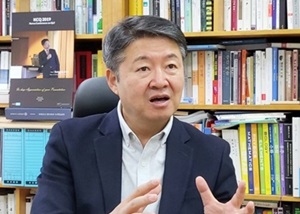
- “Korea is fully capable of developing new microbiome drugs"
- by Nho, Byung Chul Nov 18, 2022 06:04am
- Eung-Bin Kim, Professor of Systems Biology at Yonsei University “The development of metagenomics technology that extracts DNA directly from samples without culturing in 1998 enabled the field of human microbiome research to make a giant leap forward. The success and failure of innovative new microbiome-based therapeutics depend on identifying, standardizing, and materializing the keystone species in the human gut microbiome.“ The development direction for new, innovative next-generation human microbiome-based therapeutics sought by Professor Eung-Bin Kim, Department of Systems Biology at Yonsei University, is focused on the understanding of the material cycle in the ecological structure. More than 10,000 microorganisms inhabit our body (mouth, gut, nose, genital, skin, etc) along with 37 trillion bacteria. Regarding this, Professor Kim said, “What’s important is not the microorganisms themselves but the microbial genes and proteins. For example, microorganisms that digest fat are always present in a healthy intestine. However, the task is not always performed by the same microorganism. Just like how players replace each other’s role in sports games.” Among Professor Kim’s microbial studies, one that caught the reporter’s attention was his identification of the existence of probiotics in jeotgal (Korean traditional pickled fish made with croaker or hairtail, etc). In the early stages of the salt-aging period, jeotgal contains a lot of bacteria, but 99% of the bacteria are killed after 2 years of aging. In the end, only 2 or 3 types of basophilic lactic acid bacteria such as Tetragenococcus remain. The study received much interest from the academia and media. Professor Kim, who is considered an authority in microbiology, has his eyes on the potential held by Akkermansia muciniphila and Faecalibacterium prausnitzii in gut microbiota that is considered next-generation probiotic candidates.” Kim said, “The key to probiotics is in the time of residence in the intestine, and ‘Akkermansia’ and ‘Faecalibacterium’ were found to have a long survival time in the intestinal mucosal barrier. Also, the fact that these species were successfully cultured with domestic technology is also rated highly. We are looking forward to the development of innovative new drugs based on these species, which are the keystone species in the human gut microbiome.” On how to confidently compete against strong R&D players in developing new and innovative microbiome-based therapeutics in the global market, Kim said that the focus should be on treating various disease groups rather than simply developing and releasing intestinal microbiota products. In particular, open collaboration between the industry-academica-research and policy and systemic support should also be promptly prepared. Meanwhile, Professor Kim had served as the Dean of Admissions, and Dean of the College of Systems Biotechnology at Yonsei University, and authored ‘Alcohol, Disease, War: A History of Microorganisms', 'The Whole World is Full of Microorganisms', 'Biotechnology gives wings to Life Sciences’ and 'I Live with Microorganisms'.
- Company
- KPBMA visits Boston...expands exchanges with MIT, etc.
- by Chon, Seung-Hyun Nov 18, 2022 06:04am
- On the 14th (local time) KPBMA Director Hee-Mok Won (8th from the left), Huons Vice Chairman Sung-Tae Yoon (9th from the left), MIT Corporate Relations Executive Director John Roberts is taking a commemorative photograph at the EB that was held at MIT ILP Office at Boston, Cambridge, US On the 17th, Korea Pharmaceutical and Bio-Pharma Manufacturers Association (KPBMA) announced that its delegation had visited Boston, US to network with local companies and institutions. Hee-Mok Won, Director of KPBMA, Sung-Tae Yoon, Chairman of KPBMA, and other representatives of Korea’s pharmaceutical and bio business attended the executive briefing (EB) prepared through MIT Industrial Liaison Program (ILP) especially for Korean companies for 4 days from the 14th. In June 2020, KPBMA became the first association to join the consortium-type membership in the history of MIT ILP. The EB held this time was the first face-to-face event since the KPBMA became a member, and was held to directly communicate with MIT’s innovation ecosystem. At the event, member companies in the consortium discussed research technologies face-to-face with MIT's top professors in the field of their interest, such as oncology and new drug development. Also at the event, Professor Connor W. Coley from MIT presented on the development of AI-based organic compound synthesis. Also, Professor Arturo Vegas from Boston University and Sean Quinnell presented pm a small molecule inhibitor to the cytokine interleukin-4 related to inflammation and cancer. Then, presentations from MIT spin-off companies followed, including presentations on ▲Small molecule new drug development platform (Deepcure), ▲Innovative treatment methods for resting cancer cells (Felicitex Therapeutics), ▲ Effective drug delivery technology using high molecule dissociation oral administration (Veramorph), ▲Groundbreaking blood clotting diagnostics platform (Coagulo Medical Technologies). Heads and Business Development and R&D executives from Korean pharmaceutical and bio companies including Samjin Pharm, Yuhan Corp, Ildong Pharmaceutical Hanmi Pharmaceutical, and Huons sought partnership opportunities with startups that own advanced biotechnology in addition to MIT’s various academic achievements. After the event, the delegation visited Ginkgo Bioworks, a world-class biofoundry company, to discuss ways to cooperate with domestic companies. Ginko Bioworks, a bioventure that spun off from MIT in 2008, owns its own cell programming platform and provides services that meet the needs of customers in various industries. KPBMA Director Hee-Mok Won said, “In only three years since Korean pharmaceutical companies entered the Cambridge Innovation Center (CIC) and began industry-academia cooperation with MIT in earnest, more than 15 companies have entered the market. We will expand cooperation with Boston’s innovative ecosystem including MIT and new startups to bring practical results.”

- Policy
- The budget for Paxlovid's SE relief will be prepared
- by Lee, Jeong-Hwan Nov 18, 2022 06:04am
- The Welfare Committee approved a budget of 1.7 billion won. Payment can be made next year if the plenary session is passed. The budget for relieving abnormal cases and side effects of drugs being administered in Korea through the EUA system, which is not approved based on the current Pharmaceutical Act, is smoothly being secured. This is because the National Assembly's Health and Welfare Committee recently voted 1.79 billion won for next year's budget to relieve damage to EUA drugs such as COVID-19 treatments, and attention is focused on the results of the special committee on budget settlement. Given that the EUA drug damage relief budget is recognized by multiple lawmakers and professional committee members of the Welfare Committee, and the government is also actively encouraging the administration for COVID-19 prevention, calls for a side effect damage compensation budget are gaining momentum. As of November this year, a total of six drugs including Paxlovid, Remdesivir, Actemra, Lagevrio, Evusheld, and Comirnaty 2 are being administered in Korea as EUA drugs by the Ministry of Food and Drug Safety. There is no way to relieve the damage even if serious side effects such as abnormal reactions, deaths, and diseases are developed in patients who have taken six drugs approved for emergency use. This is because the drug and vaccine damage relief system is operated only for drugs and vaccines that are officially approved based on the Pharmaceutical Affairs Act. Choi Hye-young of the Democratic Party of Korea and Kim Mi-ae of the People's Power, who are members of the Welfare Committee, have proposed a bill to relieve the state from side effects caused by EUA drugs. Prior to the legislation, the Welfare Committee voted to increase the budget of 1.79 billion won to compensate for damages to EUA drugs during next year's budget review. If the budget bill passes through the Special Committee on Budget and Accounts and passes the plenary session, it will be able to compensate for side effects caused by the administration of EUA drugs such as Paxlovid from next year. Currently, the quarantine authorities are actively encouraging the use of EUA drugs such as oral COVID-19 treatments to prevent and treat severe COVID-19 and death, so there is a high expectation that the budget for damage relief will also pass the committee. There have been cases in which applications for relief from abnormal cases that occurred after taking Paxlovid have been received, and compensation for the cases will be possible only when the budget for next year is prepared. The Welfare Committee voted 271 million won, the same as this year, for the budget for the "relief from side effects of drugs" project.

- Policy
- Quick diagnosis is essential for Hepatitis C
- by Nov 18, 2022 06:03am
- Pharmaceutical companies such as BMS, Gilead, and Abbvie introduced direct anti-virus (DAA) treatments, and hepatitis C opened the era of complete recovery. Re-treatment options for a small number of patients who failed to treat also appeared this year. The goal of hepatitis C is to find "hidden patients" who have not yet been diagnosed. Experts stress that national checkups should include hepatitis C. Bruce Kreter, general manager of Global Medical, who was in charge of the development of hepatitis C treatment at Gilead, and Ahn Sang-hoon, a professor of gastroenterology at Yonsei University Severance Hospital, asked about the current status of hepatitis C screening at home and abroad. ◆ Government-led hepatitis C screening test vs. repeated discussions for years The World Health Organization (WHO) declared the fight against hepatitis C by 2030 and urged international efforts. As the treatment is completed, it can be managed by simply finding hepatitis C carriers. The domestic prevalence rate is estimated to be around 1%, and it is considered an important strategy to quickly find and treat patients who can be the source of infection because there is no separate vaccine. Unlike the United States, which conducted a government-led hepatitis C screening test under the WHO's declaration, Korea has been only discussing whether to include hepatitis C tests in national checkups for years. The paradigm of hepatitis C treatment completely changed after the introduction of DAA preparations. With a treatment success rate of nearly 100%, complete recovery can be expected, treatment can be performed regardless of genotype, and the treatment period, which was up to one year, has been greatly reduced to two to three months. Even this year, a re-treatment system has been created that can be used by a small number of patients who have failed to treat due to resistance. The success rate of re-treatment is also close to 100%. It is evaluated that treatment is close to completion among the two factors for eradicating disease, "prevention" and "treatment." The problem is prevention. Hepatitis C does not have a vaccine, so a quick diagnosis is the best. Professor Ahn pointed out that it is meant to treat only patients without prevention. In particular, it is analyzed that Korea has never been tested for hepatitis C and does not even know that it is a carrier. Professor Ahn said, "More than 70% of hepatitis C patients in Korea were asymptomatic patients who did not know that they were hepatitis C, and more than 60% had never been tested for hepatitis C in their lives," and stressed, "There are more recent situations such as drugs and tattoos, so we need to quickly detect and treat the source of infection." In 2020, the United States began recommending screening tests for hepatitis C under the leadership of the CDC. This is a change to keep pace with the WHO's announced goal of eradicating hepatitis C. The United States recommends that all adults undergo at least one hepatitis C screening test. Countries with national examination programs such as Taiwan, Japan, and Egypt included hepatitis C tests in the category. " Hepatitis C is asymptomatic and the patient cannot be recognized as a carrier unless diagnosed through a test. However, these patients may have been in poor condition for a long time, but they feel that their quality of life is improved through treatment. At the national level, medical costs can be lowered by lowering the probability of liver cirrhosis or hepatocellular carcinoma when hepatitis C is completely cured, he explained. In Korea, discussions have also been made since late 2015 to include hepatitis C tests in the national health examination category, but no conclusion has been reached even seven years later. It is not that the utility value that can be included in national projects has not been proven. Although the Korean Association for the study of the Liver has consistently proven cost-effectiveness through feasibility studies and pilot projects, there is still no progress. The Korean Association for the study of the Liver is conducting additional research to analyze the government's financial impact assessment. Professor Ahn said, "The Korean Association for the study of the Liver confirmed the cost-effectiveness of national hepatitis C screening through an early detection pilot project for hepatitis C for 105,000 people aged 55 in 2020. "When comparing the costs of treatment with screening tests and neglecting liver cirrhosis, it was much more effective to conduct screening tests for high-risk groups," he explained. He said, "In addition, research to verify whether the government's financial consumption of national checkups is possible through the government's fiscal impact assessment will be announced within this year as it is almost the final stage."
- Policy
- Budget increase for drugs and vaccines under NA review
- by Lee, Jeong-Hwan Nov 17, 2022 05:54am
- The proposal to set a new budget worth KRW 14.4 billion to support the patients’ medical expenses of ultra-high-priced new drugs for rare diseases will be reviewed by the Adjustment Subcommittee of the National Assembly’s Special Committee on Budget and Accounts. A plan to increase the budget for the K-global vaccine fund project by KRW 40 billion or KRW 20 billion from the KRW 10 billion that was originally submitted by the government, will also be discussed at the Adjustment Subcommittee of the Special Committee on Budget and Accounts. The Adjustment Subcommittee of the Special Committee on Budget and Accounts will be reviewing the agendas above on the 16th. The budget to support the medical expense for non-reimbursed new orphan drugs is a new budget that had not been reflected in both the government’s original proposal or the resolution bill of NA’s Health and Welfare Committee The agenda became subject to review after Rep. Cheol-Gyu Lee and Dong-Hyuk Jang, Hee-Young of the Special Committee on Budget and Accounts raised the need for a new budget. The plan is to increase the budget by KRW 14.4 billion to support medical expenses for non-reimbursed drugs before they are applied insurance coverage. If the budget plan is reflected, rare disease patients that use ultra-high-priced drugs that are yet to be reimbursed may receive benefits. Also, for the ‘K-Global Vaccine Fund Project’ that had been passed by the NA Health and Welfare Committee, two budget increase proposals – one to increase the budget by KRW 40 billion requested by Rep. Hyun-Young Shin and Hye-Young Choi, and the other to increase the budget by KRW 20 billion requested by Rep. Dae-Sik Kang, Sun-Woo Kang, Jin-Gyo Bae, Hyun-Jin Bae, Jung-Sook Suh, Yong-Ho Lee, Hye-Sook Jun, Su-Jin Cho will be reviewed by the special subcommittee. In other words, plans to increase the budget for the fund to support the development of local homegrown vaccines and new drugs to KRW 50 billion and KRW 30 billion are set to be reviewed side by side. The pharmaceutical and bio-industry is of the opinion that it is necessary to secure as much government budget as possible to actively support companies that develop homegrown vaccines and new drugs who are preparing to conduct Phase II or III trials. All the plans are for budget increases, and the subcommittee review of the agendas is scheduled for next week.
- Opinion
- [Reporter's view] Generic drugs can't be me-too drug
- by Kim, Jin-Gu Nov 17, 2022 05:54am
- Controversy is brewing over the government's push to replace the term "generic" with me-too-drug. The KPBMA and the Korean Pharmaceutical Association immediately objected. They stress that it is not enough to contain all the meanings of the term generic in the term copy drug. The backlash from the pharmaceutical industry seems reasonable. This is because there is a very large difference. The meaning of generic is the same as general. It is also defined in the dictionary as 'comprehensive', 'no characteristics', and 'no name'. The English dictionary describes it as "not sold or made under a specific brand name" as the second meaning. Me-too drug is defined as 'making or doing the same thing as the original'. The word 'Reproduction' or 'Copy' is more like the word 'Generic'. However, no generic drug is named Reproduced Medicine or Copy Drug anywhere in the UK. Even if you look at the process of generics development, it is different from a me-too-drug. The Ministry of Food and Drug Safety explains that generic drugs are "first developed (original) drugs and drugs that are made equal in the content of main ingredients, how to take them, efficacy, effectiveness, and quality." It goes through a process called a biological equivalence test to see if the original and generic are the same. Instead of simply copying the original, it is necessary to examine whether the efficacy and safety of the human body are the same, and then undergo a separate permission review. This is why the KPBMA expressed its opinion, saying, "It is not the result of reproduction created as if it were simply printed." If a generic is replaced with a generic drug, there is a high concern that it will be recognized differently from the essence of the general public. The Korean Pharmaceutical Association is concerned that "it may be sold under the name of 'fake medicine' or 'copy medicine' in the sense of the word cloning." Language is a vessel for thought. It's not just a symbol to express things. It acts like a kind of formwork that determines the scope of perception. If generic drugs are replaced by the term me-too drug, it is difficult to escape the range of recognition of 'replication'. The term generic may be a somewhat unfamiliar word from the perspective of the general public. Nevertheless, me-too-drug should not be a substitute for a generic. The word me-too drug does not seem appropriate to represent the nature of generic.
