
- LOGIN
- MemberShip
- 2026-06-30 22:48:54
- Company
- Tecentriq approved as adjuvant treatment for NSCLC
- by Nov 15, 2022 05:38am
- On the 14th, Roche Korea announced that its anti-PD-L1 immuno-oncology drug Tecentriq (atezolizumab) was approved as adjuvant therapy following resection in patients with early-stage non-small-cell-lung cancer, and became the first immunotherapy to receive approval for the indication. Tecentriq may now be used as an adjuvant treatment following complete resection and platinum-based chemotherapy in adult patients with stage II to IIIA NSCLC with PD-L1 expression of 50% or higher on tumor cells (TC). With this approval, Tecentriq became the first cancer immunotherapy to be approved as adjuvant therapy in early-stage NSCLC in Korea. The indication extension was approved based on findings from an interim analysis of Phase 3 IMpower010 trial. Tecentriq was found to result in a 57% reduction in the risk of disease recurrence or death compared with best supportive care (BSC) in patients with stage II to IIIA NSCLC with PD-L1 expression of 50% or higher Also, the disease-free survival (DFS) benefit derived with adjuvant Tecentriq over BSC was consistently observed across most of the subgroups analyzed on the trial, including histology and disease stage. The overall survival (OS) data remain immature for this population, but a trend toward improved survival with atezolizumab over BSC was observed with a stratified HR of 0.43. The median OS and subgroup analysis results at 46 months showed that Tecentriq reduced the risk of disease recurrence or death 57% compared with best supportive care (BSC) in subject patients. The safety profile of Tecentriq was consistent with what has previously been observed with the Tecentriq monotherapy, and no new safety signals were observed. Grade 3-4 adverse effects (AEs) that were most frequently reported in the Tecentriq arm were increased ALT (2%), pneumonia (1%), and increased AST. Based on the data, the U.S. National Comprehensive Cancer Network (NCCN) guideline recommends Tecentriq as adjuvant therapy (Category 2), and the American Society of Clinical Oncology (ASCO) also recommends Tecentriq as adjuvant therapy in its guideline for adjuvant therapy in early-stage lung cancer patients. Sang-We Kim, Professor of Oncology at Asan Medical Center, said, “Around half of NSCLC patients experience recurrence after surgery, some of which at an untreatable state. With immuno-oncology drugs that had been mainly prescribed in metastatic NSCLC now available for use in the early stages of the disease, NSCLC patients in Korea that have a high rate of PD-L1 expression can have the opportunity to reduce their chance of recurrence after surgery and chemotherapy.”
- Company
- CR of AML new drug candidates is identified in Phase 1/2
- by Kim, Jin-Gu Nov 15, 2022 05:38am
- Hanmi Pharmaceutical announced on the 14th that it has confirmed cases of complete response (CR) in various dose groups as a result of phase 1/2 clinical trials of Tuspetinib (HM43239), which is being developed as an AML treatment. Aptose was recently introduced at the KOL webinar, "As a result of the global phase 1/2 for patients with recurrent or refractory acute myeloid leukemia, we confirmed CR cases in all of the various doses (80 mg, 120 mg, 160 mg) of HM43239." Aptose will present details of the study at the 64th ASH in New Orleans, the U.S., from the 10th to the 13th of next month. HM43239 is an oral MKI administered once a day that targets major kinases acting in myelogenous malignant tumors. It was designated as a fast-track development drug by the FDA in May. In 2018, it was also designated as a rare drug. According to the successful results of this clinical trial, Aptose plans to expand clinical trials with single-administration therapy and combination-administration therapy in the future. In the extended clinical trial of single administration therapy, the efficacy of HM43239 120mg will be confirmed in the AML patient group, including patients with FLT3 mutations who do not respond to existing FLT3 inhibitors. In addition, it plans to conduct a combined clinical trial with HM4323980mg and Venetoclax, an existing AML treatment.
- Company
- Merck KGaA has appointed Christoph Hamann
- by Nov 15, 2022 05:38am
- Christoph Hamann, General ManagerMerck Biopharma Korea announced on the 10th that it has appointed Christoph Hamann as the new general representative of its business unit. Harman served as general manager of Merck Biopharma in Malaysia, Singapore, and Brunei, and as Managing Director in Malaysia. Since joining Merck in 2009, he has built various careers through strategic and commercial work in major markets such as Germany, Switzerland, and the United States. In particular, he showed excellent performance as an infertile franchise leader in Europe and vice president of global business development, playing an important role in business development and management at the global and national levels. Including this inauguration in Korea, it will have business experience in a total of seven countries. General Manager Harman majored in economics at the University of Virginia in the United States, and before joining Merck, he spent nine years in investment banking and consulting. "We expect that Korea Merck Biopharma's leadership in the special care sector will be further strengthened by Christian Hamann, a general manager with about 22 years of experience and expertise in various industries, including pharmaceuticals," said the Merck Biopharma division said.
- Policy
- The vaccine fund will be increased by ₩40 billion
- by Lee, Jeong-Hwan Nov 14, 2022 06:07am
- Expectations in the pharmaceutical industry are soaring as the National Assembly's Health and Welfare Committee decided to increase next year's budget for the "K-Global Vaccine Fund" to 50 billion won, up 40 billion won from the government's plan. As the Ministry of Health and Welfare is constantly sending signals to the pharmaceutical community to focus on developing domestic vaccines and new drugs based on Korean bio funds, attention is being paid to whether the budget approved by the Welfare Committee will pass the plenary session. Looking at the Ministry of Health and Welfare's budget plan for next year, which was recently approved by the Welfare Committee, the budget for supporting the development of the pharmaceutical industry increased sharply from 44.07 billion won to 11.128 billion won. Among them, the largest increase in budget is the "K-Global Vaccine Fund" project. The government had set aside 10 billion won, a reduction of 40 billion won from this year's budget, as a global vaccine fund budget. During the screening process, the 10 billion won budget was too small, which could dampen private investment, followed by demands from welfare committee members for an increase. The move is aimed at providing aggressive R&D investment support for pipelines that are likely to succeed among vaccine and new drug candidates preparing for domestic and foreign clinical trials for the purpose of final marketing approval and market launch. The Welfare Committee adopted a 50 billion won bill among the plans to increase the fund budget by 20 billion won from 10 billion won to 30 billion won and increase it by 40 billion won to 50 billion won. The remaining gateway is the Special Committee on Budget and Accounts. If the plenary session is passed without reduction adjustment in the special committee on the budget and settlement, the vaccine fund budget, which is increased by 40 billion won compared to the government's plan, is expected to be operated from next year. The domestic pharmaceutical industry is voicing its voice that the National Assembly and budget authorities should agree to a review without reduction in order to increase the possibility of developing native vaccines and new drugs. The Ministry of Strategy and Finance urged the government to avoid tightening its fiscal stance in the vaccine fund sector to achieve the goal of fostering the domestic pharmaceutical bio industry. An official from A Pharmaceutical Company in Korea said, "Unlike expected, the Welfare Committee voted to increase the amount by 40 billion won. "It is encouraging that they seem to agree on the need to foster the pharmaceutical bio-industry and develop blockbuster domestic vaccines and new drugs," he said. "The resolution to increase the amount is the same as this year's budget, and support for vaccines and new drugs, which may be possible only when the budget is passed as it is, will be able to become a reality," he expected. An official from A said, "I understand that the Ministry of Health and Welfare and the welfare committee members are greatly aware of the importance of the vaccine fund budget. He said, "I think I felt the need for a native vaccine starting from COVID-19," adding, "The Ministry of Economy and Finance, which is a financial authority, should sympathize with this urgency and work hard to pass the budget without reduction." An official from company B in Korea also said, "The increase has been decided, but this game is from now on when the Special Committee on Budget and Accounts begins." He said there are concerns that the reduction will be inevitable as the government is tightening its fiscal stance. "However, the government's vision to grow the pharmaceutical bio-industry as a new engine is a goal it has put forward every year." "It is time to realize our will in this budget review," he said. "The vaccine fund business is in the form of receiving private investment compared to government investment. If government investment increases, private investment will be able to be activated in proportion, he said. "The National Assembly and the Ministry of Economy and Finance should recognize that pharmaceutical companies equipped with clinical trials at home and abroad are waiting for R&D support."
- Company
- Adding AUS as a drug price reference country raise concerns
- by Nho, Byung Chul Nov 14, 2022 06:07am
- The health authorities are known to be considering including Canada and Australia as reference countries for drug pricing reevaluations. Currently, the Ministry of Health and Welfare, Health Insurance Review and Assessment Service, and the National Health Insurance Service refer to drug prices of G7 countries - US, UK, Germany, Switzerland, Italy, France, and Japan – for evaluations and assessments. Adding the two countries, which are considered to be those with the lowest drug price, is expected to raise some issues. From what has been known so far, the government is planning to include Canada and Australia as reference countries and use the drug prices of the counties as standard, but if their use extends to the pricing of new drugs introduced from abroad and new drugs developed in Korea, this may deprive patients of their right to treatment and drive local pharmaceutical companies into a crisis. In Korea, the price of generic drugs is set at 53.55% of the original version. This is slightly higher than that in other countries, ranking 4th among OECD member countries. However, this relatively higher price is only applied to some original and generic drugs and is interpreted to be a strange phenomenon arising from Korea’s odd brand name-based prescription structure rather than ingredient name. According to a booklet issued by Canada’s new drug pricing review committee that was disclosed at the recent NA Audit, the reimbursement listed price of drugs such as Plavitor, Viread, and Simvastatin is 3 to 14 times higher in Korea compared to those in the US. However, rashly concluding that the generic drug price in Korea is higher than those of reference countries without considering how the higher insurance price set for new drugs from multinational pharmaceutical companies during initial listing affected the generic price, may likely cause distortion of the drug price system. As such, applying such an invasive drug price reduction policy of adding Canada and Australia as reference countries following the unilateral drug price reduction that was applied in 2012 and the satisfaction of ‘self-bioequivalence and DMF registration’ requirement, may severely harm and distort the development of the pharmaceutical and bio industry that is regarded as the new growth engine of the future. According to one research institute, some of the generics sold in Australia are sold at a price 1/5th of that in Korea, therefore, the possibility that adding Australia as a reference country may cause a collapse in Korea’s drug pricing system cannot be ruled out. More importantly, Canada and Australia, the countries that the health authorities are considering adding as drug price reference countries are not even new drug developers. Based on US FDA data, 66 new drugs were developed in the US, 25 in Europe, 6 in Japan, and 2 in China over the past 5 years. Just like Korea, Canada and Australia have been unable to overcome the FDA’s high barrier and receive new drug approvals in the US. An industry official emphasized, “As we have learned overcoming the swine flu and COVID-19, establishing and fostering pharmaceutical and bio sovereignty is essential and must be pursued in the long-term. Therefore, applying the short-sighted measure of reducing generic drug price just to save KRW 1.5 trillion in the short term is not the answer.” Currently, the external size of Korea’s pharmaceutical and bio industry is about KRW 27 trillion, and the proportion of original and generic drugs is about 6:4. However, in the case of original prescription drugs, it is not an exaggeration to say that multinational pharmaceutical companies dominate the market as it accounts for over 90% of the original drugs marketed in Korea. Another industry official said, “With the absence of a preferential pricing policy for domestic new drugs, cutting generic drug prices can only be interpreted as a short-sighted policy on the government's part that will only hand over Korea’s pharmaceutical and bio sovereignty to foreign companies." Meanwhile, health authorities and the pharmaceutical industry have not reached a conclusion and is still discussing adding Canada and Australia to the reference countries, but have made a consensus in calculating the average monthly exchange rate using the average exchange rate of 1 to 36 month prior to the pricing negotiations.
- Company
- Heart failure drug Entresto makes KRW 10 bil in Q3
- by Kim, Jin-Gu Nov 14, 2022 06:07am
- Pic of Entresto Novartis’ chronic heart failure treatment ‘Entresto’ is growing rapidly. Its quarterly sales first exceeded KRW 10 billion in 5 years since its release in Q3 this year. The analysis is that its rapid growth was due to its de facto domination of the market. However, with the nearing entry of ▲SGLT-2 class diabetes treatments, ▲new chronic heart failure treatments, ▲Entresto generics, various prospects are being raised on whether Entresto will be able to maintain its growth rate. ◆Quarterly prescriptions of Entresto exceed KRW 10 billion…2.6 time growth in 3 years According to the market research institution UBIST on the 12th, Entresto’s Q3 prescriptions amounted to KRW 10.5 billion. This is a 21% increase from KRW 8.6 billion in Q3 last year and a 2.6-time increase from the same period 3 years ago in Q3 2019. Entresto is a drug used to reduce the risk of death and hospitalization in patients with left ventricular (LV) dysfunction. As a combination of neprilysin inhibitor sacubitril and an angiotensin receptor blocker (ARB) valsartan, it has a double mechanism of action. where sacubitril works on the neurohormonal system and reinforces the heart protection effect and valsartan blocks the angiotensin II receptor. Novartis received approval for the drug in Q2 2016 and released the drug with reimbursement in Q4 2017. Until now, no suitable treatment existed for chronic heart failure before Entresto. ACE or ARB inhibitors were mainly prescribed with not much effect. Quarterly prescriptions of Entresto (Unit: KRW 100 million, Data: UBIST) Entresto’s sales rose rapidly based on its sole lead in the field of chronic heart failure. After recording KRW 6.3 billion in its first year of release in 2018, its sales surged to KRW 15 billion in 2019, KRW 23.5 billion in 2020, then to KRW 32.3 billion in 2021. Its cumulative sales recorded KRW 29.2 billion in Q3 this year. At this pace, its sales are expected to reach nearly KRW 40 billion by the end of the year. ◆SGLT-2 inhibitors, new treatments, and generics knock to enter the heart failure treatment market However, varying prospects are being made on how long this growth will last. The biggest variable is that the SGLT-2 class antidiabetics were approved for the heart failure indication. The Korean Society of Heart Failure (KSHF) published a newly revised Heart Failure Clinical Practice Guidelines and recommended SGLT-2 inhibitors as a main treatment regardless of the patient’s diabetic status in all areas of chronic heart failure. The SGLT-2 inhibitors specified in the guidelines are limited to 'Jardiance (empagliflozin)' and ‘Forxiga (dapagliflozin).’ If reimbursement is also extended to chronic heart failure after the amendment of the guidelines, the market is expected to grow further. Pic of Forxiga(left), Jardiance (right) SGLT-2 inhibitors have a larger scope of indication than Entresto. Entresto can be used in patients with heart failure with reduced ejection fraction, heart failure with mildly reduced EF, and heart failure with preserved ejection fraction. On the other hand, Entresto cannot be used for HFpEF. Therefore, if Jardiance and Forxiga are reimbursed, they will compete with Entresto in the heart failure market. On the other hand, there is also a prospect on the possibility of combined prescription using SGLT-2 inhibitors and Enhertu based on study results that showed improved prognosis with combined use. In that case, sales of Entresto and Jardiance/Forxiga will all rise in synergy. Pic of VerquvoAnother variable is the introduction of new chronic heart failure treatments with a new mechanism of action. Currently, Bayer has announced the release of ‘Verquvo (vericiguat).’ Bayer received approval for Verquvo in Korea in December last year and submitted an application for reimbursement in August this year. Verquvo is a drug with a new mechanism of action. Entresto blocks the harmful effects from the natural neurohormonal system activated by myocardial and vascular dysfunction. Verquvo improves myocardial and vascular function by stimulating the synthesis of intracellular cyclic guanosine monophosphate (cGMP) that regulates vascular tone, cardiac contractility, and cardiac remodeling. Also, the possible entry of Entresto’s generics can also act as a big variable in Entresto’s sales growth. 13 Korean pharmaceutical companies have won the first trial against Novartis on Entresto’s patent and were qualified to release Entresto generics. If the companies succeed in releasing Entresto generics, their price will automatically be discounted by 30%. One year after its release, the price will be further reduced to 53.55% from the existing price.

- Company
- The market is recovering for the first time in two years
- by Kim, Jin-Gu Nov 14, 2022 06:07am
- The size of outpatient prescriptions of Montelukast for asthma and allergic rhinitis has increased by 21% in a year. The market, which had been stagnant for the past two years due to the COVID-19 incident and side effect issues, seems to be recovering from its previous year's prescription performance this year. It was found that the impurity negative factor that occurred at the beginning of the year also did not have a significant impact on the market recovery. According to UBIST, a pharmaceutical market research institute on the 9th, the outpatient RX in the Montelukast asthma treatment market in the third quarter of this year was 80.5 billion won. It increased by 18% compared to 68 billion won in the same period last year. Compared to the cumulative prescription amount (75.3 billion won) in the third quarter of 2020, two years ago, it increased by 7%. Montelukast is a common drug for allergic rhinitis and asthma. The original is Singulair by Oganon, Korea. MSD Korea received domestic approval in 2000. More than 100 domestic pharmaceutical companies are selling generics with the same ingredients. The market for this ingredient treatment has grown steadily until 2019. However, due to the COVID-19 crisis in 2020, visits to hospitals for children and adolescents who are mainly prescribed this drug have decreased significantly. At the same time, the U.S. Food and Drug Administration (FDA) attached a black box warning, adding to the issue of side effects. The market suffered a slump for more than two years until the end of last year. The market size, which expanded to 123.9 billion won in 2019, shrunk to 101.8 billion won in 2020 and 96.3 billion won in 2021. It seems to be rebounding this year. It recovered to 92% of the cumulative prescription amount (88 billion won) in the third quarter of 2019 before the COVID-19 incident and side effect issues occurred. If the current trend continues, it is expected to expand to more than 110 billion won by the end of the year. ◆ Most of the major products have increased prescription amount Analysts say that the risk of impurities that occurred earlier this year did not lead to a decrease in prescription performance. In January of this year, the Ministry of Food and Drug Safety decided to introduce pharmaceutical companies Impurities tests have been ordered for montelukast ingredients and finished drugs. It was a precautionary measure according to safety information that NDPA was detected in Montelukast-based raw material drugs. Pharmaceutical companies submitted the results of the impurity test to the Ministry of Food and Drug Safety in April. However, it is reported that NDPA impurities were not detected in domestic products, including the original Singulair. In the case of Montelukas preparation, unlike Valsartan and Ranitidine, large-scale sales prohibition or recovery did not proceed. In fact, most of the major products' prescription performance increased compared to the same period last year-on-year. Hanmi Pharmaceutical's Monterizine recorded a cumulative prescription performance of 8.3 billion won in the third quarter of this year. It increased by 25% compared to 6.7 billion won in the same period last year. Compared to the cumulative 5.7 billion won in the third quarter of 2019, before the outbreak of COVID-19, it increased by 1.5 times. This year, for the first time, the annual prescription amount is expected to surpass 10 billion won. Montezal, another montelukas formulation of Hanmi Pharmaceutical, also saw its cumulative prescription increase by 20% from 3.3 billion won to 3.9 billion won in the third quarter. Monterizine is a combination that combines Montelukas with Levocetirizine, a third-generation antihistamine. During the same period, HK inno. N Lukio increased by 5% from 6.4 billion won to 6.7 billion won. Boryung Asluka rose 199% from 1.3 billion won to 4 billion won, Hutex Pharmaceutical's Singuldown rose 15% from 2.7 billion won to 3.2 billion won, Singulmon rose 7% from 2.6 billion won to 2.8 billion won, and Daewoong Bio's Dawoong Montelukast rose 85% from 1 billion won to 1.9 billion won. The original product, Singulair, saw its cumulative prescription amount fall 4% from 24.5 billion won last year to 23.4 billion won this year. Singulair is being sold by Oganon Korea. Oganon Korea was spun off from MSD Korea early last year. During the spin-off process, Singulair's copyright was transferred to Organon Korea.
- Company
- The popular Daewoong's Nabota
- by Nov 14, 2022 06:06am
- EvolusDaewoong Pharmaceutical's botulinum toxin drug Nabota exceeded $100 million in cumulative sales in North America this year. This is an increase of 61% compared to the previous year. According to the earnings report of Daewoong Pharmaceutical partner Evolus on the 9th (local time), Jeuveau, which is sold by the company, recorded cumulative sales of $13.6 million (14.3 billion won) in the third quarter of this year, up 61.1% from a year earlier. Jeuveau is the North American product name of Nabota, a botulinum toxin formulation exported by Daewoong Pharmaceutical. Sales in the third quarter were $33.21 million (45.6 billion won), the lowest this year, but increased by 24.5% compared to the same period last year. Evolus is a global copyright partner of Nabota developed by Daewoong Pharmaceutical. Since the approval of the U.S. Food and Drug Administration (FDA) in February 2019, Nabota has been actively sold in North America. Early last year, the ITC dispute with Allergan and Medytox was terminated to resolve the negative factors. Nabota has recorded more than $30 million in sales for the fourth consecutive quarter as active marketing for Nabota and demand that had slowed down due to COVID-19 have increased. In the second quarter of last year, it broke its biggest quarterly sales of $37.16 million (51 billion won). Evolus predicted that growth momentum will continue in the fourth quarter with the recently launched large-scale campaign "Switch Your Tox." The campaign added 650 new customer accounts in the third quarter, securing more than 8,800 customers so far. The rate of reordering remains above 70%. The number of consumers who wrote the Evolus Reward loyalty program reached nearly 450,000. "The large-scale campaign has kept demand for Nabota strong," said David Moatazedi, CEO of Evolus. "Evolus will be able to reach the top of this year's revenue guidance range of 143 million to 150 million dollars, which is about 50% annual growth." This is about three times the expected growth rate of the toxin market, he said. Evolus also started selling Nabota in the UK in October. Nabota, which was officially released under the name Nuceiva, delivered its first order last month. Evolus will also launch Nabota in other countries in Europe next year.
- Product
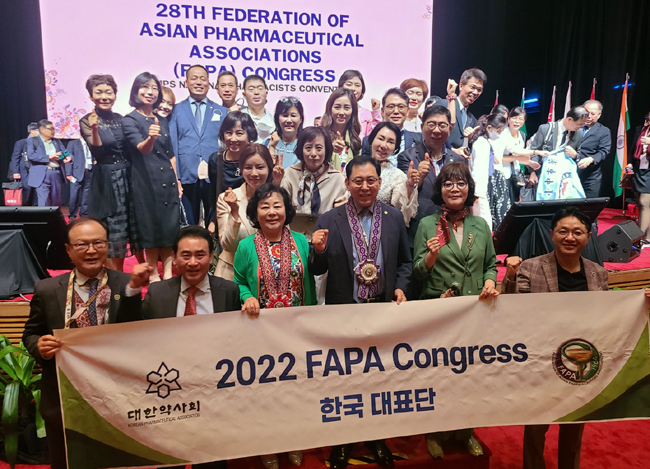
- Opening of FAPA (The Federation of Asian Pharmaceutical Asso
- by Kim JiEun Nov 11, 2022 05:52am
- KoreaAn academic festival of Asian Pharmacists was held in Kuala Lumpur, Malaysia. The interest of the Asian pharmacist community was also by far the digital great transformation of infectious diseases caused by COVID-19. On the 10th FAPA ( Asia Pharmaceutical Federation) and the academic competition center were opened at the Cala Convention Center. Due to the spread of the COVID-19 event, the event will be held for four years since the event of COVID-19 event. Under the theme of Pharmacists building better healthcare systems, Korea, Malaysia, and Taiwan participated in the event. In Korea, about 70 pharmacists and pharmacists participated. Chairman FAPA Yolanda R. Robert L At the opening ceremony, the FAPA jack Shen Lim, said, "The event will be held in Hong Kong and Sri Lanka," said, "The event will be held online in four years." At the opening ceremony, Jack Shen Lim, chairman of the organizing committee, said, "The event scheduled to be held in Hong Kong and Sri Lanka in 2020 has been postponed due to Corona," adding, "This year is an important turning point for FAPA to hold the first online and offline combination event." Malaysia, which hosted the event, said it had an opportunity to expand the role of pharmacists as pharmacists participated in vaccinations due to the spread of COVID-19. Malaysia's Amrahi Buang said, "In Malaysia, vaccination was given as a new pharmacist role, and we had an opportunity to expand the role of pharmacists and expand our functions." He said, "In addition, as pharmacists participated in preventing Nicotine addiction, it was an opportunity for pharmacists to increase their role in medicine." Pharmacists are playing an important role in primary medical care, he explained. Asian countries also suffered from a shortage of medicines due to COVID-19, and some said that the role of pharmacists has once again been proven in the process. FAPA Honorary Chairman Nam Soo-ja won the Achievement Award The 28th FAPA General Assembly and Academic Conference opened in Kuala Lumpur, Malaysia FAPA Yolanda R. Robels, chairman of FAPA, said, "We are suffering from a shortage of medicines amid a global disaster in COVID-19," adding, "Pharmacists are involved in the entire process of producing and distributing medicines in addition to local pharmacies." In the midst of the drug shortage, pharmacists actively responded and played a significant role in the disaster recovery, he said. The conference will feature three Plenary sessions and four symposiums. Ian Bates, a professor at the University College London School of Medicine in the UK, will give a keynote lecture on "Development of a Better Health System through Development of Better Human Resources." Malaysia's Jack Shen Lim, who chaired the event's organizing committee as the new chairman of the FAPA, was elected at the event, while Nam Soo-ja, honorary chairman of the FAPA, won the Achievement Award. The FAPA, which was founded in 1964, is currently participated by 24 member countries, including Malaysia, Korea, Japan, and Taiwan, and holds general meetings and academic conferences every two years.
- Product
- KMA proposes preconditions for non-face-to-face treatment
- by Kang, Shin-Kook Nov 11, 2022 05:52am
- Regarding the bill that allows non-face-to-face treatment that was recently submitted by the ruling party, the medical community asked the government to actively engage in communication with interested parties in the legislation process, as the systemic side effects should be addressed first. On the 10th, the Korean Medical Association (Chairman: Pil-Soo Lee) disclosed its opinion regarding the amendment to the Medical Service Act that was submitted by Rep. Jong-Sung Lee of the People Power Party. KMA said, “Considering the large number of side effects that have risen from the temporary implementation of the non-face-to-face treatment system that had been allowed due to COVID-19, the system itself should be first thoroughly evaluated and verified.” It added, "As it is clear that the side effects, such as the risk of misdiagnosis due to unproven safety and effectiveness, unclear legal responsibility for the results of treatment, and the collapse of the medical delivery system, will cause serious harm to public health, we must first prepare measures to address these issues.” “For non-face-to-face treatment to be carried out properly, the doctors that carry out the treatment should be able to safely and effectively apply it in practice. Mutual understanding and efforts should first be made on both parts to resolve the various concerns that have been arising around the implementation of the system.” “If the proposed bill is legislated in the current state without undergoing such processes, facilitating smooth cooperation across the medical community for the development of the system will inevitably become more difficult, and ultimately cause great confusion. Therefore, we ask the government to actively communicate with the medical community in advance and examine the specific issues that remain in the system.” Lastly, KMA added, ”We have consistently held the position that the general principle of face-to-face treatment shouldn't be undermined under the pretense of convenience to use non-face-to-face treatment, remote monitoring using wearable devices, patients’ transmission of self-information, and over-the-phone prescriptions. In order to preserve the original value of healthcare in protecting the people's lives and right to health, non-face-to-face treatment can never replace face-to-face treatment, and should only be used as a means of assistance.” Meanwhile, the bill proposed by Rep. Jong-Sung Lee contains measures that allow for non-face-to-face treatment to supplement face-to-face treatment, as well as authorize medical institutions at the clinic level to provide non-face-to-face treatment to a limited number of patients who have limited access to healthcare such as those in island/remote areas, infectious disease patients, overseas residents or the disabled, correctional facility patients, and chronically ill patients. With similar bills already been submitted to the National Assembly, it is expected that they will be collectively reviewed by the Health and Welfare Committee in the future.
