
- LOGIN
- MemberShip
- 2026-07-04 06:05:14
- Company
- SK Bioscience, speeding up its development of COVID Vaccine
- by Kim, Jin-Gu Jan 13, 2022 06:05am
- SK Bioscience is speeding up the commercialization of its own COVID-19 vaccine. In particular, it is predicted that the approval of the Novavax vaccine will have a positive effect at a time when the GBP510 is aimed at licensing items in the first half of this year. On the 12th, the MFDS approved Nuvaxovid PFS, NovaVax's COVID-19 vaccine. The item approval of this vaccine was carried out by SK Bioscience, not Novavax. Novavax handed over the right to sell Novavax vaccines to SK Bioscience in Thailand and Vietnam, including Korea, through an expansion contract with SK Bioscience late last year. ◆Nuvaxovid-GBP510 The pharmaceutical industry believes that this experience of product approval will be of great help to SK Bioscience. It is evaluated that SK Bioscience succeeded in solving similar types of practice questions before applying for GBP510, which is expected in the first half of this year. SK Bioscience is developing its own COVID-19 vaccine GBP510, which is similar to Novavax vaccine. Phase 3 clinical trials are currently underway. The goal is to obtain item permission within the first half of this year. GBP510 adopted a gene recombination vaccine platform. It is a method of inducing antibody production that can respond to viruses by injecting antigen proteins directly. Nuvaxovid, which was approved this time, was also developed as a gene recombination platform. Item licensing strategies are similar, such as obtaining "basic inoculation" permission first and "additional inoculation (booster shot)" permission later. SK Bioscience started clinical trials for GBP510 booster shots in December last year. The target number of test subjects is 550. When the clinical trial is completed, the company plans to apply for a change in permission to inoculate GBP510 with booster shots after completing the second vaccination of Pfizer and Moderna. ◆ NovaVax vaccine stock solution + finished product and sales are expected to be 200 billion won+ SK Bioscience is also expected to benefit from the approval of Novavax vaccine items. At the end of last year, the government decided to pre-purchase 10 million doses of SK Bioscience's vaccine. To this end, the company plans to invest 192 billion won in the budget allocated to the KDCA. Fees for consignment production of NovaVax vaccine stock solution (DS) and finished product (DP) are also profits that SK Bioscience can earn. SK Bioscience signed an expansion contract with Novavax in December last year regarding consignment production of vaccines. The contract period is until December this year. SK Bioscience uses three out of nine lines of Andong L House to produce Novavax vaccines. Of the three lines, two are responsible for the production of undiluted solutions and one is responsible for the production of finished products. SK Bioscience receives consignment fees based on undiluted production and sales fees based on complete sales from NovaVax. The undiluted solution produced in L House is supplied to Korea, Thailand, and Vietnam. If SK Bioscience receives additional item permits in Thailand and Vietnam, SK Bioscience's profits are expected to increase further from 192 billion won purchased by the Korean government. The finished vaccine is expected to adjust production at the request of NovaVax. Novavax has announced its vaccine production at 2 billion doses this year. Among them, SK Bioscience is also said to account for a considerable portion. It is expected to be responsible for most of the supply to Asian countries except Japan. Depending on how many Novavax requests for consignment production, SK Bioscience's fees are expected to increase. According to SK Bioscience, L House's production capacity is up to 450 million to 500 million doses per year. Arithmetically, it is possible to produce 50 million to 55 million doses of vaccines per year on one line.
- Company
- A single tech export brings in 11 times the annual revenue
- by Chon, Seung-Hyun Jan 13, 2022 06:05am
- The biotechnology company ABL Bio signed a mega-deal and secured 11 times its annual revenue through a single license agreement. Its upfront payment by itself ranks in the top 5 among the technology export deals made by pharmaceutical and biopharmaceutical companies in Korea. When excluding the ones that have returned the rights, ABL Bio’s deal is the third-largest in upfront payments. According to the Financial Supervisory Service on the 12th, ABL Bio signed a license agreement with Genzyme for ABL301, a bispecific antibody candidate for the treatment of Parkinson's disease and other neurodegenerative diseases. Genzyme is a fully owned subsidiary of Sanofi. Under the agreement, after ABL Bio completes the preclinical and Phase I clinical trial for ABL301, Sanofi will be responsible for further clinical development and receive worldwide exclusive development and commercialization rights to ABL301. ABL will receive up to $1.06 billion (approx. ₩1.3 trillion) under the agreement. ABL will first receive $75 million (approx. ₩90 billion) in upfront payment with no obligation for return and will be eligible to receive up to $45 million in near-term milestones, as well as up to $985 million (approx. ₩1.2 trillion) based on the achievement of predefined development, regulatory and commercialization milestones. ABL301 is a novel drug candidate that inhibits aggregation of α-synuclein, which causes Parkinson’s disease. Through the agreement, ABL Bio secured an amount 11 times that of its sales revenue of ₩8.1 billion in 2020 through a single technology export. ABL Bio’s ₩8.1 billion in 2020 were also profits made from technology transfer. ABL Bio posted sales of ₩1.3 billion and ₩4 billion in 2018 and 2019, respectively, both of which were also profits made from technology transfers. The upfront payment secured by ABL Bio this time ranks the company in the Top 5 among all technology exports made by domestic pharmaceutical companies. The amount shows how highly Sanofi considers the commercial value of ABL301. Hanmi Pharmaceutical holds the largest record of upfront payment made through technology export deals in Korea. In November 2015, Hanmi Pharmaceutical had entered into a license agreement with Sanofi to transfer the license of its 3 new diabetes drugs (Efpeglenatide·long-acting insulin·Efpeglenatide+long-acting insulin). The upfront payment, which was first set at 400 million euros and later reduced to 240 million, still ranks first among all upfront payments made for technology exports in Korea. Hanmi Pharmaceutical’s deal with Janssen for its long-acting diabetes-obesity drug ranks second in upfront payments ($150 million). Third is SK Biopharm’s epilepsy treatment cenobamate, which has received $100 million in upfront payment upon signing an agreement with Able Therapeutics. Fourth is again Hanmi Pharmaceutical, which had received $80 million through a licensing agreement with Genentech for its RAF inhibitor in 2016. ABL Bio’s ABL301 ranked fifth with $75 million in upfront payments. One unfortunate aspect is that 5 of the top 10 items that received the most in upfront payments were returned. In December 2015, Sanofi had discontinued development and returned the rights for the long-acting insulin among the 3 candidate drugs it acquired from Hanmi for its Quantum Project. Also, the agreement was then changed so that Hanmi develops the long-acting insulin combo (long-acting insulin+ efpeglenatide) for Sanofi’s acquisition in the future, but Sanofi did not take over in the end. The rights for Hanmi Pharmaceutical’s new candidate drug for obesity/diabetes 'JNJ-64565111,’ which accrued the second-most amount in upfront payment, has also been returned in September 2019. The license for Hanmi’s ‘olmutinib’ was also returned in 2016, and the immune disease treatment that was handed to Eli Lily was also returned in 2019. Dong-A ST’s partner company also gave up the development of Dong-A ST’s Mer tyrosine kinase inhibitor (Mer TKI). Among technology export agreements still in effect, SK Biopharm’s cenobamate has received the most amount in upfront payment with $100 million. ABL Bio’s ABL301 ranks third among technology exports that are still in effect.
- Policy
- NHRC issues ‘expedited listing of Kymriah’ opinion to MOHW
- by Lee, Jeong-Hwan Jan 13, 2022 06:05am
- The National Human Rights Commission of Korea urged the Ministry of Health and Welfare on the need to expedite insurance listing of the CAR-T therapy ‘Kymriah’ that is used to treat leukemia and lymphoma. The NHRC’s position is that the government should set a temporary drug price with NHI coverage for drugs that are directly related to life immediately upon its sale for the patients’ benefit. In this case, Kymriah will be again put on the agenda and discussed by the Health Insurance Review and Assessment Service’s Drug Reimbursement Evaluation Committee on the 13th. On the 12th, the NHRC turned down the complaint filed by leukemia patients and patients preparing to use Kymriah against the Minister of Health and Welfare, and issue an opinion to the MOHW to expedite insurance listing of the drug. Kymriah is awaiting deliberation by DREC on the 13th. The petition was filed by KLPO last year to the NHRC to urge for the expedited reimbursement listing of Kymriah, and NHRC turned down the petition but issued its opinion on the need for an expedited listing of the drug to the Minister of Health and Welfare. For the reason why the NHRC rejected the petition, the NHRC pointed to the fact that the reimbursement standards that are set for specific treatments are an area that requires high-level expertise, and that NHRC is not capable of comprehensively considering and making a decision on Kymriah based on approval cases in Korea and abroad, clinical trial results, and academic and expert opinions. In addition, the NHRC said it is difficult to say that the ‘petitionee’ MOHW had made no effort for the prompt insurance listing of Kymirah. In addition, the NHRC told the Minister of Health and Welfare that it is necessary to allow patients to first receive treatment at a temporary drug price that is covered by health insurance as soon as Kymriah is sold post-MFDS approval. NHRC’s request is that a system needs to be prepared to expedite insurance listing of new drugs directly related to life. The KLPO agreed to the opinion issued by NHRC, criticizing Korea’s reality in which no system is available for prior use of NHI finances even for new drugs that are directly related to life. In other words, the KLPO also pointed to the need for an added expediated NHI listing system for new drugs that are directly related to life. Also, the KLPO pointed to Novartis Korea’s high-price request as the cause of the delay in Kymriah’s CDDC and DREC review. According to KLPO, a non-reimbursed patient should pay around ₩460 million to be treated with Kymirah. Therefore, KLPO believes that the company should prepare a reasonable fiscal sharing plan while the health authorities make efforts to promptly introduce an expedited listing system. KLPO said, “The unceasing tug-of-war between Novartis, which is trying get a high price, and the government, which is trying to save NHI finances, is hurting the patients who cannot bear the high cost of the drug. The due procedures for Kymriah’s listing, including deliberation and vote by DREC, the drug pricing negotiations between NHIS and the Novartis, as well as deliberation by HIPDC, should be proceeded in a prompt manner.”
- Company
- Viatris & J&J hired female executives
- by Eo, Yun-Ho Jan 12, 2022 06:05am
- Executive Director Kim Ji-young (left) and Executive Director Hwang SeonghyeExecutive-level personnel in charge of multinational pharmaceutical's external cooperation department are active. According to related industries, Viatris Korea appointed Kim Ji-young (52 years old), former executive director of Janssen Korea, as the head of the dept. of Foreign Cooperation in December last year, while Johnson & Johnson Korea (J&J) will appoint Hwang Sung-hye (50), former executive director of Pfizer, this month. Viatris Korea recruited Kim Ji-young, executive director of Corporate Affairs & Market Access, as her predecessor Lim Hyun-jung (45) moved to the head of the marketing department. Executive director Kim led Janssen Corporation and Patient Affairs for 10 years and was in charge of overall communication in the pharmaceutical industry, including disease communication, environmental creation and patient support, and CSR. Graduated from the Department of Archaeological Art History at Seoul National University, she obtained a master's degree in communication at the University of North Carolina in 2000 and also oversaw the promotion and external cooperation teams of Janssen in Taiwan and Hong Kong. Previously, she worked as a reporter for Maeil Business Newspaper and Hankook Ilbo for 20 years. As former Vice President Song Young-joo (62) became an advisor to BKL as of the 7th, J&J recently decided to appoint Hwang Sung-hye as executive director of Government Affairs & Policy. Hwang joined Pfizer Public Affairs in 2008, served as the General Manager of Corporate Affairs and Market Access of the dept. of Foreign Cooperation, and has even marketing experience. Graduated from Yonsei University's Department of Newspaper Broadcasting, she earned a master's degree in economics at Sogang University and a master's degree in business administration at Rouen ESC in France and worked as a reporter for the Chosun Ilbo. Until just before the turnover, executive director Hwang led Pfizer's MA team. Meanwhile, with Kim's move, Janssen is looking for a new general manager of the external cooperation team, and Pfizer also started hiring Market Access with Hwang's resignation.
- Company
- Keytruda-Renvima has been approved as the primary treatment
- by Jan 12, 2022 06:05am
- MSD Korea announced on the 11th that a combination therapy of anti-PD-1 immuno-cancer drug Keytruda (Pembrolizumab) and Lenvima (Lenvatinib) has been approved by the MFDS as the primary treatment for advanced new cell carcinoma. Combination therapy of Keytruda and Lenvima in renal cell cancer treatment recorded 23.9 months of mPFS and improved OS in a phase 3 clinical CLEAR study. Studies have shown that Keytruda-Lenvima reduced the risk of disease progression or death by 61% (HR=0.39) compared to Sunitinib. The risk of death was reduced by 34% (HR=0.66). The overall survival period did not reach the median value. Keytruda-Lenvima's objective response rate (ORR) was 71%, significantly higher than that of the Sunitinib group of 36%. CR recorded 16%, 4%, and PR recorded 55%, and 32%, respectively. The most frequently observed adverse reactions in clinical practice are diarrhea and high blood pressure. In addition, clinical evidence for Keytruda's endometrial cancer indication was added. Phase 3 clinical data that succeeded in progressive endometrial cancer for the first time in 50 years has been added. Phase 3 KEYNOTE-775/Study 309 study found that Keytruda-Lenvima reduced the risk of death by 32% (HR=0.68) compared to chemotherapy (Doxorubicin or Paclitaxel). The risk of disease progression or death decreased by 40% (HR=0.60). In addition, the median survival period of the combined group was 17.4 months, which was statistically significantly improved to 12 months of the chemotherapy group. The median PFS was significantly longer at 6.6 months and 3.8 months, respectively. Kim Sung-pil, executive director of MSD Korea anticancer drug division, said, "This permit is a result of proving the excellent clinical profile of Keytruda-Lenvima."
- Opinion
- [Reporter’s View] Can companies get EUAs as they promised?
- by Lee, Tak-Sun Jan 12, 2022 06:04am
- The Emergency Use Authorization (EUA) system was first introduced to Korea in March last year. AstraZeneca’s COVID-19 vaccine manufactured in Italy, Moderna’s COVID-19 vaccine manufactured by Samsung Biologics, Pfizer’s oral COVID-19 treatment Paxlovid, and the COVID-19 injection Remdesivir for use in patients under 15 were approved using Korea's EUA system. All of the drugs above were introduced to Korea through EUA before receiving marketing authorization through an official process. Among these, AstraZeneca’s vaccine that was manufactured overseas and Samsung Biologics’ Moderna vaccine are now officially approved in Korea. As such, the EUA system had gained attention as the new way to introduce COVID-19 drugs before applying for marketing authorization. Using this as momentum, companies have even set out goals to introduce their drugs to Korea using the EUA system. Rather than applying for marketing authorization that requires a long time for review, the companies made the plan to quickly introduce their drugs using the EUA track after completing domestic clinical trials. However, some have criticized that the companies are setting impractical goals and making hollow promises to raise their stock price. The idea that the companies that completed clinical trials may voluntarily apply for EUA is in itself a false logic. The EUA is granted only after a request from a head of a relevant agency such as the KDCA, and when the MFDS deems the drug is necessary for responding to a public health crisis. Therefore, the pharmaceutical company cannot first ask authorities to grant EUA to its drugs. The only way this is possible is when the MFDS issues a public notice on the scope of medical products in need. Of course, there is a possibility that the companies may actively appeal the need for their drugs to the MFDS to receive EUA. However, this is also quite impractical. The government is in charge of introducing and purchasing COVID-19 drugs. Therefore, it would be very unlikely for the MFDS to grant EUA to drugs that are not included in the purchasing agreement. Therefore, the only realistic way for a drug to receive EUA is if the drug was already approved in other countries and has made a purchasing agreement with our government. The 4 products that were previously granted EUA had also been first approved overseas and signed advance agreements with the Korean government. Therefore, the claim of pharmaceutical companies that it will promptly introduce its drug through EUA can be considered an overstatement, deceiving investors who invested in the companies after reading promotional materials that contain such contents. Pharmaceutical companies must provide accurate information about their respective companies to fulfill their ethical responsibilities. They should state the feasibility and risks involved in addition to their goals. If not so, their intent pursuit to raise their stock price in this COVID-19 crisis will adversely result in the loss of what should matter the most - the consumer’s trust.
- Company
- Reducing # of sales positions of pharmaceutical companies
- by Moon, sung-ho Jan 12, 2022 06:04am
- It was found that the number of personnel engaged in the control and bio industries has steadily increased over the report showed. However, amid the boom in pharmaceuticals and bio, the position of sales workers is decreasing day by day. Analysts say this is because it is concentrated on the development of online sales and marketing and contract manufacturing organizations (CMO). According to the KPBMA on the 11th, the number of people engaged in the pharmaceutical and bio industries has steadily increased over the past 10 years, reaching 1,398 companies and 114,126 in 2020. Considering 823 companies and 74,477 people in 2011, it doubled. Such an increase in pharmaceutical and bio-industry workers was led by production workers. The number of production workers exploded from 23,539 in 2011 to 46,166 in 2020. As a result, the proportion of production workers among all pharmaceutical and bio-industry workers also increased from 31.6% to 40.5%. Analysts say that this was an opportunity for large bio companies such as Celltrion, Samsung Biologics, and SK Bioscience to expand their CMO businesses by increasing production facilities before and after the COVID-19 pandemic. Sales positions, which have been key in pharmaceutical and bio-industry jobs, have been greatly reduced over the past 10 years. This is because the size of the sales position remained in place while the number of production workers doubled during the same period. The total number of sales jobs in 2020 was 25,317. Considering that there were 24,535 people in 2011, it is safe to say that it remains the same. The percentage of sales positions decreased from 32.9% in 2011 to 22.2% in 2020. In fact, as the proportion of production workers has increased, the proportion of sales workers has decreased. The industry seems to predict that the proportion of sales jobs will decrease over the years. They say that the position will inevitably decrease as consignment production of medicines, utilization of Contracts Sales Organization (CSO) by mid-sized pharmaceutical companies, and the spread of online sales and marketing are major factors. Some predict that large-scale movements of pharmaceutical sales workers will take place amid the growth of the digital healthcare industry. This is because in the digital healthcare sector, like in the pharmaceutical and bio sectors, hiring sales personnel is essential as its use in hospitals and clinics is directly related to the increase in sales. Digital healthcare companies that develop EMR or medical AI solutions are increasing their employment as sales workers at pharmaceutical companies. Company A, which is developing EMR, is hiring "someone who wants to sell data technology, not oral drugs," while company B is hiring people with experience in sales at university hospitals at the team leader level. An executive of a domestic pharmaceutical company, a former doctor who asked for anonymity, said, "It is now difficult to grow with the operation method of a traditional pharmaceutical company that relies on generic sales centered on face-to-face sales." As consignment production of medicines is suggested as an alternative to growth, traditional pharmaceutical companies are also focusing their capabilities on developing new drugs and producing drugs, he explained.
- Product
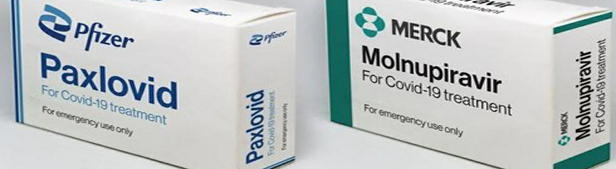
- The gov is pushing to supply COVID-19 PO tx with pharmacies
- by Kang, Shin-Kook Jan 12, 2022 06:04am
- The government is taking full-fledged steps to supply COVID-19 PO treatment to pharmacies. The Central Disaster and Safety Counters Headquaters (CDSCHQ) will hold an online meeting this afternoon (10th) with drug organizations participating and discuss oral corona treatment prescriptions and dispensing. In other words, the direction of the CDSCHQ has been virtually determined from prescription, preparation, and drug delivery. The CDSCHQ will then provide online education on preparation, medication guidance, and precautions to 270 pharmacies nationwide that are in charge of supplying oral corona treatments. The decision is based on the judgment that education is needed because the method of taking the medicine is complicated. The main dosage of Paxlovid should be taken Nimatrelvir 300 mg (2 pink tablets of 150mg) and Ritonavir 100mg , twice a day (12 hours) for 5 days. According to the CDSCHQ, Pfizer's Paxlovid is expected to enter Korea around the 13th, with initial supplies expected to be less than 50,000 people. According to the current status of government contracts, treatments for a total of 1 million and 44,000 people have been secured, including Paxlovid foe 762,000 people and MSD Molnupiravir for 242,000 people. Oral treatments can be used in mild and moderate patients with high probability of severe illness. However, as the volume is limited, it is highly likely to be administered to elderly patients aged 60 or older in hospitals or life treatment centers. People with underlying diseases such as chronic lung disease, diabetes, cancer, and obesity can also be targeted. The method of delivery of the drug has not been decided yet. More than 270 pharmacies nationwide, which are in charge of preparing drugs for home care patients, prepare and supply oral treatments as regional bases. Now, when a doctor gives a prescription, the pharmacy dispenses medicine, and public health centers and local government employees deliver the medicine to home treatment patients. Discussions are still underway over whether oral treatments will follow this method or whether pharmacies will be in charge of delivery. An official from the MOHW said, "We discussed with the Pharmaceutical Association on the 7th about the delivery method, but it was not concluded," adding, "In the beginning, it could be a direction to expand the role of pharmacies in the future."
- Company
- Pharmaceutical bio jobs to be reorganized
- by Chon, Seung-Hyun Jan 12, 2022 06:04am
- Jobs in the pharmaceutical bio industry have increased by more than 50% in the past nine years. The number of production workers surged. In recent years, it is analyzed that many jobs have been created in production jobs as pharmaceutical bio companies have greatly increased production facilities and expanded their CMO business. The proportion of sales jobs in all jobs dropped sharply. According to the 2021 Pharmaceutical Bio Industry Data Book published by the KPBMA on the 10th, the total number of employees in the pharmaceutical bio industry in 2020 was 114,126, an increase of 10.9% year-on-year. It increased 53.2% in nine years from 74,477 in 2011. # of employees in the pharmaceutical bio-industry by year (unit: # of employee, data: the KPBMA) Jobs in the pharmaceutical bio industry have increased every year since 2011. Analysts say that the pharmaceutical bio-industry has recently shown growth and is playing a significant role in creating jobs. Looking at the current status of jobs by major task, the number of production workers has increased significantly. In 2020, the number of production employees was 46,166, an increase of 24.1% from the previous year. It doubled in nine years from 25,539 in 2011. The share of production workers in the entire pharmaceutical bio industry expanded from 31.6% in 2011 to 40.5% in 2020. In 2011, sales workers accounted for the largest portion of all employees, but in 2020, the proportion of production employees exceeded 40%. It is analyzed that the number of production jobs has increased significantly recently as production facilities have increased significantly and CMO businesses have expanded, especially among bio companies. Founded in 2011, Samsung Biologics is currently operating three biopharmaceutical plants in Songdo, Incheon. Samsung Biologics is building its fourth plant with the aim of operating it in 2023. The fourth plant is the largest ever with 256,000 liters of production. When the fourth plant is in operation, Samsung Biologics will secure a total of 618,000 liters of production facilities along with its third plant (3,000 liters of first plant, 152,000 liters of second plant, and 180,000 liters of third plant). As of the end of 2020, the number of production workers at Samsung Biologics was 1,255, an 87.6% increase from 669 in 2016. In other words, the number of production jobs has nearly doubled in four years. Celltrion and SK Bioscience also saw a significant increase in the number of production workers due to the recent surge in biopharmaceutical production. Samsung Biologics, Celltrion, and SK Bioscience all surpassed 100 billion won in quarterly operating profit, leading the growth of the entire pharmaceutical bio industry. The proportion of sales jobs in the pharmaceutical bio industry has decreased significantly. In 2020, the number of sales employees was 25,317, down 1.0% from the previous year. Sales jobs were the only ones among all jobs that saw a year-on-year. The number of sales employees increased only 3.2% over the past nine years from 24,535 in 2011 to 25,317 in 2020. Sales accounts for more than 10% of all jobs from 32.9% in 2011 to 22.2% in 2020. Although the pharmaceutical bio-industry is growing, the proportion of sales jobs is also expected to decrease as sales activities are relatively less important. Analysts say that sales activities based on scientific evidence have increased significantly rather than salespeople's supply offensive. Some say that the need for salespeople to visit medical institutions in person has been reduced as the proportion of non-face-to-face work such as online marketing has decreased significantly since the recent spread of COVID-19. The proportion of office and research jobs did not change significantly. The proportion of office workers increased by 1.5% from 19.4% in 2011 to 20.9% in 2020, while the number of research workers decreased by 0.1% from 11.8% to 11.7% during the same period.
- Company
- Soliris at risk of price cuts amid increasing PA rejections
- by Moon, sung-ho Jan 12, 2022 06:04am
- The National Health Insurance Service has selected ‘Soliris (eculizumab)’ as a ‘subject for PVA monitoring’ and began monitoring its claims amount, believing that its use has increased over a certain level. However, all of the prior authorization applications for the same drug had been rejected last month. In other words, the drug is double trouble as it is being assessed for price cuts due to its increased claims amount while being rejected for reimbursement in its prior authorization applications. According to the industry on the 6th, the NHIS had selected and informed companies of the drugs under the Price-Volume Agreement that will be evaluated in the first quarter of 2022, including Soliris. The PVA system is a means for the NHIS and the pharmaceutical company to share the amount of rising drug cost that is applied to drugs whose usage increases rapidly. After negotiations with the NHIS, the company needs to maintain the use volume that it has agreed upon to avoid price cuts. Therefore, drugs that are found to have been used over that certain level according to the NHIS’ claims amount may be subject to price cuts, being subject for the adjustment of its upper limit. Soliris is also known to have been caught under NHIS’ radar for exceeding the claims amount. If the NHIS deems that Soliris’ use volume has increased after monitoring its case, the authorities will conduct negotiations with its company, Handok, and push for price cuts. An NHIS official said, “We will be selecting subjects for negotiations after monitoring the evidence. Soliris is also one of the drugs being monitored. The drugs up for monitoring this time are those whose claims have increased by 30% or more or those that have increased over 60% annually during the compared period or by over 10%‧5 billion won.” However, one thing to note is that Soliris’s applications for prior authorization are being being continuously disapproved for reimbursement by the NHIS. Soliris is currently indicated for the treatment of paroxysmal nocturnal hemoglobinuria (PNH) and atypical hemolytic uremic syndrome (aHUS). However, due to the high price of the drug – which costs 5.13 million won per vial – the MOHW and HIRA had set a hurdle that requires prior authorization for insurance benefit when approving the drug for reimbursement. And according to HIRA, all 3 of the prior authorization applications (2 new, 1 re-deliberation case) made for Soliris that were deliberated by the Healthcare Review and Assessment Committee in November last year were rejected. All 3 applications were for the use of Soliris in aHUS. For aHUS treatment, only 3 of the 47 applications filed for prior authorization last year were approved and administered to patients. As a result, although Soliris is not being administered much due to the series of disapprovals by NHIS during the prior authorization review, the drug is still subject to monitoring for price cuts due to its expanded indication that raised the claims amount. HIRA explained, “The applications were denied after reviewing the supplementary medical records that were submitted because the subjects were not eligible for administration as specified in the notice and were determined to have secondary thrombotic microangiopathy that was caused by drugs such as immunosuppressants.”
