
- LOGIN
- MemberShip
- 2026-07-04 06:05:13
- Policy
- Dong-A ST applied for Forxiga's Prodrug license
- by Lee, Tak-Sun Jan 07, 2022 06:06am
- Jegi-dong office building of Dong-A ST It was found that Dong-A ST applied for permission to the MFDS for Forxiga (Dapagliflozin Propanediol Hydrate, AZ), which has been devoted to development. Dong-A ST succeeded in avoiding material patents (scheduled to expire on April 7, 2023) through prodrug for Forxiga, so there is a possibility that it will dominate the generic market when commercialization is completed. According to the pharmaceutical industry on the 6th, Dong-A ST recently applied for permission to the MFDS for prodrug for Forxiga. Prodrug improves it slightly differently from the original substance. Prodrug differs from simple salt changes because the chemical structure is partially changed. Dong-A ST focused on avoiding Forxiga's material patents through the development of Produg. As a result, on June 23, 2020, it was the first domestic company to win a passive trial to confirm the scope of rights filed for Forxiga's first material patent. Currently, the case has been appealed by AZ, which objected to the results. As a result of the patent trial, Dong-A ST can be sold to the market after completing the product license and payment process. Other domestic generics cannot be sold until April 7, 2023, when Forxiga's material license is terminated even with product approval. Dong-A ST has been conducting phase 1 clinical trials to confirm equivalence with Forxiga 10mg since two years ago. Based on this, the plan was to apply for permission. There are cases where product approval was obtained after confirming the equivalence in phase 1 clinical trial with Prodrug. Developed by CTC Bio in 2013, Olmesartan Cilextil is a product that changed Prodrug Olmetec's isomer and was approved only for phase 1 clinical trials. Dong-A ST's Prodrug is expected to have a greater effect on preoccupying the market as soon as the item is approved. Analysts say that at least three months before the late-release market opens in April next year, it will have a proper preemptive effect. Dong-A ST has its own DPP-4 diabetes drug Suganon, which is expected to create considerable synergy in the diabetes treatment market if it secures SGLT-2 drugs with Forxiga's Prodrug. Sugaron has grown into a large drug worth 30 billion won per year. Forxiga is also leading the diabetes treatment market, which recorded 36.1 billion won in outpatient prescriptions (based on UBIST) as of 2020.
- Policy
- An additional purchase contract of pfizer tx has been signed
- by Kim, Jung-Ju Jan 07, 2022 06:06am
- The government said it has signed an additional purchase contract for oral treatments (Paxlovid) with Pfizer Korea. According to the KDCA, a total of 1,004,000 oral treatments were pre-purchased through the contract, including 762,000 with Pfizer and 242,000 with MSD Korea. Pfizer's oral treatment (Paxlovid) will be introduced in Korea in mid-January as scheduled. It is in the final stage of finalizing details with pharmaceutical companies, and plans to guide the public on how to introduce and utilize oral treatments next week. With the introduction of oral treatments, the government expects that they will greatly help treat home patients, while also contributing to quarantine and medical responses against Omicron mutations. The government will continue to review plans and purchases of treatments by synthesizing quarantine situations, medical response situations, domestic and foreign treatment development status, and clinical results of treatments.
- Company
- Ahn to reduce generic price to counter Lee's hair loss reimb
- by Kim, Jin-Gu Jan 07, 2022 06:06am
- Cheol-Soo Ahn, the presidential candidate of the minor opposition People's Party, pledged to reduce the price of hair loss drug generics. Ahn prosed this as an alternative in concern over the worsening insurance finances that may be caused by Democratic Party Jae-Myung Lee’s mention of reimbursing hair loss treatments On the 5th, Ahn criticized Lee’s pledge of reimbursing hair loss drugs through his social media channel. “How will you manage the soon to be depleted NHI finances? It would only lead to a hike in insurance premiums.” He added, “Reimbursement is not the only solution. We can reduce the people’s price burden significantly without using NHI finances if we reduce the price of hair loss drug generics by 30-40%.” In the case of finasteride drugs that are used for hair loss, the original drug ‘Propecia’ costs around 1,800 to 2,000 won per tablet. Propecia's generic ‘Monad’ currently costs 1,500 won per tablet. Ahn claims that reducing the generic’s price to around 600-800 won per tablet can greatly reduce patient burden without spending NHI finances. Ahn said, “In the US, if there are 19 generics in market, a drug’s price may fall to 6% of the original drug's price at the lowest,” stressing the need to reduce the price of generics for all pharmaceuticals in general, including hair loss treatments. Ahn also promised to support the research and development of hair loss treatments. Ahn said, “The 56 trillion won global hair loss treatment market is growing over 4% every year. If we provide significant support for the R&D of new drugs for hair loss treatment, it would benefit industry development as well as contribute to providing a more economic option for those suffering from hair loss.”
- Policy
- Is the KRAS gene-targeted drug also released in Korea?
- by Lee, Tak-Sun Jan 06, 2022 06:09am
- The first KRAS gene-targeted anticancer drug approved by the U.S. Food and Drug Administration (FDA) in May last year is expected to be approved soon in Korea. It is Amgen's Lumakras (Sotorasib), which is expected to provide new treatment opportunities to KRAS mutant patients in about 5% to 8% of non-small cell lung cancer patients in Korea. According to the pharmaceutical industry on the 5th, the MFDS recently ended the safety and effectiveness screening of Lumakras. Analysts say that as the safety and effectiveness screening has ended, there is a high possibility of obtaining permission soon if there are no other variables. The drug drew attention when it was approved by the FDA in May last year. This is because it was the first KRAS gene-targeted anticancer drug. Lumakras demonstrated the efficacy of ORR at 36% in a clinical trial (CodeBreaK 100) in 124 patients with KRAS G12C mutation-positive non-small cell lung cancer. The median reaction duration was 10 months. The KRAS gene was the first mutant gene discovered in lung cancer in 1982, but unlike the EGFR and ALK genes, no targeted treatment was available. The KRAS gene itself has many types of mutations and is due to its structural characteristics that are difficult to develop target substances. Lumakras also targets the G12C gene among KRAS gene mutations. In Korea, it is known that KRAS mutation patients account for about 5-8% of all non-small cell lung cancer patients. The patients have been using Taxane therapy because they do not have other targeted treatments, and it is said that immuno-cancer drugs are also being used recently. Amgen reportedly applied for permission to the MFDS immediately after Lumakras received FDA approval. Currently, not only Amgen but also several pharmaceutical companies are focusing on developing new drugs for KRAS mutation. Seven pharmaceutical companies entered clinical trials related to KRAS last year. These include multinational pharmaceutical companies such as Novartis, Roche, Beringer Ingelheim, MSD, and Lilly. Clinical research is also underway to see if Lumakras can be applied not only to non-small cell lung cancer but also to direct bowel cancer. This is because 3-5% of patients with direct bowel cancer are caused by KRAS mutations.
- Company
- New triple combo ‘Enerzair’ for asthma lands in 'Big 5'
- by Eo, Yun-Ho Jan 06, 2022 06:09am
- ‘Enerzair Breezhaler,’ a three-in-one triple combination therapy for asthma, can now be prescribed at general hospitals in Korea. According to industry sources, Novartis Korea’s triple combination drug ‘Enerzair Breezhaler (mometasone·indacaterol·glycopyrronium)’ that contains ICS (inhaled corticosteroids) · LABA (beta2-agonist) · LAMA (long-acting muscarinic antagonist) has passed the review of drug committees (DC) of ‘Big-5’ general hospitals including Samsung Medical Center (SMC), Seoul National University Hospital (SNUH), Seoul Asan Medical Center, and Severance Hospital. The company had sought rapid entry into the market after it was approved for insurance benefit in September last year. Enerzair was approved for reimbursement as maintenance treatment of asthma in adult patients (aged 18 or older) who are not adequately controlled with a maintenance combination of LABA and a high-dose ICS who experienced one or more asthma exacerbations in the past 12 months. As a first-in-class combination, Enerzair identified significant results in ▲lung function improvement ▲ exacerbation reduction ▲asthma control ▲quality of life improvement compared to existing two-drug therapy (ICS·LABA) and three-drug therapy (ICS·LABA·LAMA). The drug’s lung function improvement effect was identified in the pivotal IRIDIUM study that compared the efficacy and safety of Enerzair with high-dose ICS·LABA. (fluticasone·salmeterol, mometasone·indacaterol) in asthma patients. In the study, high-dose Enerzair improved the primary endpoint of trough FEV1 (volume of air that can be forced out in the first second of expiration approximately 24 hours post-administration of study drug) by 76mL and 65mL compared to high-dose Atectura Breezhaler (ICS·LABA). In the primary and secondary analysis, it showed a significant improvement in trough FEV1 (199mL) compared to high-dose fluticasone·salmeterol (FLU·SAL) that was administered twice-daily. The FEV1 improvement that was identified at week 26 lasted until week 52. Enerzair also significantly reduced asthma exacerbation rates by 36% (moderate or severe) and 42% (severe) versus high-dose FLU/SAL over 52 weeks. In asthma control, high-dose Enerzair also showed a statistically significant improvement in the rate of patients whose scores improved over the clinically significant difference of 0.5 points at week 4, week 12, and week 52 in the Asthma Control Questionnaire score. Meanwhile, Enerzair also demonstrated an improvement in quality of life even compared to a triple combination therapy that combines the ICS·LABA combo with LAMA. In the ARGON study that compared the improvement in quality of life in patients with uncontrolled asthma of twice-daily FLU/SAL to once-daily tiotropium (TIO), both the medium-dose and high-dose Enerzair demonstrated non-inferiority in the change of Asthma Quality of Life Questionnaire (AQLQ) score from baseline. Enerzair also met the primary endpoint, change in AQLQ from baseline at week 24, and demonstrated non-inferiority to its comparator. In the secondary analyses, medium-dose and high-dose Enerzair improved asthma control (ACQ-7 score, -0.124) and lung function (trough FEV1, 96 mL] compared to high-dose FLU·SAL·TIO.
- Product
- Lee’s pledge to reimburse hair loss drug creates buzz
- by Jung, Heung-Jun Jan 06, 2022 06:09am
- The news that presidential candidate Lee Jae-Myung's is considering reimbursement of hair loss treatments as his election pledge is drawing attention for days. However, as many unresolved issues including creating empathy on its need, budgetary projections, and review of beneficiaries remain, it is unclear whether this may be practically enforceable. Although most pharmacies are welcoming the pledge, the expectation is that some pharmacies that have been selling non-reimbursed hair loss drugs at a lower price will not be welcoming the reimbursement. Lee’s vow to review reimbursement of hair loss treatments has generated continuous buzz in online communities. Since the drugs cost over ₩30,000 every month and require continuous administration, their reimbursement is raising expectations of reducing the burden. However, the reimbursement of hair loss treatments may not benefit all those affected. Reimbursement will apply depending on the type of hair loss, cause, and degree of reimbursement. Therefore, unlike the rumors on social media, not all will be able to receive reimbursement. In Seok Oh, Pharmaceutical Benefit Director of the Korean Pharmaceutical Association, said, “Hair loss treatments are non-reimbursed, therefore their prices are set at a higher level. In general, patients pay over ₩30,000 every month for the drugs. If these drugs are reimbursed, a price ceiling will be set on the drugs, and a budgetary projection must be made. Also, reimbursing hair loss means that hair loss is recognized as a disease, thus specific classifications must also be made for this disease for insurance.” Oh added, “Also, not all people will be able to receive reimbursement, since the condition and type of hair loss vary greatly by person. Some may be due to stress, some due to skin irritation, and some may be at a stage where taking a drug may no longer be effective” If reimbursed, patients who had avoided treating their condition will also visit clinics and hospitals, increasing the number of patients. Consequently, pharmacies are also expected to see more hair loss patients. However, some local pharmacies that have attracted customers by selling hair loss drugs at a lower price may not welcome the change. Pharmacists A from Gyeonggi-do said, “It is good news for pharmacies that have not sold hair loss products before in the sense that their shares of the pie will increase. However, for pharmacies that specialize or sell many hair loss drugs that have attracted patients with a very low price, the harm may outweigh the benefits. Meanwhile, according to the market research institution IQVIA, the top-grossing hair loss treatments (finasteride, dutasteride) in Korea in 2020 were Propecia (₩41.3 billion), Avodart (₩38.4 billion), Monad (₩6.2 billion), Mypecia (₩ 5 billion), Damodat (₩3.3 billion), Finated (₩2.3 billion), Neodart (₩1.7 billion), Zygard (₩1.4 billion), Duted (₩1.2 billion) Jdart (₩1.3 billion).
- Policy
- There were no applications for Ultomiris·Soliris benefits
- by Lee, Hye-Kyung Jan 06, 2022 06:09am
- In November last year, it was confirmed that there was no pre-application for Ultomiris and Soliris benefits for new patients with paroxysmal night hemoglobin (PNH). There were only two applications for pre-approval of Soliris and one application for re-examination approval for new patients with atypical hemolytic uremic syndrome (aHUS), all of which were rejected. In the case of Spinraza, a treatment for Spinal Muscular Atrophy (SMA), two applications for new patient benefits have been approved. The HIRA conducted deliberation on 11 items, including ventricular adjuvant therapy (VAD), short-term hospitalization (2–4 days) with neuroblocking treatment, including Soliris and Ultomiris, short-term hospitalization with percutaneous epidural ganglion neoplasty (2–4 days), short-term hospitalization (2–4 days) with neuroblocking treatment, short-term hospitalization due to trauma (2-5 days), short-term hospitalization for pain control (2–4 days), mid- to long-term hospitalization (13 days), long-term hospitalization (27th~40th), Spinraza, and hematopoietic stem cell transplantation. Soliris costs 5,132,364 won per vial (30 ml), and if three vials are administered every other week, the drug price alone reaches 400 million won per year. Ultomiris was listed at 5,598,942 won per bottle on June 7, and should be administered once every eight weeks after the initial dose per patient is administered. Soliris and Ultomiris are ultra-high-priced new drugs, so they implement a pre-approval system to determine whether they are eligible for medical care benefits, and the agency must administer Soliris or Ultomiris within 60 days from the date of notification of the results of the pre-approval application. If it is intended to be administered after 60 days, it must be re-applied. Medical institutions approved for medical care benefits by Soliris or Ulromiris must submit monitoring reports every 6 months, and in the case of aHUS, additional initial monitoring reports must be submitted at 2 months after treatment commencement. Spinraza is an ultra-high-priced new drug with 92.35 million won per bottle of 5ml, and medical institutions that want to take it must apply for pre-approval and submit a monitoring report every four months after approval of benefits. Details of the deliberation can be found on the website of the HIRA (biz.hira.or.kr) or the medical institution's business portal (biz.hira.or.kr>examination criteria>standard>examination criteria>public deliberation cases).
- Policy
- Companies obtain generic for exclusivity in proportion
- by Lee, Tak-Sun Jan 06, 2022 06:08am
- Among pharmaceutical companies that use generic for exclusive in the licensed patent linkage system that took effect in 2015, it was found that companies with large sales are more likely to obtain generic for exclusivity. As a result, it was suggested that small and medium-sized pharmaceutical companies need more support such as consulting. Sungkyunkwan University's Industry-Academic Cooperation Group made the remarks in the "2021 Pharmaceutical Patent-approval linkage system Impact Assessment Research Service Result Report". The result report was released by the MFDS on the 29th of last month. This study is conducted annually to establish a stable patent-approval linkage system and minimize side effects, which has been fully implemented since March 2015, as a revision of the Pharmaceutical Affairs Act to implement follow-up measures to the FTA. Through research, the relevant status and status are identified, and the impact of the implementation of the system is analyzed and evaluated annually. The basis for the impact assessment is specified in Article 50-11 of the Pharmaceutical Affairs Act. As of 2020, the analysis targets the current status of obtaining generic for exclusivity of 171 domestic pharmaceutical companies with finished products. As a result of the evaluation, when other variables were controlled, companies with large sales were more likely to obtain generic for exclusivity. As of 2019, 20 pharmaceutical companies with annual sales of more than 300 billion won applied for generic for exclusivity (28.7%), 31 pharmaceutical companies with sales of more than 100 billion won (40.2%), 22 pharmaceutical companies with sales of more than 50 billion won to less than 100 billion won (17.1%), and 31 pharmaceutical companies with less than 50 billion won (14.0%). If the sales of the applied pharmaceutical company are more than 300 billion won, the average number of applications is 11.0, and the average number of applications tends to increase as sales increase. There was a high probability that a company with a large number of items would obtain generic for exclusivity. Through this, the researchers analyzed that companies with large sales and a large number of items are more likely to obtain generic for exclusivity. In response, the researchers said, "As large-scale pharmaceutical companies tend to gain generic for exclusivity, it is required to strengthen SMEs' capabilities in first-generation development. Consulting support for SMEs is needed to encourage SMEs to obtain patent challenges and approval." The researchers also analyzed the impact of generic for exclusivity on generics before and after the introduction of the parent-approval linkage system (March 14, 2015) in terms of market share. As a result of the evaluation, the number of items significantly decreased due to the introduction of the system. However, there was no significant change in the duration of generics' entry into the market. However, it was found that the period of entry into the market was shortened in the case of generic for exclusivity. The researchers said, "Unlike concerns at the time of introduction, stable operation continues, and it is evaluated to have a slight positive effect on health policies and employment in the pharmaceutical industry."
- Policy
- Request for non-reimbursed use of Pahtension in Loop's pts
- by Lee, Hye-Kyung Jan 06, 2022 06:08am
- Application for Pahtension 20mg was rejected for non-reimbursed patients with systemic erythema lupus accompanied by immunosuppressants, vasculitis that does not improve even with antibiotics, and peripheral ulcers. The HIRA is receiving applications in advance for use exceeding the MFDS' permission to prevent the use of drugs that lack medical evidence or are concerned about safety. According to the details recently released by the HIRA, a total of 237 cumulative cases were rejected due to insufficient medical evidence for the submitted data, including Pahtension. Cases added this time include Previmis 240mg tab, Previmis 480mg tab, and Previmis inj, which will be non-reimbursed to pediatric and adolescent patients receiving hematopoietic stem cell transplantation. The request to prescribe My-Rept 250mg to Sjogren's syndrome patient with steroid dependence that recur during steroid loss after diagnosis of MCD and renal syndrome was also rejected. After hematopoietic stem cell transplantation, prescriptions of R-A 10mg and R-A 20mg were also rejected for patients with BK virus-related hemorrhagic cystitis who did not respond to existing antiviral drugs or could not be used as side effects of existing antiviral drugs. All attempts to prescribe Premina 0.625mg and Premina 3mg to patients with hemorrhagic cystitis who do not respond to existing treatment after hematopoietic stem cell transplantation or after high-dose cyclophosphamide treatment have not been approved. Among patients with circular hair loss, frontal hair loss, or systemic hair loss aged 8 years or older, it was also rejected to prescribe Xeljanz to patients with severe intractable skin lesions or interstitial pneumonia who do not respond to SALT score changes of less than 25% or high dose glucocorticoid and at least two immunomodulatory treatment. Approval to prescribe Previmis 240mg and Previmis 480mg was also rejected if there was no improvement in the use of other antiviral drugs for more than two weeks due to giant cell virus infection and peripheral organ disease after hematopoietic stem cell transplantation. Among children with persistent tachycardia after heart transplantation, approval to prescribe Procoralan 5mg was also rejected to patients with tachycardia persistent tachycardia despite the use of drugs such as beta blockers.
- Policy
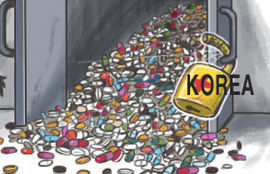
- ‘Lowest-ever’ number of drugs approved in 4 years
- by Lee, Tak-Sun Jan 05, 2022 05:59am
- The year 2021 is likely to be remembered as the year of reduced marketing authorizations for drugs. This was greatly influenced by the changes in the market and the new regulations that were introduced last year. In particular, the pricing penalty imposed on indirect bioequivalence tested drugs and the restrictions set on consigned bioequivalence tests had greatly contracted the development of consigned generic drugs, significantly decreasing the number of approved items compared to the previous year. ◆ In 2021 = a total of 2,057 items were approved, recording the lowest-ever number of approvals during the past 4 years. 2,112 items were approved in 2018, 4,893 items in 2019, and 3,350 items were approved in 2020. In the case of prescription drugs, the number of approvals is on a decline for 2 consecutive years since 2019. After reaching the peak of 4,193 in 2019, the number of approved prescription drugs decreased to 2,614 in 2020 and to 1,596 in 2021. The situation had worsened significantly due to the introduction of the penalty system that additionally discounts the price of drugs that did not directly conduct bioequivalence tests. Moreover, the so-called "1+3 restriction” system that was introduced in July regulates the number of pharmaceutical companies that can share a company’s bioequivalence test to three other pharma companies, greatly reducing the foothold of CMO generics. Therefore, the number of incrementally modified new drugs and generics that conduct their own bioequivalence tests is expected to increase greatly. OTC drugs are at greater peril. Compared to the past when OTC development increased when stricter drug pricing regulations were imposed on the industry, the number of approved items decreased to an unusual extent this year. By month, approvals peaked in February with 441 with a flood of generics of the hyperlipidemia combo ‘Atozet Tab’ being approved. Since then, the average number of approvals remained in the 100 range, dipping to 88 in September. ◆OTC = Among the 461 OTC drugs that were approved in 2021,6 were data submission drugs, 63 were herbal medicines, and 211 were drugs subject to the Standard Manufacturing Criteria for Drugs, and others including generics accounted for 181. The drugs ‘subject to the Standard Manufacturing Criteria for Drugs’ that accounted for 46% of the OTC drugs approved this year were allowed sale after simply reporting to the Ministry of Food and Drug Safety. The MFDS designates the type, standard, and limit of the ingredients, formulation, dosage·regimen, efficacy·effect, and precautions for such drugs so that they may be easily sold. It is the most preferred type of drug for pharmaceutical companies as it saves development costs. The reality is that companies cannot invest so much into R&Ds of OTCs that have a small market size and require immense marketing costs. ◆Prescription drugs = Although generic drugs account for a substantial amount of the 1,596 prescription drugs that were approved in 2021, the number of new drugs and data submission drugs are also on the rise. Among the 45 new drugs that were approved last year, 3 were advanced biological drugs that were newly approved other than reregistered drugs, and 304 were data submission drugs. These accounted for 22% of all prescription drugs approved in 2021. The trend was also evident in new drugs approvals. A record-high number of new active ingredients in 4 years was approved last year. Many new drugs and vaccines were introduced due to the DOVID-19 pandemic, and 4 homegrown new drugs were also approved last year. Starting with Yuhan Corp’s anticancer drug ‘Leclaza’ in January, Celltrion’s COVID-19 treatment ‘Regkirona’ in February, Hanmi Pharmaceutical’s neutropenia treatment ‘Rolontis’ in March, and Daewoong Pharmaceutical's ‘Fexclu’ was approved in December. Also, under the ‘Safety and Support Act for Advanced Regenerative Medicine and Advanced Biopharmaceuticals’ that was implemented in 2020, 3 new advanced biopharmaceutical drugs have entered the market. These cell therapy and gene therapy products would have been categorized as new drugs in the past. All three advanced biopharmaceuticals that were newly approved this year are Novartis’ products. The first advanced biopharmaceuticals ‘Kymriah’ was approved in March, followed by ‘Zolgensma’ in May and ‘Luxturna’ in September. Novartis’ advanced biopharmaceuticals are all ‘one-shot’ treatments that are leading the pharmaceutical revolution. However, the drugs have a long way to go before receiving health insurance benefits in Korea as these one-shot treatments for rare diseases are very expensive.
