
- LOGIN
- MemberShip
- 2026-07-05 11:32:47
- Policy
- Samyang Holdings is expanding generics for anticancer drug
- by Lee, Tak-Sun May 04, 2021 05:55am
- Last month, Samyang Holdings, which merged with Samyang Biopharm, a subsidiary specializing in pharmaceutical bio, is expanding generics for anticancer drug business. In January, following generic for Votrient (Pazopanib HCl), a kidney cancer treatment, it is also developing generic for Sutene (Sunitinib Malate). Votrient and Sutene currently do not have generics in Korea. The MFDS approved the protocol of bioequivalence study for SYO-1767 applied by Samyang Holdings on the 30th of last month. SYO-1767 is presumed to be generic for Sutene in that the target disease name of this drug is the same as Pfizer's Sutene. Sutene, which was approved in Korea in 2006, is used for various carcinomas such as gastrointestinal stromal tumor, renal cell carcinoma, and pancreatic endocrine tumors. As of last year's IQVIA, Sutene's sales amounted to ₩13.9 billion, more than its rival Novartis Votrient's ₩12.6 billion. In particular, Sutene's patent expired on February 15th. Samyang Holdings is the first to develop generics in Korea. Generic for Votrient by Samyang Holdings was approved in January for a bioequivalence test, and Votrient's patent expires in 2022. It is analyzed that if Samyang preoccupies generics for Sutene and Votrient , it will be in high demand, especially in the kidney cancer treatment market due to its rarity and low price. Samyang has confirmed its competitiveness in the domestic market through anticancer drugs such as Genexol (Paclitaxel), which has been successfully localized. It has successfully commercialized the hemoamac treatment Bendalid (Bendamustine) and breast cancer treatment Everose (Everolimus), targeting the original market. Recently, it started the pharmaceutical business after the merger, such as developing mCureX and mRNA COVID-19 vaccine. Samyang Holdings held a board meeting in January and decided on the agenda for the merger and acquisition of Samyang Biopharm. At the time, Samyang Biopharm was a wholly owned subsidiary of Samyang Holdings. The merger and acquisition was completed on the 2nd of last month, which is expected to strengthen the competitiveness of the pharmaceutical bio business and increase management efficiency. In particular, it is evaluated that stable procurement and investment of drug development resources has become possible.
- Policy
- MFDS designates 3 new orphan drugs including asciminib
- by Lee, Tak-Sun May 04, 2021 05:55am
- On May 3rd, the Ministry of Food and Drug Safety (MFDS) newly designated 3 drugs including ‘asciminib,' which is used for the treatment of rare leukemia and breast cancer, as orphan drugs. Also, MFDS announced that it will extend the indication for ‘ibrutinib,’ and designate drugs used for neonatal hypoxic-ischemic encephalopathy as development-stage orphan drugs. The orphan drug designation is given by the Minister of Food and Drug Safety, to drugs that are used to diagnose or treat rare diseases with no alternatives or with a significantly improved safety and efficacy compared to existing alternatives. The MFDS operates the ‘orphan drug designation system’ to promptly facilitate the approval process of orphan drugs by setting the data, criteria, and conditions for approval for each disease separately according to its characteristic, to support the development of rare and incurable diseases. "We hope the new and expanded designation of orphan drugs set out today will contribute to the development of treatments for patients with rare and incurable diseases,” said an official from MFDS. “We will continue to prepare policies to guarantee treatment opportunities for our patients in Korea.”
- Policy
- Combination of Forxiga + Januvia was applied for permission
- by Lee, Tak-Sun May 04, 2021 05:55am
- MSD It was found that two companies applied for a combination drug license that combines Forxiga (Dapagliflozin Propanediol Hydrate, AZ), a SGLT-2 inhibitory family, leading the diabetes treatment market, and Januvia (Sitagliptin Phosphate Hydrate, MSD), a DPP-4 inhibitory class. Combination of Forxiga+Januvia has not yet been approved in Korea. It is expected that market success is expected if commercialized. According to the MFDS on the 30th, a combination of Dapagliflozin Propanediol Hydrate (10mg)-Sitagliptin Phosphate Hydrate (100mg) was applied for approval on the 30th of last month and the 1st of this month. Dongkoo recently applied for the same ingredient to the MFDS. As Donggu Bio has signed consignment contracts with about 20 pharmaceutical companies, it may be a consigned pharmaceutical company, or it may be a pharmaceutical company that has been pursuing development alone. The applied indications are ▲When Sitagliptin alone cannot control blood sugar sufficiently, ▲When Dapagliflozin alone cannot control blood sugar sufficiently, ▲If Metformin alone cannot control enough blood sugar and it is difficult to control enough blood sugar with two-drug therapy, ▲If sufficient blood sugar control cannot be achieved with Metformin and sitagliptin combination therapy, Metformin and this drug are administered concurrently,▲ if Metformin and Dapagliflozin cannot sufficiently control blood sugar due to combination therapy, Metformin and this drug are administered together, and ▲ it is administered when replacing Dapagliflozin and Sitagliptin combination therapy. Currently, the SGLT-2+DPP-4 combination drug has been approved mainly for imported drugs, but there are no items that are still covered, so it is difficult to estimate the size of the market. The market is expected to achieve expected sales if the benefit is applied because the ratio of prescriptions for both drugs is already high. Even after obtaining permission due to the patent registration of the original drug, it is impossible to sell it on the market right away. This is because Januvia's product patent ends on September 1, 2023, and Forxiga's product patent is scheduled to expire on April 7, 2023. Moreover, since Forxiga is also valid for subsequent patents, generics must succeed in the challenge of subsequent patents in order to be released after the product patent expires. Forxiga and Januvia are leading items that are gaining popularity in the diabetes treatment market. As domestic generic companies have not yet participated in the DPP-4 and SGLT-2 markets, dozens of pharmaceutical companies are expected to participate in product development.
- Policy
- Afstyla will be reimbursed from June
- by Kim, Jung-Ju May 04, 2021 05:55am
- SK Chemicals' self-developed hemophilia treatment Afstyla (Lonoctocog Alfa (blood coagulation factor VIII, genetic recombination) ) finally passed the Health Insurance Policy Committee. It took 15 months after obtaining a domestic permit and one year after applying for insurance registration. The start of benefits was set on June 1, when supply was available, and the price was set at ₩625 per IU. The MOHW announced that the amendment (draft) of the Pharmaceutical Benefit List and benefit upper limit price table', which provides benefits for Afstyla, was submitted to the agenda of the Health Insurance Policy Committee during the day (30th), and that both deliberation and resolution were passed. .This drug is a hemophilia A treatment developed by SK Chemicals, and it was exported to CSL in Australia in 2009 .This drug applied for insurance registration to the HIRA on April 29, about three months after obtaining approval from the MFDS on January 20 last year .The HIRA held the Pharmaceutical Benefits Advisory Committee on December 3 of the same year for deliberation .This drug was introduced as a gene recombination product among factor VIII replacement therapy in textbooks such as Hemostasis and Thrombosis Advisory and recommended for use in clinical guidelines .In terms of cost-effectiveness, the weighted average price of the alternative drugs Blood Coagulation Factor VIII, Recombinant (ADVATE), Moroctocog Alfa (Xyntha Solofuse Prefilled Inj.), Beroctocog Alfa (Greengene F), Efmoroctocog alfa, and Rurioctocog alpha is less than ₩625 per IU .It was judged to be cost effective .In the case of biopharmaceuticals, if they accept the weighted average price or less, they are classified as drugs that omit drug price negotiations, so negotiations are exempted .Related conferences such as The Korean Society on Thrombosis and Hemostasis and The Korean Society of Hematology also commented that the effect was comparable to that of conventional drugs and improved convenience by reducing the number of administrations .When looking at the listing status of excluded countries, it was listed in the United States, Italy, Japan, Switzerland, and Germany in five of the A7 .The adjusted average prices in these countries range from ₩1274.72 to ₩1350.89 per IU . Accordingly, the Pharmaceutical Benefits Advisory Committee decided that if the alternative drug was accepted below the weighted average price, the company would accept it and skip the negotiation, and only negotiate the estimated billing amount with the NHIS from January 19th to 19th of this year .As a result of the negotiations, the two sides agreed to an estimated billing amount of ₩5.6 billion, taking into account the market share reflecting clinical usefulness .The NHIS predicted that there would be no additional fiscal requirements as alternative drugs exist .The items are 250, 500, 1000, 2000, 3000 IU, and the price is ₩625 per IU .The MOHW decided to apply insurance benefits as of June 1, taking into account the availability of supply from the company .CSL Behring Korea Ltd will sell this product, and SK Chemicals is receiving royalties and sales milestones from global sales .
- Policy
- MFDS, "will make all efforts to pass and land the 1+3 bill"
- by Lee, Jeong-Hwan May 03, 2021 05:54am
- The Ministry of Food and Drug Safety announced its plan to pass the revised Pharmaceutical Affairs Act at the National Assembly's plenary session and soft-land the system afterward. The revised Act contains a clause that limits the number of consignees to three for each company that conducts the bioequivalence test for generics and drugs requiring data submission (incrementally modified drugs, iMD). The Ministry also reaffirmed its position regarding the 1+3 bill for generics and IMDs, on how the bill will partially resolve the rampant drug production issue in Korea, and have a positive influence on preventing recurrence of GMP violations of domestic pharmaceutical manufacturers like Binex and Vivozon. In addition, MFDS said it will actively increase its manpower to systemize and operate the 'GMP Special Planning Inspection Team' at all times through discussions with the Ministry of Public Administration and Security. The answers above were provided on May 1st as a response to the written questions sent by the members of the National Assembly's Health and Welfare committee, In-soon Nam, Yeong Suk Seo, and Hye-young Choi of the Democratic Party of Korea. The three lawmakers questioned the MFDS on the countermeasures against GMP violations of domestic pharmaceutical companies, its position on the 1+3 regulation bill, and the direction the domestic pharmaceutical industry should pursue. On the reason why domestic pharmaceutical manufacturers intentionally violate GMP when producing drugs, MFDS pointed to ▲ financial reasons, such as the time and cost of receiving approval for changes ▲ the internal perception that violations are okay as long as the company avoids drug surveillance and ▲ the small scale of punishment. As for countermeasures to prevent recurrences, the MFDS will continue to conduct random spot inspections with the GMP Special Planning Inspection Team while improving the system, with measures such as increasing the punitive fines and implementing one strike-out system for the GMP acceptance test. In particular, the MFDS responded that it was “necessary” to operate the GMP Special Planning Inspection Team at all times. Also, the Ministry added that it will actively implement policies to increase MFDS personnel to allow the Special Planning Inspection Team to operate at all times. “We are grimly aware of the illegal activities conducted by pharmaceutical companies that should have been tending to public health. This is not a universal problem in the industry, but still, we are operating random spot inspections at all times in case similar cases arise,” wrote MFDS. “We believe a year-round operation of the Planning and Inspection Team is necessary to prevent illegal activities in advance.” Also, it wrote, "We will actively discuss measures to increase personnel in local governments with relevant ministries including the Ministry of Public Administration and Security," adding that the Ministry "asks for active support from the National Assembly.” Regarding the bill that restricts sharing bioequivalence and clinical data between companies to prevent rampant production of generics and IMDs, the MFDS strongly agreed on the need for its legislation and promised to make every effort to implement the post-revised system. On the question of how to strengthen the competitiveness of the domestic pharmaceutical industry, the MFDS responded that it intends to make efforts to build a development-oriented pharmaceutical industry by reducing the development period and cost of drugs through measures such as providing advice on clinical trials, technical support after authorization, and training professional manpower. “The domestic pharmaceutical industry has been continuing its efforts to invest in R&D to produce new products, however, the current circumstances are not enough to reorganize the current sales structure that is focused around generic sales competition,” wrote MFDS. “We will foster a development-focused industry environment. The 1+3 bill is one of the measures that may improve the quality of drugs while preventing rampant drug production, so we will do our best to pass the bill at the plenary session.”
- Company
- Hanmi launched a new challenge for patent of Entresto
- by Kim, Jin-Gu May 03, 2021 05:54am
- EntrestoHanmi took a new challenge in patenting the heart failure treatment Entresto (Sacubitril/Valsartan). It was already challenging other patents and requested an invalidation trial for a more difficult patent. If Hanmi succeeds in overcoming its patent on its own, it is expected that it will be able to release generics earlier than other companies. According to the pharmaceutical industry on the 3rd, Hanmi filed a trial against Novartis on the last day of last month for invalidation of composition and use patent of Entresto. This patent is known to be the most difficult to overcome among the four patents listed as Entresto. Patents registered as Entresto are ▲use/composition patent expiring in July 2027 ▲crystalline patent expiring in September 2027 ▲composition patent expiring in November 2028 ▲composition patent expiring in January 2029. The use/composition patent that expire first are in fact playing the role of product patent. Entresto is a heart failure treatment with the addition of Valsartan, an ARB-series hypertension treatment, and Sacubitril, an NEP inhibitor series, another treatment for hypertension. With the expiration of each patent, Novartis conducted a clinical trial by combining the two active ingredients, and was licensed as a treatment for heart failure. The reason that Hanmi newly challenged the most difficult patents to overcome is to preoccupy the generic market. Earlier, 20 companies, including Elyson, have requested a trial to confirm the scope of passive rights for a crystalline patent that expires in September 2027. This included Hanmi. If they overcome the patent, it was possible to release generics after July 2027. If Hanmi additionally overcomes the patent, it will receive generic for exclusivity, and will be exclusive for 9 months regardless of the success of challenges such as Elyson. The key is whether other companies will join the challenge. if an invalidation trial is filed within 14 days like Hanmi, a generic for exclusicity can be jointly secured after the successful challenge. Elyson's Rx performance has been increasing rapidly since its launch in Korea in October 2017. According to UBIST, Elyson has grown more than three times in two years to ₩20.3 billion last year after it produced ₩6.3 billion in 2018, the first year of its release. In the first quarter of this year, prescriptions amounted to ₩5.8 billion, the highest quarterly prescription amount ever.
- Company
- Dong-A ST’s Nesp biosimilar export exceeds ₩10 bil.
- by An, Kyung-Jin May 03, 2021 05:53am
- Pic of the Darbepoetin-α product being sold in Japan The cumulative export sales of Dong-A ST’s biosimilar anemia treatment have exceeded 10 billion won. After entering the Japanese market through a partner company at the end of 2019, the sales of Dong-A ST's biosimilar have shown steady growth based on the increasing product recognition and favorable policies set on biosimilars by the Japanese government. According to Dong-A ST on the 1st, its overseas sales of ‘Darbepoetin-alfa’ during the first quarter of this year was 2.9 billion won, a 326.6% increase from the same period of the previous year. ‘Darbepoetin-alfa’ is a biosimilar of the second generation anemia treatment ‘Nesp (darbepoetin-α)’ that was co-developed by Amgen and Kyowa Kirin. Its mechanism of action allows erythropoietin (EPO) to stimulate erythroblasts and accelerate red blood cell production and is used to treat patients with anemia from chronic renal failure or from chemotherapy. The overseas sales of ‘Darbepoetin-alfa’ are solely accrued from its Japan exports. After conducting the Phase I clinical trial on’ Darbepoetin-α,’ Dong-A ST signed a licensing-out agreement on the development and sale of its drug to Sanwa Kagaku Kenkyusho (SKK). Based on a Phase III trial conducted in Japan that compared the efficacy and safety of ‘Darbepoetin-α’ to the original ‘Nesp,’ SKK received marketing approval from Japan's Ministry of Health, Labor and Welfare in September 2019 and released the drug from November of the same year. Dong-A ST exports the finished products that were produced by DM Bio, a biosimilar company under Dong-A Socio Group, to SKK, after which SKK is solely responsible for its local sales. After recording 0.1 billion won in sales in the first year of its release, ‘Darbepoetin-alfa' started making real profit from last year. After exceeding 2 billion won in sales in the second quarter of last year, it has been selling around 3 billion won’s worth every quarter. The cumulative export sales of ‘Darbepoetin-alfa’ since its launch in 2019 to the first quarter of this year amounts to 11.8 billion won. Chong Kun Dang has also launched a Nesp biosimilar in the same market. The company had received marketing approval for its Nesp biosimilar ‘Nesbell’ at a similar period with Dong-A ST and released its product in December of the same year. The Japanese subsidiary of U.S. global pharmaceutical company, Mylan N.V., is in charge of its sales in Japan, however, Chong Kun Dang has not disclosed the individual sales performance of ‘Nesbell’ in Japan. An official from Dong-A ST said, “It has been three years since we released our ‘Darbepoetin-alfa' in Japan, and brand recognition of our product has been increasing. The advantage that our product is cheaper than the original drug, and the subsidies provided by the Japanese government to hospitals that use biosimilars, have also added to our continued positive increase in sales.”
- Policy
- The number of COVID-19 vaccinations exceeded 3 million
- by Kim, Jung-Ju May 03, 2021 05:53am
- The cumulative value of the first vaccination patients who received COVID-19 vaccine exceeded 3 million. The quarantine authorities achieved the cumulative amount of vaccinations one day earlier than the initial target set by the quarantine authorities, and the authorities predict that 12 million vaccinations in the first half can be carried out without any problems. COVID-19 Vaccination Response Promotion Team (KCDA Commissioner Jeong Eun-kyeong) said that as of 3:30 pm today (29th), 3,012,654 people (provisional count) who received the vaccine (based on the first vaccination), It has been revealed that it has exceeded 3 million. In response to this, the promotion team explained, "reinforced vaccination capabilities, such as opening additional vaccination centers and early operation of consigned medical institutions, and expanding vaccination targets according to the vaccination sequence, and trusting experts and the government to actively participate in vaccination. Thanks to the medical staff who safely administered the vaccination." The promotion team said that the originally established vaccination plan was proceeding smoothly, about 80% of vaccinations in nursing hospitals and facilities, where there were many seriously ill patients and fatalities, were also achieved, and that the vaccination of essential social personnel is also accelerating. The promotion team explained that it plans to strengthen the surveillance of adverse reactions with the medical community and continue compensation for damage so that the public can receive vaccinations more safely. The promotion team said, "We will inoculate 12 million people (based on the first vaccination) for the elderly, high-risk groups, quarantine and medical personnel, etc. by the end of June, and use it as a starting point for recovery to daily life." The promotion team requested that the people actively participate in vaccination on a healthy day, when the vaccination order came.
- Company
- Yungjin won patent dispute on Abilify after 6 years
- by Kim, Jin-Gu May 03, 2021 05:53am
- Yungjin won the patent dispute between Otsuka and Yungjin over Abilify (Aripiprazole), a treatment for schizophrenia and bipolar disorder, in six years. This added Abilify's indication for bipolar disorder. Yungjin, which won the dispute, relieved the burden of compensation for damages caused by patent infringement. ◆Generic release as an indication for schizophrenia after product patent expiration On the 29th, the Supreme Court reaffirmed the court's decision in the Abilify patent invalidation lawsuit between Otsuka and Yungjin and dismissed the appeal. It has been six years since the conflict began. In 2014, when Abilify's product patents expired, domestic companies entered the generic market one after another. There are five indications of Abilify: schizophrenia, bipolar disorder, major depressive disorder, autism disorder, and Tourette syndrome. Among them, only the indication for schizophrenia was applied due to the expiration of the product patent. Indications for bipolar disorder and major depressive disorder have been expanded as Otsuka's use patent (expired in 2022) was listed. Considering that Abilify is used for both schizophrenia and bipolar disorder, it was beneficial to launch it in both indications. In March 2015, Yungjin filed a trial claiming that the use patent for bipolar disorder was invalidated. However, the Intellectual Property Trial and Appeal Board took the side of the original company Otsuka in October 2016. Otsuka pushed generic companies in all directions by requesting a trial to verify the scope of their rights and sending out certification of contents. Eventually, generic companies sold only as schizophrenia, excluding bipolar disorder, as an indication. ◆Yungjin, including indications for bipolar disorder However, Yungjin was an exception. Yungjin continued fighting against the defeat of the first trial. It filed a lawsuit with the Patent Court of Korea to cancel the trial decision. The Patent Court of Korea overturned the first trial decision. In July 2017, on the side of Yungjin, he ruled that the patent for use with bipolar disorder was invalid. Otsuka objected. Through an appeal, the case was taken to the Supreme Court. A fierce legal dispute ensued in the Supreme Court. The conclusion came out after 3 years. As with the second trial, a ruling was handed over to Yungjin's side. The ruling included Abilify's indications for bipolar disorder, allowing Yungjin as well as other generics to add indications for bipolar disorder to schizophrenia. It can be added immediately after the trial for reversal of revocation in the Patent Court is concluded with a final judgment. Yungjin escaped the crisis of large-scale counterindemnity. If the Supreme Court ruled in favor of Otsuka, it was because Yungjin had to hand over a significant portion of the sales revenue of generics over the past five years to Otsuka. An official from Yungjin said, "Yungjin had a dispute alone. It was defeated in the first trial, but under the judgment that the logic of invalidity was certain, the second trial was enforced and finally won." He predicted that "Otsuka is also in the process of action against infringement of patent, apart from this lawsuit. It is currently in the process of winning the first trial and in the patent court. In line with this Supreme Court decision, the action against infringement of patent will also be finalized." Patent Attorney Park Jong-hyuk, who represented Yungjin, said, "Unlike composition patents and formulation patents, it is not easy to obtain an invalidation judgment. The Supreme Court recently sided with the patentee, but it means that a ruling to invalidate the use patent was made.” He explained "Bipolar disorder is a recurrent disease of two opposing conditions, mania and depression. It is the judgment of the Supreme Court that if there are no experimental data that clearly show the therapeutic effect of both diseases, it is invalid as a description." According to UBIST, a pharmaceutical market research institute, the amount of Aripiprazole's outpatient prescription last year was ₩25.3 billion. Among them, the generic prescription amount is ₩1.3 billion. However, considering that the prescription of Aripiprazole is 40% to 50% for schizophrenia, 30% to 40% for bipolar disorder, and 20% to 30% for the rest of major depressive disorders, the addition of indications for bipolar disorder will increase the prescription performance of generic companies. It is expected to work positively.
- InterView
- "Embrace precision medicine and tumor-agnostic therapy"
- by Eo, Yun-Ho Apr 30, 2021 06:12am
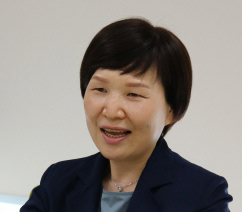
- 박경화 교수 “It’s our turn to adjust to tumor-agnostic therapies." HER2, ALK, EGFR, ROS1. These are keywords that frequently catch our eye in news about anticancer drugs. Times have changed. Effective treatment for patients these days depends on the genetic mutation of each patient. With treatments that target personalized genes continue being introduced, the development of precision medicine has heralded the shift in the field of anticancer treatment from ‘disease-based' to ‘gene-based' treatment. For example, Roche’s Neurotrophic tyrosine receptor kinase (NTRK) ‘Rozlytrek (entrectinib)’ has already been approved as a tumor-agnostic anticancer drug in Korea. Also, MSD’s PD-1 inhibitor immunotherapy ‘Keytruda (pembrolizumab)’ has been adding various indications in patients with microsatellite instability-high (MSI-H) tumors. Dailypharm met with Dr. Kyong-Hwa Park, Professor of Oncology and Hematology at Korea University Anam Hospital, an authority in the field of precision medicine in Korea who also runs the K-Master program, to hear about the currently accessible yet unfamiliar world of personalized treatment, and the paradigm shifts that have occurred in anticancer treatment with the introduction of precision medicine. -Precision medicine has become an inevitable trend. Please tell us about the K-Master project, its progress, and outcome.. Initially, our 5-year goal was to file genome sequencing of 10,000 patients with solid cancer and to launch 20 clinical trials. Based on the data, we wanted to provide new treatment opportunities to patients and create grounds to expand treatment indications. We are in our fifth year, and our project will close on December 31st this year. Since we already have registered and secured genome sequencing data on 9,000 cases, I think we will be able to easily reach our goal. We are also currently conducting 20 trials. Due to the characteristics of precision medicine, the 20 clinical trials could not be initiated all at once, so we needed to sequentially proceed on with our research. In other research areas, we could have started all the trials in the first year. However, precision medicine differs from other areas because of its unmet needs, as well as its unique timeline of drug development that depends on the discovery of new genes. -What is the K-Master program’s strength in conducting clinical trials? Our role model was the NCI (National Cancer Institute)-Match trial. Based on the trial and its limitations, we complemented and improved our project from its initial stages. When 50 institutions under the Korean Cancer Study Group send sample tissues, Central conducts NGS sequencing; however, if the sample tissues do not pass QC, the process of recollecting the tissues take long, and in some cases result in the non-registration of those patients. For our project, we increased the registration success rate by profiling the samples via a liquid biopsy platform to allow the use of blood samples for genome sequencing of patients whose tissues are unavailable or do not pass QC. - Two drugs, including Rozlytrek, were approved in Korea. These tumor-agnostics targeted therapies seem like typical examples of how ‘personalized medicine’ and ‘precision medicine’ are entering our society. What changes do you expect to see in Korea with the introduction of such medicines? The method of how we classify cancer has changed with the introduction of precision medicine. If cancer was classified by location in the past, like lung cancer, colorectal cancer, breast cancer, etc., now it is divided by pathway. So we can now classify cancer as those with HER2 overexpression, HER2 mutation, NTRK mutation, etc. Patients with such cancers are very rare, but doctors now know what to prescribe when such cases arise because we have research and findings on such cases. We can therefore use various methods to find the NTRK-mutations such as DNA sequencing, RNA sequencing, at the protein level or by FISH, etc. As DNA NGS has low sensitivity, we would be lucky to find the mutation at that level. However, for suspected patients, doctors can also order FISH or IHC tests. -Reimbursement remains an obvious issue. Reimbursing tumor-agnostic treatments must be a burden from the government’s perspective. When treatment for rare cancer types that occur in specific genes are granted evidence-based approval in the market, reimbursement should also be considered. I believe the higher-priced drugs can be reimbursed as rare cancer patients have a shorter life expectancy. Less than 1% of all solid cancer patients in Korea fall into the rare cancer patient category that can benefit from such advanced treatments. Considering our diagnostic efficiency, this amounts up to less than 200 patients. We are talking about providing treatment benefits to these very rare patients. If reimbursement is possible, it should be provided. Rare cancer patients typically do not respond to standard treatments. For example, breast cancer patients that do not respond to standard of care therapies show NTRK mutations. As these patients benefit a very short time from standard treatment, reimbursement of NTRK inhibitors for this population should also be possible. Overall, we need to devise a separate reimbursement track for precision medicine. With the introduction of Keytruda in MSI-H and Rozlytrek, there is a pressing need to prepare a separate reimbursement review standard for tumor-agnostic treatments that suits our current situation. If precision medicine is available according to a patients' NGS screening result, they should not be left to feel the immense deprivation of not being able to use the drug due to accessibility issues.
