
- LOGIN
- MemberShip
- 2026-07-07 00:14:13

- Company
- Salespersons, working at home due to Wuhan virus
- by Kim, Jin-Gu Feb 04, 2020 06:31am
- Hospitals and pharmaceutical companies took action in the aftermath of the new corona virus (Wuhan pneumonia). It is advisable to refrain from entering the hospital for the sales person for a while until the situation calms down. Some pharmaceutical companies have even started working full-time at home. According to the pharmaceutical industry, on the 31st, Konkuk University Hospital sent a text message to a pharmaceutical company sales representative and asked for cooperation to "restrict access to representatives of pharmaceutical companies for the management of new corona infection". Seoul Paik Hospital and Daejeon Konyang University Hospital are recently reported that the salesperson refrained from entering. It is expected to apply until the release of the infectious disease crisis alarm. Clinic-level medical institutions also refrain from accessing salespersons for the time being. A pharmaceutical salesman said, "Some clinics asked me to refrain from access for the time being." In some cases, all employees have been working from home. Amgen Korea has been working from home since 31st last month. Unless absolutely necessary, salespersons' visits to the hospital or business trips are prohibited. It is said that until the end of the notice, and it is possible to close the deadline until the warning of the infectious disease crisis is released. Email sent to employees from Amgen Korea Pfizer Korea will also work from home next week. MSD recently recommends 14-day telecommuting regardless of whether the person has recently been to China, who has related symptoms, or who has been to Wuhan, China. Even people who have not been to China recommended working from home if they have any symptoms. Some multinational pharmaceutical companies canceled overseas workshops, which were planned earlier this year. Roche Korea planned to go to Bali in February, but decided to cancel on the 31st. Novartis Korea is also said to have canceled the workshop plan for Thailand recently. Likewise, this is due to the new coronavirus. It is confirmed that domestic companies have also taken action. Hanmi internally ordered to avoid face-to-face meetings whenever possible. An official of Hanmi said, "Unless there is a special reason, We decided to refrain from meetings or face-to-face meetings and to handle the work by phone call whenever possible". In addition, several pharmaceutical companies are now preparing to counter the spread of new coronaviruses. A pharmaceutical industry official said, "We have not made any official recommendations yet, but we are considering various options, including refraining from visits (clinicians) under the judgment that the situation in Korea is serious and the company will make official recommendations as in the last MERS outbreak".
- Company
- Bayer to withdraw Levitra from Korean market
- by Kim, Jin-Gu Feb 04, 2020 06:31am
- Bayer Korea has decided to withdraw Levitra (vardenafil) from Korean market and leave Chong Kun Dang Pharmaceutical’s Yaila as the only erectile dysfunction treatment in Korea with vardenafil. Bayer Korea has notified respective drug distributing vendors that the supply of Levitra would be suspended from coming April. Superficially, the company stated the ‘upgrade process of manufacturing facility in Leverkusen, Germany’ is the reason for the withdrawal, but the pharmaceutical industry insiders see otherwise and suspect the recently fallen demand on the drug has affected the decision. In fact, the sales volume of Levitra has been mediocre. The pharmaceutical market research firm, IQVIA said the drug has only generated 800 million won, 600 million won, 500 million won and 300 million won from year 2015 to 2018, respectively. The drug’s gap with other competitors Viagra and Cialis is significant, considering they have generated 9.9 billion won and 7.4 billion won in 2018, respectively. The market share shriveled even more when Chong Kun Dang challenged the drug’s patent from 2018. The Korean company has filed a negative scope confirmation on Levitra in January, 2018, and won the case in November of the year. Immediately following the winning case, Chong Kun Dang released erectile dysfunction treatment Yaila with the same active ingredient from November, 2018. Yaila ended up generating 300 million won that year, and has also generated 700 million until third quarter last year. Considering Levitra has barely made over 100 million until third quarter last year, Yaila presumably has absorbed most of Levitra’s pie. ◆ Ending the Bayer-Chong Kun Dang partnership after seven years together Chong Kun Dang actually has co-marketed Levitra with Bayer from 2007 to 2014. It was technically a two-track strategy to each sell vardenafil drug under different brand name of Levitra by Bayer and Yaila by Chong Kun Dang. In the first year of the launch, the drug has earned more than five billion won. But the sales volume gradually fell as the competitors Viagra and Cialis consumed the market aggressively. From 2012, many of Viagra generics have been released. In the following year, Yaila’s sales volume plunged to around 400 million won. In the end, Chong Kun Dang canceled the license on Yaila in 2014. Basically the company stepped out of the erectile dysfunction treatment market as they had not launched the Viagra generic, yet. Shortly after in 2015, when Cialis’ patent was expired, Chong Kun Dang released the generic Cendom and got back into the market. Cendom has been performing well and followed right after the market leader, Hanmi Pharmaceutical’s PalPal. ◆Re-release after four years, Chong Kun Dang is the only one with three-substance line-up Gaining confidence with Cendom, Chong Kun Dang launched Viagra generic Cengla in 2017. And in the following year, the company released Yaila again as vardenafil generic and completed the full erectile dysfunction treatment line-up. It did not sign a co-marketing deal with Bayer this time, however. Moving on from a partnership, now the two companies are in competitive relationship. But as the original Levitra is leaving the Korean market for good, Yaila would be the sole erectile dysfunction treatment with vardenafil. And Chong Kun Dang is the only company in Korea to have all three substances of erectile dysfunction treatment. Chong Kun Dang official said, “Each active ingredient has unique advantages. Yaila’s biggest strength is its powerful effect compared to other treatments. It can be prescribed to patients, who did not see the effect with sildenafil.” “Marketing the products with three substances would create a favorable synergy effect as it could better accommodate each individual patient’s needs,” the official added.
- Policy
- The HIRA approved 10 of 12 cases in Spinraza
- by Lee, Hye-Kyung Feb 04, 2020 06:31am
- Ten out of 12 applications for the 'Spinraza' reimbursement, which has a maximum insurance price of ₩92.3 million, were approved. One case was failed, and one case was withheld due to a request for supplementary data. The HIRA (Director Seung-Taek Kim) released result of deliberation example on the website on the 31st including ▲ Immune Tolerance Induction ▲ Nusinersen sodium injection (Spinraza) ▲ Eculizumab injection (Soliris) ▲ Valve assistive device therapy (VAD) Approval of Institutions ▲approval of institutions for hematopoietic stem cell transplantation. Spinraza has been on the list of reimbursed drugs since April 8 last year, but medical institutions that want to do so at an ultra-high price of ₩92,359,131 per 5ml bottle must apply for pre-approval. The details of one disapproval of the newly filed application indicate that one medical institution applied for Spinraza benefits to a 45-year-old female patient, but symptoms and signs of spinal muscular atrophy were apparent at age 3 (36 months). And, the claim was not accepted because it was not confirmed and objectively proved. Looking for Spinraza's reimbursement criteria, all three conditions including ▲ Genetic diagnosis of 5q SMN-1 gene deficiency or mutation ▲ SMA-related clinical symptoms and signs when under 3 years old ▲ Permanent ventilator not used must be met as 5q spinal muscular astrophy patient. In the case of a data supplement decision, a 39-year-old male was not approved because there was no evidence that he had symptoms of 5q spinal muscular atrophy from 3 years of age or younger. In the case of Soliris (Eculizumab), which had been subject to prior approval prior to Spinraza, there were prior applications of the total number of 59 cases (48 cases of Paroxysmal nocturnal hemochromatosis, PNH & 11 atypical hemolytic uremic syndrome, aHUS). In the case of a newly medication application, PNH had five approvals and two disapprovals, and aHUS had five disapproval decisions without approval. In addition, details reviewed by the review board can be viewed from the website of the HIRA.

- Policy
- Value framework research explains why we need it
- by Lee, Hye-Kyung Feb 03, 2020 06:24am
- Experts claim value framework criteria and evidence fitting to Korean circumstances are needed to justify limited National Health Insurance (NHI) finance granting reimbursement on high-cost anticancer treatment with clinical uncertainty. The argument is that new value framework scales are needed for a new high-cost anticancer treatment with weak evidence of improving survival time and progression-free survival (PFS), because they raise an issue of uncertain efficacy when evaluating cost-effectiveness. Korean Cancer Study Group recently unveiled a final report on a study of pharmaceutical value framework, cosigned by Health Insurance Review and Assessment Service (HIRA). The research team evaluated six drugs—non-small cell lung cancer (SNCLC) targeted therapy Tagrisso (osimertinib), immunotherapies Tecentriq (atezolizumab), Keytruda (pembrolizumab), nivolumab, and multiple myeloma treatments Kyprolis (carfilzomib) and Pomalyst (pomalidomide)—with two tools applicable for Korean environment, American Society of Clinical Oncology’s (ASCO) Value Framework (VF) and European Society for Medical Oncology’s (ESMO) Magnitude of Clinical Benefit Scale (MCBS) ASCO VF and ESMO-MCBS assessed clinical efficacy, toxicity and quality of life, but had a gap in evaluation methods used with unclear aspects in each, which resulted in different assessment outcomes depending on investigator and drug. ASCO VF had an issue with clinical benefit indicators. Among three indicators including overall survival (OS), PFS, objective response rate (ORR), OR is meaningful as an ultimate target endpoint. So it may seem reasonable to set weighted value of OR lower than PFS or ORR, but weighted value or preference from the perspective of patient has not been reflected. The research team pointed out “Applying ASCO VF in Korea could result in a significant discrepancy in scores when respective evaluators assess randomized clinical studies of a drug. If a clarified guidance is not given on the scale of value framework, a tool originally designed to help the bilateral decision-making between a doctor and patient could actually cause confusion instead.” Meanwhile, the team found an issue of insufficient amount of ESMO-MCBS-based literature on anticancer treating blood cancer. When developing ESMO-MCBS, various drugs treating a variety of cancers were reviewed but drug for blood cancer was not included. “The tools have limitations in clearly answering the questions of how to define ‘clinical benefit;’ how would ASCO VF specify items evaluated for toxicity; what indicators could be used to assess quality of life; or what criteria could measure improved toxicity in ESMO-MCBS,“ nevertheless, “the value frameworks support the argument of rising medical expenditure, due to increased number of cancer patients and high-cost anticancer treatments, should develop ‘value-based’ scale evaluating ‘value’ more objectively,” the team assessed. The related expert survey and focused group interview drew a conclusion that the majority of the experts agreed value framework for anticancer treatment should be adopted in Korea, and they answered both of the external tools should be considered instead of preferring either of them. The weighted values from analytic hierarchy process (AHP) showed oncologists considering efficacy of an anticancer treatment more when prescribing than how much ASCO VF considers of relative importance of efficacy. The researchers stated, “This should be clarified when adopting ASCO VF as a Korean value framework. When applying clinical value framework for anticancer treatment, this part should be consulted with experts to better define and reflect it.” The report also recommended conducting follow-up studies to specify criteria to assess toxicity, alleviated symptoms, and improved quality of life. “Developing a unique value framework for Korea would require a series of discussions and studies in the future, and continuous efforts should be made to explore and generate value-based endpoint fully reflecting the Korean landscape and various stakeholders,” the researchers concluded.
- Policy
- 6-hour test kit targeting 2019-nCoV developed in Korea
- by Lee, Tak-Sun Feb 03, 2020 06:24am
- A laboratory test kit to confirm the 2019 novel coronavirus infection in six hours has been co-developed by a government body and private entity. From Jan. 31, the new test kit would used by Korea Centers for Disease Control and Prevention (KCDC) and Government Research Institute of Public Health and Environment to test suspected cases, and it would be available for use by private healthcare institutes from early February at earliest. KCDC (Director Jeong Eun-kyeong), Korean Society for Laboratory Medicine (President Kwon Gye-cheol), and Korean Association of External Quality Assessment Service (President Min Hong-ki) have developed, validated and assessed quality of real-time polymerase chain reaction (RT-PCR) to detect 2019 novel coronavirus. They announced KCDC (including National Incheon International Airport Quarantine Station) and 18 Government Research Institute of Public Health and Environment stationed nationwide are to use the kit from Jan. 31. The new test takes six hours or less to confirm the infection and the gene-amplifying PCR only requires a single test. The test can be manufactured domestically and it would significantly contribute in proactively response to the virus infection. The existing pan-coronavirus test kit takes a longer time (one to two days) and requires a two-step testing. KCDC stated the new highly credible test kit has been developed based on the 2019 novel coronavirus genetic information, World Health Organization (WHO) test method, and clinical samples, and it was fully disclosed to Korean laboratory test tool manufacturing companies to locally manufacture the kit. Except for China at the moment, an internationally approved and prevalently used test kit is not available, but the Korean-made kit would be distributed to private healthcare institutes in early February at earliest with the help of R&D by Korean manufacturer, assessment support by KCDC, the academic society and the association and emergency approval on medical device by Ministry of Food and Drug Safety (MFDS). Preparing to approve the emergency use of the test kit, MFDS plans to closely cooperate with KCDC and promptly process the reviewing of safety and accuracy with submitted product evaluation material. Korean Society for Laboratory Medicine and Korean Association of External Quality Assessment Service officials said, “The test kit holds a great meaning as public-private cooperation has resulted in an effective diagnostic system in such short period of time. The public-private cooperation would vastly contribute to end the outbreak of 2019 novel coronavirus.” Director Jeong Eun-kyeong of KCDC explained, “The new test kit would enable us to specifically target and diagnose the novel coronavirus, and to respond assertively depending on confirmed infection, even if the outbreak spreads.”

- Opinion
- [Reporter’s view]Dilemma of salesperson suicide & reporting
- by Eo, Yun-Ho Feb 03, 2020 06:23am
- Sad things happen constantly. In the past year, four salespeople who worked for a multinational pharmaceutical company took their own lives. This is the minimum number known and confirmed. The circumstances of the company and the extreme choices are different. However, the common point was that the reason for suicide was 'the company they worked for'. The reporting of suicides is tricky and uncomfortable for the media and journalists. The media needs to be cautious in reporting. Dailypharm also did not cover all four incidents. Even if reported, the first article is written with a level of communication that excludes interpretation and presumption. Nevertheless, the dilemma for the report itself remains. This is because of the heart of the bereaved family after the deceased. Of course, there are many cases where the bereaved family wants to be articled with appeal. Rather, the indifference of the press sometimes hurts them. On the other hand, but if they don't want their family to be exposed to someone they don't know about, or that someone around them might be able to guess the deceased, apart from the legitimacy of reporting, I think that ethical consideration is necessary. Certainly we shouldn't 'use' death badly, but if they have a 'reason' of extreme choice and a story they want to tell, we should listen to it. In addition, the media should add strength in raising awareness to prevent such tragic accidents from recurring. Suicide is linked to sorrow and interests. Confrontation between the union and the company intensifies, They continue to fight who is responsible for death. Even if the choice of the deceased was caused by performance pressure and staff reduction, it is another story to conclude this with the company's "imputation". So the press should be an observer. Based on the story of death, the media should listen to the labor and management's arguments and let them know that there are media that watch the fighting's conclusions and follow-up. Once again, I pray for the deceased's condolences and hope that suicide in the pharmaceutical industry will never happen again.

- Policy
- Government on new coronavirus, “All hands on deck”
- by Kim, Jung-Ju Feb 03, 2020 06:22am
- The Korean government body reported the Cheongwadae of pan-government response plan on the 2019 novel coronavirus after monitoring the current status of the outbreak. Along with the plan, the government officials discussed of a plan evacuating Korean residents in Wuhan, China, and providing other humanitarian support for China. At the Government Complex Seoul from 10:30 a.m. on Jan. 30, Ministry of Health and Welfare (MOHW) convened and President Moon Jae-in led a meeting on general countermeasure plan against the 2019 novel coronavirus, along with Deputy Prime Minister, related Ministers and 17 city and provincial leaders. ◆ Response status and pan-governmental support plan: At the meeting, the government officials first talked of the present status of response against the novel coronavirus outbreak and related pan-governmental support plan, and decided to put all efforts to block off inter-regional spread of the virus infection in Korea. First off, the government has decided to place more government officers at the quarantine centers to thoroughly shut out the spread of infection. Following the additional dispatch of 250 officers from MOHW, Ministry of National Defense (MND), Korean National Police Agency and others to quarantine centers nationwide including Incheon International Airport, MND has promptly dispatched 106 more officers to meet the needed reinforcements. And depending on the progression of the spread home and abroad, the government leaders have decided to dispatch epidemiologist to affected cities and districts. The Korea Centers for Disease Control and Prevention (KCDC) call center (1339) has increased the number of respondents from 19 to 329 to swiftly provide counseling and answer related questions from suspected case of the novel coronavirus. KCDC also plans to arrange more epidemiologists around cities and districts. Health Insurance Review and Assessment Service (HIRA) is also running a due diligence on overall 2,991 people traveled from Wuhan to Korea from Jan. 13 to 26. The travelers are checked upon everyday by phone call, and isolated for further inspection if they show respiratory symptoms. A child or school faculty returned from Hubei province, China, is refrained from coming to daycare center, kindergarten and school, but accordingly administrative measures like attendance processing are simultaneously executed. Also workers, who visited Hubei province, are also temporarily removed from welfare facility with senior citizens and the disabled for 14 days. The government plans to redirect public health center capacity to focus on special clinics for the outbreak and people who came in contact with infected people. To better accommodate the outbreak management, regional health centers adjusted and lessened workload of general medical service and health promotion programs. And regional emergency medical centers are to check visitors’ body temperature and to confirm infection of those with high fever in a separate special health center before they enter the hospital to minimize infection spreading within healthcare institutes. At the moment, 18 Government Research Institutes of Public Health and Environment are testing the suspected cases as soon as possible, but other private healthcare institutes may run tests by themselves from early February. Also the government has alleviated government support standard for medical professionals to judge the risk of infection at the field and quarantine and treat the suspected case immediately. Meanwhile, the government bodies are to cooperate monitoring and imposing strict measures on unknown source of information with unauthorized use of the government body logo distributed to the public and creating confusion and anxiety. ◆ On safely evacuating and aiding Korean residents in Wuhan: Temporary flights are sent to Wuhan to evacuate Korean residents in Wuhan and close vicinity, if they want to be. The temporary flights would be managed based on evacuation demand, and the government would finish up the related talks with the Chinese government soon. The Korean residents are to be tested for infection before boarding the plane and after landing in Korea. Dispatching government-led emergency response team, the Korean residents flying in from Wuhan would get an emergency flight support, quarantine testing, medical aid, and necessary supplies. Korean government is also sending medical aid supplies to China struggling with the fast-spreading novel coronavirus as a humanitarian gesture. As requested by Chinese government, Korean government is to review providing total of USD five million worth of supplies. ◆ Temporarily quarantined living quarter for returnees from Wuhan and local government reinforcements: Temporarily quarantined living quarter for Korean residents returning from Wuhan aims to protect both the returnees and local citizens. The site was designated generally considering the facility to accommodate quarantined treatment and proximity to healthcare institute. Each returnee is provided with a single room as a living quarter, but visitor access and exiting the facility would be strictly prohibited. Individual supply of toiletry and bedding would be given to each returnee for sanitary reasons, and also their disposal wastes would be dealt with care. Medical professionals would check their health status twice daily, and anyone showing symptoms at the facility would be immediately transferred to government-designated hospital for admission. Support team consisting of various government officers would strictly manage the temporary living facilities to ensure safety and health of neighboring communities. ◆ Economic impact and response plan: The government announced all governmental capacity and effort would be centered on securing public safety and security and in minimizing economic impact until the risk of novel coronavirus completely subsides. Also the impact, especially on the real economy in Korea, would be investigated closely and all capacity would be focused on minimizing the potential negative effect as much as possible. Referring the previous cases of SARS in 2003 and MERS in 2015, the impact on economy would be thoroughly examined and analyzed by various scenarios, and necessary initiative would be proactively prepared to be initiated when needed. And related budget would be allocated and spent on preemptive and watertight epidemic disinfection Total epidemic disinfection budget of 20.8 billion won, consisting of 6.7 billion won for responsive disinfection system, 2.5 billion won for quarantine and infection testing fee, and 2.9 billion won for quarantined treatment, already allocated for this year would be spent to assertively back up the preemptive epidemic disinfection. The government has announced two trillion won, initially allocated as contingency budget for this year, would be used if the secured budget is insufficient.
- Policy
- Chong Kun Dang's CKD-306 is approved for phase I
- by Lee, Tak-Sun Feb 03, 2020 06:20am
- Duvie, a new diabetes drug made by Chong Kun DangChong Kun Dang is continuing to develop a combination of diabetes drug 'Duvie' and DPP-4 inhibitor 'Sitagliptin'. In 2016, Chong Kun Dang, a candidate for the development of a combination drug known through clinical approval of drug interactions, was recently approved for phase I clinical trials and is now in full swing. The Ministry of Food and Drug Safety approved the Phase I clinical trial plan for CKD-396 by Chong Kun Dang on the 21st. CKD-396 is known to be a combination of Lobeglitazone, a diabetes drug called 'Duvie' and Sitagliptin, one of the DPP-4 inhibitor. In March 2016, a phase I trial protocol for drug interactions has already been approved. The trial will be conducted at Severance Hospital. The control drug is Januvia(100mg Sitagliptin phosphate hydrate) and Duvie 0.5 mg (Lobeglitazone sulfate). 26 healthy adults were compared with the pharmacokinetics and safety of CKD-396 and the control group. Clinical trials are scheduled from February to December. Duvie by Chong Kun Dang is a domestic new drug (No. 20) approved in July 2013. It is a Thiazolidinediones-based diabetes treatment drug that increases insulin reactivity, reduces blood sugar levels, and maintains pancreatic function. Chong Kun Dang has continued to develop complexes since Duvie was approved. In June 2016, Duvimet (Lobeglitazone sulfate-Metformin Hydrochloride), which was combined with Metformin hydrochloride, the first treatment for type 2 diabetes, was approved. The development of a combination of DPP-4-based therapeutic agents, Sitagliptin, is also part of the lineup. Pioglitazone (brand name: Actos by Takeda), already a competitor of Duvie, is commercially available as 'Nesina act', a combination of DPP-4 inhibitor, Alogliptin (brand name: Nesina by Takeda). Nesina act was approved in October 2014, and recorded last year's outpatient prescription amount of ₩11 billion based on UBIST, showing off as a blockbuster. In the medical field, the combination of Thiazolidinediones and DPP-4 series doubles the effect of diabetic treatment and is used as a treatment option. There are also several clinical data that show actual results. As a result, the Lobeglitazone-Sitagliptin combination may be useful in patients. It is noteworthy whether Chong Kun Dang's clinical research conducted in 2016 will bear the final commercialization.
- InterView
- 27 years in the HIRA, feeling worthwhile in public service
- by Lee, Hye-Kyung Feb 03, 2020 06:20am
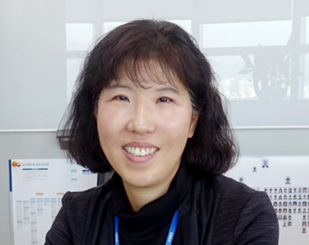
- There is a problem that the HIRA and the NHIS, which have completed the relocation to Wonju Innovation City, are worried. It is about recruiting professional personnel such as doctors and pharmacists. In particular, The number of pharmacist recruitment is 72 of the HIRA and 35 people in the NHIS, but both institutions cannot failed to fill the recruitment capacity. On the contrary, with the relocation of Wonju, pharmacists left one by one, and there are limits to filling up the vacancy even if the pharmacists are filled through the recruitment process from time to time. In this situation, let's hear about the advantages of public pharmacist from the director of Drug Management Information Center, Mi-young Yoo(54 years old, Duksung University 86)who returned from the Sejong Institute for the past year. Yoo joined the Medical Insurance Association (The HIRA Former) in 1993 and took charge of the Pharmaceutical Reimbursement Accreditation Standards, and in 2006, she continued his expertise as a pharmacist at the HIRA by applying for an open position as a director of the drug re-evaluation department. "It's been 27 years since I joined the HIRA. I worked as a pharmacist for 23 years in the pharmacy management departement, I was the head of the DUR management office and returned to the information center after dispatching to the Sejong Institute". In the first half of 2014, Yoo was the head of the Drug Registration Division, which was in charge of the core tasks of new drug reimbursement deliberation, including economic evaluation. She was a pharmacist at the time and followed the title of 'economic evaluation expert'. In January 2015, she went to Korea National Defense University (KNDU) for 1 year while she was promoted to general manager. In 2016, she was head of the dept. of therapeutic materials, and in 2017 after director of reimbursement department, she was returned to the head of DUR management, which is highly related to drugs. Pharmacist, Mi-young Yoo, is a young director who has been promoted to a director in her 40s after being recognized for her professionalism. Nowadays, she has been to the Graduate School of Defense and the Sejong Institute. It is like getting blood from a stone. "Life on the HIRA was a personally rewarding, opportunity to get a lot." The director Yoo has played an important role in the overall responsibility of drug distribution, reimbursement and patient safety management in the HIRA, from the Drug Management Office and the DUR Management Office to the current Information Center. She said, “The HIRA's role is to monitor pharmaceutical companies and wholesalers, but also to help the public receive better services, and as a pharmacist, I pride myself on the work of the public as well as pharmaceutical work. Because of this, I think I've been able to stay on the HIRA for a long time”. According to the recent complete relocation of Wonju, she said, "If you think that it is rewarding, fun and for the people, you will find the charm of a public pharmacist". In particular, she noted that the role of the pharmacist in the HIRA is more characteristic than other institutions. "The place where all the information of the medicine is gathered is the HIRA, and whatever role you play as a pharmacist, you will be in charge of all the important tasks related to the medicine. Nowadays, "work & life balance" is very important, and I feel that it is" work & life balance" that I can be rewarded and have fun". The director Yoo also said that while she was in her twenties and thirties, she was told by her colleagues why she works in public institutions with little pay and no treatment. However, she is in her 'activity' compared to her peers who are living in their usual patterns after their late 40s and 50s. "When I look at my colleagues around the world, they worked at drug companies, hospitals, etc., but most of the time, they work at retail pharmacies as they are getting older. I'm proud to say that I've done well when I look back on the work related to the health insurance and medicines that I've dedicated to youth“. The director Yoo said that the idea that our family and our people can receive proper health guarantees acted as a support. She emphasized that, unlike other public institutions, the HIRA, where there are many women, is also good for female pharmacists to work".

- Company
- Tae-han Kim, CEO of BioLogics will be reappointed
- by Lee, Seok-Jun Jan 31, 2020 06:36am
- Samsungbioepis will operate the system of two vice presidents, and Tae-han Kim, CEO of SamsungbioLogics has confirmed that it is four consecutive years. The two companies made such key positions on January 30. The figures reflect results from last year's performance. Sang-Jin Park, Vice President of SamsungbioepisSeven people were promoted. Another vice president was appointed. Sang-jin Park, 50-year-old general manager, was promoted to vice president. Park is a physician and joined Samsungbioepis in July 2018 after serving as head of the German GSK and representative of AstraZeneca Korea. As a result, Samsungbioepis has two vice presidents. Until Sang-jin Park was appointed, Chang-hoon Choi(60) was Vice President . In addition to Sang-jin Park, Samsungbioepis has appointed Kyung-A Kim, QE (Quality Evaluation) Team Manager, and Young-Pil Lee. PD (Process Development) Team. Hyung-ki Park, CMC Group Head of RA (Regulatory Affairs), Won-young Yoo, Cell Line 1 Group Head of Development Division , Soyoung Lee, Head of SCM Team of Production Division, and Jinhan Jung ,Head of Production Management Group of were promoted. The promotions reflected achievements. Samsungbioepis expects its first profit in eight years. Samsungbioepis posted operating loss of ₩102.7 billion in 2017. The market revenue is expected to reach ₩1 trillion. Samsungbioepis entrusts global distribution to partner companies, and only a certain proportion of ₩ 1 trillion will be captured. Samsungbioepis had sales of ₩368.7 billion in 2018 and last year exceeded it in the third quarter. Tae-han Kim, CEO of Samsung BioLogics Kim Tae-han, CEO of Samsung Biologics, 63 years old, has virtually confirmed his term. If there is no change in the position of the representative on promotion on January 30, he will be reappointed on March 23. Samsung Biologics announced the promotion on the 30th, including promotion to the executive director of C & C Center, Ho-yeol Yoon. Four executives including Eun-young Yang, head of CDO project team, Se-kang Park, DS2 culture part process manager, Yong-hwan Jin, DS2 MSAT team leader, and Ki-jung Kim, executive director of global customer support team, were appointed as executive directors. There was no change in the position of representative in this performance assessment. Tae-han Kim , CEO of Samsung Biologics, is expected to be re-elected at the general shareholders' meeting on March 23. If he is re-elected, it is his fourth term. In general, Samsung affiliates' promotions are conducted after the presidents' appointments. Resignation of Kim's position as a CEO was a concern. Mr. Kim is the oldest and longest CEO of Samsung Group's listed subsidiaries, and he is at the center of controversy over the issue of fraudulent accounting. Samsung BioLogics posted ₩701.6 billion in sales last year. This is a 30.9% increase from the previous year (₩535.8 billion). Operating profit came in at ₩917.7 billion, up 64.8% from the previous year (₩55.7 billion).
