
- LOGIN
- MemberShip
- 2026-07-07 04:35:12
- Policy
- For reimbursed drug, efficacy and cost-efficiency come first
- by Byun Kyung A Oct 31, 2019 09:34am
- On the last day of the 20th National Assembly Annual Audit for the Health Insurance Review and Assessment Service (HIRA), half the questions were dedicated to pharmaceutical affairs. The lawmakers of the NA Health and Welfare Committee questioned HIRA about NHI reimbursement reevaluation on dementia treatment choline alfoscerate, reimbursement expansion on NOAC Xarelto, and reimbursement expansion on the anticancer treatment reflecting its frequent non-reimbursed off-label use as ophthalmic solution. Some lawmakers claimed the General Principle of Healthcare Reimbursement on liquid solutions, like syrup and suspensions, should be revised and expand utilization cap eligible for reimbursement. As always, however, HIRA had a strictly basic answer for the said topics and stated, “The issues addressed would be sufficiently reviewed when clinical efficacy and cost-efficiency are proven”. Below is Daily Pharm’s summary of HIRA’s written answer submitted to the NA on Oct. 28. ◆Reimbursement reevaluation on choline alfoscerate: The current system does not stipulate a reevaluation for NHI reimbursement based on clinical efficacy, except for special cases of Ministry of Food and Drug Safety (MFDS) revoking an approval. The government's National Health Insurance Comprehensive Plan is to establish a pharmaceutical reevaluation system considering clinical efficacy of listed drug, financial impact and healthcare coverage listing status in foreign countries. HIRA, then, plans to have Drug Post-evaluation Subcommittee under Drug Reimbursement Evaluation Committee (DREC) to conduct NHI reimbursement feasibility reevaluation with the new system. Particularly, HIRA official stressed uncertainty of choline alfoscerate “has been questioned constantly” and that the agency would “establish reevaluation system promptly for it”. The dementia treatment is usually sold as a health functional food in other countries. ◆Expanded reimbursement benefit on Xarelto: Medical industry urges the health authority to grant NHI benefit on new oral anticoagulant (NOAC) Xarelto (rivaroxaban) to high-risk patients with coronary artery disease (CAD), specifically for cases of atrial fibrillation (AF) before and after catheter ablation and electrical cardiodiversion, nonvalvular AF with hypertrophic cardiomyopathy, and nonvalvular AF with CHA₂DS₂-VASc score 1. At the moment, Brilinta (ticagrelor) and Xarelto are listed for reimbursement as antiplatelets, and the benefit for Xarelto only covers high-risk patients with nonvalvular AF. HIRA answered, “As medical academic society has requested expanding reimbursement benefit on Xarelto, the agency plans to promptly review additional clinical evidences, such as revised guideline in foreign countries”, and the treatment’s “reimbursement would be expanded depending on clinically proven efficacy”. ◆Revising General Principle for syrup and suspensions: The current General Principle on Healthcare Reimbursement Criteria and Method stipulates granting NHI reimbursement benefit on pharmaceutical syrup and suspensions, also available in types of table or capsule with equivalent ingredient, in following cases; prescribed to patients younger than 13; patients with old age, dementia or other dysfunctional esophagus unable to swallow; prescribed with antacid, sucralfate, and sodium alginate under approved indication. The National Assembly pointed out the General Principle regarding pharmaceutical liquid solution should be amended and provide healthcare benefit for all Koreans to consume drug more conveniently. But HIRA official explained, “Liquid solution tends to be more expensive than tablet or capsule drugs”, therefore, “the General Principle, on Oct. 1, 2011, stipulated providing benefit to subject drugs meeting cost-efficiency standard under certain medical state and patient condition”. Since 2011, some syrup and suspension with proven cost-efficiency have received reimbursement as an exception to the General Principle. HIRA official added, “The agency would accordingly review the need to amend general reimbursement criteria based on cost-efficiency standard”. ◆Listing Avastin for reimbursement: This year’s National Assembly Audit addressed promptly providing reimbursement for non-reimbursed off-label treatment approved to be used. The issue refers to the use of anticancer treatment Avastin in ophthalmology as a non-reimbursed off-label treatment for macular generation. After consulting with Ministry of Food and Drug Safety (MFDS), HIRA allowed request for use of non-reimbursed treatment at clinics without an institutional review board (IRB) by revising ‘Standard and Procedure of Requesting Usage Approval of Non-reimbursed Off-label Drug’ this month. HIRA stated it would consider providing healthcare reimbursement benefit in the future, when the legitimately used off-label drugs meet clinical efficacy and cost-efficiency standards. ◆Expanding RSA for follow-on drugs: As the RSA subject regulation for severe disease has been revised in last July, HIRA plans to positively review feasibility of expanding RSA subject for follow-on drugs after collecting public opinions. ◆Preventing illegal drug distribution: HIRA has decided to upgrade monitoring system to better manage all drug distribution information and to utilize the collected information properly through the serialization system. HIRA currently requires a serial number to be labeled on minimal drug distribution unit container for the health authority to track individual unit in all phase of distribution, from manufacturing to import, distribution, and consumption. In last May, HIRA cooperated with Seoul city community police to investigate illegal distribution of a weight-loss medicine Saxenda injection. ◆Drug pricing standard for the revised Generic Pricing Policy: The latest revision in the Generic Drug Pricing Policy stipulates drug pricing differentiated with compensation for cost, time and investment spent on generic development, and revised weighted pricing system. Nonetheless, the pricing standard for incrementally modified new drug is same as before. As the new weighted pricing policy could bring down prices of some incrementally modified drugs (IMD), HIRA plans to adequately amend the standard with Ministry of Health and Welfare. HIRA official said, “IMDs are mostly developed by Korean pharmaceutical companies, so drug pricing benefit without limitation on IMD could cause international trade discrepancy as unfairly favorable benefit for Korean companies only”, but “the agency would continue to talk to other related ministries and industry about other means to promote development of IMD with better clinical efficacy”. ◆Revising PE analysis review process: In Australia and Canada, a company is responsible for submitting pharmaco-economic analysis and a public agency is responsible for reviewing the submitted material. But in Korea, pharmaceutical companies have difficulties editing submitted PE analysis report. Lawmakers claimed Korea should adopt ‘Application Registration System’ to prevent such inconvenience. HIRA official answered, “it would be reviewed in detail, surveying overseas cases and current conditions in Korea”.
- Policy
- Jext, only distributed to KOEDC for profits
- by Lee, Jeong-Hwan
- The company that exclusively deals with one of urgent drugs, Jext used for allergic reaction Shock (Anaphylaxis) was criticized for distributing drugs only through KOEDC( Korea orphan & Essential Drug Centers ) for profit. Even though Jext was listed insurance registration last July and it is possible for the company to make direct distribution, The price between general reimbursement and KOEDC reimbursement has big difference. So, Jext distributed only to KOEDC. According to the patients and KOEDC on the 11th, Jext has been distributed and sold patients only through KOEDC since domestic reimbursement listed. It is in patients and KOEDC view that KOEDC reimbursement is much higher than general reimbursement, and it makes economic burden to patients. The company says it is not for profit at all. The headquarters regulates the distribution of general reimbursement items, so the company is inevitably unable to distribute the supply. In fact, KOEDC reimbursement price of Jext is ₩134,933 more than double the general reimbursement price is ₩56,670. The company distributes Jext only through KOEDC until insurance registration listed. But it is still on sale only through KOEDC, even though Jext got general reimbursement listed and can be distributed at clinics or retail pharmacies. The reimbursement price of KOEDC is calculated based on the import cost, whereas the general reimbursement price is meticulously formulated through registraion procedure of Health Insurance Review & Assessment Services. It is the majority opinion of reimbursement specialists that it is much more profitable to sell at KOEDC than to distribute Jext at the general imbursement. Furthermore, the distribution of Jext through KOEDC significantly reduces additional marketing and management tasks such as account management costs required for direct distribution. That's one of the reasons why the direct distribution is delayed. However, if the distributor don't handle the medicine reimbursement listed directly for 6 months, the regulatory action is removed. It even raises doubts that the company deliberately distributes Jext only to KOEDC. Regardless of the company's intentions, as a result, patients need to get Jext ony by paying more expensive money through KOEDC because thiere is no distribution volume, even though there is a way to purchase Jext at significantly lower reimbursement. KOEDC official said, the prodcut is not in shortage of distribution, but the the company distributes medicines only to KOEDC and dose not supply them directly. It's reluctant. In the end, patients have to go and buy through KOEDC with higher price for almost 6 months even after reimbursement listed, there has never been a company using this trick so far. The deliberate coordination disregards the purpose of establishing KOEDC and the policy of expanding access to ER medicines for patients. In response to such criticism, the company said that it is not a distribution control for profitability, and will start direct distribution as soon as possible. The company official said, It was true that Jext was distributed only to KOEDC after July when reimbursement listed, but it was not intended. It was a supply disruption at the headquarters in preparation for improved Korean insert, etc. The official added, "The company will import Jext products within this month and supply them directly from next January after our own quality inspection".

- Company
- 3분기만에 1천억 '거뜬'...잘 나가는 K-신약 캐시카우
- by Chon, Seung-Hyun
- [데일리팜=천승현 기자] 국내 개발 의약품이 외래 처방시장 상위권에서 맹활약을 이어갔다. 한미약품의 복합신약 로수젯과 HK이노엔의 케이캡이 3분기만에 처방액 1000억원을 훌쩍 넘어섰다. 대웅바이오의 뇌기능개선제 글리아타민도 선전했다.19일 의약품 조사기관 유비스트에 따르면 비아트리스의 고지혈증치료제 리피토가 올해 3분기 누계 가장 많은 1468억원의 외래 처방금액을 기록했다. 작년 같은 기간보다 2.6% 감소했지만 선두 자리를 견고하게 지켰다. 리피토는 지난 1999년 국내 발매됐다. 국내 출시된 지 20년이 넘었고 100여개 제네릭과 다양한 조합의 복합제가 집중적으로리피토를 견제하고 있지만 여전히 처방 의약품 시장에서 강력한 영향력을 나타냈다. 특허만료 이후 제네릭의 집중 견제에도 처방 의약품 시장에서 강력한 영향력을 과시했다. 다만 최근 성장세는 주춤한 모습이다. 리피토는 지난 2018년부터 지난해까지 5년 연속 외래 처방금액 선두를 기록했다. 국내기업 한미약품과 HK이노엔이 자체 개발한 로수젯과 케이캡이 3분기만에 1000억원 이상을 올리며 선두권에서 고공행진을 이어갔다.로수젯은 지난 9월까지 누적 처방액이 전년보다 19.5% 증가한 1309억원을 기록하며 전체 2위에 이름을 올렸다. 2015년 말 출시된 로수젯은 로수바스타틴과 에제티미브 2개 성분으로 구성된 고지혈증 복합제다.로수젯은 시장 선점 효과와 스타틴·에제티미브 복합제 인기몰이로 가파른 성장세를 거듭하고 있다. 스타틴·에제티미브 복합제는 저밀도 지단백 콜레스테롤(LDL-C)을 낮추는 데 탁월한 효과를 보이는 데다 2개의 약을 따로 복용하는 것보다 약값 부담이 크지 않다는 이유로 선호도가 높아지는 추세다.로수젯은 지난 2020년 처음으로 처방액 1000억원을 넘어섰고 4년 연속 1000억원 돌파를 가볍게 확정지었다.로수젯의 분기별 처방액을 보면 2018년 3분기 처방액 112억원에서 올해 3분기 455억원으로 5년 새 4배 가량 뛰었다. 로수젯은 발매 이후 매 분기 신기록을 경신하며 꾸준한 상승세를 지속했다. 지난 2019년 3분기 처방액 200억원 넘어섰고 2021년 3분기와 지난해 4분기에 각각 300억원과 400억원을 돌파했다. 로수젯의 3분기 처방액 455억원은 선두 리피토와의 격차가 27억원에 불과했다. 케이캡은 3분기 누계 처방실적이 1141억원으로 전년보다 18.7% 성장했다. 케이캡의 지난 3분기 처방액은 400억원으로 전년동기대비 20.6% 뛰었다. 2020년 3분기 213억원에서 3년동안 88.1% 상승하며 성장세가 꺾이지 않고 있다. 지난 2018년 국내개발 신약 30호로 허가받은 케이캡은 '칼륨 경쟁적 위산분비억제제(P-CAB)’ 계열의 항궤양제다. 위벽 세포에서 산분비 최종 단계에 위치하는 양성자펌프와 칼륨이온을 경쟁적으로 결합시켜 위산 분비를 저해하는 작용기전을 나타낸다.케이캡은 기존 프로톤펌프억제제(PPI) 계열 제품보다 약효가 빠르게 나타나고, 식사 전후 상관 없이 복용이 가능한 점 등 장점을 앞세워 높은 성장세를 지속하고 있다. 케이캡은 출시 3년째인 2021년 처방액 1000억원을 돌파했고 지난해까지 2년 연속 1000억원을 넘어섰다. 올해는 일찌감치 처방액 '1000억원 클럽'에 이름을 올렸다.케이캡은 미란성과 비미란성 위식도역류질환에 이어 위궤양, 소화성 궤양·만성 위축성 위염 환자에서 헬리코박터파일로리 제균을 위한 항생제 병용요법, 미란성 위식도역류질환 치료 후 유지요법 등 5개 적응증을 순차적으로 확보했다. 당초 위식도역류질환에 이어 위궤양에 건강보험 급여가 적용됐고 최근 나머지 적응증도 모두 건강보험이 적용되면서 성장세가 더욱 높아진 것으로 분석된다.국내 개발 의약품 중 대웅바이오의 뇌기능개선제 글리아타민이 지난달까지 전년동기보다 23.5% 증가한 1150억원의 처방액을 올리며 전체 3위에 이름을 올렸다. 글리아타민은 효능 논란에 이은 급여축소, 환수협상 명령 등 고비를 겪고 있는데도 처방 시장에서는 오히려 영향력을 확대했다. 콜린알포세레이트 성분의 종근당글리아틴도 3월 누계 처방액이 전년보다 12.2% 증가한 827원으로 고공행진을 이어갔다.한국오가논의 고지혈증복합제 아토젯은 3분기 누계 처방액이 749억원으로 11.9% 증가하며 상위권에 포진했다. 아토젯은 아토르바스타틴과 에제티미브를 결합한 복합제다. 2021년부터 국내기업 100여곳이 아토르바스타틴·에제티미브 시장에 동시다발로 진입했지만 아토젯 시장은 더욱 견고한 상승세를 나타냈다. 아토젯은 종근당이 판매하고 있다.

- Company
- 급여약 1년만에 최다...당뇨약 제네릭 전쟁의 후유증
- by Chon, Seung-Hyun
- [데일리팜=천승현 기자] 건강보험 급여등재 의약품이 1년 만에 최대 규모를 기록했다. 당뇨치료제 ‘자누비아’ 제네릭 시장이 열리면서 급여의약품 개수가 반짝 팽창했다. 공동개발 규제 시행 이전에 위수탁 계약으로 허가받은 자누비아 단일제와 복합제 제네릭이 쏟아지면서 약가제도 개편 이후 감소세를 보이던 급여 의약품 규모가 반등했다.12일 건강보험심사평가원에 따르면 지난 1일 기준 건강보험 급여목록에 등록된 의약품은 총 2만3924개로 집계됐다. 지난달 2만3633개보다 한달 만에 291개 늘었다.지난 8월 급여등재 의약품은 총 2만3427개를 기록했는데, 9월 206개 증가한데 이어 이달에도 200개 이상 늘었다. 지난 두 달 동안 급여등재 의약품은 총 497개 증가했다. 급여등재 의약품은 지난해 10월 2만4661개를 기록한 이후 1년 만에 최대 규모로 확대됐다. 최근 당뇨치료제 ‘시타글립틴’ 성분 제네릭 제품이 대거 급여 등재됐다. 시타글립틴은 DPP-4 억제계열 당뇨치료제 '자누비아'의 주 성분이다. 보건복지부에 따르면 지난 1일 시타글립틴 함유 의약품 284개 품목이 급여 등재됐다. 시타글립틴과 또 다른 당뇨약 메트포르민을 결합한 복합제가 용량별로 7개 조합에 걸쳐 278종이 등재됐다. 시타글립틴과 다파글리플로진 복합제 6종도 지난 1일 등재됐다. 다파글리플로진은 당뇨치료제 포시가의 주 성분이다.지난달 자누비아의 특허 만료 이후 시타글립틴을 활용한 제네릭 제품이 무더기로 등재됐다. 지난달 2일에는 시타글립틴 단일제 163개를 포함해 시타글립틴 함유 의약품 236개 품목이 급여목록에 이름을 올린 바 있다. 사실상 지난 두 달 동안 시타글립틴 성분 의약품이 급여목록 의약품 규모를 확대한 셈이다.최근 정부의 약가와 허가 규제로 급여 의약품 규모는 감소세를 나타냈지만 자누비아 특허만료로 반등세로 돌아선 모습이다.급여등재 의약품은 지난 2020년 10월 2만6527개로 역대 최대 규모를 기록한 이후 지속적으로 하락세를 기록했다. 지난 8월 급여등재 의약품은 총 2만3427개로 2년 10개월만에 3100개 축소됐다. 지난 2년 10개월 동안 건강보험 급여 신규 진입보다 시장 철수나 퇴출이 3100개 많았다는 의미다.2020년 이후 급여 의약품 축소는 개편 약가제도가 기폭제로 작용했다. 2020년 7월부터 시행된 개편 약가제도는 제네릭 제품은 생동성시험 직접 수행과 등록 원료의약품 사용을 모두 충족해야만 현행 특허만료 전 오리지널 의약품 대비 53.55% 상한가를 유지하는 내용이 핵심이다.개편 약가제도에는 급여등재 시기가 늦을 수록 상한가가 낮아지는 계단형 약가제도가 담겼다. 특정 성분 시장에 20개 이상 제네릭이 등재될 경우 신규 등재 품목의 상한가는 기존 최저가의 85%까지 받을 수 있다. 제약사가 제네릭을 직접 개발하고 생동성시험을 수행하지 않으면 약가가 크게 떨어지는 구조 탓에 전 공정 제조 위탁 제네릭의 허가가 크게 감소했다.허가 규제 장벽도 높아졌다. 2021년 7월부터 개정 약사법 시행으로 하나의 임상시험으로 허가받을 수 있는 개량신약과 제네릭 개수가 제한됐다. 이른바 '1+3' 규제로 불리는 새 규정은 하나의 임상시험으로 허가 받을 수 있는 개량신약과 제네릭 개수를 제한하는 내용이 담겼다.생물학적동등성시험을 직접 시행한 제약사의 의약품과 동일한 제조소에서 동일 처방·제조법으로 모든 제조공정을 동일하게 제조하는 경우 생동성자료 사용이 3회로 제한된다. 1건의 생동성시험으로 4개의 제네릭만 허가 받을 수 있다는 의미다. 임상시험 자료 역시 직접 수행 제약사의 의약품 외 3개 품목만 임상자료 동의가 가능하다.과거에는 특정 제약사가 생동성시험을 거쳐 제네릭을 허가 받으면 수십 개 제약사가 동일한 자료로 위탁 제네릭 허가를 받는 경우가 빈번했는데, 공동개발 규제로 '제네릭 무제한 복제 현상'은 불가능해졌다.다만 최근 허가받은 시타글립틴제제는 개발 규제 시행 이전에 맺은 계약이라는 이유로 무제한 위수탁이 가능했다. 제약사들이 공동개발 규제 시행 이전에 맺은 위수탁 계약은 인정된다. 공동개발 규제 시행 이전에 허가받고 오리지널 의약품의 특허만료 맞춰 급여 등재되는 제품도 많다.식약처에 따르면 시타글립틴 함유 의약품은 총 785개에 달했다. 이 중 2020년 이후 629개 허가받았다. 2020년과 2021년 각각 72개, 118개 허가받았다. 지난해 시타글립틴제제 254개 품목이 허가받았고 올해는 185개 품목이 추가로 품목허가를 획득했다.
- Company
- CSO협회, 사단법인 3수 도전…70% 1인 업체 포섭 관건(H)
- by Kim, Jin-Gu
- [데일리팜=김진구 기자] 한국의약품판촉영업협회(이하 CSO협회)가 세 번째 사단법인 설립 인가에 도전한다. 업계에서는 전체 등록 CSO의 70% 이상을 차지하는 개인사업자 혹은 프리랜서 형태의 ‘1인 CSO’를 얼마나 회원으로 포섭하느냐가 이번 인가의 최대 관건이 될 것으로 보고 있다. 6일 제약업계에 따르면 CSO협회는 최근 사단법인 인가를 위한 사전 준비 작업에 한창이다. 과거 보건복지부로부터 두 차례 반려를 받으며 지적됐던 정관과 사업계획서 등을 재정비 중인 것으로 전해진다. 협회는 이달 중 새 집행부 구성을 포함한 조직 정비를 마무리한 뒤, 올 하반기 복지부에 사단법인 인가 신청서를 다시 제출한다는 계획이다.이번 재도전에는 복지부의 기류 변화가 영향을 미친 것으로 분석된다. 복지부는 최근 CSO 업계와 소통할 공식 창구의 필요성을 언급하며 사단법인 인가 필요성에 공감한다는 입장을 밝힌 바 있다. 다만 “미비했던 서류를 보완해 다시 신청할 경우 관련 규정에 따라 검토할 예정”이라며 법적 요건을 충족해야 한다는 점도 분명히 했다. 사단법인 인가는 CSO협회의 공식적인 역할을 확대하기 위한 기반이라는 점에서 의미가 있다는 분석이다. 복지부로부터 사단법인 인정을 받을 경우 정부와 공식적인 논의 창구 역할을 담당할 수 있다. 업계를 대표해 교육‧정책 사업은 물론, 협회가 추진해 온 자율규제 활동에도 더욱 체계적으로 나설 수 있다. 연 8시간 보수 교육과 지출보고서 관리, 위탁·재위탁 계약 관리 등 행정 수요가 늘면서 업계를 대표할 창구가 필요해졌다는 것이 복지부와 업계의 공통된 인식이다.사단법인 설립 인가의 핵심 요건 중 하나로 ‘업계 대표성’이 꼽힌다. 비영리법인 설립 심사에서 특정 계층이나 일부 법인에 치우치지 않고 업계 전반을 아우르는 대표성을 갖췄는지가 주요 판단 요소로 거론되기 때문이다.특히 업계 다수를 차지하는 1인 CSO를 얼마나 협회 안으로 끌어안을 수 있느냐가 대표성 확보의 핵심 변수로 지목된다. 지난 2024년 10월 CSO 신고제 시행 이후 현재까지 지자체로부터 신고필증을 받은 CSO는 1만5000여개에 달한다. 정부와 업계에선 이 가운데 70%가량인 1만개가 개인사업자 혹은 프리랜서 형태의 1인 CSO(CMR)인 것으로 파악하고 있다. 문제는 현실적인 한계다. 현재 협회 회원 구성은 기업형 법인 CSO가 중심인 것으로 전해진다. 통상적으로 의약품 판촉영업은 제약사가 법인 CSO와 1차 위탁 계약을 맺고, 법인 CSO가 다시 1인 CSO와 재위탁 계약을 체결하는 구조다. 법인 CSO를 통해 일감을 받는 특성상 1인 CSO들은 협회 가입에 따른 실익이 크지 않다는 분석이다. 협회 가입에 따른 실질적인 이점이 크지 않고, 오히려 부담만 커진다는 인식도 개인회원 확보를 가로막는 요인으로 지목된다. 한 제약업계 관계자는 "개인 프리랜서들은 협회 가입이나 신원 노출을 부담스러워하는 경우가 적지 않다"며 "회비 부담도 있고 법인 중심의 의사결정 구조에서는 개인의 목소리가 반영되기 어렵다는 우려도 있다"고 말했다.이러한 우려에도 CSO업계에서는 협회가 공식적인 역할을 수행할 필요가 있다는 목소리가 꾸준히 제기된다. 또 다른 CSO 업체 대표는 "복지부가 협회 설립 필요성에 공감하는 방향으로 입장을 밝힌 것은 환영할 만한 일이다. 사단법인 인가를 통해 협회가 공식적인 역할을 할 수 있을 것으로 기대한다"며 "CSO 업계 내에서도 건전한 유통질서를 만들고 싶다는 공감대가 있다"고 말했다.이어 "결국 중요한 것은 1인 CSO를 얼마나 제도권 안으로 끌어안을 수 있느냐가 될 것"이라며 "1인 CSO의 참여를 확대하지 못한다면 협회의 대표성과 자정 기능도 한계가 있을 수밖에 없다"고 말했다.다만 그는 "앞선 두 차례 반려에서는 회원 수나 자산 규모 등 정량적인 부분이 영향을 미친 것으로 알고 있다"며 "회원 수와 회비 규모뿐 아니라 협회를 실제로 운영하고 업계를 이끌 수 있는 역량과 자정 의지도 함께 평가했으면 한다"고 덧붙였다.
- Company
- Vadanem gains clinical evidence in renal anemia
- by Son, Hyung Min
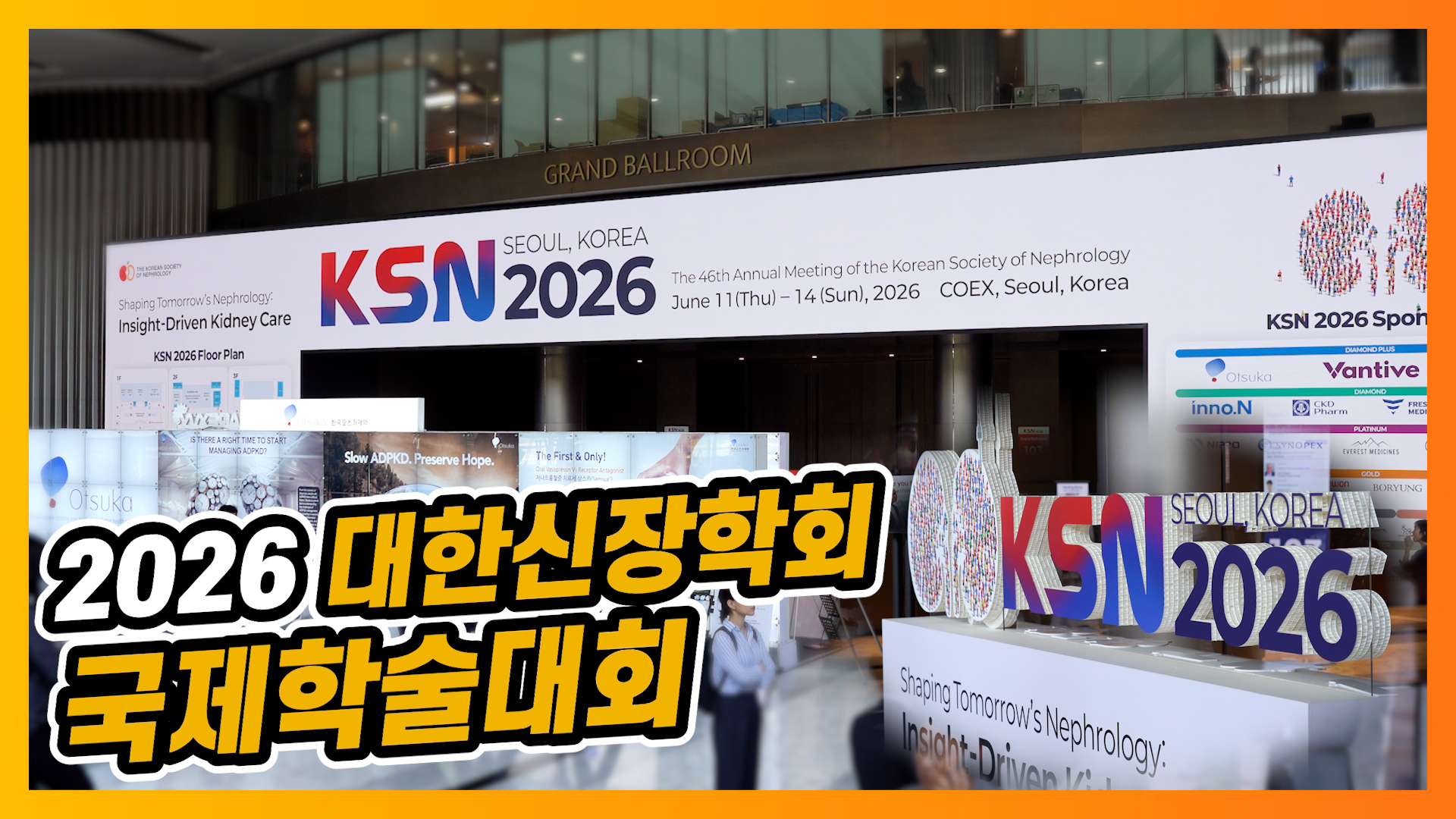
- Treatment strategies for renal anemia in patients with chronic kidney disease (CKD) are expanding beyond conventional erythropoiesis-stimulating agents (ESAs) toward more individualized approaches based on patient characteristics.In particular, growing attention is being paid to the role of hypoxia-inducible factor prolyl hydroxylase inhibitors (HIF-PHIs) in patients with ESA hyporesponsiveness or disordered iron metabolism, prompting active discussion on how these agents can be incorporated into clinical practice based on accumulating real-world clinical evidence.At the 46th Annual Meeting of the Korean society of Nephrology (KSN 2026) held by the Korean society of Nephrology in Seoul, a symposium highlighted the practical potential of Vadanem (vadadustat) based on the latest clinical evidence and real-world experience in the treatment of renal anemia.Speakers from Japan, Korea, Canada, and Taiwan shared the latest evidence on HIF-PHIs, evolving treatment paradigms, and country-specific clinical experience. The presentations focused on the clinical value of Vadanem and its use in practice.Renal anemia develops as CKD progresses, leading to a decrease in the production of endogenous erythropoietin (EPO) and is frequently accompanied by functional iron deficiency associated with inflammation. Consequently, some patients exhibit hyporesponsiveness, showing insufficient response to existing ESA therapy, which raises the need for new treatment strategies.Professor Masaomi Nangaku, The University of TokyoProfessor Masaomi Nangaku of The University of Tokyo presented results from a post hoc win statistics analysis of the INNO2VATE study, which enrolled patients receiving maintenance hemodialysis.The professor introduced results of the win statistics analysis comparing Vadanem with darbepoetin alfa. It used a hierarchical approach that prioritized clinically meaningful outcomes such as death and hospitalization. Results showed that Vadanem reduced the risk of death or hospitalization compared with darbepoetin alfa in analyses covering both the overall study period and the treatment period.Professor Nangaku said, “Vadanem demonstrated consistent non-inferiority to conventional ESA therapy with respect to major adverse cardiovascular events (MACE) regardless of patients' age, sex or geographic region.”He also suggested that the therapy may be particularly useful in patients with ESA hyporesponsiveness, elevated C-reactive protein (CRP) levels indicating inflammation, or reduced glomerular filtration rate (GFR).Prof. Sungjin Chung, Yeouido St. Mary's Hospital, who presented as a Korean expert, added that many dialysis patients in routine clinical practice still fail to achieve target hemoglobin (Hb) levels despite adequate ESA therapy or require repeated dose escalation in Korea."In these patients, treatment strategies should consider ESA hyporesponsiveness or resistance, creating a greater role and need for new therapeutic options.”Professor Chung added, “A meta-analysis of 10 randomized controlled trials (RCTs) demonstrated that Vadanem achieved comparable hemoglobin correction and maintenance to darbepoetin alfa, while maintaining a similar safety profile.Furthermore, based on its mechanism of regulating iron absorption, transport, and utilization through the HIF pathway, it is expected to improve iron utilization by reducing hepcidin. Also, its ability to induce physiological erythropoietic responses was presented as a clinical advantage.During the panel discussion, experts also discussed the long-term safety of HIF-PHIs and their potential role in future treatment strategies.The panel noted that concerns regarding malignancy and thromboembolic events reported with certain HIF-PHIs should not be generalized to the entire class. Instead, treatment decisions should consider the characteristics of individual agents and appropriate patient management.The experts further observed that although the Kidney Disease: Improving Global Outcomes (KDIGO) guidelines currently recommend ESA therapy as the preferred initial treatment, continued accumulation of clinical evidence and long-term safety data could establish HIF-PHIs as an important therapeutic option in the future.They also suggested that HIF-PHIs are likely to expand treatment options by diversifying treatment strategies according to patient characteristics, rather than simply replacing ESA.Tanabe Pharma Korea said, "KSN 2026 is an important venue where the latest findings and innovative treatment methods in the field of nephrology from around the world are shared. Based on a solid partnership with the Korean Society of Nephrology, we will spare no effort for medical advancement and the promotion of human health.”
- Company
- Pfizer set to join RSV vaccine competition with Abrysvo
- by Eo, Yun-Ho
- Pfizer is set to officially enter the Korean respiratory syncytial virus (RSV) vaccine market.According to industry sources, the Ministry of Food and Drug Safety (MFDS) has entered the final stage of its review for ‘Abrysvo,’ Pfizer Korea's RSV vaccine. With its approval imminent, commercial launch is expected in the third quarter this year.Abrysvo’s initial indications are expected to include routine immunisation for infants, as well as indications for ▲ Passive protection against lower respiratory tract disease caused by respiratory syncytial virus (RSV) in infants from birth through 6 months of age following maternal immunisation during pregnancy, ▲ prevention of RSV-associated LRTD in adults aged 60 years and older.Abrysvo targets the fusion (F) protein, the major surface protein of RSV. It is specifically designed using the prefusion form of the F protein (pre-F), which the virus uses to enter host cells.The pre-F protein represents the structural form immediately before viral fusion with host cells and is recognized as the antigenic configuration that most effectively induces neutralizing antibodies. Abrysvo induces an immune response using a stabilized version of this prefusion protein.Abrysvo is a bivalent vaccine designed to provide protection against both major RSV subtypes, RSV-A and RSV-B. Its maternal immunization strategy relies on antibodies transferred across the placenta to protect infants during the first months of life.RSV is a prominent respiratory virus responsible for pneumonia and bronchiolitis. While it can infect people of all ages, the infection rate is particularly high among infants. It is known that approximately 90% of infants worldwide are infected with RSV before the age of two. In some cases, it can progress to serious lower respiratory tract diseases such as pneumonia or bronchiolitis, making RSV one of the leading causes of infant hospital admissions.Clinical evidence supporting Abrysvo comes from the Phase III MATISSE study. The trial demonstrated that vaccination in late pregnancy significantly reduced the risk of severe RSV-associated lower respiratory tract infection in infants in the first 6 months after birth through maternal antibody transfer.The anticipated approval and entry of Abrysvo is expected to further intensify competition in Korea's infant RSV prevention market, which is already occupied by Sanofi's ‘Beyfortus’ and MSD's ‘Enflonsia.’
- Company
- Prescription drug approvals hit 3-year high in 1H 2026
- by Chon, Seung-Hyun
- The number of prescription drug approvals in Korea reached a three-year high in the first half of 2026, reflecting pharmaceutical companies' active efforts to expand their product portfolios and enter new markets. There are also some analyses that many companies accelerated regulatory filings to secure reimbursement at higher prices before generic pricing reforms take effect in August. Although approvals rebounded during the first half of this year, the total remains more than 70% lower than 6 years ago following tighter pricing and regulatory policies introduced since 2020.According to the Ministry of Food and Drug Safety (MFDS), 499 prescription drugs were approved during the first half of 2026, representing a 58.4% increase from the same period last year. After reaching 585 approvals in the first half of 2023, the figure declined to 324 in 2024 and 315 in 2025 before rebounding this year to its highest level in 3 years.The increase suggests pharmaceutical companies have recently stepped up efforts to expand their product portfolios. June alone accounted for 118 approvals, while 106 products were approved in April, marking the second month this year in which monthly approvals exceeded 100.By comparison, only July recorded more than 100 prescription drug approvals last year. Also, no month exceeded that level in 2024. In 2023, only January surpassed the 100-approval mark.Average monthly approvals reached 83 products during the first half, the highest level since the 93 recorded in 2022. Although the annual monthly average had declined from 93 in 2023 to 76 in 2024 and 48 in 2025, approvals have rebounded to an upward curve this year.Among the products approved in June, 48 orally disintegrating tablet (ODT) fixed-dose combinations of ezetimibe and rosuvastatin received marketing authorization. Companies obtaining approvals included Theragen Etex, Il-Yang Pharm, Ilhwa, Celltrion Pharm, KS Pharm, Dongkook Pharmaceutical, Mother’s Pharmaceutical, Jin Yang Pharmaceutical, HanAll Biopharma, Daehan Nupharm, Unimed Pharm, Withus Pharmaceutical, GC Biopharma, CMG Pharmaceuticals, Samjin Pharmaceutical, and GL Pharma.Competition also intensified in the market for potassium-competitive acid blockers (P-CABs) containing vonoprazan. Vonoprazan, the active ingredient of Takeda's product Vocinti that has not yet been launched in Korea, attracted significant interest, with Korean pharmaceutical companies obtaining 58 approvals for generic vonoprazan products during the first half alone. Companies preparing to enter the vonoprazan market include CMG Pharmaceutical, Unimed Pharmaceutical, Korea PMG Pharm, Medica Korea, DongKoo Bio & Pharma, Samjin Pharmaceutical, Eden Pharma, Celltrion Pharm, Alvogen Korea, BC World Pharmaceutical, KS Pharm, Yuhan Corporation, Dongkook Pharmaceutical, Genu Pharma, YooYoung Pharmaceutical, KyongDong Pharml, Vivozon Pharmaceutical, Hana Pharm, Korea Prime Pharm, GenuOne Sciences, Kolon Pharma, Korea Arlico Pharm, Ahn-Gook Pharm, Saehan Pharm, GC Biopharma, White Life Science, Samik Pharm, Mother’s Pharmaceutical, and Kyongbo Pharmaceutical.Industry observers believe another factor behind the increase is companies' efforts to secure as many reimbursements before the pricing reform takes effect in August.Under proposed revisions to the ‘Standards for the Determination and Adjustment of Drug Prices’ recently released by the Ministry of Health and Welfare (MOHW), the maximum reimbursement price for both off-patent originators and generic drugs will fall from 53.55% to 45% of the original branded drug price beginning in August, equivalent to a 16% reduction in generic reimbursement prices.Price reductions could become even steeper for products that fail to satisfy the requirements for receiving the highest reimbursement level, including conducting their own bioequivalence studies and using domestically registered active pharmaceutical ingredients (APIs).Under the revised system, the penalty for failing to satisfy the maximum-price requirements will increase from 15% to 20%. Since July 2020, generic manufacturers have been required to both conduct their own BE studies and use registered APIs to qualify for the maximum reimbursement price of 53.55%. Previously, the reimbursement ceiling fell by 15% for each unmet requirement, resulting in a total reduction of 27.75% if neither criterion was met. Under that system, reimbursement fell from 53.55% to 45.52% when one requirement was unmet and to 38.69% when neither requirement was satisfied.Under the revised framework, the new maximum reimbursement ratio of 45% will fall to 36% if one requirement is not met (20% cut) and to 28.8% if neither requirement is satisfied. Compared with the current system, these changes represent additional reimbursement reductions of 20.9% and 25.6%, respectively.From the industry's perspective, obtaining reimbursement before implementation of the new pricing rules allows products to receive relatively higher reimbursement prices, providing a strong incentive to accelerate approvals.Despite this year's rebound, prescription drug approvals remain well below historical levels. During the first half of 2019 and 2020, the MFDS approved 2,209 and 2,015 prescription drugs, respectively. The total fell to 1,073 in the first half of 2021 before declining further from 2022 onward. Compared with 2020, approvals in the first half of 2026 were 75.2% lower.Industry analysts attribute the sustained decline in generic market entry to changes in both the drug pricing and regulatory systems.Beginning in July 2020, Korea introduced a tiered reimbursement pricing system, under which reimbursement ceilings decline the longer the listing is delayed. Once 20 or more generic products are listed for a given ingredient, newly listed products are reimbursed at only 85% of the lowest existing reimbursement price. Because companies that do not independently develop generics or conduct their own bioequivalence studies receive substantially lower reimbursement, approvals for fully consigned generics have declined sharply.Regulatory barriers have also become more stringent. Since July 2021, amendments to the Pharmaceutical Affairs Act introduced the so-called "1+3 rule," limiting the number of generic and incrementally modified drugs that can rely on a single bioequivalence study.Under the regulation, if a generic is manufactured at the same facility using the same formulation and manufacturing process as the product for which the bioequivalence study was conducted, the bioequivalence data may be referenced by only three additional products. In other words, one bioequivalence study can support approval of only four generic products. Likewise, clinical data may be shared only with the original contract research organization’s product and up to three additional products.Previously, once one manufacturer obtained approval based on a bioequivalence study, dozens of other companies frequently obtained approvals for outsourced generics using the same data. The introduction of restrictions on joint development effectively ended the practice of unlimited generic replication.The surge in approvals during 2019 and 2020 was itself driven by anticipation of tighter government regulation. In 2018, sales of 175 valsartan-containing antihypertensive products were suspended after excessive levels of impurities were detected. In response, the MOHW and MFDS established a consultative body to develop measures aimed at curbing the excessive proliferation of generic drugs.As the government signaled stricter regulation, pharmaceutical companies rushed to secure generic approvals before the new rules took effect. Since implementation of the reforms, however, new market entry has slowed considerably.

- Opinion
- "고령층 독감백신, 접종률 넘어 보호의 질 논의할 시기"(H/T)
- by Son, Hyung Min
- [데일리팜=손형민 기자] "현재 정책의 장점이 접종률 확대에 있다면 앞으로의 과제는 보호 효과 향상입니다. 이제는 접종률과 함께 고령층에게 어떤 백신이 더 충분한 보호를 제공할 수 있는지, 즉 '보호의 질'에 대한 논의가 필요한 시점입니다."최민주 고대구로병원 감염내과 교수최민주 고대구로병원 감염내과 교수는 고령층 인플루엔자 예방접종 정책의 방향을 이같이 제시했다.인플루엔자는 해마다 전 세계적으로 300~500만건의 중증 감염과 최대 65만명의 사망을 유발하는 대표적인 호흡기 감염병이다. 특히 65세 이상 고령층은 입원과 중증 합병증, 사망 위험이 가장 높은 고위험군으로 꼽힌다. 국내에서도 인플루엔자 입원 환자의 약 70%, 사망 환자의 약 80% 이상이 고령층에 집중돼 있으며, 이들의 의료비 부담 역시 전 연령층 가운데 가장 높은 수준을 기록하고 있다.문제는 높은 접종률에도 불구하고 고령층의 질병 부담이 여전히 크다는 점이다. 고령층은 면역노화(immunosenescence)로 인해 백신 접종 후 항체 형성 능력이 건강한 성인의 40~80% 수준에 머무는 것으로 알려져 있다. 표준용량 백신을 접종하더라도 충분한 면역반응을 얻기 어려울 수 있다는 의미다.이 때문에 미국과 영국, 호주 등 주요국은 이미 65세 이상 고령층에게 면역증강 또는 고용량 인플루엔자 백신을 표준용량 백신보다 우선 권고하고 있으며, 대한감염학회 역시 2023년 성인 예방접종 권고안을 통해 같은 방향을 제시했다.이 같은 배경에서 최 교수는 한국과 대만의 65세 이상 고령층을 대상으로 MF59 면역증강 4가 인플루엔자 백신(aQIV)의 비용-효과성을 분석하는 연구를 수행했다. 연구 결과는 최근 국제학술지 Vaccine에 게재됐다. 고령층 백신 전략의 임상적 효과와 함께 비용-효과성까지 함께 평가한 국내 연구라는 점에서 의미가 있다.비용효과성에 건강 편익까지…경제성 분석 의미는연구 결과 면역증강 백신은 표준용량 백신보다 접종 비용은 높았지만, 인플루엔자 관련 입원과 합병증, 사망 감소에 따른 의료비 절감 효과를 고려하면 비용-효과적인 전략으로 평가됐다.특히 표준용량 백신에서 면역증강 백신으로 변경했을 때 ICER(점증적 비용-효과비)는 2200달러/QALY로 산출돼 국내에서 일반적으로 적용되는 지불의향 기준인 1인당 국내총생산(GDP) 약 3만6130달러를 크게 밑돌았다. 추가 접종 비용보다 건강 편익이 더 크다는 의미다.최 교수는 "표준용량 백신보다 접종 비용은 증가하지만 입원과 합병증, 사망 감소를 통해 추가 비용의 상당 부분을 상쇄할 수 있는 것으로 분석됐다"며 "추가 비용 대비 얻을 수 있는 건강 편익이 상당하다는 점을 확인했다"고 말했다.비용-효과성 분석은 단순히 백신 가격을 비교하는 것이 아니라 예방 가능한 감염과 합병증, 입원, 사망 감소에 따른 의료비 절감과 삶의 질 향상까지 함께 반영해 예방접종 전략의 가치를 평가하는 방법이다.이번 연구에서도 한국과 대만의 고령층 인구 구조와 백신 접종률, 의료 이용 패턴 등이 반영됐으며, 다양한 민감도 분석과 시나리오 분석을 통해 결과의 안정성을 확인했다. 분석 결과에 가장 큰 영향을 미친 변수는 상대적 백신 효과(relative vaccine effectiveness, rVE)와 백신 가격이었다.최 교수는 "민감도 분석에서도 상대적 백신 효과가 가장 영향력이 큰 변수로 나타났고, 백신 가격 역시 결과에 중요한 영향을 미쳤다"고 설명했다.다만 고용량 백신과의 비교에 대해서는 신중한 해석을 주문했다.최 교수는 "이번 연구에서는 면역증강 백신이 비용 절감 전략으로 나타났지만 두 백신 간 직접 비교 근거는 아직 제한적"이라며 "고용량 백신과의 비교 결과는 탐색적 결과로 받아들일 필요가 있으며, 이번 연구의 핵심은 표준용량 백신 대비 면역증강 백신의 임상적·경제적 가치를 확인했다는 데 있다"고 밝혔다.질병부담 넘어 경제성까지 분석이번 분석은 최 교수가 2022년 발표한 고령층 인플루엔자 백신 전략 연구를 확장한 후속 연구다.당시 연구에서는 국내 65세 이상 고령층을 대상으로 표준용량 4가 백신과 고용량 4가 백신, 면역증강 4가 백신 전략에 따른 감염과 합병증, 입원, 사망 등 질병 부담을 비교했다. 이를 통해 향상된 면역원성을 가진 백신 전략이 고령층 질병 부담 감소에 기여할 수 있음을 확인했다.하지만 예방접종 정책을 실제로 논의하기 위해서는 임상적 효과만으로는 충분하지 않았다. 새로운 백신 전략을 국가예방접종사업 등에 적용하기 위해서는 추가 비용 대비 얼마나 건강 편익을 얻을 수 있는지를 보여주는 경제성 평가가 함께 요구되기 때문이다.최 교수는 "2022년 연구 당시에는 국내에서 면역증강 백신과 고용량 백신의 활용 경험이 제한적이었고, 경제성 평가에 중요한 변수인 백신 가격에 대한 불확실성도 컸다"며 "당시에는 비용-효과성 분석을 신뢰성 있게 수행하기 어려웠다"고 언급했다.이어 "이후 국내에서도 실제 활용이 가능해지면서 가격에 대한 가정을 보다 현실적으로 설정할 수 있게 됐고, 이를 토대로 이번 연구를 수행했다"고 덧붙였다.연구는 한국과 대만을 동시에 분석 대상으로 삼았다는 점에서도 차별화된다. 기존 경제성 연구는 대부분 북미와 유럽 등 서구 국가를 중심으로 수행됐지만, 이번에는 초고령사회에 진입한 두 아시아 국가의 인구 구조와 의료 환경을 반영했다.최 교수는 "한국과 대만은 고령층 인구 구조와 인플루엔자 유행 양상, 의료 이용 패턴에는 차이가 있지만 두 국가 모두 초고령사회라는 공통점을 갖고 있다"며 "이번 연구는 서구 중심 근거를 보완하고 아시아 지역의 역학적 특성과 보건의료 환경을 반영한 예방접종 정책의 근거를 제시했다는 점에서 의미가 있다"고 평가했다.고위험군 중심 예방접종 전략 확대 필요최 교수는 이번 연구가 65세 이상 전체 고령층을 대상으로 진행된 만큼 특정 고위험군 만을 대상으로 한 결과는 아니라고 선을 그었다. 다만 대표적인 고위험군인 고령층을 대상으로 한 이번 분석 결과는 향후 위험도 기반 예방접종 전략을 논의하는 근거가 될 수 있다고 봤다.최 교수는 "접종률 향상을 넘어 입원과 중증 합병증을 줄일 수 있는 예방 전략으로 정책의 무게중심이 옮겨가야 한다"며 "장기적으로는 연령과 개별 위험도를 함께 고려하는 예방접종 전략이 필요하다"고 강조했다.이어 "현재 정책의 장점이 접종률 확대에 있다면, 앞으로의 과제는 보호 효과 향상이라고 할 수 있다. 이제는 얼마나 많이 접종했는지 만이 아니라, 고령층에게 어떤 백신이 더 충분한 보호를 제공할 수 있는지에 대한 논의가 필요한 시점"이라고 피력했다. 현재까지 한국의 고령층 인플루엔자 예방접종 정책은 접종률 측면에서 큰 성과를 거두었다고 볼 수 있다. 국가예방접종사업을 통해 65세 이상 고령층의 백신 접근성이 높아졌고 실제 접종률도 높은 수준을 유지하고 있다.다만 접종률이 높아졌다고 해서 고령층의 질병 부담이 모두 해결되는 것은 아니다. 고령층은 면역노화로 인해 백신 접종 후 면역반응이 충분하지 않을 수 있고 이로 인해 접종 후에도 인플루엔자 관련 입원과 합병증이 발생할 수 있기 때문이다. 실제로 높은 접종률에도 불구하고 고령층의 중증 질환과 입원 부담은 여전히 중요한 공중보건 문제로 남아 있다는 게 전문가들의 의견이다.최 교수는 향후 50~64세 성인을 대상으로 예방접종 대상을 단계적으로 확대하는 방안도 검토할 수 있다고 제안했다. 이 연령대는 만성질환 유병률이 증가하기 시작하는 시기로, 고령층 이전 단계부터 예방 전략을 강화하는 방안도 고려해볼 수 있다는 게 최 교수의 설명이다.아울러 성인 예방접종을 건강보험 급여 체계 안에서 관리하는 방안도 장기 과제로 제시했다. 최 교수는 "현재는 성인 예방접종률과 실제 예방 효과를 체계적으로 파악하기 어려운 만큼, 건강보험 청구자료 등을 활용해 예방접종 현황과 효과를 지속적으로 평가할 수 있는 기반을 마련해야 한다"고 전했다.이어 "축적된 근거를 바탕으로 보다 정교한 성인 예방접종 정책을 설계해 나갈 필요가 있다"고 제언했다.
