- LOGIN
- MemberShip
- 2026-09-12 22:30:40
- Generic drug mkt dominated by "CDMO·multi-product entries"
- by Jung, Heung-Jun | translator Hong, Ji Yeon | 2026-06-15 09:19:04
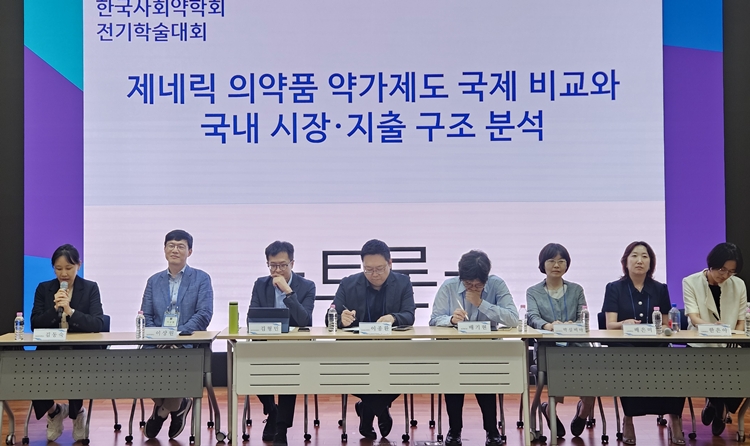
A research project commissioned by the Ministry of Health and Welfare (MOHW) before the recent drug pricing system reform identified 'long-listed, multi-product pharmaceuticals' as a primary cause of overall inflation in pharmaceutical expenditures in South Korea.
Increased contract manufacturing has led to an abundance of low-revenue, marginalized products. The average annual reimbursement per individual items posted less than KRW 1 billion, even for active pharmaceutical ingredients (APIs) with substantial claim amount.
On June 12, key findings from the MOHW-commissioned research were presented at the Korean Academy of Social and Administrative Pharmacy's academic conference.
According to the study, national expenditures on generics surged by 60% between 2017 and 2024, increasing from KRW 7.7661 trillion to KRW 12.4409 trillion, a net increase of KRW 4.7 trillion. This represents a 46.2% share of total pharmaceutical spending.
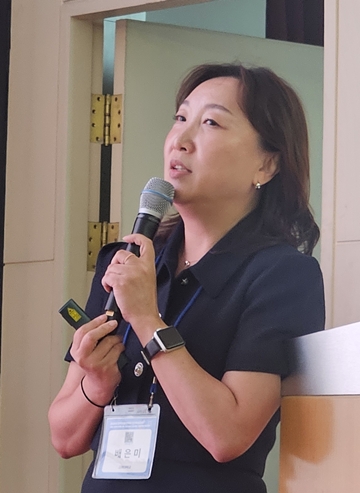
Eun Mi Bae, a professor at the Korea University College of Pharmacy, explained that an analysis of the top 20 active ingredients by generic expenditure revealed an average of 83.4 individual products per ingredient. Professor Bae noted that medications that have been listed for an extended period predominated, with an average listing duration of 16.7 years.
Within the top 10 therapeutic categories by National Health Insurance spending, dyslipidemia treatments consistently ranked number one from 2017 through 2024. Furthermore, the category expenditure expanded 2.2-fold relative to 2017 levels, reaching KRW 2.78 trillion in 2024.
The researcher also emphasized the critical need for closer regulatory oversight as fixed-dose combination (FDC) therapies increasingly become mainstream.
Professor Bae said, "Combination therapies are actively prescribed for chronic conditions. Within the statin market segment, sales of combination therapy products officially eclipsed those of monotherapy agents in 2023."
The report further evaluated past regulatory interventions, specifically the differential generic pricing policy based on criteria requirements and the primary re-evaluation scheme, concluding that they yielded no statistically significant impact on reducing overall pharmaceutical expenditures.
Professor Bae said, "The pharmaceutical expenditure share of the group satisfying both the in-house bioequivalence and DMF registration criteria skyrocketed from 15.4% to 32.4%. While the policies successfully induced market restructuring, neither the differential pricing model nor the re-evaluation measures delivered a meaningful downward impact on overall drug expenditures."
Contract manufacturing explodes from 44% to 63% over 7 years…Proliferation of low-revenue products under KRW 1B
The generic pharmaceutical market remains dominated by larger corporations with annual revenues exceeding KRW 80 billion. This segment commands nearly 80% of total insurance reimbursement claims, and its market share is expanding steadily.
The generic claim amount percentage for pharmaceutical companies with revenues exceeding KRW 80 billion increased from 71.9% in 2017 to 83.6% in 2024. In contrast, the market share for firms generating less than KRW 80 billion contracted from 24.3% to 12.4% over the same period.
Furthermore, the proportion of generic drugs in total insurance billing for designated "Innovative Pharmaceutical Companies" decreased from 49% to 37% during this period.
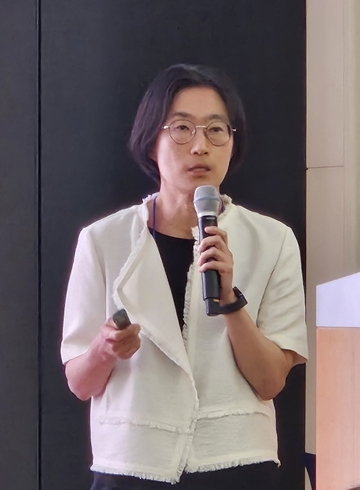
Professor Eunah Han said, "Generics constitute up to 78% of the products sold by companies with revenues exceeding KRW 80 billion. However, individual items with annual billing under KRW 1 billion make up the largest proportion of their portfolios. Furthermore, since contract-manufactured items account for 57.7% of the portfolios of these larger corporations, even big corporates lack clear strategic differentiation."
The report clearly documented a dramatic upward trend in sub-consigned production. The proportion of contract-manufactured items escalated sharply from 44% in 2017 to 63% in 2024. Although the absolute number of registered products increased, their share of total reimbursement billing grew marginally, moving from 30% to only 35%.
This data indicates that low-revenue, marginalized products heavily drove market expansion. In therapeutic categories characterized by intense multi-product entry, an average of 54 distinct brands competed head-to-head for market share.
The high reliance on contract manufacturing means operational disruptions at a single manufacturing facility can instantly trigger widespread supply vulnerabilities across the entire market.
Eunah Han, a professor at the Yonsei University College of Pharmacy, pointed out, "Competitive multi-product market segments represent a small slice (about 15%) of the overall generic therapeutic landscape. Yet, they absorb 60% of total reimbursement claims and contain 60% of all registered products."
The study concludes that slashing generic prices specifically in these competitive, multi-product segments would yield the greatest savings for the national insurance fund while minimizing broader shocks to drug supply and demand.
"Generic pricing cuts are the starting point…considering follow-up measures, including CSO·Essential medicines"
During the panel discussion at the venue, officials from the MOHW, the National Health Insurance Service (NHIS), and the Health Insurance Review and Assessment Service (HIRA), who spearheaded the pricing reform, met consensus on these structural vulnerabilities.
Jong-hwan Lee, Department head of the Pharmaceutical Reimbursement Evaluation Committee at HIRA, stated, "While foreign regulatory systems continually depress generic prices over time, South Korea links reductions to the Price-Volume Agreement (PVA) mechanism, which results in price drops only when specific sales volumes are cleared. This creates a regulatory blind spot for smaller, low-volume generic medications."
Lee mentioned that "Because the current system links pricing to maximum price rates, if a single product evades post-marketing price controls and sustains its peak price tier, late-entering generics automatically receive high pricing benchmark." Lee emphasized the pressing need to refine post-marketing price controls and initial price calculation metrics.
The NHIS announced it would systematically manage expenditure structures and volume utilization patterns to build a concrete, data-driven foundation for structural improvements.
Hyung-min Kim, Department head of the Department of Drug Management at NHIS, stated, "A significant portion of listed medications are neither actively manufactured nor supplied, which stalls healthy market competition and artificially keeps drug prices high." Kim stated that the NHIS will tighten its monitoring of unmanufactured and unbilled line items.
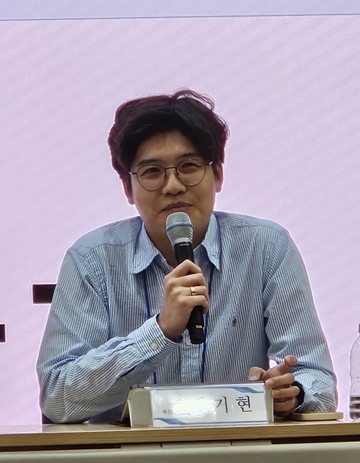
Kim added, "While drug pricing drive expenditure growth, volume expansion exert a far greater influence, prompting the agency to continuously track the volume footprints of newly listed generics."
The MOHW stressed that lowering the generic pricing baseline via the recent drug pricing reform is merely the initial phase of system reform. The MOHW revealed it is currently deciding follow-up interventions targeting CSO fees and optimized incentive system for essential medicines.
Ki-Hyun Bae, an administrative officer in the Division of Health Insurance Benefits at the MOHW, stated, "Adjusting the generic ceiling price down to 45% through the drug pricing reform represents the absolute baseline before executing broader structural improvements. It establishes the groundwork to eliminate redundant expenditures and move forward."
Bae added, "Media reports suggest average CSO commission fees amount to around 37%. Given the findings that individual generic items average under KRW 1 billion in annual billing, it is questionable whether this structure will last," and concluded, "The current situation where no voluntary suppliers step forward for essential medicines while a flood of products clusters exclusively in stable, low-risk market segments remains a critical challenge that the government must continuously resolve."
-

- 0
댓글 운영방식은
댓글은 실명게재와 익명게재 방식이 있으며, 실명은 이름과 아이디가 노출됩니다. 익명은 필명으로 등록 가능하며, 대댓글은 익명으로 등록 가능합니다.
댓글 노출방식은
댓글 명예자문위원(팜-코니언-필기모양 아이콘)으로 위촉된 데일리팜 회원의 댓글은 ‘게시판형 보기’와 ’펼쳐보기형’ 리스트에서 항상 최상단에 노출됩니다. 새로운 댓글을 올리는 일반회원은 ‘게시판형’과 ‘펼쳐보기형’ 모두 팜코니언 회원이 쓴 댓글의 하단에 실시간 노출됩니다.
댓글의 삭제 기준은
다음의 경우 사전 통보없이 삭제하고 아이디 이용정지 또는 영구 가입제한이 될 수도 있습니다.
-
저작권·인격권 등 타인의 권리를 침해하는 경우
상용 프로그램의 등록과 게재, 배포를 안내하는 게시물
타인 또는 제3자의 저작권 및 기타 권리를 침해한 내용을 담은 게시물
-
근거 없는 비방·명예를 훼손하는 게시물
특정 이용자 및 개인에 대한 인신 공격적인 내용의 글 및 직접적인 욕설이 사용된 경우
특정 지역 및 종교간의 감정대립을 조장하는 내용
사실 확인이 안된 소문을 유포 시키는 경우
욕설과 비어, 속어를 담은 내용
정당법 및 공직선거법, 관계 법령에 저촉되는 경우(선관위 요청 시 즉시 삭제)
특정 지역이나 단체를 비하하는 경우
특정인의 명예를 훼손하여 해당인이 삭제를 요청하는 경우
특정인의 개인정보(주민등록번호, 전화, 상세주소 등)를 무단으로 게시하는 경우
타인의 ID 혹은 닉네임을 도용하는 경우
-
게시판 특성상 제한되는 내용
서비스 주제와 맞지 않는 내용의 글을 게재한 경우
동일 내용의 연속 게재 및 여러 기사에 중복 게재한 경우
부분적으로 변경하여 반복 게재하는 경우도 포함
제목과 관련 없는 내용의 게시물, 제목과 본문이 무관한 경우
돈벌기 및 직·간접 상업적 목적의 내용이 포함된 게시물
게시물 읽기 유도 등을 위해 내용과 무관한 제목을 사용한 경우
-
수사기관 등의 공식적인 요청이 있는 경우
-
기타사항
각 서비스의 필요성에 따라 미리 공지한 경우
기타 법률에 저촉되는 정보 게재를 목적으로 할 경우
기타 원만한 운영을 위해 운영자가 필요하다고 판단되는 내용
-
사실 관계 확인 후 삭제
저작권자로부터 허락받지 않은 내용을 무단 게재, 복제, 배포하는 경우
타인의 초상권을 침해하거나 개인정보를 유출하는 경우
당사에 제공한 이용자의 정보가 허위인 경우 (타인의 ID, 비밀번호 도용 등)
※이상의 내용중 일부 사항에 적용될 경우 이용약관 및 관련 법률에 의해 제재를 받으실 수도 있으며, 민·형사상 처벌을 받을 수도 있습니다.
※위에 명시되지 않은 내용이더라도 불법적인 내용으로 판단되거나 데일리팜 서비스에 바람직하지 않다고 판단되는 경우는 선 조치 이후 본 관리 기준을 수정 공시하겠습니다.
※기타 문의 사항은 데일리팜 운영자에게 연락주십시오. 메일 주소는 dailypharm@dailypharm.com입니다.