- LOGIN
- MemberShip
- 2026-10-02 08:07:52
- ‘Pharmaceutical spending reform should come first’
- by Son, Hyung Min | translator Alice Kang | 2026-10-01 09:36:07
Amid the rising national health insurance spending on new drugs for severe diseases, experts have called for the rationalization of budget expenditures by linking reimbursement to treatment outcomes rather than simply containing the prices of new drugs.
With pharmaceutical spending under growing pressure from the introduction of high-priced new drugs and rising patient numbers, the argument is that Korea should create fiscal headroom by promoting competition in the off-patent drug market, while providing patients with faster access to treatments for severe and rare diseases and subsequently reassessing their value based on real-world treatment outcomes.
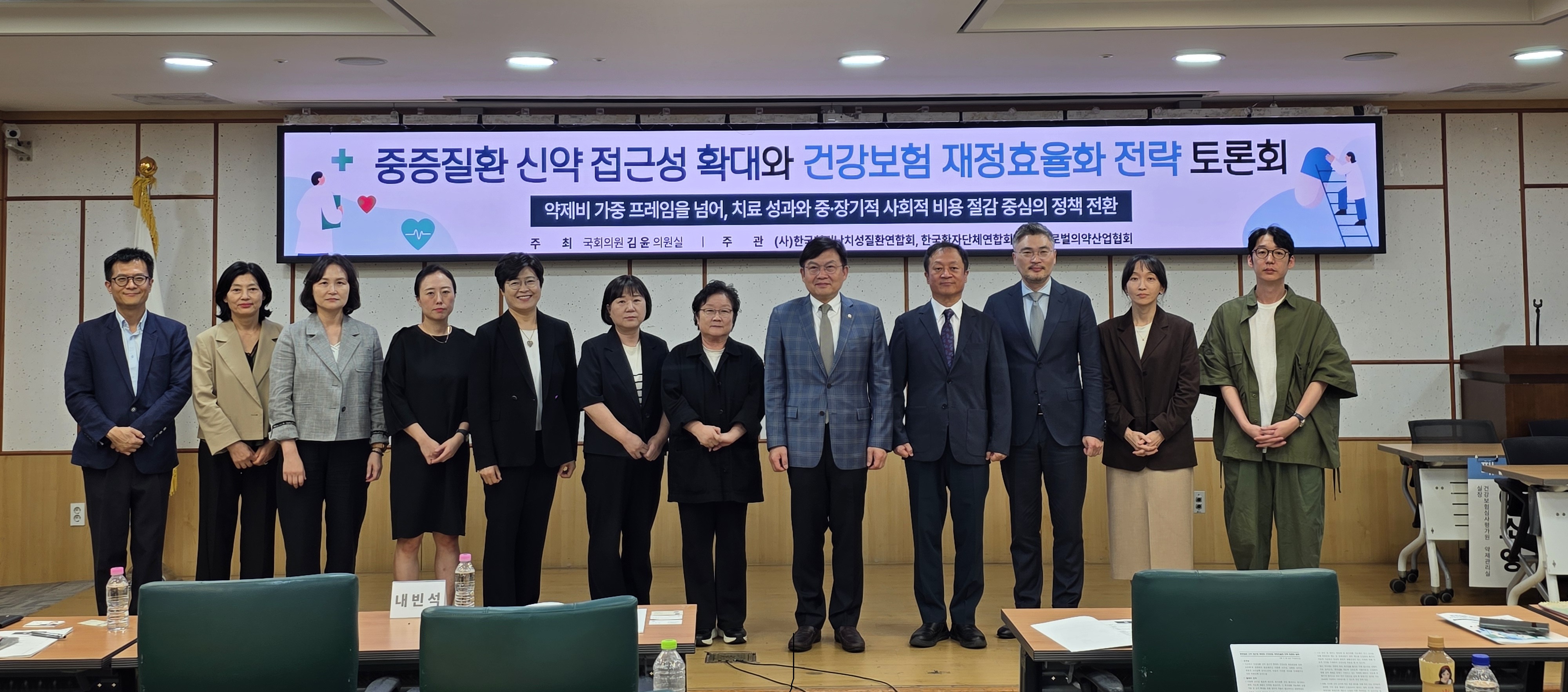
At a forum held on the 30th at the National Assembly Members' Office Building titled 'Strategies for Expanding Access to Innovative Drugs for Severe Diseases and Optimizing National Health Insurance Finances,' discussions were held on ways to improve access to new treatments for severe diseases and efficiently manage national health insurance finances.
Key topics included Korea’s pharmaceutical expenditure structure, the gap between regulatory approval and reimbursement for cancer drugs, early access to rare disease treatments, and systems for evaluating and post-listing management of new drugs.
Promote market competition rather than imposing across-the-board price cuts...new drugs need outcomes-based reimbursement
Although healthcare spending on severe diseases continues to rise in Korea, experts analyzed that the trend cannot be attributed solely to high-cost new drugs.
According to Yong Jin Kwon, a professor at Seoul National University Hospital’s Public Medical Center, national health insurance medical expenditures increased from KRW 95.4 trillion in 2021 to KRW 116.2 trillion in 2024. Total pharmaceutical spending rose from approximately KRW 22 trillion to KRW 27.7 trillion over the same period.
Drug spending for patients covered under the special copayment reduction program increased from KRW 5.6 trillion to KRW 7.5 trillion, while spending on drugs for cancer patients rose from approximately KRW 3.01 trillion to KRW 4.14 trillion.
Kwon said the increase in pharmaceutical spending cannot be solely attributed to high-priced new drugs, as rising patient numbers, expanded treatment opportunities, and increased use of new drugs have all played a part.
Kwon emphasized, “Before trying to curb spending on new drugs, we need to address the structure of the off-patent drug market, which accounts for a large share of total pharmaceutical spending.”
Korea’s market for off-patent originator and generic drugs is worth approximately KRW 19.4 trillion. Kwon argued that unnecessary spending should be reduced by enabling price competition to function properly in this market, with the resulting fiscal headroom redirected toward improving access to new drugs for severe and rare diseases.
Measures discussed to promote price competition included lowest-price generic substitution, reference pricing and tighter controls on rebates. For innovative new drugs, meanwhile, participants proposed maintaining the principle of cost-effectiveness assessment while combining faster reimbursement with post-listing evaluation to prevent excessive delays in patient access.
Kwon said, “Drug pricing policy also needs to move away from uniform price cuts and be redesigned to reflect treatment outcomes and value.”
Barriers persist from approval to reimbursement...improved access needed for cancer, rare disease treatments
Clinicians noted that substantial barriers remain to getting a new drug to Korean patients, even if it has received regulatory approval or is already in use overseas.
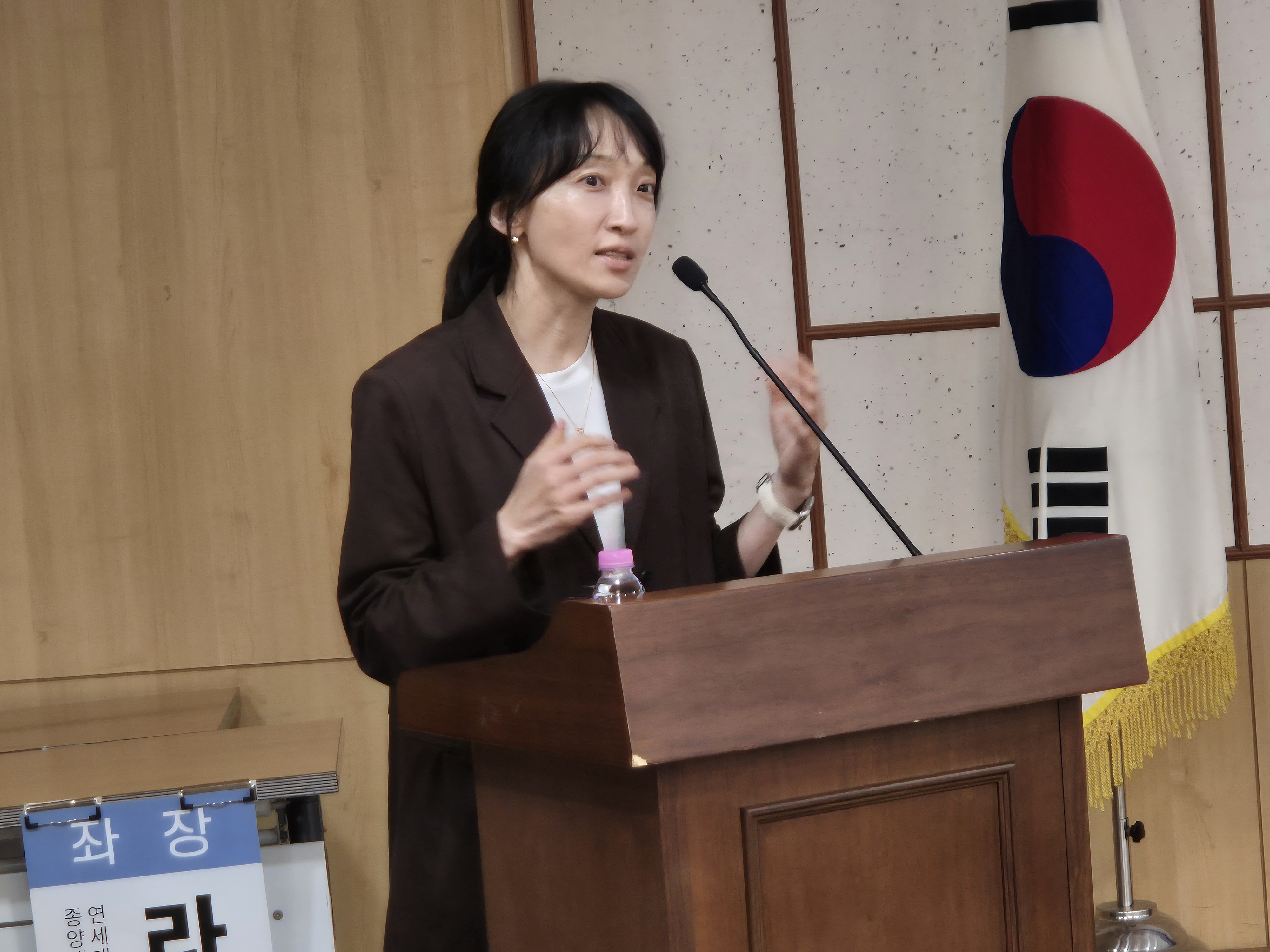
Hee-jun Kim, professor of hematology-oncology at Chung-Ang University Hospital, pointed to the time gap between regulatory approval and reimbursement for cancer drugs as a key issue. Even after a treatment is approved by the Ministry of Food and Drug Safety (MFDS), patients must bear the high treatment cost themselves until national health insurance reimbursement is granted, and detailed reimbursement criteria can further limit treatment options.
To address this, faster reimbursement of cancer drugs with demonstrated clinical utility, risk-sharing agreements, and conditional reimbursement were among the measures proposed.
Kim said, “When treatment efficacy has been demonstrated in early clinical trials, but sufficient long-term data are not yet available, patients could first be given access to treatment, with the price or reimbursement conditions subsequently adjusted based on actual outcomes.”
Kim also argued that assessments of a new drug’s value should look beyond the drug cost itself to include downstream benefits such as fewer hospitalizations and emergency room visits, reduced caregiving burden, and patients’ ability to maintain social and economic activity.
Also, experts noted that issues can arise from the earliest stages of introducing rare disease treatments into Korea.
Beom-hee Lee, professor of pediatrics at Asan Medical Center, noted that because rare diseases involve small patient populations and limited treatment alternatives, therapies developed overseas must pass through multiple steps before securing Korean approval, supply, and reimbursement.
Pharmaceutical companies may have relatively little incentive to seek Korean approval and reimbursement, making it difficult for individual physicians or patients to resolve access issues on their own.
Lee said, “We need to expand early access programs so patients can access treatments that are already used overseas but have yet to receive formal approval or reimbursement in Korea, while strengthening the governance role of the government and relevant agencies.”
Industry calls for flexible fast-track listing, post-listing evaluation...MFN another variable
During the panel discussion, participants called for managing the initial uncertainty surrounding new drugs through post-listing evaluation while also taking changes in the global drug pricing environment into account.
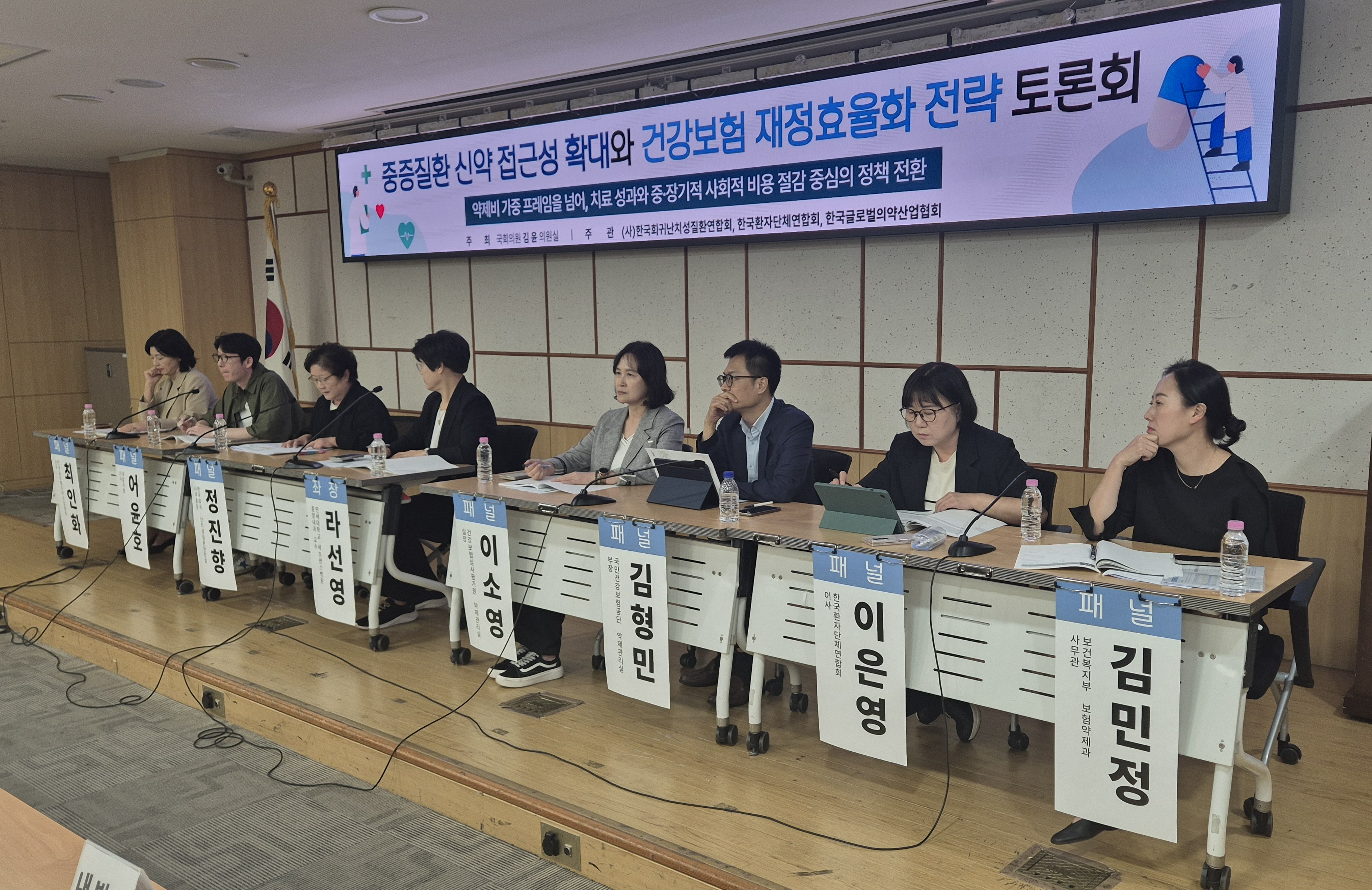
Inhwa Choi, Executive Director of the Korean Research-based Pharmaceutical Industry Association (KRPIA), said the characteristics of treatments for severe and rare diseases—including small patient populations and difficulty obtaining sufficient long-term data—should be taken into account. Rather than delaying reimbursement solely because of uncertainty in the initial evidence, she believed Korea should make more flexible use of fast-track listing, risk-sharing arrangements and outcomes-based agreements.
In other words, Choi believes providing patients with treatment first and subsequently reassessing effectiveness and financial impact using data accumulated in real-world clinical practice could improve access while managing uncertainty.
Participants also pointed to changes in global drug pricing policies as a factor that could make introducing new drugs into Korea more difficult.
At the forum, Dailypharm reporter Yun-ho Eo relayed how the impact of policies such as the US most-favored-nation (MFN) drug pricing policy has led to cases where companies halt reimbursement at the global headquarters or regional headquarters level even after receiving Korean regulatory approval.
Companies are abandoning reimbursement efforts even when their Korean affiliates want to proceed because of concerns that prices set in Korea could affect pricing in other countries.
Eo explained, “There are more and more drugs for which local teams want to pursue reimbursement but are prevented from doing so at the headquarters level. Ultimately, this shows that access to new drugs in the Korean market is deteriorating.”
Government agrees on need to improve access...‘Must consider the total patient population’
At the forum, assessment authorities and the government agreed on the need to improve access to new drugs for severe diseases, while emphasizing that the overall pharmaceutical spending structure and the drugs’ impact on national health insurance finances must also be considered.
So-young Lee, Director of HIRA’s Pharmaceutical Benefits Division, said delays caused by repeated requests for supplementary materials stemming from differences between industry and HIRA in interpreting evaluation criteria should be reduced.
While agreeing that greater price competition in the off-patent drug market could improve spending efficiency, Lee said new drugs and generics cannot be viewed entirely separately. Prices and market shares of existing treatments affect the comparators and pharmacoeconomic evaluation used for new drugs, making it necessary to examine the overall pharmaceutical spending structure.
Lee also supported the use of post-listing evaluation based on real-world data, while noting that cooperation from stakeholders, including pharmaceutical companies’ submission of data and assumption of related costs, would be necessary.
Lee said, “HIRA has a role and responsibility when reviews are delayed by unnecessary requests for additional materials. We will work at the operational level to make meaningful improvements.”
Min-jung Kim, an official with the Ministry of Health and Welfare’s Pharmaceutical Benefits Division, said the government is improving coverage for treatments for severe and rare diseases through measures including a pilot fast-track reimbursement program for rare disease drugs, flexible drug pricing agreements, risk-sharing agreements and exemptions from pharmacoeconomic evaluation.
National health insurance spending on rare disease and cancer drugs has increased by an annual average of approximately KRW 410 billion over the past 5 years. The government also sees reimbursement coverage in these areas as having expanded rapidly over the same period.
However, some high-priced therapies can place a substantial burden on national health insurance finances, making it necessary to determine how far the system should go in recognizing clinically effective treatments as cost-effective.
The use of selective reimbursement as an intermediate option between full reimbursement and non-reimbursement was also discussed. The approach would provide an additional access pathway for drugs with recognized treatment needs that are difficult to cover fully, balancing patient costs against their financial impact on the insurance system.
Kim said, “We need to achieve both faster reimbursement and appropriate recognition of the value of innovation. At the same time, we need to consider how to define a high-cost drug and how far we can go in recognizing cost-effectiveness.”
-

- 0
댓글 운영방식은
댓글은 실명게재와 익명게재 방식이 있으며, 실명은 이름과 아이디가 노출됩니다. 익명은 필명으로 등록 가능하며, 대댓글은 익명으로 등록 가능합니다.
댓글 노출방식은
댓글 명예자문위원(팜-코니언-필기모양 아이콘)으로 위촉된 데일리팜 회원의 댓글은 ‘게시판형 보기’와 ’펼쳐보기형’ 리스트에서 항상 최상단에 노출됩니다. 새로운 댓글을 올리는 일반회원은 ‘게시판형’과 ‘펼쳐보기형’ 모두 팜코니언 회원이 쓴 댓글의 하단에 실시간 노출됩니다.
댓글의 삭제 기준은
다음의 경우 사전 통보없이 삭제하고 아이디 이용정지 또는 영구 가입제한이 될 수도 있습니다.
-
저작권·인격권 등 타인의 권리를 침해하는 경우
상용 프로그램의 등록과 게재, 배포를 안내하는 게시물
타인 또는 제3자의 저작권 및 기타 권리를 침해한 내용을 담은 게시물
-
근거 없는 비방·명예를 훼손하는 게시물
특정 이용자 및 개인에 대한 인신 공격적인 내용의 글 및 직접적인 욕설이 사용된 경우
특정 지역 및 종교간의 감정대립을 조장하는 내용
사실 확인이 안된 소문을 유포 시키는 경우
욕설과 비어, 속어를 담은 내용
정당법 및 공직선거법, 관계 법령에 저촉되는 경우(선관위 요청 시 즉시 삭제)
특정 지역이나 단체를 비하하는 경우
특정인의 명예를 훼손하여 해당인이 삭제를 요청하는 경우
특정인의 개인정보(주민등록번호, 전화, 상세주소 등)를 무단으로 게시하는 경우
타인의 ID 혹은 닉네임을 도용하는 경우
-
게시판 특성상 제한되는 내용
서비스 주제와 맞지 않는 내용의 글을 게재한 경우
동일 내용의 연속 게재 및 여러 기사에 중복 게재한 경우
부분적으로 변경하여 반복 게재하는 경우도 포함
제목과 관련 없는 내용의 게시물, 제목과 본문이 무관한 경우
돈벌기 및 직·간접 상업적 목적의 내용이 포함된 게시물
게시물 읽기 유도 등을 위해 내용과 무관한 제목을 사용한 경우
-
수사기관 등의 공식적인 요청이 있는 경우
-
기타사항
각 서비스의 필요성에 따라 미리 공지한 경우
기타 법률에 저촉되는 정보 게재를 목적으로 할 경우
기타 원만한 운영을 위해 운영자가 필요하다고 판단되는 내용
-
사실 관계 확인 후 삭제
저작권자로부터 허락받지 않은 내용을 무단 게재, 복제, 배포하는 경우
타인의 초상권을 침해하거나 개인정보를 유출하는 경우
당사에 제공한 이용자의 정보가 허위인 경우 (타인의 ID, 비밀번호 도용 등)
※이상의 내용중 일부 사항에 적용될 경우 이용약관 및 관련 법률에 의해 제재를 받으실 수도 있으며, 민·형사상 처벌을 받을 수도 있습니다.
※위에 명시되지 않은 내용이더라도 불법적인 내용으로 판단되거나 데일리팜 서비스에 바람직하지 않다고 판단되는 경우는 선 조치 이후 본 관리 기준을 수정 공시하겠습니다.
※기타 문의 사항은 데일리팜 운영자에게 연락주십시오. 메일 주소는 dailypharm@dailypharm.com입니다.
- Entresto patent upheld in US, invalidated in Korea…Approval the next hurdle
- Reporter's view | Kim, Jin-Gu