
- LOGIN
- MemberShip
- 2026-06-21 11:49:14
- Company
- U.S. issues orders to produce pharmaceuticals domestically
- by Kim, Jin-Gu May 09, 2025 06:00am
- An executive order issued by U.S. President Donald Trump to promote domestic production of medicines could impose additional burdens on Korean pharmaceutical and biotech companies seeking entry into the U.S. market. Included among the order’s provisions is a requirement to strengthen inspections of manufacturing facilities outside the United States, a move analysts say will lead to more rigorous FDA audits and potentially higher related fees. On the 8th, the Korea Pharmaceutical and Bio-Pharma Manufacturers Association (KPBMA) released an analysis of the impact on Korea’s pharmaceutical and biotech industry of the U.S. administration’s 'Regulatory Relief to Promote Domestic Production of Critical Medicines' executive order. According to the KPBMA, President Trump on the 5th (U.S. time) announced the executive order titled 'Regulatory relief to promote domestic production of critical medicines.' Its purpose is to strengthen the domestic manufacturing base for medicines in the U.S. and reduce reliance on foreign supply. During his first term, the Trump administration had already pushed policies to boost U.S. production of essential medicines and key raw materials. However, the second Trump administration judged that these policies had not been fully implemented under President Biden. Accordingly, the new order aims to relax manufacturing-related regulations and thereby promote expanded U.S. drug production capacity. The order streamlines the domestic review process for pharmaceutical manufacturing and strengthens inspections of foreign manufacturing sites. Under this measure, within 90 days of the order’s enactment, the U.S. FDA must develop improved, risk-based inspection protocols for overseas facilities supplying medicines to the U.S. The order stipulates that the costs of these inspections be covered by increased fees on foreign manufacturers. The KPBMA predicts, “Enforcement of mandatory production–data reporting from overseas facilities and public disclosure of noncompliant manufacturers will intensify the burden on Korean firms eyeing the U.S. market.” And added, “With strengthened FDA audits of foreign sites, possible fee increases, and public reporting of audit outcomes by country and company, Korean manufacturers must bolster quality-management systems and regulatory-response capabilities.” Moreover, “As the U.S. government increasingly focuses on expanding supplies from domestic producers, securing local production and supply chains and meeting U.S. quality-certification standards will be prerequisites,” the association advised, “and companies must devise closely coordinated strategies to respond to changes in U.S. certification, licensing, and procurement processes.” In the medium to long term, converting Korean facilities into U.S.-based manufacturing sites should also be considered—foreign facilities will face tighter regulations while domestic facilities see relief. The FDA will introduce pre-approval inspections for U.S. sites and conduct only essential, efficient reviews. The FDA also provide clearer guidance and procedures for overseas facilities that shift production to the United States.
- Company
- Pharma closely watches tariffs as U.S. sales surge
- by Chon, Seung-Hyun May 09, 2025 06:00am
- South Korea’s pharmaceutical and biotech companies are focusing on potential tariffs on U.S. exports of their medicines. President Donald Trump’s announcement that tariffs would be imposed on imported pharmaceuticals has left major exporters considering devising countermeasures. Celltrion, whose North American sales have topped KRW 1 trillion, has pre-distributed over a year’s inventory. GC Biopharma, which recently entered the U.S. plasma product market, hopes to secure tariff exemptions on U.S.-sourced raw materials. Companies such as Samsung Biologics, SK Biopharmaceuticals, and Daewoong Pharmaceutical have been accelerating their penetration of the U.S. market, making it imperative to monitor the ramifications of any tariffs closely. Celltrion completes transfer of 15 months’ inventory to prepare for tariffs… last year’s North American sales surpassed KRW 1T On the 8th, industry sources reported that Celltrion posted a statement on its website on the 7th titled 'Our Position and Response Strategy Regarding the Trump Administration's Tariff Policy in the U.S.,' announcing that it 'has completed the transfer of approximately 15 months' worth of inventory for products scheduled for sale in the United States in 2025.' Celltrion explained that it has minimized the impact of tariffs on this year's U.S. sales and projected sales in the first half of next year. Celltrion stated, "We have finalized a manufacturing agreement for finished products with a local U.S. CMO, and have already secured the volume that can be produced domestically. We have also completed measures to negotiate additional contracts with manufacturing sites to cover any further volumes that may be affected by tariffs." President Trump's declaration on the 5th that "within the next two weeks, we will announce item-by-item tariffs on pharmaceuticals" prompted Celltrion to unveil these detailed countermeasures. President Trump also signed an executive order directing regulatory agencies to shorten approval times for pharmaceutical plants built in the United States. Since President Trump took office, Celltrion has introduced three separate countermeasures to address potential tariffs on U.S. exports, demonstrating an active approach to contingency planning. On January 30, Celltrion announced measures stating, "We have secured sufficient inventory for our products currently sold in the U.S. to be sourced locally without additional imports through at least the third quarter of 2025." In February, the company announced the completion of a nine-month inventory transfer. It stated, "We have finalized measures to minimize the impact in 2025," once again presenting the status of its tariff mitigation plans alongside further inventory transfers. Celltrion said, "We have already developed strategies to minimize tariff impacts beyond next year," adding, "Regarding the establishment of local API manufacturing facilities in the U.S. as part of our long-term response, we have completed preliminary reviews and are now conducting a comprehensive, detailed assessment." Celltrion sales by regions (unit: KRW 1 billion, source: Celltrion) Celltrion is one of the largest South Korean pharmaceutical and biotech exporters to the United States. Celltrion has achieved U.S. approval for a total of 11 pharmaceutical products. Celltrion's first U.S. approval came in 2016 with Inflectra, the biosimilar to Remicade. In 2018, its biosimilars to the oncology drugs MabThera and Herceptin received FDA approval. In September 2022, Celltrion obtained FDA marketing authorization for Vegzelma, its Avastin biosimilar, and in 2023, its Humira biosimilar Yuflyma received FDA approval. In August 2023, the FDA approved Celltrion's subcutaneous (SC) formulation of Remsima, marketed as Zymfentra, as a standalone product. Last December, its Stelara biosimilar Steqeyma was approved by the FDA. This year, Celltrion has secured U.S. approval for four biosimilars. In January, the FDA approved Aptozma, its Actemra biosimilar for treating autoimmune diseases. In March, it received FDA approvals for Stobocloo, its biosimilar to bone disease treatments Prolia and Xgeva, and Omlyclo, its Zolair biosimilar, also cleared the U.S. regulatory hurdle. Last year, Celltrion's biopharmaceutical sales in the North American market reached KRW 1.0453 trillion. While its North American sales fell from KRW 709.5 billion in 2022 to KRW 629.2 billion in 2023, they surged by 66.1% last year, surpassing KRW 1 trillion for the first time. GC Biopharma begins U.S. sales of plasma product Alyglo… forecasts that "tariffs on U.S.-sourced materials will have limited impact" GC Biopharma, which recently entered the U.S. plasma product market, has anticipated limited tariff impacts. In December 2023, GC Biopharma entered the U.S. market when the FDA approved its plasma product, Alyglo. Alyglo is a liquid immunoglobulin preparation purified from plasma fractions. It is used to treat primary immunodeficiency disorders such as congenital immunodeficiency and immune thrombocytopenia. In its Q1 earnings release, GC Biopharma stated that, because a tariff exemption for U.S.-sourced raw materials is being considered, it expects the impact of tariffs to be limited. GC Biopharma forecasted that tariffs on U.S. pharmaceuticals will not significantly affect the plasma product Alyglo (source: GC Biopharma) The raw material of blood plasma for Alyglo is produced in the United States. GC Biopharma acquired 100% of ABO Holdings for KRW 138 billion in December last year. ABO Holdings is based in California and operates six blood banks across New Jersey, Utah, and California. GC Biopharma produces Alyglo at its Ochang facility using blood supplied by ABO Holdings, and then sells it in the U.S. GC Biopharma said, "We have secured inventory of Alyglo in the U.S. and are reviewing CMO partnerships for finished product manufacturing," outlining its tariff strategy. In Q1, plasma product sales were KRW 127.2 billion, up 42.3% from KRW 89.4 billion during the same period last year. GC Biopharma began full-scale sales after shipping the initial Alyglo batch in July last year. In Q2 2023, plasma product sales were KRW 90.6 billion, rising 50.8% to KRW 136.6 billion in Q3 and increasing to KRW 161.7 billion in Q4. While plasma product sales fell by 21.3% in Q1 2024 compared to Q4 2023, they remained above KRW 100 billion for three consecutive quarters. Green Cross sells Alyglo in the U.S. through its subsidiary, GC Biopharma USA, which recorded its first sales of KRW 48.6 billion last year. U.S. Sales Growth for Samsung Biologics, SK Biopharm, Daewoong surges… Monitoring Tariff Impacts Closely Korean pharmaceutical and biotech firms must closely watch for tariff impacts as their U.S. sales have recently increased. According to the Korea Customs Service, pharmaceutical exports to the U.S. reached USD 1.35809 billion (approx. KRW 1.61 trillion) last year, up 50% year on year. The U.S. accounted for 18% of total pharmaceutical exports. Exports to the U.S. have risen rapidly over the past two years: from KRW 843.94 billion in 2022 to USD 903.30 million (approx. KRW 1.07 trillion) in 2023, a 7% rise, and last year’s surge accelerated further. In 2022, the U.S. overtook Germany as South Korea’s largest pharmaceutical export market, maintaining that position for three consecutive years. Recently, orders for contract development and manufacturing (CDMO) have expanded, and sales of new drugs and biosimilars in the U.S. have increased, driving a significant rise in export volumes. Of Samsung Biologics’ KRW 45.473 trillion in sales last year, KRW 11.741 trillion (25.8%) came from the U.S. Samsung Biologics’ U.S. revenue share was 28.5% in 2022 and 26.3% in 2023. Samsung Biologics calculates regional sales based on the location of its CDMO clients. Samsung Bioepis, Samsung Biologics’ biosimilar subsidiary, is also expected to be affected by U.S. tariffs. Of its KRW 1.5277 trillion in sales last year, KRW 917.5 billion (60.1%) came from Europe and KRW 610.2 billion (39.9%) from non-European regions. Within those non-European sales, the U.S. represents the largest share, and they grew by 46.6% year on year. Since 2017, Samsung Bioepis has obtained U.S. approval for ten biosimilars. Starting with its Remicade biosimilar in 2017, followed by Herceptin, Enbrel, and Humira biosimilars in 2019. Ontruzant in September 2019, Eticovo, and Hadlima in April and July 2019, respectively; the Lucentis biosimilar Byooviz in September 2021. Since last year, Samsung Bioepis obtained FDA approval for its biosimilars in five areas, including biosimilars of Eylea, Stelara, Soliris, Prolia, and Xgeva. Samsung Bioepis’ biosimilar supply chain involves API production at Fujifilm Bio’s Danish plant and Samsung Biologics, with finished products made by overseas CMO partners and sold worldwide. Its U.S. biosimilar sales are handled by Biogen, Organon, Teva, and other partners. SK Biopharm’s new epilepsy drug Xcopri is also accelerating its U.S. penetration. FDA-approved in November 2019, Xcopri has been sold directly in the U.S. via SK Life Sciences since May 2020. SK Biotech produces the Xcopri API, and a Canadian CMO partner supplies the finished drug. Last year, Xcopri’s U.S. sales reached KRW 438.7 billion, up 62.1% year on year, with cumulative U.S. sales of KRW 969.5 billion. SK Lifesciences sales by year (unit: KRW 100 million, source: FSS) Last year, SK Life Sciences’ sales were KRW 667.8 billion, up 36.0% from 2023. Over two years, its sales grew 72.0%, from KRW 388.3 billion in 2022, more than fourteen-fold over six years since KRW 47.5 billion in 2018. SK Group has established U.S. manufacturing through SK pharmteco, which oversees CMO operations. SK pharmteco runs five companies, including SK Biotech, SK Biotech Ireland, Ampac, Yposkesi, and CBM. Ampac has facilities in California, Texas, and Virginia. Among traditional pharmaceutical companies, Daewoong Pharmaceutical is the most active U.S. exporter, selling its botulinum toxin product Nabota (FDA-approved via partner Evolus in 2019) from its Hyangnam plant. Nabota’s exports were KRW 49.2 billion in 2021, more than doubling to KRW 109.9 billion in 2022, then rising to KRW 117.4 billion and KRW 156.0 billion in 2022 and 2023, respectively, over triple in three years. Q1 2024 exports were KRW 37.3 billion, four times the domestic sales of KRW 8.3 billion. U.S. subsidiaries of Korean pharma firms also saw strong growth. Hugel America, a subsidiary of Hugel, is responsible for the U.S. sales and R&D of the botulinum toxin product “Retivo.” Its revenue increased by 86% year-over-year, from KRW 21.1 billion in 2023 to KRW 39.2 billion last year, and its net loss of KRW 19.2 billion turned into a net profit of KRW 15.5 billion. Huons USA, operated by Huons, markets products such as lidocaine injections. Its revenue rose 29%, from KRW 1.1 billion to KRW 1.4 billion, and its net loss of KRW 1.7 billion in 2023 turned into a net profit of KRW 0.1 billion last year.
- Policy
- Ofev reimbursed from May... inflow of generic versions
- by Lee, Hye-Kyung May 09, 2025 05:59am
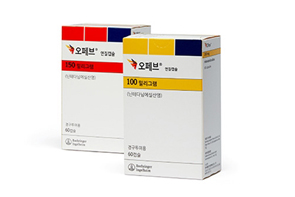
- The generic drug market is growing for Boehringer Ingelheim's idiopathic pulmonary fibrosis treatment ‘Ofev Soft Capsules (nintedanib),’ which was granted reimbursement and was listed from this month, 8 years after approval. On the 7th, the Ministry of Food and Drug Safety approved 2 items, 100 mg and 150 mg of Whan In Pharm’s ‘Ofenip Tab (Nintedanib Esylate).’ Ofenip is the fourth generic version approved for Ofev, which was approved in 2016. Generic drug approvals began with Yungjin Pharmaceutical's ‘Nintebro Tab’ in December last year, followed by Daewoong Pharmaceutical's ‘Ofevia Tab and Ildong Pharmaceutical's ‘Cuninta Tab’. The Ofev generics have been granted marketing authorizations upon the original drug's patent expiration on January 25. Ofev, which contains nintedanib, has three indications: ▲treatment of idiopathic pulmonary fibrosis, ▲delaying the decline in lung function in patients with systemic sclerosis-associated interstitial lung disease, and ▲treatment of chronic fibrosing interstitial lung disease with progressive phenotype. However, the generic versions of Ofev do not have the indication for the treatment of idiopathic pulmonary fibrosis and have only been approved for the remaining two indications. The reason for this can be found in the reimbursement process for Ofev. According to the results of the reimbursement adequacy review conducted by the Drug Reimbursement Evaluation Committee of the Health Insurance Review and Assessment Service in January, Ofev was only granted reimbursement for two indications: systemic sclerosis-associated interstitial lung disease and chronic fibrosing interstitial lung disease with progressive phenotype. Although Ofev was initially approved for idiopathic pulmonary fibrosis, the pharmaceutical company did not submit separate cost-effectiveness data for the indication, so no discussion had been made regarding its reimbursement. In particular, in South Korea, Ildong Pharmaceutical’s ‘Pirespa Tab (Pirfenidone) had dominated the reimbursement market for idiopathic pulmonary fibrosis since 2015, so Boehringer Ingelheim, which owns Ofev, had no choice but to pursue a differentiation strategy. This is why latecomers following Ofev that are attempting reimbursement have also entered the market with indications that are being reimbursed for the original drug. Currently, the number of patients eligible for Ofev’s use with reimbursement in Korea is estimated to be about 329. With reimbursement, patients will see a significant reduction in their annual medication costs from KRW 19.14 million to KRW 5.74 million. In addition to the pharmaceutical companies that have already received approval, domestic companies such as Chong Kun Dang, Sama Pharm, and Samoh Pharm are also developing generic versions of Ofev, so more generics are expected to be released in the future.
- Company
- Lilly retries to make RET-targeted therapy accessible
- by Eo, Yun-Ho May 08, 2025 06:09am
- Product photo of Retevmo Cap Patients are hopeful again for RET-targeted cancer therapy, a treatment option once deemed 'pie in the sky.' According to industry sources, Lilly Korea has recently submitted an application for insurance reimbursement listing for its RET (REarranged during Transfection) inhibitor 'Retevmo (selpercatinib),' indicated for the treatment of non-small cell lung cancer (NSCLC). Retevmo, which was approved in South Korea in March 2022, had not passed the Cancer Disease Review Committee (CDRC) of the Health Insurance Review and Assessment Service (HIRA) in May of the same year. The drug passed the CDRC in November and the Drug Reimbursement Evaluation Committee (DREC) in May 2023. Upon clearing the DREC review, Retevmo was anticipated to be reimbursed as the company entered a pricing negotiation with the National Health Insurance Service (NHIS) in June. However, an agreement had not been met. It was the sole unsuccessful drug pricing negotiation of that year. Consequently, it was expected that RET cancer therapy would not be readily accessible in South Korea. Two RET cancer therapies are domestically approved. In addition to Retevmo, 'Gavreto (pralsetinib),' introduced by Roche Korea from Blueprint Medicines Corp, exists. However, Gavreto's inclusion in the reimbursement list became difficult due to Roche withdrawing the sales rights. Lilly's Korean subsidiary has recently made progress. However, it remains uncertain whether the company will finalize the reimbursement listing process. Retevmo was conditionally approved for agreement to meet the Phase 3 trial requirement. However, the company's application for listing process lacked a Phase 3 study and was asked to submit a document equivalent to the requirement. For this reason, criticism arose regarding the evaluation criteria for the drug that had been conditionally approved to expedite its introduction. This was because the company had quickly applied for listing under the approval–evaluation linkage system, underwent discussions on reimbursement for about a year and a half but ultimately failed. There is still room for a turnaround. Proper Phase 3 trial results are now in hand. What now matters is Lilly's and the government's commitment to introducing a RET-targeted cancer therapy. At the 2023 European Society for Medical Oncology (ESMO 2023) annual meeting, the results of Retevmo's Phase 3 trials, LIBRETTO-431 and LIBRETTO-531, were each disclosed. Those results were published in the New England Journal of Medicine (NEJM). The LIBRETTO-431 study presented at the conference compared Retevmo with platinum-based chemotherapy±pembrolizumab in the first-line treatment of patients with progressive or metastatic RET fusion–positive NSCLC. The key result was that, in the ITT-pembrolizumab cohort, the median progression-free survival (PFS) assessed by the blinded independent central review (BICR) was 24.8 months in the Retevmo-treated group versus 11.2 months in the control group, with a hazard ratio of 0.465. The overall response rate (ORR) by BICR was also significantly higher in the Retevmo group at 83.7% compared to 65.1% in the control group. Meanwhile, Retevmo was granted accelerated approval, priority review, and Breakthrough Therapy & Orphan Drug Designation in the United States in 2020. Then, it was approved as the first treatment option for the treatment of cancer patients with RET gene mutations.

- Company
- BIO KOREA 2025 'Innovation and Collaboration'
- by Whang, byung-woo May 08, 2025 06:09am
- With open innovation emerging as a key topic for fostering a bio ecosystem, scalability based on networking has become a necessity rather than a choice. BIO KOREA 2025, which opened on the 7th, also kicked off its three-day journey with various programs under the theme of “Innovation and Collaboration: Building the Future Together,” marking its 20th anniversary. In particular, amid various crises and concerns such as investment contraction and the anticipated U.S. tariffs on pharmaceuticals, cooperation for business exchange and synergy creation were emphasized. First held in 2006, BIO KOREA is celebrating its 20th anniversary this year Yuhan Corp and Celltrion take center stage…Amgen’s first participation draws attention Last year, the main booths at the exhibition were occupied mainly by contract development and manufacturing organizations (CDMOs), but this year, Yuhan Corporation and Celltrion’s booths were positioned at the entrance, in the most visible spots. Both companies have recently expanded their influence in the global market based on Leclaza (Lazertinib) and biosimilars, respectively. On the day of the exhibition, Yuhan Corp placed Leclaza at the center of its booth and emphasized that it was the first domestic anticancer drug to be approved by the US Food and Drug Administration (FDA) and the European Medicines Agency (EMA). Leclaza has recently been approved by the US FDA as a combination therapy and is rapidly advancing into the global market. Through this event, Yuhan Corp sought to highlight the global competitiveness of Leclaza and expand opportunities for cooperation with overseas partners. Yuhan Corporation and Celltrion were located at the main booths of the exhibition. (Top photo) Yuhan Corporation Celltrion was the first company visited by key guests during the exhibition tour. Vice President Bumsung Kim, who introduced the company, emphasized the company’s position in the global market, highlighting that Celltrion is the world's first developer of antibody biosimilars. Celltrion set out to actively engage in communication at the exhibition as it is seeking global expansion through new drug development and open innovation projects using ADCs in addition to biosimilars. Among multinational pharmaceutical companies, Johnson & Johnson (J&J), which participated last year, and Amgen, which set up an independent booth for the first time this year, stood out. Amgen was the only multinational pharmaceutical company to be certified as a “Korea innovative pharmaceutical company” by the Ministry of Health and Welfare at the end of last year, in recognition of its contribution to research and development and investment for the creation of an innovative ecosystem for new drug development in Korea. Amgen’s main purpose for participating in this exhibition was to expand its network by increasing contact with domestic companies. Amgen highlighted that it has expanded its open innovation program “Bio Day & Pitching Day,” which it has been conducting with the Korea Health Industry Development Institute since 2024, to nurture domestic biotech ventures into a global program called “Golden Ticket.” Seung-Jae Lee, Medical TA Lead at Amgen, said, “We are operating open innovation programs such as the Golden Ticket program with the Korea Health Industry Development Institute to create a domestic bio ecosystem and discover and foster venture companies. We will continue to grow together with Korean bio companies through continuous investment in open innovation.” Amgen showcased its commitment to strengthening open innovation by setting up its first independent booth. (From left) Amgen and J&J booths. Sweden participates for the second consecutive year, Netherlands participates for the first time... Operating National Pavilions, seeking to strengthen cooperation In addition to Australia, which has participated every year, Sweden and the Netherlands operated booths in the form of national pavilions this year to actively explore possibilities for cooperation in the bio industry. Currently, the Swedish government has designated the life sciences industry as a core area of national competitiveness and is promoting global cooperation and innovation based on government-led strategies and world-class research infrastructure. In particular, on the same day, an official from the Swedish Trade and Investment Council in Korea expressed interest in creating synergy in the field of advanced therapy medicinal products (ATMP) in conjunction with the revision and implementation of Korea's Advanced Regenerative-Bio Act. Sweden is a leading country in the field of advanced regenerative medicine, and CCRM Nordic (Center for Commercialization of Regenerative Medicine Nordic), a Swedish non-profit organization, is responsible for ATMP research and development, industrial ecosystem development, and business growth support across Northern Europe and Europe. An official from the Swedish Trade and Investment Council in Korea said, “We believe that there is still a lack of awareness about Sweden's life science industry in Korea, so we decided to participate for the first time for two consecutive years. We have been actively promoting industry awareness since last year, and as BIO EUROPE was held in Sweden last year, we plan to continue discussions in line with that as well.” (Clockwise from top left) Australia Pavilion, Sweden Pavilion, Germany Pavilion, Netherlands Pavilion The Netherlands also emphasized the technological capabilities and the will to cooperate of its companies and expressed its hope for expanded partnerships with Korean biotech companies. As this is its first participation, the Netherlands plans to use this event to identify the needs of companies and expand cooperation in the future. A representative from the Dutch Embassy said, “There are various bio companies in the Netherlands, so we decided to participate to help them enter the Korean market. Currently, there are consulting companies and early-stage companies seeking to enter the market, and we plan to strengthen cooperation between the two countries in the future.” Seeking to expand Bio Korea partnerships... still lacks substance Business partnering at the exhibition, which has become increasingly important recently, has significantly expanded global partnering opportunities for domestic biotech companies. Through business meetings with companies such as Johnson & Johnson, Amgen, Boehringer Ingelheim, Pfizer, MSD, Takeda, Roche, Novo Nordisk, ST Pharm, and SK Bioscience, plans are in place to create opportunities for new partner discovery, technology cooperation, and joint research discussions. As there had been criticism in the past that there were not enough partnership opportunities, this year's event has expanded the scale of partnering by about 21% compared to last year, focusing on broadening opportunities. At BIO KOREA 2025, partnering opportunities increased by 21% compared to last year. However, with many companies seeking partnering opportunities through overseas exhibitions, there have been suggestions that domestic exhibitions need to have more “substance” to ensure continuity. A representative from a biotech company that set up a booth at BIO KOREA stated, “While it is a positive change in terms of increasing the scale and opportunities for partnerships, there are still areas that fall short when compared to overseas exhibitions. For companies in the Asia-Pacific (APEC) region, there may be good business development opportunities, but given that global companies' headquarters are unlikely to attend, there is a need to reconsider the direction.”

- Company
- Industry asks US to exempt Korean drugs from tariffs
- by Kim, Jin-Gu May 08, 2025 06:09am
- In preparation for the US government's potential imposition of tariffs on pharmaceuticals, the Korea Biotechnology Industry Organization (KoreaBIO) has followed the Ministry of Health and Welfare in submitting an official opinion statement. The opinion statement submitted to the US government states that South Korea is a reliable partner in the US medicine supply chain and is capable of supplying expensive prescription drugs to the US at low prices. KoreaBIO announced on the 7th that it had officially submitted a statement regarding the “National Security Investigation of Pharmaceutical and Pharmaceutical Ingredient Imports” to the U.S. government on the 6th (U.S. local time). The U.S. Department of Commerce launched an investigation on the 1st of last month to assess the impact of pharmaceutical and pharmaceutical ingredient imports on national security. As part of this effort, the department solicited public comments from stakeholders in various countries from the 16th of last month to the 7th of this month. In its statement, the KoreaBIO emphasized that “Korea is a reliable partner in the U.S. pharmaceutical supply chain and an affordable partner capable of supplying high-cost prescription drugs at lower prices.” KoreaBIO cited the National Security Commission on Emerging Biotechnology (NSCEB), an advisory body to the U.S. Congress, in expressing concerns over the imposition of tariffs on pharmaceuticals. The NSCEB previously stated that “the United States must develop innovative biotechnology and cooperate with its allies to stabilize the supply chain for the sake of national security.” KoreaBIO explained, “Korea plays a crucial role as a partner producing pharmaceuticals needed by the U.S.,” adding, “Especially, Korea is gradually expanding cooperation with U.S. companies for the contract manufacturing of biopharmaceuticals.” KoreaBIO warned that “It takes at least several years to develop a stable pharmaceutical supply chain in the United States,” and that “imposing tariffs before the supply chain is established in the United States could lead to drug supply shortages for American patients, ultimately having a negative impact on U.S. national security.” KoreaBIO emphasized, “Korea is making a significant contribution to the Trump administration's efforts to expand access to affordable medicines through active development and supply of biosimilars. Korea plays a crucial role in supplying the medicines and pharmaceutical raw materials needed by U.S. patients stably and cost-effectively.” Finally, KoreaBIO reiterated, “We request that the U.S. government refrain from imposing trade restrictions such as tariffs on pharmaceuticals. If such measures are unavoidable, we request that pharmaceuticals and pharmaceutical raw materials produced in allied countries such as South Korea, which do not pose a threat to U.S. national security, be exempted.” The U.S. government's decision on whether to impose tariffs on pharmaceuticals remains undecided, despite the announcement of a “separate application” policy on May 2. Earlier, U.S. President Donald Trump announced plans to impose tariffs on a wide range of products worldwide. Specifically, tariffs of 25% would be imposed on aluminum, steel, and automobiles, while a basic tariff of 10% would apply to all other products. However, all measures other than tariffs on China have been postponed. Pharmaceuticals have been temporarily excluded from the 10% basic tariff. The White House explained on the 2nd of last month that “President Trump is considering separate industry-specific tariffs on semiconductors, pharmaceuticals, and key minerals.” The MOHW also submitted a statement with a similar message on the 4th (local time). The MOHW emphasized that “imports of Korean pharmaceuticals do not pose a threat to US national security and rather contribute to supply chain stability and improving patient access, so tariffs are unnecessary.” The MOHW emphasized that “the trade of pharmaceuticals between South Korea and the US is a strategic cooperation based on mutual trust and has contributed to the strong alliance between the two countries,” adding, “Despite the difference in the size of the pharmaceutical industries and medical markets of the two countries, the US is a major importer of pharmaceuticals in South Korea, which demonstrates the close economic and health cooperation forged between the two countries.” The MOHW explained, “Practical cooperation is important for stabilizing the drug supply chain in the US and reducing the burden on patients. Korean CDMO companies can support US pharmaceutical companies' dual sourcing and contribute to supply chain stability and reducing the burden of drug prices on patients. The joint response of the two countries during the pandemic demonstrates how such cooperation is directly linked to national security.” The MOHW said, “We look forward to maximizing mutual benefits through future cooperation based on mutual trust,” and proposed, “We will strengthen cooperation between the two countries to enhance access to essential medicines and promote innovation, and maximize mutual benefits by establishing a supply chain based on mutual trust.”
- Company
- FDA approves Huons' two Lidocaine Inj products
- by Lee, Seok-Jun May 08, 2025 06:08am
- Huons has received U.S. Food and Drug Administration (FDA) approval for two of its lidocaine local anesthetic products, marking its expansion into the North American market. On the 7th, Huons (CEO Soo-young Song) announced that it has obtained FDA approval for its “1% Lidocaine 200 mg/20 mL” and “(2% Lidocaine 400 mg/20 mL multi-dose vial” on the 5th (US local time). The multi-dose vial products that were granted marketing authorizations this time are formulations that add a preservative to the previously approved lidocaine injection to enable multiple uses after opening. Huons submitted the application in January and received approval in just 4 months. Like the previously approved 1% and 2% lidocaine hydrochloride injection single-dose vials (5 mL), the new products have demonstrated bioequivalence with the reference drug, Xylocaine Injection. This FDA approval marks Huons’ sixth and seventh products to enter the U.S. market. Previously, Huons received 5 FDA approvals: △sodium chloride injection (July 2017) △1% lidocaine hydrochloride injection 5mL ampoule (April 2018) △0. 75% bupivacaine hydrochloride injection 2mL ampoule (December 2019), △1% lidocaine hydrochloride injection 5mL vial (May 2020), and △2% lidocaine hydrochloride injection 5mL vial (June 2023). The 0.75% bupivacaine hydrochloride injection and 2 other products have already been approved by Health Canada and are currently being exported to Canada. Huons plans to focus on expanding exports to the North American market through the recent approval. The North American local anesthetic market is estimated to be worth KRW 500 billion. In particular, the company plans to begin full-scale operation of its new injection line at its Cheongju Plant 2 in the second half of this year to expand sales. Soo-young Song, CEO of Huons, stated, “The two lidocaine injection products approved by the U.S. FDA hold significance as they are highly versatile multi-use vials. With this approval, we plan to work to further solidify our position in the North American market by leveraging our portfolio of high-quality local anesthetics across multiple product lines.”

- Company
- Global pharmas showcase results at ARVO 2025
- by Cha, Jihyun May 08, 2025 06:08am
- The Association for Research in Vision and Ophthalmology (ARVO 2025) began on May 4 (local time) in Salt Lake City, Utah, USA. ARVO is the world's largest meeting of vision and ophthalmology researchers, attracting over 10,000 participants each year, and ARVO 2025 is being held over five days at the Salt Palace Convention Center. The exhibition hall was packed with attendees on the second day, May 5, when the main oral presentations and symposia took place. The slogan for this year's meeting is 'i3: Imagining Innovation and Intelligence in Vision Science,' and sessions focusing on convergent technologies such as artificial intelligence (AI), gene therapy, and regenerative medicine have been greatly expanded. ARVO 2025 More than 200 companies and institutions, including global big pharmas, are exhibiting this year. AbbVie (USA), Boehringer Ingelheim (Germany), Genentech (USA), and Regeneron (USA) each opened booths to showcase their latest technologies and ophthalmic pipelines. ZEISS (Germany) and Astellas (Japan) also promoted high-resolution retinal imaging systems, ocular drug delivery platforms, and patient-customized diagnostic solutions. ARVO 2025 Regeneron, a biotech with a leading global position in ophthalmic diseases, set up its promotional booth at the very center of the exhibition. At ARVO 2025, Regeneron emphasized 'Eylea (aflibercept),' its high-dose formulation for macular degeneration. Eylea HD is a new, high-volume product launched by Regeneron ahead of the original Eylea patent expiry, extending the dosing interval from every eight weeks to every 16 weeks. Regeneron is presenting 27 abstracts at ARVO 2025, eight oral presentations. In particular, Regeneron highlighted Eylea HD's market competitiveness by reporting the results of a meta-analysis, indirectly comparing it with Roche's competitor 'Vabysmo (faricimab).' ARVO 2025 Alcon displayed surgical and vision-care products for various ophthalmic conditions, including cataracts, glaucoma, retinal diseases, and refractive errors. Precision Vision drew attention by allowing attendees to try its virtual reality (VR)–based vision testing tools firsthand. Precision Vision has over 60 years of history in vision testing and visual function assessment equipment. LUXA Biotechnology, a subsidiary of Korea's Y2 Solution, drew particular interest by presenting clinical results for its dry age-related macular degeneration (AMD) therapy. LUXA was established in 2019 through Y2 Solution's investment and a joint venture with the U.S.'s first independent stem cell research institute, NSCI. Y2 Solution currently holds a 50% stake. At this meeting, LUXA presented preclinical data for its dry AMD cell therapy candidate 'RPESC-RPE-4W.' RPESC-RPE-4W is an adult retinal pigment epithelial stem cell (RPESC)–based therapy in which mature RPE cells derived from RPESCs are transplanted into the patient's subretinal space to restore damaged vision. It is currently in Phase 1/2a clinical trials. ARVO 2025 The RPESC-RPE-4W preclinical session drew over 200 attendees, creating an electrifying atmosphere. The session room was packed even before the presentation began, and many attendees who could not find seats stood throughout the talk. Dr. Brigitte Arduini, who presented the preclinical data, said, "In animal models receiving subretinal transplants, RPESC-RPE-4W demonstrated stable cell engraftment without serious adverse reactions or tumor formation," and added, "The transplanted cells positively influenced photoreceptor preservation and retinal structure maintenance, showing potential for functional vision improvement." Dr. Arduini added, "RPESC-RPE-4W showed minimal immune rejection post-transplant, suggesting high immunocompatibility consistent with adult-derived cell characteristics. These preclinical results will provide critical evidence for future clinical studies and open up new possibilities for treating dry AMD."
- Company
- Supreme Court rules in favor of Pharmbio’s Elpag Tab
- by Nho, Byung Chul May 07, 2025 06:02am
- On the 30th, Pharmbio Korea announced that it had won the final appeal in the patent dispute with Novartis, the patent holder of the original drug Revolade (eltrombopag olamine), for its immune thrombocytopenia treatment Elpag (eltrombopag olamine). Pharmbio Korea filed a request for a judgment on the scope of rights for 3 formulation patents in July 2023 and secured two consecutive victories in April 2024 (Intellectual Property Trial and Appeal Board) and December 2024 (Patent Court). The Supreme Court's ruling also upheld Pharmbio Korea's final victory. Pharmbio Korea has already obtained marketing authorization for the orphan drug Elpag and released it on October 1, 2024, with a reimbursement price of KRW 22,849 for Elpag 25 mg, KRW 22,849 for Elpag 25mg, and KRW 44,405 for Elpag 50mg, which is 30% lower than the price of the original product, significantly reducing the medical expenses for patients. Elpag is the first generic drug developed for the treatment of immune thrombocytopenia and severe aplastic anemia in Korea, achieving the localization of a product that Korea had previously relied on imported medications. Bong-kil Nam, CEO of Pharmbio Korea, stated, “A homegrown treatment for immune thrombocytopenia was urgently needed for patients with rare diseases. By localizing this medication, Pharmbio Korea has been able to reduce patients' costs by 30%.”
- Company
- Roche seeks reimb for Polivy as first-line DLBLC therapy
- by Eo, Yun-Ho May 07, 2025 06:02am
- Polivy, a first-line treatment for DLBCL introduced in 20 years, is seeking reimbursement listing in Korea. According to industry sources, Roche Korea recently submitted an application for reimbursement for Polivy (polatuzumab vedotin), a treatment for recurrent or refractory diffuse large B-cell lymphoma (DLBCL). Polivy originally sought reimbursement listing in 2021 for its first indication, as third-line treatment in combination with BR therapy (bendamustine and rituximab), but failed to pass the Health Insurance Review and Assessment Service's Cancer Disease Deliberation Committee review. Then in the first half of 2023, the company submitted an application for reimbursement for its use as first-line treatment in combination with the so-called R-CHP therapy, which includes rituximab+cyclophosphamide, doxorubicin, and prednisone, but was again rejected by the CDDC in February last year. Therefore, it remains to be seen whether Polivy, which has failed reimbursement listing twice in Korea, will be successful in gaining reimbursement this time. There is some optimism. The company added results from a 60.9-month follow-up analysis of the POLARIX study, which evaluated the efficacy of the Pola-R-CHP combination therapy in first-line treatment for DLBCL. The study, which was presented at the American Society of Hematology (ASH) 2024 Annual Meeting, was the first clinical trial in 20 years to expand the first-line standard of care for DLBCL. Key results showed that patients treated with the Polivy combination therapy demonstrated a significant improvement in overall survival (OS) compared to the control group treated with the standard R-CHOP. The lymphoma-related mortality rate was 9.0% in the Polivy combination therapy group and 11.4% in the R-CHOP control group. At approximately 5 years after treatment initiation, the risk of death in the Polivy combination therapy group was reduced by 15%, an improvement over the previous 3-year follow-up results (6% reduction in risk). Also, the Polivy combination therapy group (38.7%) required subsequent treatment (radiation therapy, systemic chemotherapy, CAR-T cell therapy, etc.) at a rate approximately 25% lower than the R-CHOP control group (61.7%). Diffuse large B-cell lymphoma is an aggressive form of blood cancer and the most common type of non-Hodgkin lymphoma. In South Korea, it is estimated that approximately 5,000 new patients are diagnosed with diffuse large B-cell lymphoma each year. Diffuse large B-cell lymphoma, which accounts for the highest proportion of non-Hodgkin lymphoma, is an aggressive type of lymphoma that requires immediate treatment due to its rapid progression. While over half of patients achieve remission with good treatment response rates, 30–40% do not respond to standard therapy (R-CHOP) or experience recurrence after initial treatment. Despite the fact that most patients experience relapse within 2 years and have a survival period of only 6 months upon relapse, relapsed or refractory diffuse large B-cell lymphoma remains an area with limited effective treatment options.
