
- LOGIN
- MemberShip
- 2026-06-21 11:49:14

- Policy
- Original-generic collusion prevention law introduced
- by Lee, Jeong-Hwan Apr 18, 2025 05:59am
- A bill has been proposed in the National Assembly to prevent collusion between original drug manufacturers and generic drug manufacturers from maintaining the domestic sales status of original drugs through illegal means. On the 17th, Representative Young-Seok Seo (Gyeonggi Province, Bucheon City, National Assembly Health and Welfare Committee) proposed a partial amendment to the National Health Insurance Act to reduce the price ceiling set for medical expenses reimbursed for drugs related to collusion and unfair trade practices. The current law stipulates that when a generic drug with the same ingredients is released, the price of the original drug that was first registered must be reduced. As more generic drugs are released, the price of the original drug will fall further, which will reduce corporate sales but improve the financial health of the health insurance system and consumer welfare. However, if the original drug manufacturer and generic drug manufacturers engage in unfair collusion or unfair trade practices to refrain from manufacturing or supplying generic drugs, the original drug can retain its status. While the companies may continue to maintain sales based on the existing drug price, the health insurance budget deteriorates, and consumers lose the opportunity to benefit from lower drug prices. In particular, even if unfair collusion activities or unfair trade practices that disrupt market order are detected and subject to government sanctions, the original drug's status is not revoked, allowing the continued acquisition of unfair sales and profits, which has also been pointed out as an issue. Rep. Young-Seok Seo has introduced a bill to address these issues by allowing the reduction or suspension of the drug price reimbursement granted for drugs related to unfair collusion actions or unfair trade practices. The bill also includes provisions to prevent pharmaceutical companies not involved in problematic actions from suffering losses due to reductions in the original drug's insurance price ceiling when launching generic drugs. Rep Seo emphasized, “The revised bill aims to prevent companies that violate market order in the pharmaceutical market, which is critical to public health and safety, from reaping unfair profits through distorted market structures. We hope that the revised bill will reduce the practice of pharmaceutical companies disrupting market order, thereby worsening the health insurance budget and increasing the consumers’ burden of medication costs.”
- Company
- KDDF "Continuity is important for support in new drug R&D"
- by Whang, byung-woo Apr 18, 2025 05:57am
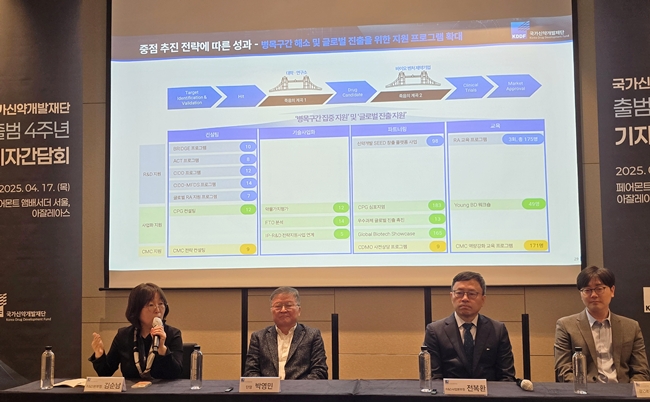
- The Korea Drug Development Fund (KDDF), celebrated fourth year since launch, has emphasized its role as a 'supporter' rather than a 'management' in advancing successful new drug development. As it enters its fifth year and reaches a midpoint of the project duration, KDDF has emphasized the need for continuity and a centralized control tower. KDDF Ceo Park Yeong-min On April 17, KDDF Ceo Park Yeong-min held a press briefing to share the KDDF's achievements and future strategies on its fourth anniversary. KDDF program supports the entire drug development lifecycle, including candidate discovery, preclinical studies through Phase 1 and 2 clinical trials, and commercialization. It is a multi‑ministerial R&D initiative with KRW 2.1758 trillion (KRW 1.4747 trillion in government funding and KRW 701.1 billion in private investment) allocated over ten years through 2030. Since its 2021 launch, KDDF has supported 423 pipeline projects and plans to add 128 new projects this year, bringing its total to approximately 550. Ultimately, KDDF aims to strengthen the R&D ecosystem by improving the success rate of early‑stage technologies progressing to later development stages and building biotech venture capabilities. Furthermore, KDDF assists with global partnering and investment attraction to generate practical outcomes such as blockbuster new‑drug approvals and global technology transfers. As it reaches the midpoint of its ten‑year plan, KDDF will focus on enhancing its commercialization support this year alongside ongoing target and modality projects. To achieve these goals, KDDF has increased clinical project funding by 30%, raising support to KRW 4.55 billion for Phase 1 trials and around KRW 9.1 billion for Phase 2 trials. Previously, KDDF capped support at KRW 2 billion for non-clinical stages, KRW 3.5 billion for Phase 1, and KRW 7 billion for Phase 2. Park stated, "We aim to discover globally competitive molecules and will focus on new targets and modalities," and added, "By optimizing our commercialization support, KDDF can pioneer a new R&D model." "We will expand programs to resolve drug‑development bottlenecks and strengthen global competitiveness. KDDF will not merely provide support, but we will establish an efficient R&D structure." During the meeting, KDDF stressed that as a sunsetting program, it requires guaranteed continuity given the long timelines inherent in new‑drug development. Park said, "KDDF is a sunsetting program that must undergo a feasibility reassessment after ten years, which can create inefficiencies in later stages," and added, "Since the government has designated the bio‑pharma industry as a future growth engine, the organization supporting frontline drug development must operate without interruption." KDDF succeeded the previous multi‑ministerial new drug development program, which ran from 2011 until its closure in September 2020, and KDDF then launched in 2021. However, there was a roughly six‑month gap between the predecessor program's end and KDDF's launch, during which small biotech firms reportedly faced support disruptions that delayed their R&D for over six months. Given KDDF's fixed ten‑year timeframe, experts have called for follow‑up measures to ensure domestic drug developers do not abandon projects due to support gaps. Park said, "We need to double the budget for drug development to support more companies. New policy measures, such as supporting potential K‑Big Pharma, are needed so that KDDF could serve as the control tower for Korea's pharmaceutical and biotech industry."
- Policy
- Co-payments retained for non-reimb drug+reimb drug comb
- by Lee, Jeong-Hwan Apr 18, 2025 05:57am
- The Ministry of Health and Welfare (MOHW) has decided that, even if an additional or combination anticancer drug is added to a chemotherapy regimen already covered by health insurance, the initial chemotherapy will continue to be subject to the patient’s existing co-payment. Boehringer Ingelheim’s idiopathic pulmonary fibrosis and fibrosing interstitial lung disease treatment Ofev (nintedanib) will have new reimbursement criteria established, while the reimbursement standards for donepezil oral tablets and patches, such as Aricept tablets and Donerion patches, will be revised. The reimbursement criteria for rituximab injections (such as MabThera), ceftazidime (such as vancomycin), and ganciclovir injections (such as Cytovene IV) will also be updated. On April 17, the MOHW issued an administrative notice proposing partial revisions to the 'Detailed Criteria and Methods for Applying Reimbursement (Drugs).' The revision is aimed to take effect on May 1, and a public comment submission will run through April 21. Previously, if a non‑reimbursed drug was added to a regimen already covered by reimbursement, even the previously reimbursed drugs would lose their coverage, increasing patients' out‑of‑pocket costs. Under the revisions, adding a non‑reimbursed anticancer drug to an already reimbursed regimen will not change the co-payment rate for the reimbursed drugs. In detail, a new clause states, 'When combining a reimbursed chemotherapy regimen with another anticancer drug, the existing co-payment for the previously initiated chemotherapy shall continue to apply to that regimen.' The MFDS approved Ofev's new reimbursement coverage for chronic fibrosing interstitial lung disease among the indications. The coverage will be provided to patients with chronic fibrosing interstitial lung disease confirmed by high‑resolution chest CT (HRCT), excluding idiopathic pulmonary fibrosis. The reimbursement criteria include cases where ▲predicted forced vital capacity (FVC) ≥ 45% ▲ predicted diffusing capacity for carbon monoxide (DLco) ≥ 30% and < 80% ▲despite prior treatment (steroids, immunosuppressants), within the past 24 months one of the following: a relative decline in predicted FVC ≥ 10%; a relative decline of greater than 5% or less than 10% with worsening respiratory symptoms; or a relative decline of greater than 5% or less than 10% with HRCT documented fibrosis progression. Patients must be re‑evaluated every 12 months after treatment initiation (HRCT and pulmonary function tests), and if disease progression is confirmed (predicted FVC decline ≥ 10% within 12 months with HRCT worsening), administration must be discontinued. The reimbursement criteria for donepezil formulations state the dosage and duration for 3 mg oral tablets. The reimbursement criteria for 3 mg tablets indicate that ▲an initial dose of 3 mg once daily may be started to reduce adverse gastrointestinal reactions if needed, but use should not exceed 1–2 weeks ▲in underweight women (BMI < 18.5 kg/m²) aged ≥ 85 years who require ongoing 3 mg once‑daily dosing, reassessment should determine continuation based on evaluation methods. Moreover, if dosing at 3 mg once daily must continue beyond 6–8 weeks, a dosing justification form must be submitted. Reimbursement criteria for rituximab injections have been expanded to include myasthenia gravis. Eligible patients are those who are MuSK antibody–positive because they are refractory to at least one prior therapy (corticosteroids, azathioprine, cyclosporine, mycophenolate mofetil, tacrolimus, etc.) or unable to receive such therapies due to ▲serious adverse effects, and who have either moderate to severe myasthenia gravis (MGFA class IIa or higher) or ▲at least two myasthenic crises within the past year. Reimbursement is covered for rituximab at 375 mg/m² weekly for four doses or 1 g every two weeks for two doses, with retreatment permitted upon relapse. For vancomycin and ceftazidime, reimbursement has been expanded beyond their approved indications to include adult bacterial endophthalmitis. Vancomycin is reimbursed for intravitreal injection of 1 mg/0.1 mL administered at intervals of 3 days or more based on clinical findings (inflammation and infection control), and ceftazidime is reimbursed for intravitreal injection of 2 mg/0.1 mL or 2.25 mg/0.1 mL at intervals of 2 days or more. If combination use is clinically required, each drug's reimbursement criteria apply. For ganciclovir, reimbursement criteria have been added for acute retinal necrosis syndrome (ARN) and CMV retinitis (CMVR), expanding the reimbursement scope. Eligible patients are those ▲who are nonresponsive or intolerant to systemic antiviral therapy or ▲who have rapidly progressive, vision‑threatening retinal lesions; dosage is 2 mg/0.1 mL intravitreally once to three times weekly, with dose reductions permitted based on patient status.
- Company
- Expanded reimbursement for 'Lorviqua' expected soon
- by Eo, Yun-Ho Apr 17, 2025 05:57am
- Product photo of Lorviqua The non-small cell lung cancer treatment 'Lorviqua' is expected to receive expanded insurance reimbursement after many attempts. According to industry sources, Pfizer Korea has recently signed an agreement with the National Health Insurance Service (NHIS) regarding drug pricing negotiations for the third generation ALK cancer drug Lorviqua (lorlatinib) as a first-line treatment of anaplastic lymphoma kinase (ALK)-positive metastatic NSCLC. Such accomplishment took 10 months since the breakdown of the drug price negotiations in May 2024, and then Pfizer had filed for reimbursement again. Pfizer immediately filed for general listing, which passed the last Drug Reimbursement Evaluation Committee (DREC) of the Health Insurance Review and Assessment Service (HIRA) last year. Even after reapplication, the reimbursement process has been slow. Analysis suggests that the government postponed the decision because Lorviqua was initially contracted as a total expenditure-capped RSA, then switched to a general listing. Earlier in January 2024, when the process for expanded reimbursement had been in process, Pfizer had filed for general medicine reimbursement. Of note, ALK cancer drugs, including the first-generation drug 'Xalkori (crizotinib)' and the second-generation drugs 'Alecensa (alectinib)' and 'Zykadia (ceritinib),' are all general listing medications. During the negotiations, Pfizer suggested switching to a general listing during the negotiation. However, the government insisted that "negotiations for the total expenditure-capped RSA must be completed before the company can move on to the next step." As a result, the negotiations ultimately failed. Meanwhile, Lorviqua is a drug designed to penetrate the blood-brain barrier (BBB). The drug has been assessed as having clinical significance based on the long-term follow-up results of the CROWN study, which was recently presented at the ASCO. The study results showed that Lorviqua reduced the disease progression and death risk by 81% compared to crizotinib, and 60% of treated patients were alive without disease progression even after five years. The risk of brain metastasis was reduced in 94% of the treated patients, with only 4 out of 114 patients who did not previously had brain metastasis developing it after being treated with Lorviqua.
- Company
- Lundbeck Korea appoints Brad Edwards as first foreign CEO
- by Whang, byung-woo Apr 17, 2025 05:57am
- Brad Edwards, new CEO of Lundbeck Korea On the 1st, Lundbeck, a global pharmaceutical company specializing in the treatment of brain diseases, announced on the 16th that it has appointed Brad Edwards as its first foreign CEO in 23 years since the establishment of its Korean subsidiary. The new CEO is a professional with extensive experience and expertise gained from 25 years of service at various multinational pharmaceutical companies, including Schering-Plough, Pfizer, Shire, and Takeda. Recently, he served as the Head of Plasma Derived Therapies (Growth and Emerging Markets) at Takeda in Singapore. Since joining Shire in 2014, Edwards has gained extensive experience through Shire's extensive rare disease portfolio. He has since served as the General Manager of Takeda Australia and New Zealand. Also, as a board member of Medicines Australia, he has contributed to shaping the external policy environment in Australia to improve patients' access to treatments for rare diseases. With the appointment of the new CEO, Lundbeck expects his extensive experience and in-depth knowledge in the field of rare diseases to play a crucial role in preparing Lundbeck Korea for its expansion into the field of neuro-rare diseases. CEO Brad Edwards said, “I am honored to have the opportunity to work in Korea by joining Lundbeck and am looking forward to joining Lundbeck's ‘Focused Innovator’ strategic journey.” He added, “I will work to reinforce Lundbeck Korea's position in the field of neuroscience and drive the company's expansion into other areas where there is an unmet medical need.” He added, “I am looking forward to learning more about the Korean culture, working closely with my colleagues at Lundbeck, and, above all, contributing to the development of treatments that have a real impact on Korean patients.” Lundbeck Korea is a multinational pharmaceutical company headquartered in Copenhagen, Denmark, and specializes in brain disease treatments, researching and developing treatments for neurological and psychiatric diseases. Representatively, the company owns the antidepressants Lexapro (escitalopram oxalate) and Brintellix (vortioxetine hydrobromide), Alzheimer's disease treatment Ebixa (memantine hydrochloride), and Parkinson's disease treatment Azilect (rasagiline mesylate).
- Company
- Vantive Korea to become kidney disease therapy leader
- by Whang, byung-woo Apr 17, 2025 05:57am
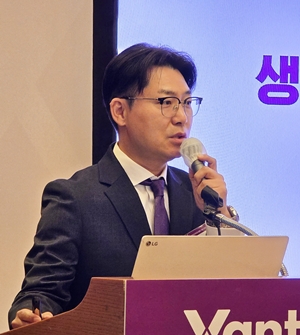
- Vantive, a spinoff of Baxter that was newly launched as an independent company, is embarking on a full-scale market penetration based on its manpower in the field of kidney treatment. In the long term, the company plans to provide solutions to become a company that provides life-sustaining organ therapy, beyond kidney treatment. Kwanghyuk Im, General Manager of Vantive Korea Vantive Korea held a meeting on the 16th to commemorate its launch in Korea and share the company's goals and strategies. Vantive was launched in February as a spin-off of Baxter's Renal Care and Acute Care Business Unit and seeks to be a company focusing on “Vital Organ Therapy.” The spin-off was made to establish a clearer business strategy by responding quickly to rapidly changing healthcare needs and focusing on innovation in each company's area of expertise. Vantive plans to present its business direction based on its legacy of leading innovation in kidney care for the past 70 years, with its mission “Extending lives, expanding possibilities.” Kwanghyuk Im, General Manager of Vantive Korea, said, “Vantive is a vital organ therapy company that aims to raise the standards of kidney and life-sustaining organ treatment,” Im added, “We will not only provide disease treatment solutions but also strive to remove obstacles in the treatment process from the beginning to the end as a companion in our patient’s treatment journey.” However, at the time of the spinoff, Vantive's business activities were not much different from those of Baxter's existing renal business unit. Some argue that the direction of a long-term plan is important for a company to differentiate itself as a standalone company. In this regard, Im said, “Baxter's business structure was diverse, so it was not easy for the company to invest in or conduct research and development (R&D) in a particular business under such circumstances. As Vantive has a major mission of long-term treatment for life support, we expect to be able to make more focused and differentiated investments." Im added, “We cannot reveal specific plans for new products, but we are soliciting various R&D ideas on a global scale to improve products and services. We fully expect there to be new innovations.” Vantive plans to provide innovative products, digital-enhanced solutions, and advanced services to support dialysis at home and in hospitals, as well as treatment options to support the kidney and vital organ functions of critically ill patients. In addition, the company aims to combine an automated peritoneal dialysis (APD) system with a digital patient management platform in the field of peritoneal dialysis to enable healthcare professionals to make patient-specific decisions quickly and accurately based on automatically transmitted data. “Vantive is working to improve the patient's treatment experience and reduce the inconvenience experienced during the treatment process,” said Im. ”We want to reduce the burden of treatment through patient-centric services such as a 24-hour consultation service for peritoneal dialysis patients and direct delivery of dialysis fluid to their homes.” In addition, Vantive plans to lead the advancement of critical care through multi-organ treatment, including continuous renal replacement therapy (CRRT). In the future, the company plans to pursue innovations that can be applied to the treatment of sepsis and organ failure, such as lung and liver failure. “We plan to expand our activities to raise awareness of end-stage renal disease and improve the dialysis environment, as well as sponsor the Kidney Camp for Children and other various social contribution programs,” said Im. ”We will work to provide better treatment experience at various points of contact between patients and healthcare professionals, fulfill our corporate social responsibility, and create sustainable change.”
- Company
- Expanded indication for Iclusig as a first-line treatment
- by Whang, byung-woo Apr 17, 2025 05:57am
- Product photo of Iclusig On the 16th, Korea Otsuka Pharmaceutical (CEO Sung-ho Moon) announced that Iclusig (ingredient name: ponatinib) can now be used in combination with chemotherapy for treating adult patients with Philadelphia Chromosome-Positive Acute Lymphoblastic Leukemia (Ph+ ALL). This expanded indication has expanded Iclusig's use of scope from a third-line or higher treatment for Ph+ ALL to Ph+ ALL first-line treatment. Previously, Iclusig was approved for the treatment of adult patients with chronic, accelerated, or blast phase chronic myeloid leukemia (CML) or Ph+ ALL who were refractory to other tyrosine kinase inhibitors (TKIs), as well as for the treatment of adult patients with T315I-positive chronic, accelerated, or blast phase CML or T315I-positive Ph+ ALL. This expansion of indications follows the expedited approval by the U.S. FDA in March 2024 for combining therapy comprised of Iclusig and chemotherapy to treat newly diagnosed Ph+ ALL patients. It has also led to an expansion of its indications in South Korea. Through this, Iclusig can now be used in Korea as a first-line treatment for adult Ph+ ALL patients in combination with chemotherapy for up to 20 cycles. The PhALLCON trial, which served as the basis for this approval, was a Phase 3 trial (randomized, open-label) conducted at 77 institutions across 17 countries. The study evaluated the efficacy and safety of the combination of ponatinib (brand name: Iclusig) with low-intensity chemotherapy versus the combination of the first-generation TKI imatinib (brand name Glivec) with low-intensity chemotherapy in 245 newly diagnosed adult Ph+ ALL patients. Study results showed that the primary evaluation endpoint, the MRD-negative complete remission (MRD-neg CR) rate at the end of induction therapy (12 weeks), was 34.4% in the Iclusig group, approximately twice as high as the 16.7% observed in the imatinib group. Furthermore, the median progression-free survival (PFS) was significantly longer in the Iclusig group at 20.0 months compared to 7.9 months in the imatinib group. In terms of safety, Iclusig demonstrated manageable tolerability. The treatment discontinuation rate due to adverse events was reported to be 12% (n=20/164) patients in the Iclusig group and 12% (n=10/81) in the imatinib group. The incidence of treatment-related serious adverse events was 20.9% (n=34/163) in the Iclusig group and 19.8% (n=16/81) in the imatinib group. Korea Otsuka Pharmaceutical representative stated, "Iclusig demonstrated superior MRD-neg CR and stable drug tolerability compared to the conventional therapy, such as the first-generation TKI, when used as a first-line treatment for patients with Ph+ ALL," and added, "Based on this expansion of indication, Iclusig, which was used for three or more line of treatments, is available as a first-line treatment option."
- Company
- ‘Should consider early use of effective new drugs for CML’
- by Son, Hyung Min Apr 17, 2025 05:57am
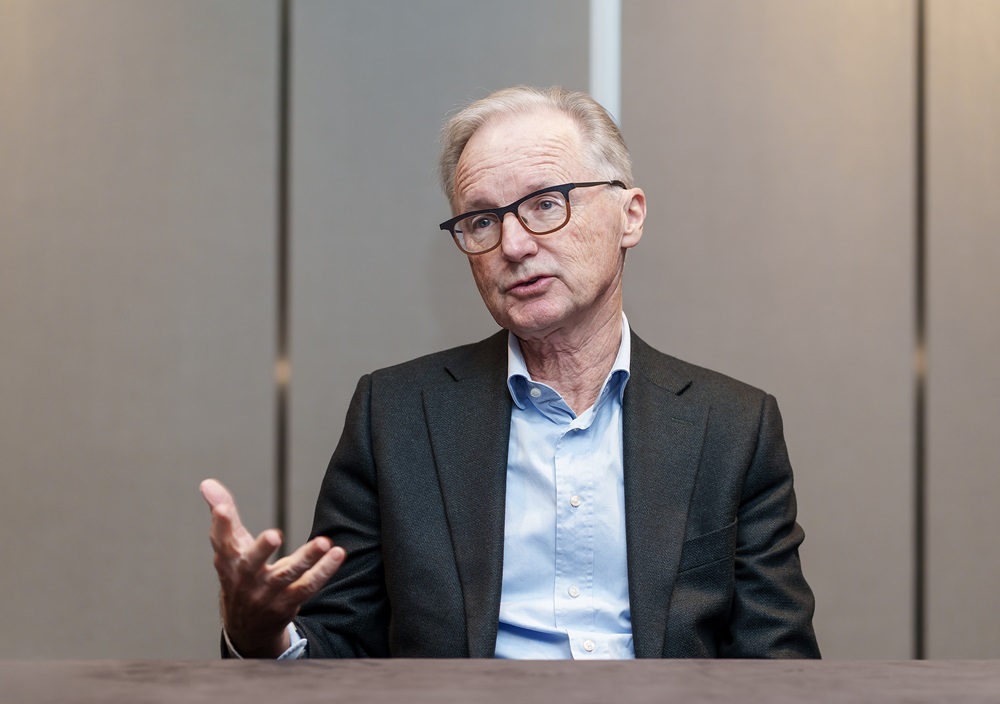
- Timothy Hughes, Professor of Hematology, South Australian Health and Medical Research Institute “Although various treatment options have emerged for chronic myeloid leukemia (CML), there is still unmet demand, as more than half of patients are intolerant. As CML treatment strategies are shifting to inducing a strong response in the early phase, it is important to prioritize the use of effective drugs.” Timothy Hughes, Professor of Hematology at the South Australian Health and Medical Research Institute, recently gave this assessment regarding CML treatment strategies during an interview with Dailypharm. The development of various tyrosine kinase inhibitors (TKIs), starting with Novartis' Gleevec, a first-generation targeted anticancer drug, in 2006, then the second-generation treatment options BMS' Sprycel, Novartis' Tasigna, Pfizer’s Bosulif, Il-Yang Pharmaceutical’s Supect, and the third-generation TKI Otsuka's Iclusig, has dramatically improved survival rates. However, since the existing first- to third-generation TKIs target the ATP binding site, there is a high possibility of developing resistance to mutations, which limits long-term treatment sustainability. In addition, as treatment options are limited for patients at risk of cardiovascular disease, there is a need for effective switching strategies and new treatment options in the third-line treatment space. Unlike existing treatment options, the fourth-generation TKI Scemblix is approved and mainly used as a third-line treatment for CML in Korea due to its specifically targeting the ABL myristoyl pocket t (STAMP) inhibition mechanism. Recently, it has been approved as a first-line treatment in Korea, the United States, and Europe, expanding its scope of use. Professor Hughes said, “We have seen a dramatic improvement in survival since the advent of TKI-based treatments, but many patients still experience treatment failure due to drug intolerance or resistance.” He added, “In particular, Scemblix is becoming an important alternative for patients who were contraindicated from using existing TKI treatment due to cardiovascular disease, etc.” Scemblix demonstrates superior efficacy in direct comparison studies with existing targeted therapies Scemblix has demonstrated its therapeutic improvement effect through a head-to-head study with existing targeted therapies. The clinical trial, ASC4FIRST, was the first study to compare Scemblix with standard first-line treatments currently available for newly diagnosed CML patients. The trial randomly assigned adult CML patients to the Scemblix group and the standard TKI treatment group and compared the major molecular response (MMR) rate at week 48. The results of the study showed that the MMR achievement rate at week 48 was 67.7% in the Scemblix-treated group and 49.0% in the standard TKI-treated group, showing an 18.9% difference. In terms of safety, the Scemblix-treated group showed a relatively low incidence of Grade 3 or higher adverse reactions, discontinuation rate due to adverse reactions, and dose adjustment and discontinuation rate for adverse reaction management compared to the control group. The biggest concern for TKI treatments, including Iclusig, which had been mainly used as a third-line therapy, was cardiovascular toxicity. Iclusig is known to have a tendency to increase the incidence of arterial occlusion depending on the dose. According to Professor Hughes, Iclusig should be used only in patients with no other treatment option because there have been many serious arterial system adverse reactions observed even at the standard dose of 45 mg per day. STAMP inhibitors have high target specificity as they act on the myristoyl pocket of the BCR-ABL1 protein, not the ATP binding site. Through this differentiated mechanism of action, Scemblix offers the advantage of maintaining a strong therapeutic effect while minimizing side effects. Professor Hughes commented, “Through the ASC4FIRST trial, Scemblix has demonstrated both efficacy and safety profiles superior to those of Gleevec, Tasigna, and Sprycel, which are currently used as first-line treatments for CML.” He went on to say, “In particular, Scemblix showed a higher MMR compared to Gleevec and also showed excellent results in terms of safety. The treatment discontinuation rate due to toxicity was also only half that of Gleevec. In addition, Scemblix also demonstrated higher treatment response rates and safety in the patient group compared to second-generation TKIs.” Potential rises for Scemblix as a first-line treatment option... “One step closer to treatment-free remission” #EB Professor Hughes believes that while CML treatment strategies have focused on improving survival in the past, it is now important to enable patients to achieve treatment-free remission and enjoy a 'life without need for treatment.' According to Professor Hughes, recent CML treatments tend to focus on inducing a strong response early, in the first-line treatment phase. This is because a fast and strong response induced by intensive treatment from the beginning can lead to a positive prognosis in the long term and ultimately increase the likelihood of achieving a treatment-free remission. Professor Hughes said, “Another notable agenda is that the treatment goal of patients is shifting to treatment-free remission. In fact, when patients are asked what treatment goal they most desire, most of them want to ‘no longer take medication.’ To date, the proportion of patients who have reached treatment-free remission is about 30%, but we expect that the figure will rise to more than 50% in the future through the use of STAMP inhibitors.” Professor Hughes believes that Scemblix has a high potential for use as a first-line treatment for CML. The ASCEND study, led by Professor Hughes, was the first Scemblix monotherapy clinical trial, involving approximately 100 patients. Professor Hughes explained that the results of the study were similar to those of the pivotal Scemblix clinical trial. “In Australia, ASCEND is currently undergoing a follow-up clinical trial. Patients who meet the criteria for participation are mostly enrolled in the study and receiving Scemblix as a first-line treatment,” added Professor Hughes. “For patients who are unable to participate in the trial, we are treating them with the best available option.” He went on to say, “Currently, the most important goal of first-line treatment is for patients to achieve a deep molecular response early and ultimately achieve a treatment-free remission. However, for patients who need to receive third line of treatment, the treatment goals will inevitably vary depending on the course and situation.” He said, “Scemblix has shown high safety and efficacy from the early stages of clinical trials. It is a drug that has shown the potential to be used not only as third-line treatment but also as first-line treatment.” He also emphasized, “We expect a strong therapeutic effect when Scemblix is used as a first-line treatment. If there were no restrictions set in our clinical trials, more than 90% of the patients may use Scemblix as a first-line treatment.”
- Company
- Vyndamax may be prescribed at tertiary hospitals in KOR
- by Eo, Yun-Ho Apr 16, 2025 05:55am
- Vyndamax, which was finally granted insurance reimbursement after 5 attempts, may now be prescribed in general hospitals. According to industry sources, Pfizer Korea's treatment for ATTR-CM (Tafamidis 61mg) passed the drug committees of 26 medical institutions nationwide, including the ‘Big 5’ major hospitals (Samsung Medical Center, Seoul National University Hospital, Asan Medical Center, Seoul St. Mary's Hospital, and Severance Hospital). Vyndamax was approved in Korea in August 2020 and has been granted reimbursement since March this year after a series of twists and turns. It failed its first reimbursement challenge in early 2021, Vyndamax failed to be designated as an essential drug at the time. In the first half of the same year, the company evaluated the drug’s cost-effectiveness and took on the second challenge through the risk-sharing agreement (RSA) track, just to meet the same results. In April 2022, it again failed to pass the Health Insurance Review and Assessment Service's Reimbursement Standard Subcommittee, but in July of the same year, it passed the subcommittee but was later judged non-reimbursable by the Drug Reimbursement Evaluation Committee 9 months later. At the time, the government and the pharmaceutical company were unable to reach an agreement on the risk-sharing plan. Pfizer again submitted a reimbursement application in June last year, passed the DREC review in October of the same year, and concluded a drug price negotiation with the National Health Insurance Service last month. The maximum insurance price ceiling for Vyndamax was set at KRW 100,000. Vyndamax is a separately licensed product that contains a different dose of the same ingredient as Vyndaqel, a treatment for familial amyloidotic polyneuropathy. Some view this as a strategy adopted by the pharmaceutical company to differentiate the drug price. However, it is encouraging that the drug was approved after 5 attempts over four years. Now, patients will only have to pay 10% of the drug price if the special calculation system is applied. The efficacy of Vyndamax was demonstrated through the Phase III ATTR-ACT study, where the drug reduced the incidence of cardiovascular events in patients with CM and showed an improvement in the six-minute walk test. In the ATTR-ACT study, 441 patients were randomly assigned in a 2:1:2 ratio to receive 80 mg of tafamidis, 20 mg of tafamidis, and placebo, respectively, and the primary endpoints of the study were hierarchical evaluation of all-cause mortality and frequency of cardiovascular-related hospitalization. The key secondary endpoints were the change from baseline to month 30 for the 6-minute walk test and the score on the Kansas City Cardiomyopathy Questionnaire–Overall Summary (KCCQ-OS), in which higher scores indicate better health status. Study results showed that tafamidis demonstrated a statistically significant reduction in all-cause mortality and frequency of cardiovascular-related hospitalizations compared to placebo.
- Opinion
- [Reporter's View] The MOHW’s contradiction
- by Lee, Jeong-Hwan Apr 16, 2025 05:55am
- The Ministry of Health and Welfare cited the 'non-face-to-face medical treatment pilot project' as an excellent administrative example last year. The reason for its excellence is that the non-face-to-face treatment, which was urgently and temporarily permitted in February 2020 in response to the COVID-19 pandemic, was converted into a pilot project in June 2023, 3 years later, and has been operated stably, with the pilot project model being supplemented and developed to improve the quality of medical services for the public. However, the MOHW overlooked the fact that in the process of implementing the non-face-to-face treatment pilot project, it revised and modified the scope of its application and permission several times, causing confusion among patients, medical institutions, pharmacies, and intermediary platforms. In particular, the MOHW also cited the Framework Act on Health and Medical Services as it failed to secure legal grounds, such as amendments to the Medical Service Act, in the process of converting non-face-to-face medical care into a pilot project in line with the government's declaration of the end of the COVID-19 pandemic. The MOHW's rationale for the pilot project was Article 44 of the Framework Act on Health and Medical Services, which states that “the national and local governments may conduct a pilot project if necessary to implement a new health and medical care system.” With just one line of legal provision as support, the MOHW conducted a non-face-to-face treatment pilot project that breaks the principle of face-to-face medical care. This is the background to the criticism that the opposition party, led by the Democratic Party of Korea, has leveled at the ruling party for forcing an executive order through politics on non-face-to-face medical care, which is directly linked to the health and lives of the people and has a significant impact on the domestic healthcare delivery system and pharmacy ecosystem. In fact, the MOHW has revised the guidelines for the pilot project 5 times since June 2023, when it converted non-face-to-face treatment into a pilot project. The model of the first pilot project, which divided medical institutions into clinics and hospitals and patients into returning and first-time patients, was criticized by the public as being overly complicated. This was also the time when some speculated that the MOHW Minister and Deputy Minister were reprimanded because the pilot project did not fully reflect former President Suk-Yeol Yoon’s request to consider ways to foster non-face-to-face treatment as its industry. Maybe due to this issue, the project for non-face-to-face treatment was revised to effectively remove the criteria on primary and follow-up visits on December 15, 2023, less than 6 months after its implementation. The reason put forward for revising the pilot project was to reduce the inconvenience raised by some in society and to expand patient access to medical care. Afterward, the Yoon administration’s policy on increasing the medical school capacity by 2,000 students was announced in 2024, and the scope of the pilot non-face-to-face treatment project was expanded under the pretext of “responding to the medical gap caused by the collective resignation of residents.” As a result, non-face-to-face medical care was allowed for more than the temporarily allowed period and was revised several times throughout the pilot project period, causing inconvenience to the public, medical institutions, and pharmacies as they had to constantly familiarize themselves with the changed standards and implementation plans. Even amid this confusion, the MOHW itself stamped its own excellent administrative seal because it had advanced the model of the non-face-to-face treatment pilot project, which is like giving itself a report card disjunct from the social confusion it had caused. Won-Joon Cho, a senior policy advisor for health and welfare from the Democratic Party of Korea, criticized the MOHW's full-scale expansion of the non-face-to-face treatment pilot project, saying, “Serious illegal activities are continuing. I will bring to account the background and responsibility for the unending pilot project in the future legislative process.” This is a glimpse of how the MOHW's ‘excellent administrative activity’ evaluation on its non-face-to-face treatment pilot project may be criticized during the National Assembly's audit and the bill review for the revision of the Medical Services Act. Non-face-to-face treatment is still being allowed without any legal basis. As the 22nd National Assembly is about to be inaugurated in a year and the country has entered an early presidential election due to the impeachment of the president, the MOHW should not issue a report card that contrasts with public opinion and the evaluation of the opposition party, but should instead work hard to sort out the problems identified in the process of revising the guidelines for the pilot project and prepare a legislative bill that can minimize social confusion.
