
- LOGIN
- MemberShip
- 2026-06-24 03:30:21
- Company
- Patients request Leqembi’s reimb even before approval
- by Eo, Yun-Ho Apr 29, 2024 05:50am
- More specifically, the drug is indicated for ‘slowing progression of mild cognitive impairment (MCI) and mild dementia due to Alzheimer's disease.’ Leqembi has been proven to reduce the rate of disease progression and slow cognitive decline by selectively binding to amyloid beta (Aβ) aggregates, which are a known cause of Alzheimer's disease. Due to such a lack of treatments for the disease, the desperation of the patients and their families has been indescribable. In addition to public petitions, the MFDS's Korea Orphan & Essential Drug Center has been inundated with inquiries on the date of Leqembi’s approval and supply in Korea. However, the problem is the price of the drug. In the U.S., Leqembi costs about KRW 35 million per year; in Japan, it costs KRW 27 million. Due to its high price, it will take a while for the drug to be approved in Korea and be listed for reimbursement as it requires a tug-of-war between pharmaceutical companies and the government. In the Clarity AD study, Leqembi achieved statistically significant results in both its primary and secondary endpoints. Specifically, Leqembi delayed clinical decline in brain function by 27% at 18 months compared to placebo. While the market for amyloid-targeted therapies such as Leqembi is gaining recognition for its effect in delaying the onset of dementia, the use of the drug has been hampered by its characteristic side effects. The amyloid-related imaging abnormalities (ARIA) that are often mentioned as an issue, are abnormal signals observed on MRI scans, such as brain edema or microhemorrhage that are detected with the drug’s use. Depending on how the adverse event occurs, ARIA is classified as ARIA-E and ARIA-H. ARIA-E can be observed on MRI as brain edema or sulcal effusions, and ARIA-H as microhemorrhage and superficial siderosis. Leqembi was approved in China in January and was previously approved in the U.S. (July 2023) and Japan (September 2023). In addition, Biogen recently submitted an application to the U.S. FDA for the approval of Leqembi’s once-monthly intravenous formulation.
- Opinion
- [Reporter’s View] Patients are left to suffer amid dispute
- by Lee, Jeong-Hwan Apr 29, 2024 05:50am
- It has been 3 months since the doctors and the government failed to see eye to eye on the government’s plan to expand medical school admissions by 2,000 students. The prolonged dispute has intensified animosity towards each other. The doctors have criticized the Minister and Vice Minister of Health and Welfare, Kyoo-hong Cho and Minsoo Park for their absurd remarks and called for their resignation, and even called for the resignation of the administration itself ahead of the general elections. The presidential office and the government condemned the act as a "cartel of interests" by doctors who were only worried about protecting their own interests and chose to enforce the policy instead of seeking further communications. Amid the patients’ deepening grievance and suffering, the doctors and the government continued to fight without retreat, and the ruling and opposition parties that were intent on winning the 22nd general election held an indifferent eye to the issue at hand. Three weeks have passed since the general elections, but there is no sign of the ruling and opposition parties planning to discuss or resolve the doctor-government conflict at the National Assembly level. The 21st National Assembly and the 22nd National Assembly are both sitting on the sidelines as the former is nearing the end of its term, and the latter is yet to start its term. Maybe the medical gap, as well as the grievances and fear felt by the neglected patients, do not seem so urgent or serious to the National Assembly. Doctors and the government are continuing to repeat their own explanations for why they are unable to engage in a dialog. At this rate, it's easy to assume that the two will continue to spew the same slanderous messages day after day. The Special Presidential Committee on Healthcare Reform, despite being "operated directly under the president," convened on the 25th without a doctor. This is like operating a vehicle with its doors open, which is illegal under the current Road Traffic Act and falls under the 12 acts of gross negligence according to the Act on Special Cases Concerning The Settlement Of Traffic Accidents. In this sense, the doctors who did not participate and the government who started without closing its doors are both guilty of gross negligence. The Special Presidential Committee on Healthcare Reform that convened without doctors will discuss policies to strengthen local and essential healthcare without reflecting the voices in the medical field without knowing whether the medical community would accept them. This increases the probability of establishing an impractical healthcare policy that is nothing more than rhetoric. Patients are suffering amid the endless doctor-government conflicts, parliamentary indifference, and the shaky launch of the healthcare reform task force. The patient’s pain and suffering will only grow greater if the conflict continues. When a child's temperature rises greatly at night, or a child's skin is scratched and torn by a laceration one day, or the condition of an elderly patient hospitalized in a nursing home suddenly deteriorates due to illness, patients and their caregivers have to experience the dreaded medical crisis. They come face-to-face with the 'emergency room rush' they've only seen in the news. The negative effects of the doctor-government conflicts are not limited to emergency and serious illnesses. Patients and their caregivers who are unable to receive a timely diagnosis on whether their bleeding abrasion is minor or serious are left to suffer their injury in pain in addition to medical confusion. Moreover, patients who receive some abnormal findings in medical health screenings are unable to visit a higher-level hospital at their desired time for further diagnosis because the medical system, except for emergency and severe cases, has been shut down. There's no telling what diseases that have slipped through the cracks will quickly take hold and eat away at the patients' lives. Doctors and the government need to stop their needless arguments and start tending to the patients. They should sincerely listen to each other's arguments and try to understand the underlying implications. The doctors need to decide to get back to the front lines of medicine and get to work on crafting a unified government-to-physician deal of their desire, including the size of the medical school expansions. Rather than just calling for a return to the drawing board, the doctors should participate in closed-door meetings and the health reform task force to exchange negotiation cards with the government. The government should also prepare a proposal that can motivate doctors to stop their collective action and return to the field. The government has conceded a point, transitioning next year’s admission quota to voluntary expansions, but it should be willing to yield further to open the dialogue. This is all for the sake of the patients. Our patients can't afford to wait any longer. Why should the patients be terrorized and sacrificed in a battle between the doctors and the government? It's time for the parties to end their ego games and deferral of responsibilities and start creating a medical normalization plan to resolve the conflict proactively. The National Assembly should also make a bipartisan move to end the conflict and bring about reconciliation. It is the raison d'être and duty of the National Assembly to reconcile conflicts between stakeholders over national policies, both large and small, and lead them to rational administration and national affairs. We hope that the 21st National Assembly leads the two parties to reach a consensus before the end of its term for ‘one last hurrah.’
- Policy
- Jardiance under review for expanding reimb to kidney disease
- by Lee, Tak-Sun Apr 29, 2024 05:49am
- Boehringer Ingelheim Korea 'Jardiance tab (empagliflozin, Boehringer Ingelheim Korea),' SGLT-2 class of treatment, is considered for expanding reimbursement to kidney disease, in addition to its current reimbursement for diabetes and cardiac failure. As Forxiga, a competing drug in the same class as Jardiance, is expected to withdraw from the Korean market in the second half of the year, Jardiance’s expanded areas may lead to an increase in market share. According to industry experts on the 25th, Jardiance 10 mg is undergoing review by the Health Insurance Review and Assessment Service (HIRA). HIRA has recently received academic opinions and supplementary documents from the pharmaceutical compnay. The efficacy and effectiveness of Jardiance 10 mg have been demonstrated in three diseases, including type 2 diabetes, chronic cardiac failure, and chronic kidney disease. Among these diseases, Jardiance is covered by reimbursement for type 2 diabetes and chronic cardiac failure. For chronic cardiac failure, Jardiance is reimbursed when administered at a safe dosage as part of standard treatment for patients with chronic heart failure characterized by reduced systolic heart failure, with an ejection fraction measurement under 40%. Last October, it was approved for chronic kidney disease indication. Regardless of the status of accompanying type 2 diabetes, Jardiance can be used to reduce the risk of death caused by the progression of kidney disease or cardiovascular diseases. The company has applied for reimbursement expansion at the HIRA following receiving additional indication approval from the Ministry of Food and Drug Safety (MFDS). Its competitor, Forxiga (dapagliflozin, AstraZeneca Korea), also has indications for diabetes, cardiac failure, and kidney disease. While it is reimbursable for diabetes and cardiac failure, patients need to cover the cost out of pocket when using it to treat kidney disease. Forxiga is expected to withdraw from the market in South Korea in the second half of the year. When Forxiga withdraws, Jardiance will become the only remaining original product with three indications in diabetes, cardiac failure, and kidney disease. If Jardiance is approved for reimbursement for chronic kidney disease, it is expected to have a more significant share in the SGLT-2 inhibitor market. However, reports indicate that Forxiga’s indications are being transferred to its joint-sales partner HK inno.N’s generics. Consequently, HK inno.N may pursue reimbursement expansion for these generics. Pharmaceutical companies in South Korea are preparing to launch a generic version of Jardiance in March 2025.
- Company
- After 9 years, greenlight for 'Ilaris' reimbursement likely
- by Eo, Yun-Ho Apr 29, 2024 05:49am
- Novartis In about nine years since its approval in South Korea, the orphan drug 'Ilaris' is heading toward reimbursement listing. Novartis’ continued effort has shined. In February, Ilaris (canakinumab), a drug used to treat periodic fever syndromes (PFS), received a conditional pass decision from the Drug Reimbursement Evaluation Committee (DREC) of the Health Insurance Review and Assessment Service (HIRA). Subsequently, it was redeliberated to the DREC review on April 4th, but it has received the same result. Contrary to the last review, reducing the scope of the government’s requirement for post-marketing evidence submission was the main discussion. In February, Novartis did not accept the condition proposed by the DREC. However, during this round of review, the DREC has likely made a conditional reimbursement pass again, requiring the same scope of the post-marketing evidence submission. This time, Novartis has agreed to accept the DREC’s conditional pass and deliberation result. They have also responded quickly to the decision. Although the required evidence scope has been reduced, it may not have been an easy for a pharmaceutical company. To deliver Ilrais to patients, Novartis has made significant efforts. It is also encouraging that the government responded promptly to the initial objection application and reduced the scope of the required evidence. However, what remains is the drug pricing negotiations with the National Health Insurance Service (NHIS). During the talks with the NHIS, the specifics of the conditional reimbursement will be discussed. The company will negotiate with NHIS for two months following the negotiations order by the Ministry of Health and Welfare (MOHW). Once the negotiations are completed, the item will be passed along to the Health Insurance Policy Review Committee, and Ilrais can be expected to be reimbursed starting in August. “We expect that the negotiating process with the NHIS will likely be equally challenging, but we will put our best efforts into negotiating for patients who have waited for the approval for a long time,” a Novartis representative stated. In South Korea, Ilrais can be prescribed for the following diseases: ▲Periodic fever syndromes (PFS), cryopyrin-associated periodic syndromes (CAPS), tumor necrosis factor receptor associated periodic syndrome (TRAPS), hyperimmunoglobulin D syndrome (HIDS)/mevalonate kinase deficiency (MKD), and familial mediterranean fever (FMF) ▲Active systemic juvenile idiopathic arthritis (Systemic JIA). For CAPS, it is further categorized into the following symptoms: ▲Familial cold autoinflammatory syndrome (FCAS)/ familial cold urticaria (FCU) ▲Muckle-Wells syndrome (MWS) ▲Neonatal onset multisystem inflammatory disease (NOMID)/chronic infantile neurological, cutaneous and articular syndrome (CINCA). Discussions for reimbursement of Ilaris are challenging due to its limited patient targets and complicated indications. Only a few patients meet the Ilaris’ number of indications. Furthermore, some Ilaris’ indications are missing disease codes and were recently registered.
- Company
- A change in the DPP4 diabetes market worth KRW 600 billion
- by Kim, Jin-Gu Apr 26, 2024 05:48am
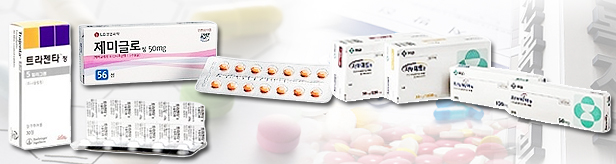
- (Clockwise from the top-left) Photos of Zemiglo, Trajenta, and Janumet·Januvia series. The market for DPRR-4 inhibitor class diabetes treatment, valued at KRW 600 billion annually, is undergoing a significant shift. Following the expiration of substance patents for major original products, generics have been launched, rapidly expanding their prescriptions. At the same time, the growth of original products is experiencing a slowdown. The prescription sales of Tenelia (teneligliptin) generics have increased by 83% year-over-year (YoY), resulting in a widening gap between the generics and the originals. The sales of Galvus (vildagliptin) generics will soon surpass those of the original product. Moreover, Januvia (sitagliptin) generics have rapidly expanded their market impact since September last year, achieving significant growth in less than six months. Tenelia generics have grown significantly…prescription sales of KRW 8.3 billion→KRW 15.2 billion 'up' According to the medical market research firm UBIST on the 24th, the market size for prescriptions of DPP-4 inhibitor class diabetes treatment in Q1 was KRW 150.9 billion. This represents a 4% decrease compared to KRW 156.5 billion in Q1 last year. Recently, this market has transformed as the patents of major original products have expired one after another. The patent of Novartis’ Galvus expired first in March 2022, followed by Handok’s Tenelia patent in October of the same year. In September of last year, the patent of Januvia, which has been a top-selling drug, also expired. After patents expired, the original products’ generics were released into the market one after another, rapidly expanding their prescriptions. On the other hand, most original products have faced decreased prescription sales. Among these, Tenelia generic has shown a significant growth in prescription sales. Since Tenelia’s patent expiration, 37 pharmaceutical companies have launched generic versions of monotherapy Tenelia and combination therapy Tenelia M. The Q1 prescription sales of these generics were KRW 15.2 billion, which is an 83% YoY increase. Prescription performance of teneligliptin-containing originals vs. generics (unit: KRW 100 million, source: UBIST). In Q2 last year, Tenelia generics exceeded KRW 10 billion in net prescription sales, and by Q3, they had surpassed the original product sales. The gap between the sales of generics and original products continues to widen. In Q1 this year, generics expanded their market share to 55% in the diabetes treatment market containing teneligliptin. On the other hand, the original products, Tenelia and Tenelia M, show a slowdown in performance. In Q1 of this year, the combined prescription sales of these two original products amounted to KRW 12.6 billion, a slight increase from KRW 12.4 billion in the same period last year. The prescription performance of Tenelia and Tenelia M expanded until Q3 of 2022, just before the patent expiration, reaching KRW 12.8 billion, and plateaued after that. Generics of Galvus·Januvia are gaining more market share…while the sales of original products slow down Galvus generics are also gradually gaining influence and will soon surpass the original product. In Q1, the combined prescription sales of Galvus·Galvusmet were KRW 6.1 billion, an 8% increase compared to KRW 5.7 billion YoY. During the same period, prescription sales of the original products decreased by 7% from KRW 7.4 billion to KRW 6.9 billion. The quarterly prescription sales of Galvus increased to KRW 12 billion just before patent expiration, but it has steadily declined since the release of generics. As the generic prescriptions increased and that of the original drugs decreased, the gap between them significantly narrowed. The difference between the originals and generics, which stood at KRW 1.7 billion in Q1 last year, narrowed by KRW 700 million over the year. In the market for diabetes treatments containing vildagliptin, the generic market share expanded from 44% to 47%. Galvus generics are expected to outperform the originals by the end of the year. Changes in prescription performance of major DPP4i originals vs. generics. In Q1, the combined prescription performance of Januvia and Janumet generics reached KRW 3.6 billion. Januvia's patent expired in September last year. Over 100 companies obtained approval for related generics before the patent expiration. Since Januvia maintained the leading position in the DPP-4 diabetes market, with prescription sales exceeding KRW 160 billion annually until just before the patent expiration, the product attracted much attention from generic manufacturers. After the patent expiration, more than 50 companies have launched competing products. The prescription sales of original products Januvia·Jaumet·Janumet XR decreased by 33% over the past year, dropping from KRW 37.9 billion to KRW 25.4 billion due to the release of generics and consequent price reductions. In May, before Januvia's patent expired last year, Chong Kun Dang Pharmaceutical acquired all domestic rights to the Januvia series from MSD. The total contract amount was KRW 45.5 billion. Chong Kun Dang Pharmaceutical paid KRW 23 billion upfront to MSD headquarters and an additional USD 17 million (approximately KRW 22.5 billion) based on sales milestones. Zemiglo maintains the leading position in the DPP-4 market…Januvia·Trajenta sales have been steadily decreasing Due to a rapid decline in the Januvia series' prescription sales has intensified competition for market leads. LG Chem’s Zemiglo (gemigliptin)·Zemimet maintained their leading position by recording prescription sales of KRW 35 billion in Q1 last year. Although the Zemiglo series was introduced to the market later than multinational pharmaceutical products, it has experienced rapid growth and surpassed KRW 30 billion in quarterly prescription sales in Q3 of 2020. In Q3 of 2021, Zemiglo surpassed the Trajenta series, which recorded prescription sales of KRW 34.1 billion, by generating prescription sales of KRW 34.5. Then, in Q3 last year, it even surpassed the Januvia series to take the lead in the market. Quarterly prescription performance of major DPP4i diabetes treatment (unit: KRW 100 million, source: UBIST). The Trajenta (linagliptin)·Trajenta-duo series secured the second position. The prescription sales of these two products in Q1 of this year amounted to KRW 29.3 billion. Compared to Q1 of last year, which recorded KRW 31.7 billion, there has been an 8% decrease over the year. Their prescription sales are ranked second in the market but have a noticeable long-term downward trend. The quarterly prescription sales of the Trajenta series have been steadily decreasing since reaching a peak of KRW 34.6 billion in Q4 of 2021. Trajenta’s patent expires in June this year. More than 60 pharmaceutical companies have obtained generic drug approvals and are waiting to enter the market. With the release of generics, Trajenta's drug price will eventually decrease when the generic version containing the same active ingredient is listed for reimbursement. According to analysts, prescription sales may continue to decline. However, Trajenta has more than five unregistered patents. It is uncertain whether domestic pharmaceutical companies will release generics immediately after the compound patent expires in June. Releasing generics without overcoming unregistered patents could raise concerns about patent infringement for domestic pharmaceutical companies.
- Company
- ‘HTL is the best global partner for Korean companies'
- by Lee, Seok-Jun Apr 26, 2024 05:48am
- There is an easy way for domestic pharmaceutical companies wishing to go global: meet a partner that has extensive experience in entering the global market. The companies can speed up their global expansions by receiving the partner's know-how and minimizing trial and error. Time is money. Especially in the rapidly changing pharmaceutical and biotechnology market, the timing of a company’s global entry can make or break the company. Earlier entrants have a better chance of success. This is why ‘partner networking’ is important for Korean companies that are about to go global. HTL Biotechnology is a global leader in providing high-quality pharma-grade biopolymers. For 30 years, the company has been providing customized solutions to global pharmaceutical companies and medical device manufacturers in the fields of ophthalmology, rheumatology, dermatology, and aesthetics. Its numbers speak for themselves. The company works with more than 100 clients in 30 countries. Since 2006, more than 400 million of its hyaluronic acid (HA) injectables have been safely used. It also owns a facility that meets the global manufacturing standards, including cGMP (US). The company also has a competitive edge in the DNA (PDRN/PN) market. Francois Fournier, CEO of HTL Biotechnology “The Korean market recognizes and appreciates value,” said Francois Fournier, CEO of HTL Biotechnology. The CEO expressed confidence that HTL can help Korean aesthetic companies go global. "Customers use HTL products because they recognize the value of HTL. It's the same as how we are willing to pay the price for a Samsung television. HTL is the perfect partner for Korean aesthetic companies seeking to go global. The differentiated competitiveness of HTL's products has been proven globally for decades. We also have global licensing know-how. Based on our strengths, we seek to become a customized partner for Korean aesthetic leaders." Dailypharm met with Francois Fournier, CEO of HTL Biotechnology, to learn more about the company's competitiveness and plans for expanding into the Korean market. As a company, HTL is less known in the Korean market. Tell us about HTL. HTL is a worldwide leader in the manufacturing production of biopolymers, especially pharmaceutical-grade biopolymers for medical use. We pioneered the use of the fermentation method to produce, manufacture, and develop biopolymers. Since its inception 30 years ago, the company has built a reputation for developing and producing high-quality products, such as HA. We are known for customizing the production according to the needs, so we don't do mass market production. We customize according to the client's needs. To reiterate, HTL is a global leader in the manufacture and development of pharmaceutical-grade biopolymers. Naturally, HTL is also a leader in the aesthetic and medical aesthetics markets. We supply raw materials (HA, DNA, etc.) for finished products. In the global medical aesthetics market, there is a 50% chance that an HA-based filler would contain HTL’s product, showing HTL’s leadership. The DNA (PN/PDRN) market is growing rapidly in Korea. What competitivity does HTL have in the DNA market? First, HTL has its own unique manufacturing process. Second, we provide products of very high quality and very high purity based on our unique process. Third, our clients’ feedback is different. The people injecting products containing HA from HTL or DNA from HTL say they feel a difference with HTL products inside. This is because we provide high-quality products customized to our clients’ needs. If one client wants to have HA of a certain molecular weight, we deliver. If another client wants another molecular weight, we deliver. We also have the manufacturing capacity to meet even the largest demands. In addition to providing raw materials, can HTL also support the global expansion of Korean companies? Most Korean aesthetic companies that HTL meets with have plans to export overseas. This is why they need premium products that meet the global standards. HTL is good at satisfying this need. We are also known for the quality of our services. We provide regulatory advice and regulatory support, and we are also known for our innovation and research and development team, so they know that if there is also development to do around the product, we can help them. We provide product-related services as well as manufacturing, development, and development-related support services for finished products. How competitive is your production facility? We have expanded our production capacity. Ten years ago, HTL was producing in kilograms, but now we can produce tons. We own the capacity to meet market demand. In terms of quality, we have been certified by all regulatory authorities. We are regularly inspected by the FDA in the US, the EMA in Europe, and various key regulatory authorities in Asia, and have passed all of them with flying colors. We are very proud of this. For example, the EMA uses HTL experts for some workshops they have around biopolymers, which is one recognition of our expertise in the area. This may be today’s most important question. What plans does HTL have for Korea? During the past decade, we have focused more on commercial activities, very much transactional with distribution, in Korea. Now, our objective is to be more strategic from a commercial standpoint and really understand the client's needs for HA and DNA, based on which we plan to expand the business. For this, we have organized a team led by Kyoung Seok Chun. Also, if there is an opportunity to establish development activities in Korea, we will do it. I cannot disclose the name of the company, but we have discussed the development of an HA delivery system with a Korean company. Korea is ahead of the rest of the world in many aspects of the aesthetic market, so it would be a great opportunity for HTL to develop products together. That’s something that we have been envisioning because Korea is the head of the curve. How attractive is the Korean market? First of all, Korea is a large and rapidly growing market. Also, the Korean market recognizes HTL's high-quality products. That's why we started commercial activities as our first step, focusing on sales in Korea. Now we have moved on to strategic business expansion beyond commercial. If there is an opportunity, we would very much like to work with Korean companies on various development projects. Price competitiveness may be an issue for HTL, considering the high quality of your products There is no low price, there is no high price. Rather, there is a price that reflects the quality of what you offer, and there is a price that reflects the value of the product a company or HTL provides. As I said, “The price reflects the quality of what you offer, The work we do around the world of biopolymers, in terms of production, in terms of services, in terms of customizing, has a value, and this value is reflected into the benefit of the finished product for the patient and the physician. So we have a price which reflects the value we have. For example, you're willing to pay more for a television made by Samsung than you would for a television whose brand and manufacturer you don't know. The same goes for HTL ingredients. I don't think the price is an issue because doctors feel the quality of the product they inject themselves. I think quality is more important to the customers. What advice would you like to give to Korean aesthetic companies planning to go global? HTL has great confidence in the importance and value of the Korean market. Korea is a market that recognizes and appreciates value. With more and more Korean companies expanding their business overseas, not only to Asia but also to the Middle East, Europe, and the U.S., I believe HTL is the perfect partner to help and support those Korean companies’ entry into the global market. Just as HTL is a global leader in raw pharmaceutical ingredients, we can help Korean companies become leaders in finished products. I think the Korean market, Korean companies, and HTL are a perfect fit for each other’s global expansion.
- Policy
- Pharma companies with 'superior R&D·K-made drug ingredients
- by Lee, Jeong-Hwan Apr 26, 2024 05:48am
- Starting this year, under the 2nd comprehensive National Health Insurance Plan (hereafter, referred to as NHI Plan), the government will provide preferential drug pricing for new drugs developed by pharmaceutical companies with high R&D costs. Additionally, the plan will expand the scope of the risk sharing agreement (RSA) for severe diseases. This year’s plan includes offering preferential drug pricing for national essential medicines that use drug ingredients manufactured in South Korea. Additionally, it includes a process for promptly increasing the price of medicine with a supply shortage. On the 25th, the Ministry of Health and Welfare (MOHW) held the 9th Health Insurance Policy Review Committee, conducted a review, and made a decision on the implementation of the 2nd comprehensive National Health Insurance Plan 2024. This year's implementation plan for the NHI Plan consists of four major directions: ▲Ensuring essential healthcare supply and fair compensation ▲ Reducing healthcare disparities and ensuring a healthy life ▲ Improving the financial sustainability of health insurance ▲ Establishing a stable supply system and a good circulation structure. The plan includes the 15th primary task and the 75th detailed task. Based on stable financial management, the MHOW has announced plans to invest over KRW 1.4 trillion in essential medical areas this year to support the implementation of the four major tasks outlined in the previously announced healthcare reform measures. Will establish a stable supply chain·good circulation structure Pharmaceutical companies are expected to focus their attention primarily on this year’s NHI Plan, particularly on innovative new drugs and supply stabilization. The MOHW announced that it would improve the system for supporting the development of innovative medical technology that provides treatment options for diseases without treatment and also the system for addressing supply shortages. For innovative new drugs, the MOHW will specify the criteria for innovativeness, aiming to offer a flexible scope for the consideration of economic evaluation. The plan will provide preferential pricing for drugs developed by pharmaceutical companies with a high proportion of R&D investment. It also includes measures to expand the scope of RSA for treatments used to treat severe diseases that irreversibly worsen the quality of life. In terms of stabilizing supply shortages, the plan will set the basis for providing preferential drug pricing for national essential medicines that use ingredients manufactured in South Korea. And it will also include a process for promptly increasing the prices of drugs with supply shortages. In addition, it will establish a system for selecting and monitoring essential medical supplies facing shortages. In terms of medical devices, the plan involves expanding the deferment criteria and period for innovative medical devices' evaluation and extending their pre-use period in medical settings. Furthermore, it aims to expand the utilization of the National Health Insurance data for public and scientific research purposes and for self-directed health management. It will also support international cooperation efforts. The plan involves increasing the provision of big data to private entities, allowing the external transfer of low-risk pseudonymized information, and supporting the utilization of medical data through health information highways. This year’s National Health Insurance fund is estimated to be KRW 2.6 trillion, currently in the black. However, the MOHW announced plans to manage the finances efficiently, considering prolonged use of the emergency medical system, changes to medical usage, and other circumstances. Additionally, over KRW 1.4 trillion will be invested in this year’s essential healthcare field. The MOHW will ensure stable finance management and support the implementation of the reform package announced in February. In Q1, over KRW 1.12 trillion will be invested to strengthen compensation in shortages such as childbirth, pediatrics, and critical emergencies. Additionally, in Q2, more than KRW 27.6 billion will be allocated to enhance compensation in medical fields focusing on severe disease and essential healthcare. In Q3, KRW 50 billion will be invested to compensate the field focusing on severe psychological disorders. In Q4, over KRW 150 billion will be invested to expand the implementation of an alternative payment system to solve the regional and essential healthcare gaps. Will provide essential healthcare·reasonable compensation Investments will be increased in pediatric surgery and treatments, as well as in closed wards within tertiary general hospitals with high workloads and resources but relatively low evaluation. In 2023, medical institution revenue and expenses, the impact of the third phase of relative value unit revision, the expansion of panel hospitals, and cost surveys and analyses for fee adjustments will be analyzed. The results report is scheduled to be released in the second half of this year. A public policy cost will be introduced to maintain maternity infrastructure and to sustain personnel and facilities in the severe pediatric field. The MOHW plans to implement six pilot businesses with an alternative payment system. This system will offer differential compensation based on the quality of medical assessments and the achievement of treatment goals, not quantity. In detail, the post-management compensation of the hospitals offering services of children’s public specialized medical centers will be expanded from 9 to 14 hospitals. The first-year business will be implemented for hospitals participating in strengthening cardio-cerebrovascular disease network and a medical system for severe diseases. The implementation of a pilot business will be reviewed following a research on establishing a model for an emergency medical center·a mother and child medical center·a regional medical program pilot business. The MOHW also plans to establish a basis for payment system reform, including measures for innovative accounts or innovative centers and an achievement-centered review and evaluation system.
- Company
- LG Chem-EuBiologics will locally manufacture vaccines
- by Kim, Jin-Gu Apr 26, 2024 05:47am
- Heuisul Park, Head of LG Chem’s Specialty Care Business Unit (left) and Yeong-Ok Baik, CEO of EuBiologics (right) are posing for a photo to commemorate the signing of a CMO agreement LG Chem is joining hands with EuBiologics to speed up the development of pediatric combination vaccines that are being fully imported. LG Chem announced today that it has signed an agreement with EuBiologics to outsource the production of 'acellular Pertussis (aP)', the main antigen used for its hexavalent combination vaccine 'LR20062.’ LR20062 is being developed as a vaccine to prevent 6 infectious diseases: diphtheria, tetanus, pertussis, polio, meningitis, and hepatitis B. Compared to the pentavalent (diphtheria-tetanus-pertussis-polio-meningitis) vaccine commonly used in Korea, the hexavalent vaccine can be administered twice less. Under the agreement, LG Chem will provide aP strains to Eubiologics, and transfer the technology for the manufacturing process and testing methods. Eubiologics will supply the pertussis solutions to LG Chem, starting from those for LG Chem’s Phase III clinical trials. LG Chem will further invest in EuBiologics to build a GMP-certified facility to secure long-term supply. After commercialization, LG Chem expects to receive up to 20 million doses per year. Currently, LG Chem has completed a Phase I trial for ‘LR20062’ and expects to enter Phase II trials within the year. The Phase I trial confirmed LR20062’s comparable safety and immunogenicity to the existing hexavalent conjugate vaccine that the company has selected as a comparator. LG Chem explained, “We signed a CDMO agreement with EuBiologics to establish a stable domestic supply chain through timely development of combined vaccines in a situation where differentiated supply strategies overseas manufacturers implement in each country and stock shortage issues have an absolute impact on the supply of vaccines in Korea.” In fact, there is only one multinational pharmaceutical company that supplies hexavalent vaccines in Korea. Due to this, there has been a growing need for additional suppliers to meet the mid- to long-term demand. Based on the collaboration, LG Chem plans to commercialize LR20062 in Korea in 2030. Heuisul Park, Head of LG Chem’s Specialty Care Business Unit, said, “We plan to accelerate clinical development through close cooperation with EuBiologics, a leading domestic vaccine company. Amid rising concerns about vaccine shortage in Korea, we plan to actively contribute to creating an environment where our children can stably receive essential vaccines.”
- Company
- Forxiga prescriptions 'drop' after a 'withdrawal notice'
- by Kim, Jin-Gu Apr 25, 2024 05:50am
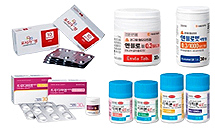
- (Clockwise from top-left) Product photos of Forxiga, Envlo, Dapalon, and Trudapa. The prescription sales of ‘Forxiga (dapagliflozin),’ an SGLT-2 inhibitor class treatment for diabetes, have declined to 22% over a year. After announcing its withdrawal from the Korean market at the end of last year, the company has distributed only the remaining stocks of Forxiga in South Korea, which may have impacted prescription sales significantly. Pharmaceuticals benefiting from Forxiga’s absence include generics, which were launched after Forxiga’s patent expiration last year, and Daewoong Pharmaceutical’s Envlo (ingredient: enavogliflozin), a new diabetes drug that falls into the same class as Forxiga. As of Q1 this year, Forxiga generics hold a 25% share of the SGLT-2 inhibitor market, while Envlo has expanded to 6%. Prescription sales of Foxiga in Q1 dropped by 22%...↑continued decline since the decision to withdraw from the Korean market According to the medical market research firm UBIST, Forxiga’s outpatient prescriptions in Q1 this year amounted to KRW 11.3 billion, a 22% decline over a year compared to KRW 14.5 billion in Q1 last year. The analysis suggests that the decline in the prescription performance of Forxiga can be attributed to the release of generics following Forxiga’s patent expiration and its withdrawal from the Korean market. Forxiga has been a top-selling drug in the market since competition in the SGLT-2 inhibitor market competition has started, expanding its prescription performance. Its sales peaked in Q1 last year, generating prescription sales of KRW 14.5 billion. Forxiga’s quarterly prescription sales (unit: 100 million, source: UBIST). However, its patent expiration in April led to release of generics into the market. Although the government’s 30% price reduction measure in response to generic releases was suspended via administrative litigation, generics containing the same ingredient have been expanding their presence in the market, shaking Forxiga’s position. Indeed, after the launch of generics, Forxiga’s sales began to trend downward. The decline in prescription performance in Q1 this year was further influenced by AstraZeneca Korea‘s decision to withdraw Forxiga from the Korean market. In December last year, AstraZeneca Korea made a decision to withdraw Forxiga from the Korean market. The company plans to withdraw Forxiga, a monotherapy drug, and only leave 'Xigduo,' a combination therapy drug containing metformin. Currently, AstraZeneca Korea only provides the existing stock without additional imports from the global headquarters. In Q1 of this year, supply decreased due to inventory depletion, leading to a significant decline in prescription performance. Monthly prescriptions for Forxiga decreased over time, from KRW 4.3 billion in December last year to 4 billion in January this year and to KRW 3.6 billion each in February and March. Forxiga gap, filled by domestic companies in South Korea… with generics accounting for 25% of the market share and Envlo for 6% As Forxiga, the market’s No.1 product, is set to withdraw from South Korea, other products are competing to fill the gap left by Forxiga. Analysis of the Q1 performance indicates that generics and Daewoong Pharmaceutical’s Envlo are emerging as contenders to fill this gap. In Q1 this year, Forxiga generics recorded a total of KRW 10.2 billion. After April last year, 64 Forxiga generics were launched. These products expanded sales rapidly, generating KRW 3.9 billion in Q2, KRW 6.8 billion in Q3, and KRW 8.3 billion in Q4. In Q1 this year, Forxiga generics expanded its market share to 25% in the entire SGLT-2 inhibitor monotherapy market (KRW 40.6 billion). This represents pulling market share to a quarter of the KRW 150 billion market size within just one year of its launch. Regarding product sales, Boryung’s 'Trudapa' and Hanmi Pharm’s 'Dapalon' have grown significantly. In Q1, Trudapa recorded prescription sales of KRW 1.2 billion, while Dapalon recorded KRW 1 billion. Moreover, Aju Pharm’s 'Daparil,' Chong Kun Dang Pharmaceutical’s 'Exiglu,' and Kyung Dong Pharma’s 'Dapazin' have recorded over KRW 500 million in Q1. However, the other Forxiga generics have very low prescription performance. In Q1, out of 64 generic products, 59 (92%) had less than KRW 500 million prescription sales. Among these, 41 products had less than KRW 100 million in quarterly prescriptions. The average amount prescribed for a generic product is about KRW 159 million. Trends in the prescription market for SGLT2 inhibitor (SGLT2i) class diabetes treatment (unit: KRW 100 million, source: UBIST). Daewoong Pharmaceutical’s Envlo is rapidly expanding its market share. Envlo’s Q1 prescription sales were KRW 2.6 billion (including the prescriptions of HanAll Biopharma’s 'Eaglex'). Envlo is the first SGLT-2 inhibitor developed in Korea, and it was launched in May. Envlo recorded KRW 500 million in Q2 last year, KRW 1.3 billion in Q3, and KRW 1.9 billion in Q4. In Q1 this year, it expanded its market share by 6% in the SGLT-2 inhibitor monotherapy market. Following Forxiga, 'Jardiance,' which ranked second in the market, also benefited. Jardiance’s Q1 prescription sales were KRW 15.3 billion, up 10% compared to KRW 13.9 billion in Q1 last year, becoming the No.1 in the market. However, Jardiance’s market share in the SGLT-2 inhibitor market decreased from 47% to 38%, a 9% drop. While prescription performance increased due to the absence of Forxiga, it is analyzed that it failed to expand market share because of competition from Forxiga generics and Envlo. The pharmaceutical industry expects the market share of Forxiga generics and Envlo to accelerate further after Q2 this year when Forxiga withdrawal begins in full swing. AstraZeneca Korea is anticipating the timing of domestic withdrawal once the remaining stock is depleted. As of Q1, the prescription sales gap, valued at over KRW 10 billion, will be divided between Forxiga generics and Envlo.
- Company
- Godex’s sales slow down due to various regulatory measures
- by Chon, Seung-Hyun Apr 25, 2024 05:50am
- Celltrion’s liver drug 'Godex' is experiencing a slump in the prescription market. At one point, its quarterly prescription sales exceeded KRW 20 billion but have been on a downward trend for the past 2 years. The company has been able to pass the health authorities' reimbursement reevaluations, but the drug price cut that followed left a performance gap. According to the market research institution UBIST on Thursday, outpatient prescriptions for Godex amounted to KRW 17.8 billion in Q1, down 1.3% year-on-year. Compared to the KRW 20.6 billion in Q1 2022, this is a 13.5% decrease in 2 years. Godex's prescription sales in Q1 were the lowest in the last 4 years, after reaching KRW 17.3 billion in Q2 2020. Godex is a reformulated drug developed by Celltrion’s former company, Hanseo Pharm in 2000. It is a combination drug consisting of 7 ingredients: adenine hydrochloride, riboflavin, biphenyl dimethyl dicarboxylate, cyanocobalamin, carnitine orotate, pyridoxine hydrochloride, and antitoxic liver ext. Godex is indicated for a variety of liver diseases with elevated transaminases (ALT), an indirect marker of liver cell damage, including alcoholic fatty liver disease, nonalcoholic steatohepatitis (NASH), inflammatory liver disease, and viral hepatitis. Quarterly Godex outpatient prescriptions (KRW: 100 million, Data: UBIST) Godex has been very popular in the prescription field, growing 48.6% over the past 2 years, from KRW 14.4 billion in prescriptions in Q1 2019 to KRW 21.4 billion in Q4 2021. From Q3 2021 to Q3 2022, the drug has recorded prescription sales of more than KRW 20 billion for 5 consecutive quarters. Godex has barely passed the health authorities' reimbursement reevaluations, but its growth has slowed down due to drug price cuts. In July 2022, the Health Insurance Review and Assessment Service determined that Godex was ineligible for reimbursement. However, after the company appealed, the authorities conducted a reevaluation of the drug’s reimbursement adequacy and concluded that Godex was eligible for reimbursement. However, in November 2022, the Health Insurance Review Committee gave a pending decision on the maintenance of Godex’s reimbursement, and a month later, the Health Insurance Policy Deliberation Committee concluded that Godex’s reimbursement should be maintained. During the reimbursement reevaluation process, Celltrion reached an agreement with the health authorities to reduce the drug’s insurance ceiling price by 12.4% from KRW 356 to KRW 312 from November 2022. Godex’s sales recorded KRW 21.2 billion in Q3 2022 but declined 7.1% to KRW 19.7 billion in Q4 due to the drug price cut, and growth stagnated thereafter. However, if the drug price cut rate is taken into account, its prescription volume is calculated to be at a similar level as before. Therefore, analysis suggests that confidence in the drug itself remains strong in the prescribing area, after being saved from reimbursement review.
