
- LOGIN
- MemberShip
- 2026-06-24 03:30:32
- Company
- Lipitor’s sales stay strong for good reason
- by Son, Hyung-Min Apr 25, 2024 05:50am
- Bill Schuster, Country Manager of Viatris Korea The dyslipidemia treatment Lipitor has been able to remain the No. 1 selling drug for 20 years, supported by various clinical evidence. Lipitor has proven its efficacy in patients with dyslipidemia not only globally but also domestically. Based on various clinical evidence, major domestic and international societies still recommend statins as the preferred treatment for dyslipidemia. On April 24, Viatris Korea held a press conference at the Westin Josun Hotel in Seoul to celebrate the 25th anniversary of Lipitor's launch in Korea. Lipitor is the first atorvastatin-based dyslipidemia treatment that had been developed by Warner-Lambert (now Pfizer). Lipitor was approved by the U.S. Food and Drug Administration (FDA) in 1997 and launched in Korea in 1999. Lipitor works by competitively inhibiting the reductive component of HMG-CoA, a precursor for cholesterol synthesis, and hence disrupt the synthesis of cholesterol in the body. Although many dyslipidemia drugs have then entered the market, Lipitor has been the number one selling drug ever since its launch. According to market research firm IQVIA, Lipitor has been on a roll since 2013, surpassing KRW 100 billion in sales. Last year, Lipitor's sales reached KRW 195.7 billion. Among the many dyslipidemia drugs, Lipitor's success has been driven by the company's efforts to secure a wide range of clinical evidence. In addition to the benefits confirmed in global studies, Viatris (then Pfizer) also conducted clinical trials in domestic patients. In the AT-GOAL and AMADEUS trials, Lipitor was found to lower LDL-cholesterol and reduce the risk of cardiovascular disease in Korean patients. In the AT-GOAL trial, 425 Korean patients with dyslipidemia were followed for 8 weeks after being prescribed personalized dosages based on LDL-cholesterol levels and cardiovascular events, and risk group. Results showed that more than 80% of the patients reached their individualized LDL-cholesterol treatment goals within 4 weeks of taking Lipitor. In the AMADEUS trial, 440 patients with type 2 diabetes received tailored doses of Lipitor according to their LDL-C levels, a major cardiovascular risk factor. In the trial, more than 90% of patients reached target LDL-cholesterol levels after eight weeks of Lipitor treatment. In addition, Viatris launched a high-dose version of Lipitor (80 mg) and Lipitor Plus (atorvastatin-ezetimibe) to improve patient convenience. One of the biggest advantages of Lipitor is that it is the only statin that has a secondary cardiovascular prevention indication. Lipitor offers the benefit of reducing patients' risk for secondary prevention of coronary heart disease, including hospitalization for nonfatal myocardial infarction, revascularization, stroke, angina, and congestive heart failure. In addition, Lipitor can be used in adult patients with type 2 diabetes, and without clinically evident coronary heart disease, but with multiple risk factors for coronary heart disease. Based on such clinical evidence, Korean and international societies such as the American Diabetes Association, the European Society of Cardiology, and the Korean coronary artery disease societies recommend statins as first-line agents with strong clinical evidence. Dr. Sripal Bangalore, Professor of Medicine at New York University School of Medicine, said, “Lipitor's cardiovascular safety has been established in several pivotal clinical studies over the past 25 years. There is still a great deal of use for Lipitor, not only for LDL-cholesterol reduction but also for the prevention of several cardiovascular diseases.” Hyun-Jung Lim, Head of Marketing at Viatris Korea, said, “We have improved patient convenience by launching not only Lipitor but also high-dose Lipitor and Lipitor Plus. We are planning various programs for dyslipidemia patients in Korea, and look forward to your continued interest."
- Company
- Possible reimb expansion for 2nd-gen BTK inhibitor Brukinsa
- by Eo, Yun-Ho Apr 25, 2024 05:50am
- BeiGene Korea The pharmaceutical industry is focusing on whether the second-generation BTK inhibitor 'Brukinsa' will overcome the last stage and acquire insurance reimbursement expansion. According to industry experts, BeiGene Korea is in negotiations with the National Health Insurance Service (NHIS) seeking approval for Brukinsa (zanubrutinib) in mantle cell lymphoma (MCL), chronic lymphocytic leukemia (CLL), and small lymphocytic lymphoma (SLL) indications. If there are no expected delays in the negotiations, Brukinsa is set to be expanded for reimbursement in the first half of the year. The following indications for Brukinsa are included for expanding reimbursement: monotherapy treatment of adult patients with MCL who have received one or more prior therapy, monotherapy treatment of adult patients with CLL or SLL who have received one or more prior therapy, and treatment of patients with CLL or SLL who are either 65 years of age, or older or 65 years of age or younger with accompanying diseases and no prior therapy. Last May, Brukinsa was listed as a monotherapy drug for the treatment of adult patients with Waldenstrom macroglobulinemia (WM) who have had one or more prior therapy. Previously, BeiGene attempted to have Brukinsa listed for MCL, CLL, and CLL indications. However, the application was not approved by the Cancer Disease Review Committee (CDRC) of the Health Insurance Review and Assessment Service (HIRA). On their third attempt, the company progressed to the negotiation stage for drug pricing. Accordingly, the Korea Alliance of Patient Organization demanded an expansion of reimbursement for MCL and CLL indications for Brukinsa in a statement issued last year. Meanwhile, Brukinsa is a targeted anticancer agent that inhibits the survival and proliferation of malignant B cells by blocking Bruton's tyrosine kinase (BTK) protein, a signaling molecule that affects the survival and development of B cells. BTK inhibitors approved in South Korea are Janssen Korea’s 'Imbruvica (ibrutinib),' AstraZeneca Korea’s ' Calquence,' and Ono-Pharma Korea’s 'Velexbru (Tirabrutinib Hydrochloride).'
- Company
- 19 K-biosimilar products sold in 11 markets after 12 yrs
- by Chon, Seung-Hyun Apr 25, 2024 05:49am
- Domestic pharmaceutical and biotech companies have succeeded in commercializing biosimilars in 11 areas. In the 12 years since Celltrion's Remsima was introduced, 19 biosimilars have received domestic approval. Among the companies, Samsung Bioepis has entered 9 markets, the most among Korean companies. According to the Ministry of Food and Drug Safety, Samsung Bioepis received approval for Stelara’s biosimilar Epyztek on November 11. This is the first time Samsung Bioepis has received approval for a Stelara biosimilar in Korea. Stelara, which was developed by Janssen, inhibits the activity of interleukin (IL)-12/23, a type of inflammatory cytokine related to autoimmune diseases, and is used to treat plaque psoriasis, psoriatic arthritis, Crohn's disease, and ulcerative colitis. Annual global sales of the drug amount to approximately KRW 14 trillion. Samsung Bioepis has successfully commercialized the first biosimilars in Korea in 3 areas this year. In January, Samsung Bioepis obtained marketing authorization from the MFDS for Episcli, a Soliris biosimilar. Soliris is a treatment for rare diseases such as paroxysmal nocturnal hemoglobinuria and atypical hemolytic uremic syndrome developed by Alexion, with global sales of approximately KRW 5 trillion. Also, the company obtained marketing authorization for Eylea biosimilar Afilivu in February. Eylea, which was developed by U.S.-based Regeneron, has indications for wet (neovascular) age-related macular degeneration. Macular degeneration is an ocular disease caused by aging and inflammation of the retinal macula, the nerve tissue in the center of the retina of the eye. In severe cases, it can cause blindness. With Samsung Bioepis succeeding in commercializing the first biosimilars in three markets in Korea this year, domestic pharmaceutical and biotech companies have now received approval for biosimilars in a total of 11 areas. Domestic companies first tapped into the biosimilar market in 2012 when Celltrion was granted approval for Remsima. Remsima is a biosimilar product of Remicade, an autoimmune disease treatment. Samsung Bioepis received MFDS approval for Remicade biosimilar Remaloce in 2015. Korean pharma and biotech companies have been receiving approval for their biosimilar products in the Enbrel, Humira, Herceptin, Mabthera, Avastin, Lucentis, and Nesp markets. In 2015, Samsung Bioepis received approval for its first biosimilar of Enbrel, Etoloce. In the Enbrel market, LG Chem received approval for the second Enbrel biosimilar, Eucept in 2018. Celltrion commercialized its second biosimilar, Herzuma, in 2014. Herzuma is a Herceptin. Herzuma was the first biosimilar of an anticancer drug that was released by a Korean company. Samsung Bioepis entered the Herzuma market second in 2017 with the approval of its Samfenet. In 2015, Celltrion received domestic approval for Truxima, a biosimilar of the anticancer drug Mabthera. A total of 3 domestically developed biosimilars have been approved in the autoimmune treatment Humira market. In July 2020, Samsung Bioepis received approval for Adalloce, the first Humira biosimilar, and Celltrion received approval for Yuflyma in June 2021. LG Chem received approval for Xelenka in December of last year, which became the third new entrant into the Humira market. Samsung Bioepis successfully commercialized its first biosimilar, Onbevzi, of the cancer drug Avastin in March 2021. Avastin is an anticancer drug indicated for the treatment of metastatic colorectal and metastatic breast cancer, non-small cell lung cancer, advanced or metastatic renal cell carcinoma, glioblastoma, epithelial ovarian cancer, fallopian tube cancer, primary peritoneal cancer, and cervical cancer. In September 2022, Celltrion received domestic approval for the second Avastin biosimilar, Vegzelma. In 2022, 2 Lucentis biosimilars entered the domestic approval stage. Lucentis is used to treat eye diseases such as macular degeneration and diabetic macular edema. In May 2022, Samsung Bioepis received domestic approval for Amelivu, a biosimilar of Lucentis. In October of the same year, Chong Kun Dang obtained a domestic license for Lucentis biosimilar LucenBS. In 2018, Chong Kun Dang’s biosimilar Nesbell, a biosimilar of the anemia drug Nesp, reached the commercialization stage. In total, 19 biosimilars from Korean companies have been approved as of now. By company, Samsung Bioepis had the most biosimilars with 9, and Celltrion entered 6 markets. LG Chem and Chong Kun Dang each released 2 biosimilars.
- Product
- Will Prolia be able to continue on its high growth in KOR?
- by Moon, sung-ho Apr 24, 2024 05:45am
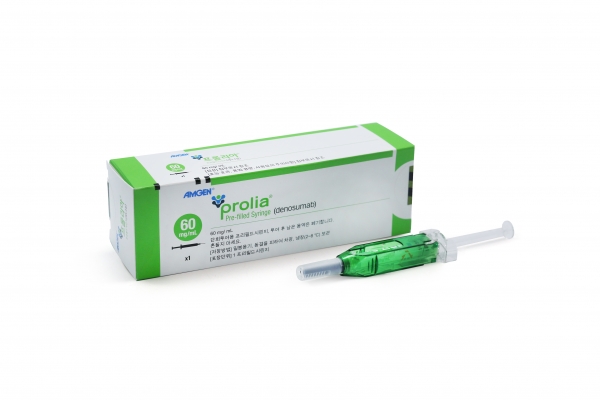
- The government will extend reimbursement for osteoporosis drugs, including Prolia (denosumab, Amgen). In particular, along with the reimbursement extension, the government has allowed switching between osteoporosis drugs. According to industry sources on the 20th, the Ministry of Health and Welfare recently issued an administrative notice of the ‘Details on the Standards and Methods for Applying Medical Benefits’ that outlined the contents above. Without special objections, the standards are expected to be in force from May. The main point of the amendment was to extend the reimbursement standard for major osteoporosis drugs used in the field. Specifically, the Ministry of Health and Welfare has decided to expand the criteria to allow borderline patients who have reached the T-score treatment goal to continue to receiving reimbursement for osteoporosis drugs. Patients who have been recognized as eligible for reimbursement for a T-score of -2.5 or less (T-score≤-2.5) when measuring bone mineral density using Dual-Energy X-ray Absorptiometry (DXA) of the central bone, will be eligible for an additional year of reimbursement if their T-score improves during treatment to a T-score greater than -2.5 but less than or equal to -2.0. If the T-score remains greater than -2.5 but less than or equal to -2.0 thereafter, reimbursement will be allowed for another year. In the additionally approved period, patients will be allowed to switch between raloxifene, bazedoxifene, bisphosphonate, and denosumab. The patients may also switch to zoledronic acid injections. The MOHW explained, "After referring to textbooks, guidelines, clinical papers, and academic society (expert) opinions, we decided to extend reimbursement to allow patients diagnosed with a T-score of -2.5 or less via DEXA to continue using the treatment if their T-score improves to -2.5 but less than or equal to -2.0." Meanwhile, the government's reimbursement extension for osteoporosis drugs sheds light on Prolia, which currently dominates the osteoporosis prescription drug market. Since this year, the MOHW has been scrutinizing osteoporosis drugs, known as selective focus review, due to the sharp rise in their claims. In essence, the government’s focus is on Prolia, among osteoporosis drugs. According to the drug research institution IQVIA, Prolia generated KRW 151.1 billion in prescription sales last year after posting KRW115.7 billion in 2022 in Korea. As a single product, it is second only to Keytruda (pembrolizumab), an immuno-oncology drug with unrivaled sales, in the domestic prescription market. The single drug’s sales in the domestic prescription market are comparable to those of mid-sized pharmaceutical companies Despite the government's scrutiny, Prolia's growth is expected to continue with the osteoporosis drug's reimbursement expansion and switching. An industry insider who requested anonymity said, "Last year, the top three items in terms of sales were Keytruda, Prolia, and Lipitor, and the sales of each exceeded the total sales of all mid-sized domestic pharmaceutical companies. Given the level of influence a single item can have on market trends, we need to consider reclassifying the threshold for blockbusters to drugs that post more than KRW 50 billion in annual sales.”
- Opinion
- [Reporter’s View] Decreased vaccine funding during endemic
- by Son, Hyung-Min Apr 24, 2024 05:44am
- K-bio and Vaccine Fund No.3 is soon to be launched. Considering the recent contraction of the investment market, the entire amount of KRW 40 billion of investment money from the government and the government-run bank has been invested, regardless of the formation size. Once the initial formation of KRW 70 billion is raised, early investment will be possible. In August 2022, the Ministry of Health and Welfare (MOHW) announced the establishment of the K-Bio and Vaccine Fund as part of the government’s policy commitments. The MOHW stated that it had invested KRW 50 billion and KRW 100 billion each in two funds, with additional investments of KRW 100 billion from the government-run banks (Korea Development Bank, Korea Eximbank, and Industrial Bank of Korea) and KRW 300 billion of private capital. These funds will be used to support companies that engage in vaccine development. However, the investment amount in the fund has gradually decreased. Few companies invest in funds due to a frozen private investment market. While the government raised KRW 261.6 billion through the K-Bio and Vaccine Funds No.1 and No.2, the investment size has now reduced to KRW 70 billion in No.3. In fact, this trend is not irrelevant to the end of the COVID-19 pandemic. In 2022, various Korean pharmaceutical and biotech companies like GC Biopharma, Ilyang Pharmaceutical, Genexine, and Shin Poong Pharm challenged the COVID-19 vaccine and treatment. However, with the shift of COVID-19 to the endemic phase, many of them either suspended clinical trials or withdrew development plans. With the waning interest from the government, the pharmaceutical and biotech industry, and citizens, the presence of the vaccine fund is now in question. The size of the vaccine fund is also raising concerns. Industry experts argue that an investment size of trillions of Korean won is necessary to develop new domestically developed drugs. However, the government reduced the fund’s size to KRW 1 trillion. Since the fund has not reached KRW 1 trillion, it is anticipated that Fund No.3 is expected to end with the formation of less than KRW 100 billion. When combining the sizes of Funds No.1, No.2, and No.3, the total is less than KRW 500 billion. In particular, the current fund size of KRW 300 billion is insufficient to support even late-phase clinical trials for a single pharmaceutical and biotech company. Many companies that develop new drugs domestically are abandoning development due to the high costs involved in phases 2 and 3. Most companies are unable to progress to phase 2 clinical trials. In the end, it may be difficult for President Yoon Suk Yeol to secure the vaccine and treatment technology to prepare for the Next Pandemic, as he has advocated since his inauguration. The vaccine fund is now non-commital due to the COVID-19 endemic and insufficient funds. There is a prevailing sentiment in the industry that instead of having high expectations for policies, the focus is on the government designating biotech as a promising industry and showing interest and support. Despite the heavy impact of the COVID-19 pandemic on Korean citizens, the government’s efforts to secure vaccines and treatment are waning with the announcement of the endemic. Doubts are emerging about whether the government plans to increase vaccine funds if infectious diseases like COVID-19 occur again. During this period, there are concerns regarding the course of government policies.
- Company
- Samsung Bioepis’ Stelara biosimilar is approved in Europe
- by Chon, Seung-Hyun Apr 24, 2024 05:44am
- Samsung Bioepis Samsung Bioepis announced on the 23rd that the European Commission (EC) granted marketing authorization for its Stelara biosimilar Pyzchiva. The final marketing authorization comes 2 months after Pyzchiva received a positive opinion for marketing authorization from the European Medicines Agency (EMA)’s Committee for Medicinal Products for Human Use (CHMP) in February. Pyzchiva’s original drug Stelara, which was developed by Janssen, is an autoimmune disease treatment for plaque psoriasis, psoriatic arthritis, Crohn's disease, and ulcerative colitis. It inhibits the activity of interleukin (IL)-12,23, a class of proinflammatory cytokines involved in the adaptive immune response. It posts annual global sales of approximately KRW 14 trillion. The company explained, “EC’s approval of Pyzchiva further extends our portfolio for autoimmune diseases by including an interleukin inhibitor to our existing 3 tumor necrosis factor-alpha (TNF-α) inhibitors - Benepali, Flixabi, and Imraldi.” Samsung Bioepis has currently 7 biosimilar products commercialized in the European market. The company has 7 biosimilar products in the European market. Samsung Bioepis currently sells biosimilars of Enbrel, Remicade, Humira, Herceptin, Avastin, Lucentis, and Soliris in the European market.” Byoungin Jung, Vice President and Regulatory Affairs Team Leader at Samsung Bioepis, said, "We are pleased to be able to receive European approval for our interleukin inhibitor Pyzchiva. We will continue to secure various autoimmune disease treatments and develop new drugs to provide patients with more treatment options."
- Company
- Prostate cancer drug Pluvicto’s approval imminent in Korea
- by Eo, Yun-Ho Apr 24, 2024 05:44am
- The new metastatic castration-resistant prostate cancer drug ‘Pluvicto’ is set to soon be commercialized in Korea. According to industry sources, the Ministry of Food and Drug Safety is in the final stages of reviewing Novartis Korea's targeted radioligand therapy ‘Pluvicto (lutetium (177Lu) vipivotide tetraxetan)’ for its marketing authorization. Its formal approval is expected in the first half of the year. In June 2023, Pluvicto was recognized by the MFDS for its innovation and designated the drug as the 6th drug in the Global Innovative products on Fast Track (GIFT) program. In addition, Novartis has also applied to participate in the pilot approval-evaluation-negotiation linkage system with Pluvicto, which is expected to accelerate insurance reimbursement discussions after approval. Pluvicto is a radioligand therapy indicated for the treatment of prostate-specific membrane antigen (PSMA)-positive metastatic castration-resistant prostate cancer (mCRPC) who have been treated with androgen receptor pathway inhibition and taxane-based chemotherapy. It is regarded as a next-generation breakthrough therapy that delivers therapeutic radioisotopes to prostate cancer cells through the binding of radioisotopes (177Lu) and PSMA, triggering cancer death. The drug has been recognized for its innovation overseas as well, being designated as a Breakthrough Therapy and granted priority review, and quickly received FDA approval (March 2022). Meanwhile, Pluvicto’s efficacy has been demonstrated in the Phase III VISION study. In the Phase III VISION study, Pluvicto met both primary endpoints of OS and rPFS, reducing the risk of death by 38% and the risk of radiographic progression or death (rPFS) by 60% compared to standard of care monotherapy. In addition, approximately one-third (30%) of patients with evaluable disease at baseline demonstrated an objective response with Pluvicto+best standard of care (BSoC), compared to the 2% in the BSoC monotherapy arm
- Policy
- Prolia and Ryaltris adjust drug pricing
- by Lee, Tak-Sun Apr 23, 2024 05:40am
- Prolia. Amgen Korea and Chong Kun Dang Pharmaceutical will voluntarily reduce the price of 'Prolia,' which they are jointly selling. As the government expanded the administration guidance of osteoporosis medicines, Prolia, which is expected to see an increase in sales following the reimbursement expansion, voluntarily adjusted the ceiling price of the drug. Prolia recorded sales of KRW 151.1 billion last year (according to IQVIA), ranking second in the domestic pharmaceutical sales in Korea, following Keytruda. Some products, such as Yuhan’s 'Ryaltris Nasal Spray,' will lower the ceiling price due to increased usage. According to industry sources on the 22nd, the ceiling price of Prolia Prefilled Syringe (denosumab) will be reduced from KRW 162,600 to KRW 156,100 starting May 1st. This measure was taken as part of the reimbursement expansion. The government aims to support senior healthcare by increasing the reimbursable period to two years after treating osteoporosis, which has a preventative effect on bone fractures. The drug is currently reimbursable when the bone density is below -2.5 (T-score value). But starting in May, it is reimbursable for up to two years when the T-score is below -2.0 or up to -2.5. The expanded reimbursement scope is expected to benefit 44,773 patients. As part of the reimbursement scope expansion, the company selling Prolia voluntarily lowered the drug pricing under the agreement with the National Health Insurance Service (NHIS). The impact of the reimbursement expansion of osteoporosis medicines, following the voluntary drug pricing reduction, on the first annual finance is expected to be around KRW 5.6 billion. Prolia has dominated the osteoporosis medicine market since its domestic launch in 2017. Its co-promotion agreement with Chong Kun Dang Pharmaceutical yielded synergistic effects. In 2019, Prolia became the top-selling drug after receiving reimbursement coverage as a first-line osteoporosis treatment. This drug is a biologic that targets RANKL, which is essential for the formation, activation, and survival of bone-destructing osteoclasts. Last year, Prolia was ranked second among the medicines with the highest performance in South Korea. According to IQVIA’s report on sales figures, Prolia recorded sales of KRW 151.1 billion, second only to the anticancer immunotherapy drug Keytruda, which generated KRW 398.7 billion. Its voluntary price reduction is anticipated to relieve the patients’ co-payment burden and save National Insurance funds. Ryaltris. Meanwhile, Yuhan’s allergic rhinitis treatment, 'Ryaltris Nasal Spray (momethasone furoate/olopatadine),' which was included in reimbursement, saw a more than 30% increase in claimed amount compared to the expected amount. As a result, the reimbursement ceiling price was adjusted under the negotiated agreement based on the price-volume agreement (PVA, Type GA). Initially, an agreement was reached during the drug pricing negotiations for an expected claim amount of KRW 1.02 billion for this drug. However, it is expected that the actual sales will exceed this amount. Based on the outpatient prescription sales reported in last year's UBIST data, it was KRW 3.3 billion. Starting in May, the price of Ryaltris Nasal Spray (18 mL) will be adjusted from KRW 6,197 to KRW 5,893, and Ryaltris Nasal Spray (31 mL) will be adjusted from KRW 12,396 to KRW 11,789.
- Company
- Pharmbio wins over Novartis’ Revolade in patent dispute
- by Kim, Jin-Gu Apr 23, 2024 05:37am
- Pharmbio Korea has won the first trial in a patent dispute over Novartis' 'Revolade.' Pharmbio Korea has won the first trial in a patent dispute against 'Revolade (eltrombopag olamine),' a treatment for primary immune thrombocytopenia (ITP), following SK Plasma. Pharmbio Korea received a generic biological license application (BLA) prior to winning the first trial, but the company may face a high risk in launching the product. It is highly possible that the patent holder, Novartis, will appeal to the verdict. According to industry sources on the 22nd, the Intellectual Property Trial and Appeal Board (IPTAB) decided on the validity of three Revolade formulation patents brought by Pharmbio Korea against Novartis, issuing a favorable ruling on the claim validity on the 19th. There are five patents for Revolade, including two substance patents and three formulation patents. The substance patents expired in August 2021 and May of last year, while the remaining three formulation patents are set to expire in August 2027. In July last year, Pharmbio Korea filed for passive confirmation of scope of rights for three patents. SK Plasma filed a similar suit in the same month, following Pharmbio Korea. While Pharmbio Korea was the first to file the petition, SK Plasma secured a victory decision two months before. On January 31, SK Plasma received the decision to establish their claim. Pharmbio Korea has already obtained a generic BLA for Revolade. In March last year, it received a BLA for two doses of 'Korea Pharmbio Eltrombopag Olamine Tab.' SK Plasma has not yet completed the development of the generic. Pharmbio Korea has secured a BLA for a generic product, but launching it may pose challenges despite winning the first trial. This is because Novartis is anticipated to appeal. Novartis has already filed a lawsuit to cancel the decision after the first trial against SK Plasma in a similar patent dispute. Given Novartis' loss to Pharmbio Korea in the same patent dispute, there are similar expectations that Novartis will appeal to the IPTAB in the pharmaceutical industry. Revolade is a primary immune thrombocytopenic purpura (ITP) treatment developed by Novartis. ITP is an autoimmune disease in which the immune system attacks platelets as if they were foreign substances. Revolade treats this disease by stimulating platelet production. Initially developed by GSK, Revolade's patent and product rights were transferred to Novartis when GSK sold its oncology division to Novartis. In 2010, Revolade was approved in Korea as a treatment for patients with ITP, and in 2018, it was additionally approved for severe aplastic anemia indications. The following year, Revolade's sales saw significant growth after its reimbursement scope expanded to include severe aplastic anemia. According to pharmaceutical market research firm IQVIA, Revolade's sales, which were less than KRW 4 billion until 2018, increased to KRW 4.9 billion in 2019, KRW 7.6 billion in 2020, KRW 8 billion in 2021, and KRW 8.6 billion in 2022. Last year, it recorded sales of KRW 9 billion, a 5% increase from the previous year.
- Policy
- HK inno.N starts developing a Lixiana generic
- by Lee, Hye-Kyung Apr 23, 2024 05:36am
- HK inno.N is joining the race to develop a generic version of the NOAC (novel oral anticoagulant) drug Lixiana (edoxaban). The Ministry of Food and Drug Safety recently approved clinical trials to evaluate the bioequivalence of the Lixiana generic ‘IN-G00002’ and IN-R00002 (Lixiana). The IN-G00002 bioequivalence trial will evaluate the candidate’s efficacy in ▲reducing the risk of stroke and systemic embolism in patients with non-valvular atrial fibrillation (NVAF); ▲treating deep vein thrombosis and pulmonary embolism, and ▲reducing the risk of recurrence of deep vein thrombosis and pulmonary embolism. The clinical trial will be conducted at Suck Kyung Medical Foundation Central Hospital from July this year to July next year, and involve 60 adults aged 18 and older. Although Lixiana's patent expires on Nov. 10, 2026, the drug's PMS (post-marketing surveillance) period ended on Aug. 24, 2021, leading to applications for approval of follow-on drugs. Hanmi Pharmaceutical, Kolmar Korea, HK inno.N, Kolmar Pharma, Hutecs Korea, Chong Kun Dang, Samjin Pharm, Dong-A ST, and Sinil Pharmaceutical filed a passive trial to confirm the scope of the composition patent that expires on August 21, 2028, and received a confirmation in July 2020. As a result, 29 generics have been approved, starting with Dong-A ST's Edoxia ODT in December 2021. However, the substance patent for Lixiana is valid until November 10, 2026, so there are still 2 more years left before the generics can be released into the market. Against this backdrop, the NOAC market has been growing constantly. According to the market research institution UBIST, the NOAC market, which was worth KRW 147.2 billion in 2018, reached the KRW 200 billion mark in 2021, posting KRW 222.9 billion. In 2022, the market expanded further to KRW 242.5 billion.
