
- LOGIN
- MemberShip
- 2026-06-24 09:41:46
- Company
- Ilaris’s reimb again at a standstill… bumpy road ahead
- by Eo, Yun-Ho Mar 12, 2024 05:48am
- The road to reimbursement for ‘Ilaris,’ a treatment used by around ten patients in Korea, continues to be bumpy ahead. According to Dailypharm’s coverage, the government’s ‘reimbursement adequacy’ decision made for Novartis Korea’s Ilaris (canakinumab) has been put on hold after the company failed to meet the government's request for additional data. The drug, which is a treatment for hereditary recurrent fever syndrome, had previously received conditional approval from the Health Insurance Review and Assessment Service’s Drug Reimbursement Evaluation Committee. Novartis has since requested the government to revisit the data submission requirements to the extent possible, and has recently filed a request with HIRA for Ilaris’s reimbursement. Ilaris is indicated in Korea to treat ▲Cryopyrin-Associated Periodic Syndromes (CAPS), ▲Tumor Necrosis Factor Receptor Associated Periodic Syndrome (TRAPS), ▲Hyperimmunoglobulin D Syndrome (HIDS)/Mevalonate Kinase Deficiency (MKD), ▲ Familial Mediterranean Fever (FMF), and ▲ Systemic juvenile idiopathic arthritis (JIA). The indications for CAPS, TRAPS, and FMF were deemed conditionally adequate for reimbursement by the DREC last month. At the time HIRA set out evidence submission and follow-up management as conditions for the reimbursement of these indications. In general, the condition set out by DREC is ‘accepting a price below the appraised value'. It is rare for a drug to be approved with such strict conditions. Given the circumstances, the government's requirements are likely to be difficult for the company to meet. The question is to what extent Novartis can accommodate the additional data requested by the government, and whether HIRA will accept the amount of data that the company believes it can submit rather than all of the data and grant reevaluations. Since being approved in 2015, Ilaris has already failed two reimbursement attempts. With patients waiting more than eight years, it will be interesting to see if the government and the pharmaceutical company can reach an agreement and move toward expanding coverage. A Novartis official said, "We are fully aware of the patients’ wait. As this is our third reimbursement attempt, we are exploring all measures available for reimbursement listing, and requested reevaluation so that the post-submitted evidence requirement presented by HIRA be adjusted to a realistically achievable level.
- Company
- SK Bioscience breaks ground on vaccine plant expansion
- by Chon, Seung-Hyun Mar 11, 2024 05:55am
- From the left, Dong-ho Oh, CEO of SK ecoengineering, Ki Chang Kwon, Mayor of Andong, Cheol-Woo Lee, Governor of Gyeongsangbuk-do, Jaeyong Ahn, CEO of SK bioscience, Pascal Robin, General Manager and Representative Director of Vaccines at Sanofi Korea, and other distinguished guests are commemorating a major expansion of Andong L HOUSE in South Korea. SK Bioscience announced on the 7th that the company broke ground on a vaccine plant, ‘Andong L HOUSE,’ located in Andong, Gyeongsangbuk-do, South Korea. The plant will be expanded to install new equipment. This expansion aims to increase vaccine production capacity for global supply by raising the existing vaccine plant within L House from one floor to three floors, securing a new space of approximately 4,200 ㎡. SK Bioscience and global pharmaceutical company Sanofi have made a large-scale joint investment to expand this facility. The facility will be used to commercially produce the next-generation pneumococcal vaccine candidate product, called "GBP410." SK Bioscience and Sanofi jointly developed GBP410, which includes 21 serotypes. In March 2014, SK Bioscience signed a joint development and sales agreement with Sanofi for the next-generation pneumococcal vaccine. Last June, SK Bioscience and Sanofi announced positive results from Phase 2 clinical trials evaluating the safety and immunogenicity of "GBP410" in infants. Based on the positive results from Phase 2 clinical trials, both companies are preparing for global Phase 3 clinical trials to submit an approval application in 2027. SK Bioscience plans to swiftly secure cGMP, the United States standards for pharmaceutical manufacturing and quality control, alongside the facility expansion, to enhance the global market competitiveness of GBP410. "With the expansion, the Andong L-HOUSE, which has proven its global production capacity, will solidify its position as a global vaccine hub," SK Bioscience CEO Jaeyong Ahn stated. "We are dedicated to creating and distributing highly effective vaccines with the potential to be blockbusters," Ahn added.
- Company
- Jemperli can be prescribed at general hospitals in KOR
- by Eo, Yun-Ho Mar 11, 2024 05:55am
- Jemperli, the first immuno-oncology option introduced to the field of endometrial cancer, can now be prescribed in general hospitals in Korea. According to industry sources, GSK Korea’s PD-1 inhibitor Jemperli (dostarlimab) has passed the drug committee (DC) reviews of tertiary hospitals in Korea. Including the Seoul National University Hospital and Seoul Asan Medical Center. The company has been gradually expanding its prescribing area after receiving reimbursement for Jemperli in December last year. While the number of hospitals that granted use of the drug is still small, GSK has been working to create an enabling environment for Jemperli prescriptions even before the reimbursement process, implementing an Expanded Access Program (EAP) in 15 major medical institutions in Korea. In the multi-cohort Phase 1 GARNET study that was conducted on patients with recurrent or advanced solid tumors, Jemperli demonstrated efficacy with the Cohort A1 analysis results, which enrolled patients with recurrent or advanced dMMR/MSI-H endometrial cancer who progressed during or after platinum-based systemic chemotherapy. The cohort was among the largest conducted for PD-1 inhibitor monotherapies in advanced dMMR/MSI-H endometrial cancer to date. The primary efficacy outcome measures of the study were Objective Response Rate (ORR) and Duration Of Response (DOR) as determined by a Blinded Independent Central Review (BICR) according to (Response Evaluation Criteria Solid Tumors) RECIST v 1.1. As a result of analyzing a total of 108 patients with a median follow-up of 16.3 months, Jemperli demonstrated durable antitumor activity with a manageable safety profile. In the cohort, the ORR was 43.5% and the median DOR was not yet reached. The Disease Control Rate (DCR) was 55.6%, and the proportions of responses lasting 6 and 12 months were 97.9% and 90.9%, respectively. On the 7th, Jemperli was additionally approved as a first-line treatment in combination with platinum-based chemotherapy for patients with Mismatch Repair Deficient/Microsatellite Instability-High (dMMR/MSI-H) recurrent or advanced endometrial cancer.
- Company
- Hemlibra shows big sales rise, Advate loses ground
- by Kim, Jin-Gu Mar 11, 2024 05:55am
- Hemlibra, introduced to South Korea by JW Pharmaceutical, is a drug used to treat Type A hemophilia. The market for Type A hemophilia has shifted significantly, with JW Pharmaceutical's 'Hemlibra' expanding sales considerably after receiving reimbursement expansion. However, Takeda Pharmaceutical’s 'Advate,' which has been recording the highest sales in the market for an extended period, lost ground. Advate sales decreased by over 20%, recording sales lower than Hemlibra’s. Hemlibra sales KRW 7.6 billion → KRW 19 billion…As a result of acquiring reimbursement expansion According to a pharmaceutical market research company IQVIA on the 8th, the market size of Type A hemophilia last year was KRW 77.1 billion, up 17% from KRW 66.2 billion in 2022. In this figure, sales data from hospitals run by the Korea Hemophilia Foundation were not included. JW Pharmaceutical's Hemlibra sales increased about 2.5 times year-over-year (YoY), surpassing the annual sales of KRW 10 billion for the first time. Its sales last year were KRW 19 billion. Hemlibra, introduced to South Korea by JW Pharmaceutical, is a drug used to treat Type A hemophilia. It utilizes dual-specific antibody technology that binds simultaneously to clotting Factors IX and X. Unlike traditional Factor VIII treatments, Hemlibra is the first non-Factor VIII medication that can be administered subcutaneously up to once every four weeks. JW Pharmaceutical secured the domestic development and sales rights for Hemlibra from Chugai Pharmaceutical in 2017. It acquired Korean BLA in January 2019 and launched in May 2020. After recording KRW 2.1 billion in sales in the first year of launch, its sales expanded to KRW 7.2 billion in 2021 and KRW 7.6 billion in 2022. The significant increase in Hemlibra’s sales last year may be attributed to its reimbursement expansion. Since May, Hemlibra has been reimbursed for ‘patients over the age of one with Type A hemophilia who do not have Factor VIII antibodies.’ In just three years, Hemlibra has expanded its reimbursement for non-antibody patients following its initial insurance coverage for patients with severe Type A hemophilia. Top Type A hemophilia drugs by sales statistics. Moreover, an increase in sales of Hemlibra may be due to its improved administration methods compared to existing treatments. Hemlibra is the first subcutaneous injection formulation, offering patients a more convenient option. Previous treatments required patients to locate a vein and self-administer injections, which was inconvenient and difficult for many patients, especially for children and teenagers. Advate sales, down 22%... Adynovate and Greengene F show weakness in sales overall On the other hand, Takada Pharmaceutical's Advate, which has established a strong position in the market, experienced a significant decrease in sales. Advate's sales last year were KRW 15.1 billion, down 22% compared to KRW 19.5 billion in 2022. Expanding the periods further, it has steadily declined since 2019. Sales of Advate, which stood at KRW 27.7 billion then, decreased to KRW 25.8 billion in 2020, KRW 22.9 billion in 2021, and KRW 19.5 billion in 2022. Advate has demonstrated a strong presence in the hemophilia A market for an extended period. By jointly selling products with GC Biopharma, which significantly influences the domestic hemophilia treatment market, Advate consistently recorded annual sales of over KRW 20 billion. However, Advate is gradually losing its strength as Hemlibra rapidly expands its influence. During the same period, Novo Nordisk Pharma's Novoseven RT sales increased from KRW 5.5 billion to KRW 17.3 billion, exacerbating Advate's decline. Another hemophilia A treatment from Takeda Pharmaceutical, Adynovate, also saw a 20% decrease in sales from KRW 6.8 billion to KRW 5.4 billion. GC Biopharma's GreenMono slightly increased from KRW 6.6 billion to KRW 6.7 billion, while another GC Biopharma's Greengene F, decreased by 35% from KRW 2.7 billion to KRW 1.8 billion. Including joint sales, three out of four products sold by GC Biopharma experienced a more than 20% drop in sales over the past year. However, GC Biopharma is still reported to maintain significant performance in the hemophilia treatment market through the Korea Hemophilia Foundation . The industry expects that Hemlibra's upward trend will continue in the future. This year, we expect to see more prominent effects from expanded reimbursement. It is estimated that there are around 1,700 hemophilia A patients in South Korea. Among them, it is estimated that 60% of non-inhibitor patients with hemophilia A in South Korea are eligible for Hemlibra reimbursement. A critical factor in the current situation is the renegotiation of Hemlibra's reimbursement terms. The risk-sharing agreement (RSA) contract for Hemlibra is scheduled to expire on the 30th of next month. JW Pharmaceutical had previously entered into an RSA contract with the government for Hemlibra, operating under a total expenditure cap model.
- Company
- AZ’s EGPA drug Fasenra receives orphan drug designation
- by Eo, Yun-Ho Mar 11, 2024 05:55am
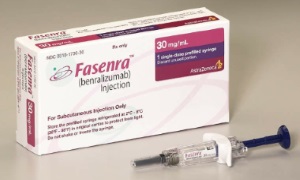
- AstraZeneca's antibody drug Fasenra has been designated as an orphan drug in Korea for its eosinophilic granulomatosis indication. The Ministry of Food and Drug Safety announced so through an official orphan drug designation notice on the 7th. More specifically, the drug received an orphan drug designation as a treatment for eosinophilic granulomatosis with polyangiitis (EGPA) Fasenra (benralizumab)’s EGPA indication was granted an orphan drug designation by the US FDA in 2018. AstraZeneca recently presented results from its MANDARA trial at the American Academy of Allergy, Asthma, and Immunology (AAAAI) Annual Meeting, showing the drug’s potential. The MANDARA trial is a head-to-head trial that directly compared Fasenra to GSK's antibody drug Nucala (mepolizumab). In the trial, patients with relapsing or refractory EGPA were given one 30mg subcutaneous injection of Fasenra or three 100mg injections of Nucala every four weeks for 52 weeks to compare the efficacy and safety of the two drugs. 140 adults with difficult-to-treat EGPA who were receiving oral corticosteroids, with or without stable immunosuppressive treatment enrolled in the study. The mean age of the patients was 52 years, and 60% were women. Of these patients, 66% had relapsing disease and 60% had refractory disease. Study results showed that the rate of patients who achieved remission at weeks 36 and 48 was 59% in the Fasenra(benralizumab) group and 56% in the Nucala (mepolizumab) group. Although the rate was slightly higher in the Fasenra group compared with the Nucala group, the difference was not statistically significant. However, the results demonstrated Fasenra’s non-inferiority to Nucala. The secondary endpoints, duration of remission and the time to first relapse, were similar in both treatment groups. The mean reductions in blood eosinophil count from baseline to week 52 were comparable between the two groups, the Fasenra group showing reductions from 306.0/µL to 32.4/µL and the Nucala group showing reductions from 384.9/µL to 71.8/µL.1 EGPA is a systemic vasculitis associated with asthma, eosinophilia, sinusitis, pulmonary infiltrates, and neuropathy. EGPA can result in damage to multiple organs, including the lungs, skin, heart, gastrointestinal tract, and nerves, which accumulate over time and can be fatal if left untreated. Fasenra is a monoclonal antibody that binds directly to IL-5 receptor alpha on eosinophils and attracts natural killer cells to induce rapid and near-complete depletion of blood and tissue eosinophils in most patients via apoptosis (programmed cell death). Fasenra is currently approved as an add-on maintenance treatment for severe eosinophilic asthma in the US, EU, Japan, and other countries, and is approved for self-administration in the US, EU, and other countries. In Korea, the drug is being reviewed for reimbursement coverage as a treatment for severe eosinophilic asthma and the agenda has passed the Health Insurance Review and Assessment Service's Drug Reimbursement Evaluation Committee review recently.
- Policy
- 1st KOR trial of 'STX-721' to treat EGFR mutant NSCLC begins
- by Lee, Hye-Kyung Mar 11, 2024 05:55am
- The US pharmaceutical company Scorpion Therapeutics has started conducting the first clinical trial of its new EGFR-targeted therapy, 'STX-721,' on patients in South Korea. The Ministry of Food and Drug Safety (MFDS) has approved ‘The first human clinical trial of STX-721 enrolling patients with locally advanced or metastatic non-small cell lung cancer (NSCLC) driven by EGFR exon 20 insertion mutations.’ The currently available targeted anti-cancer therapies for NSCLC (Source: Korea Bio-Economic Research Center of Korea Bio). The Phase 1/2 clinical trial of STX-721 will be conducted at Seoul National University Hospital. Scorpion Therapeutics and Pierre Fabre, a French pharmaceutical company, have entered an exclusive collaboration and license agreement to co-develop STX-721 and STX-241, two new drug candidates for next-generation mutant epidermal growth factor receptor (EGFR) inhibitors. According to Scorpion Therapeutics, STX-721, an orally administered treatment, is designed to selectively target mutations and optimize tolerability and efficacy compared to conventional treatments. “Conventional treatment options face significant limitations associated with the inhibition of wild-type EGFR in healthy tissues, including serious side effects often leading to dose reductions or interruptions, stated Michael Streit, Chief Medical Officer of Scorpion Therapeutics. “STX-721 demonstrated a compelling preclinical selectivity profile,” he added. The Phase 1/2 clinical trial of STX-721 started in October 2023, with the first patient receiving treatment. The company aims to complete the research, involving all 120 patients, by June 1st, 2028. Furthermore, the Phase 1/2 clinical trial is a multi-center, open-label study designed to evaluate the safety and tolerability of multiple dose escalation in patients with advanced or metastatic NSCLC. In the Phase 1/2 clinical trial, the first patient received STX-721 in October. The company is evaluating the drug as a monotherapy for patients with advanced or metastatic NSCLC driven by EGFR exon 20 insertion mutations. About 80-90% of all lung cancers are NSCLC. Early NSCLC detection can lead to a cure through surgery. However, only about 15% of patients with NSCLC are eligible for surgery and the recurrence rate after surgery is between approximately 20 to 45%. The most used targeted anticancer drugs for treating NSCLC are inhibitors that target EGFR, ALK, ROS1, and BRAF/MEK. EGFR mutations are reported to occur most frequently in non-smoking Asian lung cancers.
- Policy
- Fasenra's reimb application passes DREC review
- by Lee, Tak-Sun Mar 11, 2024 05:55am
- Fasenra, the last of 3 antibody drugs used for severe asthma to apply for reimbursement in Korea, has now passed the Drug Reimbursement Evaluation Committee (DREC) stage, increasing the likelihood of its reimbursement. The drug, like Nucala, is seeking reimbursement through the risk-sharing arrangement (RSA) scheme. The industry is paying attention to Fasenra’s progress because its same-class drug Cinqair has been reimbursed through the general listing process and Fasenra is going through the RSA process Nucala went through. The Health Insurance Review and Assessment Service announced on the 7th that it passed the applications for the reimbursement of new drugs such as Fasenra, Idelvion, and reimbursement extension of Brukinsa at the 3rd 2024 Drug Reimbursement Evaluation Committee. The reimbursement adequacy of Fasenra Prefilled Syringe Inj 30mg (benralizumab, AZ), a treatment for severe eosinophilic asthma, was deemed adequate at the recent DREC meeting. Fasenra had received a non-reimbursement decision at the previous DREC meeting that was held in September last year. Therefore, the company passed HIRA’s review in its second attempt. In particular, Fasenra is receiving attention for the fact that 2 other drugs with the same mechanism of action have already been approved. In October last year, 2 interleukin (IL)-5 antagonists used for severe eosinophilic asthma, like Fasenra, were granted reimbursement. The 2 other drugs are Cinqair (reslizumab, Teva-Handok) and Nucala (mepolizumab, GSK). Cinqair was approved through the regular reimbursement process, and Nucala was approved through the RSA process. This is the first time a drug in the same class has been approved through two different reimbursement schemes. In this sense, DREC’s recognition of Fasenra's reimbursement adequacy is even more unusual. The fact that the company is undergoing the reimbursement process through the RSA track is not exceptional, as latecomers can also apply for RSA since 2020, but no drug has attempted reimbursement listing through the RSA track after a same-class drug was listed through the general track. This is because if a drug in the same class is listed through the general listing process, it is disadvantageous for the latecomer to apply for RSA. However, since one of the drugs -Nucala – was listed through the RSA scheme, it is likely that the company referred to Nucala’s case when applying for Fasenra’s reimbursement through the RSA track. Moreover, as RSA applications were limited to anticancer drugs and rare diseases, Fasenra and Nucala are regarded as exceptions because they are severe chronic diseases. However, the Health Insurance Review and Assessment Service is expected to apply RSA to drugs for severe chronic diseases for which there are no alternatives and which irreversibly cause a significant deterioration in the quality of life, such as systemic pustular psoriasis, interstitial lung disease, hereditary angioedema, and severe asthma. At the meeting, DREC also recognized the reimbursement adequacy of CSL Behring’s ‘Idelvion Inj,’ which is used to treat hemophilia B. As it can extend the dosing cycle by up to 3 weeks, it is expected to be in high demand if it is approved for reimbursement. BeiGene Korea's Brukinsa Cap, which also sought to expand reimbursement, has been deemed adequate for reimbursement in Mantle cell lymphoma (MCL), Chronic lymphocytic leukemia (CLL), or small lymphocytic lymphoma (SLL). Burkinsa was first approved reimbursement as a treatment for Waldenström’s macroglobulinemia (WM) in May last year.
- Policy
- Pfizer starts trial for its RSV drug sisunatovir on adults
- by Lee, Hye-Kyung Mar 08, 2024 05:19am
- Pfizer will initiate a clinical trial for its respiratory syncytial virus (RSV) infection drug sisunatovir in adults in Korea. The company had previously initiated a trial for the drug on pediatric patients in Korea. On the 7th, the Ministry of Food and Drug Safety (MFDS) approved Pfizer's "interventional Phase II/III, adaptive, multicenter, randomized, double-blind clinical trial to compare the efficacy and safety of oral sisunatovir with placebo in non-hospitalized adults with symptomatic respiratory syncytial virus infection at risk of progression to severe disease.” The trial will be conducted in Chungnam National University Hospital, Korea University Medicine, Chilgok Kyungpook National University Medical Center, Gachon University Gil Hospital, Konkuk University Medical Center, Chonnam National University Hospital, Ewha Womans University Mokdong Hospital, Gangnam Severance Hospital, Wonju Severance Christian Hospital, Ajou University Hospital, Korea University Ansan Hospital, Kangdong Sacred Heart Hospital, Seoul Asan Medical Center, Jeonbuk National University Hospital, Hallym University Gangnam Medical Center, Eunpyeong Saint Mary's Hospital, Seoul Saint Mary's Hospital, and Korea University Guro Hospital. The company acquired the new drug candidate in 2022 when it acquired the UK-based antiviral drug developer ReViral. At the time, Pfizer paid up to USD 525 million to ReViral, which included an upfront payment and future development milestone payments. If successful, Pfizer expected ReViral’s programs to generate annual sales of over USD 1.5 billion. Reviral had received a Fast Track designation for sisunatovir from the US. FDA in August 2020 and initiated two international multi-phase clinical studies in pediatric and high-risk adult patients. RSV is a respiratory pathogen that can cause severe and fatal lower respiratory tract infections (LRTIs) in high-risk populations, including infants, immunocompromised individuals, and the elderly. Approximately 64 million people are infected each year, resulting in 160,000 deaths. Developing preventive treatments for RSV is an area that has been receiving much interest from global big pharmaceutical companies, and last year, RSV vaccines GSK's Arexvy and Pfizer's Abrysvo were approved by the US FDA. Also, AstraZeneca and Sanofi’s preventive antibody RSV treatment ‘Beyfortus’ was approved last year. Currently, there is no vaccine or antiviral drug available for the RSV virus, and AstraZeneca's Synagis is used in Korea to prevent severe lower respiratory tract diseases in children who require hospitalization due to RSV. Among Korean companies, SK Bioscience is working to discover an RSV vaccine candidate, and EUGiologics is preparing preclinical trials.
- Policy
- Pharmas impacted by ‘minoxidil’ bioequivalence test result
- by Lee, Hye-Kyung Mar 08, 2024 05:18am
- The bioequivalence re-evaluation of the active ingredient ‘minoxidil’ in comparison to Hyundai Pharm’s Bioequivalence test outcomes result in different paths for prescription drugs containing the active ingredient ‘minoxidil,’ which was first introduced as a hypertension drug but is now commonly used as a hair-loss drug. The Ministry of Food and Drug Safety (MFDS) recently issued a two-month sales suspension order on Binex’s ‘Bimo Tab 5mg.’ Binex received a notice for ‘Failing to submit the required documents for the 2023 bioequivalence re-evaluation of medicines.’ As a result, the company is banned from selling the item in question from March 11th to May 10th. Although Bimo Tab received a drug suspension settlement, Binex continues attempting bioequivalence test. Binex received approval from the MFDS on February 6th to conduct a bioequivalence study to re-evaluate Bimo Tab and Hyundai Pharm’s 'Minoxidil Tab Hyundai' and has completed patient recruitment. Due to a late start, the company’s submission of equivalence test report may have been delayed. “The delay in the bioequivalence study was due to protocol issues during the preparation process for the equivalence re-evaluation,” a Binex official stated. “Patient recruitment has been completed, and the first phase of blood sampling has been conducted.” The eight products containing the active ingredient minoxidil underwent a re-evaluation for equivalence. These products include Union Korea Pharm’s 'Uni-Minoxidil Tab,' TheU Pharmaceuticals' 'Momosidil Tab,' Medica Korea’s 'Medica-Minoxidil Tab,' Binex’s 'Bimo Tab 5mg,' Auskorea Pharm’s 'Minoxion Tab,' Biopharma’s 'Introminoxidil Tab,' Dae Han New Pharm’s 'DHNP Minoxidil Tab,' and Dongkwang Pharm’s 'Minoxidil Tab 5mg Dongkwang.' DHNP Minoxidil Tab and Medica-Minoxidil Tab were voluntarily withdrawn. Meanwhile, Minoxion Tab and Introminoxidil Tab are currently not in production. Therefore, the four products subjected to equivalence re-evaluation included Minoxidil Tab 5mg Dongkwang, Bimo Tab, Uni-Minoxidil Tab, and Momosidil Tab. Among these, Uni-Minoxidil Tab and Momosidil Tab showed inequivalent compared to Hyundai Pharm’s 'Minoxidil Tab Hyundai' in the bioequivalence test, leading to a recall order for companies on February 7th. Also, Bimo Tab is currently under a suspension of sales order. The only re-evaluated product currently approved for marketing is Minoxidil Tab Dongkwang. The MFDS is reviewing the submitted bioequivalence results report. However, the bioequivalence test for Bimo Tab, which received administrative order, is ongoing. Additionally, Union Korea Pharm is conducting new bioequivalence test for Uni-Minoxidil Tab after a recall, the results of which are currently unknown. Union Korea Pharm received approval from the MFDS on February 21st to conduct bioequivalence test for the Uni-Minoxidil Tab. "After reviewing the bioequivalence report submitted for Uni-Minoxidil, it was found that the drug was not equivalent and had to be recalled. The company revised its bioequivalence test plan and obtained re-approval," an MFDS official stated. The official added, "The bioequivalence re-evaluation will maintain the product's approval status intact, limiting the recall of products already distributed in the market. As the re-evaluation continues, Union Korea Pharm has amended its test plan to conduct bioequivalence test again."
- Policy
- CSL Behring’s hemophilia B Tx Idelvion reattempts reimb
- by Lee, Tak-Sun Mar 08, 2024 05:18am
- CSL Behring, a subsidiary of Australian multinational pharmaceutical giant CSL, is reattempting to receive reimbursement benefits for its hemophilia treatment in Korea. CSL Behring holds the domestic marketing authorization and reimbursement rights for the hemophilia drug Afstyla Inj which was developed by SK Chemicals. According to industry sources on the 7th, the reimbursement adequacy of CSL Behring’s hemophilia B treatment ‘Idelvion Inj’ was discussed at the Health Insurance Review and Assessment Service’s Drug Reimbursement Evaluation Committee meeting that was held on the 7th. The drug had previously been reviewed by the committee in July 2021. At the time, the committee determined that Idelvion’s reimbursement was adequate if the company accepted a price below the assessed value, but there had been no news of progress being made since then. So it is understood that the company did not accept a lower assessed price. And more than 3 years later, the company has reapplied for reimbursement. The drug is indicated for the ▲control and prevention of bleeding episodes, ▲ control and prevention of bleeding in the perioperative setting, and ▲ routine prophylaxis to prevent or reduce the frequency of bleeding episodes in patients with hemophilia B (congenital factor IX deficiency). In Korea’s hemophilia B treatment market, Pfizer’s ‘BeneFIX Inj’ owns the top market share. If reimbursed, Idelvion is expected to rise and become a viable competitor to BeneFX, fueled by its more convenient dosing frequency, as it can be administered once every 1 to 3 weeks. On the other hand, BeneFIX is administered once or twice weekly. In the PROLONG-9FP trial, patients who were administered Idelvion maintained mean Factor IX activity by over 5% for over 14 days with a single 75 IU/kg administration and a median annualized spontaneous bleeding rate (AsBR) of 0.00. Also, in a clinical trial that reviewed the long-term effect of Idelvion, patients who received 100 IU/kg every 21 days showed FIX activity levels in the 7.6% range. AsBR in the 14-day and 21-day regimen were all similar to the 7-day regimen. Based on these findings, Idelvion was approved by the US FDA and in Europe, Japan, and Canada in 2016. In Korea, the drug was approved in March 2020.
