
- LOGIN
- MemberShip
- 2026-06-24 12:06:28
- Company
- Bayer releases 2 new CVD drugs with reimb in KOR
- by Eo, Yun-Ho Mar 04, 2024 05:52am
- Bayer Korea, which has been slow to launch new drugs, is making a comeback, recently succeeding in reimbursing two of its cardiovascular drugs in Korea. According to industry sources, Bayer Korea launched its heart failure drug ‘Verquvo (vericiguat)’ with reimbursement on September 1 last year and its kidney disease drug ‘Kerendia (finerenone)’ on February 1 this year. The addition of the two drugs is expected to revitalize Bayer's cardiovascular division, which did not have a prominent pipeline since the launch of its novel oral anticoagulant (NOAC) ‘Xarelto (rivaroxaban).’ Verquvo, the first sGC stimulator for heart failure Verquvo was approved in December 2021 as a combination therapy in Korea as a treatment to reduce the risk of cardiovascular death and heart failure (HF) hospitalization following a hospitalization for HF or need for outpatient intravenous (iv) diuretics in adults with symptomatic chronic heart failure and ejection fraction less than 45%. Conventional heart failure treatments work by blocking the harmful effects of the natural neurohormonal system that is activated by myocardial and vascular dysfunction. In contrast, Verquvo is a soluble sGC stimulator that has a novel mechanism of action to improve myocardial and vascular function by catalyzing the synthesis of intracellular cyclic guanosine monophosphate (cGMP), which regulates cardiac contractility, vascular tone, and cardiac remodeling. It is the first-in-class sGC stimulator approved for the treatment of chronic heart failure. The Phase III VICTORIA trial, which became the basis for Verquvo’s approval, was shown to reduce the risk of hospitalization in patients with heart failure. A total of 5,050 patients were enrolled in the study, including 1,132 Asian patients. Study results showed that at a median of 10.8 months of follow-up, the risk of death from cardiovascular disease or first hospitalization due to heart failure was about 10% lower in the Verquvo group than that of the placebo group, and the trial met its primary efficacy endpoint with an annual absolute risk reduction of 4.2%. Kerendia, the first kidney failure drug introduced in 20 years Kerendia was approved in Korea in May 2022 by the KFDA for the treatment of adult patients with chronic kidney disease (CKD) and Type 2 diabetes to reduce the risk of end-stage kidney disease (ESKD) and a sustained decline in estimated glomerular filtration rate (eGFR), and cardiovascular death, nonfatal myocardial infarction, and hospitalization for heart failure. Until now, only treatments that target hemodynamic changes and metabolic abnormalities, 2 of the 3 causes that worsen chronic kidney disease in type 2 diabetes, had existed, but the introduction of Kerendia made available a treatment that inhibits inflammation and fibrosis in the kidneys. Kerendia’s reimbursement approval was based on the reduction in kidney disease progression, cardiovascular benefit, and safety that was demonstrated through the Phase III trials FIDELIO-DKD and FIGARO-DKD. In the FIDELIO-DKD study, Kerendia significantly reduced the incidence of a sustained decline in eGFR of ≥ 40%, kidney failure (defined as chronic dialysis, kidney transplantation, or a sustained decrease in eGFR to < 15 mL/min/1.73 m2 ), or renal death by 18% compared with placebo.
- Policy
- Will the novel anticancer drug Enhertu be reimb in April?
- by Lee, Tak-Sun Mar 04, 2024 05:52am
- After going through two Cancer Disease Deliberation Committee meetings and two Drug Reimbursement Evaluation Committee meetings, the anticancer drug ‘Enhertu’ has finally started drug pricing negotiations with the National Health Insurance Service. As the drug has passed drug evaluations after repeated revisions, the negotiations are expected to go smoothly. In particular, it will be interesting to see if the government grants reimbursement within April, as there are analysts who believe that the government is using the scenario of coverage before the parliamentary election. According to the industry on the 28th, the Health and Welfare Ministry recently issued a drug pricing negotiation order to the NHIS for Enhertu, after which the NHIS has begun full-scale negotiations. Enhertu 100mg Inj (fam-trastuzumab deruxtecan-nxki, Daiichi Sankyo Korea) was granted marketing approval in Korea in September 2022. The company applied for reimbursement coverage in December of the same year. In Korea, Enhertu is indicated to treat ▲ unresectable or metastatic HER2-positive breast cancer who have received two or more prior anti-HER2-based regimens in the metastatic setting and ▲ locally advanced or metastatic HER2-positive gastric or gastroesophageal junction adenocarcinoma who have received a prior trastuzumab-based regimen. .As a HER2-targeted antibody-drug conjugate (ADC), Enhertu demonstrated clinical efficacy over existing agents .HER2-targeted antibody-drug conjugate (ADC) Enhertu reduced the risk of disease progression or death by nearly 50% compared with conventional chemotherapy, with an mOS of 23.4 months, which was a 6.6-month extension from the 16.8 months in the chemotherapy group .However, this high effect rather posed a hurdle during drug pricing evaluations .Due to the high survival rate, the duration of its use was expected to increase, making it difficult for the drug to pass the economic evaluation threshold .If the ICER value (incremental cost-effectiveness ratio) of a drug, which is used as an indicator for economic evaluation, exceeds the threshold, it makes it difficult for reviewers to recognize the adequacy of the drug’s reimbursement .Due to this, the Cancer Disease Deliberation Committee was held twice last year to set the reimbursement standard for the drug, and the Drug Reimbursement Evaluation Committee meeting, which makes the final judgment on the adequacy of reimbursements appropriateness of drugs, was held twice in January and February this year .Although the ICER value of Enhertu exceeded the threshold of KRW 50 million set for anticancer drugs, the threshold was reportedly lowered to a reasonable level after discussion with the authorities .The company is analyzed to have conceded a lot in terms of drug price .As the drug price and financial sharing have been somewhat clarified during the evaluation process, negotiations are expected to go more smoothly .This raises the possibility that the deal could be finalized earlier than the 60-day negotiation period and listed in April .As there is talk that the government may list Enhertu and promote it as an innovative new drug listing achievement before the general elections, this is expected to speed up the negotiation process .However, there is also an analysis that the MOHW’s negotiation order came later than expected, leaving insufficient physical time to complete negotiations before the Health Insurance Policy Review Committee meeting commences in March.
- Company
- Hanmi Pharm ‘confirms the effect of SERM+Vitamin D combo’
- by Son, Hyung-Min Feb 29, 2024 06:03am
- Hanmi Pharmaceutical announced on the 27th that the results of big data-based research on 'SERM+Vitamin D combination drugs', including its own ‘RaboneD’, were published in the SCI-level international journal, 'Osteoporosis International'. RaboneD is an osteoporosis treatment developed by Hanmi Pharmaceutical that combines vitamin D with the SERM class raloxifene. The study compared the efficacy of selective estrogen receptor modulator (SERM) + vitamin D combination and SERM alone in 2,885 patients diagnosed with osteoporosis using insurance claims data from the National Health Insurance Service from 2017 to 2019. Sang-Min Kim, Professor of Orthopedic Surgery at Korea University College of Medicine Guro Hospital, Seong-Eun Byun, Professor of Orthopaedic Surgery, CHA Bundang Medical Center, and Hanmi Pharm’s data science team participated in the study. Study results showed that the SERM+Vitamin D combination significantly lowered the risk of osteoporotic fractures by approximately 23% compared with SERM alone, and the combination reduced the risk of hip fracture by approximately 75% compared with SERM alone. This is the first real-world, data-driven study to analyze the fracture reduction effect of a SERM+vitamin D combination compared with SERM alone. The results showed that the SERM+Vitamin D combination was effective in reducing the risk of hip fracture as well as osteoporotic fractures compared to SERM alone. Professor Sang-Min Kim, said, "We found that the risk of osteoporotic fracture was significantly lower in the SERM+Vitamin D administered group compared with the monotherapy group in women with osteoporosis aged 50 years and older in Korea. The results suggest that the SERM+Vitamin D combination may be a viable option for postmenopausal women with a relatively low fracture risk.” Professor Seong-Eun Byun, said, “SERM class osteoporosis treatments not only improve bone density and lipid profiles, but also act like antiestrogen in the uterus and breast, so there is less concern about the risk of endometrial and breast cancer. As Vitamin D is an important factor that controls the whole body calcium homeostasis and is known to be necessary for bone health, several guidelines recommend adequate intake of vitamin D for patients with osteoporosis." An Hanmi Pharmaceutical official said, "As a typical chronic disease, the number of osteoporotic fractures has been continuously increasing with Korea’s entry into a super-aged society. Therefore, we expect the results of this study to broaden the treatment options for doctors and patients.”
- Product
- NA Opp party in unison say ‘it's time for INN prescribing'
- by Kim JiEun Feb 29, 2024 06:03am
- Opposition lawmakers unanimously voiced the need to introduce International Nonproprietary Names (INN) prescribing and the resolution of the unstable drug supply and demand. The National Assembly representatives who attended the 70th Regular General Assembly of the Korean Pharmaceutical Association Delegates that was held at The K Hotel in Seoul on the 28th pledged their active support in resolving the pending issues and policies that remain in Korea’s pharmaceutical affairs. Rep. Ihk-pyo Hong (floor leader, Democratic Party of Korea), Rep. Min-seok Kim (member, Democratic Party of Korea), Rep Sang-hee Kim (member, Democratic Party of Korea) Speaking at the event, Rep. Ihk-pyo Hong, the floor leader of the Democratic Party of Korea, said, "International conflicts are even affecting the medicines I take. They have disrupted the global supply chain and affected the supply of medicines. The government needs to come up with a solution to resolve the issue of this unstable drug supply." Rep. Ihk-pyo Hong added, “We need to institutionalize and legislate INN prescribing. The concerns in health insurance finances caused by original drugs is an international issue. We need to make efforts to institutionalize INN prescribing." "The pilot project for non-face-to-face medical treatment is a major topic these days. A public electronic prescription system should be established in the process of institutionalizing non-face-to-face treatment to minimize side effects related to the current prescription transmission. Rep. Min-Seok Kim, a Democratic Party lawmaker (member of the Health and Welfare Committee), said, "It is problematic that the pilot project for non-face-to-face treatment was implemented in the name of deregulation. It is urgent to institutionalize a public electronic prescription delivery system. I have INN prescribing written down an agenda that needs legislation. We all know that it is a main issue that needs resolution for medical order and publicity in our society.” Rep. Min-seok Kim added, “INN prescribing is an issue that should be approached through a social agreement, and I hope the issue is presented for the first time in the next National Assembly. We need to discuss the working environment and grounds for young pharmacists. They would also want to work under a fair order. We will work to create that fair order with pharmacists who have served on the side of the people." Rep Sang-hee Kim, another member of the Democratic Party of Korea, said, "In no case should the public have difficulty buying medicine at pharmacies due to a lack of medicine. It is so difficult to restore medical school admissions to the number that was reduced after negotiation with doctors during the separation of prescribing and dispensing. Also, the Korean medicine pharmacist system was created as a result of the Korean medicine dispute. Such side effects of wrong policies are difficult to resolve and lead to public burden. I am grateful to the pharmacists for their participation in putting the people first."
- Company
- Roche Korea appoints Ezat Azem as new CEO
- by Eo, Yun-Ho Feb 29, 2024 06:03am
- Roche Korea is welcoming its new CEO, who will take up the position after a two-month vacancy. According to an interview, Roche Korea recently appointed Ezat Azem as new CEO. Before his appointment in Korea, Ezat Azem was a General Manager in Roche’s Greece subsidiary. Ezat Azem joined Roche’s Israel subsidiary in 1997 and worked in the marketing business unit. Later, he headed the subsidiaries in Slovenia and Greece. Ezat Azem has a background in medical training, having graduated from The Hebrew University of Jerusalem Medical School. Later, he completed an executive MBA from Tel Aviv University. Meanwhile, former Roche Korea CEO Nic Horridge retired in 2023 and has been appointed head of the Australian subsidiary. Nic Horridge was appointed as the head of Roche Korea in October 2018 and led the corporation for approximately five years. While he was in office, Nic Horridge’s significant achievements included the expansion of the anticancer immunotherapy ‘Tecentriq (atezolizumab)’ to include first-line treatment of lung cancer. Additionally, he facilitated new listings of ‘Evrysdi (risdiplam)‘ for spinal muscular atrophy, ‘Vabysmo (faricimab)’ for eye diseases, and ‘Rozlytrek (entrectinib),’ a tumor-agnostic drug.
- Company
- K-Bio’s potential rises in targeted anticancer therapy
- by Son, Hyung-Min Feb 29, 2024 06:03am
- The achievements made by the pharmaceutical and bio-industry companies in Korea in developing targeted antitumor therapies are being introduced at academic conferences overseas. iLeadBMS and PharosiBio have announced positive preclinical study results, and have received the green light to enter main clinical trials. The ESMO Targeted Anticancer Therapies Congress 2024 was held in Paris, France, for 3 days from February 26. The European Society for Medical Oncology, one of the world's three major oncology societies, organizes the congress every year to showcase promising new targets and candidates. On the 26th, iLeadBMS, a drug developer subsidiary of Ildong Pharmaceutical, presented clinical trial results on its IL2106, a molecular glue (targeted protein degradation, TPD), through a poster presentation. Founded in December 2020, iLeadBMS is a bioventure that develops new drugs in the field of small molecules. Ildong Pharmaceutical became the company’s largest shareholder in July 2021. The TPD molecule being developed by iLeadBMS has a mechanism of action that degrades proteins that cause cancer and eliminates the target itself. Targeted anticancer drugs inhibit tumor growth by acting on the target protein, but TPDs offer an advantage as they target the cause of the disease. Although no TPD product has been commercialized yet, pharmaceutical companies that have seen the promise of the technology have been continuously joining in on the challenge. In addition to Ildong Pharmaceutical, Novo Nordisk and Daewoong Pharmaceutical have entered the development stage. iLeadBMS targets CDK12, a protein that regulates the expression of genes related to cancer. The CDK12 protein is known to be expressed in several solid tumors, including breast and gastric cancers. In a preclinical trial, IL2106 potently inhibited cells expressing triple-negative breast cancer and HER2-negative gastric cancer through targeted protein degradation. IL6-110 was particularly successful in significantly reducing cyclin K levels in HCC70 cells that cause triple-negative breast cancer. In a study conducted on mouse models, IL2106 demonstrated a favorable pharmacodynamic (PK) profile using a single oral dose. The team concluded, "These findings can serve as evidence that molecular glues could serve as a novel CDK12/13 inhibitor.” On the 26th, PharosiBio also announced through a poster presentation that it had confirmed the efficacy of its colorectal cancer drug candidate, PHI-501, in a preclinical trial. PHI-501 is a bispecific antibody that targets pan-RAF and DDR1 (Discoidin Domain Receptor 1). By targeting the two biomarkers, PharosiBio expects its candidate to show efficacy in inhibiting cancer cell growth and metastasis. The preclinical trial was conducted on the mouse in vivo model to confirm PHI-501’s mechanism of action as monotherapy, on whether it can overcome resistance to BRAF inhibitors while showing antitumor effects. Results showed that PHI-501 suppressed tumor growth in a colon cancer xenograft model with BRAF or KRAS mutations. More specifically, PHI-501 showed 96% tumor suppression in the BRAF xenograft model and 83.3% tumor suppression in the KRAS xenograft model. PHI-501 also suppressed tumor growth by 76.1% in a model that showed resistance to the recently approved colorectal cancer drug Vitrakvi by Ono Pharmaceutical. Based on the positive results found in preclinical trial results, PharosiBio plans to initiate clinical trials to confirm the efficacy of PHI-501.
- Company
- Saxenda and Qsymia take up 57% of the obesity market share
- by Chon, Seung-Hyun Feb 28, 2024 10:35am
- Last year, Korea’s obesity drug market size reached its largest size in history. It broke the record in 2019, and since then, the market size expanded for five consecutive years. Saxenda and Qsymia account for 60 % of the total market share. Meanwhile, sales of previous obesity drugs, such as psychotropic drugs, are declining, further polarizing the market. As blockbuster drugs gaining popularity overseas are nearing launch in Korea, the dynamics of the Korean obesity drug market are expected to change in the future. The market for obesity drugs was 178 billion won last year, up 1.3% from the previous year, according to a pharmaceutical market research company IQVIA on the 29th. The market for obesity drugs reached 134.1 billion won in 2019, hitting a new record in ten years, and changed its record for four consecutive years. The market has been growing rapidly every year, with an increase of 83.9% over five years since it made 96.8 billion won in 2018. Annual obesity market size (left) and market share percentages of Saxenda and Qsymia in Korea (right) (Unit: 100 million won, Source: IQVIA). The introduction of Saxenda and Qsymia recently has expanded the market for obesity drugs. Last year, Saxenda recorded sales of 66.8 billion won, marking a 13.4% increase compared to the previous year, achieving a new record for two consecutive years. After recording sales of 42.6 billion won in 2019, Saxenda slowed in sales in 2020 and 2021, with 36.8 billion won and 36.2 billion won, respectively. It is analyzed that due to limited outdoor activities during the initial spread of Covid-19, the interest in obesity drugs may have decreased. However, it has been noted that the demand for Saxenda rose as many people gained weight due to reduced outdoor activities during the Covid-19 pandemic since 2020, and as outdoor activities resumed, the demand for Saxenda continued to increase. In comparison to the sales in 2020, Saxenda's sales in 2022 increased by 84.4% over the course of two years. Saxenda, launched in Korea in 2018, is the first glucagon-like peptide-1 (GLP-1) agonist medication for obesity. It contains the same ingredient as Victoza (ingredient: liraglutide), which is prescribed to patients with type 2 diabetes, but with different methods of administration and dosages. Saxenda became the top-selling drug in the market after recording sales of 42.6 billion won in 2019, just after its launch, and maintained the place for five consecutive years. The mechanism of action of Saxenda was designed similarly to the body’s GLP-1, leading to the suppression of appetite and weight loss. It gained popularity with the perception that it is relatively safer than existing weight-loss drugs. According to estimates, Saxenda took up a 37.5% market share of the obesity market last year. While Saxenda’s market share grew significantly from 7.8% in 2018 to 31.8% in 2019, it slowed down in 2020 and 2021, holding 25.8% and 25.2%, respectively. However, in 2022, Saxenda’s market share increased to over 30% and continued to grow last year. Alvogen Korea’s Qsymia has been gaining popularity recently. Qsymia reached sales of 35.5 billion won last year, an increase of 18.0 % compared to the previous year. In two years since 2021, when it made 26.2 billion won, the sales expanded by 35.4%. Qsymia, a combination drug of “phentermine’ and ‘topiramate,’ was launched in late 2019. Alvogen Korea acquired the sales rights for Qsymia in Korea from Vivus of the United States in 2017. Alvogen initiated domestic marketing through a joint sales agreement with Chong Kun Dang. Despite oral administration, Qsymia has a relatively small amount of psychotropic drug ingredients, and it has the advantage that it can be prescribed for an extended period. Alvogen Korea's extensive sales networks in the domestic obesity market, gained from its previous experience selling Furing and Furimin, synergized with Chong Kun Dang's business power to penetrate the market with Qsymia rapidly. Last year, Qsymia's market share in the obesity treatment market increased by 2.8% compared to the previous year, reaching 19.9%. The combined market share of Saxenda and Qsymia accounted for 57.5% of the total obesity market last year. The market share of Saxenda and Qsymia increased by 16.0% over two years, from 41.5% in 2020, significantly enhancing their market influence. In contrast, existing obesity drugs, excluding Saxenda and Qsymia, showed weakness overall. Sales of obesity drugs, excluding Saxenda and Qsymia, decreased by 12.7% to 757 billion won compared to the previous year. Daewoong Pharmaceutical's Dietamin saw a decrease in sales to 7 billion won last year, down 11.5% from the previous year. Huons' Hutermin recorded sales of 4.3 billion won, a 10.7% decrease from the prior year. The market share of existing obesity treatments, excluding Saxenda and Qsymia, was 68.2% in 2019 but decreased to 42.5% last year. The industry anticipates that the emergence of overseas validated blockbuster treatments for obesity would bring significant changes in market dynamics. Last April, the Ministry of Food and Drug Safety (MFDS) approved Novo Nordisk's Wegovy. Wegovy is a GLP-1 agonist in the same class as Saxenda. Novo Nordisk improved upon Saxenda, administered once daily, by making Wegovy a once-weekly injection. Since its release in the U.S. market, Wegovy's demand has surged to the point of shortages, with even Ozempic, a diabetes treatment with the same ingredient and usage, experiencing stockouts due to its high popularity. Eli Lilly's Mounjaro received approval from the MFDS in June last year. Mounjaro is a next-generation GLP-1 agonist that activates GLP-1 and GIP receptors with a once-weekly dose. It was approved as a treatment for type 2 diabetes and is expected to secure indications for obesity treatment in the future. Since its approval in the United States last year, Mounjaro generated sales of 2 trillion won in the first half of this year. With Mounjaro's approval as an obesity treatment, it is expected to bring significant changes in the obesity drug market alongside Wegovy.
- Company
- KRPIA appoints Sanofi CEO Kay Bae as new chair
- by Feb 28, 2024 05:50am
- Kay Bae (Bae Kyung-eun) appointed as the new chair of KRPIA The Korean Research-based Pharmaceutical Industry Association (KRPIA) announced on the 23rd that it has appointed Kay Bae (Bae Kyung-eun), Country Lead of Sanofi-Aventis Korea, as the 15th chair of KRPIA. Bae served on the KRPIA board of directors in September 2013, and she has been a member of the vice-chair body, contributing to the growth of KRPIA. Bae graduated from the College of Pharmacy at Seoul National University and received a master’s degree in global management from Aalto University School of Business. Bae gained diverse experiences in the field, including positions as Global Head of Business Units, Head of Anticancer Drugs and Prescription Medicines, and CEO at global pharmaceutical companies since 1994. For over ten years, Bae served as the head of Sanofi-Aventis Korea, where she is currently the CEO. She led the unification of independent business units, Sanofi Pasteur, a subsidiary dedicated to producing vaccines, and Sanofi Genzyme, a part of the Specialty Care franchise, into a single brand. Before becoming CEO of Sanfofi-Aventis Korea and Genzyme Korea, Bae worked at Novartis Korea and Novartis Unites States. Since September 2022, Bae has been serving as the chairperson of the Healthcare Committee at the European Chamber of Commerce in Korea (ECCK). Bae is known for having a profound understanding of the pharmaceutical industry and the Korean systems and policies while demonstrating strong leadership skills. “We will strive to provide rapid and broadened treatment benefits of innovative new drugs to patients in Korea amid the rapidly evolving healthcare and medical industry,” Bae said. “To promote innovative development in the domestic pharmaceutical and biotechnology industry, we plan to collaborate with other domestic companies by strengthening our open innovation platform,” Bae added. The KRPIA has announced the appointment of new vice-chairs along with a new chairperson. KRPIA’s vice-chairs are △Jae (Byungjae) Yoo of Novartis Korea, △Hye Young Lee of BMS Pharmaceutical Korea, and △Dong-Wook Oh of Pfizer Korea. A new board of directors was elected through a voting process in mid-January last year: △Maurizio Borgatta of GSK Korea △Jaeyeon Choi of Gilead Sciences Korea, △Christoph Hamann of Merck Korea, △Ji-young Sohn of Moderna Korea, △JinA Lee of Bayer Korea, △Sang Kyung Noh of Amgen Korea, △Junil Kim of Astellas Pharma Korea, △Soyoung Kang of AbbVie Korea, and △Albert Kim of MSD Korea.
- Policy
- Patients bear 100% of Imfinzi cost for biliary tract cancer
- by Lee, Tak-Sun Feb 28, 2024 05:50am
- Reimbursement standards have been prepared for the use of combination therapy in biliary tract cancer in Korea. However, in consideration of health insurance finances, patients are required to the full cost of the high-priced immuno-oncology drugs. The Health Insurance Review and Assessment Service recently added the combination of immuno-oncology Imfinzi (durvalumab) with gemcitabine and cisplatin to the biliary tract cancer reimbursement standards after an opinion survey on the amendment to the notification on medicines prescribed and administered to cancer patients. This is the first time an immuno-oncology drug regimen has been added for biliary tract cancer. HIRA said that the cost of the Imfinzi+gemcitabine+cisplatin combination is too high relative to its clinical benefit to cover the entire regimen, therefore patients will need to bear a 100% copayment rate for Imfinzi and a 5% copayment rate for the other drugs, gemcitabine + cisplatin. In terms of eligibility, reimbursement standards are limited to histologically confirmed adenocarcinoma and exclude ampulla of Vater cancer. Currently, the drug price (upper limit) of Imfinzi is set at KRW 3,347,202 per vial (10 ml). The use of immuno-oncology drugs, which attack cancer cells by activating the body's immune system, is being applied to various cancer types. In Korea, it is being used in lung, head and neck, stomach, breast, and cervical cancers, and the use has now been extended to biliary tract cancer. In addition, the immuno-oncology drug Keytruda applied for reimbursement extensions to 13 cancer indications last year. Meanwhile, in the amendment to reimbursement standards for anticancer drugs, the use of FOLFIRINOX (oxaliplatin+irinotecan+leucovorin+5-FU) therapy (neoadjuvant chemotherapy) was newly added for pancreatic cancer and capecitabine monotherapy (adjuvant therapy) for biliary tract cancer. In addition, the phrase that restricts the use of enzalutamide (Xtandi soft capsules)+ADT and abiraterone acetate (Zytiga)+ADT regimens for prostate cancer has been removed. In acute myeloid leukemia, reimbursement for Xostapa is now approved without limiting the duration of treatment, regardless of their eligibility for hematopoietic stem cell transplantation As a result of the negotiations with the NHIS, the expected claims amount for Xostapa was set at KRW 124.1 billion, and an additional KRW 83.8 billion was with the reimbursement extension. However, the actual financial expenditure is expected to be less than this when considering the risk-sharing agreement. Xostapa agreed to a drug price of KRW 190,704, a 6.2% reduction from the current upper limit, starting in March.
- Company
- Immuno-oncology market triples in 4 years
- by Son, Hyung-Min Feb 28, 2024 05:50am
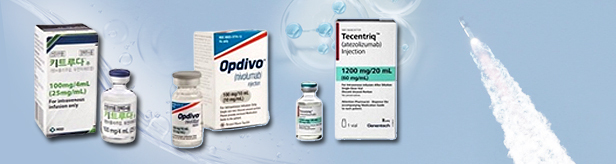
- Sales in the immuno-oncology market surpassed KRW 700 billion last year, driven by the surge in sales of Keytruda and Opdivo. The market has more than tripled in size over the past 4 years. Keytruda and Opdivo together accounted for 72.4% of the market and generated more than KRW 500 billion in sales. The market’s prospects are also bright with major immuno-oncology drugs showing additional efficacy in various solid tumors. According to the market research institution IQVIA on the 27th, the total immuno-oncology treatment market has recorded KRW 730.8 billion in the past year, a 46.6% increase from the KRW 498.3 billion in the previous year. Sales have been growing steeply in the immuno-oncology market. The market, which was worth KRW 200 billion in 2019, reached KRW 700 billion last year after recording KRW 407 billion in 2021 and KRW 498.3 billion in 2022. Immuno-Oncology Drug Market Size (Unit: KRW 100 million) Immuno-oncology drugs target PD-1/PD-L1 biomarkers that are expressed in major solid tumors. This is why the drugs have expanded their indications to several solid tumors, and sales are surging. In addition to their better effect, immuno-oncology drugs are also known to have fewer side effects than first-generation cytotoxic anti-cancer drugs and second-generation targeted anticancer drugs. Since the immuno-oncology drugs work by strengthening the body's immune system, side effects such as hair loss, vomiting, nausea, diarrhea, and bone marrow suppression are relatively mild. Keytruda, which owns 26 indications, approaches KRW 400 billion in sales...Opdivo’s sales surpass the KRW 100 billion mark #EB The market leader is MSD's Keytruda. Keytruda generated KRW 398.7 billion in sales last year, up 66.4% YoY. It occupied 54.6% of the market. Keytruda is approved for 26 approved indications in Korea, owning the most amount of indications among all cancer drugs. However, only 4 of the cancers are reimbursable: lung cancer, Hodgkin's lymphoma, urothelial carcinoma, and melanoma. MSD is seeking reimbursement for a variety of other solid tumors, including triple-negative breast and head and neck cancer. Keytruda's sales may surge further if its reimbursement is further extended. In second place was Opdivo. Opdivo generated KRW 130.4 billion in sales last year, up 18.7% from KRW 109.8 billion in 2022. After hovering in the KRW 60 billion range from 2019 to 2020, the company surpassed the KRW 100 billion mark in 2022 after reaching KRW 85 billion in 2019. Together, Keytruda and Opdivo generated KRW 529.1 billion in sales last year, accounting for 72.4% of the market. Opdivo is a PD-1 class immuno-oncology drug co-developed by BMS and Japan's Ono Pharmaceutical. It has 22 approved indications in Korea, including melanoma, non-small cell lung cancer, and renal cell carcinoma. Both companies have been steadily expanding the number of their solid tumor indication since their approval. In addition to extending Opdivo’s reimbursement coverage, BMS and Ono plan to develop a subcutaneous (SC) formulation to expand options for the patients. Opdivo's major patents are set to expire in 2028. BMS confirmed that Opdivo’s subcutaneous (SC) formulation was non-inferior to the intravenous (IV) formulation in a Phase III clinical trial conducted to confirm the efficacy of the SC formulation. The safety results were also comparable in both arms. The SC formulation can be administered in less than 5 minutes, compared to the 1 hour required for the existing IV formulation. BMS is preparing to apply for approval of its SC formulation with regulatory authorities around the world. Tecentriq and Imfinzi gains ground in intractable cancers Roche's Tecentriq and AstraZeneca's Imfinzi also showed marked sales growth. Roche Tecentriq generated KRW 97.3 billion in sales last year, up 18.9% YoY. After posting KRW 37 billion in 2020 and doubling its sales in 2021, Tecentriq’s sales have been on a steady rise. Roche has been rapidly expanding Tecentriq’s indication by actively accepting the government’s requests. Tysentriq gained coverage for lung cancer within a year of approval and expanded coverage in 2019 by removing the PD-L1 expression limit. Roche plans to expand Tecentriq’s indications through combined use with targeted cancer drugs. Tecentriq, in combination with Avastin, became the first immuno-oncology drug to be reimbursed for the first-line treatment of liver cancer. Roche is also conducting combination trials with NT-I7, an anti-interleukin (IL)-7 inhibitor developed by a Korean biotech NeoImmuneTech, in lung and skin cancers. AstraZeneca's Imfinzi posted sales of KRW 82.7 billion last year, up 57.8% from KRW 52.4 billion in 2022. After generating KRW 3.4 billion in sales in 2019, Imfinzi’s sales surged 624% to KRW 24.6 billion the following year. With sales exceeding KRW 80 billion last year, Imfinzi ranked fourth in the immuno-oncology market. Imfinzi’s strength is that it is the first immuno-oncology drug to show efficacy in biliary tract cancer. In 2022, AstraZeneca received approval for the Imfinzi+gemcitabine+cisplatin combination in Korea. This approval established the Imfinzi combination as the new standard of care in biliary tract cancer for 12 years. AstraZeneca is currently in the process of extending Imfinzi’s reimbursement to its biliary tract cancer indication. BMS plans to extend indications for the Yervoy+Opdivo combo...Bavencio’s sales increase with reimbursement in urothelial cancer BMS On the other hand, Yerovy’s sales growth was not as dramatic. Sales of Yervoy, which is the only immuno-oncology drug to target CTLA-4, grew only 12.6% last year, generating sales of KRW 16 billion. In 2021, Yervoy received approval for use in combination with Opdivo in 2021. However, the maximum dosing interval was set at 2 years, meaning that even if it works, patients will not be eligible for additional reimbursement afterward. BMS plans to explore multiple uses for the Yervoy and Opdivo combination. The company is currently exploring the combination of metastatic colorectal cancer, squamous cell carcinoma, and head and neck cancer. Merck's Bavencio generated KRW 5.7 billion in sales last year. Sales of Bavencio grew with its reimbursement approval in metastatic urothelial cancer. Bavencio, which was approved in Korea in 2019, secured reimbursement as a first-line maintenance therapy for urothelial cancer in 2023. The variable is Padcev. Padcev, which is an antibody-drug conjugate (ADC) cancer drug developed by Astellas and Seegen, has confirmed efficacy results as a first-line treatment in urothelial cancer. Based on the results of the study, the company is accelerating its efforts to receive approval as a first-line treatment in urothelial cancer This could have implications for Bavencio, as it is being used as a maintenance therapy in the first-line setting.
