
- LOGIN
- MemberShip
- 2026-06-26 09:37:22
- Opinion
- [Reporter's view] What is the solution
- by Eo, Yun-Ho Sep 13, 2023 05:28am
- A drug is so effective that it is difficult to discuss listing it for insurance benefits. Although it has proven a very large improvement in survival rate compared to existing drugs, this actually increases uncertainty in health insurance, making it difficult to estimate cost-effectiveness. Since no patients die in clinical trials, costs increase. The important point is effect estimation. OS can only be counted when the patient dies, but since no one dies, calculating OS becomes difficult. Paradoxically, if the effect of the drug is too good, the cost will definitely increase, but the problem of not knowing how much the effect will increase arises. However, the clinical results are excellent. Drugs that are truly the best of all time are emerging right now. So what is the solution to these drugs? Currently, the government is requesting a financial sharing plan, but this is not a regular regulation. I think it is time to consider establishing a fundamental evaluation system for the value of social requirements themselves. Decisions related to healthcare are a process of compromise between many complex and conflicting factors. Multiple-criteria decision analysis (MCDA) is a type of decision analysis designed to transparently integrate multiple considerations in decision-making situations where multiple criteria act simultaneously. Using such a structured and explicit approach can improve the quality of decision-making, and its application in the medical field has recently been increasing. There is an increasing discussion on the introduction of MCDA as a decision-making support tool related to pharmaceutical reimbursement in countries other than these countries. In Spain, MCDA is referred to as a method of systematic evaluation procedure that helps consistent decision-making and ensures equity in access to medicines when evaluating early access to medicines and indications before approval and reimbursement. MCDA faced opposition domestically. However, on the other hand, it is already being used domestically. In accordance with the National Health Insurance Comprehensive Plan, the Ministry of Health and Welfare is conducting a reevaluation of drug coverage adequacy every year, starting with Choline alfoscerate, a brain function improvement drug, in 2020. At this time, clinical usefulness, cost-effectiveness, and social needs are used as criteria to evaluate the adequacy of benefits. Comprehensive evaluations such as MCDA may have interpretation difficulties depending on the weights and methodology, but the reality is that the current new drug registration method relies too much on cost-effectiveness and does not reflect the characteristics of each drug. Now is the time to take action.
- Policy
- Will Enhertu pass PE evaluations for reimb in KOR?
- by Lee, Tak-Sun Sep 13, 2023 05:28am
- Due to delays in the review of the economic feasibility of the anticancer drug Enhertu (trastuzumab deruxtecan), the industry is seeing delays in its reimbursement agenda being submitted for deliberation to the Drug Reimbursement Evaluation Committee. The agenda had previously passed the Cancer Disease Deliberation Committee review after redeliberation in May. The company expects to receive positive results at the Pharmacoeconomic Evaluation Subcommittee meeting in October. According to industry sources on the 12th, Daiichi Sankyo recently submitted supplementary pharmacoeconomic evaluation data to HIRA for its Enhertu and expects to pass HIRA deliberations in October. Enhertu passed the CDDC review after redeliberations in May. The committee determined Entertu reimbursable for the treatment of ▲unresectable or metastatic HER2-positive breast cancer who have received two or more prior anti-HER2-based regimens (third-line or higher treatment), and ▲locally advanced or metastatic HER2-positive gastric or gastroesophageal junction adenocarcinoma who have received two or more prior therapies including an anti-HER2-based regimen (third-line or higher treatment) As a result, the agenda was supposed to be submitted for deliberation by the Drug Reimbursement Evaluation Committee. However, it seems that the company and the government are having difficulty reaching a consensus in the pharmacoeconomic evaluation process. Daiichi Sankyo submitted the PE evaluation data in July, but was unable to reach an agreement with HIRA. The industry analysis is that Enhertu's superior effect is hindering economic evaluations. Currently, the Pharmacoeconomic Evaluation Subcommittee is evaluating the cost-effectiveness of Enhertu compared to Kadcyla. However, as Enhertu demonstrated an extension in progression-free survival (mPFS) by more than 22 months compared to existing drugs, and the increase in the administration period that followed, there have been limitations in proving the cost-effectiveness of the drug using the current economic evaluation method. Even so, Daiichi Sankyo has accepted most of the deliberation results from the last Pharmacoeconomic Evaluation Subcommittee’s deliberation in order to quickly receive reimbursement. The company had requested redeliberation on some aspects that are difficult to accept. Daiichi Sankyo recently submitted the supplementary materials and is expecting positive results at the Pharmacoeconomic Evaluation Subcommittee meeting that will be held in October. In the paper, ‘Analysis of Socioeconomic Indirect Cost of Premature Death in Patients with HER2-positive Metastatic Breast Cancer (MBC) using Nationwide Claims Data’ that was recently published on Yakhak Hoeji on August 31, research teams of Sungkyunkwan University’s School of Pharmacy and Samsung Medical Center showed that socioeconomic benefits were greater with the administration of Enhertu. The research teams identified the claims data of 2,212 patients with HER2-positive MBC who were prescribed trastuzumab-emtansine as a second-or-higher-line of treatment from January 2007 to May 2021 using nationwide insurance claims data to estimate the progression-free survival (mPFS) and the resulting socioeconomic benefits. As a result, the mPFS of trastuzumab-emtansine ranged from 7.1 months (age 65 or older) to 12.5 months (age 30s), and the mPFS of trastuzumab-deruxtecan (Enhertu) was more than three times longer for all ages, ranging from 23.4 months (age 65 or older) to a maximum of 41.1 months (age 30). Accordingly, the socioeconomic benefits brought about by the extended PFS with the use of trastuzumab-deruxtecan (Enhertu) compared to existing drugs were estimated to amount to KRW 261.4 billion, which is averages to KRW 118 million per patient. An official from Daiichi Sankyo Korea said, "We hope that the authorities will review Enhertu’s reimbursement more flexibly, in consideration of the various aspects such as social losses of breast cancer and the extension of patients' lives that can be expected through Enhertu treatment under the framework of Korea’s current pharmacoeconomic evaluation system.
- Company
- Obesity is a chronic disease
- by Kim, Jin-Gu Sep 12, 2023 05:37am
- “Currently, only obesity metabolic surgery is covered. The scope needs to be expanded to include obesity treatments, etc.” “Obesity is a chronic disease like high blood pressure and diabetes. We need to apply health insurance benefits from a treatment perspective, not from a beauty perspective.” Gyeong-gon Kim, Vice President of the Korean Obesity Society (Department of Family Medicine, Gachon University College of Medicine) Kim Gyeong-gon, vice president of the Korean Society of Obesity (Department of Family Medicine, Gachon University School of Medicine), made this claim at the policy symposium of the Korean Society of Obesity academic conference held at the Conrad Hotel in Seoul on the 7th. Vice Chairman Kim said that the number of obese patients in Korea has been increasing at a very rapid rate recently. Vice Chairman Kim said, "Severe obesity, especially among young people, is increasing rapidly. Just 10 years ago, severe obesity with a body mass index (BMI) of 30 or more was less than 3%, but recently, especially among men in their 20s and 30s, it accounts for 3% of the total." “More than 10% of people are severely obese,” he warned. Vice Chairman Kim emphasized that obesity should be recognized as a chronic disease like high blood pressure or diabetes. For example, in the case of high blood pressure, a systolic blood pressure of 150 mmHg does not immediately cause serious problems, but because we know that it can cause various problems, such as cardiovascular disease, in the future, we are prescribing various medications through health insurance coverage, he explains. Obesity does not cause any symptoms right away, but it causes a variety of conditions such as high blood pressure, diabetes, cardiovascular disease, stroke, osteoarthritis, and obstructive sleep apnea, so it is argued that it should be managed in advance through compensation. Vice Chairman Kim said, “In Korea, there are quite a few patients with stage 2 and 3 obesity with serious complications,” and added, “They must be provided with appropriate treatment.” Vice Chairman Kim said, "Fortunately, we have recently secured many diverse and effective tools for obesity treatment, such as obesity metabolic surgery and next-generation obesity treatment drugs," and added, "Patient treatment, examination, education, and drug treatment are still non-reimbursed." “Policies are needed to improve access to effective treatments for weight loss and improving complications,” he emphasized. Vice Chairman Kim added, "A change in perception is necessary. Obesity should not be viewed only from the perspective of beauty. Obesity must be recognized as a major chronic disease."
- Company
- Celltrion’s Remsima celebrates 10th year of export
- by Chon, Seung-Hyun Sep 12, 2023 05:37am
- Celltrion’s first biosimilar, ‘Remsima’, has marked its 10th anniversary in entering the overseas market. Together with its subcutaneous injection formulation Remsima SC, Remsima successfully settled in the European market and recorded total exports that exceeded KRW 6 trillion over the past 10 years. Celltrion Healthcare announced on the 11th that it will launch various campaigns throughout the world to celebrate the 10th anniversary of Remsima's approval in Europe. Celltrion Healthcare is Celltrion's affilate that receives antibody biosimilar products from Celltrion and sells them to global distributors. Celltrion Healthcare plans to hold global lecture tours and symposiums around the globe from year to the second half of next year, starting with the United European Gastroenterology Week. During the campaign, the company will reexamine Remsima's achievements over the past 10 years and identify how the biosimilar industry, which was born with Remsima's success, has been impacting the field. Celltrion received marketing authorization for Remsima in Europe in August 2013 and received the title, ‘the world’s first antibody biosimilar.’ Remsima is a biosimilar of Remicade. Annual exports of Remsima and Remsima SC (Unit: KRW 1 million, Data: FSS) According to Celltrion Healthcare, Remsima's export volume has gradually increased since it generated exports of KRW 145.3 billion in 2013. Remsima recorded exports of KRW 402.3 billion in 2014, then exceeded KRW 700 billion in 2016. The growth of Remsima's exports slowed somewhat thereafter, recording exports of KRW 506.9 billion and KRW 401.4 billion in 2017 and 2018, respectively. However, its exports rebounded and exceeded KRW 500 billion for the first time in 2 years in 2019, then continued to grow to exceed KRW 800 billion in 2021 and last year, setting a new record for two consecutive years. By the first half of this year, Remsima recorded exports of KRW 477.3 billion. Remsima's cumulative exports over the past 10 years amounted to KRW 5.6314 trillion. Remsima SC has also started to produce export results in 2020. Celltrion received approval for Remsima SC, a subcutaneous injection formulation of Remicade, in Europe in November 2019 and began targeting the market in earnest. Remsima SC first generated exports of KRW 34.8 billion in 2020, and then posted KRW 236.9 billion last year, exceeding KRW 1 trillion in exports together with Remsima. Remsima SC recorded exports of KRW 146.6 billion in the first half of this year, exceeding KRW 500 billion in cumulative exports. The cumulative exports of Remsima and Remsima SC together over the past 10 years were calculated to be KRW 6.1394 trillion. Remsima is recording the highest sales performance among finished products sold overseas by domestic pharmaceutical companies. Celltrion Healthcare explained, “Remsima has steadily maintained its top spot in infliximab prescriptions since surpassing the market share of its original in 2017.” According to the market research institute IQVIA, Remsima recorded a market share of 56% in Europe, including 83% in the UK and 61% in France, in Q1 this year. An official from Celltrion Healthcare said, “Remsima was able to succeed and maintain its lead in the market for a long time by preoccupying the market after implementing a customized strategy for each country based on proven data on treatment efficacy and safety in the highly competitive biosimilar industry.”
- Company
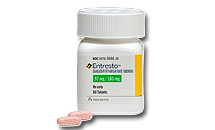
- Entresto’s 2nd patent suit ruling postponed to November
- by Kim, Jin-Gu Sep 12, 2023 05:37am
- The rulings for the 2nd trial surrounding the chronic heart failure treatment ‘Entresto (sacubitril/valsartan)’ have been postponed to November 9. The drug has been posting annual prescriptions of more than KRW 40 billion annually. According to industry sources on the 11th, the Patent Court of Korea 1st Division recently postponed the decision date for the 2nd trial on Entresto’s crystalline patent to November 9. With the argument now concluded, the court originally planned to pronounce judgment on the 14th of this month but decided to postpone the decision for two more months. The exact reason why the judgment was postponed remains unknown. As a result, the outline of the second trial of the Entresto patent dispute is expected to come out after the end of this year. Three Entresto patent disputes are currently being tried at the Patent Court. In addition to the crystalline patent (10-1432821), whose judgment has been postponed, disputes over the composition/use patent (10-0984939) and the salt/hydrate patent (10-1549318) have not yet been resolved. The ruling surrounding the crystalline patent is expected to come first, followed by the other 2 rulings. Entresto is protected by 6 patents: ▲salt and hydrate patent that expires in November 2026, ▲use patent that expires in July 2027, ▲crystalline patent set to expire in September 2027, ▲composition patent set to expire in November 2028 (10-1700062), ▲another composition patent set to expire in January 2029 (10-1589317), and ▲a use patent set to expire in 2033 (10-2159601). Among the 6 patents, generic companies have succeeded in nullifying or avoiding 2 patents. The results of the two were finalized after the generic companies won the first trial and Novartis did not file an appeal. In the case of the use patent that expires in 2033, the patent was listed after generic companies applied for marketing authorization of their generics. The generic companies have also succeeded in winning against Novartis in the first trial for the other 3 patents as well. However, Novartis chose to appeal and proceed to the Patent Court of Korea for all 3 cases. The generic companies that challenged the 3 patents plan to succeed in overcoming the remaining patents and qualify for early release. Entresto's PMS already expired in April, so the companies may release their generic versions early as long as they overcome the remaining patents. However, if generic companies lose or win the second trial but Novartis appeals to the Supreme Court, the release of their generic will be further delayed. There is the possibility that the Entresto patent dispute will be prolonged for more than four years. Since 2021, generic companies have been filing trials against Entresto's patents. Starting with Elyson Pharm, about 10 companies including Hanmi Pharm, Chong Kun Dang, and Daewoong Pharmaceutical jumped into the dispute. According to the market research institute UBIST, Entresto's outpatient prescriptions amounted to KRW 42.5 billion last year. Entresto has shown rapid growth in the market, increasing prescription sales by nearly KRW 10 billion every year. Its prescription performance, which recorded KRW 5.5 billion in 2018, increased to KRW 14.3 billion in 2019, KRW 22.4 billion in 2020, then to KRW 32.4 billion in 2021. By the first half of this year, its cumulative sales reached KRW 27.2 billion, heralding annual sales of KRW 50 billion this year. The sales have surged after its indication was extended from heart failure with reduced ejection fraction (HFrEF) to heart failure with preserved ejection fraction (HFpEF) Entresto is a first-in-class angiotensin receptor-neprilysin inhibitor (ARNI) that combines the angiotensin receptor blocker (ARB) valsartan and neprilysin inhibitor sacubitril. The drug may be used as an alternative to an angiotensin receptor blocker (ARB) or an angiotensin-converting enzyme (ACE) inhibitor in patients with left ventricular (LV) dysfunction in combination with other heart failure treatments.
- Policy
- Forxiga's generics, advertised for off-label indications
- by Lee, Hye-Kyung Sep 12, 2023 05:37am
- Forxiga's generic development companies that promoted 'chronic heart failure, chronic kidney disease' in their drug advertisements were subject to administrative sanctions. On August 18th and 22nd, the Ministry of Food and Drug Safety suspended Boryung and Aju Pharmaceuticals from advertising for products containing Dapagliflozin for three months, respectively. The objects of disposal are three items, including Boryung's Trudapa 10 mg (Dapagliflozin Bis L-proline), Trudapa M SR 10/500 mg (Dapagliflozin, Metformin), and Trudapa M SR 10/1000 mg (Dapagliflozin, metformin). and Aju Pharmaceutical's Daparil 5 mg (Dapagliflozin Propanediol Hydrate), Daparil 10 mg (Dapagliflozin Propanediol Hydrate), Daparil Duo SR 10/500 mg, Daparil Duo SR 10/1000 mg, etc. There are 4 items. They were subject to administrative action after it was discovered that they used pamphlets targeting doctors and advertised content other than the approved efficacy and effects. The original, AstraZeneca Korea's Forxiga, has three indications, including type 2 diabetes, chronic heart failure, and chronic kidney disease, but the generic developed by domestic pharmaceutical companies only has type 2 diabetes as an indication. In this situation, Forxiga's generic companies became subject to administrative action by producing and distributing promotional materials containing claims that the drug was effective against chronic heart failure and chronic kidney disease, which are unauthorized indications. The only companies to which the Ministry of Food and Drug Safety has issued administrative measures are Boryung and Aju Pharmaceuticals, but as the number of domestically approved products for Dapagliflozin reaches 222, the likelihood that other pharmaceutical companies will also be subject to administrative measures if they advertise for indications other than those approved has increased. The efficacy or performance of pharmaceuticals cannot be advertised unless permission or modification is granted in accordance with Article 68 of the Pharmaceutical Affairs Act. In the case of a first violation according to the standards for administrative disposition in Table 8 of the Rules on the Safety of Medicines, etc., the advertising business for the product concerned will be suspended for 3 months. As it became known that generic drug developers were promoting non-approved indications, AstraZeneca Korea sent a certificate of contents to the companies in question, leading to an inspection by the Ministry of Food and Drug Safety. Meanwhile, after Forxiga's substance patent expired last April, a total of 90 pharmaceutical companies entered the market with 105 single-drug products and 64 combination products approved. According to UBIST, a pharmaceutical market research firm, the outpatient prescription performance of Dapagliflozin single and combination drugs in May was 11 billion won. The sales of the original Forxiga were 4.7 billion won, and those of Xigduo were 4.1 billion won, accounting for about 80%. The remaining 2.2 billion won was accounted for by generics Forxiga and Xigduo. As of May, 60 pharmaceutical companies recorded a total of 1.436 billion won in prescriptions for single drugs, and 31 pharmaceutical companies recorded a total of 772 million won in prescriptions for combination drugs.
- Company
- Dinutuximab beta was designated as an orphan drug
- by Eo, Yun-Ho Sep 12, 2023 05:37am
- Dinutuximab beta, an immunotherapy drug administered to neuroblastoma patients, has been designated as an orphan drug. Dinutuximab is a drug from EUSA Pharma, a domestic corporation launched last year, and is currently undergoing formal approval procedures. EUSA Pharma was absorbed and merged into Recordati in 2021. This drug is a chimeric antibody that targets a specific antigen called 'GD2' expressed on neuroblastoma cells. Dinutuximab beta is indicated for patients who previously received myelosuppression and hematopoietic stem cell transplantation and showed a partial response after receiving induction chemotherapy, and for patients with a history of relapsed or refractory neuroblastoma regardless of residual disease. United Therapeutics' Unituxin, which has a similar mechanism, was approved by the FDA in 2015, but production is insufficient. Accordingly, it remains to be seen whether the domestic supply of Dinutuximab beta, a major treatment option for high-risk neuroblastoma patients, can be smoothly achieved. Neuroblastoma refers to a tumor that appears in the adrenal medulla and sympathetic ganglia. Most occur in the abdominal cavity, but about half originate in the adrenal medulla. The rest are known to appear in the sympathetic ganglia around the spinal cord and also in the skeleton surrounding the neck, pelvis, and chest where the sympathetic nerves pass. It usually occurs in children under 5 years of age, and symptoms vary. It is often felt in the form of a lump in the stomach and can cause coughing or difficulty breathing. If the tumor spreads to the cerebellum, symptoms such as rapid movement of the eyes, arms, and legs may appear, and if the tumor spreads to the pelvis, symptoms such as frequent need to urinate or difficulty urinating may appear.
- Policy
- Pfizer’s ALL drug Besponsa renews RSA in KOR
- by Lee, Tak-Sun Sep 12, 2023 05:37am
- Pfizer Korea’s acute lymphoblastic leukemia (ALL) treatment ‘Besponsa (inotuzumab ozogamicin)’ has recently renewed its risk-sharing agreement (RSA) with the government. The company had signed an Expenditure Cap Type RSA for the drug in 2019. According to the National Health Insurance Service and industry sources on the 11th, Besponsa recently completed negotiations on renewing its RSA with the NHIS. This drug is reimbursed as a treatment for adult patients with relapsed or refractory ALL, regardless of their Philadelphia Chromosome mutation status. At the time of its reimbursement in October 2019, the drug was only approved for patients with Philadelphia chromosome-negative ALL, however, its reimbursement was extended to allow use regardless of Philadelphia Chromosome mutation status since February last year. Besponsa is the first antibody-drug conjugate introduced to ALL. It is a combination of an antibody, inotuzumab, which targets the CD22 antigen expressed on the surface of B cell precursor ALL cancer cells, and the cytotoxic drug calicheamycin to induce death and destruction of cancer cells. The company explained that the combination showed a stronger effect than existing chemotherapy and significantly improved the complete response rate compared to existing chemotherapy, helping patients successfully undergo hematopoietic stem cell transplantation. This drug, which signed a 4-year expenditure cap-type RSA at the time of reimbursement listing, will maintain its refund contract with the government for 5 more years until September 2028 through the RSA renewal. The contract term, which had been 4 years at the time of the first RSA signing, has now been extended to 5 years. Besponsa's current list price is KRW 11,445,800/vial. Based on IQVIA, it raised sales of KRW 5.6 billion in 2022.
- Policy
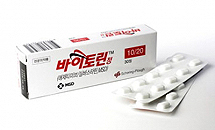
- Vytorin generics suffer blow from reevaluations
- by Lee, Tak-Sun Sep 11, 2023 05:30am
- The hyperlipidemia combination ‘Vytorin (ezetimibe+ simvastatin) suffered a direct blow from the insurance price ceiling reevaluations conducted in Korea. As a result, only two companies were able to maintain the highest insurance ceiling price for their generics. In particular, Genuone Sciences was the only company to maintain the highest ceiling price in the 10/10mg group. According to industry sources, the price ceiling of Vytorin generics had been reduced for 60 of the items (21 10/10mg dosage forms and 28 10/20 dosage forms) as a result of the price ceiling reevaluations. As a result, only Genuone Science’s Vyteb Tab was able to maintain its highest insurance ceiling price at KRW 784 among the 10/10mg dosage forms. Previously, 26 items had been sold at the highest price of KRW 784. In the case of the 10/20mg dosage forms that contain 20mg of simvastatin, the number of highest-priced drugs (KRW 1,095) was reduced to 2 - Genuone Sciences’ Vyteb 10/20mg and Korea United Pharm’s SImpex Duo Tab 10/20mg. Previously, 17 items had been sold at the highest price. The price of the original Vytorin fell from having the highest price due to a price cut made on January 1, 2022. Accordingly, Vytorin tablets 10/10 mg are priced at KRW 781, and 10/20 mg at KRW 1091. The insurance price ceiling set for products whose price was reduced by 15% because it does not meet one of the standard requirements is KRW 666 for the 10/10 mg dose and KRW 931 for the 10/20 mg dose. Of the 35 10/10mg products, 32 were priced lowest at KRW 666, and 28 of the 32 10/20mg products were priced lowest at KRW 931.
- Company
- Different progress of three new asthma drugs launched
- by Eo, Yun-Ho Sep 11, 2023 05:29am
- The results of the three types of asthma antibody drugs were different. According to the related industry, at the HIRA Pharmaceutical Reimbursement Evaluation Committee held on the 7th, Nucala of GSK Korea was judged to be appropriate for reimbursement, and Fasenra of AstraZeneca Korea was judged to be non-reimbursable. These drugs are interleukin (IL)-5 antagonists, and only Handok Teva's Cinqair, which uses the same mechanism, passed the Pharmaceutical Review Committee in July and is currently negotiating drug prices with the National Health Insurance Corporation. The reason Singcare was able to get ahead was that it went on the general registration track. On the other hand, difficulties were expected in salary discussions as Nucala and Pasenra were in the process of registering a Risk Sharing Agreement, but Nucala passed the committee this time. If so, it is believed that the difference in results between the two drugs for which RSA was applied is due to finances and drug prices. Since Cinqair has not yet been registered, RSA itself is not impossible, so interest is focused on Nucala's future actions. Nucala has proven its effectiveness through phase 3 DREAM, MENSA, and SIRIUS studies. Among these, MENSA was published in NEJM in 2014 as a representative study on this drug. This study was conducted on patients with severe asthma who experienced exacerbations despite the use of multiple control agents, including high-dose inhaled corticosteroids (ICS). In particular, the eosinophil count was more than 150 cells/㎕ in the first screening test (300 cells/㎕ a year ago). above) An increased number of patients were recruited. They were administered mepolizumab and placebo and the annual incidence of exacerbations was observed. As a result, at week 32, the annual incidence of exacerbations in the Mepolizumab 75mg intravenous injection treatment group decreased by 47% compared to the placebo group, and the Mepolizumab 100mg subcutaneous injection treatment group also decreased by 53%. In addition, quality of life improved and satisfaction with asthma control was higher than with placebo. Meanwhile, there are no drugs listed for severe asthma since Novartis Korea's Xolair entered the coverage area in 2020. When looking at the disease area called 'asthma', it looks the same, but 3 types of drugs and Xolair are prescribed for allergic asthma. There is a difference in the details of the indications. However, according to the government's standards, Xolair was the subject of comparison, and the price of the drug was difficult to bear for the three new bio drugs, so the reimbursement registration process was suspended, but discussions were held again recently.
