
- LOGIN
- MemberShip
- 2026-06-26 09:37:22
- Company
- Luxturna, a one-shot gene therapy product
- by Eo, Yun-Ho Aug 22, 2023 05:31am
- Attention is focusing on whether progress will be made in the discussion on insurance benefits for Luxturna, a one-shot retinal disease treatment. As a result of the coverage, Novartis Korea recently submitted additional supplemental data for Inherited Retinal Dystrophy treatment Luxturna requested by the HIRA. The drug submitted an application for reimbursement in September 2021, but there was no progress in the listing process, and it was presented to the Pharmaceutical Reimbursement Evaluation Committee in March but failed to set reimbursement standards. It is known that during the evaluation process of Luxturna, there was a difference of opinion over the terms of the Risk Sharing Agreement (refund rate, etc.). As Novartis submitted supplementary data and both the government and pharmaceutical companies are showing their will to be listed as Luxturna, it remains to be seen whether this re-challenge will be successful. Luxturna restores the function of the defective or defective RPE65 gene, one of the causes of IRD, by replacing it with a normal gene with just one administration. This means that the fundamental treatment of the disease is possible. This drug was designated by the US FDA for Breakthrough Therapy in 2014, Orphan Drug in 2016, and Priority Review in 2017, and obtained expedited approval in 2017. Meanwhile, Luxturna proved its effectiveness through a phase 3 clinical trial targeting patients with hereditary retinal diseases in which a biallelic mutation in the RPE65 gene was confirmed. As a clinical result, the functional vision of patients treated with Luxturna improved statistically significantly compared to the control group who did not receive treatment for 1 year. As a result of evaluating the average score of the Multi-Luminance Mobility Test, which assesses the ability to pass through an obstacle course of various heights in various lighting levels by reproducing a daily walking environment, as the primary evaluation variable at the time of 1 year of treatment, Luxturna treatment group The score change was 1.8 points, which was 1.6 points higher than the control group's score change of 0.2 points.
- Policy
- Will Pfizer rise to the top with once-weekly growth hormone?
- by Lee, Tak-Sun Aug 22, 2023 05:31am
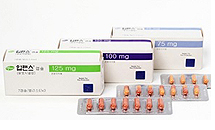
- A new growth hormone with improved convenience in administration will be introduced to Korea’s annual KRW 240 billion growth hormone market with reimbursement in September this year. The drug is Pfizer's Ngenla Prefilled Pen Inj. Whether Pfizer will use the reimbursement of its new drug as momentum and be able to rise to the top in this market that is being led by domestic companies such as LC Chem and Dong-A ST, is gaining attention. According to industry sources on the 21st, the Ministry of Health and Welfare announced that it will be newly listing Ngenla Prefilled Pen Inj 24mg and Ngenla Prefilled Pen Inj 60mg with reimbursement from September 1st through the administrative notice of the drug reimbursement standard. Ngenla is a treatment for growth hormone deficiency in children. It offers a longer half-life through molecular modification of the company’s existing growth hormone, Genotropin, which was developed as a once-daily subcutaneous injection formulation. As a result, Ngenla improved the patients’ convenience in administration by requiring only once-weekly injections. Pfizer recorded sales of KRW 30.7 billion (based on IQVIA) last year with Genotropin. Although the company did make a mark in the market, it was considerably less than what LG Chem or Dong-A ST had raised with their respective growth hormone products. Last year, LG Chem’s Eutropin made KRW 84.8 billion, and Dong-A ST’s Growtropin KRW 47.3 billion. Merck’s Saizen also posted sales of KRW 33 billion last year and exceeded Genotropin’s performance. Eutropin is administered 3-6 times a week, Growtropin 5-7 times and week, and Saizen once-daily as injectables. Therefore, Ngenla Prefilled Pen is definitely ahead of existing products in terms of ease of administration. In terms of efficacy, its non-inferiority to Genotropin was observed in annual HV (height velocity) at 12 months, demonstrating the drug’s similar efficacy to Genotropin. The domestic growth hormone market has grown rapidly, nearly doubling in the past four years. This is because the reimbursement standards for the drugs have been partially lowered while the non-reimbursed drug market for growth hormones increased significantly. The analysis is that more children and adolescents are receiving growth hormone injections during vacation. Although Ngenla has better quality by improving administration convenience, industry analysis is that the company would need to have ample sales power comparable to that of domestic companies and must raise sales in the non-reimbursed drug market. In particular, multinational companies will have to ensure stable supply and withstand the supply flood of products being supplied by the domestic companies. Patients tend to have poor adherence to growth hormone therapy. However, long-acting treatments like Ngenla lower the treatment burden and improve adherence, and therefore are likely to offer better results. This is why the industry believes, long-acting recombinant human growth hormone (rhGH) injections are expected to take over the market in the long term.
- Company
- Generic competition over KRW 56 bil Ibrance market heat up
- by Kim, Jin-Gu Aug 21, 2023 05:37am
- The competition between 5 companies over their generic versions of Pfizer’s breast cancer treatment ‘Ibrance (palbociclib)’ is heating up. Kwang Dong Pharmacuetical, Shinpoong Pharm, Daewoong Pharmaceutical, and Boryung Pharmaceutical each challenged Pfizer to overcome the crystalline form patent and formulation patent of Ibrance. In terms of acquiring first generic exclusivity, Kwang Dong Pharmacuetical has been leading the race. It is the only company that completed the bioequivalence test for its generic and received marketing authorization. According to industry sources on the 18th, Shinpoong Pharm recently filed a trial to confirm the passive scope of rights of Ibrance’s formulation patent. The company had also previously filed a trial for the invalidation of the same patent. The two trials filed for one patent by Shinpoong Pharm indicates its strong determination to release its Ibrance generic. Ibrance is protected by three patents: the substance patent (10-0669578) that expires in 2027, the crystalline form patent (10-1858913) that expires in 2034, and the formulation patent (10-2068423) that expires in 2036. The strategy of generic companies is to release generics upon the expiry of the substance patent in 2027. Generic companies first challenged the drug’s crystalline form patent. In March last year, after Kwang Dong Pharmacuetical filed a passive trial to confirm the scope of rights of this patent, Shinpoong Pharm, Daewoong Pharmaceutical, Boryung Pharmaceutical, and Samyang Holdings also requested the same trial. The companies had mixed results in the first trial. Shinpoong Pharm and Daewoong Pharmaceutical won the first trial. On the other hand, Kwang Dong Pharmacuetical, Boryung Pharmaceutical, and Samyang Holdings lost their trial. The three companies appealed to the Patent Court of Korea. Kwang Dong Pharmaceutical won the second trial, and a decision has not been made on the appeals filed by Boryung Pharmaceutical and Samyang Holdings. In the case of Boryung Pharmaceutical, the company had also filed a trial to confirm the passive scope of rights apart from the appeal and seized victory in the first trial. In conclusion, out of the 5 companies that are challenging Ibrance's patents, four companies, excluding Samyang Holdings, have succeeded in avoiding Ibrance’s crystalline patent. Daewoong Pharmaceutical, Boryung Pharmaceutical, and Shinpoong Pharm filed challenges against Ibrance’s formulation patent. On the 27th of last month, the companies filed an invalidation trial against Pfizer for Ibrance’s formulation patent. In addition to this, Shinpoong Pharmaceutical also requested a trial to confirm the passive scope of rights for the same patent. In terms of acquiring first generic exclusivity, Kwang Dong Pharmacuetical has been leading the race. It succeeded in sinning the first trial it had filed together with other companies, and completed the bioequivalence test for its generic, becoming the only drug to apply for marketing authorization and receive first generic exclusivity. Ibrance is a treatment for HR+/HER2- advanced/metastatic breast cancer. According to the market research institution IQVIA, Ibrance posted sales of KRW 56.2 billion in Korea last year. In Q1 this year, its sales decreased 13% YoY.
- Product
- Minimally Invasive Thyroidectomy made more speed & safety
- by Eo, Yun-Ho Aug 21, 2023 05:37am
- Professor Jang Ho-jinThyroid cancer surgery is usually performed by inserting an incision of about 6cm in the center of the front of the neck, and it is true that the neck scar after surgery was burdensome. For this reason, a method of concealing the wound through a robot or endoscope was developed, but this also penetrated the tunnel to access the thyroid gland located in the center of the neck, so there were many difficulties in choosing a surgical method due to disadvantages such as poor skin sensation and extensive adhesion after surgery. In this situation, minimally invasive thyroidectomy (Minimally Invasive Thyroidectomy), which operates by inserting a small incision of about 3 cm on the side rather than the center of the neck, has recently been developed and is attracting attention. Minimally Invasive Thyroidectomy is a method that maintains the advantages of the existing traditional incision method and supplements the disadvantages, drawing attention from many thyroid cancer patients. Currently, Professor Jang Ho-jin of Gangnam Severance Hospital is performing the most, and Minimally Invasive Thyroidectomy accounts for more than 95% of the 1,000 surgeries he performs annually. The Dailypharm met him. -How was Minimally Invasive Thyroidectomy developed? In any case, if the incision was made in the center of the neck, the scar would remain for a long time, and especially for those with hypertrophic scars or keloids, the scars would become thick and unsightly. This is a method developed by his teacher, Professor Park Jeong-soo, to prevent this. At the time, it was a minimal incision method in which only the incision was made small and the neck muscles were cut to access the thyroid gland. As a result, other disadvantages such as adhesion to the wound site and muscle atrophy occurred. Therefore, Minimally Invasive Thyroidectomy is a method that has been supplemented and developed by approaching between the neck muscles (strap muscles, SCM muscles) without cutting the neck muscles without using the minimal incision method. -If the incision is made on one side only, the thyroid gland is a symmetrical butterfly-shaped organ. Is it impossible to remove the entire thyroid gland on the opposite side? No, even if the incision is made on one side, a total resection is also possible to remove the thyroid gland on the opposite side. In addition, even in the case of lateral neck lymph node metastasis, a minimally invasive method other than the traditional incision method is also possible. In general, traditional incisional lymph node surgery inserts a long incision of about 10 cm, whereas minimally invasive incision is limited to the side neck area and only about 5 to 6 cm incision is made. -I think it's definitely more eye-catching than the traditional incision method. Then, what is the difference between surgery time and recovery period after surgery? If the surgical method is more difficult, the operation time and hospitalization period are likely to be longer. Not really. In the case of a half-resection (one side of the thyroid gland), the operation time is about 30 minutes. In the case of hemisection, the discharge tube is usually not required, so the patient is discharged the next day. -Are you saying that recovery after surgery is fast? As the name of the surgical method suggests, it reduces the impact of normal tissues other than the thyroid by reducing the invasion range of not only the skin but also the subcutaneous fat and muscle layer. Recovery is quick because it makes the impact range that our body receives from the outside small. -Are there any side effects or complications of this operation? The three major complications of thyroid cancer surgery are postoperative hemorrhage, voice change due to vocal cord nerve paralysis, hypocalcemia (numbness in the hands and feet) due to parathyroid function decline, and damage to the airway and esophagus. The probability of such a complication is around 1%, and it can be seen that minimally invasive thyroidectomy is similar.

- Policy
- Januvia generics to be listed for reimb on Sept 2nd
- by Lee, Tak-Sun Aug 21, 2023 05:37am
- Competition in the diabetes treatment market is expected to heat up again next month. Following the patent expiry of the SGLT-2 inhibitor class drug Forxiga, which stirred the market in the first half of the year, the patent of Januvia, the leading DPP-4 inhibitor class drug, is set to expire next month. Accordingly, a large number of same-ingredient generics and salt-modified versions of Januvia will enter the market in line with its patent expiry date, September 2. According to the industry on the 18th, Januvia's substance patent expires on the 1st of next month, and generic companies have applied for reimbursement of their latecomers accordingly. Januvia generics have been approved since 2015. Currently, there are 766 approved single and combination drugs that contain sitagliptin as an active ingredient. Among those, 55 products obtained generic exclusivity and are approved to be sold in advance from September 2 to June 1 next year. The drugs succeeded in avoiding or invalidating all the other patents except for those that expire on the 1st of next month. Since Januvia has been approved for more than 10 years, some items also have disappeared from the reimbursement list. 9 items including Daewon’s Januritin S Tab. 100mg (ceiling price KRW 618) are currently tentatively listed. According to UBIST, the single-agent Januvia recorded KRW 40.5 billion in outpatient prescriptions last year. The fixed-dose combinations Janumet recorded KRW 68.9 billion and Janumet XR 48.2 billion. Both the single-agent and fixed-dose combinations are performing evenly in the market. Combined, the market adds up to be worth KRW 157.6 billion. Therefore, it is safe to say that most domestic pharmaceutical companies will be jumping into the competition. Therefore, there is a high possibility that the heated competition that arose in the diabetes treatment market due to the introduction of Forxiga generics may arise again for Januvia. A total of 149 items (89 single-agent drugs, 60 combination drugs) of drugs were simultaneously listed for reimbursement on April 8. Due to such heated competition, illegal marketing activities by contract sales organizations, which had raised their commission significantly, had also arisen, signifying how heated the competition had been in the market. Competition by Januvia generics will be the same or greater than that of Forxiga, so there is a high possibility that companies will conduct fierce sales and marketing activities to preoccupy the market. Meanwhile, Chong Kun Dang will protect the original Januvia family’s share against generics. Chong Kun Dang purchased the license for the Januvia brand last May for KRW 45.5 billion. With Chong Kun Dang, a strong sales force in Korea’s clinics, guarding the sales of the original Januvia family against generics, expectations are that it will not be easy for generics to penetrate the market and take over sales of the original.
- Policy
- Combination drugs with Januvia to be released in September
- by Lee, Tak-Sun Aug 21, 2023 05:37am
- With the expiry of Januvia's patent on the 1st of next month, the three-drug combination is expected to be launched in earnest in the domestic oral diabetes treatment market. In particular, since the revised reimbursement standard in April recognizes only three drugs, it is noteworthy whether the three-drug complex with improved ease of use will become mainstream. According to the industry on the 20th, the material patent for DPP4-type diabetes treatment Januvia will expire on September 1. As a result, Januvia's generics are expected to emerge. This is because the market size of the domestic Januvia series alone reaches 157.6 billion won (based on UBIST in 2022). In particular, the 3-combination system, which has not been listed on the benefits list, is scheduled to be released. The main character is the combination of metformin + SGLT2i + DPP4i and metformin + SGLT2i + TZD, for which the reimbursement standard was prepared in April. Since the reimbursement standard was established in April, several products for SGLT2i+DPP4i and SGLT2i+TZD two-drug combinations have entered the market and are competing. However, the 2nd drug had the disadvantage of having to take metformin together. The combination drugs containing metformin are evaluated to be much better in terms of ease of administration because they are covered with just one pill. In the third-party market, the products of Hanmi and Daewon, which quickly developed related products, are expected to be the first to start. Daewon Pharm received approval for four doses of drugs consisting of DPP4i + SGLT2i + MET in May and June. Hanmi Pharm also received approval for two doses of SGLT2i + DPP4i + MET in May. These generics will not have any major barriers to market release as the Januvia patent expires next month. Attention is focused on whether the market will respond right away to the three-agent complex with convenience. Chong Kun Dang is also launching a three-agent complex that contains Sitagliptin. However, it is not related to the newly established 3rd system salary standard. Chong Kun Dang received approval for Duvimet XR, a combination of Sitagliptin and metformin hydrochloride, in Duvie, a new diabetes drug developed by Chong Kun Dang, in May. In addition, Duvie S, a combination of Lobeglitazone Sulfate+Sitagliptin Phosphate Hydrate, was approved in June. Both items are expected to be released on the 2nd of next month.
- Company
- Nexviazyme, 1st biobetter to receive preferential pricing
- by Eo, Yun-Ho Aug 21, 2023 05:37am
- The Pompe disease treatment ‘Nexviazyme’ may become the first drug to receive the premium pricing benefit as a biobetter in Korea. According to industry sources, Sanofi-Aventis Korea’s Nexviazyme (avalglucosidase alfa-ngpt) has completed the drug premium pricing calculation process and is soon to receive reimbursement. The drug is likely to receive reimbursement listing in the coming September. In 2016, the government announced a preferential pricing plan for biobetters which are improved versions of biosimilars and previously approved biopharmaceuticals that contributed to the improvement of healthcare in Korea. In consideration of how biobetters like Nexviazyme are more difficult to develop compared to incrementally modified drugs (chemical drugs), a 10% additional premium was added, rendering the overall price of biobetters to be set at the 100-120% range of the original drug. No drug has benefited from the system since it was implemented in 2016. Therefore, Nexviazyme will become the first biobetter to be recognized for its improved effectiveness and safety and receive premium drug pricing benefits. Nexviazyme is an improved biological drug that offers improved dosing and administration compared to Myozyme (alglucosidase alfa), a recombinant human acid alpha-glucosidase (rhGAA), that is developed by the same company, Sanofi. The drug has increased the amount of M6P, which plays an important role in the intracellular uptake of drugs, by about 15-fold compared to Myozyme through the glycoengineering technology. Nexviazyme’s increased M6P increases drug uptake over Myozyme and GAA activity to enable more effective glycogenolysis and less damage to muscle cells. Also, the increase in surface M6P contributes to improved immunogenicity, providing benefits in terms of safety. Pompe disease is a progressive, genetic neuromuscular disease that is known to be caused by a genetic deficiency or dysfunction of the lysosomal enzyme acid alpha-glucosidase (GAA). It can affect patients of all ages. When left untreated, it may lead to muscle damage, respiratory failure, movement disorders, and even premature death.
- Product
- 9 of 10 pediatric patients are prescribed off-label drugs
- by Kang, Shin-Kook Aug 18, 2023 05:20am
- Over 9 out of 10 patients admitted to the pediatric intensive care unit (PICU) at university hospitals were found to have been prescribed drugs off-label. The joint research team of the Department of Pharmacy at Seoul National University Hospital, Seoul National University College of Medicine, and Gachon University’s College of Pharmacy studied the 6,183 medications that were prescribed to 502 patients admitted to the pediatric intensive care unit (PICU) at the Seoul National University Hospital for 1 year from July 2019 (median age 1.7 years). The results were released on the 15th, and published in a recent issue of the international pharmaceutical journal, Saudi Pharmaceutical Journal. Off-label medications are drugs that were approved by the Ministry of Food and Drug Safety but are being used for an indication, age, or dose that is not listed in the approved label for the drug. Drugs are mainly used off-label in children, pregnant women, elderly patients, patients with rare diseases, and cancer patients for whom separate clinical trials had not been conducted during the approval process. The report showed that pediatric patients in the PICU received a median of 12 drugs per patient, 9 of which were off-label prescriptions. 99.6% of the 500 patients received one or more off-label prescriptions during their time in the PICU. In other words, most drugs that are prescribed to severe pediatric patients were being prescribed at the doctor’s discretion based on their adult indications and doses. The drugs that were most often used off-label were sedatives, followed by digestives, antibacterial, then cardiovascular-related drugs. By category, the labeling changes were most often made on the dose (67.8%), followed by age (50.1%), then indication(31.5%). During the study period, 67 adverse drug reactions were identified in 5.4% (27 patients) of the patients from off-label use. The research team estimated that the incidence of moderate or severe adverse drug reactions from off-label drug use was 69.0%, much higher than the 38.9% that arise from on-label drug use.
- Company
- Hugel HA filler Revolax, obtained product approval
- by Nho, Byung Chul Aug 18, 2023 05:20am
- Hugel, a global total medical aesthetic company, announced on the 17th that it had obtained item permission for the HA filler Revolax from the Thai Food and Drug Administration (TFDA) on the 27th local time. Thailand is the largest beauty/plastic surgery market in Southeast Asia, and according to Decision Resource Group, a global market research firm, HA fillers are expected to grow rapidly at an annual average of 8% from 95 billion won in 2023 to 110 billion won in 2025. With the approval of this item, Hugel has succeeded in entering Thailand's HA filler/botulinum toxin/PDO suture market for the first time in Korea. Aestox, a botulinum toxin product, maintains the top spot in the industry with a market share of around 50%, and in June, the PDO suture brand Licellvi was launched and started to be sold in earnest. Hugel plans to aggressively promote sales/marketing of Revolax with the goal of launching it in 4Q. It plans to effectively deliver its product power by conducting academic programs and hands-on training for local medical institutions and key opinion leaders (KOLs). The synergy between the three products, Revolax, Aestox, and Licellvi, will be continuously enhanced by utilizing high awareness and local distribution networks. An official from Hugel said, “With this HA filler product approval, we will be able to further enhance our competitiveness in the Thai medical aesthetic market.” ” he said. Meanwhile, Hugel's HA fillers (domestic product name: THE CHAEUM)/export product names: Revolax, Dermalax, and Persnica, launched in 2014, are recognized for their outstanding product quality based on physical properties specialized for volumizing and high safety, and are currently sold in 38 countries around the world.
- Company
- HK Inno.N will comarket Roche’s single-dose Xofluza in KOR
- by Kim, Jin-Gu Aug 18, 2023 05:20am
- With the number of influenza cases rising for the longest period ever after the COVID-19 endemic, Xofluza is expected to open a new paradigm in post-exposure prophylaxis treatment. On the 17th, HK Inno.N announced that it had signed an exclusive distribution and joint sales agreement with Roche Korea for Roche’s ‘Xofluza (baloxavir marboxil) in Korea. HK Inno.N will be in charge of distributing Xofluza for 2 years and will be jointly market and sell the drug with Roche Korea. Xofluza was the first new influenza treatment developed in 20 years. The drug rapidly reduces flu symptoms compared to placebo with a single oral dose and reduces the detection of influenza virus. Xofluza inhibits the endonuclease activity of the polymerase acidic (PA) protein found in influenza virus to ultimately inhibit virus replication in the early stages. The drug showed consistent effects in high-risk patients including those with old age and chronic diseases. In the Phase III CAPSTONE-2 trial, the median time to improvement in symptoms in patients over the age of 12 at high-risk was approximately 3 days for Xofluza (73.2 hours), reducing the period by 1.2 days (29.1 hours) compared with placebo (4.3 days, 102.3 hours).
