
- LOGIN
- MemberShip
- 2026-06-26 11:55:00
- Policy
- Combination drugs with Januvia to be released in September
- by Lee, Tak-Sun Aug 21, 2023 05:37am
- With the expiry of Januvia's patent on the 1st of next month, the three-drug combination is expected to be launched in earnest in the domestic oral diabetes treatment market. In particular, since the revised reimbursement standard in April recognizes only three drugs, it is noteworthy whether the three-drug complex with improved ease of use will become mainstream. According to the industry on the 20th, the material patent for DPP4-type diabetes treatment Januvia will expire on September 1. As a result, Januvia's generics are expected to emerge. This is because the market size of the domestic Januvia series alone reaches 157.6 billion won (based on UBIST in 2022). In particular, the 3-combination system, which has not been listed on the benefits list, is scheduled to be released. The main character is the combination of metformin + SGLT2i + DPP4i and metformin + SGLT2i + TZD, for which the reimbursement standard was prepared in April. Since the reimbursement standard was established in April, several products for SGLT2i+DPP4i and SGLT2i+TZD two-drug combinations have entered the market and are competing. However, the 2nd drug had the disadvantage of having to take metformin together. The combination drugs containing metformin are evaluated to be much better in terms of ease of administration because they are covered with just one pill. In the third-party market, the products of Hanmi and Daewon, which quickly developed related products, are expected to be the first to start. Daewon Pharm received approval for four doses of drugs consisting of DPP4i + SGLT2i + MET in May and June. Hanmi Pharm also received approval for two doses of SGLT2i + DPP4i + MET in May. These generics will not have any major barriers to market release as the Januvia patent expires next month. Attention is focused on whether the market will respond right away to the three-agent complex with convenience. Chong Kun Dang is also launching a three-agent complex that contains Sitagliptin. However, it is not related to the newly established 3rd system salary standard. Chong Kun Dang received approval for Duvimet XR, a combination of Sitagliptin and metformin hydrochloride, in Duvie, a new diabetes drug developed by Chong Kun Dang, in May. In addition, Duvie S, a combination of Lobeglitazone Sulfate+Sitagliptin Phosphate Hydrate, was approved in June. Both items are expected to be released on the 2nd of next month.
- Company
- Nexviazyme, 1st biobetter to receive preferential pricing
- by Eo, Yun-Ho Aug 21, 2023 05:37am
- The Pompe disease treatment ‘Nexviazyme’ may become the first drug to receive the premium pricing benefit as a biobetter in Korea. According to industry sources, Sanofi-Aventis Korea’s Nexviazyme (avalglucosidase alfa-ngpt) has completed the drug premium pricing calculation process and is soon to receive reimbursement. The drug is likely to receive reimbursement listing in the coming September. In 2016, the government announced a preferential pricing plan for biobetters which are improved versions of biosimilars and previously approved biopharmaceuticals that contributed to the improvement of healthcare in Korea. In consideration of how biobetters like Nexviazyme are more difficult to develop compared to incrementally modified drugs (chemical drugs), a 10% additional premium was added, rendering the overall price of biobetters to be set at the 100-120% range of the original drug. No drug has benefited from the system since it was implemented in 2016. Therefore, Nexviazyme will become the first biobetter to be recognized for its improved effectiveness and safety and receive premium drug pricing benefits. Nexviazyme is an improved biological drug that offers improved dosing and administration compared to Myozyme (alglucosidase alfa), a recombinant human acid alpha-glucosidase (rhGAA), that is developed by the same company, Sanofi. The drug has increased the amount of M6P, which plays an important role in the intracellular uptake of drugs, by about 15-fold compared to Myozyme through the glycoengineering technology. Nexviazyme’s increased M6P increases drug uptake over Myozyme and GAA activity to enable more effective glycogenolysis and less damage to muscle cells. Also, the increase in surface M6P contributes to improved immunogenicity, providing benefits in terms of safety. Pompe disease is a progressive, genetic neuromuscular disease that is known to be caused by a genetic deficiency or dysfunction of the lysosomal enzyme acid alpha-glucosidase (GAA). It can affect patients of all ages. When left untreated, it may lead to muscle damage, respiratory failure, movement disorders, and even premature death.
- Product
- 9 of 10 pediatric patients are prescribed off-label drugs
- by Kang, Shin-Kook Aug 18, 2023 05:20am
- Over 9 out of 10 patients admitted to the pediatric intensive care unit (PICU) at university hospitals were found to have been prescribed drugs off-label. The joint research team of the Department of Pharmacy at Seoul National University Hospital, Seoul National University College of Medicine, and Gachon University’s College of Pharmacy studied the 6,183 medications that were prescribed to 502 patients admitted to the pediatric intensive care unit (PICU) at the Seoul National University Hospital for 1 year from July 2019 (median age 1.7 years). The results were released on the 15th, and published in a recent issue of the international pharmaceutical journal, Saudi Pharmaceutical Journal. Off-label medications are drugs that were approved by the Ministry of Food and Drug Safety but are being used for an indication, age, or dose that is not listed in the approved label for the drug. Drugs are mainly used off-label in children, pregnant women, elderly patients, patients with rare diseases, and cancer patients for whom separate clinical trials had not been conducted during the approval process. The report showed that pediatric patients in the PICU received a median of 12 drugs per patient, 9 of which were off-label prescriptions. 99.6% of the 500 patients received one or more off-label prescriptions during their time in the PICU. In other words, most drugs that are prescribed to severe pediatric patients were being prescribed at the doctor’s discretion based on their adult indications and doses. The drugs that were most often used off-label were sedatives, followed by digestives, antibacterial, then cardiovascular-related drugs. By category, the labeling changes were most often made on the dose (67.8%), followed by age (50.1%), then indication(31.5%). During the study period, 67 adverse drug reactions were identified in 5.4% (27 patients) of the patients from off-label use. The research team estimated that the incidence of moderate or severe adverse drug reactions from off-label drug use was 69.0%, much higher than the 38.9% that arise from on-label drug use.
- Company
- Hugel HA filler Revolax, obtained product approval
- by Nho, Byung Chul Aug 18, 2023 05:20am
- Hugel, a global total medical aesthetic company, announced on the 17th that it had obtained item permission for the HA filler Revolax from the Thai Food and Drug Administration (TFDA) on the 27th local time. Thailand is the largest beauty/plastic surgery market in Southeast Asia, and according to Decision Resource Group, a global market research firm, HA fillers are expected to grow rapidly at an annual average of 8% from 95 billion won in 2023 to 110 billion won in 2025. With the approval of this item, Hugel has succeeded in entering Thailand's HA filler/botulinum toxin/PDO suture market for the first time in Korea. Aestox, a botulinum toxin product, maintains the top spot in the industry with a market share of around 50%, and in June, the PDO suture brand Licellvi was launched and started to be sold in earnest. Hugel plans to aggressively promote sales/marketing of Revolax with the goal of launching it in 4Q. It plans to effectively deliver its product power by conducting academic programs and hands-on training for local medical institutions and key opinion leaders (KOLs). The synergy between the three products, Revolax, Aestox, and Licellvi, will be continuously enhanced by utilizing high awareness and local distribution networks. An official from Hugel said, “With this HA filler product approval, we will be able to further enhance our competitiveness in the Thai medical aesthetic market.” ” he said. Meanwhile, Hugel's HA fillers (domestic product name: THE CHAEUM)/export product names: Revolax, Dermalax, and Persnica, launched in 2014, are recognized for their outstanding product quality based on physical properties specialized for volumizing and high safety, and are currently sold in 38 countries around the world.
- Company
- HK Inno.N will comarket Roche’s single-dose Xofluza in KOR
- by Kim, Jin-Gu Aug 18, 2023 05:20am
- With the number of influenza cases rising for the longest period ever after the COVID-19 endemic, Xofluza is expected to open a new paradigm in post-exposure prophylaxis treatment. On the 17th, HK Inno.N announced that it had signed an exclusive distribution and joint sales agreement with Roche Korea for Roche’s ‘Xofluza (baloxavir marboxil) in Korea. HK Inno.N will be in charge of distributing Xofluza for 2 years and will be jointly market and sell the drug with Roche Korea. Xofluza was the first new influenza treatment developed in 20 years. The drug rapidly reduces flu symptoms compared to placebo with a single oral dose and reduces the detection of influenza virus. Xofluza inhibits the endonuclease activity of the polymerase acidic (PA) protein found in influenza virus to ultimately inhibit virus replication in the early stages. The drug showed consistent effects in high-risk patients including those with old age and chronic diseases. In the Phase III CAPSTONE-2 trial, the median time to improvement in symptoms in patients over the age of 12 at high-risk was approximately 3 days for Xofluza (73.2 hours), reducing the period by 1.2 days (29.1 hours) compared with placebo (4.3 days, 102.3 hours).
- Policy
- Lower drug dose options trending in chronic diseases
- by Lee, Tak-Sun Aug 18, 2023 05:20am
- Low-dose drugs are trending in the field of chronic diseases. This is because their use in combination with other drugs can be more effective than using a single-agent drug when used to produce fixed-dose combinations or prescribed in combination with other drugs, while reducing the safety risk, compared to high-dose products. Already, three low-dose drug formulations have received reimbursement this month. According to industry sources on the 17th, Sam Chun Dang Pharm’s ARB-class hypertension drug ‘Mirtel Tab 20mg,’ which contains telmisartan 20mg was listed for reimbursement at KRW 284 as of the 1st of this month. Chong Kun Dang released the first telmisartan 20mg, Until now, the only telmisartan 20mg available in the market was Chong Kun Dang’s ‘Telmitrend Tab 20mg,’ which was released in 2021. In the field, there is an opinion that it is effective to reduce the dose of telmisartan when patients experience orthostatic hypotension after being prescribed combinations that contain telmisartan, for example, by reducing the prescribed 40mg to telmisartan 20 mg. However, an unmet need existed as only two doses -40mg and 80mg – of telmisartan were available in the market before the release of Telmitrend 20mg. This is why, the performance of the Telmitrend brand has also risen after the release of Telmitrend 20mg. Last year, according to UBIST, Telmitrend’s sales rose 34% from the previous year, recording KRW 15.2 billion. This is a 98% growth over the last 3 years. In other words, Chong Kun Dang's strategy that accurately saw the demand for low-dose telmisartan worked well. Sam Chun Dang Pharm, which received reimbursement for its new product this time, became the second to receive reimbursement for a low-dose version of its drug, following Chong Kun Dang's precedent. Yuhan Corp recently introduced a new low-dose atorvastatin (5mg) combination drug. Its ‘Atovamibe 10/5mg', which is a combination of atorvastatin 5mg and ezetimibe, was listed at an insurance price ceiling of KRW 637, at a price the same as its 10/10mg product. Atovamibe demonstrated superior LDL-C change rate at Week 8 from baseline compared with atorvastatin 5mg monotherapy and ezetimibe 10mg monotherapy in a clinical trial. In addition, the drug minimized the risk of side effects such as diabetes and myopathy, which can occur with high-dose statins. Hyperlipidemia combination drug that contains low-dose rosuvastatin Hanmi Pharm was the first to start this low-dose statin strategy. The company had widened the market with the low-dose rosuvastatin (2.5mg)+ezeimibe, ‘Rosuzet 10/2.5mg.’ Rosuzet 10/2.5mg was released in December 2021 and has been generating more than KRW 10 billion per year. Daewoong Pharmaceutical, Yuhan Corp, Mother’s Pharmaceutical, Shinpoong Pharm, Jeil Pharmaceutical, GC Biopharma, and HK Inno.N also released their same-ingredient products. On the 1st of this month, Yuhan Corp’s incrementally modified drug (IMD) developer Add Pharma listed Rowroze at KRW 750.
- Company
- Vabysmo pays attention to entry into reimbursement
- by Eo, Yun-Ho Aug 18, 2023 05:20am
- Vabysmo, a treatment for macular degeneration, stood in front of the final gateway to being listed as an insurance benefit. According to industry sources, Roche Korea's first bispecific antibody treatment Vabysmo for the ophthalmic disease is in negotiations with NHIS. Last month (July), this drug accepted the conditions below the evaluation amount proposed by the Pharmaceutical Reimbursement Evaluation Committee and received the final reimbursement adequacy decision. Vabysmo, licensed as a treatment for neovascular or wet age-related macular degeneration and vision loss caused by diabetic macular edema, is a significant disease pathogenesis pathway, vascular endothelial growth factor-A (VEGF-A) and angiopoietin-2 (Ang-2) ), it is a new drug with a differentiated mechanism that targets all. It is the first intraocular injection that enables administration at 4-month (16-week) intervals through licensed clinical research based on a new mechanism, and it can reduce the patient's treatment burden with fewer injections. Vabysmo is administered by intravitreal injection once monthly (4 weeks) at the recommended dose of 6 mg (0.05 ml) for the first 4 doses. After that, nAMD patients without disease activity are administered once every 4 months (16 weeks). In patients with DME, the administration interval can be increased by 4 weeks and extended up to 4 months (16 weeks) according to the judgment of the medical staff. Meanwhile, Vabysmo proved its effectiveness through four phase 3 studies, including clinical studies related to nAMD treatment, TENAYA and LUCERNE, and clinical studies related to DME treatment, YOSEMITE, and RHINE studies. The double TENAYA and LUCERNE studies were non-inferiority trials comparing Vabysmo and Eylea in nAMD treatment. As a result of the study, in the first year of treatment, Vabysmo treatment at intervals of up to 4 months (16 weeks) showed a non-inferior level of visual acuity improvement to Eylea treatment at intervals of 2 months (8 weeks). In particular, in the first year of treatment, about 80% of the Vabysmo-administered group maintained a dosing interval of 3 months (12 weeks) or more. In the recently announced results of the second year of treatment, it was found that more than 60% of patients maintained a 4-month (16-week) dosing interval, raising expectations that continuous clinical benefits will be provided to patients.
- Company
- Bavencio’s reimb may change the Rx paradigm in KOR
- by Hwang, byoung-woo Aug 17, 2023 05:29am
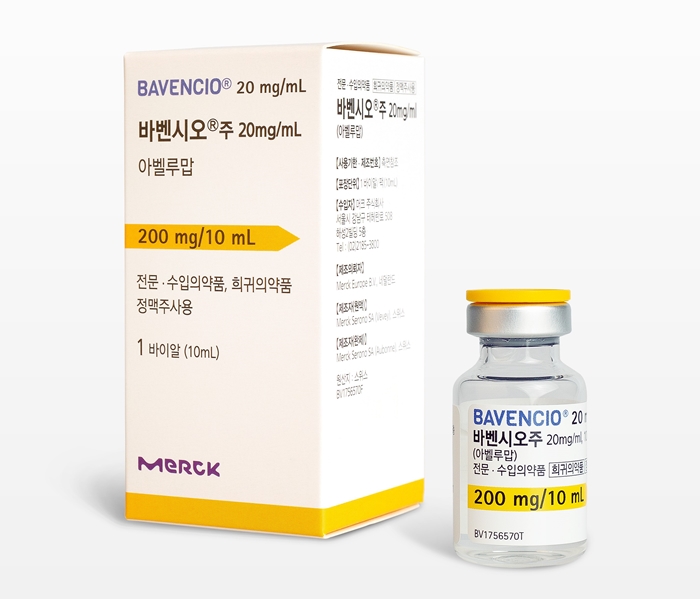
- Changes are arising in the prescription pattern for metastatic urothelial cancer due to the emergence of new treatment options. The reimbursement of Bavencio (avelumab) as a first-line maintenance therapy, increased treatment options for the patients. The drug was first granted reimbursement only as a second-line treatment. As demand for maintenance therapy has been high in the field, experts believe the prescription pattern will also change rapidly with Bavencio's reimbursement. Pic of Bavencio# Urothelial carcinoma begins in the urothelial cells and is the most common type that accounts for 90% of all bladder cancer diagnoses. Platinum-based chemotherapy, which has been the standard of care in the field for the past 30 years, showed a response in 3 out of 4 patients, but overall survival and progression-free survival were only around 12-15 months and 6-8 months, respectively. Also, the rate (25%) of patients using second-line chemotherapy was low, indicating the high unmet need for a viable treatment option after first-line chemotherapy. This is why the reimbursement of Bavencio (avelumab) from August as first-line maintenance therapy for adult patients with locally advanced or metastatic urothelial carcinoma is being received such high expectations. Bavencio was found to delay disease progression in the randomized, multicenter, open-label JAVELIN Bladder 100 study that studied 700 patients with locally advanced or metastatic urothelial cell carcinoma from 29 countries including Korea for over 38 months. Study results showed that the median overall survival (OS) of patients who received Bavencio was 29.7 months (25.2-34.0), a 9-month extension compared to patients who received best supportive care (BSC) care alone (20.5 months, 19.0-23.5), and patients showed over an 8-month improvement compared with the control group regardless of the first-line chemotherapy option. Professor A from the Department of Oncology at one tertiary hospital, said, “30-40% of patients progress after receiving first-line treatment. This means that out of 10 patients, around 7 patients will be eligible to use Bavencio as maintenance therapy.” “In the past, if 3 out of 10 patients experienced disease progression and moved on to second-line treatment, the 6 to 7 who did not progress just stayed without treatment. If the patient’s condition worsened after 3 to 4 months of non-treatment, the only positive aspect was that they were able to move on and receive later-line treatments.” However, considering the characteristics of locally advanced or metastatic urothelial cell carcinoma, experts believe that attention should be paid to later-line treatment options to treat the progression of the disease. The use of Bavencio may offset part of Keytruda’s use as a second-line treatment to some extent, but as the disease progresses, concern about what to use next becomes inevitable. Professor Miso Kim of the Department of Hemato-Oncology at the Seoul National University Hospital, said, “It is difficult to say which is more important - maintenance therapy and later-line treatment, but we are concerned about patients who cannot receive maintenance therapy, on how to treat these patients.” As the demand for later-line treatment is still high due to the nature of the disease, doctors have been stressing the need for reimbursement of such treatments. Treatments such as Padcev (ingredient: enfortumab vedotin-ejfv) that have been introduced have been raising interest in reimbursed options to use after second-line treatment. At a meeting last July, Astellas emphasized the justification for reimbursement of treatments such as Padcev as third-line or later-line treatments, apart from reimbursement of treatments like Bavencio. During the meeting, Kyung-Ah Park, Director of Medical Affairs at Astellas Korea, said, “We are offering drugs that can be used in a field where no 3rd-line or later-line option has been available until now. Padcev is strongly recommended by NCCN or European guidelines. We are working to benefit more patients by receiving reimbursement for this drug as soon as possible.” A urologist at a tertiary hospital, said, "In Korea, patients whose disease progresses after second-line rechallenge their tumor with previously treated treatments or use chemotherapy with paclitaxel. Although there are limitations due to its non-reimbursed status, there is a demand for a valid later-line treatment option, apart from Bavencio's reimbursement.”
- Policy
- Will Opdivo soon be reimb as first-line gastric cancer Tx?
- by Lee, Tak-Sun Aug 17, 2023 05:29am
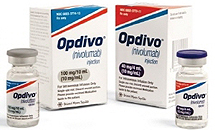
- Whether Ono Pharmaceutical Korea’s ‘Opdivo Inj’ will receive reimbursement as the first first-line immunotherapy option for gastric cancer is gaining attention. If the drug is reimbursed as a first-line treatment for gastric cancer, Opdivo Inj may closely chase the sales of Keytruda, which had expanded coverage as a first-line treatment for non-small cell lung cancer in the immuno-oncology drug market. Three doses of Opdivo Inj were included in the updated list of drugs for which drug price negotiations were recently completed by the National Health Insurance Service. The list contains all the drugs that have completed pricing negotiations by the 10th of this month. After being recognized for the adequacy of reimbursement as a first-line treatment for gastric cancer by the Health Insurance Review and Assessment Service in May, the company has been negotiating the insurance drug price with the NHIS. Its reimbursement standards had been established in June last year by HIRA’s Cancer Disease Deliberation Committee (CDDC). The CDDC set the drug eligible for reimbursement as first-line treatment in combination with fluoropyrimidine- and platinum-containing chemotherapy for advanced or metastatic gastric cancer, gastroesophageal junction cancer, and esophageal adenocarcinoma. The analysis is that if the negotiations are complete, Opdivo will likely be listed for reimbursement soon after reporting to the Health Insurance Policy Deliberative Committee. In particular, HER2-negative gastric cancer, which Opdivo targets, accounts for nearly 90% of all patients. Therefore, the reimbursement expansion is expected to increase its sales greatly. Currently, Opdivo is reimbursed as monotherapy for 4 indications: as first-line and later lines of monotherapy for melanoma, as second-line and later lines of monotherapy for non-small cell lung cancer, as third-line or later lines of monotherapy for Hodgkin lymphoma, and as second-line or later lines of monotherapy for head and neck squamous cell carcinoma. Also, the drug is reimbursed in combination with Yervoy as a first-line treatment for renal cell carcinoma. Last year, Opdivo’s sales based on IQVIA sales was KRW 109.9 billion. Among immuno-oncology drugs, Opdivo recorded the second-highest performance after Keytruda (KRW 239.5 billion). Keytruda's sales have improved significantly compared to other immuno-oncology drugs after being granted reimbursement extensions as a first-line treatment for non-small cell lung cancer in March last year. If Opdivo also is granted a reimbursement extension as a first-line treatment for gastric cancer, it may also enjoy as explosive sales growth comparable to Keytruda.
- Opinion
- [Reporter's view] There should be no recurrence of the Champ
- by Lee, Hye-Kyung Aug 17, 2023 05:29am
- On the 10th, the Ministry of Food and Drug Safety lifted the suspension of manufacturing and sales of Dong-A Pharmaceutical's Champ Syrup and Daewon Pharmaceutical's Coldaewon Kidsfen Syrup. Champ Syrup, which represents children's antipyretics containing acetaminophen, was produced and distributed again in 128 days, and Coldaewon Kidsfen Syrup in 85 days. Dong-A issued a recall order four times on April 25th, April 28th, and May 31st, starting with the recall of commercially distributed products due to 'concern about unsuitable quality (characteristics, microbial limit) on April 4th. On the other hand, Daewon Pharmaceutical recalled business operators for commercially available products as a precautionary measure following the phase separation phenomenon (concern) on May 18. Although the reasons for the recall of the two items are different, it is unknown when and how the order to recall and destroy the drug will occur. First, Champ Syrup, which had been recalled, went through the return and refund process through pharmacies and online. In addition, when a customer brings a product to a pharmacy, even in the case of products purchased at other pharmacies, normal product exchange or return and refund measures are to be carried out first. Suffering from the Champ Syrup recall process became the pharmacy distributing the product. Perhaps for this reason, Daewon Pharmaceutical, which was advised to recall the business operator, went through the process of returning and refunding the drug directly to the pharmaceutical company without going through the pharmacy. Of course, there was also Coldaewon Kidsfen Syrup, which was confused with Champ Syrup and brought to pharmacies, but pharmacies did not have to accept the product. Champ Syrup and Coldaewon Kidsfen Syrup, which had been discontinued for nearly three months, were canceled at the same time, and it was the pharmacy that was confused again. This is because it was not easy to order antipyretics for children whose production was resumed due to sales at specific hours and restrictions on the number of purchases per pharmacy. As Champ Syrup and Coldaewon Kidsfen Syrup went through a series of incidents such as manufacturing, suspension, and cancellation, pharmaceutical companies were insufficiently prepared to resume distribution due to inconsistent recall procedures and the Ministry of Food and Drug Safety's unilateral cancellation of manufacturing/suspension. Looking at this process, there is a need for support measures such as preparing a consistent procedure for recalls of business operators rather than compulsory recalls in the future and providing time to prepare for preparations such as pre-announcement by pharmaceutical companies in case of the lifting of manufacturing or suspension of drugs with issues such as supply and demand instability. seems to be
