
- LOGIN
- MemberShip
- 2026-06-26 15:12:36
- Company
- Shaperon files Phase II IND for its AD treatment
- by Lee, Seok-Jun Aug 01, 2023 05:33am
- On the 31st, Sharperon announced that it had submitted an investigational new drug (IND) application to the US Food and Drug Administration to conduct a Phase II trial in the U.S. for its atopic dermatitis treatment, ‘NuGel.’ The company plans to evaluate the pharmacokinetics, safety, tolerance, and efficacy of NuGel through the multinational Phase II trial on patients with mild-to-moderate atopic dermatitis. Participants will be double-blinded and receive a placebo or NuGel for 8 weeks. Through this clinical trial, Shaperon seeks to confirm NuGel’s improvement in eczema area and severity index (EASI score)) compared to placebo in patients with atopic dermatitis. NuGel is a new drug candidate that suppresses the expression of cytokines that exacerbate symptoms of atopic dermatitis by suppressing inflammasomes present in immune and vascular cells. By increasing the number of inflammatory regulatory cells in the body, the drug controls a wide range of inflammatory pathological mechanisms in two ways. Currently, 80% of atopic dermatitis patients are treated with moisturizers and steroids. However, this is not a cure and also accompanies various concerns related to side effects such as steroid resistance and telangiectasia. In this sense, NuGel is evaluated to have shown similar effects to steroids while securing safety. According to the market research institution Mordor Intelligence, North America accounts for 48.5% of the global atopy dermatitis market, with a market size of KRW 6 trillion. According to Grand View Research, the global atopy dermatitis treatment market is expected to reach KRW 37 trillion by 2030.
- Company
- US FDA starts review of GC Biopharma’s Alyglo
- by Kim, Jin-Gu Aug 01, 2023 05:33am
- GC Biopharma announced on July 31st that its drug, 'GC5107B (immunoglobulin 10% for intravenous administration) is being reviewed in earnest by the U.S. Food and Drug Administration. GC5107B is one of GC Biopharma’s blood derivative products that goes by the brand name Alyglo. The company had submitted a Biologics License Application (BLA) to the US FDA last month. With FDA starting the review process in earnest, the company expects the results to come out by January next year. The FDA assigned a target action date of January 13th (local time) next year, under the Prescription Drug User Fee Act (PDUFA). Therefore, the decision on 'GC5107B' will be made by then. GC Biopharma received a pre-license inspection for a blood product production facility in Ochang, Chungbuk Province in April of this year, which had been delayed due to the prolonged COVID-19 crisis. Then, the company resubmitted the BLA on the 14th of last month. The company announced that it plans to launch its product in the US market under the brand name Alyglo if it receives final approval from the FDA in January next year. According to GC Biopharma, the U.S. immunoglobulin market was worth USD 10.4 billion (about KRW 13 trillion) as of last year. In particular, blood derivatives, which require large-scale facility investment and advanced manufacturing experience, are known to have frequent supply disruptions due to the limited number of manufacturers.
- Company
- Pediatric neurofibroma new drug Koselugo will be reimbursed
- by Eo, Yun-Ho Aug 01, 2023 05:33am
- Attention is focusing on whether progress will be made in discussing the insurance coverage of Koselugo, a new drug for pediatric neurofibroma. According to the industry, AstraZeneca's neurofibromatosis new drug Koselugo will be submitted to the HIRA Pharmaceutical Reimbursement Evaluation Committee. As it recently submitted additional supplemental data and RSA, it remains to be seen whether an agreement can be reached with the government. Koselugo quickly supplemented the data and resumed discussions on registration in May after receiving a non-reimbursement decision from the committee in March of last year, but there was no significant progress in the discussion. Neurofibroma has relied on symptomatic treatment without suitable treatment. Neurofibromatosis is a rare disease in which tumors occur in nerve tissue, bone, and skin, and about 85% of them are type 1 in which the NF1 gene of the long arm of chromosome 17 is mutated. The prevalence of type 1 is 1 in 3000. The disease begins in childhood with the appearance of Café-Au-Lait Spots measuring 1 to 3 cm. Afterward, he suffers from symptoms such as optic glioma (brain tumor) around the age of 6 and scoliosis between the ages of 6 and 10. In adults, Leish nodules, which are hamartomas on the iris, are mostly found. Possible areas can be removed surgically or treated with chemotherapy or radiation. However, even after surgery, most cases recur, and most of them are major surgeries, which puts a heavy burden on both the medical staff and patients. In particular, recurrence is frequent in pediatric patients, so even after several surgeries, painkillers must be taken, and many suffer from language and movement disorders. Koselugo is a treatment jointly developed by AstraZeneca and MSD. It inhibits the growth of cell lines by blocking MEK activity. In the SPRINT phase 2 clinical trial, which served as the basis for approval, Koselugo achieved ORR, the primary evaluation index, by reducing tumor size by 20% or more in 68% of patients treated. In addition, 82% of patients who showed a partial response lasted more than 12 months. Half of the patients who did not receive treatment experienced disease progression after 1.5 years, but only 15% of patients who took Koselugo had disease progression by 3 years.
- Company
- Will Hanmi be able to develop its own Saxenda for Koreans?
- by Kim, Jin-Gu Aug 01, 2023 05:33am
- Hanmi Pharm has decided to change the development direction for its GLP-1 class drug ‘efpeglenatide.’ Instead of developing it as a diabetes treatment as before, the company plans to develop the drug as an obesity treatment. The industry’s attention was focused on the Global Phase III trial that Sanofi and Hanmi Pharm had conducted with efpeglenatide as a diabetes treatment. The results of the trial, 'AMPLITUDE-M,’ had indirectly confirmed the weight loss effect of efpeglenatide. In the trial, the weight of patients in the U.S. and Europe with diabetes who received 4mg efpeglenatide fell by 3.34kg on average. However, it would be difficult to rashly assume the results as the race or body mass index (BMI) of the participants may differ greatly if a new clinical trial is conducted in Korea for the drug as an obesity treatment. ’Just like Saxenda’... Hanmi Pharm changes development direction from antidiabetic→obesity drug Hanmi Pharm announced on the 31st of last month that it will develop efpeglenatide as an obesity treatment. On the 28th of last month, the company submitted an Investigational New Drug (IND) application to the Ministry of Food and Drug Safety for efpeglenatide to conduct a Phase III clinical trial with efpeglenatide as an obesity treatment. The company plans to change the development direction from diabetes treatment to obesity treatment. It is not completely giving up on the development of diabetes treatment, but a company official explained that the company plans to focus its capabilities on developing it as an obesity treatment in the near future. Efpeglenatide is classified as a GLP-1 analogue. GLP-1 analogues have a similar structure to human GLP-1 hormones. This hormone is secreted in response to meal ingestion and enhances insulin secretion by acting on the pancreatic beta-cells and reducing glucagon secretion to bring a glucose-lowering effect. It also acts on the brain to reduce appetite and delay the passage of food to enhance satiety. This is why the drug can work as a diabetes treatment while showing a weight loss effect. Global pharmaceutical companies have long been investigating this unique mechanism of action. Novo Nordisk opened the door to this field with the release of ‘Saxenda.’ Novo Nordisk transformed its diabetes drug, the GLP-1 analogue Victoza, into the obesity treatment Saxenda by changing its dose. Pic of Novo Nordisk After Saxenda became a global sensation, companies have continued to develop follow-up drugs. Novo Nordisk has released ‘Wegovy,’ a long-acting GLP-1 analog, as its next-generation obesity treatment. Eli Lilly, which owns 'Trulicity' as a GLP-1 analog type diabetes treatment, has developed another next-generation drug, GLP-1/GIP dual agonist ‘Mounjaro.’ Both Wegovy and Mounjaro were received with great attention, to the extent that large shortages of both have occurred in the US since their release. In the case of Mounjaro, the US Food and Drug Administration approved the drug as a diabetes treatment, but the drug is being prescribed to obesity patients off-label. Hanmi Pharm is also on a similar track. Rather than launching efpeglenatide as a latecomer to the diabetes treatment market, which is already saturated with various classes of drugs in the market, the company is known to be seeking to jump into the budding obesity treatment market. Global Phase III trial on efpeglenatide as a diabetes drug showed ‘3.34kg weight reduction' The industry has been paying attention to the results of the global Phase III trial that Hanmi Pharm has conducted with efpeglenatide as a diabetes treatment to indirectly check on the weight loss effect of efpeglenatide. The company had signed a license-out agreement with Sanofi in 2015. At the time, Sanofi led 5 global Phase III trials were conducted on efpeglenatide. However, Sanofi returned all the rights to Hanmi in June 2020. Since then, the company received all clinical data from the 5 trials and has been seeking new commercialization opportunities. One result to note among the 5 trials is one that compared 3 different doses of efpeglenatide with placebo. The trial set the primary efficacy endpoint of the trial as the change in glycated hemoglobin (HbA1c). At the time, Hanmi Pharm had also evaluated the weight change of the patients at 30 weeks and 56 weeks as one of the secondary endpoints of the trial. The trial was conducted on 406 patients in the U.S. and Europe. The mean BMI of the trial participants was 34.2㎏/㎡. The mean BMI by administered doses were: ▲placebo(102 patients) 34.8㎏/㎡ ▲ efpeglenatide 2㎎ (100 patients) 34.4㎏/㎡ ▲ efpeglenatide 4㎎ (101 patients) 33.8㎏/㎡ ▲ efpeglenatide 6㎎ (103 patients) 33.8㎏/㎡. At 30 weeks of administration, the weight loss effect was greatest in the 4mg group. The 102 people in the placebo group lost an average of 1.35 kg. The group that was administered efpeglenatide 2 mg lost an average of 1.01 kg. The mean weight loss was 3.34kg in the 4mg group and 3.19kg in the 6mg group. At 56 weeks of administration, the placebo group lost an average of 1.26kg. The group that was administered efpeglenatide 2 mg lost an average of 0.95 kg. The mean weight loss was 3.24kg in the 4mg group and 1.82kg in the 6mg group. At both the 30th and the 56th week, the weight loss effect tended to be prominent in the 4mg group. Weight loss effect of efpeglenatide as a diabetes treatment in a global Phase III trial (Data: clinicaltrials.gov) There was no significant difference in the incidence of serious adverse events, including cardiovascular events, between the placebo and control groups. ’Development of an obesity treatment tailored to Koreans’... raises interest in the design of the clinical trial Hanmi Pharm had announced that it would develop efpeglenatide into an ‘obesity treatment customized for Koreans,’ It added that it would develop a drug optimized for the BMI of 25 kg/m2, which is the obesity standard for Koreans. Although the specifics of its clinical design have not been disclosed, it is speculated that the trial will recruit and enroll people with a BMI of 25 kg/m2 or higher. This is expected to be somewhat different from the global diabetes Phase III clinical trial that had been conducted on efpeglenatide. In the case of the global clinical Phase III trial, the average BMI was 34.2 kg/m2. In particular, only 112 (27.6%) of the 406 people who participated in the trial had a BMI of less than 30 kg/m2. Another difference is that the previous global Phase III trial for efpeglenatide as a diabetes treatment was conducted mainly on white, black, and Hispanic subjects. Of the total 406 participants, only 5 (1.2%) were Asians. This means that different results may be derived even though the same drug was used due to different demographics. Therefore, industry officials unanimously say that the design of the domestic Phase III clinical trial will determine the success or failure of Hanmi’s development of efpeglenatide as an obesity drug for Koreans. An industry official said, “Although it is the same drug, the target is different and the composition of the clinical participants will also be very different from the previous clinical trials. In the case of Wegovy, a study had shown that the drug demonstrated weight loss in East Asians. In the case of efpeglenatide, the results may also differ depending on the clinical design.” Hanmi is also clearly aware of this. An official from Hanmi Pharm said, "Global pharmaceutical companies that have developed GLP-1-based obesity treatments are competitively announcing the rate of weight loss, but the reported figures are only beneficial to highly obese patients in the West. We will develop an obesity drug customized for Koreans that takes into consideration the body shape and weight of Koreans.”
- Policy
- Incentives for phase 3 among Koreans raise public opinion
- by Nho, Byung Chul Aug 01, 2023 05:33am
- In order to prepare a reasonable drug price calculation for new drugs that have undergone phase 3 clinical trials in Korea, attention is focused on whether the special drug price system of Japan, Taiwan, and France can be applied and introduced. According to the industry, the public-private consultative body for improving the drug price system is conducting in-depth discussions to form a consensus on the introduction of a positive incentive system for innovative new drugs developed in Korea and to derive positive results. Furthermore, the basis for preferential drug prices for domestic new drugs, such as Article 17-2 of the 'Special Act on the Promotion and Support of the Pharmaceutical Industry' amended in December 2018, such as 'preferential treatment in addition to the maximum amount of drugs', is already in place. It is expected that it will be able to be institutionalized from next year. The purpose of the clinical drug pricing system for Koreans is to evaluate the appropriate value of new drugs by raising them from 90% to 95-100% of the current alternative drug market price in the case of skipping drug price negotiations for new drugs that have undergone phase 3 clinical trials for patients residing in Korea. is wearing Institutional strengths include ▲securing evidence for safety, efficacy, and clinical usefulness for Koreans, ▲easiness of tracking and management of clinical trials, improvement of R&D capabilities according to the full domestic clinical staff, ▲upgrade and employment of clinical trial institutions creation, and ▲compensation for contributions to the development of new drugs suitable for the health conditions and diseases of Koreans. Then, how about the case of Japan, which is most actively operating such a system? In this regard, Japan's additional system is largely classified and applied into four categories: innovation, usefulness, marketability, children, and preferential introduction. The usefulness bonus is a drug that meets two of the three requirements of the innovativeness supplement and can receive an incentive benefit of 5 to 60% depending on the detailed application criteria. Additives for children (5~20%) are drugs for which the contents of children and infants are explicitly included in the dosages related to the main or corresponding efficacy of the new listing, and drugs for which the comparator of the new drug is not subject to the additives for children. belong to this category Priority introduction (10%) includes new drugs approved for the first time in Japan and drugs with new mechanisms different from similar drugs already approved in foreign countries (US, UK, Germany, France) and Japan. It is understood that France determines the addition by focusing on improvements such as medical benefits, clinical value, and dental efficacy as well as the reduction of side effects. CT oversees technical reviews such as SMR and ASMR under the Ministry of Health, and CEPS determines drug prices through negotiations with pharmaceutical companies after consultation with the committee. When negotiating drug prices, the level of clinical benefit improvement of drugs, the price of alternative drugs, the expected amount of use, and the predictable status of prescriptions are reviewed from various angles. Contracts regarding refunds in case of exceeding expected usage and expenditures are made, and drug prices and drug expenditures are made accordingly. The level of clinical benefit improvement is classified into 5 grades according to the degree of improvement compared to existing treatments, and the drug price is determined according to the grade. New drug pricing categories in Taiwan are divided into Group 1, group 2A, and Group 2B. Group 1 is determined by the median price of drugs in A10 countries, and Groups 2A and 2B are finalized considering the lowest price in A10 countries, drug prices in countries of origin, relative comparison prices of foreign prices, and comparison of drug administration costs. As for the additional requirements, premiums of up to 15% are given for domestic clinical trials (10%), domestic economic evaluation (maximum 10%), pediatric drugs (maximum 15%), and improvement in therapeutic effect, safety, and convenience of taking. The public-private consultative body for improving the drug price system is composed of officials from the Ministry of Health and Welfare, the Korea Pharmaceutical Bio Association, and the Global Pharmaceutical Industry Association. It is understood that the government is working on a plan to improve and classify the new drug price system, such as maintaining the period for adding the maximum amount of drugs to stabilize the supply of drugs.
- Policy
- Decided to re-discuss reimbursement criteria for Mylotarg
- by Lee, Tak-Sun Jul 31, 2023 05:29am
- Acute myeloid leukemia treatment drug Mylotarg decided to re-discuss setting reimbursement standards. This drug received attention as the first Antibody-Drug Conjugate (ADC) treatment, but in May of last year, the Cancer Disease Review Committee failed to establish reimbursement standards. The HIRA (Chief Director Kang Jung-gu) announced that it decided to re-discuss Mylotarg as a result of the review of the reimbursement standards for drugs used in cancer patients, which were reviewed at the 5th Cancer Disease Review Committee in 2023 held on the 26th. This drug, licensed in Korea in December 2021, is an ADC consisting of a CD33-targeting monoclonal antibody and calicheamicin, a cytotoxic drug, and blocks cancer cell growth through a mechanism that acts on cells expressing the CD33 antigen that appears in 90% of all AML patients. induce extinction. In a clinical trial on 271 patients with acute myeloid leukemia, the Mylotarg+Daunorubicin+Cytarabine combination group showed a median event-free survival of 17.3 months, which was approximately 7.8 months longer than the daunorubicin+Cytarabine combination group's 9.5 months. As the deliberation committee decided to re-discuss it, attention is paid to whether it will succeed in setting the salary standard through data supplementation. BOSULIF, a treatment for Philadelphia chromosome inactive chronic myelogenous leukemia, failed to set reimbursement standards as a first-line treatment but succeeded as a second-line treatment. Therefore, criteria for use were established for Ph+ CML in the chronic phase, AP, or acute phase (BP) who showed resistance or intolerance to previous therapies. Oxaliplatin + Capecitabine combination therapy, which has been expanding the reimbursement standard, has also been set as adjuvant therapy after surgery for patients who have received chemotherapy before or after surgery for rectal cancer. On the other hand, Besremi, which is used for polycythemia vera that is resistant or intolerant to hydroxyurea, failed to establish reimbursement standards.
- Opinion
- [Reporter's view] When will Enhertu's benefit be available?
- by Jul 31, 2023 05:29am
- Daiichi Sankyo and AstraZeneca's Enhertu are continuing their unstoppable moves. Enhertu, which has achieved remarkable results in breast cancer, has expanded the types of carcinoma to include gastric cancer and lung cancer and is expected to be used in a number of solid cancers that show HER2 expression, such as cervical cancer, endometrial cancer, and ovarian cancer. Several ADCs have been approved, but none have been as scalable as Enhertu. Indeed, Enhertu is writing ADC history. The phase 2 results for Enhertu announced at ASCO 2023 in June were very positive. Although it was not at a stage that deserved a standing ovation like last year's announcement of low-expression breast cancer of HER2, this announcement raises the possibility that Enhertu will be reborn as an anti-cancer drug regardless of cancer type. The Enhertu DESTINY-PanTumor02 clinical trial announced at ASCO was a study that examined the effects of Enhertu by forming a cohort of cervical cancer, endometrial cancer, ovarian cancer, bile duct cancer, pancreatic cancer, bladder cancer, and other solid cancers without a control group. For each cohort, 40 patients were recruited and Enhertu was administered. ORR was set as the primary evaluation index, and DOR, DCR, PFS, OS, and safety were established as secondary evaluation indexes. What is noteworthy is the response rate that Enhertu showed. It recorded a response rate of 50% or more in cervical cancer and endometrial cancer. In particular, the response rate for endometrial cancer reached 57.5%. Seven out of 40 endometrial cancer patients (17.5%) showed complete remission (CR) and 16 (40%) showed partial response (PR). At 12 weeks, 80% (32 patients) of endometrial cancer patients had their disease under control. In conclusion, Enhertu recorded a response rate of 30% or more in all cancer types studied, except for pancreatic cancer, which had a response rate of only 4%, and biliary tract cancer, which had a relatively low response rate of 22%. About a month later, on the 27th, additional analysis results of DESTINY-PanTumor02 were announced. In summary, Enhertu demonstrated improvement in PFS and OS, which were set as secondary evaluation indicators. Follow-up clinical trials should be supported, but it is clear that Enhertu is rapidly taking off as an anti-cancer drug regardless of cancer type. Domestic patients looking at Enhertu's rapid development were very distressed. Although approved, access to treatment is low due to non-reimbursement. Enhertu is an oasis for patients not only in breast cancer but also in gastric cancer where new drug options are limited. Daiichi Sankyo's commitment to Enhertu's fast benefit was also quite large. It is known that several measures were prepared, such as offering the drug price at the lowest price in the world and considering additional RSA. Patients urged Enhertu's speedy reimbursement listing. The national consent petition for this was so supportive that it obtained the consent of 50,000 people last February. The health authorities seem to be paying attention to Enhertu's benefit, as if conscious of public opinion. It can be seen from the fact that even when the review committee was first eliminated, it was concluded through a re-examination rather than not setting a standard. Considering the time it takes for a new drug to be registered for reimbursement in Korea, Enhertu's reimbursement process is fast. Currently, Enhertu has passed the cancer disease review committee after re-examination and is undergoing a PE review. However, it is unclear when it will be presented to the pharmaceutical reimbursement evaluation committee, which is in the final stage. Patients are anxiously awaiting news of the assumption. In about two months, it will be a year since Enhertu was approved in Korea. Even after passing the Drug Evaluation Committee, all procedures for insurance coverage are completed only after drug price negotiations with the NHIS and the health insurance policy deliberation committee of the Ministry of Health and Welfare. By the end of the year, after Enhertu's first global launch, it will take 48 months to receive benefits in Korea, exceeding the OECD average of 45 months. We hope that patients' wait for Enhertu will not be too long.
- Policy
- Bill proposed to allow Kymriah’s use at transplant hospital
- by Kim, Jung-Ju Jul 31, 2023 05:28am
- A bill was proposed to amend the law and improve patient access to Novartis’s Kymirah, the ultra-high-priced ‘one-shot drug,’ by realistically amending the requirements for institutions that use the drug. The main point of the amendment is to allow hematopoietic stem cell transplant institutions designated as transplant hospitals to provide Kymriah treatment. Rep. Young Woo Lee of the Democratic Party of Korea proposed the bill for the ‘Partial Amendment to the Act On The Safety Of And Support For Advanced Regenerative Medicine And Advanced Biological Products’ that contained the proposal above on the 27th. Kymriah was approved in March 2021 as the world’s first chimeric antigen receptor T-cell (CAR-T) therapy and the first advanced biopharmaceutical under the ‘Advanced Regenerative Bio Act.' With the enactment of the Act, the Ministry of Food and Drug Safety classified Kymriah as a biodrug and stipulated the medical institutions that seek to use Kymriah to receive a permit for a human cell management business under the newly implemented ‘Advanced Regenerative Bio Act.’ However, to receive the permit, the law requires the institution to be equipped with a GMP facility that meets the pharmaceutical manufacturing management standards. Rep. Lee pointed out that the irony lies in how medical institutions that seek to use Kymriah for treatment only ‘draw, extract, and freeze’ the patient’s blood to send to Novartis. Lee criticized that requiring treatment institutions to have pharmaceutical manufacturing facilities is wasteful and unnecessary as the institutions are not in charge of making the drug itself. Due to such limitations, only the 5 large hospitals in Seoul - the ‘Big 5 Hospitals’ of Korea - were permitted to use Kymriah. Due to this restriction, patients living in rural areas had to come all the way to Seoul to receive treatment. The amendment aims to reduce the patient's suffering and waste and alleviate the concentration of medical care in the metropolitan area by allowing hematopoietic stem cell transplantation institutions designated as ‘transplant hospitals’ under Article 25 of the Organs Transplant Act to use Kymriah for treatment. In addition to Rep. Young Woo Lee, the bill was jointly proposed by Rep. Young In Ko, Ju Young Kim, Gab Seok Song, Soo Jin Lee, Sung Ho Jung, Il Young Chung, Pil Mo Jung, Oseop Jo, and Jung Min Hong.
- Company
- Equipped with two new drugs this year alone
- by Jul 31, 2023 05:28am
- Janssen challenges with a new mechanism, BMS widening the gap with maintenance therapy Janssen has added a new drug for multiple myeloma in Korea. This is the second permit this year. It is noteworthy whether Janssen will change the multiple myeloma market where BMS dominates with Celgene. On the 26th, the Ministry of Food and Drug Safety approved Janssen’s Tecvayli as a fourth or higher treatment. Tecvayli is indicated for use as monotherapy in adult patients with relapsed or refractory multiple myeloma who have received at least three lines of therapy, including proteasome inhibitors, immunosuppressants, and anti-CD38 monoclonal antibodies. Tecvayli is Korea's first multiple myeloma bispecific antibody. It double-targets the B-cell maturation antigen (BCMA), which is overexpressed on multiple myeloma cells, and the CD3 receptor, which is expressed on the surface of T cells. When this antibody binds to BCMA and CD3, lysis and death of BCMA-expressing myeloma cells are induced by activated T cells. The study that served as the basis for Tecvayli's approval was the MajesTEC-1 study, a phase 1/2 clinical trial. As a result of evaluating efficacy in 165 patients, Tecvayli recorded an ORR of 63% in patients who failed 3 or more treatments. 32.7% of patients presented with sCR. The number of patients with CR and VGPR was also 6.7% and 19.4%, respectively. The average time from the administration of Tecvayli to the first response was 1.2 months. The response lasted 18.4 months. Janssen's aggressive move in multiple myeloma continues. Following the CAR-T treatment Kavicty in March, Tecvayli was installed with two new drugs this year alone. Kavicty is the second CAR-T treatment to appear in Korea. This is the first CAR-T with multiple myeloma as an indication. Unlike existing multiple myeloma treatments, Kavicty inserts genetic information capable of recognizing BCMA into the patient's immune cells and then injects these T cells back into the patient's body. Initially, Kavicty was approved for use as a fifth-line or higher treatment, and the number of patients for which it could be used was very limited. Recently, a new clinical presentation prepared the basis for expanding the scope. These are the results of the phase 3 clinical CARTITUDE-4 study presented at ASCO 2023 held in June. In this clinical trial, standard therapy PVd (Pomalidomide + Bortezomib + Dexamethasone) or DPd (Daratumumab + Pomalidomide + Dexamethasone) was administered to 419 patients with relapsed/Lenalidomide-refractory multiple myeloma who had previously received first- or third-line treatment. Compared to Kavicty. Clinical results showed that Kavicty lowered the risk of disease progression or death by 74% compared to standard therapy. In the primary endpoint, progression-free survival, the Cavikti group recorded 76%. The control group was 49%. The control group's median PFS was recorded at 11.8 months, whereas the Kavicty group had not yet reached the median. As a result of the sub-analysis according to the treatment order, Kavicty proved its potential as a second to fourth-line treatment by improving progression-free survival regardless of the treatment order. Tecvayli, approved this month, is considered a promising global blockbuster. Clarivate, a global academic information service company, predicted earlier this year that Tecvayli will record estimated sales of $1.8 billion (2.2363 trillion won) in 2031. However, as competition in the multiple myeloma treatment market is fierce, the report said that Tecvayli needs to think about ways to increase its utilization if it wants to become a blockbuster new drug. Accordingly, Janssen is seeking a new combination therapy using Tecvayli. It is a method of using it in combination with Talquetamab, a new bispecific antibody drug that has not yet been approved in Korea. Unlike Tecvayli, which simultaneously targets BCMA and CD3, Talquetamab is a novel mechanism that inhibits both GPRC5D protein and CD3 expressed on the surface of specific cancer cells. At the last ASCO, data from phase 1b clinical trials evaluating the combination therapy of the two drugs were also announced. Janssen is trying to transform the multiple myeloma market by adding two new drugs with new mechanisms following the existing drugs, Darzalex and Velcade. Several pharmaceutical companies in Korea are selling multiple myeloma treatments, but BMS is by far the strongest player at this point. BMS has significantly strengthened its multiple myeloma pipeline by acquiring Celgene, which owns Velcade and Pomalyst. The BMS-Celgene acquisition, which took place in 2019, was of an unprecedented scale and was considered the most significant M&A case in the global pharmaceutical industry. At that time, the amount invested by BMS to acquire Celgene amounted to about 83 trillion won. According to IQVIA, a pharmaceutical market research institute, Revlimide has the highest annual sales of 38.6 billion won among domestic multiple myeloma treatments. Amgen's Kyprolis ranked second with 34.5 billion won in sales. Sales of Janssen's Darzalex and Velcade recorded 21.2 billion won and 10.4 billion won, respectively. Darzalex is showing rapid growth but remains in third place. Janssen plans to change the treatment landscape with a new drug with a new mechanism. To this end, efforts are in full swing to raise the treatment order of new drugs to the front stage. The variable is the maintenance regimen of Revlimide. Revlimide, which was the first-line treatment, is widening the gap by moving to maintenance therapy, which is a more advanced treatment. In January of this year, maintenance therapy was also listed on the list of insurance benefits, showing a growing trend. Revlimide sales in the first quarter were 10.4 billion won, up 14% from the previous year.
- Company
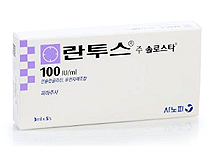
- Handok will sell original insulin drug Lantus
- by Lee, Tak-Sun Jul 31, 2023 05:28am
- Handok, which had previously stopped selling the insulin biosimilar ‘Glarzia (insulin glargine)', will be marketing and distributing the original insulin 'Lantus' from the 1st of next month. Whether the company will be able to expand its presence in the diabetes treatment market with the original product based on the know-how in insulin sales it had accumulated selling Glarzia is gaining attention. According to industry sources on the 28th, Handok will be in charge of the marketing and sales of Lantus Injection Solostar and Lantus Injection Vial that is being imported and marketed by Sanofi-Aventis Korea from August 1st. Lantus is a long-acting insulin injected once a day. As the current leading product in Korea, the product posted sales of KRW 20.2 billion last year (IQVIA). However, the drug has come down from its unrivaled position after the introduction of its biosimilars in 2016. Currently, the Lantus biosimilars Lilly's ‘Basaglar Kwik Pen’ and GC Biopharma’s ‘Glarzia Prefilled Pen' are available in Korea. Among the two biosimilars, Glarzia, which was developed by Indian drugmaker Biocon, has been sold by Handok in Korea in co-partnership with GC Biopharma since its release in 2018. The company’s agreement with GC Biopharma ended in June, leaving a gap in its sales of insulin products. Since then, Dongkook Pharmaceutical has been in charge of sales and distribution of Glarzia. However, the company closed its sales gap in only 2 months. Handok will start selling the original Lantus from August 1st and is expected to further increase the company's presence in the insulin market. Handok has a strong presence in the diabetes market selling diabetes treatments and consumables such as Amaryl and Tenelia. The industry expects the addition of the original Lantus to the lineup to further strengthen the company’s position in the field. Even though Lantus biosimilars were introduced to the market, their sales are not high yet. Based on the IQVIA report, Glarzia sold KRW 1.1 billion, Basaglar KRW 0.4 billion last year.
