
- LOGIN
- MemberShip
- 2026-07-05 02:14:51
- Policy
- Drug substances with impurities are collected voluntarily
- by Lee, Tak-Sun Sep 16, 2021 05:59am
- The recovery of antihypertensive drugs exceeding impurities is expanding. Following the Drug product, Drug substance began to recover. The MFDS announced on the 14th that it will voluntarily retrieve some of Kukjeon and Pharmacostech's Irbesartan's Drug Substance. Kukjeon and Pharmacostech start collecting four manufacturing number products each. Following the drug product, the recovery of drug substances began. Initially, the MFDS announced on the 9th that it would voluntarily recover 73 items from 36 companies that manufacture Sartan hypertension treatments (1.51 to 7.677/day) exceeding the daily intake of AZBT, which is an impurity. All of these items are Drug products, and only manufacturing number items that have been problematic in safety surveys are recovered. The withdrawal list did not include Drug substance. In response, an official from the MFDS explained, "Raw Material did not include it in the announcement list because there was no consumer recovery like Drug Product," adding, "The local government is also voluntarily collecting the drug in question." According to the MFDS' explanation, it is estimated that there will be more items to recover raw materials. The Ministry of Food and Drug Safety announced on the 9th that the pharmaceutical company voluntarily collects 183 manufacturing numbers of Sartan drugs. Accordingly, patients taking the drug should not stop taking it arbitrarily, but should decide whether to continue taking it after consulting with a pharmacist. It added that patients with health concerns can be exchanged for manufacturing numbers below the standard at pharmacies. The MFDS emphasized that it will manage only Sartan drugs that are less than the daily intake allowance so that they can be supplied and distributed to the market.
- Company
- Idiance reveals the results of Venadaparib
- by Kim, Jin-Gu Sep 16, 2021 05:59am
- Idience, a new drug development company of Ildong Holdings, announced on the 14th that it will announce the results of phase 1b clinical trials of the targeted anticancer drug Venadaparib (IDX-1197) at the ESMO conference to be held from the 16th to the 21st. Venadaparib is a new drug candidate for targeted anticancer drugs based on precision medicine with a PARP (Poly ADP-ribose polymerase) inhibitory mechanism. Currently, Idience is conducting phase 1b/2a clinical "VASTUS" to evaluate the safety, tolerability, and effectiveness of Venadaparib in solid cancer patients with homologous recombination recovery mutations. What will be announced this time is the first interim result of the VASTUS test released through the American Cancer Society (AACR) in April. According to the abstract released on the 13th, Venadaparib was administered to metastatic BRCA mutated breast cancer patients, and there were no nausea, fatigue, or loss of appetite corresponding to Grade 3, which is the main side effects of existing PARP inhibitors.In particular, excellent efficacy was observed, with an objective response rate (ORR) of 80% of 10 patients administered Venadaparib, Idiance said. The company explained that it plans to secure additional related data through follow-up research. Based on the results of the clinical phase 1b study, Idience is known to have initiated phase 2a clinical trials. The ORR levels of Venadaparib observed in breast cancer patients with BRCA mutations are very meaningful compared to conventional PARP inhibitors, an Idiance official said. "We will continue further clinical studies to prove the excellent anticancer effect of Venadaparib."

- Policy
- 299 items were voluntarily withdrawn
- by Lee, Hye-Kyung Sep 15, 2021 06:12am
- The NHIS's self-evaluation came out that the "National Health Insurance Medical Care Benefit Standards" revised on October 8 last year prevented the registration at will. At the Korea Special Press Association briefing held on the 14th, Lee Sang-soo, executive director of insurance benefit, said, "As soon as the drug benefit list was registered, as items that cannot perform supply obligations were voluntarily withdrawn, the items that have been pointed out have been blocked." The NHIS has also been negotiating drugs subject to calculation (generics, IMDs, combination drugs, and herbal medicines, etc.), which upper limit is determined according to the drug calculation criteria since October 8 last year. The contents of the negotiations are not the amount, but the obligation to supply generics, promises to quality control, and confidentiality. According to the results of the negotiations so far, a total of 1,869 items were subject to negotiations as of the end of August, and 296 negotiations are currently underway. There were 1,382 items that negotiated medical care benefits, including the recently conducted additional revaluation drug, and only 778 items were agreed upon. The remaining 604 items have been broken down or negotiations are underway. The 1,382 items also included negotiations on additional revaluation, and 468 out of 487 items have been agreed on supply and quality. Lee Yong-gu, head of the drug price management office, said, "Among the generic negotiations, supply obligations and quality control are more important," adding, "If there is a pharmaceutical company that seeks to reach an agreement due to the breakdown of negotiations, we are negotiating again with the MOHW." Director Lee added, "However, we believe that drugs that cannot voluntarily withdraw or perform supply obligations immediately have no choice but to be deleted."
- Company
- Novartis Korea appoints Byungjae Yoo as new head
- by Eo, Yun-Ho Sep 15, 2021 06:11am
- Byungjae Yoo, new General Manger of Novartis Korea Byungjae Yoo, the former Managing Director of Johnson & Johnson Medical North Asia, has been appointed as the new head to lead Novartis Korea. The company had recently announced through an internal notice that Yoo will be officially appointed as its General Manager from October 1st. This will be the second time since the company's establishment that the Korean subsidiary will be managed by a Korean leader. After completing his MBA at Harvard Business School, the newly appointed General Manager Yoo had joined J&J in 2006 through the company’s International Recruitment & Development Program. Since then, Yoo had held various roles in the company, including ones in North America’s Endovascular team, DePuy UK, and DePuy Australia. In Korea, he had served in the Cardiovascular Care Business Unit across North Asia and then appointed the Managing Director of Johnson & Johnson North Asia to oversee Korea, Taiwan, and Hong Kong. Although Novartis has been operating its oncology and pharmaceutical division independently as separate divisions, with reimbursement discussions for the CAR-T therapy ‘Kymriah (tisagenlecleucel)’ and SMA treatment ‘Zolgensma’ in progress, on what synergy will the appointed new head bring remains to be seen. Since its establishment in 1997 and the first president Frans Hompe, the company had mostly appointed foreign heads to lead the Korean subsidiary, including Jean-Luc Scalabre in 1998, Peter Maag in 2003, Andrin Oswald in 2006, Peter Jager in 2008, Brian Galdsden in 2014, and most recently, Joshi Venugopal. The only Korean national that had been appointed until now was Hak-sun Moon in 2015.

- Company
- Pharma companies fail to suspend renegotiations for CAs
- by Chon, Seung-Hyun Sep 15, 2021 06:11am
- Once again, the suspension of execution for the second negotiation order to retrieve reimbursement that was paid for choline alfoscerate (cholinergic agent) that was filed by pharmaceutical companies was dismissed. In other words, the companies have failed to suspend the execution of both the first and second negotiation order to retrieve reimbursement. According to industry sources on the 14th, the 9th Administrative Branch of the Seoul High Court dismissed the appeal to suspend execution of the order for renegotiations on choline alfoscerate products that was filed by 26 companies including Chong Kun Dang on the 8th. The suit was filed for the second negotiation order that was issued by the government to negotiate the terms for retrieving the reimbursement paid for choline alfoscerate drugs. At the end of last year, the Ministry of Health and Welfare ordered the National Health Insurance Service to make insurance retrieval agreements on choline alfoscerate drugs. The order was to reach agreements with the companies that ‘If the clinical trial fails, the full amount of health insurance prescriptions, from the date the clinical trial design submission was submitted to the MFDS to the date of indication removal, should be returned to the NHIS,.’ After the companies refused to negotiate, the MOHW again ordered renegotiations in June last year. Upon order, two groups consisting of 26 companies including Daewoong Bio and 26 companies including Chong Kun Dang filed for the cancellation and suspension of execution of renegotiations. In July, the suspension of execution filed by Daewoong Bio and others was dismissed, and the suspension of execution of negotiations filed by Chong Kun Dang and others was also dismissed. Chong Kun Dang and others again re-appealed but the case was again dismissed. As a result, all pharmaceutical companies that requested suspension of executions failed to suspend renegotiations for reimbursement retrieval. Prior to the second try, the companies had filed administrative suits and suspension of execution for the first renegotiation order as well. At that time, two groups consisting of 28 companies including Daewoong Bio and 28 companies including Chong Kun Dang separately filed their cases, but both cases were dismissed by the Supreme Court. The suspension of execution filed by Chong Kun Dang, etc. was first dismissed in January, then again dismissed at the appeal hearing in May. Chong Kun Dang and others filed for a reappeal, and but this was again dismissed last month. The suspension of execution filed by Daewoong Bio and others was dismissed at the first and second trial and then dismissed again by the Supreme Court in July without hearing as discontinuance of a trial. Meanwhile, the companies have also reached an agreement with the NHIS to negotiate for the retrieval of reimbursement. Recently, the NHIS had reached an oral agreement for negotiations with companies to retrieve the reimbursement paid for choline alfoscerate drugs. The NHIS and the companies agreed that the companies will back 20% of the health insurance prescriptions amount paid from the date of submission of the clinical trial design to the MFDS to the date of indication removal if the clinical trial on choline alfoscerate drugs fail and its indication is deleted. However, despite reaching such agreements, the companies are continuing with litigations to defer negotiations. The companies have filed all-round lawsuits, including suits for cancellation and suspension of execution to block negotiations, but none were dropped since.
- InterView
- Leclaza’s ESMO data will determine FDA approval
- by An, Kyung-Jin Sep 15, 2021 06:11am
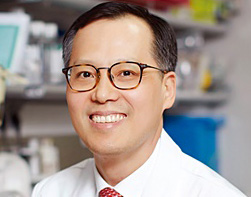
- Cho Byung Chul, a professor at Yonsei University "This data will be the basis for determining the approval of Leclaza combination therapy. Following Tagrisso, the world is paying attention to how much lung cancer patients who failed to treat platinum-based anticancer drugs will react. " Janssen, a partner of Yuhan, will announce new clinical data on combination therapy with Leclaza at the ESMO 2021 online academic event, which will open on the 16th (local time). It is the very combination that excited the society (ESMO 2020) a year ago with an incredible number of "OR 100%." In the meantime, Leclaza's combined drug, Rybrevant, was approved by the U.S. Food and Drug Administration (FDA) for the treatment of non-small cell lung cancer accompanied by 20 insertion variations of epithelial cell growth factor (EGFR). What synergy effect will Leclaza and Ambantamab have this year? Cho Byung-chul, a professor of oncology at Yonsei University, emphasizes, "We should pay attention to the response rate (ORR) of Leclaza and Rybrevant combination therapy unveiled at ESMO 2021." According to the abstract list released by the society, the new data for Leclaza combination therapy this year is a clinical study of CHRYSALIS-2 (phase 1b). The phase CHRYSALIS-21b clinical cohort A study evaluates the OR of Leclaza and Librevant combination therapy in patients with EGFR targeted anticancer drug Tagrisso and EGFR mutant non-small cell lung cancer who do not respond to platinum-based anticancer drugs.It is a thoroughly designed study to obtain permission for Leclaza and Librevant combination therapy in patients with Tagrisso resistance. According to Professor Cho, Taxotere is the only drug that can be used for patients under the current conditions. Taxotere is a cytotoxic anticancer drug that causes severe adverse reactions. Nevertheless, the reaction rate is close to zero (0%). In other words, they try because there are no other options, but it is virtually the same as there is no cure. It is predicted that early market sales will be possible through Breakthrough Therapy Design and acceleration approval. Considering the case of Librevant, which obtained the FDA acceleration review in May, it is judged that the possibility is sufficient. Recently, the American Society of Clinical Oncology (ASCO 2021), a combination therapy with Leclaza, also reproduced 36% OR in patients with resistance after Tagrisso treatment. Professor Cho said, "Lung cancer specialists who face patients in desperate situations in the clinic every day need a new treatment. This is why the world is paying attention to the ESMO announcement data, he explained. We are looking forward to the release of a treatment that can be used instead of 'Taxotere' as soon as possible, he said. Professor Cho is in charge of CHRYSALIS-1 multinational clinical trials, led by Janssen, evaluating Rybrevant alone and combined therapy. An intermediary study on the anti-tumor mechanism of Rybrevant in Exxon 20 mutant lung cancer was conducted to reveal the mechanism of anti-tumor effectiveness. Recently, it is evaluated as the leading player in leading the final FDA approval while leading the clinical development of Rybrevant. Rybrevant has not yet been approved in Korea, but it is conducting a program for patients with EGFR Exon 20 mutant lung cancer.
- Policy
- Controversy over the price of COVID PO of ₩900,000
- by Lee, Jeong-Hwan Sep 15, 2021 06:11am
- While the government, which judged that oral treatments are needed to shift the COVID-19 phase, is negotiating pre-purchase with global pharmaceutical companies, it is pointed out that drug prices will reach ₩900,000. The government also acknowledges that the price of oral COVID-19 treatment is expensive, but if they have a therapeutic effect, they are more advantageous than hospitalization costs due to COVID-19 and loss costs due to economic activity. When the host asked about the price of oral treatments during MBC Radio's Kim Jong-bae's attention on the 10th, Bae Kyung-taek, a planning coordinator at the KDCA, replied, "It is difficult to tell you everything at the current stage of signing the contract." He said, "From the government's point of view, the price seems to be high," adding, "We need to compare and evaluate the direct cost of hospitalization or going to a life treatment center because they don't take the treatment." Regarding treatments being developed by domestic pharmaceutical companies, he said, "Celltrion treatments are injections, not PO," adding, "Oral treatments can be observed after taking them at home. If this happens, the COVID-19 situation will change a lot." "The pharmaceutical industry explains that it is not easy to produce the same effect by administering medicine to blood vessels with injections and putting it into the digestive system," he said. "This seems to delay the development of medicines compared to global companies."
- Company
- Who is the winner of the domestic toxin in the US market?
- by Nho, Byung Chul Sep 14, 2021 05:55am
- As Medy Tox received the rights of the improved botulinum toxin candidate MT10109L from AbbVie on the 8th, competition in the U.S. market for domestic Toxin companies is expected to intensify. The size of the US botulinum toxin market is about 2 trillion won, the largest sales in the world. For Korean companies, the United States is an essential country to expand global sales. Currently, Daewoong's Nabota (Jubo) is the only domestic product that is officially distributed. Hugel also submitted an application for an item license for Letybo 50 and 100 units to the U.S. Food and Drug Administration (FDA) in April this year, making it visible to enter the U.S. market directly through Hugel America. Hugel and Daewoong are entering the U.S. market. On the 8th, Medy Tox rights return and license contract for the neurotoxin candidate MT10109L signed with Allergan was terminated. With the contract signed in 2013, Allergan (AbbVie) will transfer all rights, including clinical data conducted by Allergan, to Medy Tox. Shinhan Financial Investment announced on the 9th that Medy Tox is likely to proceed with its own licensing process, and that it is also possible to sell botulinum toxin products by Medy Tox through Evolution. In fact, Medy Tox is currently the largest shareholder with a 13.7% stake in Evolus. Daewoong said in a statement on the 10th, "The possibility of selling Evolus in a report issued by Shinhan Financial Investment on the 9th is clearly false," adding, "Evolus can never handle competitors other than Nabota under a botulinum toxin exclusive license contract with Daewoong." All of these are disclosed in the disclosure data." In July, USPTO PTAB sided with Galderma, a Swiss pharmaceutical company, in 2019 regarding the long lasting effect of new botulinum toxin formulations patent registered in the U.S. by Medy Tox in 2018. Medy Tox said in a statement at the time, "The results of the first trial on Galderma's patent objection have been released, and we are considering applying for a review to maintain the patent." It has nothing to do with the production or sale of our products developed with the technology, he said. However, in the same month, Revance Therapheutics, a U.S. botulinum toxin company, also raised the issue of Patent No. 9480731, which includes the long lasting effect of new botulinum toxin formulations, to USPTO PTAB. An official from the pharmaceutical industry said, "Repeated lawsuits related to text between domestic companies in the global market, including Korea, can only provide opportunities to competing multinational companies. In particular, this method should be avoided to prevent negative perceptions of Korean healthcare companies in the global market."
- Policy
- Sama Pharm’s ‘Daxas’ generic approved
- by Lee, Tak-Sun Sep 14, 2021 05:55am
- Sama Pharm received approval for the first generic of the COPD treatment ‘Daxas (roflumilast, AstraZeneca Korea)'. As Sama was the only company that succeeded in avoiding the composition patent of Daxas, if the generic is released immediately, the company will be able to preoccupy and monopolize the market for the time being. The Ministry of Food and Drug Safety approved Sama Pharm’s ‘Samaloflu 500mg microgram tablets’ on the 13th. The drug is a generic drug of Daxas 500 micrograms tablets, and the first generic of its kind to be approved in Korea. The drug may be used as add-on therapy to bronchodilator treatment or as maintenance treatment of severe chronic obstructive pulmonary disease (COPD) is associated with chronic bronchitis in patients with a history of symptom exacerbations. Patients over the age of 18 may take a single tablet of the drug once daily with or without meals. Daxas, which was developed by Takeda pharmaceuticals in Japan, was approved in Korea in May 2011. AstraZeneca Korea, while acquiring Takeda’s respiratory treatment division, had acquired the domestic marketing authorization for Daxas in Korea as well. Daxas, which is a PDE4 inhibitor that inhibits factors related to the progression of COPD, has been received with positive reviews for its convenient single table, once-daily dosed regimen According to IQVIA the company sold around ₩1.6 billion in sales last year. Sama pharm had attempted to avoid Daxas’ composition patent since 2019. In the May of 2019, the company filed a defensive confirmation trial for the scope of rights to avoid Daxas’s patent, which was received by the Intellectual Property Trial Appeal Board in the March of the following year. The original developer did not file a suit to protect its patent, and Sama’s patent avoidance was confirmed in May of the same year. 2 years later, the company was finally approved the marketing authorization for its product. Other companies have also challenged Daxas’s patent but failed. Dong-A ST among other pharmaceutical companies had filed for patent invalidation but were all rejected. Accordingly, other pharmaceutical companies that joined in the suits also dropped their claims. As a result, Sama became the only pharmaceutical company to succeed in challenging Daxas’s patent. With Sama’s sales in action for respiratory disease treatment, the approval of Daxas’s first generic from Sama Pharm is expected to raise the market competitiveness of the company. In a clinical trial conducted on 33 healthy adults, the bioequivalence of Simaloflu in comparison to Daxas was demonstrated with a confidence interval of 90%, within the log 0.8 - 1.25 range.
- Policy
- Moon "Invest ₩2.2 trillion in 5 years for vaccines"
- by Lee, Tak-Sun Sep 14, 2021 05:55am
- President Moon Jae-in President Moon Jae-in announced that South Korea will “invest ₩2.2 trillion to increase its vaccine competency over the next 5 years.” On September 13th, President Moon expressed such plans in a recorded welcome address for the 'Global Bio Conference' that is being held at the Grand Intercontinental Parnas Hotel in Seoul. Moon said, "Korea aims to become one of the global vaccine production hubs that could lead the response to the rise of infectious diseases in the future. Moon added, “Biopharmaceuticals have provided new hope to mankind’s fight against COVID-19. The typical development period for vaccines, which used take more than 10 years, have now been reduced by 1/10, and pharma companies have successfully developed various vaccines and drugs.” Such achievement was only possible with close cooperation of global biopharma experts and businesses across borders, Moon reckoned. Moon also indicated that “The Korean government also is continuing its attempt to find different solutions to supply a steady flow of vaccines. Contract manufacturing and technology transfers have increased, and competing pharma companies have joined forces to co-produce vaccines. South Korea also has begun contract manufacturing of four vaccine products to aid the global vaccine supply." "Such collaborations between the industry, academia, and research organizations as well as emerging industries like artificial intelligence and big data, will be what brings the current biopharmaceutical industry to the next level. The minister of Food and Drug Safety Kang-rip Kim is giving a opening address The Minister of Food and Drug Safety (MFDS) Gang-Rip Kim, who gave the opening address, said that “This conference seeks to discuss new roles of the industry, the academia, and the government in the new normal, the 'With-COVID-19' era. During the pandemic, MFDS has not only served as a regulatory agency but also stepped up to become an active cooperator in the research, development, production, import and export, and international diplomacy of biopharmaceuticals." He added, “The conference will solidify MFDS’s new role in the ‘new normal,’ and be the opportunity to take the scope of regulatory science to the next level.” Meanwhile, the 7th GBC this year will be conducted for 3 days under the theme, ‘A New Normal: A Leap Towards Newly-Found Future of Biopharmaceuticals.’ Biopharmaceutical experts, pharmaceutical companies, and regulatory reviewers from companies had participated in the event.
