
- LOGIN
- MemberShip
- 2026-07-05 17:20:55
- Policy
- AstraZeneca Korea earns Consignment Business Authorization
- by Lee, Tak-Sun Feb 17, 2021 05:40am
- AstraZeneca Korea earned the seventh ‘Pharmaceutical Consignment Manufacturing Business Authorization’ in South Korea due to the COVID-19 vaccine manufactured by SK Bioscience. South Korea’s Ministry of Food and Drug Safety (MFDS) reported AstraZeneca Korea has been authorized for a pharmaceutical consignment manufacturing business on Feb.10. On the same day, the South Korea’s first approved COVID-19 vaccine, ‘AstraZeneca Korea Covid-19 Vaccine injection’ was also authorized for the market. The licensor of the vaccine is AstraZeneca Korea, but it would be manufactured by SK Bioscience. Prior to receiving a pharmaceutical license, the supplier has to be licensed as a manufacturer or an importer. And an approved manufacturer in South Korea can apply for an approval on domestically marketed drug or export-only drug. A company licensed as an importer can also apply for an approval on an internationally imported drug. So far, AstraZeneca Korea was only licensed as a pharmaceutical importer in South Korea as of 2016. Up until Feb. 10, the multinational company had total of 65 licensed drugs all imported. But the company needed another business license as it manufactures the COVID-19 vaccine authorized on Feb. 10 since last July through a consignment deal signed with SK Bioscience. In 2007, MFDS newly established the Pharmaceutical Consignment Manufacturing Business Authorization for such company without a manufacturer in South Korea to receive the pharmaceutical authorization. With the license, a company can apply for an approval on an item manufactured with consignment contract. The first authorization was earned by GL Pharm Tech (CEO Wang Hunsik) in September 2008. The company owns licenses over four items including G-Soren tablet, manufactured by Richwood Trading Company. Another multinational pharmaceutical company MSD Korea (CEO Kevin Peters) also took the second authorization in 2009. MSD Korea owns licenses over three items including an anti-hypertension drug Cozaar XQ tablet, manufactured by Hanmi Pharmaceutical. Corepharm Bio, Crystal Genomics, Abbott Korea, Geongang Pharmaceutical and AstraZeneca Korea are the rest of companies with the consignment business authorization. Other companies to supply COVID-19 vaccine should be licensed in South Korea. Pfizer and Janssen have no issue as they are already licensed as an importer, and would import their vaccines. But for Novavax, who licensed out the technology to SK Bioscience, would have the South Korean company to be in charge of the approval and distribution. As for a company without a license in the country like Moderna, it would have to open a branch in South Korea to apply for the imported vaccine use authorization, or to license out for the co-promotion deal to a Korean company like Novavax.

- Policy
- Hanmi’s salt-modifying drug for Galvus, re-licensed
- by Lee, Tak-Sun Feb 17, 2021 05:39am
- Hanmi, which failed to enter the market for Vildagliptin through so-called split indications, has obtained item approval again. The MFDS approved Vildagle Tab 50mg (Vildagliptin HCl) by Hanmi on the 10th. It was licensed in January of last year, and Vildagle Tab 50mg, which was voluntarily withdrawn in July of that year. The withdrawn item is used as an adjunct to diet and exercise therapy to improve blood sugar control in type 2 diabetes patients. It was approved for four types of treatment: ▲ single therapy ▲ Metformin combination therapy ▲ Sulfonylurea and Metformin combination therapy ▲ Insulin alone or Metformin combination therapy. However, in addition to the four methods of use, this product has added sulfonylurea or metformin or thiazolidinedione co-administration. The scope of efficacy and effect has become the same as the original drug, Novartis' Galvus. Hanmi previously established a Galvus patent avoidance strategy with a product with a reduced range of usage. Insurance benefits were obtained, but the strategy needed to be revised because he lost the patent lawsuit. It was withdrawn, and re-approval was obtained with the same efficacy and effect this time. In the case of Vildagliptin, original Novartis products and products by Ahn-Gook and Hanmi are licensed. Ahn-Gook's product is Vildagliptin, the same as the original Galvus. Ahn-Gook acquired generic exclusivity through the success of the first patent challenge, and the sale of the same active ingredient was banned from August 30, 2021 to May 29, 2022, but Hanmi's salt-modifying drug for Galvus is not applied. Not only Ahn-Gook, but also Hanmi succeeded in the first patent challenge, but did not succeed in the second patent challenge. In the first (the KIPO) challenge, Galvus' material patent period was reduced by 187 days through a trial for invalidation of the extended duration, but in the second (Patent Court of Korea) challenge, only 55 days were recognized as invalid. Therefore, it must be released later than in August this year, which was originally planned for the release date. It is a burden that other generics are developing their products in line with the material patent end date of March 4, 2022. This is because it is advantageous to preoccupy the generic market by promoting product release as much as possible. Currently, Ahn-Gook and Hanmi's patent challenge was contested in the Supreme Court due to Novartis' appeal. Depending on the final outcome of the Supreme Court, the strategies of the two companies to dominate the market are expected to change.
- Company
- SK Chemicals sells Janssen’s Ultracet
- by Lee, Seok-Jun Feb 17, 2021 05:39am
- SK Chemicals announced on the 15th that it has signed a domestic sales contract with Janssen Korea for the anti-pain inflammatory drug Ultracet (Acetaminophen/ Trimadol HCl). According to this agreement, SK Chemicals is in charge of Ultracet distribution ,domestic marketing and sales. Janssen Korea will be in charge of production. There are 4 types of products (Ultracet, Ultracet Semi, Ultracet ER, and Ultracet ER Semi). The sales agreement between the two companies is the second following the 2019 dementia treatment Reminyl. Ultracet is one of the most widely used pain relievers in the world since it was first developed in 2002. Ultracet has a broad pain spectrum ranging from moderate to severe pain. There is no need to worry about side effects such as addiction or drug abuse because there are no narcotics that were included in many effective pain relievers. SK chemicals is co-promoting its natural drug No. 1 Joins, which is recording ₩40 billion in sales in the area of pain, and Lilly's Cymbalta (Duloxetine HCl) in Korea, thus establishing a portfolio of analgesic anti-inflammatory drugs.
- Opinion
- [Reporter’s View] KDCA’s dilemma on using AZ vaccine
- by Kim, Jin-Gu Feb 17, 2021 05:39am
- The last call is to be made by the hand of Korea Disease Control and Prevention Agency (KDCA). On Feb. 10, South Korea’s Ministry of Food and Drug Safety (MFDS) finalized the authorization on AstraZeneca’s COVID-19 vaccine. The ministry included a warning for inoculating an age group over 65 that ‘the vaccination should be carefully considered for the specific age group.’ It was a clever decision. But also at the same time, now KDCA has to make the hard decision. In the afternoon of Feb. 15, KDCA announced the final inoculation plan including the vaccination for the elderly age group. Initially, the government was planning to prioritize inoculating AstraZeneca’s vaccine on long-term nursing hospital occupants and elderly age group. If KDCA decides not to recommend using the vaccine on 65-and-up group, the entire change in the plan is inevitable. Basically, every government in the world has conflicted stances on inoculating the 65-and-up age group with AstraZeneca’s vaccine. Germany, France, Sweden, Norway, Denmark, the Netherlands and Spain are recommending the vaccine for the 65-and-up age group. Whereas, Italy and Belgium recommend the vaccine only to age 55 and under. The two countries do not see that the vaccine has sufficient evidence to confirm the efficacy. In fact, a clinical study with the vaccine showed only 660 people aged 65 and over, or 7.4 percent of the total, responded to the vaccine. Meanwhile, the U.K., India and Argentina recommend using AstraZeneca’s vaccine on all age groups. The World Health Organization (WHO) also approves of inoculating the elderly age group with the vaccine. They consider the potential benefit of the vaccine outweighs the risk. They elaborated the immune response on the vaccine by the elderly group has been confirmed through documents, which was apparently on par with other age group. The most challenging decision is now given to KDCA to make. Both options could be criticized by each side. However, KDCA should not be swayed by those criticisms. This is the time for the agency to strictly follow the principle. Based on the preceding vaccination cases, they should make a firm decision focusing on the safety and efficacy only. Postponing the decision on the 65-and-up age group vaccination could be an option, if need be, until other countries like the U.K. unveils further clinical data. Most of all, the agency should steer away from a political decision, keeping the April by-election in mind. The inoculation plan may be constantly changing and delayed, but it would be better than risking people’s health with an unconfirmed vaccine. And this is why the KDCA’s decision holds a grave meaning to it.
- Policy
- Novavax vaccine needed as AZ vaccine in 65 and up postponed
- by Lee, Tak-Sun Feb 16, 2021 06:08am
- The South Korean government seems to be considering on purchasing more doses of other COVID-19 vaccine options as the government has decided to hold off on inoculating the age group over 65 with AstraZeneca’s vaccine. Originally, the 65-and-up age group was supposed to be vaccinated within the first quarter, but it has been pushed to the second quarter. And now the need for Novavax vaccine is heightened. On Feb. 15, Korea Disease Control and Prevention Agency (KDCA) disclosed the first quarter COVID-19 vaccination plan. The agency official said 272,000 occupants and inmates aged under 65 admitted to long-term nursing hospital or houses and related workers would be vaccinated first from late February, followed by 352,000 high-risk healthcare providers, 78,000 COVID-19 first responders including 119 emergency service, epidemiologist and disease control workers, and 55,000 COVID-19 patient-treating hospital workers. The government has secured AstraZeneca vaccine doses for 702,000 people and Pfizer vaccine doses for 55,000 people. The age group over 65, initially planned to be vaccinated within the first quarter, would have to wait until the second quarter due to insufficient efficacy data on AstraZeneca vaccine. About 370,000 people’s vaccination schedule would be pushed from the first to second quarter. However, the delay could cause a vaccine shortage in the second quarter as the number of eligible subjects would soar. And to prepare for the shortage, the South Korean government would need to additionally purchase more vaccine doses. Also, the government should be concerned the expected date of AstraZeneca’s vaccine efficacy confirmation in the elderly group is unknown, and predictability in vaccines developed by Janssen and Moderna is unreliable as well. Accordingly, the South Korean government is working on purchasing additional doses of Novavax vaccine with completed clinical trial in the U.K. Currently, SK Bioscience is manufacturing the Novavax vaccine under a consignment contract. The two companies have reportedly working on a licensing agreement as well. If the license-in deal gets sealed, the government plans to purchase additional doses for 20 million people from SK Bioscience. Recently, Novavax presented data on clinical trial with satisfying level of efficacy in the 65-and-up age group. The trial tested the vaccine on 15,000 people in the U.K. ranging from age 18 to 84, in which 89.3 percent of them demonstrated a successful preventive effect. 27 percent of the participants aged over 65 also showed successful rate. Meanwhile, AstraZeneca’s vaccine showed only 7.4 percent response rate in participants aged over 65, not enough to confirm the efficacy in the age group. But if the South Korean government is to procure additional doses of Novavax vaccines, the vaccination gap in the elderly age group created by AstraZeneca’s vaccine could be filled. The government sees that Novavax vaccine could be introduced in the second quarter at earliest. Director Jeong Eun-kyeong of KDCA briefed that “The South Korean government has almost reached the final stage of signing a contract for the additional Novavax vaccine doses. The vaccination for the age group over 65 would start when the COVAX-AstraZeneca vaccine, Novavax vaccine and other vaccine supply schedules are set.” Nevertheless, Novavax vaccine also has its own uncertainty. First, the company has to complete the license-out deal with SK Bioscience. Moreover, other countries’ emergency use authorization application for Novavax vaccines should be processed in March at earliest. The government’s plan to introduce the vaccine in May would be possible only if all the expected schedules proceed without an issue. Regardless of the uncertainty, Novavax vaccine has comparatively less uncertainty than other imported vaccines as they are manufactured domestically. Imported vaccines tend to have more unforeseen issues in approval date and supply. MFDS has already conducted a preliminary review on Janssen’s vaccine to be supplied in the second quarter, but the ministry has not reported any update on Moderna vaccine. And because they would be manufactured outside of South Korea, they would likely to struggle to supply the vaccines on schedule. The COVAX-Pfizer vaccine, which should have been introduced in mid February, has been delayed. Ultimately, Novavax vaccine should be secured to timely unfold the vaccination plan on the 65-and-up age group in the second quarter.
- InterView
- Takeda's evolution continues
- by Eo, Yun-Ho Feb 16, 2021 06:08am
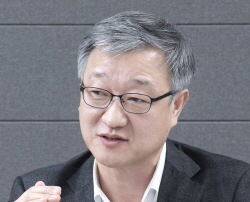
- Moon Hee-seok, CEO It is difficult to stop what is going well. Even more so if it is a company's business. Takeda sold its diabetes and over-the-counter (OTC) business to Celltrion, a domestic company, last year. Takeda's Actos is a TZD-family drug that persisted in the Avandia outbreak, while Whituben and Albothyl are famous OTCs that everyone knows, meaning they sold the products that symbolized the company. Takeda has carried out a total of four mergers and acquisitions: Millenium Pharmaceutical in 2008, Nycomed in 2012, ARIAD Pharmaceuticals in 2017, and Shire in 2018. Pipelines have been reinforced in the areas of anticancer drugs, rare diseases, and gastrointestinal diseases. The situation is rapidly keeping pace with the rapidly changing market environment. There were also difficulties. As a follow-up to the sale of the division, Takeda reduced the number of employees. Along with the labor-management conflict, items that used to be cash cows disappeared, resulting in a change in the sales structure. Dailypharm met Hee-Seok Moon (56 yrs old), CEO of Takeda Korea, who had been through an eventful year, and heard the story of the past and the future direction of the company. -There were many issues such as merger and sale. It feels like a completely different company over the years. Takeda was founded in 1781 and celebrated its 240th anniversary this year. It has been a traditional pharmaceutical company. However, since the early 2000s, we have tried to become a global company, and there have been many concerns. As a result of these concerns and efforts, the anticancer drug pipeline has been strengthened since the mid-2000s, and through the merger of Millenium Pharmaceutical and Shire, the company focused on specialty care. Takeda is trying to obtain approval for new products in the fields of anti-cancer, gastrointestinal diseases, rare diseases, nervous system diseases, and vaccines, which are key treatment fields. In the future, Takeda aims to achieve a sales volume of over ₩50 trillion by 2030, and has a pipeline that divides into products that are ready to be released within the next five years (Wave 1) and products scheduled to be released after that (Wave 2). -Although drastic change in business model is desirable and necessary to some extent, employment issues are a problem with this sale. Didn't the company actually suffer a lot from this? Currently, the sale and all circumstances resulting from it have ended. We considered what the best efforts would be for the employees who were inevitably forced to leave Takeda, and made efforts to provide maximum opportunities and support through continuous discussions with the headquarters. It looks like it's almost finished systematically, and as we have spent a difficult time together, we will continue to think about the future together. -Wave 1 and Wave 2 products were prepared. Do you have a keynote or strategy when introducing new drugs such as anticancer drugs or treatments for rare diseases? Product strategy is important from the early stages of development. Takeda Korea is also making efforts to include Korea in clinical research when developing new products. Takeda Development Center Asia, which oversees drug development in Asia, and TDC Asia are located in China, and recently hired a Korea Development Leader from TDC Asia. When a product included in Wave 1 is introduced in Korea, a staff member who is a doctor is working in Korea to know how to conduct clinical trials and to speed up the clinical process. It will be able to influence even more by belonging to TDC Asia. We are considering ways to help patients as quickly as possible before listed, such as the EAP (Early Access Program). -There seems to be a lot of worries about domestic insurance benefits. Is the government's conservative attitude toward Zejula's indication? In the case of anticancer drugs or rare diseases, the drug price is very expensive and accessibility is low, making it difficult. However, I think the accessibility of patients with anticancer drugs has improved a lot over the past two to three years through the registration. Nevertheless, it is unfortunate that the Cancer Disease Review Committee still seems to consider a lot of conservative and economic aspects. It would be better if looking at it in terms of more scientific evidence and patient accessibility. In the case of rare diseases, there is still a need for improvement in terms of patient accessibility compared to anticancer drugs. In many cases, it is difficult to compare with alternative drugs, and because the ICER value is also low, it is very difficult to prove by economic evaluation. The government is currently conservative on the drug exempt from economic evaluation track. -Do you have any experience in receiving orders for Korea Passing from the head office due to domestic drug prices? Takeda is fully aware that the domestic situation is not easy because it has a good understanding of the Korean market. We are operating so that we can set drug prices appropriate for the Korean situation. Due to the Chinese drug price reference system, it may be launched in China first, but the release has never been canceled.
- Policy
- COVID-19 vaccine lot release to be authorized this week
- by Lee, Tak-Sun Feb 16, 2021 06:07am
- Minister of Food and Drug Safety Kim Gang-lip is explaining about the final authorization on AstraZeneca COVID-19 vaccine on Feb. 10. As a COVID-19 vaccine was authorized for the first time in South Korea, the lot release for AstraZeneca’s vaccine is expected to be granted this week. Although South Korea’s Ministry of Food and Drug Safety (MFDS) did not restrict inoculation on the age group over 65, the Korea Advisory Committee on Immunization Practices (KACIP) associated under Korea Disease Control and Prevention Agency (KDCA) is to make the final call. However, as a group of experts has decided the vaccine should also be accessible to population over 65, the advisory committee would be likely to follow the same direction. At the AstraZeneca COVID-19 vaccine authorization briefing presented on Feb. 10, the Minister of Food and Drug Safety Kim Gang-lip explained the lot release would be decided this week. Minister Kim said, “Currently, the lot release authorization procedure is ongoing. Probably the final decision would be made next week, and the authorization would be passed.” The lot release approval review would verify the quality and safety of the vaccine. And with the authorization, the vaccine would be available for the market. KDCA would finalize the AstraZeneca vaccine inoculation plan, including the details on the elderly group, by Feb. 19, and initiate the vaccination from Feb. 26. Minister Kim elaborated, “MFDS concluded the ministry could not find a reason to put a definite restriction on vaccinating the elderly group aged over 65 with AstraZeneca’s. However, warnings on the specific age group would be given at the clinical scene, and we expect KDCA to compile a reasonable guideline after surveying experts’ opinions and discussing with KACIP.” AstraZeneca’s COVID-19 vaccine was authorized for use in South Korea with a condition to provide additional data later. Minister Kim noted, “We have requested the company to submit interim and final reports on the currently ongoing clinical trial in the U.S. The trial is targeting 30,000 people, which includes about 7,500 elderly people.” The interim report should be submitted by the end of coming April.
- Policy
- Fosamax 10mg·Pletaal OD Tab has been withdrawn
- by Lee, Tak-Sun Feb 16, 2021 06:07am
- Otsuka MSD Korea's osteoporosis treatment Fosamax, and Otsuka Pharmaceutical's antiplatelet drug Pletaal OD Tab will be withdrawn from the Korean market due to poor performance. According to the MFDS on the 9th, as of the 8th, MSD Korea's Fosamax 10mg (Alendronic acid), Otsuka's Pletaal OD Tab 100mg, Pletaal OD Tab 50mg, and Pletaal Powder 20% (Cilostazol) have been withdrawn. Fosamax, original for Alendronic acid, is a bisphosphonate-based osteoporosis treatment and is widely used in Korea. Pletaal, original for Cilostazol also has a high market share in Korea for antiplatelet drugs. These items are not flagship items. Fosamax includes Fosamax 70mg, Fosamax PlusD, Fosamax Plus, and Fosamax 10mg, which has been withdrawn. Fosamax PlusD is MSD's flagship item. Fosamax PlusD recorded an outpatient prescription amount of ₩10.9 billion based on UBIST, ₩2 billion for Fosamax Plus, and ₩2.2 billion for Fosamax 70mg. There is no outpatient prescription sales of Fosamax 10mg because it is a non-reimbursement drug. Fosamax 10mg is taken once a day and Fosamax 70mg, once a week. Fosamax 70mg is highly preferred. Accordingly, MSD also focused on marketing Fosamax 70mg, and Fosamax 10mg was eventually converted to a non-reimbursement drug in 2018, and the prescription was virtually stopped in Korea. And this time with the withdrawal of the license, it was completely withdrawn from the market after entering Korea in 2008. Fosamax 10mg’s indication range is wider. This is because it is used for the treatment of osteoporosis by glucocorticoid (limited to postmenopausal women who did not take estrogen). It was eventually withdrawn from the market due to poor performance. Pletaal 50mg, Pletaal 100mg, Pletaal Powder 20%, Pletaal SR cap, Pletaal OD Tab 100mg, Pletaal OD Tab 50mg, and Pletaal SR cap 200mg are approved for domestic market. But, Pletaal Powder 20%, Pletaal OD Tab 100mg, and Pletaal OD Tab 50mg have been withdrawn. All drugs have been modified for convenience, but the strategy did not work well in the market. All three items are non-reimbursement drugs, and they have not been properly marketed. It was not difficult for Otsuka as products from other lineups are performing well in the market. Looking at the amount of outpatient prescriptions based on UBIST last year, other items excluding 3 items recorded ₩25.1 billion. There are many generics of Cilostazol on the market, but only the original has powder type and OD tablet type.
- Company
- RRMS, actively expanding coverage of drugs
- by Eo, Yun-Ho Feb 16, 2021 06:07am
- There is news of expanding coverage of oral RRMS (Relapsing-remitting multiple sclerosis) drugs. According to industry sources on the 8th, after Mavenclad (Cladribine, Merck) was listed in insurance benefits in the second half of last year, Sanofi Genzyme's primary drug Aubagio was expanded from February. In the case of Aubagio, additional benefits are applied to patients with Relapsing-Remitting Multiple Sclerosis (RRMS) who meet McDonald's diagnostic criteria through examination by a neurologist and who can go to the outpatient clinic. The key to the expansion of this benefit standard is to be able to follow the judgment of experts based on the McDonald standard diagnosis of multiple sclerosis. Aubagio's provisions that only benefit from having two or more neurological dysfunctions in the past two years have been deleted, so that patients with multiple sclerosis can benefit from Aubagio early, and access to treatment is expected to improve significantly. Mavenclad, which is recently prescribed in general hospitals, is the first to show a significant effect in terms of the progression of physical disorders, annual recurrence rate, number of active lesions shown on MRI (magnetic resonance imaging), and major disease activity indicators of RRMS patients. As a short-term oral treatment, it is taken twice for 2 years. The drug's clinical trial program included long-term follow-up data from the 8-year prospective observation registry PREMIERE study, as well as the CLARITY Phase 3 study and CLARITY EXTENSION, ORACLE MS, and ONWARD Phase 2 study corresponding to the CLARITY extended clinical trial. As a result of post-hoc analysis of patients with high disease activity in the CLARITY 2,3 study conducted for two years, the annual recurrence rate of patients receiving Mavenclad decreased by 67%, and the Extended Disability Status Scale (EDSS), which indicates the degree of disability progression. Also, the Mavenclad treatment group showed a 82% decrease compared to the control group. However, when Mavenclad is administered, lymphopenia and shingles can occur as significant adverse reactions. Therefore, patients with multiple sclerosis must measure their lymphocyte counts before and during Mavenclad administration. Mavenclad administration is contraindicated in certain populations, including patients with impaired immune function and pregnant women. A KSNI official said, "The data showed that the sales of oral drugs were far superior to those of injections in just one year. As such, patients would have chosen oral drugs in many cases."

- Policy
- The redemption of α-GPC benefits extended until March 15
- by Lee, Hye-Kyung Feb 15, 2021 06:17am
- The contract for reimbursement of benefits related to α-GPC, a brain function improvement drug, was extended until March 15th. The MOHW ordered The NHIS to extend the deadline for negotiations on the Choline alfoscerate formulation on the 10th. February 10, which ordered an extension of the negotiation period, marks the end of the first negotiations for the MOHW to end negotiations and contracts for 129 pharmaceutical companies and 227 items of α-GPC(Choline alfoscerate). On December 14, 2020, the MOHW ordered the termination of the contract for reimbursement of benefits for Choline alfoscerate by February 10 in accordance with the Rules on the Standards of National Health Insurance Medical Benefits. A total of 56 pharmaceutical companies, including 28 pharmaceutical companies such as Chong Kun Dang and 28 pharmaceutical companies including Daewoong, among the 129 pharmaceutical companies to be negotiated, have suspended executions and administrative litigation regarding the cancellation of negotiation orders and notifications against the Minister of Health and Welfare and the Chairman of the NHIS. During the negotiation period, the Seoul Administrative Court dismissed pharmaceutical companies' applications for suspension of execution on January 27 and 29, but disapproved with the results as pharmaceutical companies filed appeals. Dissatisfaction with the results of the court had an impact on the negotiation process. This is because there was no pharmaceutical company that agreed to the NHIS' redemption contract until February 10, when the negotiations ended. The MOHW decided to extend the redemption negotiation order for one month. According to Article 2-2, Paragraph 2 of the Drug Price Negotiation Guidelines, in spite of '1 (60 days from the day after the day after the Minister of Welfare ordered the negotiation), each subparagraph (if the Minister of Welfare ordered the negotiation by setting a separate negotiation period), If the Minister of Health and Welfare has ordered a temporary suspension of negotiations or postponement of the negotiation deadline pursuant to Article 11, Paragraph 2 of the Standards for Medical Benefits), it shall be up to a period or time limit separately determined in accordance with each subparagraph. The negotiation period was specified. In the case of Choline alfoscerate, when the NHIS Chairman requests the Minister of Health and Welfare for reasons such as delay in accordance with Article 11-2, Paragraph 7 of the Rules, the deadline may be delayed or temporarily suspended within 60 days. The NHIS will conduct negotiations again for each pharmaceutical company during the extended negotiation period for an additional month. In the event of a clinical trial failure, pharmaceutical companies must agree to return or break down the entire health insurance prescription amount from the date of submission of the clinical protocol to the MFDS to the date of deletion to the NHIS. The reimbursement for the current health insurance prescription amount refers to the total medical care benefit expenses excluding the patient's copayment. However, there is a possibility that it will change during the negotiation process, such as a lawsuit.
