
- LOGIN
- MemberShip
- 2026-07-05 17:20:57
- Company
- Going beyond antidiabetic, Forxiga to treat heart failure
- by Jan 28, 2021 05:59am
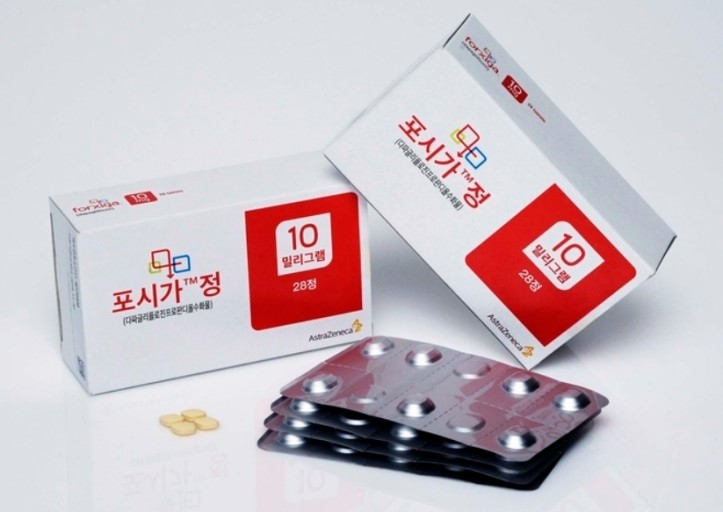
- AstraZeneca’s Forxiga has been approved in South Korea to treat diabetes and heart failure. The indication is obtained for the first time for a sodium-glucose co-transporter-2 (SGLT2) inhibitor. The industry experts noted, “Forxiga demonstrated reduction of cardiovascular death risk and hospitalization for heart failure in patients with or without diabetes.” In 2014, Forxiga was the first SGLT-2 inhibitor to be released in the South Korean market. Although initially developed as a type-2 diabetes treatment, a series of clinical studies showed a potential in reducing risk of cardiovascular and renal diseases. And in last December, the drug won the indication to lower the risk of heart failure based on additional study results. During a virtual online media conference convened on Jan. 25 by AstraZeneca Korea, experts projected the SGLT-2 inhibitor would bring a new change in the heart failure treatment scene. An online news media conference for Forxiga Mediating the conference, President Choi Dong-ju (Seoul National University Bundang Hospital Department of Internal Medicine) of the Korean Society of Heart Failure (KHFS) evaluated, “A SGLT-2 inhibitor acquiring an indication to treat heart failure holds a great significance. Along with the changes in drug use, the global cardiology association’s guidelines are changing accordingly as well.” In fact, the American College of Cardiology (ACC) has released the 2020 Expert Consensus Decision Pathway recommending cardiologists to choose SGLT-2 inhibitor of glucagon-like peptide 1 receptor agonists (GLP-1RA) over the previously recommended metformin, to treat patients who have been diagnosed with or have a high risk of cardiovascular disease. Also the practical guidance for cardiologist updated after four years recommends administering SGLT-2 inhibitor combination as a standard of care (SOC) for NYHA class II-IV patients who meet the estimated glomerular filtration rate (eGFR) standard and have heart failure with reduced ejection fraction. Professor Choi Seonghoon (Hallym University Medical Center Department of Cardiology) stated, “Particularly, the revised ACC guideline positioned SGLT-2 inhibitor as a second-line therapy for heart failure. Considering various efficacies Forxiga has confirmed, it would be helpful to use the drug as soon as possible for better treatment result.” The Phase III DECLARE-TIMI 58 study, evaluating Forxiga’s cardiovascular safety in type-2 diabetic patients, confirmed the drug reduced the risk of hospitalization for heart failure or cardiovascular death. And DAPA-HF study proved the drug’s effect to treat chronic heart failure patients regardless of type-2 diabetes. Professor Choi Seonghoon elaborated, “The DAPA-HF study presented highly significant data showing Forxiga lowering the risk of worsening heart failure by 30 percent, and the risk of cardiovascular death by 18 percent, especially because the clinical data proved the simple but integral benefit of combining Forxiga on the standard of care.” Another participant at the conference, Professor Kim Eung-ju (Korea University Guro Hospital Cardiovascular Center) positively highlighted Forxiga can provide double benefit as it was effective in renal disease, most frequently expressed in patients with heart failure. Professor Kim said, “In the DECLARE-TIMI 58 study, Forxiga lowered the eGFR by minimum 40 percent, compared to placebo, and the risk of renal disease death by 59 percent. Considering cardiovascular and renal diseases are closely related, SGLT-2 inhibitor could deliver a dual effect in heart and kidney.” Led by Forxiga, the SGLT-2 inhibitor prescription volume is expected to surge even higher as it expands indication. According to UBIST, the SGLT-2 inhibitor market generated 121.4 billion won last year. Compared to 12.2 billion won made in 2015, the prescription volume skyrocketed by 895 percent in just five years. Out of the total prescription volume, AstraZeneca’s Forxiga combination drug with metformin Xigduo takes up the biggest pie with 64.8 billion won.

- Company
- Leclaza’s lightning fast listing shocks global competitors
- by Eo, Yun-Ho Jan 27, 2021 06:15am
- As Yuhan Corporation dashes for the National Health Insurance (NHI) reimbursement talk on Leclaza (lazertinib), affected multinational pharmaceutical companies are tensing up. A Korean-made new drug Leclaza is to get reviewed by the Cancer Deliberation Committee in February, the related industry sees that the non-small cell lung cancer (NSCLC) treatment area would face a dynamic change sooner than expected. Especially, the targeted therapies waiting for reimbursement listing or expansion are closely following the progress of Yuhan’s third-generation epidermal growth factor receptor (EGFR) tyrosine kinase inhibitor (TKI) Leclaza. ◆ Cyramza combined with a first-generation TKI: The industry projects two drugs would be impacted the most by the Korean-made drug. Lilly’s Cyramza (ramucirumab), one of the two drugs, is currently seeking for reimbursement expansion for a combination therapy with a first-generation EGFR TKI Tarceva (erlotinib). The Cancer Deliberation Committee is to be convened for the first time this year today Cyramza-Tarceva combination therapy Leclaza was first indicated as a second-line therapy for lung cancer treatment, which differs from the first-line therapy indication Cyramza combination therapy is targeting. However, Leclaza is also planning to acquire the first-line therapy indication, and its market influence would grow fast in Korea, considering the speed of approval and listing procedure it showed and its title of a Korean-made new drug. Meanwhile, patients are showing great interest in the combination of vascular endothelial growth factor receptor-2 (VEGFR-2) antagonist Cyramza, EGFR TKI Tarceva and two targeted therapies as it showed efficacy in patients with EGFR exon 19 deletion or exon 21 mutation, although it used to demonstrate comparatively weak efficacy before. ◆Same generation same class Tagrisso: Technically, AstraZeneca’s Tagrisso (osimertinib) would be the biggest competitor to Leclaza. Approved for the South Korean market in May 2016, Tagrisso is also categorized a third-generation EGFR TKI, same as Leclaza, and in December 2017 it received the NHI reimbursement for the second-line therapy indication Leclaza is applying for. Tagrisso, also adding a first-line therapy in December 2018, attempted to expand the reimbursement in 2019, but the Cancer Deliberation Committee in October that year deferred the decision until the Phase III FLAURA trial outcome is published to confirm the overall survival as a first-line therapy. However, the committee refused to approve the drug again noting the issue of the hazard ratio in the Asian subset analysis submitted along with the final findings of FLAURA. AstraZeneca is hoping to convince the committee with the FLAURA China study conducted with Chinese participants, but the review schedule has not been set. If Leclaza is to enter the market right now, Tagrisso would have to compete against it in the same class. With a record-breaking speed of NHI reimbursement progress, Leclaza may shake up the South Korean targeted therapy market for lung cancer. Currently, first-generation AstraZeneca’s Iressa (gefitinib) and Roche’s Tarceva, second-generation Giotrif (afatinib) and Vizimpro (dakomitinib), and a third-generation AstraZeneca’s Tagrisso are prescribed to patients as EGFR TKI.
- Policy
- Can COVID-19 vaccine by the COVAX be quickly introduced?
- by Lee, Tak-Sun Jan 27, 2021 06:15am
- COVID-19 vaccine developed by PfizerThe health authorities said that it is possible to quickly introduce COVID-19 vaccine supplied from the COVAX Facility. This is because the MFDS has been participating in the COVAX Facility vaccine joint review since October at the request of the WHO. Pfizer's vaccine was pre-verified on the 31st of last month when the WHO approved Emergency Use Authorization. This is why the government believes that rapid vaccination is possible by receiving the Pfizer vaccine from the COVAX Facility in early February. The MFDS announced in a report from the President on the 25th that it is participating in the joint review of the COVAX Facility’s COVID-19 vaccine at the request of the WHO in October. Pfizer's mRNA vaccine has been reviewed, and 13 items will be reviewed. In fact, on the 31st of last month, the WHO Emergency Use Authorization of the Pfizer vaccine. On the 22nd, it also signed a contract for 40 million doses of Pfizer vaccine for the use of the COVAX Facility. It is expected to be supplied to member countries that have joined the COVAX Facility from February. The case of Korea is also being discussed. Current status of the MFDS Korea has signed a vaccine supply contract for a total of 1,000 people with COVAX Facility. Among them, 50,000 Pfizer’s vaccines are expected to be introduced first in early February. However, Pfizer’s vaccine has not been approved in Korea, so it is possible to introduce it in an emergency only through special imports. Until now, special imports have been mainly applied to small amounts of imported products such as orphan drugs and essential drugs. However, last year's COVID-19 treatment 'Remdesivir' could be introduced urgently due to an infectious disease. However, it is said that it is impossible to apply special imports for imported vaccines that do not have domestic clinical cases or screening history. In response, the MFDS explained that vaccines supplied from the COVAX Facility can be considered for special imports because Korean examiners participated in the joint review. An official from the MFDS said, “In the case of vaccines supplied through the WHO, examiners of the MFDS have participated in the quality certification evaluation. At the request of WHO, we have been participating in the WHO quality certification evaluation of COVID-19 vaccine since last October. Because I participated in the review, it will be used as a reference when deciding on special import.” It is explained that this situation was also reflected by the MFDS' description of the WHO joint review situation in the data of the President's report. It is interpreted that if the introduction of COVID-19 vaccine is confirmed by the COVAX Facility in early February, it is highly likely to follow special import procedures. Special import is determined by the KCDA through expert advice, etc. Special import is possible after 3-4 days of procedure. Pfizer's vaccine applied for official approval from the MFDS on the 25th. Since it plans to complete the approval review within 40 days with as early as possible, item approval is expected in early March. The government has signed a contract with Pfizer to bring in COVID-19 vaccine doses for 10 million people of the third quarter.

- Company
- NOAC prescription market growth stagnates
- by Kim, Jin-Gu Jan 27, 2021 06:15am
- The novel oral anticoagulant (NOAC) market seems to be plateauing after enjoying consistent two-digit growth for years. The outpatient prescription market marked a growth of almost 20 percent until 2019, but the growth shrunk down to 3 percent last year. Regardless of the decreased growth, Lixiana is still topping the market. Except for the market leader, the prescription performance by Xarelto, Pradaxa and Eliquis have dropped. The generics entering market seems to have critically affected Eliquis making a negative growth for the first time last year. Its generics are expanding their market presence from the second quarter in 2019. ◆NOAC market grows 3 percent making 184.3 billion won According to pharmaceutical market research firm UBIST on Jan 25, overall the last year’s NOAC market generated 184.3 billion won with a growth of 3 percent from the year before. The overall market volume expanded, but the growth was sluggish compared to previous years. Since the launch of Xarelto in 2009, the NOAC market welcomed Pradaxa and Eliquis in 2013, as well as Lixiana in 2016. Replacing the older generation anticoagulant warfarin, the NOAC rapidly got bigger. In last six years, the NOAC market generated 34.5 billion won, 80 billion won, 114.9 billion won, 151.5 billion won, 179 billion won and 184.3 billion won in year 2015 through 2020, respectively. Its streak of two-digit growth was crippled last year with 3 percent, after seeing 132 percent, 44 percent, 32 percent and 18 percent growth in 2016 through 2019, respectively. ◆Lixiana growth by 7 percent, when Xarelto, Eliquis and Pradaxa drop The market’s star items showed contrasting performance. Only the prescription volume of Lixiana by Daiichi Sankyo expanded, when all three others underperformed. Generating 59.9 billion won and 64 billion won in 2019 and 2020, respectively, the Lixiana prescription volume had a 7-percent growth. The drug may have been the last to join the market, but it topped the market in 2019 and is still widening the gap with the runner-up. The pharmaceutical industry analyzes the co-promotion deal signed with Daewoong Pharmaceutical is the key to the growth surge. In December of 2015, right before the product launch, Daiichi Sankyo inked the Lixiana co-promotion contract with Daewoong Pharmaceutical. The contract is still effective today. Xarelto, on the other hand, had two consecutive years of negative growth. Its prescription volume peaked in 2018 with 52 billion won, the volume has been on a downhill since 2019 making 50.8 billion won. Last year the drug’s volume dropped again to 50 billion won. The industry experts project it would go under 50 billion won this year. Eliquis also continued to make growth until 2019, but it turned downward last year. In year 2016 through 2020, the drug’s prescription volume hit 19.5 billion won, 30 billion won, 40.4 billion won, 49 billion won and 47.7 billion won, respectively. The industry experts point out the generics is the culprit of the plateauing growth. Since June last year, generic versions of Eliquis like Chong Kun Dang’s Liquisia, Yuhan’s Yuhan Apixaban, Samjin Pharm’s Elxaban, Hanmi Pharamceutical’s Apixban, Aju Pharm’s Eliban and YooYoung Pharmaceutical’s Yupix have been released to the NOAC market. The total prescription volume of Eliquis generics surged from 1.2 billion won in 2019 to 8.3 billion won in 2020. In last year, Liquisia, Elxaban and Yuhan Apixaban respectively generated 2.6 billion won, 1.7 billion won and 1.1 billion won. Taking account of the inclining quarterly prescription volume, the experts project they would break through the 10 billion won mark this year. Since 2016, Pradaxa’s prescription volume has been dropping. The volume plummeted to 14.3 billion won last year. Compared to 18.1 billion won in 2019, it took a 21-percent drop. Boehringer Ingelheim signed a co-promotion deal with Boryung Pharmaceutical from 2018, but it has not been so effective. ◆Generic versions of Xarelto and Pradaxa ready for launch And in this year, Xarelto and Pradaxa’s generics are to be released to the market and accelerate the shift in the NOAC market. Patent expiration dates for major NOACs First, four companies that overcame NOAC Pradaxa’s patent are to release their generics early. Intro Bio Pharma’s Dabican, Aju Pharm’s Dabitran, Jinyang Pharm’s Pradabi and Huon’s Hubitran are preparing for the launch. The four companies won the patent dispute against the original drug company Boehringer Ingelheim in January 2019. The obtained preferential sales rights are to last until April 2022. Another NOAC, Xarelto is also expecting its generic versions—Hanmi Pharmaceutical’s Riroxban and SK Chemical’s SK Rivaroxaban—to emerge in October. If Chong Kun Dang, successfully evades the product patent before Oct. 4, it would be able to market the product even before Hanmi Pharmaceutical and SK Chemical regardless of the preferential sales rights.

- Company
- 11 companies won consecutive patent disputes for Betmiga
- by Kim, Jin-Gu Jan 27, 2021 06:15am
- In the patent dispute over Betmiga PR (Mirabegron), an overactive bladder treatment with an annual prescription amount of ₩65 billion, generic companies won the first trial. From the standpoint of generic companies, including Hanmi and Chong Kun Dang, which have already launched generics, and are about to release generics, the obstacles related to patents have disappeared. However, It is highly likely that the original company Astellas will choose to go to the Supreme Court. ◆Use patent·crystal patent invalidated On the afternoon of the 22nd, the Patent Court of Korea ruled against the plaintiff (Astellas) in a lawsuit filed by Astellas against 11 companies including Hanmi and Chong Kun Dang. Following the first trial, the second trial also took the side of generics. Original and generic companies have been fighting over Betmiga PR's crystal patent and use patent. Legal disputes have been fierce for four years since Hanmi and others filed an invalidation trial in March 2015. In the end, the conclusion of the first trial was concluded in December 2019. Generic companies won use patents and some won crystal patents. As a result, Astellas took the case to the second trial, and at the second trial decided that both patents were invalid. ◆Generic exclusivity expires next month The ruling was to sell generics for Betmiga. the material patent expired in May last year. The composition patent, which expires in 2029, has also been successful by Hanmi. This trial decision was confirmed without appeal to Astellas. The patent invalidation was confirmed in the second trial following the first trial, making it easier for generic companies to sell generics. There are currently two products on the market. Hanmi and Chong Kun Dang received generic exclusivity and launched Mirabek and Selebeta respectively in June and July of last year. By the end of last year, the two companies had recorded outpatient prescriptions of ₩2.8 billion and ₩1 billion respectively. The generic exclusivity of the two companies expires on February 3, this year. After the expiration of generic exclusivity, 9 companies including Daewoong can participate in the generic market. However, if Astellas disagrees with the second trial decision and decides to go to the Supreme Court, it will be a burden for companies preparing to release generics. Regarding this, a pharmaceutical industry patent official said, "There is a high possibility that Astellas will lead the case to the Supreme Court."
- Policy
- AZ’s Vaccine Verification Advisory Committee Meeting held
- by Lee, Tak-Sun Jan 27, 2021 02:24am
- An advisory group meeting to verify the safety and effectiveness of AstraZeneca's COVID-19 vaccine will be held on the 31st of this month. In this meeting, external experts will participate in the clinical trial data. In addition, the Central Pharmaceutical Affairs Review Committee for COVID-19 treatment developed by Celltrion will be held on the 27th, and the results will be released on the same day. The MFDS announced on the 21st the progress of COVID-19 vaccine and treatment review process. Completed the survey on the actual condition of the SK Bioscience factory. Request for quality data and review for lot release According to the MFDS, the AstraZeneca’s COVID-19 vaccine completed a factory site survey for SK Bioscience from the 18th to the 20th. Currently, non-clinical and clinical trial data and quality data are being reviewed. The vaccination group and the placebo group are compared and reviewed if there is any safety information that requires special attention in the elderly over 65 years of age. In the factory condition survey of SK Bioscience, as it is a virus vector vaccine, the management of genetically modified organisms in the factory and the management of the biosafety level (BSL) were confirmed. It is explained that the area manufactured with sterile injections has facilities and environments that can prevent contamination from fine particles and microorganisms, and that it has maintained the specified cleanliness level. The MFDS requested additional data necessary for screening, such as non-clinical, clinical, and quality, on the 15th, and as soon as the data are submitted, it reviews the preventive effect, the validity of the application and dosage, and safety, and the quality for national lot release. In particular, COVID-19 Vaccine Safety and Effectiveness Verification Advisory Group' meeting, in which external experts participate in the clinical trial data, will be held on the 31st of this month, and the results will be released on February 1, the next day. Celltrion's Regdanvimab screening is on the way. The Central Pharmaceutical Affairs Review Committee is likely to recommend approval this month For the COVID-19 treatment Celltrion's Regdanvimab, it has completed an investigation into the factory and clinical trial institutions, and is currently undergoing additional review and review of quality data for non-clinical and clinical trial data.The request for data submission including some of the quality data that has not yet been submitted was requested on the 20th, and the review will proceed as soon as it is submitted. The review results will be summarized and consulted on the safety, effectiveness, and matters to be considered during approval from the Central Pharmaceutical Affairs Review Committee, a legal advisory body of the MFDS, and the results will be disclosed on the same day. After that, the final inspection committee is held once to decide on item approval.

- Company
- Sales of Statin-Ezetimibe combination have risen sixfold
- by Chon, Seung-Hyun Jan 27, 2021 02:21am
- In the dyslipidemia treatment market, the combination drug market that combines 'Statin' and Ezetimibe' showed rapid growth. Despite COVID-19 outbreak, the sales continued high. In the past five years, sales have increased by six times. Hanmi's Rosuzet and MSD's Atozet led the uptrend. According to the drug research institute UBIST on the 25th, the prescription size of the lipid-regulator combination last year was ₩633.5 billion, an increase of 21.0% from the previous year. The prescription market for lipid-regulating drugs increased by 10.2% and 15.1%, respectively, compared to the previous year in 2018 and 2019, but the growth trend further rose last year. It showed the most remarkable growth among the major chronic disease treatment. The prescription amount of Statin drugs used for the treatment of dyslipidemia last year was ₩1.97 trillion, an increase of 3.4% from the previous year. The combination of calcium channel blocker (CCB) and angiotensin II receptor blocker (ARB), which are the most commonly used treatments for hypertension, recorded ₩8,113 billion last year, up 10.1% from the previous year. The market for combination drugs that combines Ezetimibe and Statins showed remarkable growth. Last year, the outpatient prescription for the combination drug Statin-Ezetimibe was ₩470.8 billion, an increase of 20.9% from the previous year. It increased 55.6% in two years from ₩302.6 billion in 2018. Compared to the ₩80 billion in 2015, the market size has expanded by 6 times over the past five years. It is analyzed that Statin-Ezetimibe combination has an excellent effect in lowering LDL-C, and the preference is increasing because the drug price is not high. It is analyzed that Statin-Ezetimibe combination has an excellent effect in lowering LDL-C, and the preference is increasing because the drug price is less than taking two drugs separately. Simvastatin, Rosuvastatin, and Atorvastatin are sold in combination with Ezetimibe. Sales of Rosuvastatin-Ezetimibe combination products rose the most. Last year, the sales amount for the combination of Rosuvastatin and Ezetimibe was ₩352.9 billion, an increase of 25.7% from the previous year. It increased 67.9% from two years ago, and continued high growth. It increased by 159.1% from ₩136.6 billion in 2017, three years ago. The Rosuvastatin-Ezetimibe combination market began in 2015 when Hanmi released Rosuzet. It recorded ₩300 billion in sales after 5 years of entering the market. Atorvastatin-Ezetimibe combination was also promoted. Last year, the prescription amount for Atorvastatin-Ezetimibe was ₩74.7 billion, up 13.5% from the previous year. From ₩44.5 billion in 2018, it grew 60.6% over the past two years. Atozet is being sold jointly by MSD and Chong Kun Dang. Currently, only one Atorvastatin-Ezetimibe combination sold is MSD's Atozet. Sales of the Simvastatin-Ezetimibe combination were somewhat slow. Last year, the prescription amount of Simvastatin-Ezetimibe was ₩44.2 billion, a 0.1% increase from the previous year. MSD's Vytorin was the first to be released in the Statin-Ezetimibe combination market, but its growth is stagnating compared to other combination drugs. Last year, Rosuzet's prescription performance was ₩99.1 billion, up 22.4% from the previous year. Launched in late 2015, Rosuzet recorded ₩24.3 billion in prescriptions in 2016. It showed high growth every year, including ₩41.5 billion in 2017, ₩61.2 billion in 2018, and ₩81 billion in 2019. Last year, it ranked second in outpatient prescriptions among all drugs. Hanmi secured the right to use Ezetimibe from MSD, the patent holder, and entered the market ahead of competitors, gaining an opportunity to preoccupy the market. Considering the recent growth trend, it is also strong to exceed ₩100 billion in prescriptions this year. Yuhan, HK inno.N, and Daewoong showed remarkable growth in the Rosuvastatin-Ezetimibe markets. Yuhan's Rosuvamibe recorded a prescription amount of ₩54 billion last year. In 2019, it rose 19.0% from ₩45.4 billion, exceeding ₩50 billion. After recording a prescription amount of ₩7.2 billion in the first year of its release in 2016, Rosuvamibe has expanded its market influence every year, including ₩23.7 billion in 2017 and ₩35.4 billion in 2018. HK inno.N's Rovazet recorded sales of ₩24.5 billion, up 17.1% from the previous year, and Daewoong's Crezet rose 35.2% from the previous year with a prescription performance of ₩19.8 billion last year. In October of last year, Chong Kun Dang's self-developed Atorvastatin-Ezetimibe combination drug Lipilouzet was approved. 22 companies have been approved for the commissioned generic of Lipilouzet. About 20 companies are preparing for Atojet's generic license.
- Company
- Yuhan’s Leclaza zooms through the NHI listing process
- by Eo, Yun-Ho Jan 26, 2021 06:00am
- Yuhan Corporation’s new drug Leclaza could break the record of receiving the National Health Insurance reimbursement the fastest as an anticancer treatment. After the South Korean health authority approved of the drug on Jan. 18, the company immediately entered a talk to list the drug. The pharmaceutical industry source reported the Health Insurance Review and Assessment Service (HIRA) Cancer Deliberation Committee is to deliberate Leclaza (lazertinib), a third-generation epidermal growth factor receptor (EGFR) tyrosine kinase inhibitor (TKI) like Tagrisso (osimertinib), from next month. Yuhan Corporation is rushing through the commercialization process by fully utilizing the conditional approval and the approval-reimbursement linkage system. Leclaza was cleared for marketing in South Korea on Jan. 18. If the Cancer Deliberation Committee reviews the drug in the February meeting, the drug would be taking only a month to reach a reimbursement review. Generally, a novel anticancer treatment takes about four to five months to be deliberated by the Cancer Deliberation Committee after applying for the reimbursement. Considering the typical speed of the listing procedure, the 31st Korean-made new drug Leclaza may set the historic record of passing the Drug Reimbursement Evaluation Committee after the Cancer Deliberation Committee, settling a drug pricing and listing itself for the reimbursement. The related academic society also seems to be supporting for the Leclaza coverage. The Korean Association for Lung Cancer submitted a statement to urge for the healthcare benefit on Leclaza. The society claimed, “The National Health Insurance reimbursement should be granted on lazertinib, as it has demonstrated acceptable level of safety and low cardiac toxicity, and also the treatment is highly demanded by the patients to fight against a severe disease.“ Leclaza was approved as a first-in-class second-line treatment in EGFR T790M mutation-positive patients with locally advanced or metastatic non-small cell lung cancer (NSCLC), who has been treated with EGFR-TKI previously. The drug approval was cleared based on the Phase II clinical trial (therapeutic exploratory trial) outcomes conducted in South Korea, but with a condition to conduct a post-marketing Phase III trial (therapeutic confirmatory trial).
- Opinion
- [Editor’s View] The key to Xofluza pricing negotiation
- by Nho, Byung Chul Jan 26, 2021 06:00am
- A novel breakthrough influenza treatment Xofluza (baloxavir) by Roche is in a deadlock. Due to COVID-19 pandemic and conditional non-reimbursement status, the flu drug is struggling with the sales dip and marketing. Even before the launch, the drug was expected to easily take over Tamiflu’s market with significantly improved administration convenience, but it only generated maximum 100 million won last year. IQVIA projects the drug’s quarterly sales marked 360,000 won, 1.4 million won, 29 million won and 50 million won in last first quarter through the fourth. The market experts point out the sales were disappointing last year, presumably because the influenza patient size plummeted last year due to the strict mask-wearing order given amid COVID-19 pandemic. The argument is supported by a household name Type A influenza treatment Tamiflu (oseltamivir) barely making 3.5 billion won last year. Moreover, Roche’s strategy to launch the new flu drug without the healthcare coverage in last March also seems to have backfired on the limited patient access. The non-reimbursed Xofluza cost ranges from 70,000 won to 75,000 won. Pushing aside the unexpected COVID-19 pandemic factor, the product launch without the reimbursement greatly hindered the drug from absorbing the market share. The drug sales plateaued already from the point of receiving the coverage with evidence development from the first reimbursement listing threshold, the Health Insurance Review and Assessment Service (HIRA) Drug Reimbursement Evaluation Committee (DREC). The coverage with evidence development means the applicant company may start the projected claim amount negotiation with the National Health Insurance Service (NHIS) after accepting the pricing lower than HIRA’s evaluated pricing. However, Roche stated it would not accept the pricing suggested by the government agency. The industry suspects HIRA suggested a reimbursed pricing of around 20,000 won to 30,000 won for Xofluza, whereas the company offered a range of 45,000 won to 60,000 won. In other countries, where the drug is approved, it is priced at USD 90 (99,152 won) in the U.S. for both 20 mg and 40 mg, and also at JPY 1,535.4 (16,349 won) and 2,348.8 yen (25,961 won) for 10 mg and 20 mg, respectively in Japan. Based on the global pricing and weighted average pricing, Roche would highly unlikely to accept the pricing below 50,000 won for the healthcare reimbursement. Even if the company takes the pricing under 50,000 won, it would cause confusion among the A7 and other countries complain. The key to Xofluza’s pricing negotiation is in the pharmacoeconomic evaluation. In other words, Roche would have to convince and make HIRA understand how much of economic efficiency Xofluza can achieve compared to Tamiflu. 75 mg of Tamiflu is priced at 1,662 won in South Korea with the healthcare coverage. It would cost 16,620 won when taking two capsules daily for five days. Meanwhile, 40 mg of Xofluza could alleviate the symptoms of influenza with a single dose. Basically, one capsule of Xofluza can replace 10 capsules of Tamiflu. The key outcomes of CAPSTONE-1 with healthy adult and adolescent patients aged 12 to 64 years found Xofluza’s median time to symptom alleviation was 26.5 hours faster than the placebo. Also, Xofluza showed faster virus shredding than placebo. In about 24.0 hours, Xofluza halved the viral shedding, which was significantly shorter than placebo (96.0 hours) and Tamiflu (72.0 hours). During the CAPSTONE-2 study with high-risk influenza patient groups including senior and chronic disease patients, the high-risk patient group treated with Xofluza demonstrated median symptom alleviation time of 73.2 hours, which was about 29 hours faster than the placebo group (102.3 hours). In the same study, Xofluza halved the viral shedding in 48.0 hours, improved by approximately 50 percent than the placebo (96.0 hours) and oseltamivir (96.0 hours). In short, Xofluza can treat and alleviate the influenza symptoms about one to two days faster than Tamiflu. Also the vastly improved administration convenience to replace 10 capsules for five days with one single dose is great news for those who have dysdipsia. Now for the pricing negotiation, it is up to Roche to persuade and HIRA to acknowledge how much of economic value a 24-hour-faster recovery can make for a working person making 100,000 to 300,000 won a day.

- Company
- Antidiabetic DPP-4 inhibitor breaks record of KRW 600 bn
- by Kim, Jin-Gu Jan 26, 2021 06:00am
- The outpatient prescription volume of antidiabetic dipeptidyl peptidase 4 (DPP-4) inhibitors exceeded over 600 billion won for the first time in the history. The market is steadfastly growing with about 6 percent surge from last year. The experts hint the oral antidiabetic drug market was the key to the growth. The sodium-glucose cotransporter-2 (SGLT2) inhibitor market is constantly and exponentially expanding with Forxiga and Jardiance. The last year’s prescription volume grew 29 percent from the year before and marked 121.4 billion won. ◆DPP-4 inhibitor market volume expands by 6 percent and hits 602.4 billion won According to a pharmaceutical market research firm UBIST on Jan. 21, total 602.4 billion won worth of DPP-4 inhibitor single and combination drugs were prescribed last year and surpassed the 600 billion won line for the first time. The DPP-4 inhibiting antidiabetics became the major player in the market since the MSD’s Januvia launched in 2007 as it rose above sulfonylurea (SU) and thiazolidinedione (TZD). Apparently, the drug group dominates more than half of the oral antidiabetics market. And the market is ceaselessly growing. In last six years, the market volume surged from 358 billion won in 2015 to 440.8 billion won in 2016, 493.4 billion won in 2017, 543.1 billion won in 2018, 568.7 billion won and 602.4 billion won in 2020 showing growth of 23 percent, 12 percent, 10 percent, 5 percent and 6 percent, respectively. ◆Januvia and Trajenta lead the market, while Zemiglo, Tenelia and Suganon leap Sorting by company, MSD and Boehringer Ingelheim are still leading the market. MSD’s Januvia series (Januvia and Janumet) grew 5 percent from 168.2 billion won in 2019 to 176.2 billion won last year. Boehringer Ingelheim’s Trajenta series grew by 4 percent and hit 128.9 billion won. Also, the prescription volume of LG Chem’s Zemiglo series (Zemiglo, Zemimet) soared. From 100.4 billion won in 2019, the volume skyrocketed to 115.8 billion won with a 15-percent jump. The gap with the market’s second best-selling Trajenta series was narrowed from 58.6 billion won in 2016 to 13.1 billion won last year. Besides the Zemiglo series, Handok’s Tenelia series (Tenelia, Tenelia M) and Dong-A ST’s Suganon series (Suganon, Sugamet) were prescribed significantly more last year. The Tenelia series generated 42.5 billion won with a 14-percent surge, whereas the Suganon series made 24.5 billion won with a 51-percent surge. On the contrary, the prescription volumes of Novartis’ Galvus series (Galvus, Galvus Met) and Takeda Pharmaceutical’s Nesina series (Nesina, Nesina Act, Nesina Met) and JW Pharmaceutical’s Guardlet series (Guardlet, Guardmet) dipped last year compared to the year before. The Galvus series made 44.5 billion won, the Nesina series made 32.1 billion won and the Guardlet series made 10.3 billion won with a 4-percent, 9-percent and 27-percent drop, respectively. ◆SGLT-2 inhibitors broke through 100 billion won, 29 percent growth propelled by Forxiga and Jardiance The SGLT-2 inhibitor market, for the first time in the history, exceeded the 100 billion won line. Since the launch of AstraZeneca’s Forxiga in 2014, Boehringer Ingelheim and MSD joined the race to drive the rapid growth in the market. The market volume at 12.2 billion won in 2015 grew to 24.5 billion won in 2016, 33.3 billion won in 2017, 42.8 billion won in 2018, 53.1 billion in 2019 and 121.4 billion won in 2020, showing the growth of 131 percent, 75 percent, 40 percent, 34 percent and 29 percent, respectively. The growth rate is decreasing as time passes, but it is still strong at almost 30 percent. The Forxiga series (Forxiga. Xigduo) and the Jardiance series (Jardiance, Jardiance Duo) are firmly leading the market. Forxiga made 64.8 billion won last year, marking a 22-percent growth from 53.1 billion won in 2019. In the mean time, the Jardiance series grew 40 percent from 36.6 billion won to 51.1 billion won. On the other hand, MSD and Astellas are demonstrating underwhelming performances. Astellas’ Suglat generated 3.3 billion won, when MSD’s Steglatro made 2.3 billion won. The two drugs combined do not even take up 5 percent of the market share. ◆Combination drug is ‘in,’ towering over single drug growths in both DPP-4 and SGLT-2 inhibitor markets When most of the drugs combined with metformin performed notably well, the single agent drugs’ growths were sluggish or brought down. The source reported the phenomenon was apparent in both DPP-4 inhibitor and SGLT-2 inhibitor markets. For instance, MSD’s Januvia series saw a single agent drug Januvia’s prescription volume increasing only by 1 percent from 46.5 billion won to 47 billion won. But a combination drug Janumet’s volume grew by 6 percent from 121.7 billion won to 129.1 billion won. Also Trajenta single agent drug’s prescription volume showed almost no growth, whereas the combination drug grew by 8 percent from 62.4 billion won to 67.2 billion won. The situations were similar with Zemiglo (5 percent) and Zemimet (21 percent), Tenelia (11 percent) and Tenelia M (16 percent), Suganon (43 percent) and Sugamet (57 percent) and Onglyza (0 percent) and Kombiglyze (4 percent). Meanwhile, Guardmet and Nesinamet’s prescription volume plummeted compared to their single drugs. But an external factor seems to have caused it. Apparently, the manufacturing and sales of Guardmet were shut off last year due to N-Nitrosodimethylamine (NDMA), suspected as a cancerous substance, found in metformin used in the drug. Nesinamet had an issue with the supply from February last year. SGLT-2 inhibitor market also witnessed prominent growth by combination drugs. When Forxiga’s prescription volume grew by 11 percent, a combination drug with metformin Xigduo grew by 39 percent. A single agent drug Jardiance grew by 21 percent, when a combination drug Jardiance Duo skyrocketed by 117 percent.
