
- LOGIN
- MemberShip
- 2026-07-06 05:50:08
- Company
- The dismissal of an executive in Lundbeck Korea was unfair
- by An, Kyung-Jin Sep 08, 2020 06:11am
- The National Labor Relations Commission issued an order to reinstate the job, saying that the dismissal of former executives in Lundbeck Korea was unfair. According to related industries on the 7th, the National Labor Relations Commission held an interrogation meeting on July 30 and sided with Mr. A in the case of a ``unfair dismissal request'' filed against the company by former Lundbeck Korea executive A. The National Labor Relations Commission recently issued an award containing the contents. The National Labor Relations Commission acknowledged that the dismissal of Mr. A by Lundbeck Korea was unfairly dismissed, and ordered that Mr. A be reinstated to his original position within 30 days from the date on which he was served, and paid the equivalent of the wages he would have received if he worked normally during the dismissal period. In this regard, Lundbeck Korea held a disciplinary committee on April 13th, and Mr. A notified his dismissal in writing for violating Article 12 of the employment rules. ▲ Article 4 (duty of integrity) ▲ Article 9 (prohibited matters) 5 and 6 ▲ Article 27 (waiting order) Article 82 (Disciplinary) 3, 5, 8, 11, and 12. The company's explanation is that despite the violation of internal guidelines during the selection process of the contractor, and misconduct such as lies and non-cooperation in work, Mr. A did not reflect and his work attitude did not improve. and the dismissal was notified properly. Mr. A received a notification of 'dismissal' from the company on April 16, three days after the disciplinary committee was held, and filed a request for relief from unfair dismissal to the committee on June 2nd. The National Labor Relations Commission said, "The dismissal is an abuse of the disciplinary discretion of the employer due to an excessive amount of dismissal compared to the recognized disciplinary grounds." For example, it is pointed out that the problem of the open tendering process for a contractor is that it is not recognized as a misconduct by Mr. A because the CEO and the head office have the final decision authority and the duty of management and supervision. It was considered that the specific grounds for the claim that Mr. A failed to comply with the work order or disturbed the workplace order were insufficient. Among the multiple disciplinary grounds, it is the position that Mr. A only admits one act of attending the academic conference without approval from the management during the waiting period. According to this decision, Lundbeck Korea must reinstate Mr. A within 30 days of service of the decision and pay the wages for the dismissal period, or request a reconsideration with National Labor Relations Commission within 10 days.

- Company
- The contradiction of generic exclusivity
- by Kim, Jin-Gu Sep 07, 2020 06:13am
- Let's imagine! This is the case when the rule for '1st place' in a marathon is set to be '14 seconds after the first goal scored'. Competition will become meaningless, and only fights will increase. The achievements of legitimate efforts that the first place should receive will be shared by numerous 'joint first prizes'. The controversy over the generic exclusivity system is similar. Due to the regulation that suppresses discrimination, the 'contradiction of common first place' is prevalent. It is often observed that up to 45 items receive the right at the same time, and the product is not released even after receiving the right. As the circumstances look like this, the profits from obtaining generic exclusivity are very small. It is calculated that each item is limited to ₩400 million for 9 months. This is the reason why criticism is constantly raised for promoting free rides over the current system. It is also the reason why the pharmaceutical industry is regretting about the government's revised right. ◆5 years of introduction of the rights, benefits average ₩400 million for 9 months The generic exclusivity system was introduced in earnest in 2015. The purpose of the introduction was to provide benefits for the efforts of active pharmaceutical companies in the development of generics and patent challenges. However, as of five years later, most pharmaceutical companies with the generic exclusivity do not benefit. Dailypharm surveyed the prescriptions of products with generic exclusivity since 2015. The average prescription amount for 9 months during the sales period was only about ₩400 million. According to the MFDS, as of the end of August 2020, 140 generics were launched on the market within the generic exclusivity period. The prescription performance of these items during the period was ₩59.3 billion. It is calculated that the average prescription amount per item (₩59.3 billion ÷ 140 items) is only ₩420 million for 9 months. Although there is a difference in the size of the market and the loyalty of the original for each item, criticism has been raised that it is not effective given the nature of the generic exclusivity. In particular, as the number of pharmaceutical companies that jointly acquire the generic exclusivty, the benefits to each pharmaceutical company decrease. This is why pharmaceutical companies, which have led the patent challenge, are complaining that it is 'free ride'. In the case of generics for Amosartan (Amlodipine+Losartan), 21 companies received the right of the generic exclusivity with 45 items. Of these, only 12 (57%) launched products during the period. 12 pharmaceutical companies only produced a total of ₩1,160 million during the period (May 9, 2015 to April 1, 2016). This is less than ₩100 million per pharmaceutical company. If the rights were monopolized by one pharmaceutical company rather than 21 pharmaceutical companies, it is expected that the results would not have reached ₩100 million. The rest of the products are similar. In the case of generics for Layla, out of the 14 companies that received the right, only 10 launched the product within the period, and they only recorded an average of ₩430 million during this period. 13 companies for generics for Viread received the right, but only 11 companies released the product within the period. The company that launched the product produced an average of ₩370 million per company. Nine companies challenged generics for Feburic, but only 8 released products, and they only achieved an average of ₩79 million won per company. On the other hand, items with fewer competitors tended to have more profits from generic companies. Hanmi alone challenged the patent for Patanol eye drop (Olopatadine)' and received the right of the generic exclusivity as a generic called Olotadine. During the period, Hanmi recorded ₩1.35 billion in prescriptions. Dong-A ST challenged the patent for Dilatrend (Carvedilol) and received the right as a generic called Vasotrol. During the period, Dong-A ST produced a prescription record of ₩990 million. ◆Generic for Amosartan, In addition, the mess of the generic exclusivity is observed in many products. As of the end of August 2020, there are 387 items that have acquired the right of copyright. Excluding items with different capacity in the same lineup, it is calculated that 244 products have received the right. There are 42 original drug patents that these 244 products have overcome. It means that one original product has an average of 5.8 generics and received the right. This trend is observed to be more frequent in larger items. In the case of Amosartan, 21 pharmaceutical companies received the right for 45 items. It means that only 21 people are tied for first place. Other products are also very similar. Most recently, on the 25th of last month, 13 pharmaceutical companies received rights with 21 items on Forxiga (Dapagliflozin). In 2016, Januvia (Sitagliptin) acquired 22 items from 10 companies, and Janumet (Sitagliptin + Metformin) acquired 33 items of 11 companies. 14 companies and 10 companies, respectively, succeeded in acquiring the right for natural drugs, Stillen 2X and Layla. ◆Even after winning the right, half of them were not released within the period. Why? Although many pharmaceutical companies flocked to acquire the right of the generic exclusivity, it is also confirmed that not many pharmaceutical companies actually launched the product. As of the end of August of this year, there are a total of 255 items that have reached the right sales period or are currently in use, of which only 140 items have actually released products to the market within the right sales period. Only 5 out of 10 products (54.9%) that received the right copyright have put products on the market. There are many reasons for not releasing a product even after obtaining the right through patent disputes. The reason is that it won the right, but failed to prove bioequivalence for the release of generics, felt a burden as the patent dispute with the original company passed to the second or third trial, or judged that it was not marketable. However, it is easy to obtain the right of the generic exclusivity as the number of requests for trial increases. ◆Initial request for trial '14 days' It was introduced in 2015. With the conclusion of the Korea-US FTA, the licensed patent linkage system was introduced in 2012, and the system that grants monopoly rights to patent challenge generics through step-by-step enforcement procedures was also revealed. All three requirements must be met in order to obtain the right of copyright. First, it is necessary to first request a trial (confirmation of invalid or passive scope of rights) for the original patent. Second, it must win the patent trial raised in this way. Third, it is necessary to first apply for approval for generics. Acquiring the right seems tricky because all three conditions must be completed, but it is not. This is because the clues are attached to the first requirement, the request for an initial trial. Under the current law, it stipulates that 'company that makes a claim within 14 days after the initial request for a judgment is also recognized'. This regulation causes the contradiction of the joint first place. After winning the referee, the day after the end of the PMS (reexamination), a bunch of applications for permission continued. It was common for dozens of companies to be bound by consignment and got the right at the same time. The first request for judgment became a ticket for the sale of generics. It is not known exactly why the '14 days' rule in question was included when making the law. Some say that this is because the time it took to be published in the patent gazette after a request for a trial was filed for about 14 days. However, it is said that Korea is the only case in the world that regulates 14 days. A patent expert in the pharmaceutical industry said, "The generic exclusivity in Korea has been reduced to a system that has little practical benefit. Due to the scattered initial request for trial, only pharmaceutical companies that challenged patents have been changed to a structure that is relatively damaged."
- Company
- Court to rule against companies on eye drop pricing?
- by Chon, Seung-Hyun Sep 07, 2020 06:12am
- The end in two years of legal dispute over the eye drop pricing reduction seems to be approaching. The Supreme Court has ultimately ruled against pharmaceutical companies on one of the two pricing reduction litigation cases. And as the government has won both the first and second trials over the other case, it would be unlikely for the pharmaceutical company to win the last appeal. ◆MOHW authorizes pricing reduction on eye drops twice, the Supreme Court’s final decision made on one The pharmaceutical industry sources reported on Sept. 6, South Korea’s Ministry of Health and Welfare (MOHW) has announced the execution suspension on the pricing reduction in 33 eye drops would be lifted. The ministry’s announcement followed the Supreme Court’s decision. On Sept. 3, the Supreme Court dismissed the appeal made by pharmaceutical companies regarding the government’s attempt to bring down the pricing on eye drop products. The Court stated, “The appellant’s claim for the appeal is clearly unjustifiable, therefore, all appeals would be dismissed.” In December 2018, MOHW has decided to lower the pricing on 33 eye drop products. As the affected pharmaceutical companies filed litigation against the decision, they also requested the suspension of execution on the ministry’s action. As the court accepted the request, the pricing reduction was withheld, but the pricing was brought down, nonetheless, with the Supreme Court’s final decision. The legal dispute between the government and pharmaceutical companies over the pricing reduction in eye drops lasting over two years is getting closer to the end. Two separate litigations were conducted, both aiming to revoke the pricing reduction in eye drop products. On Aug. 27, 2018, the Ministry revised its list of reimbursed drugs and upper limit pricing to bring down the pricing of 307 eye drop items by up to 55 percent. The key change was to apply the same pricing standard on single-use eye drops with same concentration of pharmaceutical substance (dose per mL), regardless of the overall amount of the solution. Regarding the ministry’s decision, 20 pharmaceutical companies claimed the pricing reduction on 299 items is unfair, and filed litigation to the Seoul Administrative Court to nullify the government order. Kukje Pharma, Daewoo Pharm, Daewoong Bio, DHP Korea, BINEX, Samchundang Pharm, Sinsin Pharm, CMG Pharma, Youngil Pharm, Inist Bio Pharmaceutical, Ildong Pharmaceutical, Chong Kun Dang, Taejoon Pharmaceutical, Korea Global Pharm, Hanlim Pharm, Hanmi Pharmaceutical, Humedix, Huons and Huons Medicare were part of the litigation. The Seoul Administrative Court ruled in favor of the government in July last year. The group of pharmaceutical companies filed for an appeal, and the Seoul High Court came to the same decision in last July. As the companies have pushed case on, the Supreme Court is currently reviewing the case. Updates on eye drop pricing reduction litigations The latest decision by the Supreme Court was related to another case. Four months after MOHW’s decision to reduce the eye drop pricing, the ministry has again unveiled a partially revised list of reimbursed drugs and upper limit pricing that lowered pricing on 33 eye drop items by eight companies on Dec. 21, 2018. The pricing reduction was ordered on eye drop items listed after the first pricing reduction order, and the ministry meant to apply the same standard. The litigation was filed by Daewoo Pharm, Sinsin Pharm, Youngil Pharm, Reyon Pharmaceutical, Ildong Pharmaceutical, Hanlim Pharm, Huons and Huons Medicare. The eight companies filed the litigation to revoke the ministry’s order to lower the pricing. In November last year, the Seoul Administrative Court has ruled in favor of the government body, and the court reaffirmed its earlier denial of the litigation during the second trial held in last May. Although the order was given later than the first one, the case was processed faster and reached the Supreme Court’s decision earlier. Accordingly, the 20 pharmaceutical companies await the Supreme Court’s ruling on the first pricing reduction order. Nevertheless, as the courts have ruled against the companies in two prior trials, the Supreme Court would be unlikely to rule otherwise. The pharmaceutical companies argued the pricing reduction is an unfair order as the ministry has abused the discretionary power, violated the principle of trust protection, and taken illegitimate proceedings, but the courts denied the claim. And the Supreme Court has discontinued the trial and dismissed the case. The discontinuance of the trial refers to the Supreme Court dismissing the case without a trial, when the court sees no difference in viewing the prior rulings. The Supreme Court basically made a final decision without even holding the trial. ◆Confusion in drug pricing as the court dismissed and reaccepted the request to suspend the pricing reduction Confusion in the pricing in the affected eye drops was caused as the court once dismissed and accepted the request to suspend the execution of pricing reduction order again. While the pharmaceutical companies filed two litigation cases to revoke the pricing reduction orders, they also requested the court to order suspension of execution. And only one request to withhold the pricing reduction order was accepted. Prior to the first trial with 20 pharmaceutical companies, the companies submitted an application to request the Seoul Administrative Court to suspend MOHW’s pricing reduction on eye drop until 30 days after the court’s decision. Eventually, the pricings were lowered, as of Sept. 22, 2018, when the Seoul Administrative Court dismissed the request. But the companies, again, requested the suspension to the Seoul High Court, which accepted the request and recovered the eye drop products’ original pricing, as of Nov. 30, 2018. Every time the litigation cases proceeded to the higher court, the companies requested for the court to suspend the execution, and the rest of the requests were all accepted. Currently, the ministry’s order to lower pricing on 20 companies’ 287 items, related to the first litigation, is withheld. Although the number of items started from 299, the number has gone down due to some companies withdrawing the litigation or reimbursement. The Supreme Court would soon make the decision on the rest of 287 items.
- Policy
- SCD's Eylea biosimilar was approved for phase III trials
- by Lee, Tak-Sun Sep 07, 2020 06:12am
- Eylea by BayerSCD Pharm has been approved for a phase III clinical trial of a biosimilar for Eylea (Aflibercept, Bayer), a macular degeneration treatment for the third time in Korea. In June, it was approved for the third phase III clinical trial following Samsung Bioepis and Amgen. It is noted who will succeed in commercialization first in Korea. On the 2nd, the MFDS approved the multinational phase III clinical trial protocol of 'SCD411' applied by SCD Pharm. This clinical trial is a phase III randomized, double-blind, parallel group, multicenter trial that compares efficacy, safety, tolerability, pharmacokinetics, and immunogenicity between SCD411 and Eylea in new vascular age-related macular degeneration test subjects. As a multinational clinical trial, the total number of subjects is 560, and 75 in Korea will be recruited. The test is conducted at Samsung Medical Center, Ajou University Hospital, and Asan Medical Center in Seoul. It is the third phase III clinical approval of Eylea biosimilar this year. On June 11th, Samsung Bioepis, and on June 29th, Amgen's biosimilar was approved by global CRO, Parexel Korea. Eylea, along with Lucentis, is the most used macular degeneration treatment in the world. Macular degeneration is the #1 cause of blindness in the elderly, and there is high demand for medicines. Eylea recorded ₩46.8 billion in sales based on IQVIA last year. SCD Pharm was approved by the US FDA for a phase III clinical trial of Eylea biosimilar in May. The company has announced a plan to release the product in 2023 after applying for approval the next year after going through phase III clinical trials.

- Company
- OTC pain reliever market grows surges, Tylenol up by 30%
- by Kim, Jin-Gu Sep 07, 2020 06:12am
- The OTC pain reliever market was yet again dominated by Tylenol and Geworin in the first half of this year. Compared to the first half of last year, specifically, Tylenol’s sales have surged 30 percent. Geworin, EZN6 and Tak-sen followed the market leader on the leader board and generated the highest six-month sales on the record. ◆Tylenol makes KRW 18.6 billion, Geworin KRW 9.7 billion—the highest half-a-year sales yet Product image of Tylenol According to the pharmaceutical market research firm IQVIA on Sept. 2, Janssen’s Tylenol line-ups have generated overall 18.6 billion won from last January through June. It was the highest sales marked by an OTC pain reliever brand launched in South Korea. Compared to last year’s first half at 14.3 billion won, the sales soared by 30 percent. It was the biggest sales made in half a year. Among the three Tylenol line-ups (Tylenol tablet, Tyleno 8-hour ER tablet, Women’s Tylenol tablet), Tylenol tablet and Tylenol 8-hour ER tablet led the exceptional sales growth. Compared to same time last year, the two products grew by 29 percent and 38 percent, repsectively. The market experts evaluate the surge in Tylenol sales were indirectly driven by the COVID-19 epidemic. In last March, the World Health Organization (WHO) advised to use acetaminophen (Tylenol), instead of nonsteroidal inflammatory drug (NSAID) ibupropen, in a suspected case of COVID-19. Although WHO’s recommendation was revoked within two days as the initial statement lacked sufficient evidence, the number of consumers buying acetaminophen kept growing. In fact, pharmacies in Korea often experienced Tylenol shortage during the first half of the year. Samjin Pharm’s Geworin came in second with sales of 9.7 billion won accumulated in the six months. Compared to 8.9 billion won made in last year same time, the figure grew by 7 percent. Geworin also marked its highest half-a-year sales. Geworin also shares the same substance acetaminophen with Tylenol. Nevertheless, Samjin Pharm’s newly launched ‘Geworin soft capsule’ did not perform as much as the company hoped for. The new form of Geworin made a little more than 200 million won in the six months. In last February, the Korean company released Geworin soft capsule, which was the first line-up expansion in the Geworin brand after 41 years. As well as changing the form into a soft capsule, the new Geworin product switched the major substance from the original acetaminophen into ibuprofen. 2020 H1 sales in top OTC pain relievers (Unit: KRW 100 million) Source: IQVIA ◆Sharp increase in EZN6 and Tak-sen, closely tailgating the market leaders The third place was taken by Daewoong Pharmaceuticals EZN6. The five line-ups under the same brand has generated overall 3.5 billion won, making 20 percent jump from 2.9 billion won made in last year same time. EZN6 has been making a steep growth recently. Five years ago in 2015, the brand has made 1.5 billion won and barely took a place in the top 10 OTC pain reliever market. But in 2017, the brand’s sales soared to 2.5 billion won and proudly took a place on the fifth. And in the first half of this year, EZN6 brand has generated sales up to 3.5 billion won. The brand’s outstanding growth has put itself on the third place, surpassing Hanmi Pharmaceutical’s Maxibupen and Chong Kun Dang’s Penzal on the leader board. GC Pharma’s Tak-sen came in fourth with sales reaching 2.8 billion won in the first half of the year. Compared to last year same time, the sales have grown by 6 percent from 2.6 billion won. Tak-sen has also experienced a rapid surge in the sales growth. Compared to five years ago (1.7 billion won) and three years ago (2.2 billion won), this year’s sales marked 59 percent and 25 percent growth, respectively. On the top 10 OTC pain reliever market, the brand’s ranking has leapt from eighth to fourth. Recent sales growth in top OTC pain relievers (Unit: KRW 100 million) Source: IQVIA ◆The rest of the market followed by Penzal, Maxibupen, Carol, Anyfen, Brufen, Champ and Advil The rest of the OTC pain reliever market’s ranking was followed by Chong Kun Dang’s Penzal (2.3 billion won), Hanmi Pharmaceutical’s Maxibupen (2.1 billion won), Ildong Pharmaceutical’s Carol (1.9 billion won), Ahn-gook Pharmaceutical’s Anyfen (1.8 billion won), Samil Pharm’s Brufen (1.4 billion won), Dong-A Pharmaceutical’s Champ (1.4 billion won), Pfizer’s Advil (900 million won), Kyung Dong Pharm’s GNAL-N (500 million won) and Dong Wha Pharm’s Trisfen (200 million won). In particular, Maxibupen (38 percent), Anyfen (23 percent), Penzal (28 percent) and Brufen (25 percent) experienced a steep fall in the sales from last year same time. The pharmaceutical industry views the COVID-19 has significantly affected the OTC pain reliever market in the first six months of the year. As less number of patients visited hospitals and pharmacies amid COVID-19, more consumers tried to stock up first-aid kits including OTC pain relievers. The general OTC pain reliever market sales have grown about 5 percent compared to last year same time.
- InterView
- The corporation separation is started from Employee rights
- by Sep 07, 2020 06:12am
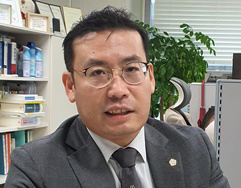
- Kyungrak Kim, CEO of Daesang Labor CorporationBusiness divisions of large foreign pharmaceutical companies such as Pfizer and MSD are actively in progress. Pfizer separated the patent-expired drug business unit into Pfizer Upjohn last year, and MSD is working to spin off the women's health, patent-expired drug, and biosimilar business divisions into a new corporation called Organon & Co. with the aim of the first half of next year. The division of the division itself has a good purpose. By becoming an independent incorporation, it can be specialized in specialized fields, and the management efficiency of the company is increased. Regardless of the will of some employees, their company name changes. The affiliation will change from one of the world's leading companies to an unknown company overnight. The change of affiliation also affects credit loans and visa issuance. The biggest reason why employees are more anxious about moving to a divided corporation is that there is a high concern that they will take steps to sell the so-called 'non-profitable business' to another company altogether. The 'carve-out deal', which sells off non-core businesses after physically splitting them, is an active M&A method. In fact, Pfizer announced the news of the merger with Mylan two months after Pfizer Upjohn was separated. It has been changed to Viatris, which is named after the existing one. Although Mylan and Pfizer are jointly controlled, Pfizer Upjohn employees think it is actually Pfizer's ‘Exit’. There are concerns that MSD's Organon & Co. will eventually follow the same procedure. Employees say that they move personnel such as sales and marketing, but do not move related R&D personnel, and that an organon office is set up in WeWork, a shared office that does not require long-term contracts. Kyungrak Kim, CEO of Daesang Labor Corporation, a former MSD salesman who specializes in the pharmaceutical industry in a meeting with Dailypharm, said, "In the case of the past, employees are more sensitive because there is a high possibility of the company’s sale." He said, "Pfizer and MSD are among the leading companies in the pharmaceutical industry, so depending on what kind of examples they set, they can have a big impact on other pharmaceutical companies in the future." Unlike Europe, where social security system is strong, and the United States, where horizontal movement is flexible, general administrative and sales positions are not easy to move in Korea, except for specialized fields such as research. He said that there is a large supply of manpower for the sales and marketing jobs, which account for the largest portion of pharmaceutical companies, but the current demand for those jobs that can be absorbed by the pharmaceutical industry is limited. Even if they move to a domestic company, they often come out without adapting to a completely different culture. Also he added they have no choice but to actively respond to issues such as division of a corporation. Currently, Pfizer's management and the union are negotiating over the issue of compensation due to the division and merger of corporations, and MSD is expected to proceed with negotiations in earnest when executives and staff members to move to Organon & Co. are announced in October. In relation to Hyundai Green Food in 2013, the Supreme Court did not recognize the 'opt out right', which allowed workers to choose or refuse a place of work when a company was divided. In other words, in the current situation, it is a favorable situation for companies only when it comes to case law. However, he expressed the opinion that It can be developed in a new way now. "In this case, following the decision of the National Labor Relations Commission, both the first and second trials acknowledged workers' right to veto to transfer companies, and in the current situation that advocates a labor-respecting society, so another judgment could come out." Hyundai Green Food’s case is too far to be compared with the current corporate division of foreign companies, so it is judged that there is a high probability of a fight in the future.” He continued, "In the issue of division and sale of a corporation, the management of the Korean branch only repeats the position that it is the decision of the global headquarters. If the division and sale is an unavoidable procedure according to the company's policy, employees should also actively respond to seek rights."

- Company
- Hanmi·Chong Kun Dang, leading the erectile dysfunction tx
- by Chon, Seung-Hyun Sep 04, 2020 06:53am
- The growth of the domestic erectile dysfunction treatment market has slowed. In the aftermath of COVID-19, the market size has decreased from last year for the first or second consecutive quarter. Generics by Hanmi and Chong Kun Dang are leading the market. According to IQVIA, a drug research institute on the 3rd, the market for erectile dysfunction treatment in the first half of last year was ₩54.5 billion, a 2.6% decrease from the same period last year. In the first quarter, it fell 4.8% from the previous year, and in the second quarter, it decreased by 0.4%. Compared to the first quarter, it showed a slight recovery in the second quarter, but the market's growth has declined. Quarterly erectile dysfunction tx market size (Unit: ₩million, Source: IQVIA) The market for erectile dysfunction treatments continued to expand in size. In the first half of 2017, it increased by 7.2% from the same period last year, and in the first half of 2018 and 2019, the growth rate was 2.3% and 7.4%, respectively. This year, there is a possibility that the spread of COVID-19 led to the sluggishness of erectile dysfunction drugs. It is evaluated that the growth trend has declined due to the prolonged COVID-19, as patients' visits to hospitals were reduced and sales marketing activities were also restricted. The industry diagnoses that the erectile dysfunction treatment market is vulnerable to external factors such as the epidemic of infectious diseases because the severity is lower than that of chronic diseases such as high blood pressure and diabetes, and the nature of essential materials is weak. There is still low recognition that erectile dysfunction is a disease that needs to be treated urgently, which means that changes in the external environment can affect the market growth. PalPal, Viagra, Gugu, Sendom from top left In general, sales growth of major erectile dysfunction drugs also slowed down. However, generics by domestic companies such as Hanmi and Chong Kun Dang are still taking the lead in the market. Hanmi's PalPal, a leading product for erectile dysfunction treatment, recorded sales of ₩5.2 billion in the first half of the year, down 4.9% from the same period last year, but the sales are still huge. PalPal is a generic product containing Sildenafil, which Hanmi released shortly after the expiration of Viagra's patent in 2012. Since beating Viagra in 2013 and Cialis in 2015,It is keeping its unrivaled lead. PalPal has more than doubled sales of the original product Viagra. Considering that PalPal is less than half the price of Viagra, it is possible to calculate that the actual sales volume is more than four times. Among the generic products, Hanmi's Gugu increased by 12.5% from the previous year with sales of ₩2 billion in the first half. In the first quarter, it recorded a growth rate of 6.8%, and in the second quarter, sales increased by 18.0% from the previous year. Considering that major erectile dysfunction treatment products recorded a combined sluggishness, the growth is remarkable. Gugu beat Cialis in the second quarter of last year, and in the second quarter of this year, and pursued Viagra by ₩100 million. Quarterly sales trend of major erectile dysfunction drugs (Unit: ₩million, Source: IQVIA) Hanmi took up 26.3% of the total erectile dysfunction treatment market as of 2Q with only two products due to the promotion of PalPal and Gugu. On the other hand, sales of Viagra and Cialis are sluggish. Viagra's sales in the first half of the year were ₩2.1 billion, down 12.1% from last year. Cialis recorded only ₩1.6 billion, down 5.6% from the first half of last year.
- Company
- Keytruda coverage expansion plan back to MSD for revision
- by Eo, Yun-Ho Sep 04, 2020 06:53am
- Regarding the Keytruda coverage expansion, the South Korean authority passed the ball back to MSD Korea. The pharmaceutical industry sources reported Health Insurance Review and Assessment Service (HIRA) informed MSD on Sept. 2 about PD-1 inhibitor Keytruda’s (pembrolizumab) financial burden reduction plan the Cancer Deliberation Committee discussed during an on-paper meeting on Aug. 26. The sources confirmed HIRA has requested MSD to revise the financial plan once more. But on a positive side, the health authority expressed their intention to be flexible on the controversial clause of ‘pharmaceutical company covering the administration cost of the first three cycles.’ This could be interpreted as a huge progress. As the MSD’s global headquarters was unconvinced of the clause, the company could have more wiggle room in expanding the coverage. However, the government proposed MSD to resubmit a financial plan ‘equivalent to the initial clause.’ In other words, MSD would have to increase the company’s financial burden more than the initial financial plan and the plan amended three times by the Cancer Deliberation Subcommittee and deferred by the Committee on Aug. 26. If the Cancer Committee refuses the new financial plan, Keytruda’s attempt to expand coverage would be technically over. Regarding the issue, MSD official noted, "To answer the government’s effort to positively review the unprecedentedly revised financial cost reduction plan, the company would discuss means to extend the company’s part in lessening the financial burden further for the last time.” The official added, “Delivering fair treatment opportunity to cancer patients in both South Korea and other countries is the most important part. The company would thoroughly discuss about the plan revision and submit it to the government again for the Cancer Deliberation Committee to reconsider in October.”
- Policy
- The MFDS supports ₩25.6 billion for COVID-19
- by Lee, Tak-Sun Sep 04, 2020 06:53am
- The MFDS has established a budget of ₩25.6 billion next year to support the commercialization of COVID-19 vaccines and K-quarantine products. The MFDS announced on the 2nd that the government budget for 2021 has increased by ₩45.2 billion (8.1%) from ₩559.2 billion this year to a total of ₩604.4 billion. The budget for 2021 includes that ▲ securing food safety for consumers to become healthier ▲ strengthening the management of medicines and medical devices that patients can rest assured ▲ building a preemptive safety foundation for the future. In particular, it announced that it will provide a solid foundation for safety against the post-coronavirus by supporting domestic development, commercialization, and rapid supply of vaccines with high dependence on imports, and to closely manage hygiene and nutrition to small daycare centers that do not have the obligation to hire nutritionists to ensure the safety of children's meals. In detail, a drug design-based quality by design (QbD) model was developed (₩3.2→5.2 billion) for the establishment of a pharmaceutical smart factory, and the 'Advanced Biopharmaceutical Regulatory Science Center' was operated (₩900 million) and a long-term tracking investigation system (₩2.9 billion). In addition, the MFDS explained that it will expand support for the commercialization of innovative medical devices and establish a management system (₩100 million →₩1.2 billion) and technical support for the commercialization of in vitro diagnostic medical devices (₩400 miliion → ₩900 million). In addition, it plans to implement patient-centered safety management of medical products by preparing the basis for evaluation of next-generation medical products (R&D, ₩4.1 billion) using big data produced in medical fields. The MFDS added that it will reinforce national testing equipment and built a BSL3 laboratory (₩700 million→₩4.5 billion) to quickly supply COVID-19 related vaccine and treatment in Korea and will expand support for the operation of Hwasun 'Vaccine Safety Technology Support Center' (2→₩5.8 billion) to improve the domestic vaccine self-sufficiency rate. In addition, to support the development of K-quarantine products, a laboratory dedicated to the quality and performance of in vitro diagnostic medical devices (₩1 billion) was installed, and research on approval/examination evaluation technology for quarantine products such as COVID-19 treatments, vaccines, and masks (R&D, ₩4.4→ 6.9 billion), and it has announced that it will start a business (R&D, ₩3.1 billion) that will lead the biohealth industry. The MFDS announced that when the government budget for 2021 is finalized in December of this year through the parliamentary deliberation process, it will promptly and actively promote next year's major projects, including national tasks, as a vision for 'safe food and medicine, healthy citizens'.
- Company
- Celebrex barrier still too high for NSAID Acelex
- by Nho, Byung Chul Sep 04, 2020 06:52am
- The 22nd Korean-made novel drug (Bio-venture No. 1) and a nonsteroidal anti-inflammatory drug (NSAID) for arthritis Acelex (polmacoxib) seems to be stuck in a box pattern, struggling to narrow the sales gap with its biggest competitor Celebrex (celecoxib). IQVIA data found Acelex has generated 598 million won, 4.01 billion won, 4.78 billion won, 4.49 billion won and 5.34 billion won from 2015 through 2019, respectively. Celebrex has also generated 37.1 billion won, 34.4 billion won, 32.6 billion won, 36.4 billion won and 40.1 billion won in year 2015 through 2019, respectively, and its global sales have reached over 850 billion won. Both Acelex and Celebrex are not stepping out of their respective sales brackets ranging from 4 billion won to 5 billion won, and from 35 Billion won to 40 billion won. The two products are sluggish to break through the brackets, having no explosive growth in sight. Celebrex has consolidated the market leadership by selling the product seven times more than Acelex last year. Acelex, developed by Crystal Genomics, has received Ministry of Food and Drug Safety (MFDS) approval in 2015 as a tissue-selective COX-2 inhibitor that selectively impedes COX-2 enzyme inducing inflammation and pain. The drug has conducted clinical trials not only in South Korea, but also in the U.S. and Europe. During its Phase III study, Acelex has confirmed to improve the participating patients’ physical function scores, as part of osteoarthritis indicators, faster than Pfizer’s Celebrex. Released to the market in 2000, Celebrex selectively hinders COX-2 enzyme causing pain and inflammatory. Celebrex has been an inevitable competitor of Acelex with its benefit of alleviating symptoms of osteoarthritis, rheumatoid arthritis and pain, while it lowers risk of digestive system complications that other existing NSAIDs often cause. Acelex has been distributed to major general hospitals and university hospitals in Korea through a partnership deal with Dong-A ST signed in September 2015, and it signed another sales deal with Daewoong Pharmaceutical in March 2018. Dong-A ST is in charge of healthcare institutes with over 300 beds, and other hospitals and clinics are handled by Daewoong Pharmaceutical. The drug is also expanding the sales network through its own subsidiary Crystal Life Sciences. And in late last year, the company launched a tablet form of the brand to expand its line-up. Acelex 2 mg tablet has generated 149.9 million won in last first quarter. After signing a co-marketing deal with Jeil Pharmaceutical in 2015, Pfizer and the Korean company each have been focusing their sales force on Celebrex sales in general hospitals, semi-general hospitals and clinics, assigned according to respective strength. Although Acelex has salespeople 1.6 times more than the competitor, the Korean-made drug could not overcome Celebrex’ consolidated prescriber networks. Dong-As ST and Daewoong Pharmaceutical have reportedly dispatched about 430 (180/ 250) sales people for Acelex, and Pfizer and Jeil Pharmaceutical have about 260 sales people (60/ 200) for Celebrex. Unless Acelex takes assertive and effective sales and marketing strategies now, it would be difficult for the drug to see a quantum jump from this point where the sales have been unchanged for five years. With such underwhelming performance in South Korea, Crystal Genomics have been actively working on exports and license-out deals. Acelex is accounted for approximately 38 percent of the overall sales of Crystal Genomics, which made 14 billion won last year.
