
- LOGIN
- MemberShip
- 2026-06-23 23:19:38
- Product
- Will Osimertinib emerge as the standard of care
- by Park, sang-jun Jun 10, 2024 05:41am
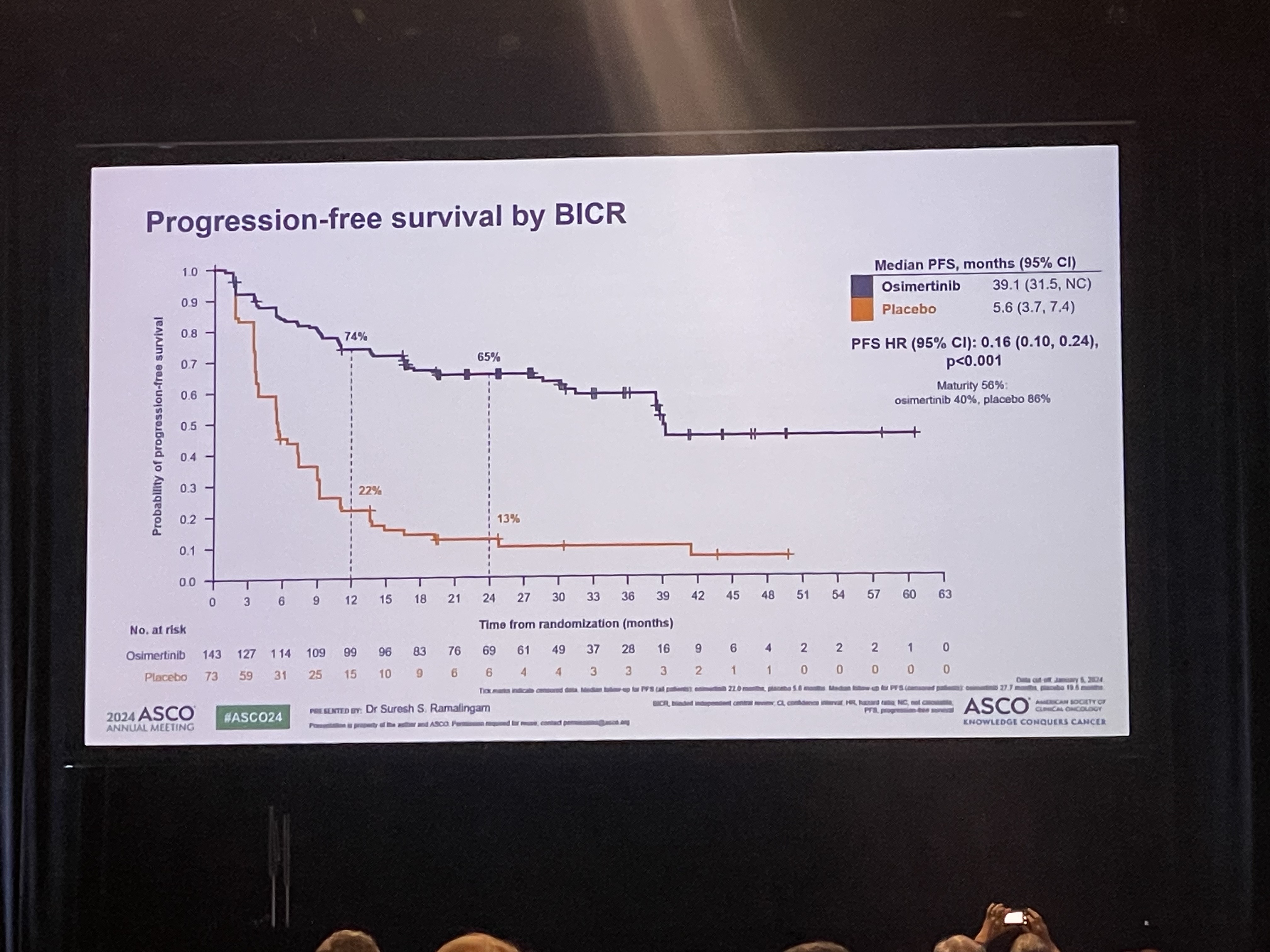
- The LAURA trial, which evaluated osimertinib’s effect in patients with unresectable Stage III EGFR-mutant non-small cell lung cancer who received chemoradiotherapy (CRT), was presented at the 2024 American Society of Clinical Oncology (ASCO) Annual Meeting. The results were also concurrently published in NEJM. # The LAURA trial evaluated progression-free survival (PFS) in 216 patients with unresectable stage III EGFR-mutant NSCLC who received chemoradiotherapy (CRT). The patients were randomized to receive osimertinib or placebo. The results showed a median PFS of 39.1 months and 5.6 months in the osimertinib and placebo arms, respectively, with an 84% reduction in the risk of disease progression and death in the osimertinib arm. The overwhelming numbers were met with spontaneous resounding ovation. Although the overall survival rates were not clear yet, researchers also added a positive interpretation based on the fact that overall survival did show a clear trend toward improved survival in the osimertinib arm, even though 80% of the placebo arm switched to osimertinib. Professor Suresh S. Ramalingam from the Winship Cancer Institute at Emory University School of Medicine, who presented results of the phase III LAURA study during the Plenary Session at the 2024 ASCO Annual Meeting, said, “The current standard of care for unresectable stage III EGFR-mutant NSCLC patients following CRT is durvalumab, but the benefit of the immunotherapy agent, specifically among patients with EGFR mutations, is uncertain. Based on the clear benefits, osimertinib after CRT will most likely emerge as the new standard of care for EGFR-mutant disease in this setting.” The next big question will be in setting the eligible subjects and timing of administration. Patients with unresectable stage III EGFR-mutant NSCLC who have received chemoradiotherapy (CRT) are regarded as an incurable group of patients, who have a high likelihood of relapse in the future. This is why drug use in this patient group needs to be reviewed from various aspects. Professor Lecia V. Sequist from the Massachusetts General Hospital and Harvard Medical School, who attended the presentation as a discussant for the abstract, regarded the results as a half glass of water, explaining that osimertinib may and may not be a viable treatment option depending on the perspective.” He emphasized that the positive benefits of osimertinib in terms of preventing brain metastases are a clear advantage, but the cost of the drug and increased side effects are a disadvantage. Professor Beung-Chul Ahn of the National Cancer Center, said, "The positive outcome of osimertinib in this group of patients is very welcome evidence, but if we evaluate it soberly, the cost of the drug cannot be ignored in clinical practice, and there are groups of patients who do not necessarily need it, so we need a treatment strategy that reviews its use according to the situation.”
- Company
- Chronic kidney disease drug ‘Kerendia’ can be prescribed
- by Eo, Yun-Ho Jun 10, 2024 05:41am
- Bayer’s new chronic kidney disease drug ‘Kerendia.’ ‘Kerendia,’ a treatment for chronic kidney disease, is now available for prescription after receiving approval for insurance reimbursement. According to industry sources, Bayer’s Kerendia (finerenone) has passed the drug committee (DC) of Big 5 tertiary general hospitals, including Seoul National University, Seoul Asan Hospital, and Sinchon Severance Hospital. Additionally, 49 hospitals in Korea have assigned Kerendia’s prescription code. Kerendia is a treatment for chronic kidney disease accompanying type 2 diabetes. It has been listed for reimbursement since February last year. With Chon Kun Dang becoming a marketing partner in South Korea, rapid landing and promotional activities are underway. Kerendia received approval in Korea last year. It is indicated for the treatment to reduce the risk of sustained eGFR (estimated Glomerular Filtration Rate, eGFR) decline, end-stage kidney disease, cardiovascular death, non-fatal myocardial infarction, and hospitalization for heart failure in adult patients with chronic kidney disease (CKD) associated with type 2 diabetes. CKD is one of the most common complications in type 2 diabetes and is an independent risk factor of cardiovascular diseases. While CKD is a progressive disease, it can be difficult to detect because the disease can progress without showing obvious signs until just before the late-stage renal failure occurs. With late-stage renal failure, patients require dialysis or kidney transplants to sustain life. This can pose a socio-economic burden and have a profound impact on a patient’s quality of life. For patients with type 2 diabetes, frequent monitoring and assessment of kidney damage and kidney function are essential. Early detection and appropriate treatment are critical to slowing down the progression of the disease and reducing the risk of cardiovascular diseases. In type 2 diabetes, the three key factors causing kidney disease are hemodynamic changes, metabolic abnormalities, and inflammation or fibrosis. However, in current therapy, treatments targeting hemodynamic and metabolic factors are only available, while treatments targeting inflammation and fibrosis are lacking, highlighting the need for new treatment approaches. Kerendia is a novel therapeutic approach targeting inflammation and fibrosis in adult chronic kidney disease patients with type 2 diabetes. It is the first non-steroidal, selective mineralocorticoid receptor antagonist. Overactivation of the mineralocorticoid receptor (MR) can lead to inflammation and fibrosis, which can result in permanent damages to kidney. Kerendia inhibits the overactivation of the mineralocorticoid receptor, reducing inflammation and fibrosis, and thereby preventing kidney damage. Kerendia demonstrated its effectiveness in the Phase 3 FIDELIO-DKD trials. FIDELIO-DKD trials enrolled approximately 5,700 patients from 48 countries globally, and Kerendia is indicated to inhibit the progression of chronic kidney disease and reduce the risk of cardiovascular events in adult patients with chronic kidney disease accompanying type 2 diabetes. Patients participating in the study received either Kerendia at doses of 10mg or 20mg in addition to standard therapy or a placebo. Clinical outcomes demonstrated that primary composite endpoint consisted of end-stage kidney disease, a sustained decline of more than 40% in eGFR, reduction by approximately 18% compared to the placebo in renal death. In addition, it reduced the secondary endpoints consisting of cardiovascular death, nonfatal myocardial infarction, stroke, or heart failure leading to hospitalization by approximately 14%. The outcomes of major adverse events or the rate of adverse events related to acute kidney damage were comparable between the two groups. Meanwhile, the European Society of Cardiology (ESC) revised its ‘2021 ESC Guidelines for the Diagnosis and Treatment of Acute or Chronic Heart Failure’ and listed Kerendia as a Class 1A recommendation to prevent hospitalization due to heart failure in patients with chronic kidney disease accompanying type 2 diabetes. Additionally, the ESC recommended annual assessment of eGFR and urinary albumin levels to screen for the development of chronic kidney disease in patients with diabetes.
- Company
- Pharma company MRs illegally work for CSOs on the sideline
- by Lee, Seok-Jun Jun 10, 2024 05:41am
- Contract Sales Organizations (CSOs) are trending in the pharmaceutical industry. In the case of small and medium-sized pharmaceutical companies, the companies have been opting to use CSOs rather than their own sales departments, to the extent that their departments are disappearing with the expansion of CSO business. The smaller the company, the more it relies on CSOs. A growing number of companies are outsourcing 100% of their sales. Large companies are also dabbling with CSOs. In 2019, the Ministry of Health and Welfare reported that 45% of the 195 pharmaceutical companies surveyed used CSOs. However, the industry consensus is that the rate would exceed 70% if the pool is narrowed to small and medium-sized companies. With CSOs becoming more mainstream, acts of misconduct are also increasing. One representative example is the act of pharmaceutical company medical representatives (MRs) illegally working for CSOs. According to the industry, many MRs who work for one company are selling their competitors' products at the same time. It's not uncommon to see MRs actively selling their competitors' products that pay higher commissions than their own. The problem is exacerbated by the industry's implicit acceptance of such illegal behavior. There are numerous posts on online job information sites recommending MRs to work for CSOs on the sideline, guaranteeing absolute confidentiality. There are even rumors that some small and medium-sized pharmaceutical companies that are in urgent need of making sales may tacitly allow employees to work for CSOs as long as they meet their sales targets. The CSOs are also encouraging the multicareer path. In fact, one CSO said, "The company can only see the wage and salary income it paid to each employee, so even if the employee earns additional income and reports it to the National Tax Service, the company will never know because it is categorized as business income. We provide full personal protection, so you don't have to worry about getting caught working a second job." Another CSO said, "We guarantee the highest commission in the industry. We work directly with pharmaceutical companies, so we can get the highest commissions. Our CSO is not like the others that are actually a bunch of corporate entities. No one knows how many steps the electronic data interchange (EDI) goes through in those companies, and whether there are any problematic entities, so it's really important to use a CSO that directly deals with the pharmaceutical company." The practice of pharmaceutical MRs doubling as CSOs needs to be abolished, as it can lead to a lack of collegiality and professional ethics, and can cause serious damage to the company in the form of trade secret theft and unfair competition. The industry is also aware of this problem and is making efforts to eradicate the practice. Companies are increasing penalties for MRs who are illegally working two jobs and expanding education and monitoring to prevent such acts. The CSO Reporting System is one of the most notable industry efforts. The CSO Reporting System is one of the key components of the amendments to the Pharmaceutical Affairs Act, which will come into full effect on October 19th. At its core, the bill requires "CSOs to report their business activities to local governments where they are located.” Violators will be punished by imprisonment for up to 3 years or a fine of up to KRW 30 million. Pharmaceutical companies will also be required to check their ability to prepare, keep, submit, and disclose expenditure reports, manage the appropriateness and transparency of their accounting, and be obligated to provide training to prevent illegal acts. The government believes that the introduction of the reporting system will be able to address the illegal practices by CSOs and pharmaceutical companies that circumvent the system, which has been raised as a possible source of illegal rebates. "At a time when the pharmaceutical industry as a whole is making efforts to integrate CSOs into the system, by disclosing expenditure reports and implementing the CSO reporting system, it is imperative that we eradicate and prevent illegal CSO business activities to restore the CSOs’ credibility in the domestic pharmaceutical industry.” Meanwhile, the general business structure of CSOs is as follows. The CSO is referred to as a "corporate CSO," and its employees are referred to as "dealers.” Dealers are usually sole proprietors who work for the corporate CSO, and the corporate CSOs work like middlemen, signing contracts with pharmaceutical companies and setting commissions that they later pay out to their dealers. The corporate CSOs recruit dealers, sign contracts with pharmaceutical companies, receive commissions for sales and redistribute them back to individual dealers.
- Policy
- Roche applies for Ocrevus' reimbursement in KOR
- by Lee, Tak-Sun Jun 10, 2024 05:41am
- Roche Korea applied for reimbursement of 'Ocrevus Inj. (ocrelizumab, Roche Korea),’ its multiple sclerosis treatment that was approved last month, to the Health Insurance Review and Assessment Service. The drug is administered twice a year, which is considered to have dramatically improved the dosing convenience for MS patients. The drug is a megablockbuster drug with global sales of about KRW 9 trillion in 2022. Celltrion is developing a biosimilar version of the drug. According to industry sources, Roche Korea submitted a drug determination application to HIRA for Ocrevus Inj on the 5th. Ocrevus Inj is a recombinant humanized monoclonal antibody (mAb, IgG1) that selectively targets CD20-expressing B cells, reducing the number and function of B cells to inhibit MS. MS is a disease of the central nervous system, which consists of the brain, spinal cord, and optic nerve, and is an autoimmune disease characterized by the patient's immune system attacking healthy cells and tissues. It is estimated that there are about 1,800 MS patients in Korea. The initial symptom is usually unilateral visual neuritis and is often accompanied by other various symptoms depending on the part of the central nervous system affected. Most patients complain of fatigue. Although there is no cure, various medications are being used to alleviate the symptoms. Beta interferon injections are the most commonly used, but the regimen requires receiving an injection from every other day to at least once a week. Ocrevus Inj offers greater dosing convenience with an initial dose of 600 mg administered in 2 intravenous infusions, followed by a single dose of 600 mg injection every 6 months. Ocrevus was approved by the U.S. FDA in March 2017 for the treatment of adult patients with relapsing or primary progressive forms of multiple sclerosis. In Korea, the Ministry of Food and Drug Safety approved the drug as a treatment for ▲ relapsing forms of multiple sclerosis (RMS) in adults, including clinically independent syndrome, relapsing-remitting multiple sclerosis, and active secondary progressive multiple sclerosis, and ▲ primary progressive multiple sclerosis (PPMS) in adults. In the U.S., the annual cost of the drug is USD 71,087, which is equivalent to KRW 97.73 million in Korea. Due to its high cost, how the company and government will share the reimbursement cost is likely to be an issue during reimbursement review. Ocrevus Inj generated global sales of KRW 9 trillion by 2022, leading Roche's growth. It is the No. 1 product in the multiple sclerosis treatment market. Celltrion submitted a Phase III IND for an Ocrevus Inj biosimilar to the European Medicines Agency (EMA) in May last year. Recently, the Korea Pharmaceutical and Bio-Pharma Manufacturers Association named Roche as the pharmaceutical company that will generate top global sales in 2028, citing data from global pharmaceutical market research institution Evaluate. Its products, the immuno-oncology drug Tecentriq, macular degeneration drug Vabysmo, and Ocrevus are expected to contribute to the high sales.
- Opinion
- [Reporter’s View] Finances limit reimbursement of drugs
- by Eo, Yun-Ho Jun 07, 2024 05:51am
- Insurance reimbursement standards and indications for a drug can differ. This is because the government’s pockets are not infinite under the National Health Insurance System. This is why there are always complaints in the field. Not all complaints can be resolved but there are some that evidently require resolution, that were made for incomprehensible “financial” reasons that are difficult to understand. Restrictions on age, duration, and switching drugs are typical examples. In the case of the age restriction, the standard is simple. For the same condition, infants, young children, or elderly patients may be excluded from coverage, or only certain age groups may be included due to concern about financial exhaustion. In this case, reimbursement is often extended later through reimbursement expansion measures. However, some drugs remain inaccessible for the patients. Restrictions set on the duration of use are a little different. Generally, reimbursement standards limit a drug's dosing interval based on the drug's clinical studies or authoritative international guidelines. However, there are also cases where reimbursement is restricted for "financial" reasons without any specific grounds for limiting the dosing interval. Restrictions on switching are the most frequent. Autoimmune diseases are the next big thing in the pharmaceutical industry after anticancer drugs, and numerous classes of drugs and same-class drugs with the same mechanism of action compete in the market. In the case of these drugs, the government often does not allow patients to be reimbursed for the first drug if they switch to another, meaning that if a patient is given a new drug with the expectation that it will work better than the first drug, but experience worse prognosis, he or she cannot go back to the old drug. The same situation was applied to drugs that were introduced long ago, and it took a long time before switching was granted reimbursement. In Korea, drug reimbursement has a significant impact on prescribing practices. Even if a patient needs a drug, doctors will often refuse to prescribe it if it is not reimbursed. This is why restrictions for financial reasons can be detrimental in fields where prescribing is essential. We ask the health authorities to trust the field’s judgment a little more.
- Company
- Immuno-oncology drugs demonstrate additional benefit at ASCO
- by Son, Hyung-Min Jun 07, 2024 05:50am
- Global pharmaceutical companies have demonstrated their immuno-oncology drugs’ effect in refractory solid tumors. Clinical results from major immuno-oncology drugs, including Imfinzi, Opdivo, and Yervoy, were presented at the 2024 American Society of Clinical Oncology (ASCO) Annual Meeting, which kicked off last month in Chicago, U.S. In the case of Imfinzi, the trial confirmed a survival benefit in small cell lung cancer. Imfinzi has shown promise in gastrointestinal cancers, including biliary tract and liver cancer. Such results paved the way for the company to add new indications. The combination of Opdivo and Yervoy improved survival in the first-line treatment of liver cancer. The combination has demonstrated efficacy against Nexavar and Lenvima in the first-line treatment of liver cancer, setting the stage for new competition. Imfinzi improves OS, PFS in small-cell lung cancer AstraZeneca's Imfinzi showed efficacy in small-cell lung cancer, an area with a high unmet need. The Phase III ADRIATIC trial evaluated the efficacy of Imfinzi monotherapy and the Imfinzi+Imjudo combination versus placebo in 730 patients with limited-stage small-cell lung cancer whose disease had not progressed after concurrent chemoradiation therapy (cCRT). ADRIATIC study design, which evaluated the efficacy of immuno-oncology drug Imfinzi (Source: ASCO 2024 lecture capture). Patients were randomized to receive a fixed dose of 1,500 mg of Imfinzi every 4 weeks alone or in combination with 75 mg of Imjudo, followed by Imfinzi every 4 weeks for up to 24 months. The primary endpoints were Imfinzi monotherapy’s progression-free survival (PFS) and overall survival (OS) vs placebo. Results showed that Imfinzi monotherapy reduced the risk of death by 27% compared with placebo. Median estimated OS was 55.9 months in the Imfinzi arm compared with 33.4 months in the placebo arm. Approximately 57% of patients in the Imfinzi arm were alive at 3 years, compared with 48% in the placebo arm, and Imfinzi therapy reduced the risk of disease progression or death by 24% compared with placebo. Median progression-free survival (mPFS) at 2 years was 16.6 months in the Imfinzi arm and 9.2 months in the placebo arm, with 46% of patients in the Imfinzi arm experiencing no disease progression at 2 years compared with 34% in the placebo arm. In addition to the small number of patients, small-cell lung cancer has a significantly lower number of treatments available than other cancers. According to a fact sheet published by the Korean Association for Lung Cancer (KALC) and the Korean Central Cancer Registry (KCCR) based on 2015 data, only about 13% of all lung cancer patients (2,658) were diagnosed with small cell lung cancer. As the first immuno-oncology drug to demonstrate efficacy in limited-stage small-cell lung cancer, whether Imfinzi can rise to become a new treatment option in the field is gaining attention. Opdivo+Yervoy improves survival as first-line treatment in liver cancer BMS announced results from the Phase III CheckMate-9DW trial, which evaluated the efficacy of the combination of Opdivo, a PD-1-targeted immuno-oncology drug, in combination with Yervoy, a CTLA-4-targeted immuno-oncology drug. Opdivo and Yervoy demonstrated an effect as first-line treatment in liver cancer (Source: ASCO 2024 lecture capture. BMS is exploring the possibility of securing multiple indications with the Yervoy plus Opdivo combination. The company is currently exploring the potential of the combination in liver cancer, metastatic colorectal cancer, squamous cell carcinoma, and head and neck cancer. The results presented at the 2024 ASCO Annual Meeting are from an interim analysis of the trial that evaluated the efficacy and safety of the combination as a first-line treatment for liver cancer. The trial enrolled 668 treatment-naive adults with unresectable hepatocellular carcinoma who were randomized to receive the Opdivo+Yovoy combination and either Lenvima or Nexavar. Results showed a median OS of 23.7 months in the Opdivo+Yervoy combination arm, compared with the 20.6 months in the control arm. The objective response rate (ORR) was 36% with the Opdivo+Yervoy compared with 13% in the control arm. The median duration of response was 30.4 months for the Opdivo+Yovoy combination arm compared with 12.9 months for the control arm. These results lay the foundation for the Opdivo+Yovoy combination to become a significant competitor in the first-line liver cancer treatment market. Currently, the combinations Tecentriq (immuno-oncology drug) plus Avastin (targeted therapy) by Roche and Imfinzi (immuno-oncology drug)+Imjudo (targeted therapy) by AstraZeneca are available as first-line treatment for liver cancer. In the field, HLB's targeted anti-cancer drug rivoceranib in combination with Hangseo Pharmaceutical's immuno-oncology drug camrelizumab has also recently presented data showing improved survival.
- Company
- "Breast cancer treatments received positive reviews"
- by Son, Hyung-Min Jun 07, 2024 05:50am
- Major antibody-drug conjugates (ADC) have secured positive clinical results in treating breast cancer. ADCs under development by global pharmaceutical companies have shown to be effective in various types of breast cancer, including triple-negative breast cancer, hormone-positive (HR+)/HER2-negative breast cancer. With these results, latecomers have established a foundation to secure indications for breast cancer, following the cases of Kadcyla, Enhertu, and Trodelvy. According to industry sources on June 4th, clinical achievements of several ADCs, including Padcev, datopotamab deruxtecan, and sacituzumab tirumotecan, were presented at the American Society of Clinical Oncology (ASCO 2024) annual meeting, which started on May 31st. Astellas and Seagen have presented clinical outcomes of their ADC Padcev. Padcev, an ADC anticancer agent targeting the cell surface protein nectin-4, has been approved worldwide for urothelial carcinoma. During this meeting, the results of the phase 2 EV-202 clinical study, confirming its potential in breast cancer, were disclosed. Both companies are exploring possibilities not only in urothelial carcinoma but also in breast cancer, gastric cancer, and non-small cell lung cancer, as nectin-4 protein is expressed in various solid tumors. On June 2, the Phase 2 study results of Padcev, a nectin-4-targeting ADC, were presented at ASCO 2024 (source: snapshot of ASCO 2024 lecture presentation). EV-202 clinical study evaluated Padcev’s effectiveness and safety in patients with triple-negative breast cancer and hormone (HR) positive·HER2-negative breast cancer who have been treated with chemotherapy before. The primary endpoint was objective response rate (ORR), and the secondary endpoints were duration of response (DOR), disease control rate (DCR), progression-free survival (PFS), and and safety/drug tolerance. The clinical results showed that the Padcev treatment group had an ORR of 19.0% for triple-negative breast cancer, while the DRR, an index measuring the percentage of patients with no disease progression during or after the treatment, was 57.1%. Such results were consistent with the outcomes for HR+/HER2- breast cancer. The Padcev treatment group recorded an ORR of 15.6%, while the DCR was 51.1%. The treatment-related adverse events (TRAE) of over Grade 3 for Padcev were decreased neutrophil counts (7%), decreased white blood cell counts (5%), and increased aspartate aminotransferase (5%). Adverse reactions identified in two cohorts were manageable and consistent with previously disclosed safety data. Currently, for triple-negative breast cancer, there is no ADC approved after Trodevly. All eyes are on whether Padcev would secure an indication for treating triple-negative breast cancer through follow-up clinical results. A TROP2-targeting ADC demonstrated additional effects on breast cancer On June 2, the clinical results of datopotamab deruxtecan, under development by Daiichi Sankyo and AstraZeneca, and MSD’s sacituzumab tirumotecan were disclosed. These two drugs are ADCs targeting TROP2 protein, an intracellular calcium signal transducer regulating cell proliferation and survival. TROP2 protein is expressed in healthy cells but commonly overexpressed in cancer cells. The protein is also associated with drug resistance. Gilead Sciences’ Trodelvy is the only available drug with a similar mechanism that succeeded in commercialization. Datopotamab is under clinical trials to confirm its potential for breast cancer and non-small cell lung cancer. The TROPION-BREAST01 study showed that datopotamab improved PFS for HR+/HER2- breast cancer. This time, the report detailing the study’s patient reported outcome (PRO) was disclosed. The TROPION-BREAST01 study increased the likelihood of datopotamab securing an indication to treat breast cancer (source: snapshot of ASCO 2024 lecture presentation). The clinical study involved 732 patients with inoperable or metastatic HR+/HER2- breast cancer previously treated with at least one chemotherapy. The patients were randomly assigned to either the datopotamab group or investigator’s choice of chemotherapy (eribulin, vinorelbine, capecitabine, or gemcitabine) with a 1:1 allocation. The PRO included (GGS), quality of life (QoL), and time to deterioration (TTD) evaluated by EORTC QLQ-C30, a questionnaire to assess the quality of life of cancer patients. The clinical results showed that the TTD for QOL in the datopotamab group was 3.4 months, compared to 2.1 months in the chemotherapy group. TTD for the datopotamab group was confirmed to be delayed in terms of physical function, pain, and most other symptoms and functioning scales. MSD’s sacituzumab tirumotecan was shown to be effective in triple-negative breast cancer. In 2022, MSD licensed the ADC candidate sacituzumab from China-based Sichuan Kelun-Biotech. Results from the phase 3 OptiTROP-Breast01 study compared sacituzumab to investigator’s choice chemotherapy (eribulin, vinorelbine, capecitabine, or gemcitabine) in patients with locally recurrent or metastatic breast cancer. The primary endpoint was PFS, assessed by blinded independent central review (BICR). Interim analysis results for PFS showed that the sacituzumab group recorded a PFS of 5.7 months, which was longer than the 2.3 months in the chemotherapy group. PFS at 6 months was 43.4% for the sacituzumab group and 11.1% for the chemotherapy group. Sacituzumab reduced the disease progression and mortality risk by 69%. OS was significantly favorable for Sacituzumab treatment. “Sacituzumab monotherapy demonstrated clinically meaningful PFS and OS benefits compared to chemotherapies,” an investigator stated. “Moreover, it demonstrated a manageable safety profile for treating triple-negative breast cancer, which has limited treatment options.”
- Company
- ‘Fully utilize the various IBD treatment options available'
- by Eo, Yun-Ho Jun 07, 2024 05:50am
- Professor Hong Sub Lee. Busan Paik Hospital, Inje university. Incidence of Inflammatory bowel disease (IBD), which had been regarded as a condition typically associated with Westerners, is now rising amongst Asian populations as well, including Koreans. According to the IBD fact sheet published by the Korean Association for the Study of Intestinal Diseases, the number of patients with ulcerative colitis and Crohn's disease has more than doubled in 10 years, to 37,000 and 18,000, respectively, by 2019. At the same time, treatments that can be used as a "weapon" by doctors are being introduced competitively to the market are being launched competitively. In an interview with Dailypharm, Professor Hong Sub Lee (Department of Gastroenterology) of Busan Paik Hospital, Inje University, assessed the importance of 'sequencing' the existing and new drugs and preparing an IBD treatment strategy customized for each patient. In recent years, appropriate drug selection has emerged as a key issue in the treatment of IBD in clinical practice in Korea, as treatment options have diversified to include Janus kinase (JAK) inhibitors in addition to conventional biologics. While it is not always possible to immediately switch to another drug when the therapeutic effect of a drug is inadequate, the availability of several prescribable options has created a dilemma of which drugs to use and in what order. Professor Lee explained, "We divide patients into low-risk and high-risk groups according to the presence and severity of symptoms, and then develop a treatment strategy and select drugs accordingly.” Lee added, "High-risk patients are those who are younger, have lesions that invade the entire large intestine and have deep ulcers. They are considered high-risk patients according to IBD metrics, in which case they are judged to be candidates for biologics or small molecule drugs that have recently been introduced in Korea." "We approach patients with fewer symptoms with the usual treatment strategy. But high-risk patients need to start a treatment sequence in line with the health insurance reimbursement system as quickly as possible." Adding to the dilemma for clinicians is the recent increase in the use of JAK inhibitors as a mainstream treatment option for ulcerative colitis and Crohn's disease. "Recently, JAK inhibitors have also been increasingly used to treat IBD. For example, filgotinib is the only JAK inhibitor that can be prescribed directly after azathioprine. According to clinical trials, upadacitinib has shown a high effect. However, to prescribe other JAK inhibitors, you need to first take patients off azathioprine, which is problematic for doctors because they have to remove a drug that they believe is effective for their patients." Therefore, Professor Lee believes that Korea’s reimbursement standards need to be improved to allow for more freedom of choice in clinical practice. "I would like to be able to quickly prescribe the increasing number of drug options to patients who really need them. We don't need to wield a big knife for patients with mild symptoms, but we need to improve the reimbursement standards so that we can approach each patient especially those at high risk with a personalized treatment strategy so that we can actively use necessary drugs.” "In addition to drugs, fecal microbiota transplantation (FMT), which utilizes the gut microbiome to treat IBD, is a major therapeutic option. I opened an inflammatory bowel disease clinic last November and am looking to start a gut microbiota transplantation company and pursue its research. I want to research and develop therapies using FMT to help treat IBD in practice."

- Policy
- Latuda·Dupixent enter negotiations with the NHIS
- by Lee, Tak-Sun Jun 07, 2024 05:50am
- (from the top) 'Latuda (lurasidone),' a medication used to treat schizophrenia and imported and distributed by Bukwang Pharmaceutical, and 'Dupixent (dupilumab),' which aims to expand reimbursement for young children, have entered negotiations with the National Health Insurance Service (NHIS). When an agreement with the National Health Insurance Service (NHIS) is completed, reimbursement coverage is possible following reporting to the Health Insurance Policy Review Committee According to the NHIS on June 5, Latuda 20, 40, 60, 80, 120mg and Dupixent Prefilled Inj 200 mg and 300 mg entered negotiations this month. These two drugs have cleared the review by the Drug Reimbursement Evaluation Committee (DREC) of the Health Insurance Review and Assessment Service (HIRA) held in May. At the time, Latuda received a decision that it could receive reimbursement if accepted below-evaluated amount. It appears that Bukwang Pharmaceutical accepted the DREC’s suggested below-evaluated amount. When a company agrees with an amount below the standard to be exempted from the drug pricing negotiations, it will only negotiate the expected claim amount. Latuda, developed by Japan's Sumitomo Pharma, is an atypical antipsychotic medication used in the treatment of schizophrenia and type 1 bipolar disorder. It works by binding to dopamine and serotonin receptors in the central nervous system, blocking the action of neurotransmitters in the brain. Bukwang Pharmaceutical acquired the exclusive development·license of Latuda for South Korea in 2017. Latuda is reported to have generated US$1.465 billion (about KRW 1 trillion) in sales in the United States in 2022. Dupixent has applied for expanded reimbursement for treating patients with severe atopic dermatitis in children aged 6 months to younger than 6 years. In May, the DREC decided that the expanded reimbursement criteria were appropriate. When the negotiations for expanded usage are completed, Dupixent will be reimbursed for patients with severe atopic dermatitis from 6 months to adulthood. In the LIBERTY AD PRESCHOOL Phase 3 trial, Dupixent showed significant improvement in skin lesions in young children. At 16 weeks, 28% of patients treated with Dupixent in combination with topical corticosteroids (TCS) showed a score of 0 or 1 point in the Investigator's Global Assessment PN-Stage (IGA PN-S), demonstrating a significant improvement in atopic dermatitis compared to 4% of the placebo group. Consequently, it met the primary efficacy endpoint. Its indication for young children was approved in South Korea in November 2022.
- Company
- ADC·immunotherapy competitiveness↑…K-bio gains attention
- by Son, Hyung-Min Jun 07, 2024 05:50am
- The American Society of Clinical Oncology (ASCO 2024) annual meeting started on May 31st lasting five days in Chicago, U.S. Korea-based biopharmaceutical companies have confirmed clinical achievements in globally trending R&D areas, including antibody-drug conjugates (ADC), immunotherapy for cancer, and bispecific antibodies. LigaChem Biosciences presented clinical data of LCB14, a human epidermal growth factor receptor 2 (HER2)- targeting ADC candidate. LBC14 has been shown to improve primary assessment indexes. ABL Bio confirmed efficacy in various solid cancers and blood cancers, including diffuse large B-cell lymphoma (DLBCL), Hodgkin lymphoma, non-small cell lung cancer (NSCLC), and pancreatic cancer. Additionally, the Korea-based biopharmaceutical industry’s immunotherapy for cancer with a new mechanism of action have shown potential at early stages of clinical trials. It has also shown synergistic effect with bispecific antibodies. LigaChem Biosciences’ ADC shows comparable efficacy to Enhertu At ASCO 2024, LigaChem Biosciences presented the Phase 2 clinical trial result of LCB14, a HER2-targeting ADC candidate. LCB14 is linked via a monomethyl auristatin F (MMAF) agent, unlike most ADC drugs employing topoisomerase inhibitors. MMAF is an anti-tubulin inhibitor that kills cancer cells by inhibiting microtubule formation. Currently, Roche’s Kadcyla Daiichi Sankyo·AstraZeneca’s Enhertu have emerged as HER2-targeting ADCs. These two were approved for the treatment of breast cancer, but only Enhertu was approved gastric cancer. LigaChem Biosciences is confirming the market potential of its candidate for one of Enhertu’s indications, metastatic gastric cancer or gastroesophageal junction cancer. The clinical trial evaluated LCB14’s efficacy in patients with gastric cancer who had received at least two or more previous treatments (16 patients, cohort 1) and who had received at least one treatment (19 patients, cohort 2). Cohort 1 treated with LCB14 had an objective response rate (ORR) of 37.5%, a median progression-free survival (PFS) value of 4.3 months, and an overall survival (OS) of 10.0 months. This result was comparable to the clinical result of DESTINY-Gastric06, evaluating Enhertu’s efficacy, with an ORR of 35.6%, a PFS of 5.7 months, and an OS of 10.2 months. Cohort 2 treated with LCB14 recorded an ORR of 52.6%, a mPFS of 4.4 months, and an OS of 14.6 months. Since LCB14 has shown comparable efficacy to Enhertu in a phase 2 clinical trial, LigaChem Biosciences expects its potential use in treating patients with recurrent solid cancer. ABL Bio has confirmed the efficacy of CS5001, a ROR1-targeting ADC, in a phase 1 clinical trial. ROR1 is strongly expressed during fetal development. The clinical trial analyzed the efficacy, pharmacokinetics (PK), and antitumor activity of CS5001 in patients with solid cancer and lymphoma. As of January 15, 2024, the drug tolerance and safety of eight doses of CS5001 were analyzed in 17 lymphoma patients and 32 solid cancer patients. In the first eight dose groups of CS5001, no dose-limiting toxicities (DLT) were observed. Superior safety and expected pharmacokinetics property were reported, with the maximum tolerated dose (MTD) not being reached. Their investigator said, “CS50001 treatment has shown modest drug tolerance without experiencing DLT. Additionally, we observed favorable anticancer activities in various advanced solid cancers and lymphoma.” Achievements in clinical trials of immunotherapy for cancer·bispecific antibodies GI Innovation has confirmed the effectiveness of GI-102, a candidate immunotherapy for cancer. This company is developing GI-102, which acts on CD80 and interleukin (IL)-2. IL-2 is involved in immune cell proliferation and activation, and CD80 blocks CTLA-4, a receptor preventing immune cells from attacking cancer cells. The presented clinical trial results evaluated the safety, drug tolerance, and antitumor activities of GI-102. Korea-based biopharmaceutical companies participated in poster sessions at ASCO 2024, which commenced on May 31. An ORR of 17.4% was observed in 23 patients (7 skin melanoma patients, 4 NSCLC patients, and 3 ovarian cancer patients). The reported overall ORR was 42.9%, and the disease control rate (DCR) was 85.7%, including three cases of partial response (cPR) confirmed in patients with metastatic skin melanoma who had previously experienced ICB. GI Innovation aims to obtain conditional approval for its GI-102 and is assessing the potential for technology transport. They are also examining the potential of using GI-102 in combination with NK cell therapy, as well as GI-102 monotherapy. The company’s clinical trial results are receiving attention as they strive to make the technology transfer of an immunotherapy candidate by the end of this year. TiumBio presented the interim result of a phase 1b trial involving TU2218, which is under development as bispecific antibodies. TU2218’s underlying mechanism of action involves simultaneously inhibiting transforming growth factor beta (TGF-ß) and vascular endothelial growth factor (VEGF) pathway, which are known to interfere with immunotherapy activation in the body. TiumBio is conducting clinical trials in three clinical institutes in the United States to evaluate the efficacy and safety of TU2218 in combination with the immunotherapy Keytruda in patients with advanced solid cancer. The clinical results showed that out of five patients treated with a daily recommended dose of TU1228 195 mg, two patients had PR, and three patients had SD. The DCR of all treatment groups was 66.7%. The treatment-related adverse events (TRAE) of over Grade 3 were fatigue, increased gamma-glutamyl transpeptidase, and pneumonia. TRAE of Grades 4-5 was not reported.
