
- LOGIN
- MemberShip
- 2026-06-25 11:12:04
- Opinion
- [Desk’s View] On resolving the stock shortage of drugs
- by Lee, Tak-Sun Dec 05, 2023 05:49am
- As a parent, I feel like I've been visiting hospitals after the endemic than I did during the COVID-19 pandemic. At the height of the pandemic, I only had to worry about COVID-19, but after the pandemic has passed, children with weak immunity are suffering from various viral diseases including colds, flu, and adenovirus. When my older daughter got sick, my younger one also got sick, and us parents were no exception. After going through a series of these vicious cycles, I pulled out my mask again and wondered whether I had removed my mask too soon. With this increase in hospital visits, drug shortages are quite understandable. However, as a healthcare consumer, I don't understand the seriousness of it. It's not as bad as when I had to go from pharmacy to pharmacy seeking acetaminophen fever reducers for my COVID-19 vaccination. I never had to go to another pharmacy because the prescriptions written by my local pediatrician or ENT were not available at one site. However, when I look at the prescribed drugs, I see the ingredients of the “drug with unstable supply" that are often mentioned in recent articles. Although these are not the items that are being discussed for price hikes, they contain the same active ingredients. This shows that there may be differences in demand for different products even within those that contain the same ingredients. Also, in one corner of the pharmacy, I saw a lot of over-the-counter fever reducers. Although the supply of prescribed fever reducers is running low, the over-the-counter ones still seem to be available. The government's response to the ‘unstable supply of medicines’ seems to have been successful to a certain extent, as consumers are not feeling any inconvenience yet. If the consumers had felt and experienced the drug shortage firsthand, the anger against the government would have been extreme, as people become most emotional when they are sick. However, I am disappointed that the government's solution seems to be focused on 'increasing production.’ Even the most effective card the government has played, the drug price increase, is aimed at increasing production. If only certain products are out of stock and other drugs with the same ingredient are available, efforts should be made to diversify prescriptions. It would be best if the system allows full utilization of the substitution system, but it is unlikely to have an effect under the current system, as the pharmacies need to bear the inconvenience. In this case, why not amend the enforcement decree to temporarily exempt pharmacies from notifying the medical institutions about the substitutions for drugs that are in unstable supply? In the long run, we can also expect to alleviate the concentrated prescription of certain ingredients by removing reimbursement of general medicines used for mild illnesses such as the common cold. However, as such options are not even being considered as a way to solve the supply and demand instability of drugs, this further narrow the options that the government can take. The government should seriously monitor the market first, and consider measures to diversify prescription if other drugs with the same ingredient are left for immediate utilization.
- Company
- AbbVie Korea strengthens its autoimmune disease pipeline
- by Eo, Yun-Ho Dec 05, 2023 05:48am
- AbbVie Korea is actively working to advance its position in the field of autoimmune diseases. According to industry sources, AbbVie Korea successfully expanded the indications for its Interleukin-23(IL-23) inhibitor 'SKYRIZI (Risankizumab)’ and JAK inhibitor ‘RINVOQ (Upadacitinib).’ On November 15th, an indication was added for SKYRIZI to treat adult patients with moderately to severely active Crohn's disease who had responded inadequately or were intolerant to biologic therapy and/or existing therapies. The approval was based on a multicenter, randomized, double-blind, placebo-controlled Phase III trial that demonstrated the efficacy, safety, and tolerability of SKYRIZI in adult patients with moderate-to-severe active Crohn’s disease. In the ADVANCE and MOTIVATE induction trials, 1,419 patients were randomly assigned to receive 6000 mg intravenously, 1,200 mg intravenously, or placebo at week 0, week 4, and week 8. Clinical remissions and endoscopic responses were measured by stool frequency (SF) and abdominal pain score (APS) at 12 weeks. The FORTIFY trial evaluated 462 patients who showed clinical response to 12 weeks of intravenous induction therapy in the ADVANCE and MOTIVATE trials. Patients were randomly assigned to receive either subcutaneous risankizumab 180 mg, subcutaneous risankizumab 360 mg, or withdrawal from risankizumab to receive subcutaneous placebo every 8 weeks for up to 52 weeks. The primary endpoints were clinical remission and endoscopic response at week 52. SKYRIZI is currently approved and reimbursed in Korea to treat moderate-to-severe plaque psoriasis in adults who are candidates for phototherapy and systemic therapy (including biologic treatment), as well as to treat active psoriatic arthritis in adults who are non-responsive to DMARDs (disease-modifying anti-rheumatic drug). As for RINVOQ, its reimbursement has been expanded to the treatment of severe active ankylosing spondylitis from December. Accordingly, patients with severe active ankylosing spondylitis who have stopped receiving treatment due to poor response to one or more types of tumor necrosis factor-alpha inhibitor (TNF-α inhibitor) or IL-17A inhibitor will be able to receive reimbursement for once daily treatment of 15mg of RINVOQ. The reimbursed price of RINVOQ is KRW 19,831 for once-daily dose of 15 mg, and patients covered by special exemption of calculations provisions only have to pay 10% of the drug price. RINVOQ proved efficacy in patients with severe active ankylosing spondylitis who were enrolled in the Phase 2/3 SELECT-AXIS1 and the Phase 3 SELECT-AXIS2 clinical trials. In both SELECT-AXIS 1 and 2 clinical studies, the ASAS40 (Assessment of Spondyloarthritis International Society response standard improvement of 40% or more) response rate for patients treated with RINVOQ 15 mg was 52.0% and 45.0%, respectively, at 14 weeks. This was significantly higher than that of the placebo group (26.0% and 18.0%, respectively.) In addition, the ASAS40 response was observed from Week 2 in SELECT-AXIS1 and from @eek 4 in SELECT-AXIS 2, confirming quicker effect of the drug. In the SELECT-AXIS 2 clinical trial, the average reduction in back pain in the Rinvoq 15mg treatment group was -3.00, which is a significant decrease compared to the placebo group (-1.47), and the intensity of morning stiffness also decreased by -3.08 compared to the baseline value compared to the placebo group (-1.67). Lee Sin Suk, Chairman of Korean College of Rheumatology, said, “RINVOQ has significantly improved the pain, inflammation, and joint damage in patients with severe active ankylosing spondylitis, and also helped improve the quality of life in patients as well as reaching treatment goals. The reimbursement expansion is likely to address the unmet need and alleviate the financial burden of patients who had been unable to receive benefits, and is expected to offer an effective oral treatment option for the patients."
- Company
- Companies in KOR and abroad compete in Eylea biosimilar mkt
- by Son, Hyung-Min Dec 05, 2023 05:48am
- Intense challenges are being made against Bayer's Eylea, the current leader in the macular degeneration market. Not only domestic biosimilar companies like Celltrion and Samsung Bioepis but also traditional pharmaceutical companies such as Sam Chun Dang Pharm have thrown down the gauntlet. Bayer and Regeneron, the original developers of Eylea, thus face fierce market competition not only with biosimilar developers but also with Roche's next-generation macular degeneration treatment, Vabysmo. According to industry sources on the 3rd, among domestic companies, Sam Chun Dang Pharm, Celltrion, Samsung Bioepis, and Alteogen are currently developing Eylea (aflibercept) biosimilars. All four companies have set their sights on the global market, preparing to receive approvals in the U.S. and Europe in addition to the Korean market. In the U.S., Celltrion, Amgen, and Sandoz are close to commercializing their biosimilars in the U.S. These companies have now completed global Phase III clinical trials and applied for marketing authorization in the U.S. and Europe. Eylea’s U.S. new drug exclusivity expires next May, and its European substance patent expires in November 2025. In Korea, Sam Chung Dang Pharm is nearing approval. The company applied for the marketing authorization of its Eylea biosimilar candidate ‘SCD411’ in two formulations - vial and prefilled syringe formulation – in Korea last month. Sam Chung Dang Pharm is the first company to apply for the approval of a prefilled syringe formulation of Eylea. The application was filed based on SCD411’s Phase III trial results. The trial, which had been conducted on 576 patients, demonstrated SCD411’s bioequivalence to Eylea. Based on the results, Sam Chung Dang Pharm is also preparing to apply for marketing approval of SCD411 in the United States and Europe as well. Eylea to inevitably compete with biosimilars and Vabysmo Pharmaceutical and bio companies in Korea and overseas have jumped into developing biosimilars due to the high marketability of Eylea. Eylea’s global sales were approximately USD 1.4 billion (KRW 1.9 trillion) in Q1 this year and USD 1.5 billion (KRW 2.373 trillion) in Q2 this year. Eylea had posted the highest sales in the domestic macular degeneration market. According to the pharmaceutical market research institution IQVIA, Eylea’s sales, which had been around KRW 46.8 billion in 2019, exceeded KRW 60 billion in 2020. Sales continued to grow, and Eylea posted KRW 80.4 billion in sales last year. However, sales generated by Eylea’s competitors last year, Novartis’ Lucentis (ranibizumab) and Beovu (brolucizumab) were only KRW 29.4 and KRW 14.5 billion, respectively. In addition to the challenges made by the biosimilar developers, Bayer’s Eylea is starting competition in earnest with Roche's macular degeneration drug Vabysmo (faricimab). Unlike existing VEGF inhibitors like Lucentis, and Eylea, the drug’s dual mechanism of action allows for it to also block the angiopoietin-2 (Ang-2) pathway to inhibit neovascularization. In particular, in clinical trials, Vabysmo improved visual acuity at a level non-inferior to that of Eylea, which is administered at 8-week intervals, when administered at intervals of up to 16 weeks. Vabysmo was granted reimbursement and released in earnest in October last month. Roche is also known to be planning to introduce a prefilled syringe formulation of Vabysmo next year.
- Policy
- MOHW will expand drugs subject to price adjustments
- by Lee, Tak-Sun Dec 05, 2023 05:48am
- To ensure higher drug prices for medicines in short supply, the Ministry of Health and Welfare (MOHW) announced its plan to revise the evaluation standard for drugs eligible to apply for pricing adjustments to increase the upper limit price (list price). Accordingly, national essential drugs and those selected by public-private consultative bodies as having unstable supply will be eligible to apply for price increase adjustments. According to industry sources on December 4th, the MOHW is reviewing a plan to include national essential drugs and drugs suggested to be in short supply by its public-private consultative body as subjects in its evaluation standard to adjust the upper limit price. The current evaluation standard allows drug pricing adjustments to be made for drugs ▲with no alternative drugs are available; ▲absolutely necessary for treatment; ▲necessary for treatment, and the cost of medication is cheaper than its alternative but the administration and ingredients are the same, and there is only 1 manufacturer produces the drug. A drug essential for treatment should meet the following criteria, ▲have no available alternative therapies (including medicines) ▲is used for serious diseases with low survival rates ▲is used for rare diseases that affect a small group of patients ▲has demonstrated clinically significant improvement such as a substantial extension of survival time, and other cases where the committee evaluates it absolutely necessary for the patient’s treatment. The drugs that have recently had supply shortages and raised concern in pharmacies, often do not meet the current evaluation criteria. To resolve the current issue, the government is considering revising the evaluation criteria to include national essential drugs and drugs deemed necessary for price increase by the public-private consultative body to resolve the supply instability issue. The Ministry of Food and Drug Safety recently added 6 types of 7 pediatric medicines, including acetaminophen syrup and tulobuterol transdermal patches to the list of national essential drugs. The industry views this as a step towards adding the qualification for drug price increase adjustment requests for national essential drugs. The industry views the proposed revision is a measure to quell potential disputes over criteria that may arise in the future, as the government is considering the drug price increase as part of measures to address the supply shortage of particular drugs. Consequently, there is speculation that drugs that do not qualify for adjustment requests will still go through the price increase process, with their legitimacy being granted through subsequent revisions of the criteria. On December 7th, HIRA's Drug Reimbursement Evaluation Committee will review pricing adjustment requests for 5 pharmaceutical products that have supply shortages. The candidate products include Sama Pharm's 'Setophen Suspension', Johnson & Johnson Korea’s 'Children's Tylenol Suspension', Boryung's ' Meiact Fine Granule Boryung', Kukje Pharm's 'Ditoren Fine Granules', and JW Pharmaceutical's 'Dulackhan Easy Syrup', among others.
- Company
- Celltrion applies for US approval of its Prolia biosimilar
- by Chon, Seung-Hyun Dec 04, 2023 05:13am
- Celltrion announced today that it has filed an application for the marketing authorization of its, ‘CT-P41,’ to the US Food and Drug Administration (FDA). CT-P41 is a biosimilar of ‘Prolia,’ a treatment for osteoporosis. Based on the results of a global Phase III clinical trial on CT-P41, Celltrion filed for marketing authorization of its substance for all of Prolia’s indications, including osteoporosis, bone loss, prevention of skeletal complications from multiple myeloma or solid cancer bone metastases, and giant cell tumor of bone. Prolia is a biological osteoporosis treatment that targets the RANKL protein essential for the formation, activation, and survival of osteoclasts that destroy the bone. The same active ingredient is also licensed under the brand name ‘Xgeva’ for the prevention and treatment of bone metastasis complications in cancer patients. Based on IQVIA, the drug generated USD 5.83 billion in sales last year (KRW 7.54 trillion), and its patent is set to expire in the U.S. and Europe in February 2025 and November 2025, respectively. In October, Celltrion conducted a global Phase III trial on 477 patients in postmenopausal women with osteoporosis in 4 countries including Poland and Estonia, to confirm the bioequivalence and pharmacodynamic similarity to the original drug. Celltrion has worked continuously with the FDA and the European Medicines Agency (EMA) throughout the development process to design a global development program that will enable CT-P41 to be approved simultaneously as a Prolia and Xgeva biosimilar, based on the results of the global Phase III study. The company explained that CT-P41 will be allowed to be prescribed interchangeably with the original product once it is approved in the U.S. because it will receive interchangeable biosimilar status. Following the U.S. approval, Celltrion plans to file for approval in other major global markets, including Europe. A Celltrion official said, "After confirming the bioequivalence and similarity of CT-P41 in the Phase III trial, we have submitted our application for its marketing authorization in the U.S. as an interchangeable biosimilar. will continue to work with regulatory authorities to complete the remaining approval processes."
- Policy
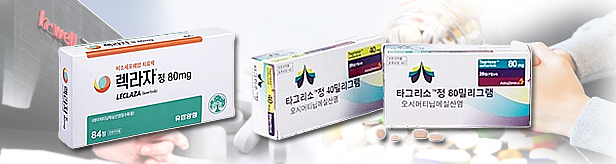
- Tagrisso and Leclaza complete drug pricing negotiations
- by Lee, Tak-Sun Dec 04, 2023 05:13am
- The National Health Insurance Serivce was found to have completed pricing negotiations with the companies for the reimbursement of Tagrisso (AZ, osimertinib) and Leclaza (Yuhan, lasertinib) as first-line treatments for non-small cell lung cancer through the risk-sharing agreement (RSA) system. However, as the two were applied different types of RSA, the actual reimbursed prices of the two drugs are expected to differ somewhat. According to industry sources on the 1st, AstraZeneca, which owns Tagrisso, and Yuhan Corp, which owns Leclaza, recently completed drug price negotiations with the NHIS. The pricing negotiations had been ongoing with the NHIS since late September for Tagrisso, and since late October for Leclaza, but the authorities had reportedly treated the two drugs as a single set for reimbursement deliberations. Yuhan Corp has been providing Leclaza as a first-line treatment to patients free of charge through an Early Access Program (EAP) until its reimbursement, without limiting the number of patients. This was why the initial treatment refund type RSA was not applied during its pricing negotiations., Initial treatment refund-type RSA is a risk-sharing approach that takes into account uncertainties such as the effectiveness of the drug during the initial treatment period. Instead, Leclaza was applied 2 types of RSA during negotiations – Refund type and Expenditure Cap type RSA. On the other hand, Tagrisso was applied initial treatment refund type, refund type, and expenditure cap type RSA. Due to differences in the type of RSA applied, the NHIS seemingly has balanced the prices of the two drugs by setting different refund rates. As such, the refund rate for Leclaza, which was not applied the initial treatment refund-type RSA, will be higher than that of Tagrisso. As such, the actual price of Leclaza is also likely to be somewhat lower than that of Tagrisso The list price is also expected to decrease slightly with the increase in the reimbursement rate. Currently, the insurance price ceiling (list price) is set at KRW 68,964 per tablet for Leclaza, while Tagrisso (80 mg) is set at KRW 212,148 per tablet. As Leclaza is taken three times a day, and Tagrisso once a day, the total drug cost is slightly cheaper for Leclaza. However, depending on the refund rate, the actual difference in price may increase further.
- Opinion
- [Reporter's View] Non-face-to-face treatment pilot project
- by Lee, Jeong-Hwan Dec 04, 2023 05:12am
- Starting December 15th, ’24-hour non-face-to-face treatment’ will be available to the public following the legalization of revised non-face-to-face treatment pilot project by the Ministry of Health and Welfare. The project will extend the non-fact-to-face treatment benefit that had been previously limited to returning patients to new patients. Patients will be able to request non-face-to-face treatment for all types of diseases, whether acute or chronic, at a clinic where they have made an in-person visit within 6 months. A dramatic increase in the number of non-face-to-face treatment is expected due to the updated policy, which has allocated the responsibility of sorting the non-face-to-face treatment eligibility at the sole discretion of the physicians, regardless of severity of disease. Physicians and pharmacists registered with the Korean Medical Association (KMA) and the Korean Pharmaceutical Association (KPA) have voiced concerns against the newly updated non-face-to-face treatment policy. Their primary view regarding the policy is that the government has forcefully implemented the pilot project without a thorough assessment of its side effects. Shortly after the MOHW's announcement, physicians and pharmacists' associations small and large have all issued statements opposing the revised pilot project. On November 30th at 8:00 a.m., a day before the MOHW released the revised plan, a conference had been held between the advisory panel regarding the non-face-to-face treatment pilot project. Although the KMA, KPA, and the Korea Alliance of Patients Organization have stated their opposing views on the extension of the policy at the meeting, their opinions have not been taken into consideration. Therefore, the panels expressed that the advisory panel for the pilot project was held for formality, wherein the government had not planned to regard any of the opinions proposed at the meeting and the extension of the plan was already a done deal. The Yoon Suk-Yeol administration has been putting an emphasis on running the governmental operation based on ‘social consensus and scientific reasoning,’ especially regarding the major issues of national concern. However, no such consensus or reasoning was made in the process of the non-face-to-face treatment pilot project advisory panel meeting and the revision announcement. Neither scientific statistics nor research analysis data have been suggested for concluding extending the potential patient pool of the ongoing pilot project. It is truly questionable whether MOHW has ruled President Yoon Seok Yul’s comment that “parents of children have a hard time seeking non-face-to-face treatment late at night and on holidays” made in the Cabinet meeting a scientifically backed argument. In contrast, all the opposing voices of physicians, pharmacists, and patient organizations were left unheard. As for the revision, the scientific reasoning-based administration is non-existent and the societal agreement-based policy-making principle has been neglected. Because the non-face-to-face-treatment pilot project is a revision to the public health law and not to the medical law, there seems to be no regulation of MOHW's way of conducting an extension. Despite of opposing views by medical professionals, concerns by patient organizations, and major criticisms by the political party, the pilot project which allows ’24-hour non-face-to-face treatment’ will be accelerated. December 15th will be remembered as the date on which the omnipotent pilot project, which extends the scope of non-face-to-face treatment, overpowers the medical law.
- Policy
- Preferential pricing plan will be further discussed by HIPDC
- by Lee, Tak-Sun Dec 04, 2023 05:12am
- The government’s announcement of the plan to improve Korea’s drug pricing system to properly compensate for the innovation value of new drugs (hereinafter referred to as the New Drug Preference Pricing Plan) is expected to be made around the end of this month. The plan was originally set to be presented for deliberation at the general meeting of the Health Insurance Policy Deliberation Committee (HIPDC) on the 8th of this month, but the Health Insurance Policy Deliberation Subcommittee decided that the agenda requires further discussion. According to the industry on the 3rd, the New drug preference pricing plan had been presented as an agenda for deliberation on the 22nd, but the subcommittee decided to continue further discussions. As such, another subcommittee meeting is expected to be held around the middle of this month. Prior to this, the contents of the New drug preference pricing plan will be shared at a meeting with the pharmaceutical industry. This is also expected to be held in the middle of this month, ahead of the subcommittee meeting. The New drug preference pricing plan has been discussed with the pharmaceutical industry since January this year. The government has been working on a plan since the end of last year to strengthen the competitiveness of homegrown new drugs and foster the pharmaceutical and bio industries. The industry has also consistently called for drug pricing incentives for homegrown new drugs that have proven non-inferiority to existing drugs, saying that more practical measures are needed to encourage innovative pharmaceutical companies. As such, the ministry held 5 public-private consultative body meetings and 6 working-group level meetings with the Korea Pharmaceutical and Bio-Pharma Manufacturers Association, the Korea Biomedicine Industry Association, and the Korean Research-based Pharmaceutical Industry Association until June this year. Since then, the Ministry of Health and Welfare has taken time to organize the final draft, collecting opinions from related organizations in consideration of the financial soundness of insurance finances and feasibility. In addition, the MOHW had added other measures, such as adding drug price preservation plans for drugs with unstable supply and demand. Currently, the most promising plans include ▲ Flexible application of ICER thresholds by prioritizing innovation for pharmacoeconomic evaluation of innovative new drugs ▲ Preferential drug pricing for domestically developed innovative new drugs (apply highest price among alternative drugs) ▲ Preferential drug pricing for natural drugs at the same level as cell therapies ▲ Expansion of drugs for severe diseases that deteriorate the quality of life to be allowed exemption from pharmacoeconomic evaluative and applied RSA ▲ Application of RSA (dual drug pricing) for homegrown new drugs planned for exports. If the plan is finalized, the industry expects that the preferential pricing of homegrown new drugs and eased post-marketing management will improve the competitiveness of the drugs overseas and allow faster listing of innovative new drugs developed abroad that are urgently needed for patient treatment.
- Company
- Pharma companies fiercely compete to develop ADC drugs
- by Son, Hyung-Min Dec 01, 2023 05:35am
- Competition among domestic pharmaceutical companies to secure new antibody-drug conjugate (ADC) technology has been intensifying in Korea. With ADC drugs recently demonstrating an effect on various cancer types, there is an analysis that the industry is making active measures to secure new ADC technologies. According to the pharmaceutical industry on the 29th, not only pharmaceutical companies such as Samjin Pharm and Chong Kun Dang, but also bio companies such as LegoChem Biosciences, ABL Bio, PinotBio, AIMed Bio, Celltrion, Samsung Biologics, and Lotte BioLogics have entered the ADC market. ADCs are drugs made by connecting antibodies that bind to specific target antigens on the surface of tumor cells to cytotoxic payloads with a linker. ADC has the advantage of increasing the treatment effect while minimizing side effects due to the target selectivity of the antibody and the apoptosis activity of the drug, which induces the drug to work selectively to target cancer cells. Domestic pharma and bio companies start developing ADC candidates through open innovation… is seeking promising ADC candidates The domestic pharmaceutical and bio industry joined in the ADC development game through open innovation. Accordingly, an overall platform technology has been implemented in all stages of development from early-stage candidate discovery to preclinical trials. To date, LegoChem Biosciences has successfully licensed-out 9 contracts in the field of ADC. Starting with technology transfer to China's Fosun Pharmaceutical Group in 2015, the company has licensed-out 5 pipeline platform technologies to Amgen in December last year. LegoChem Biosciences owns 2 proprietary platform technologies, ‘ConjuAll’ and ‘LegoChemistry.’ ABL Bio is developing ABL201, an ADC candidate targeting blood cancer, and ABL202, targeting solid cancer. ABL Bio also successfully licensed-out ABL201 to bio venture TSD Life Sciences. Also, ABL202 is being developed by incorporating LegoChem Biosciences linker technology. PinotBio is developing PINOT-ADC, which was developed by changing the chemical structure of camptothecin, a topoisomerase class anticancer drug. The candidate substance that linked PINOT-ADC to the HER2 targeting antibody was confirmed to have an anti-tumor effect in a preclinical mouse model. , Ahn-Gook Pharmaceutical, Celltrion, and Lotte Biologics, who eyed PinotBio’s technological capabilities, have made equity investments. AIMed Bio is developing its solid cancer-targeted ADC candidate, AMB302. AMB302 is a novel drug candidate targeting FGFR3 for glioblastoma and bladder cancer. Its first clinical trial is scheduled to begin next year. AIMed Bio received an equity investment from a Life Science Fund created by Samsung C&T, Samsung Biologics, and Samsung Bioepis last September. Samjin Pharm started ADC development in earnest after signing an agreement for joint R&D with an ADC specialist, Novelty Nobility. Under the agreement, the partners will be investigating the use of Samjin Pharm’s new payload with Novelty Nobility’s linker technology. The company is known to be developing differentiated payloads, unlike existing ADC new drug development companies. Chong Kun Dang will begin exploring candidate substances using the Dutch ADC company Synaffix’s ADC technology. Chong Kun Dang plans to secure the rights to use Synaffix’s 3 ADC platform technologies, GlycoConnect, HydraSpace, and an undisclosed linker-payload from the toxSYN platform, to develop ADC anticancer drugs. Samsung Biologics, Celltrion, and Lotte BioLogics are also expanding their ADC contract development and manufacturing (CDMO) business in addition to investing in new drug development companies. ADC development difficult…only around 10 candidates became commercialized Daiichi Sankyo and AstraZeneca’s ADC drug Enhertu Domestic pharmaceutical and bio companies are eager to develop ADC drugs because of the excellent effect demonstrated by ADC drugs developed to date. In particular, relatively recently released drugs are attracting attention as they have secured superior data over existing treatments for various cancer types. However, due to its difficulty in development, only a handful of drugs have been commercialized as of now. Since Pifzer’s Mylotarg (gemtuzumab ozogamicin) was released in early 2000s, Takeda’s Adcetris (Brentuximab vedotin), Roche’s Kadcyla (Trastuzumab emtansine), Pfizer’s Besponsa(Inotuzumab ozogamicin), and Roche’s Polivy (Polatuzumab vedotin-piiq) were successfully commercialized. Recently, Astellas’ Padcev (enfortumab vedotin), Gilead’s Trodelvy (sacituzumab govitecan), and Daiichi Sankyo and AstraZeneca’s Enhertu (trastuzumab deruxtecan) were also released into the market. The relatively recently released drugs have been demonstrating their efficacy in areas with a high unmet need or where existing treatments were ineffective, and have been scoring various therapeutic indications like immune-oncology drugs. In the case of Enhertu, it is currently approved as a treatment for HER2-positive breast cancer and gastric cancer in Korea but has also shown effectiveness in areas that lack treatment options, such as triple-negative breast cancer and non-small-cell lung cancer. Trodelvy is also looking to secure various indications. Currently, it has been approved as a treatment for triple-negative breast cancer in Korea, but its efficacy and safety are also evaluated for HR+/HER2- breast cancer and non-small-cell lung cancer.
- Policy
- Novavax’s COVID-19 vaccine receives EUA in KOR
- by Lee, Hye-Kyung Dec 01, 2023 05:35am
- The Ministry of Food and Drug Safety (Minister Yu-Kyoung Oh) announced that it had granted emergency use authorization (EUA) for Novavax’s ‘Novavax COVID-19 Vaccine 2023-2024’ to respond to the Omicron subvariant (XBB.1.5). The Minister of Food and Drug Safety grants emergency use authorization when the head of relevant central administrative agencies requests a medical product that is not approved in Korea to appropriately respond to public health crises such as infectious disease pandemics, and allows the manufacturer or importer to manufacture or import medical products not approved in Korea. The EUA was granted after a review of the clinical and quality data submitted by the company, consultation with experts in various fields, then deliberation and resolution by the Medical Product Safety Management and Supply Committee. The Korea Disease Control and Prevention Agency had requested the use of Novavax’s vaccine in accordance with its national vaccination plan to prevent COVID-19 in the 2023-2024 winter season which is imported and supplied by SK Chemicals in Korea. Novavax's vaccine directly injects an antigenic protein made by genetic recombinant technology into the body to induce the production of antibodies that eliminate the virus The Pfizer and Moderna vaccines that are currently available are mRNA-based vaccines that express antigenic proteins to induce the body’s immune response. The Novavax vaccine has been granted EUA in the United States and is being used with formal approval in Europe. The Ministry of Food and Drug Safety said, "The introduction of Novavax’s vaccine in Korea holds significance as it expands the types of vaccines that can be used in the field. We will continue to strengthen the safe management of COVID-19 vaccines by carrying out thorough quality control measures and collection of adverse event reports to ensure that the public can receive the vaccination with peace of mind.”
