
- LOGIN
- MemberShip
- 2026-06-25 07:24:13
- Company
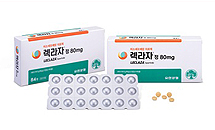
- Yuhan Leclaza clinical phase 3 cost exceeds 100 billion
- by Chon, Seung-Hyun Nov 20, 2023 05:50am
- The development cost invested by Yuhan's new anti-cancer drug Leclaza in the Phase 3 clinical trial has exceeded 100 billion won. Three years after the start of the clinical trial, the cost of development is also increasing. Yuhan was approved as a primary treatment based on the efficacy and safety of Leclaza confirmed in the clinical trial, and the salary expansion was also in the countdown. According to the Financial Supervisory Service on the 16th, as of the end of the third quarter, the total development cost accounting for as intangible assets by Yuhan Corporation was 119 billion won. It increased by 3.9 billion won in three months from 1151 billion won at the end of the first half of the year. In 2019, the Financial Supervisory Service set a standard that accounting assets can only be processed if there is a technical feasibility for R&D tasks such as new drugs. The Financial Supervisory Service proposed the asset-enabled phase of R&D costs, with phase 3 clinical trials for new drugs and phase 1 clinical approval for biosimilars. Generics can be assetized after the biometric test plan is approved. The intangible assets reflected by Yuhan in its development expenses are the largest proportion of Lexha. At the end of the third quarter, Leclaza development cost of intangible assets was 101.1 billion won. It means that more than 100 billion won has been invested in aleclaza clinical phase 3 expenses. Leclaza is a treatment for non-small cell lung cancer that was approved as the 31st new drug developed in Korea in January 2021. Patients with locallyprogressive or metaplastic non-small cell lung cancer who are resistant to T790M after administration of the first and 2nd generation epithelial growth factor (EGFR) tyrosinase suppressant (TKI) are subject to administration. It interferes with the transmission of signals involved in the growth of lung cancer cells and acts as a mechanism to inhibit the proliferation and growth of lung cancer cells. Leclaza recognized 32.6 billion won in development costs as intangible assets for the first time in the fourth quarter of 2020. As the clinical phase 3 trial started in earnest, the development cost was reflected as an intangible asset. Leclaza development cost of intangible assets increased to 61.4 billion won at the end of 2021 and rose to 88 billion won, an additional 26.6 billion won last year. This year, the development cost of Leclaza’s intangible assets increased by a total of 13.3 billion won. 5 billion won and 4.7 billion won in clinical phase 3 expenses were invested in the first and second quarters, respectively. In the third quarter, 3.4 billion won was added, exceeding 100 billion won for the first time. Leclaza is challenging the primary treatment health insurance benefits. In June, Lexar received additional permission as a primary treatment, two years and five months after receiving domestic approval. Reclaza identified statistically significant progression-free survival (PFS) improvements in a multi-country clinical phase 3 trial. A Phase III trial (LASER301) conducted on 393 active EGFR mutant-positive topical advanced or metaplastic lung cancers that had never been treated demonstrated superior safety and effectiveness over conventional therapies. The clinical results were unveiled at the Asian General Conference of the European Society of Oncology in Singapore last year. Yuhan has recently applied to health authorities to apply Leclaza primary treatment. Yuhan plans to provide patients with free drugs for clinical trials for primary therapeutic purposes through the Expanded Access Program (EAP). The price of Leclaza’s monthly medicine is about 6 million won. According to IQVIA, a pharmaceutical research institute, Leclaza’s sales in the first half of last year were 10.3 billion won, up 49.5% from the same period last year. Sales in the first quarter were 5.1 billion won, up 57.4% from the previous year, and in the second quarter, it recorded 5.2 billion won, up 42.5% from the previous year. Cumulative sales since the release of Leclaza have been 30.2 billion won. Cumulative sales exceeded 30 billion won within two years of domestic launch.
- Company
- ‘1+3 will also impact Korea’s patent linkage system'
- by Kim, Jin-Gu Nov 20, 2023 05:50am
- The so-called ‘1+3 restriction on bioequivalence testing’ system is expected to impact the Drug Approval-Patent Linkage System as well. If applied, the 1+3 system is expected to eradicate the practice of multiple generic companies jointly filing patent challenges and improve the practicality of the first generic exclusivity right (first generic exclusivity). Also, the ‘Bill for the Amendment to the Drug Patent Term Extension System’ that is pending at the National Assembly is expected to have a positive effect on generic companies that challenge the original drug’s patent. However, there is also a possibility that this bill will not be passed due to the nearing end of the 21st National Assembly session. "1+3 restriction will improve the effect of first generic exclusivity system… but be disadvantageous for generic companies" Myung Hee Lee, Senior Researcher at the Korea Institute of Intellectual Property presented the prospects mentioned above at the ‘2023 Medical Intellectual Property Policy Forum’ that was held at the Korea Intellectual Property Service Center on the 16th. During her presentation, Lee pointed to 2 changes that will significantly affect the patent linkage system in the future. One is the Bioequivalence Testing 1+3 Restriction System, and the other is the Drug Patent Term Extension System.’ The 1+3 system limits the participating generic makers to 3 consignees per consignor when conducting joint biological equivalence tests or clinical tests. This means that the number of times the clinical data owned by the pharmaceutical company that directly conducted the trial can be shared is limited to 3. Regarding this, Lee predicted that there would be a change in the existing practice of multiple pharmaceutical companies challenging one patent at the same time. At the same time, it was predicted that the effectiveness of the generic exclusivity system would improve. Lee added, “We are currently analyzing the impact of the implementation of the systems. Because the system was not applied to existing applications at the time, the impact of the new system will begin to be felt in earnest from 2022.” “In the past, many companies challenged patents at the same time. In this process, the criticism was that the original purpose of the first generic exclusivity system had faded somewhat. With more than 20 pharmaceutical companies receiving exclusivity at the same time, the significance of the ‘exclusivity’ offered by the system had faded somewhat.” Lee added, “Simultaneous filing of patent challenges will also decrease. We are also observing situations where consignees who have not been granted data from the consignor companies that have directly conducted the bioequivalence tests are unable to join in the early release of generics. This will lead to many small pharmaceutical companies giving up development of generic drugs.” In the discussion session that followed the presentation, In-Bum Kim, an expert consultant at Kimg & Chang added, “From the generic companies’ part, it is now time to seriously consider selecting and focusing on a specific subject. If the companies had all challenged a single patent together, it is now the time for them to each select and pursue a field they can do well at.” "Patent term extension system is beneficial for generic companies…but will it be able to pass NA remains a question" On the other hand, the amendment to the drug patent term extension system was expected to have a positive effect on generic companies. The amendment, which is currently pending at the National Assembly, was presented to limit cases of excessive patent term extensions by original companies. The drug patent term extension system extends the patent term of original companies by the time the company spent on clinical trials or approval, by up to 5 years. However, criticism arose that the system rather works in favor of the original companies in Korea than in the US and Europe. The amendment limits the 'effective patent term’ to 14 years from the time of application for term extension to its expiration, and allows the company to only apply for term extension of one patent among the many that are registered for a single drug. Lee said, “The amendment will be detrimental to original companies and beneficial to generic companies. It is expected to serve in favor of generic companies on the other side of the 1+3 system.” However, whether it will pass the National Assembly review remains in question. To be enacted, the bill must be passed within this year’s session ahead of the general election in April next year. The panels who participated in the discussion predicted that the possibility of passing the amendment in the 21st National Assembly was low. Professor Cha-ho Jung from Sungkyunkwan University Law School who chaired the panel discussions, said, “If it was a bill with no objections, it might have passed; but due to strong opposition from original companies, it will not be easy for the bill to pass NA. I believe the chances are low."
- Opinion
- [Reporter’s View] 1 yr after Zerbaxa's release
- by Eo, Yun-Ho Nov 20, 2023 05:50am
- One year has passed since the new antibiotic ‘Zerbaxa’ has been listed for reimbursement in Korea. At the time, the drug was applied the special exemption of the pharmacoeconomic evaluation system as a National Essential Medicine. The government’s flexible response amid the rise of the global issue of antimicrobial resistance shone through. The drug’s need, although it is not for a ‘life-threatening disease,’ has been recognized. However, a more serious issue lies ahead. No other new antibiotic has been reimbursed since then. Even when taking into account how Zerbaxa was listed 5 years after its approval, this 1-year gap is a significant time when determining whether the government had continued to show resolve to address the antimicrobial resistance issue. At the time, when designating antibiotics as subject to the PE exemption system, the government limited the scope of beneficiaries to antibacterial drugs like Zerbaxa. This is why Cresemba, another antibiotic, remains non-reimbursed, due to difficulties in passing pharmacoeconomic evaluations. Medically, antibiotics refer to 'antimicrobial medicines' that include antibacterial drugs (for the treatment of bacterial infections), antifungal drugs (for the treatment of fungal infections), and antiviral drugs (for the treatment of viral infections). The increase in antimicrobial resistance (AMR) is being regarded as one of the most serious public health issues worldwide. The World Health Organization (WHO) has defined AMR as a global health and development threat as it threatens the effective prevention and treatment of an ever-increasing range of infections caused by bacteria, parasites, viruses, and fungi. Also, finding a new therapeutic alternative to carbapenem is another public health issue that has been announced by the WHO. The rise in the incidence of multidrug-resistant Gram-negative bacteria has also been causing serious issues in terms of healthcare-related infections. In particular, the WHO has designated carbapenem-resistant Pseudomonas aeruginosa infection as one of the highest-priority pathogens in need of research and development for new antibiotics. In this context, ‘Zavicefta,’ which can benefit from the PE exemption waiver system and receive reimbursement, has passed the Health Insurance Review and Assessment Service’s Drug Reimbursement Evaluation Committee in September and is undergoing drug pricing negotiations with the National Health Insurance Service. The drug has been gaining attention as a new antibiotic option for severe infections in which drug resistance poses a serious problem, such as multidrug-resistant Pseudomonas aeruginosa infections, carbapenem-resistant Gram-negative pathogens, extended-spectrum β-lactamases (ESBL) producing Enterobacteriaceae, etc. In With its reimbursement listing nearing thanks to the efforts of the pharmaceutical company and government, this is now the time to look back on the antibiotics issue that lingers as a threat to public health.
- Policy
- Results of the 2nd price ceiling reevals to be released soon
- by Lee, Tak-Sun Nov 20, 2023 05:50am
- The National Health Insurance Service plans to hold a preliminary briefing session before starting its main negotiations for the 2nd drug price ceiling re-evaluations. The authorities decided upon this measure to inform companies in advance about the documents that would need to be submitted for negotiations due to the tight 10-day negotiation deadlines. According to industry sources on the 17th, the NHIS will be conducting an online briefing session for the 2nd drug price ceiling re-evaluation negotiations on the 23rd. The NHIS said, “Due to our tight schedule, including the Drug Reimbursement Evaluation Committee meeting expected in early December, we expect the negotiation period for the companies to be limited to 10 days or so. Although the drugs subject to negotiations have not been finalized yet, the briefing session will be held for all pharmaceutical companies to minimize the burden work burden on the NHIS and companies.” Also, the NHIS asked for the companies to prepare and submit their negotiation documents in advance to complete the negotiations in the set period. Also, for the convenience of negotiation administrations and simplification of documents, the process will be completely converted and conducted electronically. Currently, 6,700 items are subject to the 2nd insurance price ceiling reevaluations. These are some of the oral and sterile preparations ETCs the Ministry of Food and Drug Safety included as in need of bioequivalence verifications. Following re-evaluations, the prices of the subject drugs will be reduced according to the standard requirements. The requirements are ▲ completion of in-house bioequivalence tests or clinical trials ▲ using raw drugs registered with the MFDS when manufacturing finished drugs. The price of those that only meet one of the requirements is adjusted to 85%, and those that meet none are adjusted to 72.25% of the previous price HIRA has been conducting reevaluations after receiving data from pharmaceutical companies until July this year. The NHIS will start the main negotiations in mid-December after the results are deliberated by DREC at its meeting on December 7th. Then the results will be reported to the Health Insurance Policy Deliberative Committee and pricing adjustments applied from January next year. Meanwhile, the price ceiling of 7,675 items had been adjusted in September through the 1st drug price ceiling re-evaluation negotiations.
- Company
- 160 billion won Daewoong·Takeda Luphere·Leuplin
- by Nho, Byung Chul Nov 17, 2023 06:00am
- Daewoong Pharmaceutical's Luphere and Takeda Pharmaceutical Leuplin are leading the market in the field of prostate cancer treatment. According to the drug distribution performance data, Luphere and Leuplin ranked 1st and 2nd based on single product sales in the first half of this year, with a performance of 15.4 billion won and 13.9 billion won, respectively. In the last five years, these two products have been fiercely competing for a leading position. In 2019-2020, Leuplin surpassed Luphere, which recorded 21.5 billion and 22.4 billion won at 32.2 billion and 315 billion won, and in 2021 and 2022, Luphere surpassed Leuplin, which achieved 242 billion and 27.5 billion won with 30.7 billion and 30.4 billion won. Ipsen Korea's Diphereline, which ranked third, recorded 22.7 billion, 24.8 billion won, and 13.7 billion won in 2021 and 2022. The noteworthy point is that in the first half of 2023, the combined performance of Digital herelin PR/SR is 162 billion won, which is more than the performance of Luphere and Leuplin. Diphereline is growing from 200 million in 2019 to 4.5 billion won in 2022, and Diperellin pier is also expanding its appearance from 8.9 billion in 2019 to 248 billion won in 2022. In the first half of this year, Hanol Eligard, AZ Zoladex Depo, Zoladex LA depo, and Lorelin Depo recorded sales of about '9.5 billion', '8.8 billion won, and '7 billion' respectively. In the past three years, the combined sales of Zoladex Depot and Zoladex LA depot have been at the top with 26.4 billion won, 30.7 billion won, and 331 billion won. Ferring Pharmaceutical Permagon, which remains at the bottom of the ranking, showed a slight increase in sales compared to last year, with a performance of 130 million won in the first half of this year. The reason for the low sales is identified as the acquisition of a single indication compared to competing products. Indications for Luphere and leuplin, include prostate cancer, endometriosis, premenopausal breast cancer, central puberty, and reduction of myoma. Zoladex has the most various efficacy effects, such as prostate cancer, endometriosis, premenopausal breast cancer, and assisted reproduction for pituitary inhibition and adjuvant therapy for early breast cancer in the process of ovulation. 7.5 mg and 22.5 mg of leuprorelinacetate is used to relieve advanced prostate cancer, and 45 mg is used for central puberty. The market for prostate cancer and precociousness treatments has grown from 118.9 billion won in 2019 to 1607 billion won in 2022, an increase of 35% over three years.
- Company
- New drug Camzyos can be prescribed at hospitals
- by Eo, Yun-Ho Nov 17, 2023 06:00am
- The new drug Camzyos for obstructive hypersatic myocardial infarction is entering the general hospital prescription. According to the related industry, Camzyos of BMS Pharmaceutical Korea has passed the Drug Committee (DC) of medical institutions such as SMC and Sinchon Severance Hospital. Camzyos is the first and only treatment that selectively inhibits the excessive cross-bining of cardiac myosine and acttin, the cause of obstructive hypertrophic cardiomyopathy (oHCM). The drug has the mechanism of separating myosine from actin and relaxing the excessively contracted heart muscle, improving occlusion with an inflated left ventricle structure and left ventricle leaks. The clinical trial based on the Camzyos permit is the EXPLORER-HCM study. In the trial, Camzyos improved more than twice as much as the patient's symptoms (NYHA grade) and motor performance (maximal oxygen intake, pVO2), which is a primary evaluation variable. Of these, 20% of the Camzyos dosing group achieved both NYHA ratings and pVO2 improvements. After exercise, the left ventricle also reduced the occlusion index more than fourfold. Seven out of 10 people treated wit Camzyos had improved their indicators to such an extent that they did not consider surgery, maintaining a consistent effect for 30 weeks. oHCM is a rare heart disease in which the left Ventil muscle of the heart is abnormally thickened and blocks blood flow through the entire body through the aorta. Symptoms of oHCM vary, including shortness of breath, dizziness, chest pain, which can increase the risk of various cardiovascular complications such as heart failure and atrial fibrillation. Currently, oHCM treatment focuses on symptom relief and management rather than underlying treatment, so there was a high demand for unfulfilled treatment. Drug treatment options such as beta blockers and calcium channel blockers could reduce heart rate and myocardial contractility, but there were limitations that existing drug treatment options alone made it difficult to expect long-term improvement. Professor Lee Sang-cheol of the Department of Circulation at Samsung Seoul Hospital said, "OHCM is a rare disease that can cause sudden heart death without warning, and there has been many difficulties in treatment because there is no effective way to treat it non-invasively. Camzyos expects to be able to restore patients' quality of life by taking oral doses once a day, with excellent symptom-improving effects from the early days of treatment."
- Company
- GC Biopharma’s Hunterase approved after 11yrs
- by Chon, Seung-Hyun Nov 17, 2023 05:59am
- GC Biopharma’s rare disease treatment ‘Hunterase’ was granted official marketing authorization 11 years after receiving conditional approval. On the 16th, GC Biopharma announced that it had completed the Phase III trial for its Hunterase on the 14th and changed its license from conditional approval to final marketing authorization. Hunterase, which was approved in 2012 in Korea, is the world’s second treatment for developed Hunter syndrome, which is also known as ‘Mucopolysaccharidosis type II (MPS II),’ is a rare disease that is known to occur in roughly 1 in 100,000 to 150,000 male live births. As a congenital, hereditary metabolic disorder, Hunter syndrome shows various unpredictable symptoms such as skeletal abnormalities decreased intelligence, and even premature death around the age of 15 in severe cases. Less than 100 patients with Hunter syndrome exist in Korea. Hunterase had received conditional approval under the condition of conducting a Phase III trial in January 2012 GC Biopharma received approval for a Phase III trial in November 2016 and conducted a clinical trial to evaluate Hunterase’s efficacy and safety in patients with Hunter syndrome who have not previously received enzyme replacement therapy. The company completed its Phase III clinical trial results report in March of this year and submitted the Phase III clinical trial results to the Ministry of Food and Drug Safety in May. Afterward, the company completed a Good Clinical Practice (GCP) inspection and received the nod for the final change in its license. In the Phase III trial, patients who received Hunterase intravenously every week for 52 weeks showed statistically significant superior results compared with the past placebo control group. Due to the nature of the rare disease, it took a longer time to agree on a Phase III trial design, including patient recruitment. In the end, it took 6 years to prepare the Phase III clinical trial results report. However, the company explained that it met the required conditions 3+ years earlier than in the plans it discussed with the MFDS. A GC Biopharma official said, “Hunter syndrome is a serious and life-threatening rare disease, and based on the fact that it is realistically difficult to conduct confirmatory clinical trials, we have supplied it to patients under conditional approval. So just the fact that we completed the Phase III trial and met the conditions we were required to meet for its formal approval has significant meaning on its own.
- Policy
- Takeda Obizur accepts results of the drug rating
- by Lee, Tak-Sun Nov 17, 2023 05:59am
- If the alternative drug was accepted less than 90%, the drug price negotiation was omitted. It was confirmed which was conditionally approved by the Pharmaceutical benefit evaluation committee in October, accepted the results and moved to the stage of negotiation. This drug is used to treat bleeding in patients with adult acquired hemophilia A.l According to the industry on the 16th, Obizur was recognized for its salary suitability by accepting less than the evaluation amount of the weak level. The Pharmaceutical Review Committee, held on October 12, determined that there is a suitable salary for Obijour if it is accepted below the assessed amount. It is interpreted as a condition that the weighted average of alternative drugs is below. If Takeda accepts less than 90% of the weighted average price, drug price negotiations will be omitted, and only the expected amount of use will be negotiated, so it will be possible to make a faster registration. The drug has been undergoing a rapid payroll process since obtaining an item permit last March. Unlike conventional bypass drugs, it is a treatment that replaces the 8th person of blood clotting with AHA (accent hemophilia A) adaptation, and it has the advantage of being the only AHA treatment that can reliably monitor blood clotting factor 8 through standard analysis and treat individual doses. Takeda Pharmaceuticals Korea explained, "This drug is a gene recombinant made by removing B-domain from liver-like pig blood clotting 8 people, and it can replace inactivated human blood clotting 8 because it is not easily recognized by autoimmune antibodies to help blood clotting and help control bleeding." Good results were also found in clinical trials. An open-label phase 22/3 study evaluating the efficacy of Obijour in 28 patients with acquired hemophilia A found that all patients treated with Obzur had a positive response to all early episodes of bleeding at a 24-hour assessment after the first dose. Takeda are said to be preparing related materials before the full-scale negotiations.
- Company
- Will Keytruda’s receive reimb for TNBC in KOR?
- by Eo, Yun-Ho Nov 17, 2023 05:59am
- Whether MSD Korea will be able to make progress in extending reimbursement for its cancer immunotherapy Keytruda for the 13 additional indications it had applied for is receiving attention. According to industry sources, 3 indications of MSD Korea’s PD-1 inhibitor Keytruda (pembrolizumab) are expected to be deliberated by the Health Insurance Review and Assessment Service’s Cancer Disease Deliberation Committee on the 22nd. Although the company applied for reimbursement of its 13 indications in bulk, the specific indications are expected to be deliberated separately. In October, its 3 applications for esophageal cancer, endometrial, and colorectal cancer were presented for deliberation by CDDC but received a ‘rediscussion’ decision. In the case of triple-negative breast cancer, although a new drug has received marketing authorization for the disease, no reimbursed option currently exists for TNBC as of now. Gilead Science Korea’s TNBC treatment ‘Trodelvy (sacituzumab govitecan)’ is also expected to be deliberated at the same meeting. Keytruda’s efficacy in TNBC was confirmed through 2 clinical trials. In KEYNOTE-522, a Phase III trial conducted on previously untreated patients with Stage II or III TNBC patients to evaluate the benefit of using Keytruda as neoadjuvant and adjuvant therapy, its use showed a significant 13.6% absolute increase in complete pathologic response compared with the control group. Event-free survival (EFS) rate was 84.5%, reducing the risk of disease progression and death by 37%. In KEYNOTE-355, Keytruda improved PFS regardless of the type of chemotherapy. The chemotherapy+ Keytruda arm in the study showed a PFS of 9.7 months, which was a 4.1-month improvement compared to the placebo arm, demonstrating statistical significance. MSD applied for 13 indications for Keytruda in June: ▲ early-stage triple-negative breast cancer; ▲locally recurrent or metastatic triple-negative breast cancer, ▲metastatic or with unresectable, recurrent head and neck squamous cell carcinoma, ▲ locally advanced or metastatic esophageal or gastroesophageal junction (GEJ) carcinoma, ▲adjuvant treatment of patients with renal cell carcinoma, ▲non-muscle invasive bladder cancer,▲persistent, recurrent, or metastatic cervical cancer,▲ advanced endometrial carcinoma, ▲advanced endometrial carcinoma that is microsatellite instability-high (MSI-H) or mismatch repair deficient (dMMR) ▲ unresectable or metastatic MSI-H or dMMR colorectal cancer ▲metastatic MSI-H or dMMR small bowel cancer, ▲ metastatic MSI-H or dMMR ovarian cancer, and ▲ metastatic MSI-H or dMMR pancreatic cancer
- Company
- Large companies more actively engage in patent challenges
- by Kim, Jin-Gu Nov 17, 2023 05:59am
- Pharmaceutical and bio companies with annual sales of more than KRW 300 billion were found to be most actively engaging in patent challenges. As of 2021, pharmaceutical companies with sales exceeding KRW 300 billion applied for an average of 7.7 generic exclusivity approvals per company. The average number of applications for generic exclusivity filed by each company was smaller for smaller companies. In Bum Kim, the expert consultant at Kim & Chang, introduced the above statistics at the ‘2023 Pharmaceutical Intellectual Property Policy Forum’ held at the intellectual Property Protection Agency in Seoul on the afternoon of the 16th. According to statistics, a total of 112 pharmaceutical companies applied for 792 generic exclusivity rights in 2021. Due to the strict requirements required when applying for generic exclusivity, it is used as an indicator of how actively generic companies have challenged original drug patents. To apply generic exclusivity, the company must be the first to request a trial or lawsuit to challenge the original drug’s patent, the first to apply for marketing authorization, and the first to win a trial or lawsuit. In general, the larger the pharmaceutical company, the more applications it had filed for generic exclusivity on average. 21 pharmaceutical companies with sales exceeding KRW 300 billion applied for 216 generic exclusivity rights in 2021. This renders the average number of applications for generic exclusivity filed by each company to become 7.7. The most number of applications filed by a single pharmaceutical company was 49. A total of 38 pharmaceutical companies with sales between KRW 100 billion to 300 billion field a total of 347 generic exclusivity applications. This renders the number of applications filed per company to 7.1. 27 pharmaceutical companies with sales between KRW 50 billion to 100 billion filed 142 generic exclusivity applications. This renders the number of applications filed per company to 4.6. In the case of small pharmaceutical companies with sales of less than KRW 50 billion, 26 companies filed 87 generic exclusivity applications. This renders the number of applications filed per these companies to 2.8. In terms of the total number of applications, mid-sized pharmaceutical companies with sales ranging from KRW 100 to 300 billion have most actively challenged the original drug’s patents, but the average number of applications per pharmaceutical company shows that large pharmaceutical companies with sales exceeding KRW 300 billion most actively engaged in patent challenges. Kim explained, “To receive first generic exclusivity, you have to make a lot of preparations to meet the strict conditions. So the statistics indicate that companies more actively engage in patent challenges when they are of a certain size.
