
- LOGIN
- MemberShip
- 2026-06-25 13:21:15

- Company
- Prescriptions of HCV market leader Mavyret halves in 1 yr
- by Kim, Jin-Gu Nov 09, 2023 05:43am
- Pic of Outpatient prescription performance of ‘Mavyret,’ the No. 1 product in the hepatitis C treatment market, has shrunk to less than half in just 1 year. In addition to the decrease in overall market size due to the decline in hepatitis C patients, Mavyret’s newly released competitors 'Epclusa' and ‘Vosevi’ have been rapidly expanding their influence in the market. According to the market research institution UBIST on the 8th, outpatient prescriptions of Mavyret in Q3 amounted to KRW 3.7 billion. This is a 52% decrease in 1 year compared to the KRW 7.8 billion it had posted in Q3 last year. Mavyret is a pan-genotypic hepatitis C treatment that was released by AbbVie. Since its release in Q3 2018, it quickly replaced Sovaldi and Harvoni which previously led the market. ‘Mavyret.’ can be used for patients with hepatitis C virus types 1 to 6, while Harvoni cannot be used for types 3 and Sovaldi cannot be used for types 5 and 6. The long treatment period of 12 weeks for Harvoni and Sovladi, compared to 8 weeks for Mavyret, also served as a weakness for Harvoni and Sovaldi. Mavyret’s share in the HCV treatment market share rose vertically from 3% in Q3 2018 to 56% in Q4. Subsequently, its market share exceeded 60% in Q1 2019 and then 70% in Q2 of the same year. Subsequently, its market share steadily increased and expanded to more than 80% in Q3 last year. Contrary to its expanded market share, prescription performance has been declining since 2019. Mavyret’s prescription performance, which recorded KRW 41.5 billion in 2019, decreased for 3 consecutive years to KRW 34.4 billion in 2020, KRW 32.8 billion in 2021, then to 31.2 billion won in 2022. Quarterly prescription performance of major hepatitis C treatments (Unit: KRW 100 million, Data UBIST) The analysis is that this is due to the steadily shrinking overall market size. The size of the HCV treatment market has steadily decreased from KRW 135.3 billion in 2017 to KRW 73.7 billion in 2018, then to KRW 65.1 billion in 2019, and KRW 47.4 billion in 2020, KRW 35.1 billion in 2021, then to KRW 34.2 billion in 2022. Compared to 2017, when the market had expanded to its maximum, the market had shrunk to a quarter in 5 years. The industry pointed to the characteristics held by the HCV treatments as a cause of the market contraction. Before the introduction of direct-acting antivirals (DAAs) like Mavyret, HCV had been a very critical disease. However, the treatment effect of HCV drugs had increased dramatically with the introduction of BMS’s Daklinza and Sunvepra. With Gilead Sciences' Sovaldi and Harvoni, MSD’s Zepatier, and Abbvie’s Mavyret that followed, the treatment effect had further increased. Ironically, as these new treatments offer an effect high enough to be close to a complete cure, the market size quickly contracted with the number of patients being prescribed the drug increasing within the finite number of patients in the market. As a result, the market size is shrinking. Pic of The entry of its competitors also affected the decline in Mavyret’s prescription performance. Gilead Sciences released Epclusa and Vosevi as next-generation hepatitis C treatments in November last year. The combined prescription performance of the two products is on the rise, reaching KRW 300 million in Q4 last year, then KRW 1.6 billion in Q1 of this year, KRW 2.7 billion in Q2, then to KRW 2.5 billion in Q3. During the same period, the market share of the two products had rapidly expanded from 4% to 19%, 34%, then 39%. If the current trend continues, it is predicted that it will surpass Mavyret and become a leader in the hepatitis C treatment market within the next year. However, like Mavyret, the fact that the overall market size is shrinking is expected to become a concern for Epclusa and Vosevi as well.
- Company
- Velexbru can be prescribed at general hospitals
- by Eo, Yun-Ho Nov 09, 2023 05:43am
- Velexbru, a new drug for lymphoma, can be prescribed at general hospitals. According to related industries, Ono Pharmaceutical's BTK (Brutons Tyrosine Kinase) inhibitor Velexbru recently passed the Drug Committee of top general hospitals such as AMC and Sinchon Severance Hospital. In addition, major medical institutions, including Samsung Seoul Hospital, are also conducting landing procedures. Velexbru was approved domestically in 2021 by the Ministry of Food and Drug Safety as a monotherapy for patients with Primary Central Nervous System Lymphoma. This drug is the first BTK inhibitor approved in Korea for the treatment of patients with relapsed or refractory B-cell primary central nervous system lymphoma for which there is no standard treatment. The effectiveness of Velexbru was confirmed through ONO-4059-02, a non-blinded, uncontrolled phase 1/2 clinical study of Velexbru conducted in Japan in patients with relapsed or refractory primary central nervous system lymphoma. A total of 44 patients were enrolled in the study and were administered Velexbru 320 mg (80 mg per tablet, n = 20), 480 mg (n = 7), and 480 mg (n = 17) on an empty stomach orally once daily. Drug administration continued until the disease progressed or unacceptable toxicity occurred. The primary endpoint was ORR according to BICR. As a result of the study, the ORR for the approved dosage and dosage of 480 mg (fasting) was 52.9%. Major adverse reactions corresponding to grades 3 and 4 included neutropenia, leukopenia, and hypertriglyceridemia, which occurred in 11.8% of patients each. PCNSL is a very rare disease, so it is quite difficult to estimate the nationwide patient population. In general, it is reported that approximately 6,000 lymphoma patients occur annually in Korea, and about 2,000 primary brain tumors occur annually. Among these, PCNSL is known to account for approximately 2% of all brain tumor patients. Considering that PCNSL is reported to occur at 0.44 cases per 100,000 people in Western countries, it is estimated that approximately 200 to 250 new PCNSL patients will occur annually in Korea.
- Policy
- Drug pricing nego start in earnest for Tagrisso·Leclaza
- by Lee, Tak-Sun Nov 09, 2023 05:43am
- With drug pricing negotiations ongoing for the reimbursement of Tagrisso (AZ, osimertinib) and Leclaza (Yuhan, lasertinib) as a first-line treatment for non-small cell lung cancer, whether the two drugs will be applied the initial treatment refund-type RSA (risk-sharing agreement system) remains a variable. Leclaza, which is being supplied for free through the early access program (EAP), is not applied to the initial treatment refund type RSA and the National Health Insurance Service is conducting negotiations in consideration of this. According to industry sources on the 8th, Leclaza began drug pricing negotiations with the National Health Insurance Service at the end of last month. Leclaza was previously recognized as adequate for reimbursement in the first line at the Health Insurance Review and Assessment Service’s Drug Reimbursement Evaluation Committee meeting that was held on the 12th. Tagrisso had been conducting negotiations with the corporation since the end of September. Given that drug price negotiations are carried out within a 60-day deadline, Tagrisso and Leclaza are expected to complete negotiations in December at the earliest receive reimbursement listing in January. However, a tense tug-of-war between the government and companies is expected over the RSA refund rate. In particular, in the case of Leclaza, as the initial treatment refund type is not included in its RSA, the government is expected to adjust the other refund rates while taking this into account. The initial treatment reimbursement type RSA takes into account uncertainties in effect among others for the initial treatment period. The initial treatment reimbursement type RSA was not applied for Leclaza because the full amount is being supported without limit to patients until its reimbursement listing through the Early Access Program (EAP). However, from the NHIS’s perspective, the authorities would need to adjust the other refund rates as it has no choice but to consider treatment uncertainty and the required finances. Moreover, they also must consider equity with Tagrisso, which is also under negotiation. Due to high interest in the reimbursement of the two drugs, including the National Assembly, the NHIS is expected to speed up negotiations. However, it remains to be seen whether both drugs will succeed in receiving reimbursement together or whether only one drug will be listed for reimbursement. An industry official said, “Their reimbursement depends on how much the pharmaceutical company is willing to give up on the RSA refund rate. Since the government and pharmaceutical companies are all willing to reimburse both drugs, it is highly likely that negotiations will be concluded at an appropriate level.”
- Policy
- MFDS approves P3T for talquetamab in MM patients
- by Lee, Hye-Kyung Nov 08, 2023 05:37am
- Janssen Korea Janssen Korea received approval to initiate a Phase III trial for its first-in-class investigational bispecific antibody ‘talquetamab’ for multiple myeloma in Korea. The drug is ‘Talvey,’ which was approved by the US FDA in August. The FDA granted accelerated approval to Talvey based on its overall response rate and duration of response. Its continued approval will depend on the results of the Phase III confirmatory trial. The phase 3 drug trial approved in Korea this time is for the indication approved by the FDA. The FDA approved Talvay for the treatment of adults with relapsed or refractory multiple myeloma who have received at least four prior lines of therapy, including a proteasome inhibitor, an immunomodulatory agent, and an anti-CD38 monoclonal antibody. The randomized Phase III conducted in Korea will enroll adults patients with relapsed or refractory multiple myeloma who have received one to four prior lines of therapy, and compare the effect of talquetamab+pomalidomide, talquetamab+ teclistamab, and investigator’s choice of elotuzumab combined with pomalidomide dexamethasone(EPd) or pomalidomide, bortezomib, and dexamethasone (PVd). The trial will be conducted at seven sites, including Seoul National University Hospital, Samsung Medical Center Chonnam National University Hwasun Hospital, Ulsan University Hospital, Seoul St. Mary's Hospital, and Pusan National University Hospital. Talvay is a bispecific T-cell engaging antibody that binds to the CD3 receptor on the surface of T cells and G protein-coupled receptor class C group 5 member D (GPRC5D) expressed on the surface of multiple myeloma cells, non-malignant plasma cells and healthy tissue such as epithelial cells in keratinized tissues of the skin and tongue. The Phase 2 MonumenTAL-1 study, which became the basis for its accelerated approval, was conducted on 187 patients who had received at least four prior lines of therapy and who were not exposed to prior T-cell redirection therapy Results showed that patients who received a biweekly dose of Talvay 0.8 mg/kg, 73.6% of patients achieved an ORR. At a median follow-up of nearly 6 months from the first response among responders, 58% of patients achieved a very good partial response (VGPR) or better, including 33% of patients achieving a complete response (CR) or better 73.0% of patients who received a once-weekly subcutaneous injection (0.4mg/kg) of Talvay also achieved an ORR, but their CR rate was 35%, lower than the biweekly arm. The duration of response was also favorable for the biweekly arm, which was why the drug was approved as a biweekly subcutaneous injection.
- Policy
- Daewoong starts developing XR formulation of tofacitinib
- by Lee, Tak-Sun Nov 08, 2023 05:37am
- Pfizer Daewoong Pharmaceutical has begun developing a product that can rival Pfizer's oral JAK inhibitor 'Xeljanz XR 11mg'. Xeljanz XR (tofacitinib citrate) is Prizer's latest tofacitinib product approved in December 2020. Daewoong Pharmaceutical, like the original company Pfizer, is building a lineup of immediate-release and extended-release tablets before entering the tofacitinib generic drug market. On the 3rd, the Ministry of Food and Drug Safety approved the Phase 1 clinical trial plan for DWJ1431, for intake with and without food. DWJ1431 is known to contain 10mg of tofacitinib. The trial will focus on confirming DWJ1431’s pharmacokinetic properties and safety compared with tofacitinib 11mg. The reference drug, tofacitinib 11mg appears to be Pfizer's Xeljanz XR Tab 11mg. Pfizer received approval for the once-daily Xeljanz XR Tab 11mg on December 1, 2020. With its approval, the company secured various prescription options, in addition to the twice-daily Xeljanz 5mg Tab (approved in April 2014) and Xeljanz 10mg Tab (approved in December 2018). Xeljanz XR Tab is used to treat rheumatoid arthritis, psoriatic arthritis, and ankylosing spondylitis. In particular, its extended-release tablet is expected to play a major role in protecting the market from its generics, which are scheduled to be released in November 2025. As of now, 56 generic versions of Xeljanz have been approved by the Ministry of Food and Drug Safety, most of which are tofacitinib 5 mg salt-modified drugs that have overcome the Xeljanz composition patent, and are immediate-acting tablets that are taken twice a day. Daewoong Pharmaceutical also received approval for its Zeltopa Tab 5mg, which contains tofacitinib aspartate, in September 2020 and is waiting to release the product. If it receives approval for its XR formulation as well, the company’s competitiveness is expected to double when the market for generics opens. Meanwhile, Pfizer's Xeljanz recorded outpatient prescriptions worth KRW 12.3 billion in Korea in 2022 based on UBIST.
- Policy
- PN injection benefit restriction suddenly halted
- by Nho, Byung Chul Nov 08, 2023 05:37am
- Intra-articular injection of PN ingredients reduces knee cartilage friction by maintaining physical restoration and high elasticity With the advent of the reevaluation period for selective coverage of intraarticular injections containing PN (sodium polynucleotide), health authorities are planning to adjust the patient copayment upward. Manufacturers and sellers have recently submitted opinions to HIRA, drawing attention to the future direction. The opinion is based on supporting papers and clinical evaluations, and it is expected that the issue of 'restrictions on reimbursement of related products' will be quickly resolved. According to the industry on the 7th, HIRA held a suitability evaluation committee and treatment material expert evaluation committee from early this year to September with the advent of the selective reimbursement period for PN preparations and agreed to increase the patient copayment from the existing 80 to 90%. The key issue in the selective reimbursement of PN drugs is evaluated as 'restriction of administration after 6 months from the start of treatment,' and if such a measure is actually realized, the related market may be in danger of virtually drying up. Currently, there are approximately 20 pharmaceutical companies manufacturing and selling intra-articular injections containing PN ingredients, and the market size alone amounts to a whopping 80 to 100 billion won. If all went as planned, the measure to restrict coverage of PN drugs around October to December would likely have been submitted to the review committee and then notified, but the brakes were put on hold as pharmaceutical companies' written opinions based on clinical usefulness, feasibility, and cost-effectiveness were delivered. The PN preparation is a new medical technology that has entered insurance coverage and has secured clinical results that are not inferior to the safety and effectiveness of the pharmaceutical collagen/sodium hyaluronate injection. The industry and academic community also believe that ex officio adjustments related to ‘withdrawal of insurance benefits’ are an abuse of administrative power when there is clinical data that is comparatively inferior to alternative drugs, regardless of whether it is a drug or medical device. An industry official said, "PN, collagen, and hyaluronic acid injections are usually administered 1 to 5 times every 6 months, and it is known that there is no significant difference in their effectiveness and safety. However, with the advent of selective coverage, PN injections are now available for life. He pointed out, “Limiting benefits to only one vaccination per cycle is highly problematic.” Regarding the overall situation, the legal profession's position is citing the precedent of Dong-A ST's Styrene Tablet, and it is highly likely that PN preparations and intraarticular injections will also present conditional clinical trials related to securing effectiveness within the next 2 to 3 years. In the case of Stillen, there is a precedent in 2011 of receiving reimbursement for about 2.5 years on the condition of securing an indication for the prevention of gastritis due to the administration of non-steroidal anti-inflammatory drugs (NSAIDs). At the time, the dispute over the reduction of styrene tablets' benefits, although it failed to secure clinical trial data to prove its usefulness, was evaluated as an exemplary case of protecting the authority and pride of an 80 billion won blockbuster domestic natural medicine, including indications for the treatment of acute and chronic gastritis, against the ex officio adjustment of health authorities. there is. The introduction of health insurance coverage for new medical technologies is an active patient consideration policy that limits the upper limit of indiscriminate treatment fees for similar non-covered products and can also be expected to have a savings effect on health insurance finances. In other words, with the development of private actual cost insurance, out-of-pocket expenses can be minimized, and the national health insurance financial loss can be reduced to only 1/4 of the level of registered drugs, killing two birds with one stone. This raises questions about the current benefit restriction measure. PN preparations have been proven to be safe and effective using DNA components, a safe biomaterial extracted from salmonid fish, and are a biomaterial for tissue repair recommended for patients whose knee cartilage is worn out due to aging or overweight by reducing knee joint friction. all.
- Company
- Whether Ilaris for 10 will receive reimb gains attention
- by Eo, Yun-Ho Nov 08, 2023 05:37am
- Attention is focused on whether progress will be made on discussions for the insurance reimbursement of 'Ilaris', a treatment that is used by around ten patients in Korea. According to industry sources, reimbursement discussions for Novartis Korea’s Ilaris (canakinumab) are currently being negotiated between the government and pharmaceutical companies at the Drug Reimbursement Standards Subcommittee stage. Half a year had passed since the company reapplied for reimbursement in line with the addition of its pediatric indications in April at registration. The company had failed to list the drug for reimbursement two times. A bumpy road lies ahead for its reimbursement still. The current focus of Ilaris’s reimbursement discussion is whether or not the drug can be applied the pharmacoeconomic evaluation exemption system. Ilaris's listing will become more difficult if its reimbursement evaluation is not carried out through the PE exemption track, Ilaris was initially approved in 2015 as a hereditary recurrent fever syndrome treatment. Its disease type is specified according to the mutated gene. Among the various specific syndromes that accompany hereditary recurrent fever, Ilaris is approved in Korea to treat ▲Cryopyrin-Associated Periodic Syndromes (CAPS), ▲Tumor Necrosis Factor Receptor Associated Periodic Syndrome (TRAPS), ▲Hyperimmunoglobulin D Syndrome (HIDS)/Mevalonate Kinase Deficiency (MKD), ▲ Familial Mediterranean Fever (FMF), and ▲ Systemic juvenile idiopathic arthritis (JIA). Among these, CAPS is further classified into ▲Familial Cold Autoinflammatory Syndrome FCAS)/ Familial Cold Urticaria (FCU), ▲Muckle-Wells Syndrome (MWS), ▲Neonatal Onset Multisystem Inflammatory Disease (NOMID)/Chronic Infantile Neurologic Cutaneous and Articular. Due to the very small number of subject patients and complex indications, it was difficult to progress discussions for its reimbursement. The number of patients who are applied the various indications for Ilaris is extremely small. Some indications for Ilaris do not even have disease codes or are only recently registered. In fact, the number of domestic patients that can use Ilaris is estimated to be around 13. Due to Ilaris’s non-reimbursement, patients have been receiving a treatment they can with an alternative that is not really an alternative. Patients with CAPS have been using ‘Kineret’ which is being supplied through the Korea Orphan & Essential Drug Center. As this drug has not been officially approved by the Ministry of Food and Drug Safety and is being supplied through the center, when supply disruptions occur, no entity in Korea has the obligation to ensure its supply, rendering the communication channel unclear and limits to improving its supply. In the case of FMF, colchicine is recommended as a first-line treatment but is not available in Korea. Ilaris is approved for use in patients with FMF who are contraindicated, intolerant, or achieved inadequate response with the highest-dose colchicine. However, since colchicine has not been introduced domestically, it will be difficult for FMF patients to use Ilaris, even if it receives reimbursement if colchicine's approval and reimbursement issues are not resolved. To solve this problem, an academic society applied for non-reimbursed off-label use of colchicine and reimbursement extension for the drug. In addition, voices calling for Ilaris’s reimbursement listing had risen in the recent NA audit. The National Assembly’s Health and Welfare Committee audit of the National Health Insurance Service and the Health Insurance Review and Assessment Service, Rep Sun-woo Kang of the Democratic Party of Korea, said, "Patients are spending KRW 80 million to as much as KRW 100 million a year to purchase non-reimbursed drugs. We ask the government to promptly list the drug for reimbursement to improve the quality of life for children and ease the financial burden borne by the patients' families.” Therefore, it remains to be seen whether the company and health authorities can reach a consensus and achieve reimbursement listing for ‘Ilaris’, a drug for a very small number of patients.
- Policy
- A draft for reevaluation of overseas drug prices
- by Lee, Tak-Sun Nov 08, 2023 05:37am
- Advantages and disadvantages depending on the re-evaluation method. The HIRA has prepared a draft plan for comparative and reevaluation of overseas drug prices and will begin collecting opinions in earnest with the pharmaceutical industry starting this month. As the HIRA plans to conduct re-evaluation sequentially starting next year, it is expected to prepare a final plan by at least next month, and intensive discussions are expected to take place this month. According to the industry on the 7th, HIRA plans to hold working-level discussions with the pharmaceutical industry on the 10th to discuss ways to compare and reevaluate overseas drug prices. Depending on the method of reevaluating overseas drug prices, there is a high possibility that it will have a disadvantageous effect on the domestic pharmaceutical industry, so it is expected that it will be difficult to come up with a final plan during this working-level discussion. The overseas countries subject to comparison are eight: the United States, the United Kingdom, Germany, France, Italy, Switzerland, Japan, and Canada. The HIRA plans to sequentially re-evaluate chronic disease drugs whose patents have expired starting next year. In a recent government audit, he said, "We plan to carry out re-evaluation sequentially by the year starting in 2024," and added, "We will strive to secure the sustainability of health insurance finances by managing the drug costs of products listed with high drug prices compared to foreign countries." He said. Considering this, it is highly likely that a reevaluation will be carried out with the goal of reducing drug costs, so it is possible that the overseas drug price standard will be lowered and the upper limit amount may be adjusted. However, it appears that some modifications will be made while gathering opinions from the pharmaceutical industry, so we will have to watch the future discussion process. A HIRA official also explained, “The internal draft has been prepared, but the final draft may be revised during discussions with the pharmaceutical industry.” It is expected that some of the contents of the HIRA draft will be made public once the opinion collection process begins. In order for the reevaluation to proceed next year, the final draft must be confirmed in December, so intensive discussions with the pharmaceutical industry are scheduled to take place this month. A HIRA official added, “We plan to hold discussions with the pharmaceutical industry throughout November,” adding, “I don’t think it will end with one or two meetings.”
- Company
- Budesonide’s price to be raised due to increased demand
- by Chon, Seung-Hyun Nov 07, 2023 05:34am
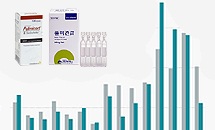
- Health authorities are working to increase the price of asthma medications containing ‘budesonide’, which have been experiencing supply shortages. Quarterly prescriptions of budesonide, which was less than KRW 1 billion, more than tripled after the COVID-19 pandemic, intensifying the supply and demand imbalance. According to industry sources on the 6th, the Korean health authorities have been reportedly working to increase the prices of two drugs that contain the asthma treatment ingredient budesonide. The authorities are known to be reviewing a price increase due to the recent surge in their demand. Budesonide is used to treat bronchial asthma and acute laryngotracheobronchitis in infants and children. Two products, AstraZeneca's Pulmicort and Kuhnil Pharmaceutical's Pulmican, are currently available in the Korean market. According to the pharmaceutical research institution UBIST, the prescription amount for Pulmicort and Pulmican in Q3 this year was KRW 1.6 billion. The amount decreased by 0.2% from Q3 last year but is 155.8% in 2 years from the KRW 600 million in Q3 2021. In 2020, the prescription market for budesonide was only KRW 3.8 billion. The average quarterly prescription amount was less than KRW 1 billion. In 2021, prescription performance was less than KRW 1 billion from Q1 to Q3. Quarterly outpatient prescriptions of Pulmicort(grey) and Pulmican(green) Budesonide prescriptions increased 39.0% YoY to KRW 1.4 billion in Q4 2021, then soared again to KRW 3 billion in Q4 last year, recording an over threefold increase from 2 years ago. This year, budesonide continued to increase in sales, recording KRW 2.5 billion and KRW 2.8 billion in Q1 and Q2, respectively. The cumulative prescription amount for budesonide in Q3 this year was KRW 6.9 billion, approximately 3 times higher than KRW 2.3 billion during the same period in 2021. The prescription market for budesonide has also increased significantly with the surge in the number of confirmed COVID-19 cases since the end of 2021. Recently, the demand for asthma drugs has increased due to the increase in not only confirmed cases of COVID-19 but also cold and flu patients, resulting in a supply-demand imbalance where supply cannot meet demand Prescriptions for Pulmican and Pulmicort both surged from the end of 2021. Pulmicort’s quarterly prescriptions from 2020 to Q3 2021 ranged around KRW 300 million to 500 million. It jumped 36.6% YoY to KRW 800 million in Q4 2021 and exceeded KRW 1 billion in the of last year. The cumulative prescription amount for Pulmicort in Q3 this year was KRW 3.4 billion, up 194.7% from the cumulative KRW 1.2 billion in Q3 2021. Pulmican’s quarterly prescriptions from Q1 2020 to Q3 last year fell below KRW 1 billion. However, sales surged to KRW 1.8 billion in Q4 last year, and recorded KRW 1.5 billion and KRW 1.4 billion in Q1 and Q2 this year, respectively. The cumulative prescription amount of Pulmican in Q3 this year was KRW 3.4 billion, a threefold increase from 2 years ago. If raised, budesonide will become the fourth drug to receive a price increase since last year, following acetaminophen, magnesium hydroxide, and pseudoephedrine. The Ministry of Health and Welfare raised the insurance price ceiling of 18 acetaminophen 650mg items by up to 76.5% in December last year. The insurance price limit for 650mg acetaminophen, which ranged between KRW 43 to 51 before then, was raised to KRW 90. The government made an unprecedented decision to raise the price of all acetaminophen together when pharmaceutical companies expressed reluctance to increase production due to the drug’s poor cost structure. However, it is a temporary increase that will be adjusted to KRW 70 from December this year. Pharmaceutical companies had promised to increase production of acetaminophen in line with the price hike. The Ministry of Health and Welfare has also raised the price of magnesium hydroxide-based laxatives since last June. The price of Magmil was raised by 27.8% from KRW 18 to KRW 23. Cho-A Pharmaceutical's Marogel was raised from KRW 15 to KRW 22, and Sinil Pharm’s M Tab Sinil was raised from KRW 16 to KRW 22. Last month, the prices of the 4 types of pseudoephedrine single-agent drugs were increased by up to 45%. The insurance price of Sinil Pharm’s Pseudoephedrine Tab Sinil increased by 45% from KRW 20 to KRW 29. The price of Sam Il Pharmaceutical's Sudafed rose 39% from KRW 23 to KRW 32. The insurance drug price of Sama Pharm’s Schdafen and Kolon Pharmaceutical's Cosue was raised by more than 30% from KRW 23 to KRW 30 and KRW 31, respectively.
- Policy
- Drug price reduction delayed due to suspension of execution
- by Lee, Jeong-Hwan Nov 07, 2023 05:34am
- As the so-called 'Drug Price Reduction Litigation Recovery and Refund System' is about to be implemented in earnest from the 20th, it is expected that some pharmaceutical companies will be put on hold in their tricks to preserve the prices of their own drugs by nullifying or delaying the effect of the government's drug price reduction disposition. According to the Ministry of Health and Welfare on the 6th, according to the results of administrative litigation on drug price reduction, the amendment to the Health Insurance Act and subordinate laws to post-settlement the recovery and refund of drug costs between pharmaceutical companies and insurance authorities will take effect from the 20th. The amendment requires domestic and foreign pharmaceutical companies to collect losses and interest if they obtain unreasonable profits, such as collecting drug costs without reducing the litigation period by suing to suspend the execution of drug price cuts decided by the government through litigation procedures. Conversely, if the government loses the case and is found to have illegally lowered drug prices to a pharmaceutical company, it will be required to refund the pharmaceutical company's drug cost losses along with interest. This regulation applies to administrative trials or administrative lawsuits filed after November 20, when the amendment goes into effect. With the implementation of the system, the number of cases in which pharmaceutical companies protest against government drug price cuts and file 'applications for suspension of execution' and 'lawsuits for cancellation of administrative dispositions' without considering whether they win or not is expected to decrease. Until now, in most cases, suspension of execution of drug price reduction measures was cited until the court's final ruling, which resulted in drug prices not being reduced or only after the lawsuit was completed several years later. This is why criticism has been raised that patients had to take medicine at high prices during the period when drug prices were not reduced due to lawsuits, leading to a waste of health insurance funds. According to the health insurance authorities, the financial loss of health insurance resulting from the suspension of drug price cuts in 47 lawsuits in which suspension of execution was cited since 2018 amounted to approximately 573 billion won as of the end of March 2022. The Ministry of Health and Welfare plans to minimize health insurance financial losses by implementing the system and using related funds to strengthen patient access to rare disease treatments.
