
- LOGIN
- MemberShip
- 2026-06-25 15:41:36
- Company
- Gilead’s TNBC drug Trodelvy is released in KOR
- by Son, Hyung-Min Oct 20, 2023 05:31am
- Gilead Sciences Korea announced on the 18th that it has launched its metastatic triple-negative breast cancer drug ‘Trodelvy (sacituzumab govitecan)’ in Korea. Until now, Trodelvy has been supplied through the Korea Orphan & Essential Drug Center, but from the 18th, Gilead will supply it domestically, and patients will be able to use it with prescriptions at hospitals. Trodelvy, a Trop-2 targeting antibody-drug conjugate (ADC), consists of a monoclonal antibody that binds to the cell surface antigen Trop-2 and a TOP1 inhibitor payload ‘SN-38’ that destroys cancer cells. By targeting only Trop-2, which is highly expressed in various types of cancers, including more than 85% of breast cancers, the cytotoxic drug is delivered with minimal impact on normal cells. Trodelvy was approved by the Ministry of Food and Drug Safety in May for the treatment of adult patients with unresectable locally advanced or metastatic triple-negative breast cancer (mTNBC) who have received two or more prior systemic therapies, at least one of them for metastatic disease. Excluding cytotoxic anticancer drugs, Trodelvy is the only treatment approved by the MFDS for the entire patient population, regardless of genetic mutation or biomarker, as a second-line or higher treatment for patients with mTNBC. The National Comprehensive Cancer Network (NCCN) breast cancer treatment guidelines recommend Trodelvy as Category 1 for the second-line or higher lines of treatment of adult patients with metastatic triple-negative breast cancer. Jae-yeon Choi, General Manager of Gilead Sciences Korea, said, “We are pleased to provide Trodelvy, which has been shown to significantly improve survival in patients with metastatic triple-negative breast cancer, as a new treatment option for those who have been long waiting for an innovative treatment option. We will continue to protect the daily lives of our cancer patients in Korea, including those with triple-negative breast cancer, and strive to not only supply innovative treatments but to also increase disease awareness and improve the treatment environment.” Triple-negative breast cancer is a subtype of breast cancer that is clinically negative for the expression of estrogen and progesterone receptors (ER/PR) and HER2. It is known to be the most aggressive among breast cancers. It also has a poor prognosis due to its high risk of metastasis and recurrence compared to other subtypes and high risk of metastasis to the brain (30%) or lungs (40%). Its five-year survival rate is only 12%, compared to the 30% in other breast cancer types.
- Opinion
- [Reporter's view]Skill is more important than trends
- by Oct 20, 2023 05:31am
- Recently, antibody-drug conjugates (ADCs) have emerged rapidly in the pharmaceutical industry. ADC is a biopharmaceutical that combines an antibody that binds to a specific target antigen on the surface of cancer cells and a drug (payload) with a powerful cell-killing function. Unlike Roche Kadcyla, which is classified as a first-generation ADC anticancer drug, which only secured indications for breast cancer, the recently launched Enhertu is proving its effectiveness by showing effectiveness in various indications, including breast cancer, stomach cancer, non-small cell lung cancer, and colon cancer. In line with this, the domestic biopharmaceutical industry is also challenging the ADC anticancer drug market. Traditional pharmaceutical companies and the bio industry have expressed their intention to participate in ADC development. This is not much different from the previous situation where cancer immunotherapy drug development was popular due to Keytruda. Keytruda, a third-generation anti-cancer immunotherapy drug, is a drug that the domestic biopharmaceutical industry was committed to developing before ADC. It is similar to ADC in that it has fewer side effects and can secure a variety of indications. Many domestic pharmaceutical and bio companies are competing to promote that they are developing anti-cancer immunotherapy drugs such as Keytruda or confirming the effectiveness of new drug candidates by conducting clinical trials in combination with Keytruda. To date, there are numerous stories of confirmed efficacy in preclinical or early clinical trials. However, there is no news that it has entered late-stage clinical trials and is close to commercialization or has achieved notable technology exports. The prevailing assessment is that the domestic biopharmaceutical industry has not yet demonstrated the ability to develop new drugs as much as its willingness to follow trends. Most anticancer drugs from domestic companies, including Leclaza, have failed miserably in the market. It is true that the domestic biopharmaceutical industry, which had not succeeded in developing such a notable anticancer drug, was following the trend and starting to develop ADCs, so it was more focused on whether it was possible than expected. Currently, the industry is following the latest trends not only in ADCs and anti-cancer drugs but also in various areas such as NASH treatments and obesity treatments. It cannot be denied that the research and development (R&D) costs of the domestic biopharmaceutical industry are relatively high compared to global pharmaceutical companies. Accordingly, the industry should not blindly follow trends but rather distinguish between what it can do well, what areas it should challenge, and when it should collaborate. I hope that the true capabilities of the domestic pharmaceutical and bio-industry will be demonstrated, rather than just raising expectations.
- Policy
- Will a new Alzheimer’s drug be introduced in 20 yrs in KOR?
- by Lee, Tak-Sun Oct 20, 2023 05:31am
- New Alzheimer's disease treatments are accelerating their introduction into the country. Following Eisai's application for the approval of its ‘lecanemab’ in June, Lilly also received approval from the Ministry of Food and Drug Safety to initiate a multinational Phase 3 clinical trial for ‘donanemab’ in Korea. As Biogen applied to introduce 'aducanumab' to Korea in 2021 but withdrew its application for approval due to controversy over its effectiveness, attention is being paid to whether other new drugs may achieve success and make their way into Korea. The MFDS approved Lilly’s Phase 3 clinical trial for donanemab on the 18th. The trial will evaluate the safety and efficacy of donanemab inpatients with early symptomatic Alzheimer's disease. Donanemab is a new antibody drug that blocks amyloid beta plaque accumulation, which is overexpressed in early-stage Alzheimer's patients. The company submitted an application to the U.S. Food and Drug Administration (FDA) at the end of June and is anticipating its approval at the end of the year. In the Phase III trial results that were published in the Journal of the American Medical Association in July that observed the intermediate tau population, patients who were treated with donanemab showed that the drug slowed clinical decline by 35% compared to placebo. A clinical trial that was conducted for 76 weeks also confirmed the effect of delaying the progression of Alzheimer's disease. In the donanemab arm, 47% had no disease progression after 1 year, compared with 29% in the placebo arm After applying for FDA approval, the company also submitted data to Japan’s Ministry of Health, Labor and Welfare. With the approval of this clinical trial, the company is expected to soon begin the approval process in Korea as well. #iLilly had already applied for the approval of its ‘lecanemab,’ which has the same mechanism of action as donanemab, in June to treat mild cognitive impairment or mild dementia stage of disease arising from Alzheimer’s disease (AD). The drug, which was co-developed by Eisai and Biogen, was officially approved by the FDA in July. This is the third application the company has filed in Asia, following Japan and China. Clinical trial results showed that the lecanemab arm recorded a CDR-SB score of 1.21 at 18 months, which is a 27% reduction in clinical decline compared with the 1.66 recorded in the placebo arm. In Korea, no new drug for treating Alzheimer's disease has been approved since Ebixa (memantine) in 2003. Aricept, the original drug of the ingredient donepezil, which is the most commonly prescribed treatment for Alzheimer's disease in Korea, received domestic approval in 2000. The size of the domestic Alzheimer's disease treatment market is estimated to be near KRW 340 billion as of last year. As it has already been 20 years since the first treatment was released, the companies of the 2 new drugs are expected to competitively accelerate entry into the domestic market for market preoccupation.
- Opinion
- [Reporter's view]Promotion of pharmaceutical & bio-industry
- by Lee, Jeong-Hwan Oct 19, 2023 05:30am
- In the audit conducted by the National Assembly Health and Welfare Committee for the Ministry of Health and Welfare and the Ministry of Food and Drug Safety this year, it was difficult to find policy questions to foster the domestic pharmaceutical and bio-industry. There are still audits from the National Health Insurance Corporation, the Health Insurance Review and Assessment Service, the Health Industry Promotion Agency, and a general audit, but it seems that there is not enough time to deal with issues related to the pharmaceutical industry with weight. The Yoon Seok-yeol government has shown a blueprint for creating two global blockbuster-class new drugs and nurturing more than three global-level pharmaceutical bio companies by 2027 while showing its willingness to record 16 billion in drug exports, but the National Assembly's willingness to verify this was weak. On the second day of the Ministry of Health and Welfare's national audit and the day of the Ministry of Food and Drug Safety's national audit, the problem of vulnerability to the self-sufficiency rate of domestic raw materials and drugs was pointed out, but even this was only proposed as a solution to solve the problem of supply and demand unstable medicines that suffer from long-term out of stock. There were no questions related to the Prime Minister's BioHealth Innovation Committee, which will serve as a control tower to foster the pharmaceutical bio-industry, pointed out the direction of operating the pharmaceutical bio-industry megafund, and no concerns about the reduction of the budget to support the development of the pharmaceutical industry next year. It was difficult to look at the expression of the National Assembly, which is considering the reform of the innovation value compensation drug price system, which is a hot topic for domestic pharmaceutical companies and global pharmaceutical companies, preferential treatment for domestic raw materials, and ways to foster new domestic drugs. It was a pity that it was hard to find a reference to the agenda related to the pharmaceutical and bio-industry in the National Assembly's audit day of the Ministry of Appreciation Day between the Ministry of Welfare and the Ministry of Food and Drug Safety, which are in charge of nurturing the pharmaceutical and bio-industry. I feel that I have lost the opportunity to look into whether the Ministry of Health and Welfare and the Ministry of Food and Drug Safety are currently putting into practice their policy vision regarding the development of the domestic pharmaceutical and bio-industry. This national audit is the last audit of the 21st term of the National Assembly. The 21st National Assembly experienced the COVID-19 pandemic and felt the need and importance of securing domestic pharmaceutical, bio, and vaccine sovereignty more deeply than anyone else. During the three years following the pandemic, we continued our national activities, seeing that the pharmaceutical and bio-industry is an industry directly related to national security and a field that needs to be intensively nurtured for the future of the country. The National Assembly's interest in creating an R&D, drug price, and regulatory environment where domestic pharmaceutical bio companies can demonstrate sufficient capabilities in the global market is directly related to fostering domestic industry through policy improvement by government ministries. It's time to encourage the government's measures to foster the domestic pharmaceutical and bio-industry, which have unlimited growth potential during the rest of the national audit period, and to show a level of active interest and expertise that can monitor whether the administration is being carried out according to the promised blueprint.
- Company
- War between the U.S. and Russia spreads Middle East risk
- by Kim, Jin-Gu Oct 19, 2023 05:29am
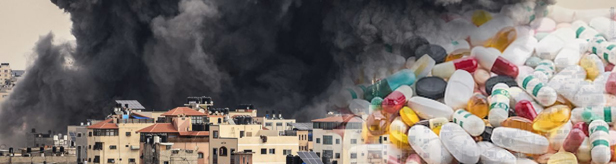
- Amid bloody conflicts continuing around the world, it was found that there was no direct impact on pharmaceutical export performance. The analysis is that this is because the proportion of pharmaceutical exports to countries in conflict is very small in the first place. However, it is predicted that if the conflict spreads to nearby areas due to the worsening local situation, it will have a significant impact on pharmaceutical exports. The share of pharmaceutical exports to Russia and Ukraine is around 0.8%. According to the Korea Customs Service on the 18th, pharmaceutical exports to Russia and Ukraine as of the third quarter of this year amounted to $33.22 million (about 44.9 billion won). It decreased by 16.1% compared to the same period last year. Last year, $39.61 million was exported through the third quarter. Although the decrease is relatively large, it is analyzed that it did not have a significant impact on Korea's overall pharmaceutical export performance. This is because the two countries account for a very small proportion of the total pharmaceutical export performance in the first place. Total cumulative pharmaceutical exports in the third quarter amounted to $4,255.12 million. Among these, Russia and Ukraine account for only 0.8%. Russia is 0.6% and Ukraine is 0.2%. The share of pharmaceutical exports to these two countries has consistently remained below 1%. The decline in vaccine exports to Australia and Taiwan took a direct hit rather than the Russo-U.S. war. By the third quarter, Korea's total pharmaceutical export amount was $4,255.12 million, a 13.8% decrease from $4,936.4 million in the same period last year. Analysis also suggests that it is difficult to interpret this as a direct effect of the war between Russia and Ukraine. The decline in overall pharmaceutical exports this year is largely due to the sharp decline in the supply of coronavirus vaccines to Australia and Taiwan. In fact, by the third quarter, exports to Australia had decreased by 92.7% from $428.99 million last year to 31.1 billion won this year. In the case of Taiwan, it decreased by 83.3% from $301.04 million to $5.03 million during the same period. In the case of Australia, it accounted for 8.7% of total exports until the third quarter of last year, but this year it shrunk to 0.7%. Last year, it had the fourth largest export volume after the United States, Germany, and the Turkic Republic, but this year it fell to 16th place. The proportion of exports to Taiwan also decreased from 6.1% to 1.2%. In 2021 and 2022, the Moderna vaccine produced on consignment by Samsung BioLogics has been exported to Australia as a vaccine. 10% of exports to the Middle East... Watch to see if the Israeli conflict will spread to nearby areas In this extension, the prevailing view is that the recent Israeli conflict will not have a direct impact on Korea's pharmaceutical exports. This is because pharmaceutical exports to Israel amounted to $3.84 million as of the third quarter of this year or only 0.2% of the total. There is also the prospect that if the conflict spreads to neighboring Middle Eastern countries, it will have a significant impact. As of the third quarter, pharmaceuticals exported from Korea to the Middle East totaled $408.98 million, accounting for about 9.6% of the total. Among these, Turkiye accounts for the majority (71.4%) with $291.92 million, and Saudi Arabia, Jordan, the United Arab Emirates, Egypt, and Iraq also account for a significant portion, at around $20 million.
- Policy
- HIRA ‘will discuss reimb obesity treatments with MOHW'
- by Lee, Tak-Sun Oct 19, 2023 05:29am
- HIRA President Jung-gu Kang In response to the claim that obesity should be recognized as a chronic disease and its treatment covered by Korea’s health insurance, President Jung-gu Kang of the Health Insurance Review and Assessment Service responded that he would discuss the request with the Ministry of Health and Welfare. Kang made this announcement at the National Assembly Health and Welfare Committee’s Health Insurance Service-Health Insurance Review and Assessment Service audit that was held at the National Assembly on the 18th. Rep Hyun-Young Shin from the Democratic Party of Korea said, " Obesity should be considered a chronic disease. According to the Korea Disease Control and Prevention Agency, 1 in 3 adults suffer from obesity.” Shin asked, “The Korean Society for the Study of Obesity, which recognizes not only severe obesity but general obesity as a chronic disease, claimed the need to provide everything from testing to drug treatment. What does HIRA’s president think about the claim that the whole course of obesity treatment from testing to pharmacotherapies should be reimbursed?” Kang answered “Early treatment is important due to the high follow-up care and treatment costs required for obesity. We will discuss the issue with the Ministry of Health and Welfare.” Shin said, “From a preventive medicine perspective, covering obesity will also help with the financial soundness of NHI finances. Please consider gradually expanding reimbursement for obesity.”
- Company
- Korean new drug cash cows bring in KRW 100 bil in 3 quarters
- by Chon, Seung-Hyun Oct 19, 2023 05:29am
- Domestically developed drugs are continuing to show strong performance in high ranks in Korea’s outpatient prescriptions market. Prescriptions of Hanmi Pharm’s combination new drug Rosuzet and HK Inno.N's K-CAB have exceeded KRW 100 billion in just 3 quarters. Daewoong Bio's brain function enhancer Gliatamin also performed well. According to the market research institution UBIST on the 19th, Viatris’s hyperlipidemia treatment, Lipitor, recorded the highest cumulative outpatient prescription amount of KRW 146.8 billion in Q3 this year. Although it decreased by 2.6% compared to the same period last year, it maintained its leading position. Lipitor, which was introduced to the domestic market in 1999, has been in the market for over 20 years. Despite the fierce competition with the entry of around 100 generics after patent expiry, the original Lipitor has been boasting its strong influence over the prescription drug market. Although it continued to exert a strong influence in the prescription drug market despite the entry of its generics after patent expiry, the growth seems to have slowed down recently. Lipitor had posted the most outpatient prescription sales for 5 consecutive years from 2018 to last year. Rosuzet and K-Cap, which were each developed by the domestic companies Hanmi Pharmaceutical and HK InnoN, continued on their high march at the forefront of the market, raising more than KRW 100 billion in just 3 quarters. Rosuzet ranked second overall, recording KRW 130.9 billion in cumulative prescriptions as of last September, a 19.5% increase from the previous year. Rosuzet, which was launched at the end of 2015, is a combination drug for hyperlipidemia consisting of 2 ingredients, rosuvastatin and ezetimibe. Rosuzet is experiencing rapid growth thanks to its market preoccupation strategy and the growing popularity of statin and ezetimibe combination drugs. The preference for the statin/ezetimibe combination drug has been increasing because the combination is excellent for lowering low-density low-protein cholesterol (LDL-C) and cost costs less than taking the two drugs separately. K-CAB's cumulative prescription performance in Q3 was KRW 114.1 billion, up 18.7% from the previous year. K-CAB’s prescription amount in Q3 was KRW 40 billion, up 20.6% YoY. The drug has been recording unceasing growth, rising 88.1% over the past 3 years from KRW 21.3 billion in Q3 2020. K-CAB is continuing to grow rapidly due to its advantages of showing an effect faster than existing proton pump inhibitor (PPI) products and the fact that it can be taken regardless of meal intake. K-CAB’s prescription volume exceeded KRW 100 billion in only the third year since its launch in 2021 and exceeded 100 billion won for 2 consecutive years until last year. This year, it already saved its spot in the ‘KRW 100 billion prescription club’. In addition to being approved for the treatment of erosive and non-erosive gastroesophageal reflux disease, and gastric ulcer, K-CAB acquired 5 additional indications, including as an antibiotic combination therapy for the eradication of Helicobacter pylori in patients with peptic ulcer and/or chronic atrophic gastritis, and as maintenance therapy after treatment of GERD. Initially, the drug was granted reimbursement for the GERD and gastric ulcer indication and was additionally granted reimbursement for the other indications. Therefore, its growth rate is expected to continue only increase further. Among domestically developed new drugs, Daewoong Bio’s brain function enhancer Gliatamin’s prescriptions rose 23.5% YoY to record KRW 115 billion to rank third place. Gliatamin’s influence in the prescription market increased despite the difficulties faced due to narrowed reimbursement standards, controversy over its efficacy, and the order to start negotiations on refunded reimbursement claims amount. Chong Kun Dang Gliatirin, which contains choline alfoscerate, also continued its high march, recording a 12.2% YoY rise in prescription amount. Organon Korea's hyperlipidemia combination drug Atozet also made the top ranks with cumulative prescriptions in Q3 of KRW 74.9 billion, up 11.9% YoY. Atozet is a combination drug that combines atorvastatin and ezetimibe. Starting in 2021, more than 100 domestic companies entered the atorvastatin and ezetimibe markets with their generics, Atozet continued to show a solid rise in sales. The drug is being sold by Chong Kun Dang in Korea.
- Company
- Global 1 trillion won project
- by Kim, Jin-Gu Oct 19, 2023 05:29am
- Domestically developed new drugs in the P-CAB (Potassium-competitive gastric acid secretion inhibitor) series are accelerating their overseas expansion. HK inno.N K-CAB and Daewoong Pharmaceutical Fexuclue both set a global sales goal of 1 trillion won within five years. To this end, K-CAB has obtained product approval in 7 countries. In addition, the company announced expansion into a total of 35 countries, including technology and finished product export contracts. Fexuclue also obtained product approvals in four countries and signed technology and finished product export contracts with a total of 15 countries. According to the pharmaceutical industry on the 19th, Daewoong Pharmaceutical recently received product approval for Fexuclue from Mexican health authorities. As a result, the number of countries for which Fexuclue has obtained product approval has expanded to four countries. Daewoong Pharmaceutical received product approval in the Philippines in November of last year, followed by Ecuador and Chile in February and March of this year. The analysis is that the company is accelerating its overseas expansion in the second year of its domestic launch. Daewoong Pharmaceutical launched Fexuclue in Korea in July last year. Since then, the company has quickly begun targeting overseas markets by submitting product approval applications to a total of 12 countries. Among these, formal approval has been obtained in four countries, and approval is being reviewed in eight countries, including China, Vietnam, Indonesia, Thailand, Saudi Arabia, Brazil, Colombia, and Peru. If adding the countries with which technology and finished product export contracts have been signed, Fexuclue is expected to enter a total of 15 countries. The total contract size is estimated to be more than 700 billion won. Daewoong Pharmaceutical signed a technology export and finished product export contract worth $44.42 million with Mexico's 'Moksha8' in January 2020. In August, a contract worth $72.58 million was signed with Brazil's EMS. In March 2021, a contract worth $339.55 million was signed with China's 'Shanghai Haini Pharmaceutical'. In June of the same year, a development and commercialization license agreement worth $430 million was signed with Neurogastrx in the United States and Canada. However, this contract was terminated in June of this year. Daewoong Pharmaceutical announced that it has begun negotiations with multiple multinational pharmaceutical companies to enter big markets not only in North America but also in Europe and Japan. In addition, a contract was signed with 'Pharma Consulting Group (BIOPAS)' to transfer local licensing and sales rights in four Central and South American countries, and with 'Aghrass Healthcare Limited' to supply Fexuclue to six Middle Eastern countries, including Saudi Arabia, for the next 10 years. contracts were signed respectively. Daewoong Pharmaceutical plans to expand the number of countries applying for Fexuclue approval to 30 countries by 2025. The goal was to enter a total of 100 countries by 2027, including technology and finished product export contracts. Daewoong Pharmaceutical's plan is to achieve global sales of 1 trillion won through this. K-CAB launches products in 7 countries, exports contracts with 35 countries K-CAB, which entered the global market ahead of Fexuclue, also set its global sales target at 1 trillion won. Prior to this, the goal was to enter a total of 100 countries by 2028. The product has already been released in seven countries with product approval. Since April 2022, HK Innoen has released products one after another in China, the Philippines, Indonesia, Singapore, Mongolia, Mexico, and Peru. What is attracting attention is the Chinese market. China is known as the world's largest anti-ulcer drug market. According to IQVIA, a pharmaceutical market research firm, the size of China's anti-ulcer drug market last year amounted to approximately 3.3 trillion won. HK Innoen released a non-sales service under the name ‘泰欣赞’ in April last year. In March of this year, this product was applied for insurance benefits. Product approval has been applied for in Vietnam, Malaysia, and Chile. HK inno.N plans to apply for product approval in three to four additional countries in Central and South America within this year. HK inno.N has signed technology and finished product export contracts with a total of 35 countries, including this one. In October 2015, a technology transfer contract worth a total of $95 million was signed with Chinese pharmaceutical company Luoxin. Then, in February 2019, a contract was signed with Carnot, a Latin American pharmaceutical company, to export finished products to 17 Central and South American countries, including Mexico and Argentina. The total contract size is $84 million. Since September of the same year, contracts have been signed to export finished products to six Southeast Asian countries. In December 2021, a technology transfer agreement in North America was signed with the US pharmaceutical company Braintree. The contract size is $540 million, and phase 3 clinical trials are being conducted locally starting in September 2022. Last year, technology and finished product export contracts continued. In April last year, a contract was signed with Indian pharmaceutical company Dr.Reddy's to supply finished products to India, South Africa, Russia, Kazakhstan, Uzbekistan, Ukraine, and Belarus. In December of the same year, a technology transfer agreement was signed with Eurofarma to enter the Brazilian market. The total contract size is undisclosed.
- Policy
- NA calls for prompt reimb of Ilaris during NA audit
- by Lee, Tak-Sun Oct 19, 2023 05:29am
- The National Assembly requested progress to be made in reimbursing ‘Ilaris (canakinumab, Novartis),’ a drug used to treat Hereditary recurrent fever syndromes that affect 13 patients in Korea. Rep. Sun-Woo Kang of the Democratic Party of Korea and member of the National Assembly Health and Welfare Committee suggested so at the Health Insurance Service-Health Insurance Review and Assessment Service audit held on the 18th. Mr. Lee, a parent of a pediatric patient whom Rep. Kang called as a witness, appeared before the National Assembly and said, "There are two palliative treatments. One is Kineret Inj, which needs to be administered daily, and my two-year-old child is suffering the pain of its daily injections every day." “Ilaris can administered once every 8 weeks, but it has not been reimbursed yet,” he said. He said, "If Ilaris is reimbursed, it can significantly improve my child's quality of life. " adding, "It is difficult to understand that this drug, which is covered by insurance in 30 other countries, is not covered by insurance in a developed country like Korea" appealed. Rep. Kang said that patients are spending between KRW 80 million to KRW 100 million per year to use non-reimbursed drugs, and requested that the registration of benefits be speeded up to improve the quality of life for children and ease the financial burden on patients' families. Regarding this, HIRA President Kang said, "Ilaris is administered once every 8 weeks, and it is so effective that 97% of patients responded to the treatment. We reviewed the reimbursement standards last September, and will continue to work to reimburse it as soon as possible."
- Policy
- Rep. Young-hee Choi ‘expenses surged after Moon Care’
- by Lee, Tak-Sun Oct 18, 2023 05:49am
- After the implementation of Moon Jae-in Care, which was implemented to strengthen health insurance coverage, KRW 5.272 trillion was found to have been spent on drugs for seriously ill patients over the 6 years and exceeded the expenditure target every year. According to data Rep. Choi Young-hee (People Power Party, proportional representation), a member of the National Assembly Health and Welfare Committee, received from the National Health Insurance Service on the 12th, the number of previously non-reimbursed drugs that are now reimbursed and categorized as pharmaceutical expenses for severe diseases increased from 529 in 2017 to 4,027 as of September this year, even though the NHIS granted 1306 non-reimbursed items reimbursement last year. In addition, Rep. Choi's office claimed actual expenditures spent on expanded non-reimbursed covered drugs rose 56.5 times from ▲ KRW 31.5 billion in 2017, ▲ KRW 309.8 billion in 2018, ▲ KRW 6854 billion in 2019, ▲ KRW 1.3 trillion in 2020, ▲ KRW 1.43 trillion in 2021, to ▲ KRW 1.77 trillion in 2022. Rep. Choi's office explained that patients frequented hospital visits even if they were only mildly ill due to improved medical access and the reimbursement of non-reimbursed drugs. Last year, 188,054 patients received treatment more than 150 times, and patients in their 50s showed excessive medical consumption, receiving treatment 3,009 times at 50 medical institutions. Due to this, it is pointed out that the current health insurance balance was in deficit of ▲KRW 177.8 billion in 2018, ▲KRW 2.82 trillion in 2019, then ▲KRW 353.1 billion in 2020. Afterward, the use of medical services decreased due to COVID-19, resulting in a surplus of ▲KRW 2.82 trillion in 2021 and ▲KRW 3.629 trillion in 2022. Rep. Young-hee Choi said, “Moon Jae-in's care is ultimately a ruined policy that only increased the burden on patients due to worsening health insurance finances and increasing non-reimbursed items," and she emphasized, "It is natural that the Yoon Suk-yeol government defined it as a 'populist policy' and declared its abolition." Representative Choi then urged the preparation of countermeasures, saying, “Although health insurance finances have recently become stabilized, we must work for efficient operation and normalization of health insurance finances in preparation for the low birth rate and aging population.”
