
- LOGIN
- MemberShip
- 2026-06-26 06:20:11
- Policy
- Resolving Conflicts in Non-face-to-face Medical treatment
- by Lee, Jeong-Hwan Sep 27, 2023 05:44am
- The Ministry of Health and Welfare cited the legalization of non-face-to-face treatment through the revision of the Medical Act as a solution to resolve the conflict between the medical community and the medical community surrounding non-face-to-face-face treatment. In addition, the MOHW expressed his will to improve the non-face-to-face treatment pilot project as soon as possible, reflecting the on-site opinion that the scope of the first diagnosis is narrow, the criteria for re-examination is vague, and there is a gap between the medical field. On the 26th, the Ministry of Health and Welfare responded to the written question of Rep. Choi Young-hee, a member of the National Assembly Health and Welfare Committee. Rep. Choi Young-hee pointed out that it is necessary to institutionalize non-face-to-face treatment through the revision of the Medical Act based on the temporary non-face-to-face treatment results, but it is in a shutdown situation due to the non-infection of legalization. In response, the Ministry of Health and Welfare explained that the temporary non-face-to-face treatment conducted from the 2nd of 2020 to May of this year is only 0.3% of the total number of outpatient visits, and the pilot project carried out in June and July this year accounts for 0.2%, and explained that non-face-to-face-to-face treatment is being used as an auxiliary means of face-to-face treatment. The Ministry of Health and Welfare responded that revision of the law is essential to provide stable and predictable non-face-to-face treatment to the public, and it is urgent to deliberate on the revision of the medical law. In particular, the Ministry of Health and Welfare is that in order to resolve conflicts with the medical community and the pharmaceutical community, the National Assembly needs to reach a social agreement by revising the medical law. Furthermore, the Ministry of Health and Welfare has revealed a plan to objectively analyze and improve the current non-face-to-face treatment pilot project. The plan is to revise and improve the scope of the pilot project as soon as possible, reflecting the opinion that the scope of the initial diagnosis is too narrow and the criteria for re-examination is ambiguous, so there is a gap with the medical field. The Ministry of Health and Welfare said, "We will continue to prepare legislative and policy improvement measures for non-face-to-face treatment by reflecting the opinions of the field, evaluation and analysis results of pilot projects, discussions of advisory group, and satisfaction survey results. Legalization is essential to prevent illegal acts related to non-face-face-to-face treatment in advance and provide non-to-face treatment stably."
- Policy
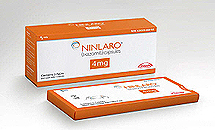
- Why did the original Ninlaro voluntarily cut its price 34%
- by Lee, Tak-Sun Sep 27, 2023 05:44am
- The insurance ceiling price of Takeda Pharmaceuticals Korea’s multiple myeloma treatment ‘Ninlaro Cap’ will be discounted by 34% from October. 10% of the price cut is made due to the price-volume agreement system, but the company had voluntarily lowered the price significantly over the set 10%. It is rare for an original drug with no generic to reduce its insurance price ceiling by over 30%. Why did Takeda decide to make such an unexpected price cut? According to the industry on the 26th, from October 1, the insurance price ceiling of Ninlaro will be lowered by KRW 494,000 from the previous KRW 1,450,000 to KRW 956,000. This is a drastic reduction amounting to 34%. First, the maximum reduction rate for this drug was reduced by 10% through the price-volume agreement negotiations. It was reduced from KRW 1,450,000 to KRW 1,305,000. In addition, the company further lowered the insurance price ceiling to KRW 956,000 voluntarily. Regarding the price cut, Takeda Pharmaceuticals Korea, said, “In addition to the reduction due to the price-volume agreement negotiations, the change in the insurance price ceiling of Ninlaro Cap. is the result of the change in the company's internal policy. The company is pleased to be able to provide Ninlaro Cap. to patients with multiple myeloma in Korea at a reduced price." “All decisions within our organization are made in accordance with our code of conduct - Patient, Trust, Reputation, Business (PTRB) — which bring our values of Takeda-ism to life.” The nuance is that the price cut will provide economic benefits to patients. However, some analysts say that the reduction in the price ceiling will only change the list price, and there will be no actual change in the real price of the drug. Rather, the analysts expected that the company would benefit from tax reduction by lowering the list price. Ninlaro is reimbursed through an RSA (risk-sharing agreement) with the National Health Insurance Service. It is reimbursed through a refund-type RSA, which means that a certain percentage of the drug expenditure that exceeds the pre-agreed amount is refunded to the NHIS by the company. Refunds are made based on the actual price, not the list price (insurance price ceiling). Accordingly, the analysis is that if the actual price does not change, it will not affect product performance, health insurance expenditures, or the economic burden of patients. An industry official said, "The actual price may have gone down through the NHIS’s PVA system. But the voluntary cut seems to have only changed the upper limit of the list price." He added, "If the actual price remains the same, nothing much will change in the field.” He added, “However, by lowering the list price, you can benefit from tax savings during customs clearance. I understand that many companies that receive reimbursement through RSA are considering lowering their drug’s list price for tax benefits.”
- Policy
- Madopar triggers bioequivalence test verification requests
- by Lee, Hye-Kyung Sep 26, 2023 05:50am
- The demand has been rising for the government to verify the validity of bioequivalence tests conducted by generic versions of Madopar Tab (levodopa-benserazide), Roche Korea’s Parkinson's disease drug that had withdrawn from the domestic market. Opinions are being collected on the post ‘Regarding the validity of bioequivalence tests that serve as the standard for approving generic drugs’ that appeared as an open petition on the Petition24 website earlier this month. The opinion collection deadline is October 6. The petitioner, who described himself as a Parkinson's disease patient for 20 years, said, "Original drug manufacturers are withdrawing from Korea because of fake generic drugs. No matter how cheap the drugs are, we are in a situation where we have to put aside good drugs and take quack generic drugs.” The price of Madopar Tab was reduced with the introduction of generics in 2021, and Roche Korea voluntarily withdrew its marketing authorization on January 6 this year. The Ministry of Health and Welfare had been making efforts to supply the original in Korea, such as by extending the reimbursement term for Madopar that Roche voluntarily withdrew, from July 31 to December 31. However, Roche Korea submitted a written position on how it would be difficult to resupply the drug in Korea because the company has to obtain documents necessary for new domestic approval from its Italian manufacturing plant that produces Madopa Tab, and the manufacturing facility has been demanding a considerable price due as cost of restoring manufacturing facilities to produce the quantities for export. This is why patients have been demanding the Ministry of Food and Drug Safety to verify the validity of the bioequivalence tests that are conducted for the approval of generics. The petitioner said, "The withdrawal of original drugs and the introduction of generic drugs is a very natural phenomenon in some ways. I happily accepted this phenomenon and switched prescriptions to the relatively inexpensive generic drugs." "However, I physically feel the difference in effect when taking the medicine for a long time. Bioequivalence tests are designed on a logical and scientific basis, and many people have a great deal of trust in this bioequivalence test, I know that it is an internationally recognized test. But due to my personal experience, I can’t help but start to have doubts about its validity.” Therefore, the petitioner requested the government to create a bioequivalence test feasibility study team composed of experts to examine whether standards for generic drugs could be added to bioequivalence tests or whether new standards were needed and create an international standard for generic drugs that can be recognized around the world. However, the MFDS drew the line that the safety and effectiveness of generics that passed the bioequivalence test were equivalent to the original. An MFDS official emphasized, "In the case of generic drugs, bioequivalence tests that compare the drug with the original are required upon approval. When a generic drug demonstrates its bioequivalence to the original, its safety and efficacy are judged to be equivalent to the original drug. This is an internationally accommodated standard."
- Opinion
- [Reporter's view] Paid-in capital increase & bio ventures
- by Lee, Seok-Jun Sep 26, 2023 05:49am
- Bio ventures have recently begun to raise funds through paid-in capital increases allotted to shareholders as promised. This is a phenomenon that has recently emerged as the bio market is not doing well, making it difficult to attract investment from institutional investors such as VCs (venture capitals) or specific third parties. Shareholders express the current situation as a ‘crying train’. Even though there is a high possibility that the stock price will fall, it is because of the worry. Just looking at the past three to four months, there are numerous bio ventures that have completed or are in the process of capital increase. CJ Bioscience, PCL, SCM Life Science, Cellid, Voronoi, SD Biosensor, and Noul have completed the paid-in capital increase. MedPacto, Micobiomed, Lunit, EDGC, Kangstem, Vaxcell-bio, Medi-post, etc. are in progress. Among them, SD Biosensor (10.4 billion won), Lunit (201.9 billion won), Medi-post (120 billion won), MedPacto (115.9 billion won), and Vaxcell Bio (100.6 billion won) decided to increase paid-in capital on a large scale of more than 100 billion won. Honestly, it is difficult to identify bio ventures. This is because it is virtually impossible to judge technological capabilities. We only rely on the data disclosed by the company and judge its value by referring to technology exports, partners, research team history, etc. While watching the paid-in capital increase trend, we believe that it may be possible to separate bio ventures in other ways. For example, it is possible to understand valuation through ▲how often financing is raised, ▲how well the fund use plan matches reality, and ▲whether the financing plan announced through IR, etc. has been reversed. In addition, ▲how often management changes, ▲whether the securities report at the time of IPO is implemented, ▲the largest shareholder's participation in bequests, etc. can be objective factors. Of course, financing is also an important element of corporate management. However, the problem is that even as the years go by, more and more companies rely on financing rather than their own ability to survive. In a time where paid-in capital increases are rampant, why not try creating an opportunity for bio ventures to separate the pros and cons? There are not many factors that can determine a company's valuation as much as financing issues. This is especially true for bio ventures where liquidity is vital.
- Company
- Daewon’s Pelubi enters Indonesia with a KRW 4 bil deal
- by Chon, Seung-Hyun Sep 26, 2023 05:49am
- On the 25th, Daewon Pharmaceutical announced that its nonsteroidal anti-inflammatory drug, ‘Pelubi CR Tab’ has entered the Indonesian market. Pic of Pelubi series Daewon Pharmaceutical signed an exclusive export agreement with its Indonesian partner, PT. Interbat Pharmaceutical Industry, to export its finished Pelubi CR Tablet products to Indonesia. The 5-year deal is worth a total of USD 3 million (KRW 4 billion). Pelubi CR tablet is an improved version of Daewon’s new drug ‘Pelubi’ that offers improved convenience in administration. After being released in 2015 as an anti-inflammatory analgesic in 2012, its prescription area has been expanded, adding various indications such as post-traumatic pain and primary menstrual pain into the areas of chronic pain and acute pain. Daewon Pharmaceutical said, “Our Pelubi series has grown into a mega-brand product that posts annual sales of approximately KRW 40 billion, and has achieved the highest prescription volume among NSAIDs in Korea.” Indonesia is a country with a high demand for pharmaceuticals in Asia, accounting for approximately 27% of the entire ASEAN market. Its pharmaceutical market size amounts to approximately USD 3 billion (approximately KRW 4.022 trillion) in 2021. Pelubi was released in Russia early last year after 2 years of local clinical trials and on-site inspections. Daewon Pharmaceutical is planning to sign new export contracts with the Philippines and Mexico in H2, using its entry into the Russian and Indonesian markets as momentum. The company is waiting to complete product registration in Vietnam. Daewon Pharmaceutical plans to accelerate its expansion into overseas markets, focusing on the Eurasian Economic Union (EAEU) which includes Russia and Kazakhstan, as well as Central and South America, and Southeast Asia. In-Hwan Baek, CEO of Daewon Pharmaceutical, said, “As Pelubi was classified as a new drug in Indonesia, the export holds significance in introducing a Korean new drug to the foreign market. We expect this to significantly contribute to expanding our presence in the Asian and global market.”
- Company
- Luxturna can be prescribed at general hospitals
- by Eo, Yun-Ho Sep 26, 2023 05:49am
- Luxturna, a one-shot retina treatment, can be prescribed at general hospitals. According to related industries, Luxturna, a treatment for Inherited Retinal Dystrophy, has passed the drug committee of medical institutions such as Seoul National University Hospital. Luxturna is currently in the process of registering for insurance benefits and is beginning to create a prescription environment. This drug passed HIRA on the 7th and is about to negotiate the price with NHIS. Discussions on reimbursement for Luxturna, which is an expensive drug and targets a very small number of patients, were difficult. An application for benefits was submitted in September 2021, but there has been no significant progress in the registration process and only recently produced results. Although it has passed the evaluation committee, it remains to be seen whether drug price negotiations can be concluded smoothly. Luxturna restores the function of the deficient or defective RPE65 gene, which is one of the causes of IRD, by replacing it with a normal gene with just one administration. This means that fundamental treatment of the disease is possible. This drug was designated by the U.S. FDA as a Breakthrough Therapy in 2014, an Orphan Drug in 2016, and a Priority Review in 2017, and it also obtained expedited approval in 2017. Meanwhile, Luxturna proved its effectiveness through a phase 3 clinical trial conducted on patients with hereditary retinal disease in whom biallelic mutations in the RPE65 gene were confirmed. Clinical results showed that at one year of treatment, functional vision treated with Luxturna was statistically significantly improved compared to the control group that did not receive treatment. As a result of evaluating the average score of the Multi-Luminance Mobility Test as the primary endpoint at a year of treatment, the score change in the Luxturna treatment group was 1.8 points, which was 1.6 points higher than the control group's score change of 0.2 points.
- Policy
- Pfizer’s Bosulif in pricing negotiations for reimb in KOR
- by Lee, Tak-Sun Sep 26, 2023 05:49am
- The reimbursement listing process for Pfizer’s Philadelphia chromosome-positive chronic myeloid leukemia (CML) treatment Bosulif (bosutinib) is gaining momentum. The drug has entered the drug pricing negotiation stage only 8 months after it received approval in January in Korea. As a late 2nd-gen Ph+ CML drug entrant to Korea, the drug is expected to contribute to increasing Pfizer's recognition in the domestic Ph+ CML treatment market. According to industry sources on the 25th, Pfizer accepted the results of the Drug Reimbursement Evaluation Committee (DREC) meeting that was held on the 7th. At the meeting, The efficacy and effect of Bosulif 100, 400, and 500mg were deemed adequate for reimbursement if the company accepts a price below the assessed price for Ph+ CML. DREC is understood to have presented a price lower than the weighted average of its alternative as other second-generation drugs, such as BMS Korea’s ‘Sprycel,’ Novartis’s ‘s ‘‘Tasigna,’ and Il-Yang Pharamceutical’s ‘Supect (ladotinib)’. In Korea, up to 4th generation Ph+ CML treatments have been released with the reimbursement listing of Novartis ‘Scemblix’ in July. As Pfizer accepted the conditions presented by DREC, Bosulif is expected to move on to the drug price negotiation stage. This is in 6 months since it the drug was first approved last January. At the HIRA's Cancer Disease Deliberation Committee that was held a month before DREC, the drug succeeded in setting reimbursement standards only for Ph+ CML as a second-line treatment. CDDC has decided to recognize the adequacy of the drug’s reimbursement only for Ph+ CML in the chronic phase (CP), accelerated phase (AP), and blast phase (BP) that shows resistance or intolerance to previous therapy. On the other hand, no reimbursement standard had been set for the treatment of newly diagnosed chronic phase Ph+ CML. Accordingly, Pfizer is expected to first list the drug as a second-line treatment as soon as possible, then move forward and expand its reimbursement as a first-line treatment. Given that the drug price negotiation deadline with the National Health Insurance Service is 60 days, there is a high possibility that the drug will be reimbursed within the year. If this happens, the drug will gain attention as a new drug that took less than one year from approval to reimbursement.

- Policy
- Hanmi is the first to release Zytiga generic at half price
- by Lee, Tak-Sun Sep 25, 2023 05:35am
- Hanmi Pharm has become the first to launch the first generic of Janssen's prostate cancer treatment ‘Zytiga (abiraterone acetate).’ In particular, the drug is expected to greatly reduce the financial burden borne by patients as it is sold at a much lower price than the original Zytiga. According to industry sources on the 22nd, Hanmi Pharm’s 'Abiteron Tab 500mg' will be listed for reimbursement on the 1st of next month. The drug is a generic that contains the same ingredients as Zytiga and is the first generic to be listed for reimbursement. Its insurance price ceiling is KRW 8,537 per tablet, which is almost half of that of Zytiga, which is KRW 16,780. It is even lower than 53.55% of the original price, which is the standard used to calculate the price of generics. The company said that it set a low price to reduce the financial burden on patients and improve accessibility. There are no patents registered on MFDS’s green list for Zytig. Nevertheless, the reason no other generic version has been approved so far is due to the difficulty in conducting bioequivalence tests. However, Hanmi succeeded in completing the bioequivalence test and won the first generic title. Abiteron has the same indications as Zytiga. The drug is indicated for ▲the treatment of asymptomatic or mildly symptomatic patients with metastatic castration-resistant prostate cancer, ▲treatment of f metastatic castration-resistant prostate cancer in adult men whose disease has progressed on or after a docetaxel-based chemotherapy regimen, and ▲ treatment of newly diagnosed high-risk metastatic hormone-sensitive prostate cancer (mHSPC) in adult men in combination with androgen deprivation therapy (ADT). Among these, Janssen, which owns the original Zytiga, is taking steps to convert the selective reimbursement (30% copayment rate) status of the third indication to essential reimbursement (5% copayment rate). If the company succeeds in expanding reimbursement of its drug, Abiteron is also expected to benefit and receive expanded coverage. Based on IQVIA sales, Zytiga recorded sales of KRW 21.8 billion in Korea last year.
- Company
- Roche’s Rozlytrek lands in tertiary hospitals in Korea
- by Eo, Yun-Ho Sep 25, 2023 05:34am
- The tumor-agnostic anticancer drug ‘Rozlytrek’ may now be prescribed in 5 tertiary hospitals in Korea. According to industry sources, Roche Korea’s NTRK(Neurotrophic tyrosine receptor kinase) inhibitor Rozlytrek (entrectinib)’ has passed review of drug committees (DCs) at the Big 5 tertiary hospitals in Korea, - Samsung Medical Center, Seoul National University Hospital, Seoul, Asan Medical Center, Seoul St.Mary’s Hospital, and Sinchon Severance Hospital – and its prescription code has been inserted in medical institutions nationwide. Rozlytrek was listed for reimbursement this April. It is currently reimbursed for first-line or higher treatment of adult and pediatric patients 12 years of age and older with solid tumors that have an NTRK gene fusion without a known acquired resistance mutation, whose cancer type is classified as Type 2A or higher under the NCCN guidelines and are locally advanced, metastatic or have high risk of severe morbidity upon surgical resection, and have progressed following the use of existing treatments (or therapies) and have no other available treatment options. The drug was approved in April 2020 as a treatment for the treatment of adult and pediatric patients 12 years of age and older with solid tumors that have an NTRK gene fusion without a known acquired resistance mutation and for adult patients with locally advanced ROS1-positive or metastatic NSCLC. Rozlytrek was approved based on the Phase I/II STARTRK-NG trial on pediatric patients, as well as the pivotal Phase II STARTRK-2 and Phase I STARTRK-1 and ALKA-372-001 trials. In the Phase II STARTRK-2 study, Rozlytrek shrank tumors in more than half (objective response rate [ORR] = 56.9%) of people with NTRK fusion-positive solid tumors. Objective responses to Rozlytrek were seen across 10 different solid tumor types with a median duration of response [DoR] = 10.4 months. Treatment of CNS metastatic conditions in patients with NTRK gene fusion-positive cancer had been limited until now because most anticancer drugs have not been able to pass through the blood-brain barrier (BBB), rendering it difficult for the drugs to be exposed to the central nervous system (CNS) to an appropriate level However, Rozlytrek showed an ORR of 62.5% even in the 16 patients with CNS metastasis at baseline, showing a consistent response rate regardless of CNS metastasis. This is because Rozlytrek is designed to permeate the BBB partially remain within the CNS and act on primary brain tumors and brain metastases.
- Policy
- Mifegyne, inadequate national essential drug system
- by Lee, Jeong-Hwan Sep 25, 2023 05:34am
- Rep. Nam In-soon applies as a reference to the Pharmaceutical Society for a Healthy Society Anticipation of questions such as transparency of essential medicines. Problems with the national essential drug designation system and the issue of the miscarriage inducer Mifegyne not being designated as a national essential drug are expected to be discussed at this year's Ministry of Food and Drug Safety inspection. On the 22nd, after examining the final list of applications for witnesses and references for the National Assembly's Health and Welfare Committee of the National Assembly, Nam In-soon, a member of the Democratic Party of Korea, applied for Lee Dong-Geun, secretary general of the Pharmaceutical Association for a Healthy Society, as a reference. Rep. Nam's reason for applying as a reference is to inquire about problems with the national essential drug system. The Pharmaceutical Association for a Healthy Society has been pointing out problems with the Ministry of Food and Drug Safety's national essential drug designation system for several years now. The biggest problem that the Pharmaceutical Association for a Healthy Society is looking at is that the purpose and standards for reorganizing the national list of essential drugs are unclear, and that “miscarriage-inducing drugs,” which civil society has been continuously demanding, are not designated as essential drugs. Due to the decision in 2019 to make the abortion law unconstitutional, many women are receiving abortion procedures at medical institutions starting in 2021, but abortion through medication is still not performed in Korea, and the reason for this is the non-designation of Mifegyne as an essential drug. The Ministry of Food and Drug Safety has not designated Mifegyne as a national essential drug. Although the Ministry of Food and Drug Safety's failure to designate Mifegyne as an essential drug cannot necessarily be viewed as faulty administration, it has been pointed out that the national essential drug designation system must be disclosed more transparently in order to examine whether it is proper administration. This is also the reason why the Pharmaceutical Association for a Healthy Society is demanding that the Ministry of Food and Drug Safety reveal the standards for designating nationally essential drugs. In addition, the Pharmaceutical Association for a Healthy Society pointed out that it was a problem that nine items for the treatment of acquired immunodeficiency syndrome (HIV) were included in the list of drugs that can be de-designated as essential drugs. Acquired immunodeficiency requires a variety of medicines due to the nature of the disease, and it is unreasonable for the Ministry of Food and Drug Safety to consider lifting the designation even though there is a precedent in the past where multinational pharmaceutical companies unilaterally stopped supply for economic reasons. An official from the Pharmaceutical Society for a Healthy Society explained, “We plan to respond to questions from the National Inspector General regarding the non-designation of miscarriage inducers such as Mifegyne as essential drugs and urge that the standards for designation as national essential drugs be disclosed more transparently than they are now.” He explained, “Even if a lactic acid inducing drug is not approved for domestic marketing, it is possible to designate it as an essential drug, but the Ministry of Food and Drug Safety is holding on by refusing to respond.”
