
- LOGIN
- MemberShip
- 2026-06-26 06:20:12

- Company
- Drug exports reduced by 14%... COVID-19 effect vanished
- by Kim, Jin-Gu Oct 18, 2023 05:48am
- Cumulative pharmaceutical exports in Q3 this year have fallen 13.8% YoY to a record KRW 5.8 trillion. With the global transition to a COVID-19 endemic, exports of COVID-19 vaccines fell sharply, leading to a decline in exports. According to the Korea Customs Service on the 17th, the cumulative pharmaceutical exports in Q3 this year amounted to USD 4.255 billion (about KRW 5.8 trillion). Compared to the USD 4.936 billion exported during the same period last year, the amount decreased by 13.8%. When expanding the period, the amount has been on a decline for 2 consecutive years. In Q3 2021, cumulative total exports recorded USD 5.760 billion. Korea has been enjoying a sales spike during the COVID-19 crisis that arose in 2020. In particular, in 2021 and 2022, the export performance of COVID-19 vaccines sharply increased. The Moderna vaccine produced on consignment by Samsung Biologics achieved high performance as it was exported to countries including Australia and Taiwan. Exports of homegrown domestic vaccines were around USD 173 million by 2020, but the amount tripled in one year to USD 519 million in 2021. In 2022, the amount further increased to USD 941 million. However, after the global COVID-19 pandemic turned into an endemic earlier this year, exports of COVID-19 vaccines also plummeted. In fact, domestic vaccine exports in 1H this year amounted to USD 167 million, down to 1/5 of the USD 778 million it had posted in 2022. Analysis suggests that domestic pharmaceutical export sales are returning to the level in the previous years. When comparing the numbers to Q3 2019, before the COVID-19 outbreak, the amount increased by 60.7% from USD 2.648 billion in 4 years. Additionally, exports of pharmaceuticals other than vaccines have been increasing compared to the same period last year. The same goes for imports as well. During the prolonged COVID-19 crisis, imports with the import of Pfizer and Moderna vaccines, but the amount has also stabilized somewhat this year. Korea's Q3 cumulative pharmaceutical imports increased 1.5 times in 3 years, from USD 4.840 billion in 2019 to USD 5.537 billion in 2020, USD 6.879 billion in 2021, then USD 7.482 billion in 2022. However, in Q3 of this year, it recorded a cumulative USD 7.155 billion, which is a decrease from the same period of the previous year. This year is the first time that cumulative pharmaceutical imports have decreased YoY in Q3.
- Policy
- Layla+Celecoxib coming soon
- by Lee, Tak-Sun Oct 18, 2023 05:48am
- a new osteoarthritis complex developed by PMG Korea.A compound that combines different osteoarthritis treatments based on natural products and synthesis is expected to be released on the 1st of next month. 20 companies are selling their products, and it is noteworthy whether it will create a new wind in the osteoarthritis treatment market. The original drug ingredient of Danggui, Mogwa, Bangpung, Sokdan, Ogapi, Wooseul, Wiryeongseon, Yukye, Jingyo, Cheongung, Cheonma, and Honghwa 25% Ethanol Yeonjo X is Layla of Korea PMG Pharmaceutical. PMG Pharmaceuticals Korea succeeded in developing a compound that combines the ingredient of Layla tablet with the ingredient of COX-2 inhibitor 'Serecoxib', and was approved for the item 'Reladisuine' in August. The drug demonstrated superiority to the control group in a phase 3 clinical trial of 356 patients with knee osteoarthritis (177 in the trial group and 179 in the control group) in a 100 mm pain VAS change in activity at week 8 compared to the baseline, the primary efficacy evaluation variable. In the same month, 19 items with the same ingredients were also licensed. These items are consignment items that have been approved through joint development with Korea PMG Pharmaceuticals. All product production is handled by PMG Korea Pharmaceutical. The items are Kyungdong Pharmaceutical's 'Selec Duojeong', Guangdong Pharmaceutical's Cox Duojeong', Daewoong Bio's Beacoxis Plus Jeong', Dongkuk Pharmaceutical's Selebron Jeong', Vascan Bio-Pharmaceutical 'Sebkan Plus Jeong', Samil Pharmaceutical 'Lecoxjeong', Samjin Pharmaceutical 'Asbon Plus Jeong', CMG Pharmaceutical 'Coks Plus Jeong', Anguk Pharmaceutical 'Cox2 Plus Jeong', Alico Pharmaceutical 'Raycelco Jeong', HLB Pharmaceutical 'Rex Duojeong', Unimed Pharmaceutical 'Bon Ekox', Ilhwa 'Sele Inajeong', Jenewon Science 'Sereduojeong', Jinyang Pharmaceutical 'Aduria Diess', Palm Genesis 'Sejoinjeong', Pungjeong', Korea Techon Pharmaceutical 'Unira-on Pharmaceutical 'Unira Plus These are expected to be priced by the compound calculation criteria. The compound is calculated at 53.55% sum of the single component before patent expiration. Both ingredients have expired patents, so it is likely that they will be set at the sum of the highest price of a single component. Then, the drug price is expected to be calculated at 567 won, which is the maximum price of ethanol Yeonjo X, which is 220 won for 25% ethanol Yeonjo X and 347 won for Celecoxib 100 mg 347 won. However, if the Ministry of Food and Drug Safety recognizes it as an improved new drug, the drug price will be added at 58.5% instead of 53.55%, so there is also interest in whether to designate an improved new drug. Some analysts say that in the case of eperison + aceclofenac complex in December last year, only Aju Pharm, a trustee, received an added-improved new drug, so there may be a difference in the drug price depending on whether it is above or not. Regardless, with a combination of the two ingredients, each pharmaceutical company has performance expectations in that it can receive a higher drug price than a single drug. In particular, PMG Pharmaceutical, which sells the original Layla, has seen a decline in earnings due to drug price adjustments since the appearance of Layla generic, so expectations for this product are different. Moreover, since it is also in charge of consignment production to 19 companies, it is expected to add CMO performance to its own product sales performance. The domestic osteoarthritis treatment market is estimated to be about 500 billion won. The launch of this complex is expected to be an opportunity to create a new competitive landscape.
- Policy
- Pharma-Bio Control Tower launched…first meeting next month
- by Lee, Jeong-Hwan Oct 18, 2023 05:48am
- A presidential order to establish the Biohealth Innovation Committee, a control tower to foster the pharmaceutical bio-industry, has been issued. The government plans to hold its first meeting next month to begin discussing major agendas. With the launch of a pan-ministerial organization, financial and administrative support is expected to be strengthened in addition to support for domestic pharmaceutical and bio companies' research and development (R&D), new drug development, and entry into overseas markets. The Ministry of Health and Welfare announced on the 17th that regulations regarding the establishment and operation of the Biohealth Innovation Committee (Presidential Order No. 461) have been issued. Until now, issues related to products and services of biohealth in the industry, including the use of pharmaceuticals, medical devices, and healthcare technology, have been blocked by inconsistent regulations between ministries, fields, and stages. To address this, the MOHW has been working to launch the 'Biohealth Innovation Committee' as a government-wide control tower chaired by the Prime Minister that encompasses all areas of biohealth, taking advantage of the strategy that seeks to open a biohealth market that was announced at the pan-ministerial biohealth new market creation strategy meeting held on February 28th. The newly established Biohealth Innovation Committee will appoint the Prime Minister as the chair and will consist of the head of 12 ministries, including the Ministers of the Ministry of Health and Welfare, Ministry of Strategy and Finance, Ministry of Education, Ministry of Science and ICT, Ministry of Trade, Industry, and Energy, Ministry of Foreign Affairs, and Ministry of SMEs and Startups, as well as the minister for the Office for Government Policy Coordination, the Chairperson of the Personal Information Protection Committee Commission, the Minister of Food and Drug Safety, Commissioner of the Korea Intellectual Property Office, and the Commissioner of the Korea Disease Control and Prevention Agency, and field and academic private experts. The government plans to concentrate on reviewing and deliberating policies to support the full cycle from biohealth technology development, commercialization, and insurance registration, to market entry. Seung-Hyun Hwang, Director-General of the Global Vaccine Hub at the Ministry of Health and Welfare, said, "Through the Biohealth Innovation Committee, we will bring together public and private capabilities to lay the foundation for the biohealth industry as a future growth engine and a key national strategic industry. The first meeting, which will be held in November, will focus on urgent agendas.”
- Company
- Controversy arises over illegal rebates made by Company A
- by Nho, Byung Chul Oct 17, 2023 05:28am
- The multinational pharmaceutical company A's illegal rebate activities have gone too far and are disrupting competition in relevant markets. According to an anonymous tip on the 15th, Company A has been providing economic benefits to prescribers at large general hospitals to promote drug sales. The same company was investigated by the Fair Trade Commission and the police around 10 years ago, and the Ministry of Food and Drug Safety imposed a fine for related products at the time. Company A owns several global blockbuster products, and although relatively inexpensive latecomer generics have been released for many of their blockbusters, the company’s performance improved by 20% over the past 3 years. Company A's major illegal business activities include providing golf entertainment to prescribing doctors and the use of corporate cards. Regarding this, the informant said, "Implicit rebate sales are rampant under verbal instructions by the CEO. Purchasing groceries at high-end restaurants and illegal card cash-backs are also being allowed." Also, the sales representatives have been providing golf entertainment for doctors. Typically, four players play a round of golf is played together, and its cost ranges from hundreds of thousands of won to well over a million won. According to CP regulations, the entertainment fee per doctor for holding a product briefing session is KRW 100,000, and the same person may not receive entertainment from the same company over 4 times a month. Promotions and souvenirs provided after a product briefing or symposium can be provided for up to KRW 50,000, and meals up to KRW 100,000. Promotional materials that sales and marketing personnel can provide when visiting doctors and pharmacists need to be priced at less than KRW 10,000, retail price.
- Policy
- Daewoong's new diabetes drug 'Envlo',
- by Lee, Tak-Sun Oct 17, 2023 05:28am
- Envlo, a new diabetes drug developed by Daewoong Pharmaceutical, is entering long-term safety and efficacy testing of the Zemiglo three-drug therapy. While triple therapy of the Metformin+SGLT2i+DPP4i has been approved for reimbursement since last April, Daewoong Pharmaceutical is expected to establish its position as a latecomer, Envlo, in the triple therapy through this long-term trial. On the 13th, the Ministry of Food and Drug Safety approved the phase 3 clinical trial to evaluate the safety and efficacy of Envlo + Metformin + Gemigliptin applied by Daewoong Pharmaceutical. Envlo is the first domestically produced SGLT-2 type diabetes drug developed by Daewoong Pharmaceutical. It received approval in November 2022 and has been commercially released since May of this year. Gemigliptin, which is included in the three-drug combination therapy along with metformin, is a new domestic diabetes drug of the DPP-4 series developed by LG Chem and is being jointly promoted in the market with Daewoong Pharmaceutical. Daewoong Pharmaceutical confirmed the safety and effectiveness of the metformin and gemigliptin triple therapy through phase 3 clinical trials at the time of Envlo approval. At that time, the clinical trial lasted 24 weeks. The long-term clinical trial to be conducted this time will verify safety and effectiveness for 12 months. Last month, Daewoong Pharmaceutical announced that it had applied for this clinical trial to the Ministry of Food and Drug Safety and that it was a preemptive market response following the expansion of coverage for combination SGLT-2 inhibitors in April. Jeon Seung-ho, CEO of Daewoong Pharmaceutical, said, "This phase 3 was conducted to respond to the changing treatment paradigm. As diabetes treatment is a representative drug that requires long-term use, we plan to expand various treatment options based on Envlo's excellent efficacy in the future." He explained. Since its launch last May, Envlo has been supplied to large hospitals one after another and is expanding its market. Last September, the two-drug combination drug 'Envlomet', which combines Envlo + Metformin, was also launched for reimbursement. Daewoong Pharmaceutical plans to develop Envlo into a large blockbuster drug with sales of 100 billion won within three years.
- Company
- 'Verquvo is effective in high-risk heart failure patients'
- by Son, Hyung-Min Oct 17, 2023 05:28am
- Bayer Korea held a press conference celebrating the reimbursement listing of Verquvo in Korea at the Seoul Conrad Hotel in Yeouido. on the 16th Bayer’s new heart failure drug Verquvo (vericiguat) has been granted reimbursement listing in Korea, showing effect in high-risk patients. Based on the positive clinical results, experts have been claiming that Verquvo should be considered as a second-line treatment option. On the 16th, Bayer Korea held a press conference celebrating the reimbursement listing of Verquvo in Korea at the Seoul Conrad Hotel in Yeouido. Verquvo is an oral soluble Guanylate Cyclase (sGC) stimulator that plays an important role in the signaling pathway. The drug was approved in November 2021 and listed with reimbursement in September this year. Patients with symptomatic chronic heart failure (New York Heart Association [NYHA] class II-IV) whose left ventricular ejection fraction (LVEF) is less than 45%, and who satisfy specific conditions despite over 4 weeks of standard therapy may use Verquvo in combination with other standard therapies for heart failure. The drug's efficacy was demonstrated through the Phase III VICTORIA trial, which became the basis for its reimbursement listing. The trial enrolled 5,050 adult patients with symptomatic chronic heart failure, 1,132 of whom were Asian patients. Results showed that at a median 10.8 months of follow-up, the risk of death from cardiovascular disease or first hospitalization due to heart failure was around 10% lower than that of the placebo group, and the trial met its primary efficacy endpoint with an annual absolute risk reduction of 4.2%. Also, no significant difference was observed in terms of adverse reactions or serious adverse reactions between Verquvo and placebo. Both drugs also showed similar systolic blood pressure levels. Professor Eung-Ju Kim of the Department of Cardiology of Korea University's Guro Hospital said, “Unlike most clinical trials that exclude patients with reduced renal function, 41% of the patients enrolled in the VICTORIA were seriously ill patients. Even in high-risk patients such as those with an estimated glomerular filtration rate (eGFR) of 15 or higher, Verquvo showed significant clinical benefits. In terms of safety, there was no significant difference from the placebo group.” Kim emphasized, “Another point to note is that the drug secured significant results despite the high proportion of patients that were at high risk.” the prevalence of heart failure on a continuous rise in Korea… Verquvo’s role beomce important Professor Seok-Min Kang of the Department of Cardiology at Severance Hospital With population aging the prevalence of heart failure has also been steadily on the rise. The prevalence of heart failure in the total population increased from 0.77% in 2022 to 2.58% in 2020. Hospitalization rates and overall mortality due to heart failure have also continued to increase. Currently, treatment options such as RAAS inhibitors (angiotensin receptor blockers, beta-blockers, etc.) and SGLT-2 inhibitors that were originally used as a diabetes treatment are available for heart failure, but the risk of recurrence still remains. Major global guidelines, including those issued by the American Heart Association (AHA) and the European Society of Cardiology (ESC), recommend Verquvo’s use in heart failure patients whose symptoms have worsened despite standard therapy. Domestic guidelines recommend its use at a higher level than the ESC, so Verquvo is expected to play a significant role in secondary treatment of heart failure. Professor Seok-Min Kang of the Department of Cardiology at Severance Hospital said, “Patients with chronic heart failure whose symptoms are worsening have a higher risk of hospitalization and death despite standard treatment. “We need treatment options that can lower the death and hospitalization rates from heart failure and also reduce the burden of medical expense. Considering the comorbidities the patients can have such as high blood pressure and chronic kidney disease, Verquvo, which has shown effectiveness in clinical trials, can be a viable second-line treatment option. It is an attractive drug for patients who have been hospitalized multiple times.”
- Company
- Xtandi closes coinsurance gap with Erleada
- by Eo, Yun-Ho Oct 17, 2023 05:27am
- 'Xtandi' has virtually overcome its difference in drug price with ‘Erleada.’ Dailpharm’s coverage found out that Astellas Pharma Korea recently reached a final agreement with the National Health Insurance Service to negotiate the drug price for its prostate cancer treatment drug Xtandi (enzalutamide) to convert its indication for metastatic hormone-sensitive prostate cancer (mHSPC) to full reimbursement. The conversion will likely be made in November. Through the negotiations, the company was finally able to close the out-of-pocket coinsurance difference between its Xtandi and Janssen Korea’s ‘Erleada (apalutamide).’ Controversy was raised over Xtandi’s coinsurance rate after Erleada’s reimbursement approval. Xtandi’s reimbursement was extended in August last year through the selective reimbursement system. Selective reimbursement allows companies to waive the economic feasibility evaluations and quickly extend the scope of reimbursement for a different indication of a listed drug, but with a differentiated coinsurance rate, when the expansion of coverage for a previously listed drug is deemed urgent. Xtandi was first listed for metastatic castration-resistant prostate cancer (mCRPC) in 2014, and when the mHSPC indication became eligible for selective reimbursement, Astellas chose to receive reimbursement through the option. But the situation differed for Erleada. As a newly listed drug, selective reimbursement was not an option for Erleada, so it had no choice but to conduct a pharmacoeconomic evaluation and undergo the mandatory reimbursement procedures. Of course, the time required for reimbursement between the two drugs also differed significantly. However, the issue lay in the coinsurance disparity that arose from the patient's perspective. The out-of-pocket rate for Xtandi is 30% with selective reimbursement, but only 5% for Erleada, which received essential reimbursement and special calculations, resulting in a disparity in drug prices between these two drugs that are the same class. But this problem is soon to be resolved. Xtandi's conversion to essential reimbursement can be seen as the result of quick action made by Astellas and the government to address the issue. Considering how Erleada was listed in April, Xtandi's rate of conversion to essential reimbursement has been made quite rapidly. Meanwhile, Xtandi’s reimbursement agenda passed the Cancer Disease Review Committee in June, the Drug Reimbursement Evaluation Committee reviewed its cost-effectiveness in July, and drug pricing negotiations began in August after the company accepted the conditions set by DREC.
- Policy
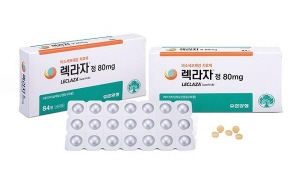
- Yuhan’s Leclaza passes DREC review for 1st-line NSCLC
- by Lee, Tak-Sun Oct 16, 2023 05:24am
- Yuhan Corp’s application to extend coverage for its 3rd-generation EGFR TKI non-small-cell lung cancer treatment Leclaza (lasertinib)' as a first-line treatment is making rapid progress. After passing the Health Insurance Review and Assessment Service review, all that remains is drug price negotiations with the National Health Insurance Corporation. On the 12th, the HIRA held the 2023 11th Drug Reimbursement Evaluation Committee meeting and deliberated on the adequacy of reimbursement for drugs including Leclaza. Leclaza, which was the only one on the agenda for reimbursement expansion on this day, was recognized as adequate for reimbursement. Accordingly, the agenda has moved to the next stage, to conduct drug pricing negotiations with the NHIS like Tagrisso, another 3rd generation EGFR TKI that passed DREC review last month. The industry prospect is that Tagrisso and Leclaza will receive reimbursement for their first-line indication at the same time. Meanwhile, among the drugs for which a new reimbursement decision was requested on this day, Kerendia Tab (Bayer Korea) was recognized as adequate for reimbursement. The drug is used to treat chronic kidney disease in patients with type 2 diabetes. In addition, the Trimbow inhaler (Kolon Pharmaceuticals), which is used to treat asthma and COPD, and Obizur, a treatment for bleeding episodes in adult patients with acquired hemophilia A, received conditional approval. In other words, the two drugs may pass the DREC review If their companies accept a price less than the evaluation amount.
- Company
- Kwangdong and Moderna strengthen partnership
- by Nho, Byung Chul Oct 16, 2023 05:24am
- Kwangdong Pharmaceutical (CEO Choi Seong-won) announced on the 13th that it will begin full-scale activities to provide medical information to medical staff about Moderna's newly updated COVID-19 vaccine 'Spikevax X', which was recently approved by the Ministry of Food and Drug Safety. Moderna's monovalent vaccine against the XBB.1.5 mutation contains neutralizing antibodies against prevalent mutations such as BA.2.86, EG.5, and FL.1.5.1, as well as the Clinical data confirming the response has been published. The vaccine approved this time is for those 12 years of age or older, and is strongly recommended for the elderly, those with weakened immune systems, and members of facilities vulnerable to infection. Kwangdong plans to engage in various activities to provide product information on Spikevax The plan is to expand its position in the coronavirus vaccine market based on its own sales and marketing competitiveness. Previously, health authorities decided to use the FDA-recommended XBB.1.5 target vaccine for fall/winter vaccination due to the prevalence of the Recently, the World Health Organization (WHO) emphasized the need for vaccination in winter, citing the increase in hospitalizations of COVID-19-infected people in Europe and other countries. An official from Kwangdong Pharmaceutical said, “Moderna's COVID-19 vaccine is a vaccine that has proven excellent protective effect and safety in all age groups, including the elderly, immunocompromised, and those with underlying diseases through clinical trials and actual use evidence (single-use vial formulation) “The advantage is that it is manufactured with an increased ease of vaccination at medical institutions.” Meanwhile, Kwangdong Pharmaceutical established a relationship with Moderna, starting with a vaccine partnership in November last year. This is the first case where Moderna has signed a business partnership agreement with a local pharmaceutical company, and the industry says that the sales power that Kwangdong Pharmaceutical has built based on collaboration with multinational pharmaceutical companies has shone. Over the past 10 years since its establishment, Moderna has transformed from a research company that led the advancement of mRNA technology to a company with a diverse portfolio of clinical trials for vaccines and treatments. Based on mRNA platform technology, 43 research and development programs are underway in the fields of infectious diseases, immuno-oncology, rare diseases, cardiovascular diseases, and autoimmune diseases.
- Company
- Lioresal Intrathecal can be prescribed in general hospitals
- by Eo, Yun-Ho Oct 16, 2023 05:24am
- The skeletal muscle relaxant and antispastic ‘Lioresal Intrathecal (baclofen injection)’ may now be prescribed in general hospitals in Korea According to industry sources, Novartis' Lioresal (baclofen), which will be supplied through the Korea Orphan & Essential Drug Center, has passed the Drug Committees (DCs) of tertiary hospitals including the Seoul National University Hospital and Seoul Asan Medical Center. Lioresal was listed for reimbursement last June. It is indicated in patients with severe chronic spasticity of spinal origin (associated with injury, multiple sclerosis, or other spinal cord diseases) or of cerebral origin who are unresponsive to orally administered antispastics (including oral baclofen) and/or who experience unacceptable side effects at effective oral doses. It is reimbursed for when administered in patients who show insufficient response to orally administered muscle relaxants or cannot receive the drug due to side effects. The reimbursement price ceiling was set at KRW 148,375. Lioresal works by relaxing the muscles used to treat severe spasms and preventing spasms, caused by damage to the brain or spinal cord or other specific conditions. Severe spasms are caused by an injury to the brain or spinal cord or a disease and can cause muscles to feel tight, stiff, and difficult to move. Severe spasms may cause the muscles to feel locked up or cause muscles to move uncontrollably and irregularly when trying to use them. The intrathecal injectable formulation of Lioresal is used to manage such severe spasms. Meanwhile, Lioresal did not show carcinogenic potential in a 2-year study on rats. Pelvic ovarian cysts and enlarged hemorrhagic adrenal glands were observed at the highest doses (50 to 100 mg/kg) in female rats that were treated for 2 years.
