
- LOGIN
- MemberShip
- 2026-06-27 00:29:43
- Policy
- Rationalization of expedited review of new pharmaceuticals
- by Lee, Hye-Kyung Jun 20, 2023 05:35am
- In the case of a new drug developed by a first-in-class pharmaceutical company, a priority review request can be made to the rapid review division of the Ministry of Food and Drug Safety. The Ministry of Food and Drug Safety recently prepared detailed procedures, such as the method of requesting designation from the Minister of Health and Welfare, when prioritizing new drugs developed by innovative pharmaceutical companies. According to Article 35, Paragraph 4 of the Pharmaceutical Affairs Act, which was revised in July 2021, 'drugs for which the Minister of Health and Welfare has requested designation among new drugs developed by innovative pharmaceutical companies pursuant to Article 2, Subparagraph 3 of the Special Act on the Promotion and Support of the Pharmaceutical Industry' may be designated for priority review. This means that even for a new drug developed by a first-in-class company, the Ministry of Health and Welfare must request designation before the Ministry of Food and Drug Safety can proceed with an expedited review. If this continues, innovative pharmaceutical companies will have to request a request for support from the Ministry of Health and Welfare, and after that, the Ministry of Health and Welfare will request designation, and the Ministry of Food and Drug Safety will have to go through the process of reviewing the rapid review. The Ministry of Food and Drug Safety said, "In order to quickly resolve the difficulties of first-in-class companies, we have prepared a procedure so that an official letter requesting designation can be sent from the Ministry of Health and Welfare's Health Industry Promotion Division to the Ministry of Food and Drug Safety's Rapid Review Division without establishing a separate procedure." When an innovative pharmaceutical company proceeds with a request for review of priority review designation to the Ministry of Food and Drug Safety's rapid review department, the rapid review department requests confirmation of the innovative pharmaceutical company's certification from the Ministry of Health and Welfare and receives a reply and a request for priority review designation directly from the Ministry of Health and Welfare. Therefore, first-in-class companies only need to contact the Ministry of Food and Drug Safety to apply for expedited review, and then apply for product approval. Meanwhile, not only new drugs developed by innovative pharmaceutical companies but also drugs prescribed by the Prime Minister Ordinance that is used for the purpose of treating serious severe diseases or rare diseases under Article 2, Subparagraph 1 of the Rare Disease Management Act are subject to expedited review. The Ministry of Food and Drug Safety shall decide whether to designate the drug within 30 days of receiving the application for priority review and notify the applicant of the result.
- Company
- ALS drug Teglutik may be prescribed at general hospitals
- by Eo, Yun-Ho Jun 20, 2023 05:35am
- SK Chemical’s Lou Gehrig's disease treatment ‘Teglutik’ can now be prescribed at general hospitals in Korea. According to industry sources, Teglutik (riluzole) passed the drug committees (DCs) of tertiary hospitals including Samsung Medical Center, Seoul National University Hospital, Asan Medical Center, as well as medical institutions such as Pusan National University Hospital The drug, which was released this year, was approved by the Ministry of Food and Drug Safety in May last year to extend the survival period or delay tracheostomy in patients with amyotrophic lateral sclerosis (ALS) ALS, which is also commonly referred to as Lou Gehrig's disease, is a neurodegenerative disorder that results in the progressive loss of motor neurons, leading to paralysis in the limbs and breathing. So far, there is no cure for Lou Gehrig's disease itself, however, symptomatic treatments such as Teglutik are available to slow down symptoms. Teglutik comes in a suspension formulation that allows an easier oral intake for patients suffering from swallowing disorders. The company explained that Teglutik offers an improved convenience in intake compared to existing treatments. Meanwhile, other riluzole treatments available in the market are Rilutek (Sanofi) and Yooritek Tab. Based on IQVIA, Rilutek sold KRW 3.7 billion and Yooritek KRW 2.5 billion in 2021. Teglutik, the only riluzole suspension formulation available, was listed for insurance reimbursement in January last year. The ceiling insurance price is KRW 133,970 per vial for 15-day use. Therefore, the price is the same as the price of existing tablet formulations (KRW 4,499 per day) in terms of daily dosage. Therefore, what changes will occur with SK Chemicals' entry into the riluzole market that had been shared by Sanofi and Yoo Young Pharmaceutical remains to be seen.
- Company
- SK Biopharmaceuticals’ Cenobamate approved in Canada
- by Chon, Seung-Hyun Jun 19, 2023 06:00am
- SK Biopharmaceuticals announced on the 15th that Cenobamate, a new drug for epilepsy, has received marketing approval from the Canadian Department of Health. Cenobamate's commercialization in Canada is being handled by Paladin Labs, a local pharmaceutical company. Cenobamate is a new drug for epilepsy that SK Biopharmaceuticals is independently selling in the US. It was approved by the US FDA in 2019. Cenobamate was independently carried out by SK Biopharmaceuticals in the entire process from initial development to U.S. Food and Drug Administration (FDA) approval. It is prescribed for adult epileptic patients with partial seizure symptoms. It is a mechanism of action that relieves seizure symptoms by simultaneously regulating two targets related to excitatory and inhibitory signaling, which cause epilepsy. SK Biopharmaceuticals expects that "Cenobamate will receive approval in Canada four years after FDA approval, and will accelerate its advance into the North American market, which accounts for more than half of the global epilepsy market."

- Policy
- 100 billion won more for new drug 500 billion won megafund
- by Lee, Hye-Kyung Jun 19, 2023 06:00am
- The government plans to create an additional fund of 100 billion won this year following the creation of a 500 billion won 'mega fund' last year to strengthen investment and export support for the pharmaceutical and bio industries. However, since a proper drug price valuation must necessarily accompany first-in-class development support, it was suggested that the system should be improved for this purpose. Kim Yong-woo, head of the Korea Health Industry Development Institute, explained the 3rd 5-year comprehensive plan to nurture and support the pharmaceutical and bio industries in a session on 'Government Policy and Industrial Strategy for Creating a New Bio-Health Market' held at the KFDC Spring Conference held on the 16th. Director Kim said, "The Ministry of Health and Welfare created two investment institutions at the end of last year to create a mega fund worth 500 billion won." The creation of the megafund is part of the 3rd plan to nurture and support the pharmaceutical and bio industries from this year to 2027 and was prepared to strengthen financial support and support start-ups in the pharmaceutical and bio sectors. Director Kim said, "We are paying attention to infrastructure creation so that we can bring in a lot of money to the biopharmaceutical field by creating mega funds and strengthening policy finance investment links." prepared,” he explained. In addition to mega funds, financial support such as technology guarantee funds, preferential loans to expand private investment and attraction support, and incentives to attract domestic and foreign investments were included in the 3rd comprehensive plan. Looking at the 3rd Comprehensive Plan in detail, 10 key tasks (investment in global blockbuster R&D, R&D investment in response to health security and social needs, AI promotion of new drug development, digital conversion support, finance and start-up support, export industrialization, core talent cultivation, human resources development ecosystem, support for innovative new drug development system, support for strategy to achieve global No. 3 in clinical trials, and strengthening of infrastructure by pharmaceutical value chain). Looking at the investment strategy for creating global blockbuster new drugs, support is provided for expanding public and private investment in new drug development, establishing a first-mover strategy to secure super-gap technologies, and investing in vitalizing open innovation. Director Kim explained, "In order to support the first-in-class development system, it is necessary to improve the system for proper drug price evaluation." He emphasized, “Efforts must be made to shorten the period of new drug development through an expedited approval system and simultaneous reimbursement review for each drug characteristic.”
- Company
- ADHD drug Strattera discontinues supply in Korea
- by Kim, Jin-Gu Jun 19, 2023 06:00am
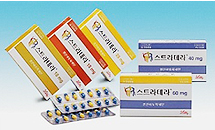
- Pic of Strattera The domestic supply of the ADHD (Attention-Deficit·Hyperactivity Disorder) treatment ‘Strattera (atomoxetine) was completely discontinued in Korea. Its supplier Lilly Korea said, “We have currently discontinued its supply, with no plans for resupply. According to the pharmaceutical industry on the 17th, Lilly Korea recently notified Boryeong Pharmaceutical that it will suspend the supply of Strattera. Lilly Korea has been supplying Strattera to the domestic market through Boryeong. Lilly Korea had notified Boryung about the discontinuation earlier this year and additionally announced that it has no plans to resupply Strattera in Korea. “Supply of Straterra will be discontinued not only in Korea but also in most countries," and "We have no plan to resupply the drug in Korea either." Regarding whether the company will voluntarily withdraw the drug’s authorization in Korea, it said, “We are currently discussing the specifics on withdrawing Straterra’s approval." Lilly Korea received approval for Straterra in Korea in 2006. Since then, the drug had led Korea’s ADHD treatment market with Janssen Korea’s Concerta OROS (methylphenidate). However, the gap between its sales and Concerta OROS had widened greatly recently. According to the market research instruction IQIVIA, the size of Korea’s ADHD treatment market was KRW 36 billion. Among those, Concerta OROS sold KRW 23.9 billion, and Straterra KRW 4.4 billion. In terms of market share, Concerta OROS has a monopoly over the market, occupying 67% of the market. Even in Q1 this year, there was a more than fourfold difference in sales between Concerta OROS’s KRW 6.9 billion and Straterra’s KRW 1.6 billion. Quarterly ADHD treatment market size (Unit: KRW 100 million, Data: IQVIA) Due to the prolonged monopoly of Concerta OROS, many competitors in addition to Lilly, whose headquarter discontinued the global supply of the drug, have discontinued the supply of its products or voluntarily withdrew their marketing authorizations in Korea 7 out of 15 domestically approved ADHD treatments have been withdrawn from the market. Hwanin Pharm's Metadate CD, Korean Drug’s Atomottera, Hanmi Pharmaceutical’s Atocera, Mundipharma Korea's Bisphentin, and JinYang Pharm's Amoxetine were withdrawn from the market either voluntarily or due to license expiry. Korea Pharma’s Domotin and Myungmoon Pharmaceutical’s Artrex are not being supplied to the market. Here, the supply of Lilly’s Straterra in Korea will also be discontinued. Boryung, which is in charge of marketing Lilly’s Straterra in Korea expects the discontinuation to not lead to a gap in the company’s performance due to its small sales volume. An official from Boryung said, "We are expanding our pipeline by introducing items in the overall CNS area, including ADHD while developing IMDs and generics. Discontinuing Straterra will not be a serious issue.”
- Company
- Epkinly designated as an orphan drug in Korea
- by Eo, Yun-Ho Jun 19, 2023 06:00am
- Epkinly, the first bispecific antibody drug involving T cells, has been designated as an orphan drug in Korea. The Ministry of Food and Drug Safety recently announced that it designated AbbVie's lymphoma treatment Epkinly as an orphan drug. The specific indication is relapsed or refractory DLBCL with a history of two or more systemic therapies. Epkinly is a type of immunoglobulin 1 bispecific antibody that simultaneously binds to CD3 of T cells and CD20 of B cells and induces T cell-mediated killing of lymphoma B cells. Recently, the US FDA obtained approval through the rapid approval program, and the phase 1/2 EPCORE NHL-1 study became the basis for approval. The study enrolled 148 patients with CD20-positive diffuse large B-cell lymphoma, of which 86% were patients with unclassified diffuse large B-cell lymphoma, and 27% of these patients were DLBCL converted from indolent lymphoma. The remaining 14% were patients with advanced B-cell lymphoma. As a result, Epkinly showed an ORR of 61%, a CRR of 38%, and a median duration of response of 15.6 months in patients with relapsed or refractory DLBCL who had previously received an average of three treatments. In Korea, one type of B-cell lymphoma new drug, MONJUVI, was recently approved. MONJUVI, an introduced new drug from Handok, is used as combination therapy with Lenalidomide in adult patients with relapsed or refractory diffuse large B-cell lymphoma who are not suitable for autologous hematopoietic stem cell transplantation and who have failed at least one previous treatment. MONJUVI binds to CD19, a B cell surface antigen protein, and has a mechanism of inducing B cell depletion by inducing direct apoptosis, antibody-dependent phagocytosis, and antibody-dependent cell-mediated cytotoxicity.
- Company
- Forxiga generics occupy 20% of mkt 2 mths into their release
- by Kim, Jin-Gu Jun 19, 2023 05:59am
- Forxiga (left), Pic of Xigduo ‘Forxiga (dapagliflozin)’ generics have increased their market share to 20% within 2 months of entry into the market. With fierce competition unfolding in the prescription field, the total market size expanded to exceed KRW 10 billion per month. However, since so many products were released at the same time, the average monthly prescription amount per generic product amounted to only around KRW 20 million. According to the marker research institution UBIST on the 19th, the outpatient prescription amount of single-agent and combination dapagliflozin drugs was KRW 11 billion in May. The original drugs, Forxiga and Xigduo posted sales of KRW 8.8 billion, and the combined generics of the two products recorded KRW 2.2 billion. In terms of market share, the original drugs accounted for 79.9% and generics 20.1% of the market. This means that the market share of generic drugs has increased to 20% in just 2 months after entry. A large number of Forxiga·Xigduo generics were released after Forxiga’s substance patent expired in April. A total of 90 pharmaceutical companies obtained approval for 105 single-agent drugs and 64 combination drugs. By May, 60 single-agent drugs and 31 combination drugs were released. The total market size has also expanded to more than KRW 10 billion per month. In March, before the full-fledged addition of generics, the total market size was KRW 9.5 billion, but in May, the market increased by 15.2% in 2 months to KRW 11 billion. The analysis is that the introduction of generic products in droves and fierce sales competition at the prescription site led to the expansion of the overall market. Monthly prescription performance of Forxiga and Xigduo original and generic However, with so many products entering at the same time, the average profit made by the companies was minimal. In the case of single-agent drugs, 60 pharmaceutical companies recorded a total of KRW 1.44 billion in prescriptions in May. The average prescription amount for each generic drug is only around KRW 24 million. In the case of combination drugs, 31 pharmaceutical companies recorded KRW 772 million in prescriptions in the same month. The average prescription amount per combination product was around KRW 31 million. ▲Boryung Pharmaceutical’s Trudapa, and ▲Hanmi Pharmaceutical’s Dapalon among single-agent drugs, ▲ Boryung Pharmaceutical’s Trudapa M, ▲ Hanmi Pharmaceutical’s Dapalon Duo, and ▲Kyung Dong Pahrma’s Dapamet among combination drugs, posted over KRW 100 million in monthly sales each. Among 60 companies that released single--agent drugs, over half – 29 companies – earned less than KRW 10 million a month. In the case of combination drugs, 17 of the 31 companies recorded monthly sales of less than KRW 10 million. Sales of the original drug, Forxiga, which posted sales of KRW 5.2 billion in March, fell 9.7% in May. In the same period, Xigduo’s sales fell 5.0% from KRW 4.3 billion to KRW 4.1 billion. Forxiga and Xigduo’s prices did not fall despite the release of their generics. AstraZeneca filed a lawsuit against the government to cancel the drug price cut and requested suspension of execution of the government’s price cut disposition. The court accepted AstraZeneca's request for suspension of execution. Therefore, the original drug’s price will remain the same until February next year. The suspension of disposition decision is considered a success on AstraZeneca’s part as it succeeded in delaying the drug price cuts and did relatively well against the large number of generics that were introduced to the field.
- Policy
- Awareness of Korean pharmaceuticals, ranked 7th out of 13
- by Lee, Hye-Kyung Jun 16, 2023 05:55am
- In an awareness survey conducted on overseas consumers in countries leading the world's bio-health industry, they ranked 7th out of 13 countries in the pharmaceutical sector, 7th out of 15 countries in the medical device sector, 3rd out of 12 countries in the cosmetics sector, and 3rd out of 12 countries in the medical service sector. It was ranked 5th out of 14 countries. In the case of pharmaceutical respondents, 75.3% were aware of Samsung Biologics. Daewoong Pharmaceutical 34.2%, Hanmi Pharmaceutical 33.8%, GC Pharma 31.7%, Celltrion 30.3%, SK Bioscience 29.9%, Yuhan Corporation 26%, Hugel 23.5%, Seegene 18.2%, Donga ST 15.1%. All companies in each sector were selected as the top companies in terms of manufacturing exports in 2021, and it is a figure that confirms whether or not they are each company, rather than selecting companies known to them in terms of ranking. On the 14th, the Korea Health Industry Development Institute (President Cha Soon-do) announced the '2022 Korean Bio-Health Industry (Manufacturing and Medical Service) Overseas Awareness Survey' with these contents. The countries surveyed were 19 countries (25 cities), including the United States, China, Japan, India, and Germany, with a focus on countries where Korea's health products are exported a lot. the survey was conducted on the subject. As a result of the survey, awareness of Korea as a manufacturer of health products was 75.1%, up 3.5%p from 2021 (71.6%). Specifically, the awareness rate in the pharmaceutical sector was 68.6% (▲4.8%) and the medical device sector was 68.6% (▲3.9%), and awareness rose significantly in Japan, Australia, and France. Among Korean bio-health products, the number of consumers who are aware of a specific product stood at 67.1%, a slight increase from 65.8% in 2021. The proportion of people who are aware of specific medical device products in Korea was 63.8%, an increase of 4.2%p compared to 2021. When using Korean bio-health products for the first time, about 8 out of 10 (82.2%) knew that they were Korean products and used them, a slight increase compared to 2021 (81.5%). As a result of asking 507 respondents who later recognized that it was a Korean bio-health product, the degree of change in perception after brand recognition, the average score of 100 was 67.2 points. Respondents who used it for the first time before (67.1 points) before the outbreak of COVID-19 (67.2 points) had a higher opinion that 'positive changes' had taken place, and South America (76.9 points), Southeast Asia (72.7 points), and medical devices (69.1 points) The average score of 100 users was high. By country, in Thailand, India, and France, Korean brand awareness before using the product was relatively low, while in Brazil, Kazakhstan, and Vietnam, there was a high change in positive awareness among post-recognizers. After using Korean biohealth products, the overall satisfaction rate was 75.3 points, a decrease of 0.3 points compared to 2021. By factor, quality, and efficacy satisfaction was the highest at 75.8 points, and the positive evaluation for product diversity (75.0 points) increased compared to the previous year. In the field of medical devices, it was found that satisfaction with the diversity of Korean medical devices increased. As a result of asking about the intention to recommend Korean bio-health products regardless of experience, active recommendation (voluntarily recommended) was 61.4 points and passive recommendation (not voluntarily, but recommended if someone asks) was 62.8 points, indicating active and passive recommendation. All intentions increased year-on-year. As for the reason for recommendation, the opinion that the efficacy of the product was ranked first (87.7%). The willingness to recommend Korean bio-health products by 265 foreign experts was high at 60.1%, and cosmetics experts showed a willingness to recommend 83.3%, and the entire bio-health product industry showed a high willingness to recommend. General consumers' overseas awareness of Korea's first medical service was 61.3%, and awareness was high in countries with many foreign patients visiting Korea, such as Vietnam, China, and Mongolia. In addition, after Corona 19, the national brand and power awareness of Korean medical services has been strengthened, and it was high in countries such as Vietnam, Indonesia, UAE, and Saudi Arabia. As a result of analyzing perceptions between Korean bio-health products and medical services, Vietnam, China, Thailand, and Indonesia all showed high awareness of manufacturing and medical services, while Kazakhstan, UAE, and Russia had higher awareness of Korean medical services than manufacturing. investigated. As a result of a correlation analysis between foreign patient attraction performance and medical service awareness by country, Korean medical services in China (1st place, 83.3%), Mongolia (5th place, 80.8%), and Vietnam (7th place, 91.7%) ranked high in foreign patient attraction. Awareness of the service was very high. In the Middle East, the UAE (10th, 74.2%) and Saudi Arabia (14th, 71.7%) showed a high level of awareness of Korean medical services compared to the performance of attracting foreign patients. Han Dong-woo, head of the Health Industry Innovation Planning Division at the Promotion Agency, said, "This survey is significant in that it has been expanded not only to Korea's bio products, but also to the medical service sector, such as attracting foreign patients." Director Han said, "It is possible to objectively grasp overseas consumers' perceptions of our products and services in major bio health-related exporting countries and to analyze the differences and causes of awareness between our bio health products and medical services in the same country. It is expected that our bio health industry will be highly utilized in establishing strategies for overseas expansion tailored to each foreign country."
- Policy
- RMP evaluation cycle Up to 3 yrs What items can be changed?
- by Lee, Hye-Kyung Jun 16, 2023 05:55am
- Items that can change the risk management plan (RMP) cycle up to three years have been determined. The Ministry of Food and Drug Safety recently enacted an amendment (draft) to the 'drug risk management plan guidelines and specifically included the targets for changing the RMP reporting cycle, related documents, and procedures for reviewing the feasibility of the change. In the case of RMP-submitted drugs, safety evaluation or benefit/risk evaluation, such as clue analysis, is conducted every 6 months from item approval until 2 years, and every 1 year after 2 years have elapsed, and the results are submitted after the expiration of the relevant period. It must be reported to the Ministry of Food and Drug Safety within one month. However, in the future ▲Items that have completed re-examination in accordance with Article 32 of the Pharmaceutical Affairs Act ▲Items for which additional pharmaceutical surveillance activities (post-marketing surveillance) have been completed ▲Items for which 4 years have elapsed since marketing if other pharmaceutical surveillance activities are not established ▲RMP after product approval In the case of drugs designated for submission, the RPM evaluation cycle can be changed to a maximum of 3 years or less for items for which 4 years have elapsed since the date of change of approval following the RMP submission. However, the plan may be changed if essential changes have occurred to the relevant item, such as the addition of new indications or changes in usage and dosage, or if evaluation and reporting of RMP implementation results are required at a shorter cycle than the changed cycle due to pharmacovigilance, etc. If it is judged that it is necessary to shorten the evaluation cycle due to issues such as safety, the RMP plan can be changed. In the case of drugs with high safety concerns, such as anticancer drugs, antibiotics, drugs for the nervous system, narcotics, orphan drugs, and biological products, whether they fall under the review of changing the evaluation cycle and the need for the change must be separately considered. The Ministry of Food and Drug Safety ▲occurrence or change of important clue information, benefit/risk analysis/evaluation results, etc. ▲clinical characteristics of established safety review items and types and characteristics of bad information ▲deletion or change of safety review items and additional risk mitigation measures ▲ The RMP cycle can be changed by reviewing the appropriateness of the implementation of the risk management plan that has been implemented so far ▲ the characteristics of formulations with low risk of safety problems ▲ consideration of the overseas safety information evaluation cycle and differences. When changing the periodic reporting period, the change of evaluation start point is not applicable except in unavoidable circumstances. The Ministry of Food and Drug Safety said, "The change in the evaluation cycle of the RMP is to review the feasibility of the target item and change the implementation result evaluation cycle period to a maximum of three years or less." "he said.
- Company
- Lipiodol is in stable supply despite price cuts
- by Nho, Byung Chul Jun 16, 2023 05:55am
- Guerbet Korea X-ray contrast agent Lipiodol Ultra (iodized oil), which caused controversy over supply and demand, faced a drug price cut due to the entry into a generic on the 1st of last month. Still, it is understood that the supply is stable so far. In the meantime, Guerbet Korea has been negotiating with the health authorities for reasons such as 'reduced margins due to price hikes for raw material drugs' and 'justice to maintain current drug prices due to application for price adjustment'. However, in 2020, Dongkook Pharm's Fattiodol, a competitive product with the nature of an alternative drug, obtained approval from the Ministry of Food and Drug Safety and was released, and the generic drug price calculation following patent expiration was applied from May 1 this year. Last year's sales of Lipiodol and Fattiodol according to drug distribution performance standards were about 2.8 billion won and 36 million won, respectively. According to industry estimates, Guerbet Korea did not take out the extreme card of refusal to supply because it cannot hand over the market to competing generics. Lipiodol, an old-drug original drug licensed in 1998, was sold at 52,560 won in June 2018, 190,000 won in August 2018, 189,224 won in January 2022, 133,000 won in September 2022, and 189,224 won in September 2022. It has experienced drug price increases and decreases seven times in the last five years, including 19,224 won, 133,000 won in 2023, and 101,745 won in May 2023. The price of Fattiodol 10·5ml was reduced twice: 113,050 won and 75,367 won in 2020 and 101,745 won and 67,830 won in 2023. Regarding this, Dongkuk Pharmaceutical said, "We plan to do our best to ensure a stable supply of Fattiodol from the patient's point of view. However, it is true that the cost rate of related drugs is so high that profitability is not good." It is a necessary part to reestablish the direction of rational drug price calculation.” Since cost disclosure is a corporate trade secret, it is difficult to ascertain the exact details. In addition, Guerbet Korea and Dongkuk Pharmaceutical's only way to raise or preserve drug prices is to apply for a drug price adjustment, but they cannot use it because there are alternative drugs for Lipiodol and Fattiodol. Because of this, both Guerbet Korea, the original company, and Dongkuk Pharmaceutical, the generic company, are bound by the institutional shackles of essential medicines and are forced to fall into the dilemma of continuous supply of drugs, which is their ethical duty as pharmaceutical companies. In the worst case, if two pharmaceutical companies stop supply at the same time because of lower margins due to drug price cuts, a supply-demand crisis is expected. On the other hand, Lipiodol's main ingredient is iodized fatty acid ethyl ester (iodized oil) derived from poppy seeds and is used for lymphography, salivary gland imaging, carotid artery chemoembolization for liver cancer, and hysterosalpingography.
